The Theory of Small Deeds: The Case of Chulpan Khamatova

Yigal Levin
Facebook
March 21, 2022

Mitya is infinitely right. All these years I have been constantly saying that all people of good will should leave the Russian Federation. How can one imagine a “theory of small deeds,” say, in the Third Reich? All conscientious Germans left Germany in the 30s, and to one degree or another joined various resistance forces. Such regimes are not destroyed from the inside, but only by blows from outside —military, economic, political and cultural.

Russia delenda est

Mitya Raevsky
Facebook
March 21, 2022

Until recently, a segment of the Russian intelligentsia and the upper middle class had a favorite toy — the “theory of small deeds.” In practice, it meant that they said: yes, we cannot defeat the dictatorship, which means we need to do something useful in spite of that — save sick children, create foundations, hold cultural events, publish literature, defend human rights wherever possible. They had the hope that everyone would be able to influence the state and society as a whole doing what they do best, and these little drops would come together to make a sea, so to speak. Well, in the process, of course, they would have to cooperate with the state.

It all turned out to be baloney. Here is another historical lesson — do not collaborate with tyrants. Never. Under any circumstances. Don’t lend them legitimacy. Even for the sake of sick children.

Because you will never turn that debit into a debit. You will save 10 thousand children who have cancer only for the dictatorship to kill 100 thousand children sooner or later. It’s already killing them, and not only Ukrainian children. It’s killing Russian children, too, whom it will now be impossible to save without western drugs and equipment.

In a dictatorship, small deeds happen only in the toilet.

________________
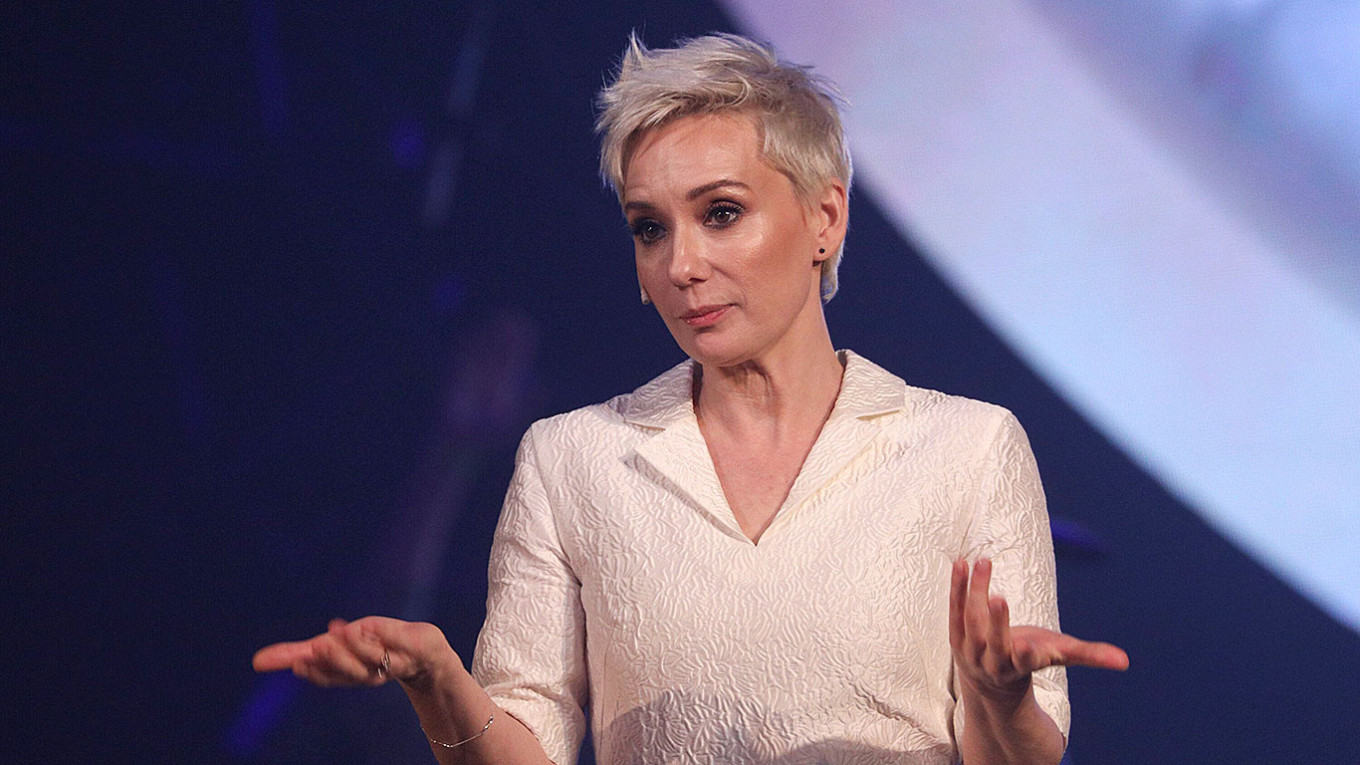
 

Chulpan Khamatova. Kirill Zykov/Moskva News Agency. Courtesy of the Moscow Times

Actress and Activist Chulpan Khamatova Has Left Russia
She joins dozens of Russian cultural figures who have left the country.
Moscow Times
March 21, 2022

The Russian stage and screen actress Chulpan Khamatova told Ekaterina Gordeyeva in an interview released on Monday that she would not be going back to Russia.

Khamatova, who heads the Gift of Life charity foundation, was abroad when Russia began its attack on Ukraine. “For the first few days I didn’t know what to do,” she said in the interview. At first I just wanted to stay some place and wait for it to end, but then I was led to believe that it might not be safe for me to return. I’m in Riga for now. I am certainly not a traitor. I love my homeland very much,” she said.

Khamatova is one of Russia’s most celebrated actresses who has acted in dozens of films and television series — most recently playing the lead role in the screen version of Guzel Yakhina’s novel “Zuleikha.” She also plays Raisa Gorbachev in the hit play “Gorbachev” at the Moscow Theater of Nations.

She is just one of dozens of Russian cultural figures who have left the country since the war began.

Earlier this month the music director of the Bolshoi Theater, Turgan Sokhiev, resigned his post in Moscow and in Toulouse, France. He wrote that he felt he was being forced “to choose between my beloved Russian and beloved French musicians” and so “decided to resign from my positions at both the Bolshoi in Moscow and Orchestre National du Capitole de Toulouse.”

At the same time two foreign ballet dancers at the Bolshoi, Jacopo Tissi and David Motta Soares, put in their resignations.

This was followed by the announcement that Bolshoi prima ballerina Olga Smirnova left for the Dutch National ballet.

Russian television has also lost several of its best-known on-screen personalities: Channel One colleague Zhanna Agalakova quit her job as Europe correspondent for Channel One, and both Lilia Gildeyeva and Vadim Glusker quite NTV. Gildeyeva had worked at the channel since 2006, and Glusker had been there almost from the start, for 30 years.

Dmitry Linkin, the head designer for Channel One for 24 years, also quit. “I was taught that human life is invaluable,” he said.

________________


In an interview with Ksenia Sobchak, broadcast on TV Rain in June 2012, Chulpan Khamatova said that she would rather live in “North Korea” than have her own country go through another revolution.

No Political Harmony Among Cultural Elite
Alexander Bratersky
Moscow Times
February 19, 2012

As Prime Minister Vladimir Putin enters the home stretch of his campaign to return to the Kremlin, he is relying on the support not only of the blue-collar electorate, but also members of the cultural elite, who are helping to market his bid for the presidency.

Putin’s extended campaign team has about 500 participants, including famous musicians, actors and writers who appear in pro-Putin commercials and at rallies. But political analysts and experts said their participation has divided the cultural elite itself.

Several dozen prominent celebrities, among them world-famous piano player Denis Matsuyev, St. Petersburg Mariinsky conductor Valery Gergiev, jazz musician Igor Butman and opera star Anna Netrebko have thrown their lot in with Putin.

When contacted to explain the reasons behind their choice of candidate, most have declined to comment. The situation has even split families: in one case a well-known rock musician sided with Putin, while his brother, also a rock star, is for the opposition.

Supporting Putin, who is seen by his opponents as an authoritarian leader, might damage a performer’s reputation and can become a source of controversy. The liberal media has attacked prominent actress Chulpan Khamatova for appearing in a Putin commercial, in which she thanks the prime minister for supporting her charity that aids children with cancer. Although Putin’s spokesman Dmitry Peskov told reporters that Khamatova appeared in the commercial voluntarily, sources at the charity said she was forced into the recording.

The public response against the video was so negative that even liberal Novaya Gazeta had to defend Khamatova in one of its latest articles. Khamatova has declined to discuss her endorsement for Putin. “Let everyone stick to his own vision,” she said, RIA Novosti reported.

Iosif Prigozhin, a prominent music producer and show business insider has also defended the actress.

“Khamatova is an absolutely sincere person. But imagine that I had helped you. Would you do the same for me?” he told The Moscow Times.

Continue reading “The Theory of Small Deeds: The Case of Chulpan Khamatova”
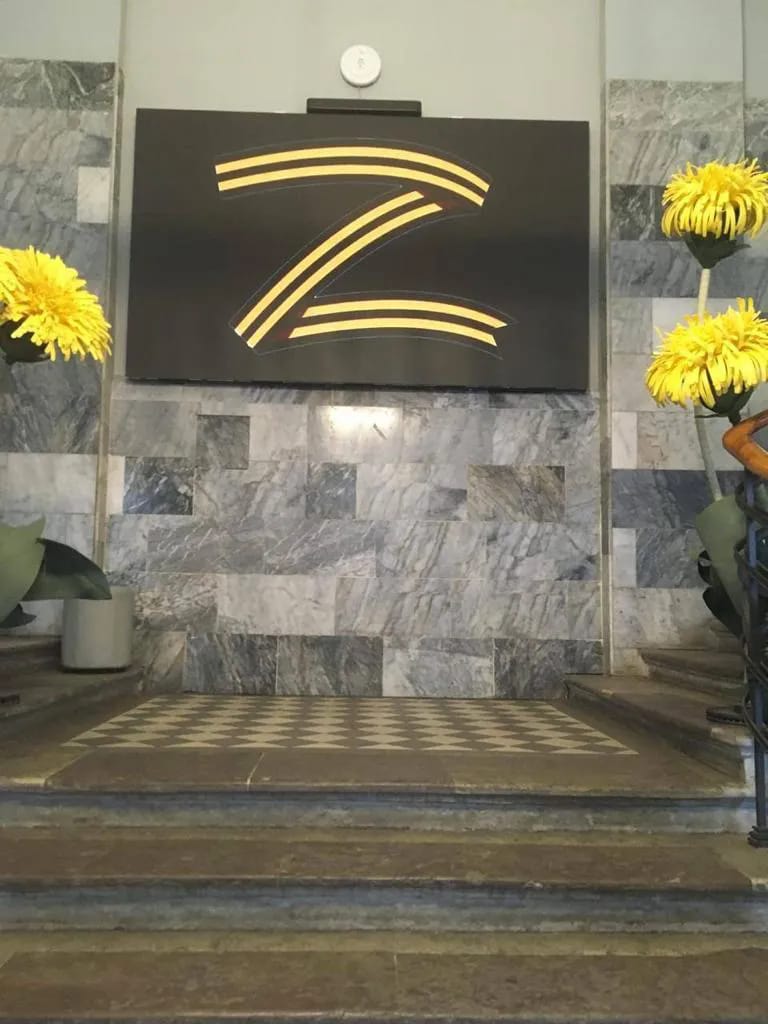
Z Is for Zombie Box

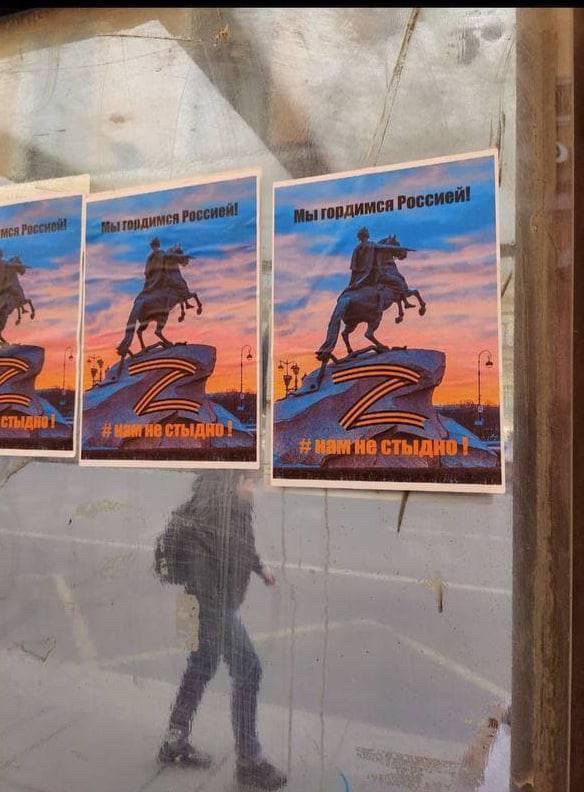
The Putinist Zwastika now graces the halls of Petersburg’s renowned physics and maths magnet School No. 239, writes Alexander Rodin, an alumnus who says that he will now try and get his alma mater excluded from all international projects including the school Olympics in maths and physics, and that he is sure that all his fellow alumni (some of whom I know) share his sense of shame at this turn of events. Thanks to PZ for the link.

The Zombie box. Smart people have been trying to persuade me that it is not a matter of propaganda at all, but that it has to do with the peculiarities of Russian culture and history, or with the psychology of the Russian populace, with complexes and resentments. As for the latter, I don’t really understand how one can deduce a particular reaction to current political events from such general categories as “culture,” which consists of many different things, nor do I really understand how so many complexes and resentments about Russia and the world naturally arise in the head of a specific person who mainly thinks about their own everyday problems. But as for the former — that is, propaganda — there is no theory for me here. Instead, there is the daily practice of observing my nearest and dearest: how this dark force literally enchains them, how this poison contaminates their minds, how these people repeat verbatim all the stock propaganda phrases and figures of speech, passing them off as information and arguments, and how they lose the ability to hear objections. Perhaps it isn’t the Zombie box that is the matter, but just in case, I advise you to turn it off and try to expel Saruman from your brains.

Source: Sergey Abashin, Facebook, 21 March 2022. Translated by the Russian Reader

_______________

Vladimir Putin’s speech at the concert and rally in Luzhniki Stadium, Moscow, 18 March 2022

Putin Marks Crimea Anniversary, Defends ‘Special Operation’ in Ukraine in Stadium Rally
Moscow Times
March 18, 2022

Russian President Vladimir Putin led a pro-government rally that was beset by “technical difficulties” and reports of people being forced to attend.

The event marking the eighth anniversary of Russia’s annexation of Crimea, which is not recognized by most countries, came three weeks into Moscow’s full-scale invasion of Ukraine that has sparked fierce international condemnation.

“We have not had such unity for a long time,” Putin said, referring to the “special military operation” in Ukraine as he addressed the crowd of about 95,000 and another 100,000 outside the stadium, according to the state-run RIA Novosti news agency.

Moscow’s Luzhniki Stadium was awash with Russian tricolor flags as snippets from Russia’s military insurgency in Crimea flickered across the stadium’s screens, accompanied by songs that celebrated the success of Russia’s military.

A number of guest speakers, including RT editor-in-chief Margarita Simonyan and Foreign Ministry spokeswoman Maria Zakharova, spoke from a stage emblazoned with the phrases “For Russia” and “For a world without Nazism.”

Many guest speakers were wearing orange-and-black St. George’s ribbons in the shape of a Z, a new symbol of support for Russia’s Armed Forces in the wake of the invasion.

Putin’s impassioned speech defended Russia’s military operation in Ukraine, citing the need to protect those in eastern Ukraine’s Donbas region from a so-called “genocide.”

“This really was genocide. Stopping that was the goal of the special operation,” said Putin, who was wearing what has been identified as a $15,000 parka.

But the broadcast of his speech came to an abrupt end as Russia 24, the channel broadcasting the event, switched to footage of a military band playing on the same stage.

Russian state television is tightly controlled and such interruptions are highly unusual.

The Kremlin later said that the broadcast was “interrupted due to technical problems on the server.”

Reports prior to the event stated that many of those in attendance had been forced to attend, with state employees used to bolster the annual celebration’s numbers.

“They stuck us in a bus and drove us here,” one woman told the Sota news outlet outside the stadium.

Meanwhile, a photo shared by the Avtozak Live news channel suggested that event-goers were offered 500 rubles to show up to the event.

Videos circulating on social media showed streams of people leaving the stadium some 20 minutes after the event had started.

Crowds were subject to rigorous security checks when entering the stadium, as the atmosphere in Moscow remains tense amid the Kremlin’s decision to launch a military operation in neighboring Ukraine that many Russians have voiced opposition to.

The event’s strict guidelines also banned any symbols associated with Ukraine or the West, according to an unconfirmed report by the Baza Telegram channel.

Despite what appeared to be a festive mood in the crowd, a number of independent journalists were detained near the stadium, according to Sota, all of whom were later released.

In addition to referencing the Bible, Putin closed his address by invoking naval commander Fyodor Ushakov, who is now the patron saint of Russia’s nuclear bomber fleet.

“What a coincidence that the special military operation should fall on [the commander’s] birthday,” the Russian president said, as onlookers whooped in agreement.

He Didn’t Look like a Gopnik

Natalia Vvedenskaya, an amazing grassroots activist acquaintance of mine in Petersburg who teaches Russian to immigrant kids, writing about what happened her and “No to the war” pin today in the subway:

I got my pin torn off today. It was a man, over thirty. He demanded that I take it off, then he tore it off himself. He didn’t look at all like a gopnik, by the way, although he behaved accordingly.

Source: Natalia Vvedenskaya, Facebook, 19 March 2022

Election Day: 18 March 2018

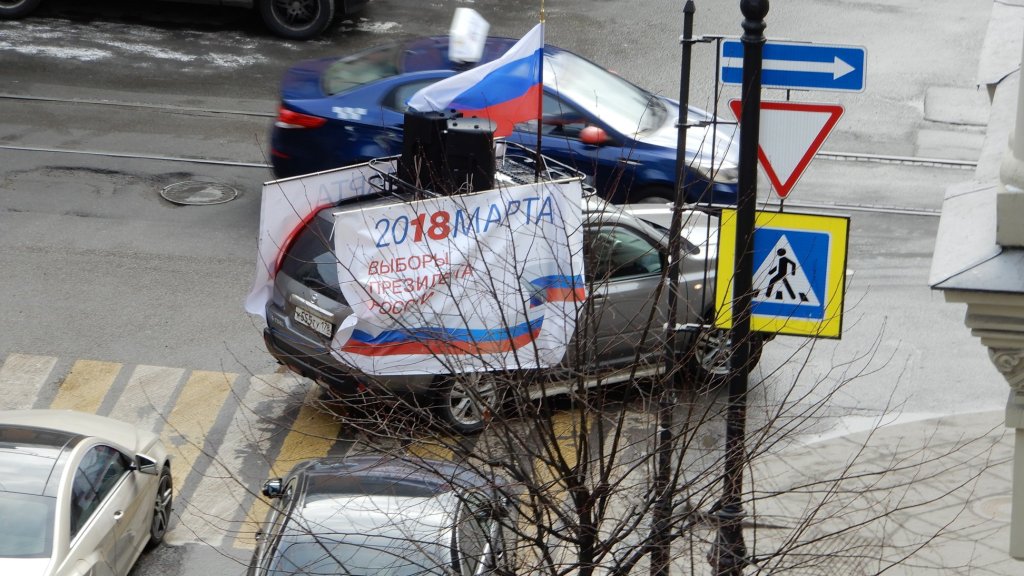
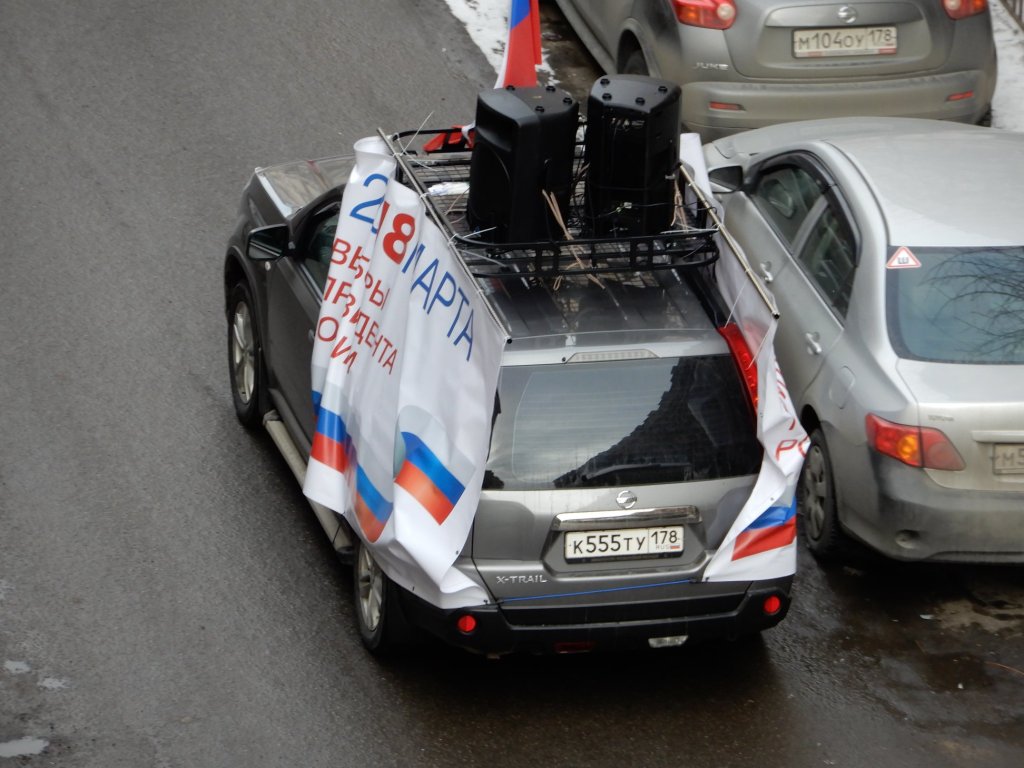
The “get out the vote” mobile just made its second pass down our street today.

The speakers mounted on its roof blared out at deafening volume the recording of a song that mentioned something about a “strong team” and resembled a jingle for potato chips or tampons more than anything.

Russia’s leaders take the Russian people for idiots.

Minutes later, the “get out the vote” mobile made its third pass down our street today, driving in the opposite direction.

This time, the speakers on the car’s roof were not terrorizing the neighboring with the ear-splitting jingle about the “strong team.” Instead, a middle-aged man with the velvety-toned voice of a Soviet news presenter explained — again, at extremely high volume — that today was a “celebration” in which Russians were “making a choice” that would “determine the country’s future.” 

The “get out the vote” mobile just made its ninth pass down our street in the last four hours. It drove slowly. The speakers on its roof were cranked up to eleven, playing a particularly unpleasant song.

I gather this is now the punishment phase for everyone on our street who hasn’t voted in the “celebration” to “re-elect” Russia’s dictator for life today.

It goes without saying that people like that deserve the worst. Even many of their own alleged friends and political allies have been emotionally abusing them online for the last several days, so strong is the Putin personality cult, especially among the Russian liberal and leftist intelligentsia.

Not that any of them would admit it. They are Putin’s real base, because they have the means to do something about his tyranny, but most have chosen to engage in more personally pleasant pursuits, some of which they have managed to pass off as “opposition” or “grassroots” politics.  ||| TRR, 18 March 2018

Pushkin Is Stained and It’s Not My Fault

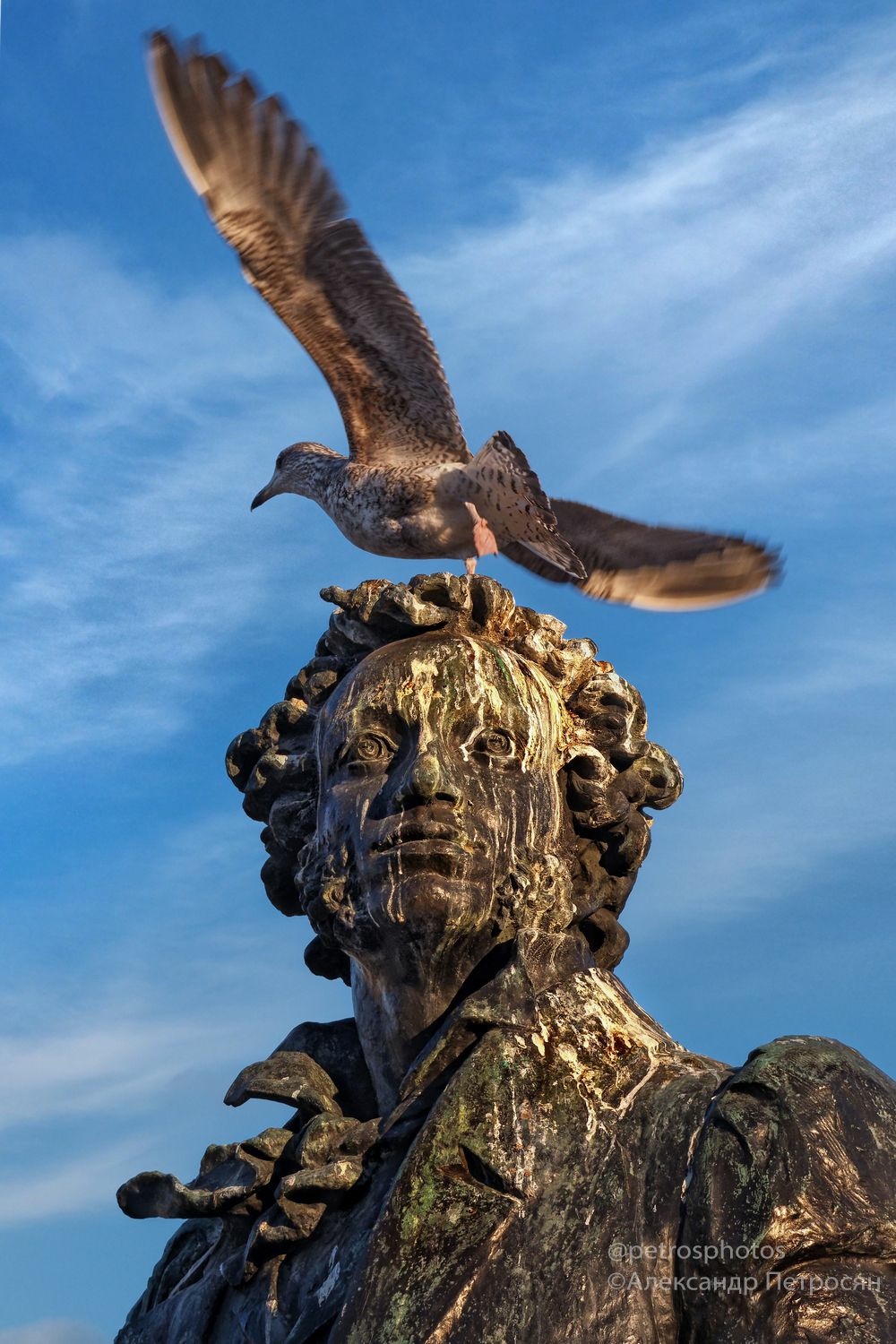
The second week of March 2022 again proved cheerless, to put it mildly, nullifying even more previously unshakable habits. Even the usual traces of the vital functions of urban birds are already causing vague fears in the wake of news reports about “foreign biological laboratories.” Of course, fear has big eyes, and there are spots on the Sun [of Russian poetry], but no matter how many worries we have, we can definitely say that nothing can spoil our hope and faith in the best outcome. Anikushin’s Pushkin is always washed in the spring, and since spring is already in full swing, he will soon be unblemished again. And then, before you know, we will be made cleaner ourselves!

Source: “Photo of the Week: Alexander Petrosyan on the Stained Sun of Russian Poetry,” 18 March 2022, Novyi Prospekt. Translated by the Russian Reader


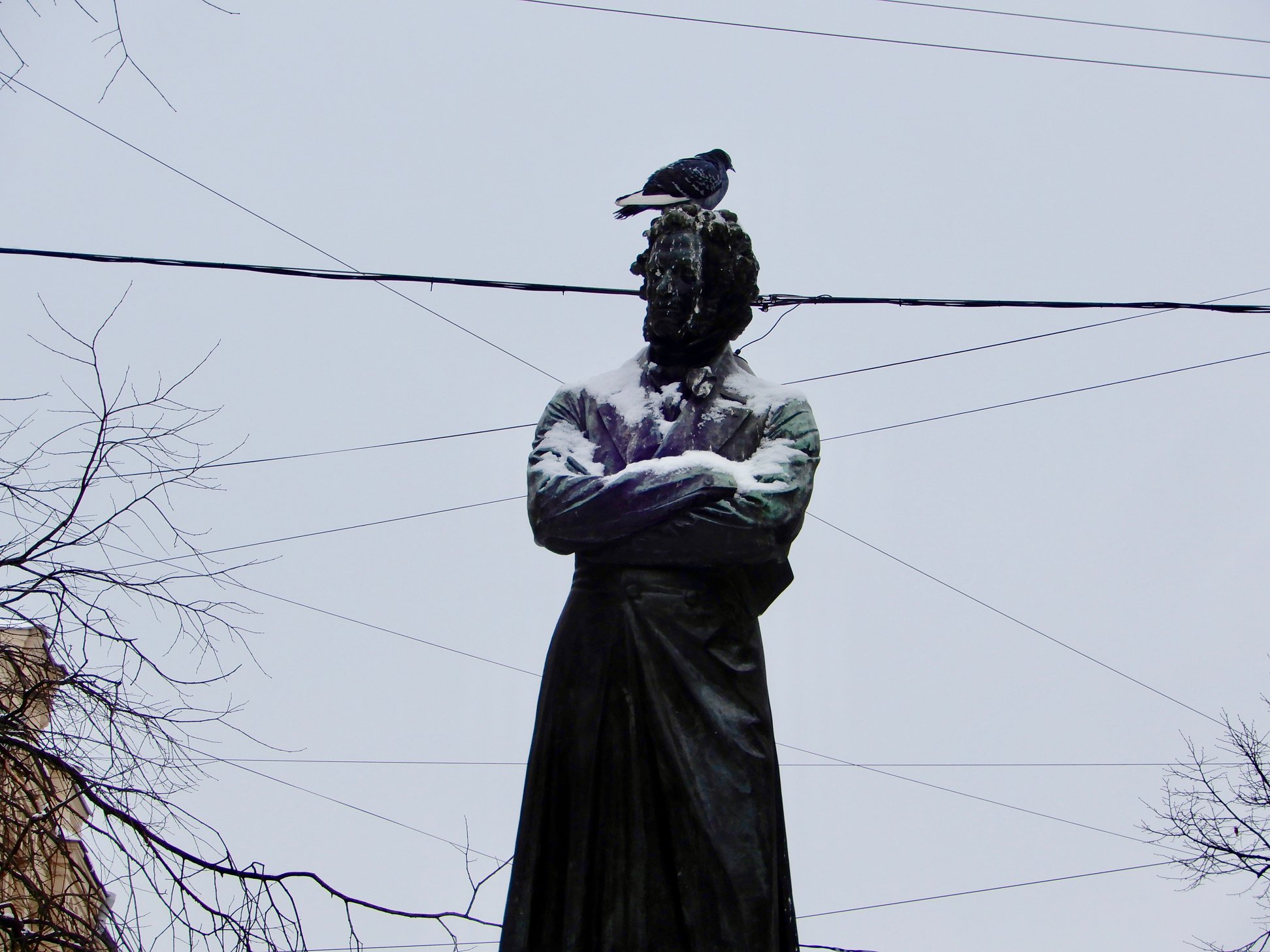
A close-up of the Pushkin monument on Pushkinskaya Street in Petersburg, 23 March 2018. Photo by the Russian Reader

Liberating a well-fortified city with a good engineering infrastructure is a big problem for the attacking side.

Despite all the difficulties, the fighters from Chechen Republic’s security forces, fulfilling their professional duty to protect the civilian population of the LPR, the DPR, and the whole of Ukraine from the encroachments of the Banderovites, Nazis, and Shaitans, have been coping with the tasks set by the leadership of the Russian Federation.

This time, another well-fortified Banderovite base was reclaimed by Russian troops. During this brilliant operation, a large group of civilians were released, whom the Nazis had been holding all this time without water, food, and medical care.

Our brave warriors helped the destitute and abandoned people to escape from the clutches of the Nazis. There were a large number of children among them, including infants. All the rescued were put into special vehicles and taken to a safe place. Chechen fighters provided them with food, water, medicines, and medical assistance.

It was nice to hear words of gratitude from civilians for the assistance, rescue, and warm attitude of our soldiers. Most importantly, people felt how well the Chechen liberators had been brought up.

The mission of holding captured positions and rescuing the civilian population of the liberated territories in Ukraine is being carried out by our fighters at the highest level. They are in a great mood and excellent fighting spirit, looking forward to a speedy victory.

Source: Chechen leader Ramzan Kadyrov’s Telegram account, 19 March 2022. Translated, so to speak, by the Russian Reader

“We Have to Cut the Strings”

“They built a wall!” The shore of the Vuoksi River in Imatra in more peaceful times. Archive photo by the Russian Reader

I love Imatra and Lappeenranta and South Karelia (Finland) more than any place on earth. Stupidly, perhaps, I regret that I wasn’t born there. Less stupidly, I am sad that I haven’t been there for two and a half years. BBC Newsnight went there this past week to talk with the locals about what they think about suddenly finding themselves across the border from a warring country and whether they think their heretofore proudly neutral Suomi should join NATO. Thanks to Riittaa Mustonen for the link.

Ironically, the reporter who did this story is named Sima. ||| TRR

If Finland joins Nato, its 1,300km border with Russia will become Nato’s eastern front. There is a troubled history of war between the two countries, but how do people living on this potential new frontier feel, and what’s been the impact of Putin’s aggression on previously close relationships between Finns and Russians who live here? In South Karelia, officials say the absence of Russian tourists crossing to Finland is costing the region €1m a day. Newsnight’s Sima Kotecha reports from the border town of Imatra and the region’s biggest city Lappeenranta where there are more than 2,000 Russian speakers.

__________

“Something Tells Me He’ll Never Want to Learn the Truth”

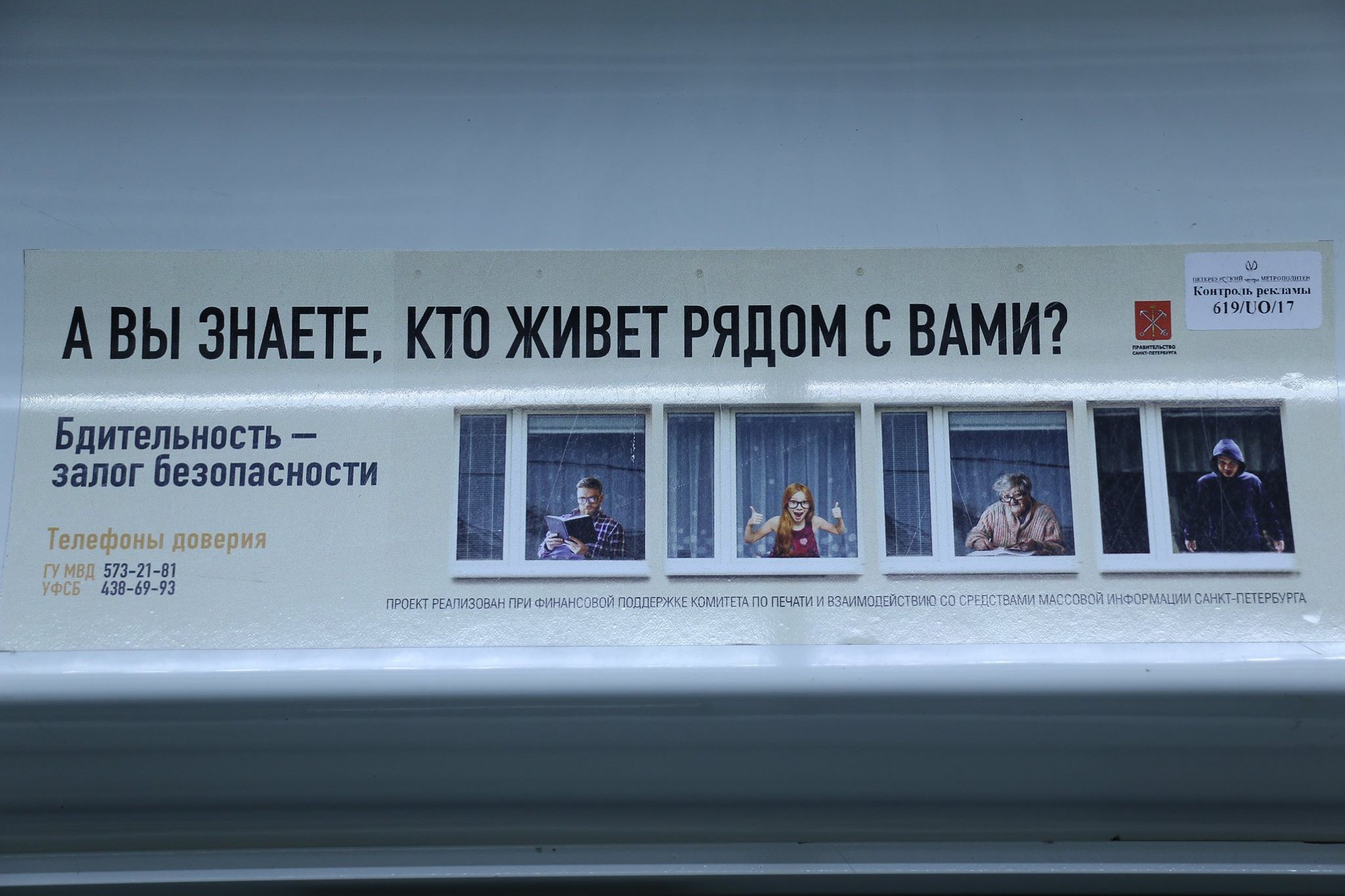
“Do you know who lives next door? Vigilance is the key to security.”

I admit that I sometimes try and get people talking to understand what’s going on in their heads. Today, however, I had no such plan. I only permitted myself to go outside for ten minutes to drink a cup of coffee and to look at the sun as seen from somewhere other than the window of my office. I went to my favorite coffee shop, a two-seater, without any ulterior motives. And without wanting to hobnob with anyone. I sometimes have a nice chat with the barista, because it was simply impossible to have an unpleasant chat with him before [the war]: he has no interest in politics whatsoever. He’s an exemplary sweet summer child, a vegan, the antipode of universal evil. But then he tried to get me talking, on the contrary, taking me by surprise. He suddenly started discussing Ukraine. For some reason I assumed that the hellishness going on there would disgust him, but far from it! When I said that civilians were being killed there, he was genuinely surprised. “Who’s killing them? What civilians?” In a nutshell, he has a girlfriend in Kharkiv. She stays at home, doesn’t go out, and hears gunshots, but she hasn’t mentioned anything to him about casualties. “There, in Kharkiv, you know, everything is fine, you just shouldn’t go outside.” Then he started complaining to me that, in Ukraine, they name streets in honor of [Stepan] Bandera. Tall and blond, the guy looks to be about twenty-five. Bandera is the bane of his existence, but otherwise everything is cool. Something tells me he’ll never want to learn the truth.

This feuilleton was posted friends-only on social media earlier today by an experienced and thoughtful Moscow-based journalist and activist. They have kindly permitted me to translate and publish it here. Photo by the author. (It was taken on another occasion several years ago, but seemed to fit this story.) Translated by the Russian Reader

Support The Moscow Times!

Dear friend,

Life in Russia changed forever on February 24th 2022 — and The Moscow Times has felt this to its core. As the Russia-Ukraine conflict continues, sinking Russia further into isolation not seen since the Soviet era, it is more important than ever to keep independent reporting alive.

The Moscow Times has operated from Moscow for the past 30 years. As Russia’s oldest independent English-language media, we have always worked to give the world an unbiased perspective on Russian life and politics.

But as Russia has tightened its grip on the free press — punishing those who call the war “war” with prison — our team has had to leave the country.

Amid the crackdown as well as a flood of disinformation exacerbated by hundreds of journalists fleeing Russia, it is more important than ever to provide the global community with accessible and informative stories about the region and offer a nuanced view free of stereotypes and prejudices.

Despite the unprecedented challenges, The Moscow Times continues to cover Russia – but we need your support.

We hope you will support us on this difficult journey!

Support The Moscow Times

Source: Moscow Times email newsletter, 17 March 2022. Please consider pressing the link to the newspaper’s donations page, above, to support their vital mission. You can use a credit card or PayPal to make your donation. I used the latter, and it took me less than a minute to donate. To remind you of the great work they do, I’ve attached a recent story to this blog — as I’ve done several times over the last fifteen years on this post, especially when their now-defunct sister newspaper in Petersburg was still operating. ||| TRR

________________

She Signed an Open Letter Calling for Peace. Then Got Fired.
Russians who signed petitions against Russia’s war in Ukraine are losing their jobs.
Jake Cordell
The Moscow Times
March 3, 2022

Yekaterina Dolinina. Photo: Facebook/Moscow Times

Like many people around the world, Yekaterina Dolinina woke up on Feb. 24 to a barrage of notifications and messages on her phone.

“I couldn’t immediately figure it all out. It probably took about 15 minutes to process everything,” the 29-year-old director of two central Moscow cinemas told The Moscow Times.

“But then I realized what it meant. Then the pain came immediately. I felt scared and anxious.”

Russian President Vladimir Putin had just given a pre-dawn address to the nation announcing the start of a “special operation” in Ukraine — an aggressive war on Russia’s pro-European neighbor that has killed thousands, including civilians and children, in its first week.

“I didn’t understand what to do next. How could I go to work like nothing had happened? How could I carry on living my life,” Dolinina said.

The next day, she added her name to an anti-war petition — one of dozens of open letters from different professional spheres addressing Putin and calling for him to back down. Dolinina signed one circulating among cultural and artistic professionals. Similar letters were signed by economists, teachers, doctors and a number of other groups in what has grown into a sizable show of opposition to the war.

On Monday, she was hauled into an early-morning meeting by her employers — the MosKino cinema hall — and given a choice. Make a public statement saying that your name was added by mistake, or quit. If she refused to go of her own accord, she said, her bosses threatened to make her dismissal “very unpleasant.”

MosKino did not respond to a request to comment.

“I didn’t waver over signing it and I don’t regret it. But I didn’t expect that it would result in forced dismissal,” Dolinina said in an interview.

“I knew, as somebody working in a cultural institute connected to the government, that if I was detained at a protest or posted something aggressive on social media I could get fired. But I never guessed it would happen for signing an open letter calling for peace.”

“But that’s a sign of the new world we’re all living in now.”

While the Russian military wages war abroad, the government has stepped up a campaign of censorship and repression at home. Independent media outlets are threatened with being blocked or fined from calling Russia’s war in Ukraine a “war” or “invasion.” Russia’s media watchdog blocked the websites of two leading independent broadcasters — radio station Ekho Moskvy and the Dozhd television channel — for flouting those rules.

A law under consideration in Russia’s parliament — that could be passed as early as Friday — would make publishing what the Russian government deems “fake information” a criminal offense, punishable by up to 15 years’ imprisonment.

On the streets, anti-war protesters have been met with a tough police resistance, with almost 7,000 people detained in a week of small-scale rallies and demonstrations in cities across the country.

“They said that it wasn’t their choice, that they had tried to protect me. But the order came from above. They couldn’t do anything about it,” Dolinina said of her forced resignation.

In text messages seen by The Moscow Times, her employers wrote in a company-wide chat later that day: “Dear colleagues. Please refrain from making posts about political topics on Facebook, and do not add flags to your profile picture.”

In Russia, forced dismissals are not a new tactic as retribution for political dissent. Last year, the Moscow metro reportedly fired dozens of workers for signing a petition in favor of jailed Kremlin critic Alexei Navalny.

And amid the current war, Dolinina’s case is not unique. Many Russians — especially in the arts and cultural space — have reported being forced to resign in recent days from their work after coming out publicly against the war in Ukraine.

Others are resigning and packing up of their own accord, unwilling to stay in a country at war and facing a devastating economic crisis and unprecedented international isolation.

“I thought about leaving,” said Dolinina. “But even though it hurts to follow what’s happening in our country at the moment, this is a place where I’ve invested lots of love and energy.”