Yelena Osipova: “Russia Is a Bird, Not a Bear”


OLYMPUS DIGITAL CAMERA
Russia wants to be a bird: peaceful, honest, kind.  Russia: kind and hardworking. 2011: The bear can no longer be cured. Vote for the bird. Although it is wounded, if it is treated well, it can fly high. Vote for the hardworking bird

“Russia is a bird, not a bear”
Tatyana Voltskaya
November 21, 2015
Radio Svoboda

Yelena Osipova’s “naïve” posters remind us of the link between politics and street protests

A cozy basement with uncomfortable pictures: that is how one might describe in a nutshell the exhibition of paintings and posters by Petersburg artist Yelena Osipova currently underway in the Petersburg office of Open Russia, which shares the space with the Petersburg office of the Parnas party.

Elena Osipova
Yelena Osipova

The exhibition marks a milestone—Osipova has turned seventy—but it is her debut exhibition. She has never been a member of any artist unions and groups, but she has stood outside in the rain, frost, and heat at nearly all the protest rallies that have taken place in Petersburg in recent years. The striking posters that Osipova holds at these rallies expose the latest injustices or crimes, warn of dangers, and empathize with the plight of others, whether they have been victims of terrorist attacks, natural disasters, dishonest elections or civil rights violations.

The exhibition was not easy to put together. The organizers set out to show not only Osipova’s best political posters but also her paintings, mainly portraits and landscapes. The show also includes two large genre scenes, the first featuring an ordinary Soviet beer hall, the second, a group of punks. Perhaps they are the link to the posters, which call to mind not only the tradition of political satire but also primitivist painting.

We are all hostages of violent, provocative imperialist politics.
We are all hostages of violent, provocative imperialist politics

“This exhibition is the first in my life,” says Yelena Osipova. “And I love the room and these vaulted ceilings and the fact you can see how my paintings segue into the posters. The latest poster, showing a mother with a dead infant, is about the dead Tajik boy Umarali Nazarov, while the first was prompted by the Nord-Ost tragedy in 2002. Then I went to the Mariinsky Palace [seat of the Saint Petersburg Legislative Assembly] with a simple lettered poster, handwritten on a sheet of wove paper. I just could not understand why no one took to the streets then, why everyone was silent. On the fortieth day after the deaths of the hostages, I made a poster in which I painted a picture in acrylics on fabric.

OLYMPUS DIGITAL CAMERA
In an Andersen story, a girl sold matches in Denmark in the nineteenth century: matches. (Read Andersen’s fairytales to children.) 2012, the twenty-first century. Children are commodities. This is the end of the world. Adoption should be free. Foster care should be free. In Russia, children sell narcotics: narcotics.

You are a professional artist. Where did you study?

“I graduated from an art school. It was then called the Tauride Art School, now it is the Roerich Art School. Marc Chagall had studied there in his day, though not for long. I had then wanted to apply to the monumental painting program at the Mukhina Academy. I had been influenced by the frescoes of Andrei Rublev and Dionisius, by the size of their figures and their schematic manner. But young women were just not admitted to the monumental painting program, and I have no regrets about it now. What would I have done? Painted murals in the subway? I am an artist and educator. I taught for over thirty years. We organized three art schools from scratch.”

Umarali
Umarali

So you mostly painted landscapes and posters, then Nord-Ost happened and you turned to posters. What exactly happened after Nord-Ost?

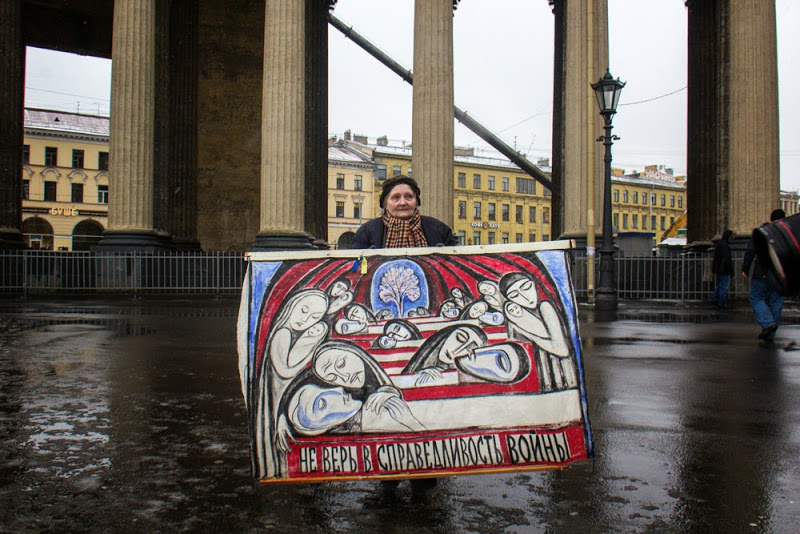
“An ever more horrible event: Beslan. No conclusions had been drawn! I had two posters: one was lost, while the other version is exhibited here. The lost version was two-sided. On the reverse side, the slogan “Moms of the world, give birth to little princes. They will save the world!” was written on a blue background. I made the next poster, “Don’t believe in the justice of war!” when the war in Iraq began. I stood outside the American consulate, the British consulate, outside the consulates of all the governments who had supported sending troops into Iraq. There was no reaction. When it was the anniversary of the Beslan tragedy, the mothers of the dead came to Petersburg and wanted to walk down Nevsky Prospect to the Russian Museum holding icons and candles. Ultimately, no one joined them. Just one other woman went with the Beslan moms, plus me with my poster. So we marched alone, amidst the general indifference.”
Anti-war-0089
Artist Yelena Osipova holds a poster that reads, “Don’t believe in the justice of war,” during an unauthorized anti-war protest outside Kazan Cathedral in Petersburg on March 15, 2014. Photo by Sergey Chernov

But this indifference has continued. Look how many people came to the rally protesting the death of the Tajik baby Umarali Nazarov, who was taken away from his mother.

“Yes, but more people are coming than before. Civil society is slowly emerging. We have had the Marches for Peace, and certain rallies have drawn a good number of people. It used to be that no one came to these things at all.”

OLYMPUS DIGITAL CAMERA
Yelena Osipova, Portrait of an Artist, 1975. Oil on canvas

Have you been detained at protests?

“Of course I have been detained. There was a G20 summit here one summer. I went there with two posters: Don’t believe in the justice of war! and another one about the disposal of nuclear waste. The police detained me then, and I have been detained many times since, sometimes quite roughly. There were unpleasant incidents outside the Mariinsky Palace on St. Isaac’s Square when the war with Ukraine began. Yet the people who go to these events think like you do, and that is quite important. You feel you are not alone with your thoughts, that there are other people who think the same way. Okay, so there are not so many of them, but they are out there.

Free political prisoners!

“Now, perhaps, it will become more difficult, and people will retreat to their apartments, as they did in Soviet times. The laws that have been passed [restricting public protests] are tough to deal with even financially. It used to be that the biggest fine I got was five thousand rubles. People collected the money on the web, and later I sent it on to the Bolotnaya Square prisoners. But the fines now are so high that you cannot pay them. It is too bad that society resigned itself from the outset and did not oppose these laws. After all, they could have resisted and taken to the streets, but, unfortunately, when people have begun to live better, they become indifferent.”

Are there any landmark works, works important to you at this exhibition?

“Yes, for example, Theater Entrance. I painted it during my fourth year at art school. I was really into the theater then, and my thesis painting had a theatrical motif. There are also three paintings here from my Vologda series, pictures of fields in Vologda. There is a landscape painting of Gurzuf, in Crimea. The big painting shows a beer hall that was behind the Nekrasov Market. It had these big round arches, and the beer was poured straight from a tap. You could meet professors and students and artists there. I have painted Russia there with a halo, looking sad. It was the nineties, a very complicated time. And my other painting on this subject is Punks in the Subway. I knew all those kids.

OLYMPUS DIGITAL CAMERA
The musical Nord-Ost, October 25, 2002. Stop the war, people! Learn the truth!

And what is Oh mania, oh mummy of war…, featuring two crows?

“It’s an anti-war poster. I drew it after Boris Nemtsov’s murder. I used a poem by Marina Tsvetayeva. She wrote it in Germany, and I saw the resemblance with our circumstances. The poster Not everyone who is naked is needy is about the death of Berezovsky. I play on the birch motif [Berezovsky’s name is derived from the Russian word for birch tree, berëza], and there are funereal crows.

OLYMPUS DIGITAL CAMERA
Artist Yelena Osipova at the opening of her exhibition on November 14, 2015. She stands next to posters that read, “August 6, 1945. August 9, 1945. Moms of the world against atomic energy,” and “Ukraine, forgive us: we let it happen.”

Do you appreciate some of your posters more than others?

Maybe this one, Don’t believe in the justice of war!, and the Beslan poster. In fact, the political posters about tragedies I always rendered in the three colors of the Russian flag.”

Will you continue to make new posters and freeze on the streets?

“At one point I though that maybe there was no need for this and I wanted to quit, but people said I should do it and told me I gave them hope.”

At the entrance to the exhibition is a small poster, Vote for the bird. At the bottom of the poster is a heavy United Russia, pumped full of oil; on the top is a bird.

“The bird has always been the symbol of Russia,” argues Yelena Osipova.
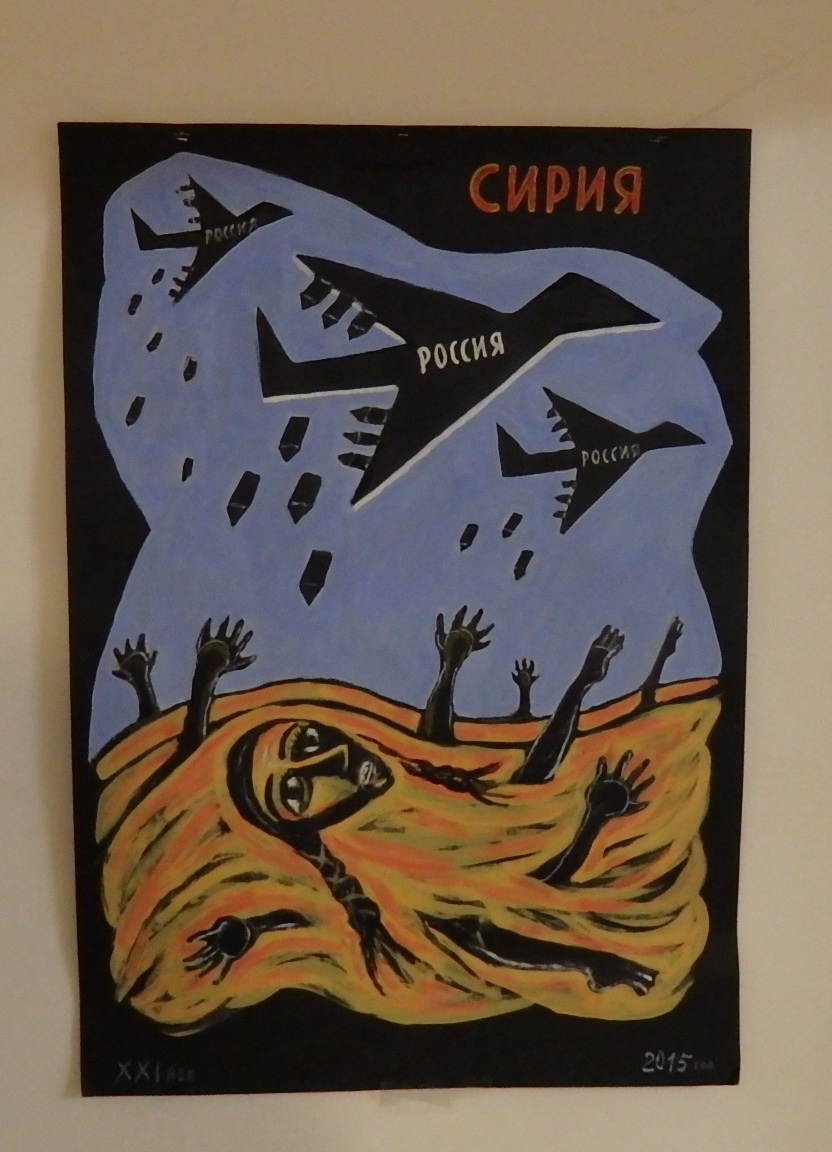
Syria. Russia
Syria, Russia, Russia (2015)

And to her mind, Russia’s color is blue, as in a certain painting by her beloved Wassily Kandinsky. True, Osipova now sees less and less of the color in her homeland’s plumage.

Translated by the Russian Reader. All photos by the Russian Reader except where otherwise indicated. Yelena Osipova’s work will be on view at 19 Fontanka Embankment until November 25, 2015.

Free Sergei Nikiforov!

Free Sergei Nikiforov!
Natalya Kalinina
November 6, 2015
Amur.Info

On November 5, 2015, a public event in support of a political prisoner was held in Blagoveshchensk, administrative center of the Amur Region. It took place a week after Russia commemorated the Day of Remembrance of the Victims of Political Repression, a week after Amur Regional Governor Alexander Kozlov had told the region’s residents, “Today’s date reminds us of the innocent victims of injustice, false accusations, and ideological wars. Our duty is to preserve the memory of the victims of insane political terror so that such things never happen again.”

No, today’s subject is not a rally in memory of the martyred victims of political repression in the Gulag during the distant 1930s, 1940s, and 1950s.

It is more trivial and terrible. Evenki leader Sergei Nikiforov has been thrown in prison after leading a protest movement of his tiny people in the Selemdzhinsk District. As village head, he had been organizing resistance to the expansion of gold mining companies attempting to take over tribal reindeer pastures and hunting grounds.

Sergei Nikiforov. Photo: Ampravda.Ru

Earlier, attempts by district and regional officials to close the village’s Evenki ethnic kindergarten were thwarted. Of course, without the unanimous support of his fellow villagers, Sergei Nikiforov could not have done this. But officials understood they would be unable to quietly seize Evenki lands, a real Klondike for miners, while the Evenki had such a “chief.”

Blagoveshchensk City Court sentenced Nikiforov, the father of five adopted children, to five years in a maximum security prison and a fine of 16 million rubles [approx. 232,000 euros] for bribery and embezzlement. The fellow villagers who were present in the courtroom have reached their own conclusions about the court’s bias. The court disregarded all the particulars that pointed to the defendant’s innocence, for example, the fact that at the time the bribe was made in Blagoveshchensk, Nikiforov was in Ekimchan, administrative center of the Selemdzhinsk District, hundreds of kilometers away, and the fact that the only witness was unable to identify Nikiforov in court and testified she did not know the man. Nor was the bribegiver arraigned. According to the Evenki, the trial was clearly a frame-up.

Nikiforov was convicted in Blagoveshchensk in late October of this year. On October 3, all the residents of his native village of Ivanovskoye who were not out on the hunt attended a protest rally in defense of Sergei Nikiforov.

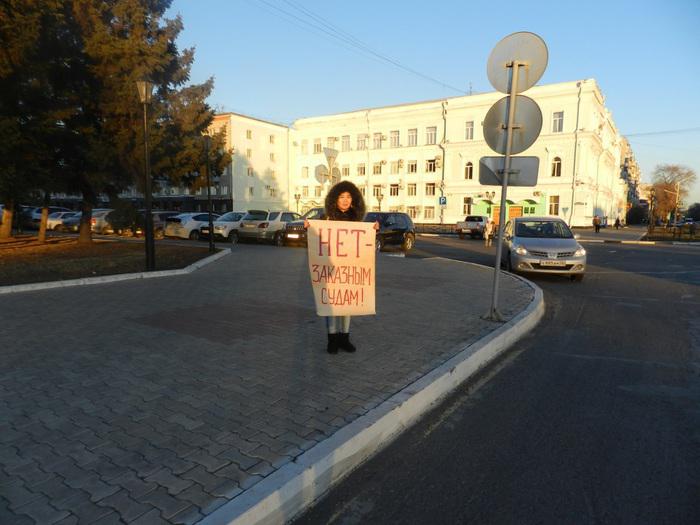
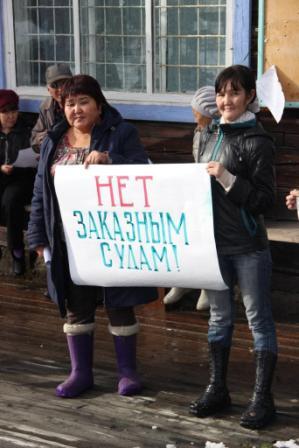
"No to kangaroo courts!" Residents of the village of Ivanovskoye demonstrate in support of Sergei Nikiforov
“No to kangaroo courts!” Residents of the village of Ivanovskoye demonstrating in support of Sergei Nikiforov, October 3, 2015

You cannot fool the people. If the village head had really been stealing money from the already meager village budget, who would have come out to support him?! You cannot hoodwink villagers, as people who have lived there would know.

After the protest, the regional authorities kept a low profile. Nowhere in the media did anyone comment on the trial of the disgraced village head. A small group of Evenki woman managed to travel to the regional center, overcoming hundreds of kilometers of bumpy roads on an UAZ off-road vehicle.

The Amur branch of the Yabl0ko Party gave due notice of plans for a protest rally on Lenin Square. Officials made a fuss. None of them wanted to see Evenki waving placards under the windows of the regional government house. I was contacted and asked to move the protest behind a department store, “out of sight of the authorities.” Clearly, it would have been pointless to protest behind a department store. So we were forced to to alter the format of the protest, but not the purpose and place.

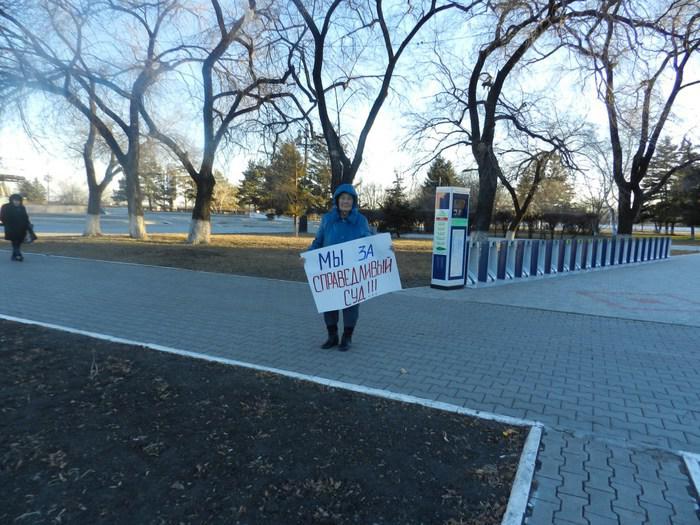
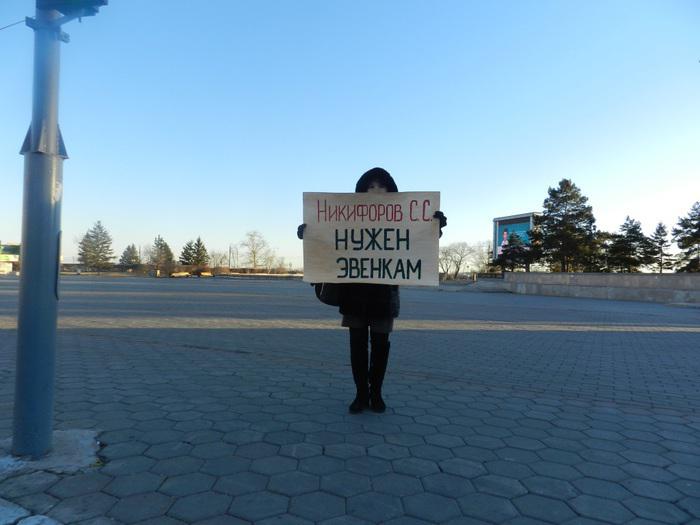
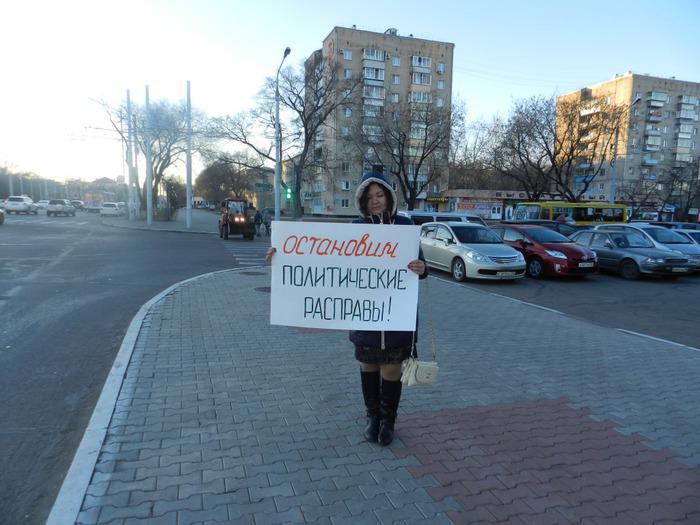
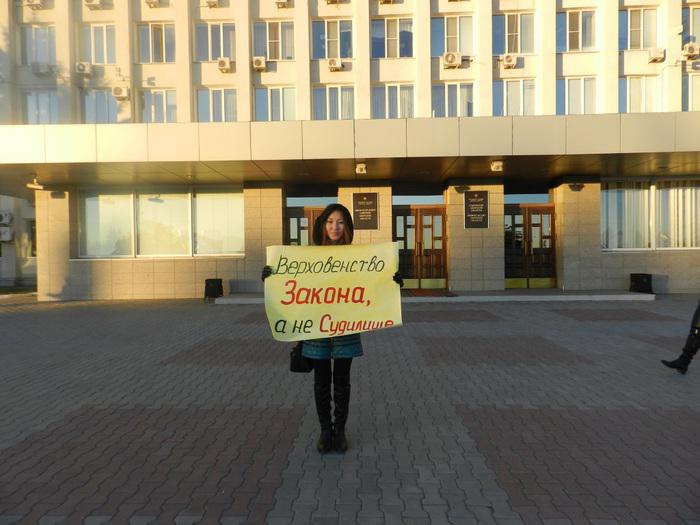
We held a series of solo pickets in downtown Blagoveshchensk. People stood alone at a distance of a several dozen meters from each other on both sides on Lenin Street in the vicinity of the eponymous square. Just opposite the windows of the regional government house, legislative assembly, and the public reception office of the Russian President stood women (wives and daughters of hunters and reindeer herders) holding placards with the slogans “The Evenki need S.S. Nikiforov,” “Free Sergei Nikiforov,” “Sergei Savelyevich, we are with you!” “We ask the Russian federal authorities to pay attention to the criminal case of S.S. Nikiforov,” “We want a fair trial!!!” “No to kangaroo courts!” “The rule of law, not a tribunal!” and “Put an end to political reprisals.” They hoped to attract the attention of authorities to the injustice perpetuated in the Amur Region.

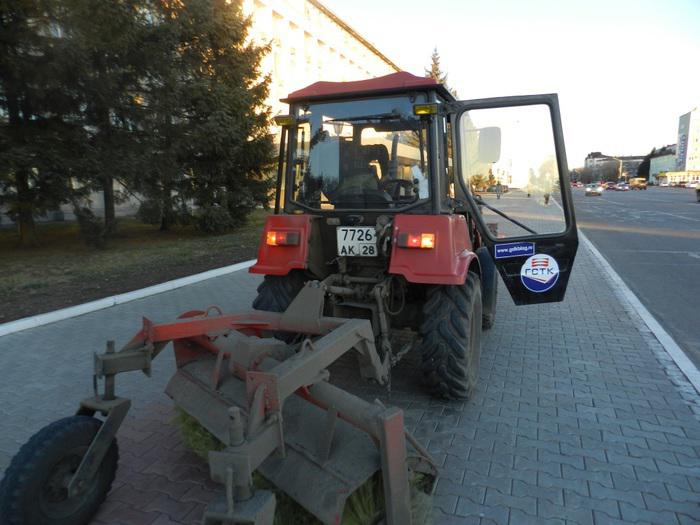
The reaction of officials was unexpected. No, neither the governor nor lawmakers came out to meet with their constituents. Nor did the chair of the regional court or the prosecutor show up. No, it was much more tedious. Frightened by the female protesters, the officials summoned several pieces of maintenance equipment from the City and Trade Services Center Municipal Enterprise (MP “GSTK”). A tractor drove on the sidewalk back and forth exactly where the protesters were standing. At times we imagined that the driver (a young chap with a brazen face) was defiantly trying to run over the small, fragile women, who would barely dodge out of his way. The oldest protester later said that she had physically sensed the tractor was about to run her over. It was noticeable that the moron behind the wheel was clearly getting some kind of sadistic thrill from his attacks on the defenseless women. Despite the fact the tractor was driving on the sidewalk, no special warning signs had been set up to this effect.

As soon as the picket ended, and the protesters left the square, the special maintenance equipment hastily turned around and drove away. By the way, the policemen on the square were quite polite. They were not at all keen to detain us “protestants,” apparently supporting us in their hearts.

Of course, it is too early to say that a protest rally was held and Nikiforov will be released tomorrow. Of course, that will not happen. We need to do much more. Maybe the next item on the agenda is a trip by Evenki to the capital and pickets on Red Square? In any case, people are becoming citizens and learning to assert their rights in practice. That is worth a lot!

"We want a fair trial!"
“We want a fair trial!”
amur-2
“We ask the Russian federal authorities to pay attention to the criminal case of S.S. Nikiforov.”
amur-3
“The Evenki need S.S. Nikiforov.”
amur-4
“Sergei Savelyevich, we are with you!”
amur-5
“Put an end to political reprisals!”
amur-6
“The rule of law, not a tribunal!”
amur-7
“No to kangaroo courts!”
amur-8
“Free Sergei Nikiforov!”

N.B.  I wish to inform Valentina Kalita, mayor of Blagoveshchensk, and MP “GSTK” head Igor Banin, United Russian party members and partners of ex-mayor Alexander Migulya, now under investigation, that actions aimed at disrupting a public event (to which every citizen of Russia has a constitutional right!) are covered by Article 149 of the Russian Federal Criminal Code (“Obstruction of assemblies, rallies, demonstrations, marches, and pickets or involvement in them”).

Finally, Igor Banin, the driver of the tractor, who spread dust and rubbish over the square today, deserves a bonus. The lad tried really hard to carry out your orders (which had nothing to do with the cleaning the sidewalk, as you know).wink

The wild municipal services tractor
The wild Blagoveshchensk municipal services tractor and street sweeper
letter
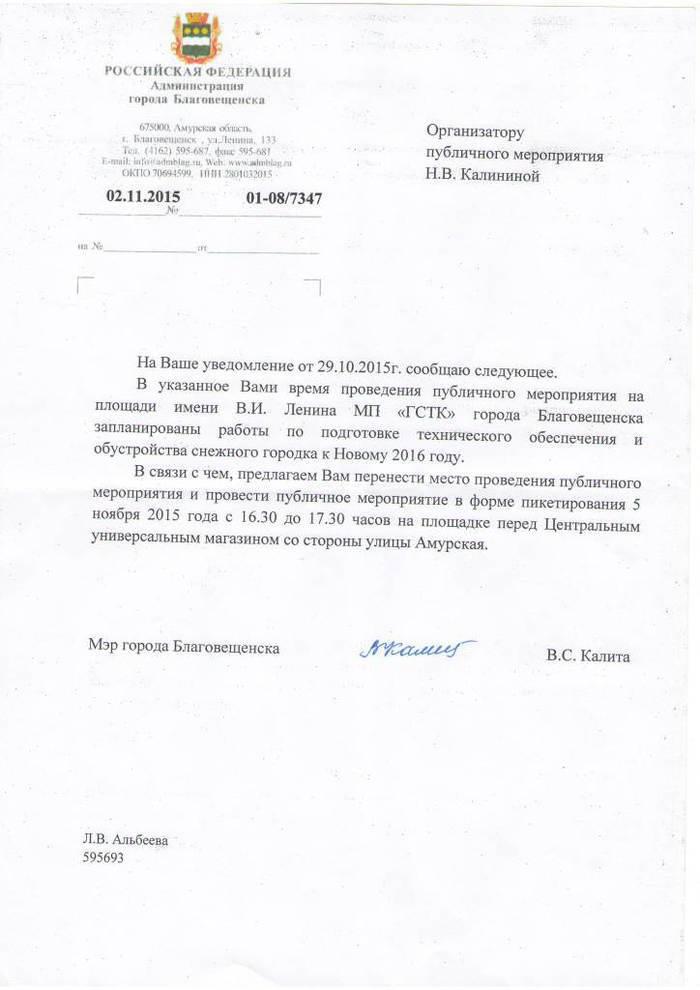
A letter from Blagoveshchensk Mayor Valentina Kalita, dated November 2, 2015, and addressed to protest rally organizer Natalya Kalinina, stating that MP “GSTK” had planned to carry out preparatory work for building a “snow fortress” [sic] on Lenin Square for 2016 New Year’s celebrations at the same time as Kalinina and her group had informed the authorities they would be protesting there. Mayor Kalita therefore asks that the venue be switched to the area in front of the Central Shopping Center on the Amur Street side, and that the rally be turned into a series of pickets from 4:30 p.m. to 5:30 p.m. on November 5, 2015.

Translated by the Russian Reader. Thanks to Comrade AD for the heads-up

Raivo Shtulberg: I Am the Pug Who Barked at Voldemort

“I am the pug who barked at Voldemort”: High school teacher in Ryazan Region forced to resign after refusing to campaign for United Russia
Darina Shevchenko
October 30, 2015
Yod

Reivo Shtulberg
Raivo Shtulberg

Raivo Shtulberg, thirty-six, taught physics, computer science, and German for thirteen years at the only secondary school in the village of Olkha, in Ryazan Region’s Ukholovo District. Before elections to the Ryazan Regional Duma, in September of this year, the school administration demanded that teachers persuade at least six villagers to vote for the ruling United Russia party. Instead, Shtulberg shot a video in which he explained how teachers were being forced to campaign and posted it on the web. Shtulberg was forced to resign, and can now longer find employment as a teacher. Yod learned the details of the story.

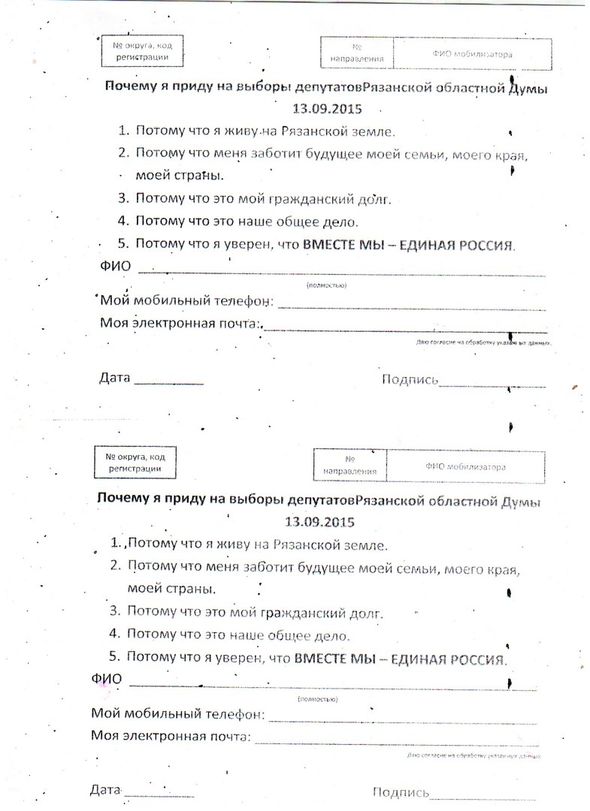
The teachers were given questionnaires and asked to return them filled out with the names and signatures of the people they had successfully canvassed. Shtulberg was outraged by this request.

“At first, we filled in the names of distant relatives so they would leave us alone, but we were told it had to be fellow villagers. I got angry then. We were doing repairs at home, but I had to canvas the village for signatures. Other teachers also resented this. In particular, one of them said something about ‘Russian idiocy,’ but they dutifully went out canvassing.”

Shtulberg recorded a video in which he related how teachers had been forced to campaign for United Russia and posted it on YouTube.

“I acted spontaneously. You might say it was the revolt of the underdog. I am like the pug who barked at Voldemort. Village teachers are paid tiny salaries. I wore the same blazer to work for eight years or so, until two years ago it was completely tattered and I had to buy a new one. The principals have bigger salaries, and they can be ordered to campaign, but a full belly does not understand an empty one. I am not against any party or politician: I cannot reconcile myself with the low quality of life of teachers. If tomorrow, United Russia provided good roads and decent wages, I would vote for them or anyone else [who does these things]. Ultimately, it is my legal right to choose whom I vote for,” says Shtulberg.

The video garnered around 15,000 views on YouTube. It was seen by Yuri Bogomolov, co-chair of the regional branch of the opposition Solidarity and RPR-PARNAS parties in Ryazan. On the basis of what he heard, Bogomolov filed a complaint with the prosecutor’s office asking that United Russia be barred from the elections. It was after this, according to Shtulberg, that a crackdown against him was launched at school.

The school’s principal called a faculty meeting, which was attended by Shtulberg’s mother, who also taught at the school. Shtulberg did not attend the meeting himself. He says that the principal made it clear to his mother they both had better resign, otherwise they would be quietly “removed.”

“You can always find fault with a teacher. For example, by doing a full review of all the subjects he teaches and visiting his classes every day, then giving a series of quizzes and removing him for incompetency, and by carefully studying his record keeping,” says Shtulberg.

Yuri Bogomolov urged the disgraced teacher not to resign voluntarily and offered him legal assistance.

“I have no doubt that the campaign questionnaires were handed out at the school where Shtulberg taught. We know that employees at other schools, factories, and hospitals in Ryazan Region were forced to persuade people to vote for United Russia. In my recollection, Shtulberg is the only public sector employee who has openly and personally alleged violations,” says Bogomolov.

stulberg-2

Photocopy of the campaign canvassing questionnaire that Raivo Shtulberg and his fellow teachers were required to ask people in their village to fill out. “Why I will be voting in elections for the Ryazan Regional Duma on September 13, 2015. 1. Because I live in the land of Ryazan. 2. Because I am concerned about the future of my family, my region, [and] my country. 3. Because it is my civic duty. 4. Because it is our common cause. 5. Because I am certain that TOGETHER WE ARE A UNITED RUSSIA. Surname Name Patronymic __________________________ My mobile phone number: __________________________________ My email address: ____________________________.” United Russia received 62% of the votes in the election. Their nearest rivals, the Communists, received a mere 13%. Opposition party Yabloko failed to overcome the five-percent barrier.

Shtulberg turned down the politician’s assistance and voluntarily resigned. His mother also resigned.

“To be honest, I was scared. I was not ready for such an abrupt turn of events,” he says.

Shtulberg’s colleagues responded neutrally to his dismissal.

“Village teacher are mostly good people. They perform their duties conscientiously, but they try and not speak out on political topics, because [they think] it isn’t worth the effort.

“Sit tight, go along with things, do what they ask you to do, get your salary, and don’t dare oppose not only the authorities but even the principal. My colleagues told me reproachfully, ‘United Russia pays our wages. Why can’t [you] live peacefully like other people? We have to vote for whomever the boss tells us to vote,” says Shtulberg.

His fellows villagers were also indifferent to the teacher’s firing. Only the children whom Shtulberg had taught wrote him messages of support on a social network.

Shtulberg says he really loved his job.

“I tried every lesson to give [my pupils] something insightful. In German, I would often offer them extra texts of my own. I would try and make sure the computer games were more interesting, show them lots of videos, and do presentations. I would not say I was pals with my pupils. I kept my distance, but I treated them respectfully.”

After he was fired, Shtulberg tried to find a work at a school. At first, he was offered a job teaching computer science in a neighboring village, but then he was turned down for the job with no explanation.

“I cannot confirm it, but probably they called my previous place of employment and were told what sort of person I was,” says Shtulberg.

He tried to find a job at a school in Ryazan, but realized he would not be able to move to the city. A teacher’s salary would only cover the rent.

stulberg-3
His former bosses claim that the athletic Shtulberg is a binge drinker and alcoholic.

Shtulberg says that he now works as a copywriter and earns enough to get by.

His only regret is that his mother lost her job at the school because of him.

“Mom worked forty-five years at that school. She was an excellent public educator. Mom really misses the school and her pupils. She is in bad psychological shape now. I am very scared for my brother. He also works as a teacher, in a nearby village, and I am afraid he also might suffer because of me,” says Shtulberg.

At the Olkha Village School, Yod was told that Raivo Shtulberg had never worked there. In turn, the Ukholovo District Department of Education and Youth Policy told us that Raivo Shtulberg had taught at the village school in Olkha.

“The school’s principal had to cover for him all the time, because he drank and skipped classes. Because of his alcoholism, he recorded a video, posted it on the web, and dragged all of us through the mud,” our source told us.

Shtulberg is not surprised by these comments.

“I did not abuse alcohol and did not skip classes. But a response like this from bureaucrats does not surprise me. For the authorities, public sector employees do not exist as it were. We are these also-rans pottering about somewhere. We behave peacefully, do not ask for a lot of money, and that is fine. Public sector employees are viewed as a silent constituency that can be used at [the regime’s] discretion.”

Translated by the Russian Reader

_________

Our Swimmer
Our Swimmer

I guess I am a sucker for these stories of underdogs from the Russian hinterlands and margins of Russian society fighting the powers that be practically on their lonesome. There sure do seem to be a fair number of them in the press lately, which is encouraging.

They tell us two things. First, that it is a lie that Putin’s “base of support” is found in places like the village of Olkha in Ryazan Region, where the indomitable Raivo Shtulberg worked as a high school teacher until he was summarily fired for refusing to canvass for the ruling United Russia party in the run-up to regional parliamentary elections there this past September.

If people in places like Olkha “support” Putin and UR, it is not because these mighty rulers have improved their lives in any substantial way. It is because these people are passively afraid of losing what they already have and actively afraid of political authorities in general. History has taught them this lesson.

More importantly, in many cases, they are simply intimidated, upon pain of firing, into “throwing their support” behind the ruling party during elections.

So, among such “losers” like Raivo Shtulberg, Putin is not “popular.” On the contrary, he has been “popularized” among such “simple” and “disempowered” folk through a whole armory of tactics including relentless media propaganda, outright intimidation, and vote rigging.

When push comes to shove, as I hope and think it might someday, folks like Raivo Shtulberg’s fellow villagers will remember his “foolish” deed from several months ago or a few years back, and that will be all she wrote for Putin and UR.

All the pundits, analysts, and journalists who had been excitedly citing polls and 600% approval ratings for Putin in the interim will suddenly do an about-face and pretend they were on the side of the “ordinary people” all along.

Second, Putin’s real base of support is among those who have made out like bandits, either on a major or minor scale, over the past fifteen years. Some of these people might also, technically, be classified as “public sector employees,” like Raivo Shtulberg, but they do not work as village schoolteachers, and their pay grade is way higher. And the kickbacks and perks they enjoy are astronomically better.

And these real-live Putin supporters do not live, for the most part, in villages like Olkha, but in cities like Moscow, Petersburg, and even London.

It is a story too long and convoluted to tell in this slapdash afterword, but to some extent (although certainly not entirely), the Fair Elections movement of 2011-2012 was an attempt by a segment of this pro-Putinist class to save face in its own eyes and the eyes of the “civilized” world by opposing itself feebly to Putin’s “electoral dictatorship.”

Be that as it may, when you are tempted to imagine or encouraged by a lazy journalist or “analyst” to think that Russia’s anti-democratic woes are caused by Putin’s “popularity” among the simple toilers and rural yokels in the “heartlands,” think about what Raivo Shtulberg did and what happened to him, and think again. Russia is where it is today because well-educated people from Moscow and Petersburg with tons of connections to start with wanted it to happen that way.

“American Ambassador”

Ilya Yashin
September 10, 2015
Facebook

Today I was having another meeting [with voters] in a residential courtyard in Kostroma. A few old women sat on a bench, while journalists stood on the sidelines.

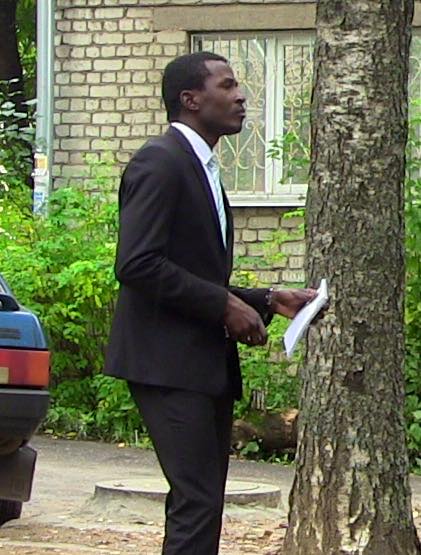
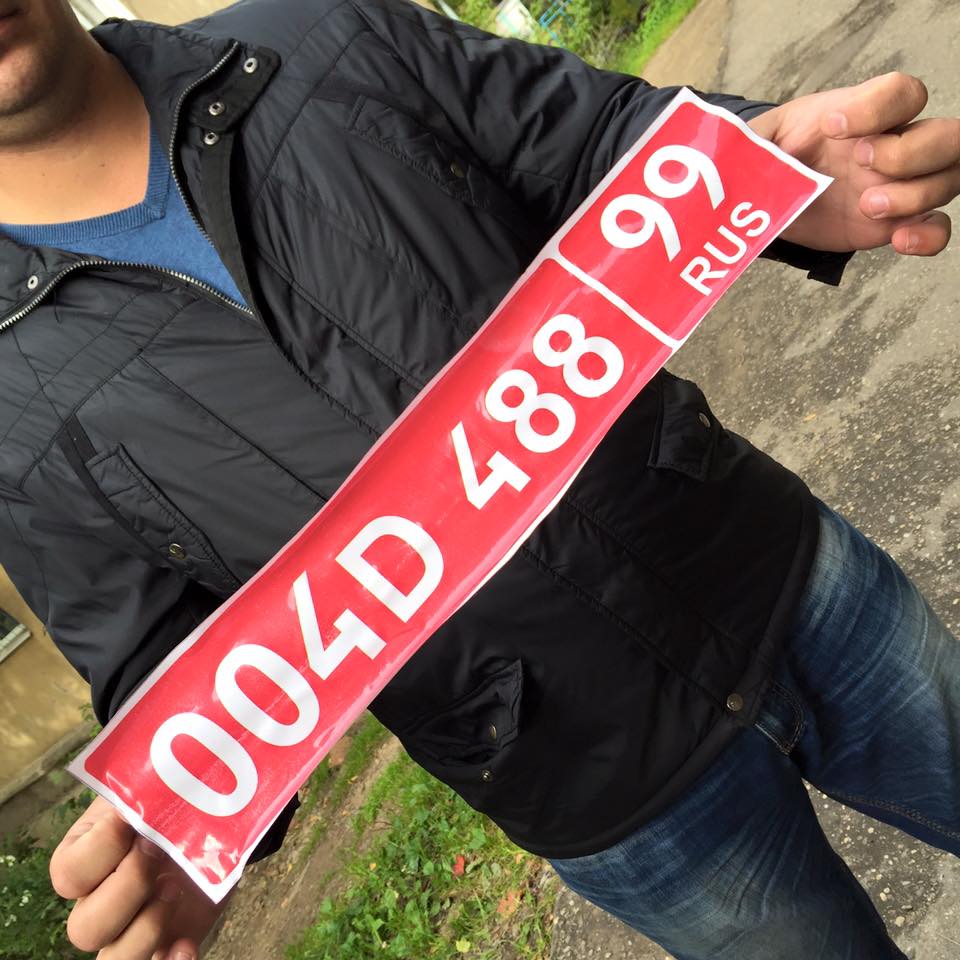
Suddenly, a car with red diplomatic license plates drove into the yard. A black man in a suit got out of the car and said, in broken Russian, “Hello, I represent the American ambassador.”

yashin-1

Everyone was struck dumb.

The first to get his bearings was Andrei, who went up to the car and neatly tore  off the “diplomatic license plate.” It was a sticker that had been pasted over the real license plate (which was Russian, of course).

yashin-2

By the way, driving with fake license plates is a crime.

The fake “diplomat” took cover in the car and drove off.

You can reach your own conclusion about the methods of our opponents from United Russia.

Ilya Yashin is a well-known liberal politician running for the regional parliament in Kostroma on the Democrat Coalition ticket. Thanks to Comrade SC for the heads-up. Translated by the Russian Reader

Saratov Anti-Fascist Sergei Vilkov Accused of “Nazi Propaganda”

Journalist Sergei Vilkov Accused of Nazi Propaganda at Alexander Lando’s Request
February 25, 2015
Obshchestvennoe Mnenie (om-saratov.ru)

Today, Obshchestvennoe Mnenie journalist Sergei Vilkov, a member of the anti-fascist movement, was charged by the regional directorate of the Center for Extremism Prevention (Center “E”) under Article 20.3 of the Administrative Code (“Propaganda of Nazi symbols”). The charge was based on a November 2011 cartoon, featuring the logo of the ruling United Russian party and a swastika, that denounced links between the authorities and nationalist movements. The cartoon was posted on the VKontakte social network in connection with the fact that Saratov City Hall issued permission for a march by right-wing radicals on November 4th.

1424873021general_pages_25_February_2015_i21541_jurnalist_sergei_vilkov_ob

Saratov journalist and anti-fascist Sergei Vilkov

Charges were filed after Center “E” followed up on a public request by Alexander Lando, head of the Saratov Regional Public Chamber, to check the contents of Sergei Vilkov’s social network accounts.

Kirill Rogov: Why You Shouldn’t Trust Russian “Public Opinion” Polls

One of my hobbies in recent years has been closely observing the development of Russia’s “pollocracy”—the proliferation of “public opinion” polling, media discussions of poll results, and the obvious ways in which this “mirror” has been held up to the actual Russian public to con it into believing it supports the country’s authoritarian regime and its policies with ever increasing wildness and fervor, even as other democratic venues for it to voice its opinion, such as free elections, grassroots organizations, and protest rallies, have been whittled away, hacked at or more or less outlawed (depending on the season and the concrete causes) by the regime, its security services, and the loyalist media. 

So I was amused, the other day, to read about yet another such “public opinion” poll. This one “showed” that over seventy-two percent of Petersburgers support Georgy Poltavchenko, the Putin-appointed nonentity currently warming the chair, in the city’s upcoming gubernatorial elections. Even more hilariously, this same poll claimed to have discovered that the “majority of respondents rated the campaign as calm, and not interfering with the usual lifestyle” of Petersburgers.

When I sent the “news” article about this goofy, cynical poll I had found to a local journalist friend of mine, he responded by complaining that he had been having a hard time explaining to colleagues and acquaintances in the West that “public opinion” polls attesting to the Russian public’s allegedly overwhelming support for Putin and his aggressive policies vis-a-vis Ukraine should be treated with a grain of salt, at very least. Why, he had asked, do people who otherwise think that Russia is not a free country have an almost religious faith in Kremlin-directed polls alleging fantastic levels of support for Putin? Doesn’t it occur to any of these otherwise skeptical people that there might be something fishy about the polls, how they are conducted, and the conditions (of unfreedom, rampant propaganda, fear-mongering, and coercion) in which they are conducted?

He also wondered whether I had translated anything on this topic, something he could use in his arguments with Western friends. I said that I hadn’t, but I immediately recalled the following column by liberal political analyst Kirill Rogov, published in December 2013 in Novaya Gazeta. Sadly, it has become only more relevant and timely over the intervening nine months.

lifeforce-19_2124977i

The Fiction of the “Backwards Man in the Street”
Kirill Rogov
December 3, 2013
www.novayagazeta.ru

Not a week goes by without a dreary discussion in the media of the results of yet another opinion poll showing the narrow-mindedness and conservatism of the majority of the Russian people.

The week before last, the discussion focused on a survey showing that most Russians support the repressive decrees of the “enraged printer”—the self-styled Russian Duma. Last week, poll results showing that around eighty percent of Russians believe enemies surround our country were eagerly paraphrased.

Week after week, like cold raindrops falling on the heads of the educated class, these surveys persuade it of the futility of striving for something better. They demoralize the opposition and plunge business and the liberal elite into depression. Pack your bags and turn out the lights!

In general, the past year of Russian history has been an excellent case study for political scientists, showing how authoritarian regimes buy time by tearing it, so to speak, from the clutches of history.

An explosive mixture of revolving political (and not only political) crackdowns, unbridled propaganda, and a series of skillfully organized public hysterias have spread the dark pollen of proto-fascism in the air, which has settled as a deep depression in the souls of the educated class. And those people who a year and a half ago were confident in their strength and rightness (“Who is the power here?”) walk around with heads sunk down to their collars and their pretty tails tucked between their legs.

Polls are an important part of the picture. They are the “naked sociological truth,” after all, and have a powerful effect on just those people who are able to resist the onslaught of fear, hysteria, and propaganda. It is not so easy to understand how sociological surveys are turned into a weapon of authoritarianism in its fight against society’s desire for progress.

But let us turn to facts no less naked than the polls themselves. The experience of the elections of 2011–2013 definitely implies that data about the political preferences of Russians, as reflected in the polls conducted by two of our leading pollsters, FOM and Levada Center, are regularly biased in favor of the authoritarian regime by at least ten to twelve percentage points. When purged of falsifications, voting results show that not sixty-five percent, but a little over fifty percent voted for Putin in the 2012 presidential election; not sixty percent, as the pollsters had it, but around forty-eight percent voted for Sobyanin in the 2013 Moscow mayoral race; and not fifty percent, but a little over thirty-five percent voted for United Russia in the 2011 parliamentary elections. This follows from both statistical calculations and the data collected from a fairly broad sample of monitored polling stations.

We will leave the conspiracy theories as to why this is so to the lowbrows. The non-conspiracy theories are more interesting. We can assume that the regular shift in the data comes from the fact that everyone involved in the process has a solid understanding of the “correct” result.

Simply put, they know that the majority is for Putin, Sobyanin, United Russia, and “everything bad.” As a result, people who do not support “everything bad” will be on average more likely to shy away from contact with sociologists.

Of course, there are firm “supporters” and “opponents” who express their opinions, regardless. There are, say, from fifteen to twenty percent of such people on each side. But between them is the “majority,” those people for whom politics is not a matter of daily reflection. For them, the most important thing is not even fear, as is sometimes suggested, but ordinary self-doubt and discomfort from the fact that their feelings do not coincide with the views of the “majority,” views of which they are aware in advance.

It is logical these people will be more likely to refrain from participating in polls. (The quasi-Duma, after all, has not yet issued regulations stipulating fines, suspension of driving licenses, and corrective labor for such evasiveness.) We can assume, as is likely, that they participate half as often as those whose opinion coincides with the “correct” view. (Such escapism, by the way, is quite typical not only of the uneducated but also of many educated people, whose awareness of the gap between their opinion and the “common” opinion provokes an irritated rejection of the entire public sphere and social scientists as well.) On average, this will mean, for example, that of twenty people “for Putin” and twenty “against” him, ten of those who are “for” him will agree to respond to sociologists, while only five of those who are “against” him will respond. Sociologists will come to the depressing and mathematically precise conclusion that two thirds of respondents support Putin.

Let me say it again. The majority of people, who are not very politically motivated and do not think a lot about politics, find it extremely uncomfortable to express an opinion that is not supported by “public esteem” and does not coincide with the opinion of the “majority.” This can be defined as the indirect effect of propaganda. The direct effect is when people reproduce what they have heard on TV. The indirect effect is when they do not express opinions that differ from those they hear from “authoritative sources.”

In polls on “hot” topics, this distorting effect should be even stronger. People are asked whether they think Pussy Riot should be punished, whether adoptions of Russian children by foreigners should be allowed, and whether we should feud with our enemies. But the truth is that the majority does not think anything at all about these topics. The values conflicts behind these questions are remote from these people’s lives, and all they can say about them is what they have heard from the same authoritative sources. Or they can avoid answering the questions.

This does not mean we should give up on sociology. On the contrary, we need more of it. Personally, polls are like bread, water, and air to me. We just need to understand that what sociology measures are not “thoughts” and “opinions,” but the echoes of thoughts and opinions. It finds out what clichés and ideologemes people use. Under pluralism, quantitative sociology usually works as follows: the mass media, politicians, and experts actively discuss two viewpoints on a topic, and sociologists go out into the “field” and measure which way the scales are tipping. Under authoritarianism, in which channels of public communications are monopolized, this mechanism stops working or, rather, its meaning changes. In this case, polls reflect not the balance of opinions, but the imbalance in communications—authoritarianism’s informational superiority in quantitative terms.

However, we should remember that the “common people” do not always “obey” the TV. Thus, on the issue of corruption and lawlessness, the opinion of seventy to eighty percent of respondents radically diverges from the TV’s opinion.

That is because this problem lies within the scope of their daily experiences. But the admissibility of self-expression on church altars, the international situation, and adoption regulations are complete abstractions, and the man in the street can only repeat what he has heard in passing. And we know what he has heard in passing. But this does not mean that the average person is willing to put up with all the other outrages of the regime.

The image of the “backwards man in the street” who supports “everything bad” is a fiction created by authoritarianism and is meant to justify its existence by suppressing the will of “dissenters” to resist. Not that this “backwardness” does not exist, but authoritarianism amplifies it several times over, simultaneously suppressing other overtones of public perceptions. The success of this technique, on the one hand, extends the life of authoritarianism, but on the other hand, it generates the mechanism of unpredictability that plays a key role in its subsequent downfall.

rtx157tw

 Photos courtesy of The Telegraph and Business Insider.