El lector ruso: “Que me juzguen por traición” (Andrei Trofimov)

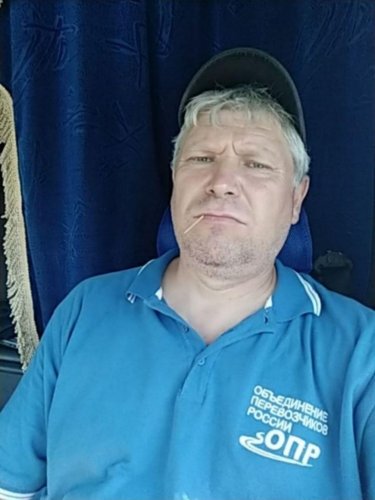
Andrei Trofimov, condenado activista pacifista ruso. Foto: Página Vkontakte de Andréi Trofimov, vía Mediazona.

El 2023, el activista pacifista Andrei Trofimov, de Tver, fue condenado por diversos cargos (entre ellos, difundir noticias falsas sobre el ejército ruso, incitar al extremismo e intentar unirse a la legión Libertad de Rusia) a diez años de cárcel en una prisión de máxima seguridad. En su declaración final del juicio, llamó a Vladimir Putin “estúpido” (khuilo) y apoyó vehementemente los ataques ucranianos al Puente de Crimea y al Kremlin. Esta declaración se usó como fundamento para una segunda causa penal contra él, esta vez con cargos de “apología al terrorismo” y “difamación del ejército”.

Hoy (6 de mayo del 2025), el juez Vadim Krasnov del Segundo Tribunal Militar del Distrito Occidental extendió la condena de Trofimov a trece años. El fiscal Andrei Lopata había solicitado al juez una pena mayor a quince años.

Antes de la lectura del veredicto de su primer juicio, Trofimov había solicitado al tribunal la imposición de la pena máxima. Ahora, también ha pedido que se le acuse por alta traición, un delito más grave, alegando su participación del lado ucraniano en la guerra informativa.

A continuación, la publicación de Mediazona, un tanto abreviada, de la declaración de Trofimov durante los argumentos orales del [segundo] juicio.

* * * * *

Su Señoría, las circunstancias objetivas de mis acciones, que la investigación ha calificado como delitos, están correctamente expuestas en la acusación y han sido investigadas a fondo durante la audiencia judicial.

En mi declaración, quisiera profundizar en las razones de estas acciones, en mis objetivos, y analizando en detalle las imputaciones una a una, brindar mi respuesta a las acusaciones; es decir, explicar mis motivos para no declararme culpable. Y, en conclusión, quisiera solicitar al tribunal lo que debe hacerse conmigo a continuación.

Yo vivía tranquilamente en mi casa de campo, con mis gatos, sin molestar a nadie. Mi vida cambió drásticamente el 24 de febrero del 2022. El motivo, tanto del primer proceso penal como del actual [en mi contra], ha sido la invasión a Ucrania por parte de Rusia. Explicaré luego y con más detalle por qué considero así ese evento.

De hecho, estoy en prisión por lo que he dicho. No hice nada ni en el primer caso ni en el segundo. Pero esta ha sido mi forma de involucrarme en tales eventos, porque me era físicamente imposible salir del país y no tenía ningún deseo de permanecer en silencio en ese trance. Porque, claro, es mi vida.

¿Por qué he hecho esto? Debo responder a sus comentarios de ayer en el sentido de que mis declaraciones, incluso en el tribunal, podrían perjudicar mis propios intereses. Su Señoría, no me interesa una sentencia más corta. Yo ya estoy en prisión.

¿Cuál es el propósito de lo que hago? En general, es una cuestión de supervivencia. Simplemente entiendo el instinto de supervivencia no como la preservación del cuerpo en sí, de su salud física, porque no soy solo mi cuerpo. Quiero preservar mi conciencia en esta difícil situación, mi capacidad para distinguir entre blanco y negro, entre la falsedad y la verdad, y, aún más importante, mi capacidad para decir en voz alta lo que creo que es cierto.

Esta cuestión mía no comenzó el 2022. Siempre he intentado vivir así. Es solo que mi deseo de mantener esta capacidad en tales momentos —es decir, la capacidad de decir la verdad, de mantener mi conciencia— es lo que me lleva a actuar así.

¿Qué hechos hemos observado? Hemos presenciado pruebas concretas de delitos de los que no se me acusa, evidencias de la violación del artículo 278 del Código Penal Federal Ruso, es decir, la toma o retención forzosa del poder. Me refiero a Vladímir Putin, quien ha ocupado el cargo oficial más alto de la Federación Rusa durante exactamente un cuarto de siglo. En todo este tiempo, la Constitución de la Federación Rusa ha mantenido el principio de sucesión de poderes, establecido en la forma del gobierno de dos mandatos [para la presidencia rusa]. Hemos presenciado una violación directa de esta norma, es decir, la retención forzosa del poder.

En cuanto a lo ocurrido desde el 24 de febrero, vemos pruebas concretas de la violación del artículo 353 del Código Penal, es decir, la planificación, preparación, desencadenamiento y ejecución de una guerra ofensiva.

¿Qué he hecho al respecto? Públicamente, en un piquete solitario [aunque prolongado], he demostrado la insanía del Estado ruso. Vea, la fiscalía pide quince años en total: una pena por asesinato, pero incluso por asesinatos, las sentencias suelen ser más cortas. Y, sin embargo, mis actos no perjudicaron a nadie ni causaron daño alguno.

No me refiero sólo al período cubierto por estos casos penales. Nunca he tocado a nadie ni robado un céntimo en mi vida. Sin embargo, [el fiscal quiere condenarme a] quince años. Creo que esto demuestra la demencia del Estado. El Estado exhibe con gusto esta cualidad al ponerme como ejemplo.

¿Cómo respondo? Demostrando fortaleza. Esto es vital, porque espero que los ucranianos vean lo que he estado haciendo. Miren: lo arrestaron. Lo condenaron y le dieron doce años de pena máxima. Juzguen el efecto en relación con el segundo caso. ¿Hicieron un buen trabajo convenciéndome [de mi error]? Es decir, ¿he dejado de hacer lo que hacía? ¿Se ha apagado mi voz? No, no se ha apagado.

Hemos presenciado lo mismo en el frente militar. Por cuatro años seguidos el estado ruso ha ensangrentado a un país vecino. Ucrania no se ha rendido ni se rendirá.

Entre las cosas de las que no se me ha acusado exactamente, pero que se han repetido en los autos de acusación y entre las pruebas presentadas en el juicio, está mi insulto a Vladimir Vladimirovich Putin con la palabra grosera «estúpido». ¿Qué he hecho? A esto le llaman desacralización.

Porque la sacralidad del poder supremo es uno de los fundamentos de la forma de gobernar de la Horda de Oro. Cuando pública, repetida y diariamente; en el primer juicio, en el segundo, o en el medio de la detención preventiva, he hecho este truco, he desacralizado a Vladimir Putin. Esto es importante porque este régimen terminará de todas formas y deseo con todas mis fuerzas apurar tal fin. Odio a ese hombre. Y lo que dice la fiscalía sobre el “motivo del odio político” es la pura verdad. Puedo confirmarlo.

El público al que me dirijo con estas acciones no vive en Rusia, porque la sociedad rusa está muerta y es inútil intentar hablar con ella. Mi público es Ucrania.

En cuanto a los cargos contra mí, no me declaro culpable de ninguno de los cargos de violación del artículo 205.2 del Código Penal. El caso es el  el texto mismo, simplemente publicado en internet y leído en voz alta en el centro de prisión preventiva, porque no considero que los incidentes que he decidido incluir en mi alegato final del juicio sean “actos terroristas”. Los he elegido a propósito.

Lo que está en juego son los dos ataques al Puente de Crimea. Este puente es una arteria de transporte vital que abastece a las fuerzas armadas federales rusas en Crimea. Un ataque a una instalación militar constituye un caso de violencia armada. El ataque fue llevado a cabo por las fuerzas armadas de Ucrania.

¿Por qué se catalogó como “ataque terrorista”? Sé perfectamente por qué. Esto se hizo, primero, para poder usarlo en la propaganda rusa y así deshumanizar al enemigo. En otras palabras, la Federación Rusa no está en guerra con las fuerzas armadas de Ucrania, que están estipuladas por la ley ucraniana y cumplen con su deber constitucional, sino con bandas terroristas de “banderistas” y “ukronazis. Para apoyar esta agenda es que se toman decisiones y se inician procesos penales por cargos de “terrorismo” en casos de conflicto armado.

En cuanto al segundo incidente que he mencionado, el ataque al Kremlin el 3 del mayo del 2023, ¿qué sabemos? El comunicado del Comité de Investigación, citado ayer por la fiscalía afirma categóricamente que el ataque se llevó a cabo contra la residencia del presidente de la Federación Rusa, comandante en jefe de las fuerzas armadas federales rusas. Además, los ucranianos también atacaron el edificio del Senado, ubicado en una zona del Kremlin cerrada al turismo y donde se encuentra una de las oficinas de Putin. Disculpenme, pero esto no fue un ataque terrorista. Fue una operación de combate ucraniana, además fallida.

Debo decir, fuerte y claro, que no apruebo ni apoyo el terrorismo, que nunca lo he aprobado ni tengo intención de hacerlo. Mantengo una actitud categóricamente negativa hacia la ideología y la práctica del terrorismo.

Pasemos al [los cargos del] artículo 280.3 del Código Penal. Este artículo es completamente nuevo: se adoptó tras el inicio de lo que llamamos la «operación especial».

Esto es un claro ejemplo de persecución por decir la verdad. Porque ha ocurrido algo que ha hecho necesario silenciar a los opositores a la guerra. Pero es imposible acusarlos de violar, por ejemplo, mi querido artículo 207.3 del Código Penal. ¿Cómo se puede acusar a alguien de “difundir noticias falsas” si simplemente expresa su opinión sobre la actualidad? Así surgió el artículo 280.3 y el concepto de “difamación”, que, legalmente, ha sido muy mal concebido.

Me han dicho que mi frase «Ucrania es víctima de una agresión por parte de Rusia» difama a las fuerzas armadas federales rusas. Pero ¿qué hay? Tenemos la resolución de la Asamblea General de la ONU de 2014 que dice que Rusia se «anexionó» Ucrania. Esas no son mis palabras. Esta es una resolución de la Asamblea General: no tiene poder de veto [como sí lo tiene el Consejo de Seguridad de la ONU], por lo que fue aprobada por una mayoría considerable [de Estados miembros]. Esta es la posición del derecho internacional.

De igual manera, contamos con una resolución de la Asamblea General de la ONU de marzo del 2022 que califica los sucesos del 24 de febrero como «agresión». Y tenemos una resolución de la Asamblea General de la ONU sobre la incorporación, por parte de Rusia, de las regiones ucranianas de Donetsk, Luhansk, Zaporizhia y Jersón, que califica estas acciones de «anexión».

Debo señalar que las declaraciones de, por ejemplo, la portavoz del Ministerio de Asuntos Exteriores, Masha Zakharova, no constituyen una fuente de derecho internacional. Las declaraciones del ministro de Asuntos Exteriores ruso, Lavrov, tampoco lo son. En cambio las resoluciones de la Asamblea General de la ONU sí lo son, y por lo tanto, mis apreciaciones se basan en documentos jurídicos internacionales.

Pero, claro, mi frase sobre los “escorias de Putin” también forma parte de la acusación de “difamación” en mi contra. En primer lugar, desde su punto de vista, “Putin” no puede ser difamatorio, porque, según usted, Putin es bueno. En cuanto a la segunda palabra [de la frase], sí, es mi opinión personal, y no se aplica sólo a  militares rusos que siguen órdenes ilegales. Sí, hay también gente en las fuerzas armadas rusas que incumplen órdenes ilegales, pero no son los únicos que luchan allí.

Disculpeme por describir así a quienes asesinan a soldados de un país vecino por dinero. Es mi opinión personal, basada en [sus] acciones.

Resumiré esta parte de mi declaración. La Constitución Federal Rusa contiene el Artículo 29, [que garantiza] el derecho a la libertad de expresión, incluyendo el derecho a recopilar y difundir información. Esto es lo que he estado haciendo. Es decir, no he salido ni un milímetro del Artículo 29 de la Constitución. Sin embargo y al mismo tiempo, ciertamente he violado estos dos artículos vigentes del Código Penal.

¿Cómo es esto posible? Puede que sea porque los artículos por los que se me acusa son inconstitucionales. Si Rusia tuviera un Tribunal Constitucional real, estos artículos habrían dejado de existir hace mucho tiempo.

No puedo dejar de mencionar mi informe al fiscal Zhuk, que no formaba parte de los cargos en mi contra, pero aún así escuchamos a testigos que lo mencionaron ayer . No contiene el texto de [mi] declaración final [del primer juicio]. No hay mención de terrorismo ni ningún acto violento. Tampoco mencioné a las fuerzas armadas.

El caso es que este segundo proceso es el resultado de mi declaración ante la comisión del fiscal. Porque el expediente contiene dos resoluciones del investigador del FSB, el teniente coronel Serguéi Vyacheslavovich Yerofeev, para desestimar el caso; es decir, del investigador de mi [primer] caso, con quien tengo una excelente relación y que comprende perfectamente lo que he estado haciendo y lo que he intentado lograr. Él intentó desestimar este caso dos veces.

En la parte final de mi declaración, me referiré a la adecuada descripción de mis acciones. Estoy involucrado del lado ucraniano en la guerra. Simplemente que esta participación se lleva a cabo sin armas, porque una guerra es un evento extraordinariamente multidimensional. Además de los combates en las estepas del Donbás, en el Mar Negro y en los cielos de Ucrania, se libran ferozmente en el espacio informativo por entidades estatales y organismos rusos. Del lado ucraniano, por ejemplo, también participan entidades interesantes.

Soy un guerrero de la información. ¿En qué sentido? El 9 de octubre del 2022, escribí y envié un correo electrónico al presidente ucraniano, Volodymyr Oleksandrovych Zelensky, pidiéndole que me concediera la ciudadanía ucraniana. Tengo derecho a ella por mi ascendencia. Todos mis abuelos eran ucranianos. La ley ucraniana dice que tengo derecho a la ciudadanía [ucraniana].

Pude incluir una captura de pantalla de Kasparov.ru en el expediente para hacer que la examinaran en el tribunal. ¿Qué confirma esto? Que, además de publicar mi alegato final en el juicio, Kasparov.ru me ha publicado regularmente. ¿Qué confirma esto? Que lo que se me está juzgando ahora es, de hecho, solo un ejemplo de mi trabajo, que no he cesado.

También debo mencionar, por supuesto, a Novaya Gazeta, cuyo sitio web también publicó mis cartas. Y mi último logro en este sentido es que me han declarado oficialmente preso político, porque es así como me he denominado en el centro de detención preventiva y así firmo mis peticiones ante este honorable tribunal. Pero, por así decirlo, fue una especie de autodenominación.

El 14 de abril de este año, el Consejo de Presos Políticos del Centro Internacional de Defensa de los Derechos Humanos Memorial publicó una decisión [que me declara como preso político]. Como parte de mi trabajo, he tomado los casos penales [en mi contra], tanto el primero como el segundo, como oportunidades de difusión.

La guerra de la información es real. Estoy involucrado en ella y ahora intento demostrarlo. En el terreno informativo, apoyo a Ucrania y a sus fuerzas armadas. De hecho, me he unido al bando enemigo en un conflicto armado que involucra a la Federación Rusa. Esta es la esencia del delito tipificado en el artículo 275 del Código Penal Federal ruso: alta traición.

Solicito al tribunal que devuelva mi caso penal a la fiscalía, ya que las circunstancias indican que existen motivos para acusarme de un delito más grave. Que me juzguen por traición: he traicionado su demente país.

* * * * *

Dirección para correo postal:

Trofimov Andrei Nikolayevich (nacido en 1966)

141 ul. Bagzhanova, FKU SIZO-1 UFSIN po Tverskoi oblasti

Tver,  Tver Oblast 127081 Federación Rusa

Puede enviar cartas al sr. Trofimov y a  otros  prisioneros políticos rusos via ZT, F-Pismo, y PrisonMail.online. (Este último acepta pagos con tarjetas de bancos fuera de Rusia.)

Fuente: “‘Try me for treason: I betrayed your deranged state’: a statement by 58-year-old Andrei Trofimov in a military court,” Mediazona, 6 May 2025. Traducido al inglés por the Russian Reader y al español por Hugo Palomino
Andrei Trofimov: “Try Me for Treason”

Convicted Russian anti-war activist Andrei Trofimov. Photo: Mr. Trofimov’s Vkontakte page, via Mediazona

In 2023, Andrey Trofimov, an anti-war activist from Tver, was sentenced to ten years in a maximum security penal colony on several charges [to wit, disseminating “fake news” about the Russian army, calling for “extremism,” and attempting to join the Free Russia Legion]. In his closing statement at trial, he called Vladimir Putin a “dickhead” [khuilo] and “heartily endorsed” Ukraine’s attacks on the Crimean Bridge and the Kremlin. This statement was the grounds for the second criminal case against Trofimov, this time on charges of “condoning terrorism” and “defaming the army.”

Today [6 May 2025], Judge Vadim Krasnov of the Second Western District Military Court lengthened Trofimov’s sentence to thirteen years. Prosecutor Andrei Lopata had petitioned the judge to impose a longer sentence of fifteen years.

Before the verdict in his first trial was read out, Trofimov had petitioned the court to impose the maximum penalty. Now he has suggested that he be charged with the more serious offense of high treason, claiming that he has been involved in the information war on the Ukrainian side.

Below, Mediazona has published a slightly abridged version of Trofimov’s statement during oral arguments at the [second] trial.

* * * * *

Your honor, the factual circumstances of my actions, which the investigation has categorized as crimes, are correctly stated in the indictment and have been fully investigated during the court hearing.

In my statement I would like to dwell on the reasons for these actions, on my goals, to review in detail, charge by charge, my response to the allegations—that is, to explain my motives for not pleading guilty. And, in my conclusion, I would like to petition the court as to what to do with me next.

I was living quietly at the dacha with my cats and was a bother to no one. My life changed drastically on 24 February 2022. The reason for both the first criminal case and the current criminal case [against me] was Russia’s invasion of Ukraine. I will further explain why I regarded this event in this way.

I am in prison for what I have said, after all. I took no action in either the first case or the second. But this has been my way of being involved in the events, because it was physically impossible for me to leave the country, and I had no desire to stay silent in this situation. I mean, it is my life.

Why have I done this? I must respond to your remarks yesterday to the effect that my statements, including in court, could harm my own interests. Your honor, I have no interest in a shorter sentence. I am already imprisoned.

What is the purpose of what I am doing? Writ large, it is a matter of self-preservation. It is just that I understand the instinct of self-preservation not as the preservation of the body per se, of its physical health, because I am not my body alone. I want to preserve my conscience in this difficult situation, my ability to tell black from white, and lies from truth, and, quite importantly, my ability to say out loud what I believe to be true.

This thing of mine did not start in 2022. I have always tried to live this way. It is just that my desire to preserve this ability in such situations—meaning, the ability to tell the truth, to maintain my conscience— is what causes such actions.

What actions have we observed? We have witnessed concrete evidence of crimes with which I have not been charged, evidence of the violation of Article 278 of the Russian Federal Criminal Code—that is, the forcible seizure or the forcible retention of power. I am referring to Vladimir Putin, who has held the highest official post in the Russian Federation for exactly a quarter of a century. During this entire time, the Constitution of the Russian Federation has contained the principle of succession of power, set out in the guise of the two-term rule [for Russian presidents]. We have witnessed a direct violation of this rule—that is, the forcible retention of power.

In what has occurred since 24 February, we see concrete evidence of a violation of Criminal Code Article 353—that is, the planning, preparation, unleashing, and waging of a war of aggression.

What have I done in this situation? Publicly, in the mode of a solo picket (just a protracteed one), I have demonstrated the Russian state’s insanity. Look, the prosecution is asking for fifteen years in total—the sentence given for murder, but even for murder, sentences are often shorter. And yet my deeds harmed no one nor caused any damage.

I am not just talking about the period covered by these criminal cases. I have never laid a finger on anyone, never stolen a penny, in my entire life. Nevertheless, [the prosecutor wants to send me down for] fifteen years. I believe that this is a demonstration of the state’s insanity. The state happily displays this quality using me as an example.

What have I done in response? I have shown fortitude. This is vital, because I hope that what I have been doing is seen by Ukrainians. Look at this: they arrested him. He was convicted and given a dozen years of maximum security. Judge the effect in terms of the second case. Did you do a good job of convincing me [of the error of my ways]? That is, have I stopped doing what I was doing? Has my voice become less audible? No, it has not.

We have witnessed the same thing on the military front. For four years running, the Russian state has been spilling blood in a neighboring country. Ukraine has not surrendered and will not surrender.

Among the things that I have not exactly been charged with, but which have been repeated in the indictments and in the evidence presented at trial is my insulting Vladimir Vladimirovich Putin by using the foul word “dickhead.” What have I done? It is called desacralization.

Because the sacredness of supreme power is one of the foundations of the Golden Horde method of governance. When I publicly, repeatedly, and daily, at the first trial, at the second trial, in the pretrial detention center, perform this trick, I am desacralizing Vladimir Putin. This is important, because this regime will end all the same, and I very much want to hasten its end. I hate this man. And what the prosecution says about the “motive of political hatred” is the sacred truth. I can confirm that.

The audience I am addressing by these actions is not in Russia, because Russian society is dead and it is useless to try and talk to it. Ukraine is my audience.

As for the charges against me, I do not plead guilty to either count of violating Criminal Code Article 205.2. At issue is one and the same text, simply posted on the internet and spoken aloud in the pretrial detention center. Because I do not consider the incidents which I chose to include in my closing statement at trial to be “terrorist acts.” I chose them on purpose.

What is at issue are the two attacks on the Crimean Bridge. The Crimean Bridge is a vital transport artery which supplies the Russian federal armed forces in Crimea. An attack on a military installation is an instance of armed hostilities. The attack was carried out by the armed forces of Ukraine.

Why was it categorized as a “terrorist attack”? I know perfectly well why. This was done in order, first, to use it in Russian propaganda to dehumanize the enemy. In other words, the Russian Federation is at war not with the armed forces of Ukraine, which are stipulated under Ukrainian law and are doing their constitutional duty, but with terrorist gangs of “Banderites” and “Ukronazis.” To support this agenda, decisions are made to launch criminal proceedings on charges of “terrorism” over instances of armed conflict.

As for the second incident I mentioned, the attack on the Kremlin on 3 May 2023, what do we know? The communique from the Investigative Committee, which the prosecutor quoted yesterday, states outright that the attack was carried out against the residence of the President of the Russian Federation, who is the commander-in-chief of the Russian federal armed forces. Moreover, the Ukrainians also hit the building of the Senate, which is in the section of the Kremlin closed to tourists and where one of Putin’s offices is actually located. Excuse me, but this was not a terrorist attack. It was a Ukrainian combat operation, and a failed one at that.

I must say loudly and out loud that I do not condone or support terrorism, and that I have never condoned terrorism, nor do I intend to condone terrorism. I have a categorically negative attitude to the ideology and practice of terrorism.

Let us move on to [the charges under] Article 280.3 of the Criminal Code. This article is brand-new: it was adopted after the start of what we call the “special operation.”

This is a pure example of persecution for telling the truth. Because a situation has arisen where it has been necessary to shut the mouths of the war’s opponents, but it is impossible to charge them with violating, say, my beloved Criminal Code Article 207.3. How can you charge a person with “disseminating fake news” if they simply voice their attitude to current events? This is how Article 280.3 and the notion of “defamation” emerged, which is quite poorly conceptualized legally.

I have been told that my phrase “Ukraine is a victim of aggression on the part of the country of Russia” defames the Russian federal armed forces. What do we have? We have the UN General Assembly’s 2014 resolution saying that Russia “annexed” Ukraine. Those are not my words. This is a General Assembly resolution: there is no veto power there [as there is on the UN Security Council], so it was passed by a decent majority [of member states]. This is the position of international law.

Similarly, we have a March 2022 UN General Assembly resolution, in which the events of February 24 are labeled an “aggression.” And we have a UN General Assembly resolution on Russia’s incorporation of the Ukrainian regions of Donetsk, Luhansk, Zaporizhzhya and Kherson which labels these actions “annexation.”

I should note that the statements of, say, Foreign Ministry spokesperson Masha Zakharova are not a source of international law. Statements by Russian Foreign Minister Lavrov are not a source of international law. UN General Assembly resolutions are, on the contrary, a source of international law, and so my assessments are based on international legal documents.

But my phrase about “Putin’s scumbags” is also part of the “defamation” charge against me, of course. First, from your viewpoint, “Putin’s” cannot be defamatory, because as you see it, Putin is good. As for the second word [in the phrase], yes, this is my personal opinion, and it does not apply solely to Russian servicemen who carry out unlawful orders. Yes, there are also people in the Russian armed forces who do not carry out unlawful orders, but they are not the only ones fighting there.

Excuse me for characterizing in this way people who murder the soldiers of a neighboring country for money. This is my personal judgment, and it is based on [their] actions.

I will summarize this part of my statement. The Russian federal constitution contains Article 29, [which guarantees] the right to free speech, including the right to gather and disseminate information. This is what I have actually been doing. That is, I have not overstepped Article 29 of the Constitution by a single millimeter. But at the same time I certainly have violated these two current articles of the Criminal Code.

How can this be the case? It can be the cacse because the articles under which I have been charged are unconstitutional. If Russia had a real Constitutional Court, these articles would have ceased to exist long ago.

I cannot fail to mention my report to Prosecutor Zhuk, which was not part of the charges against me, but nevertheless we heard witnesses talk about it yesterday. It does not contain the text of [my] closing statement [at the first trial]. It makes no mention of terrorism or any violent acts at all. I did not say a word about the armed forces either.

The point is that this second case is the result of my statement to the prosecutor’s commission. Because the case file contains two resolutions by FSB investigator Lieutenant Colonel Sergey Vyacheslavovich Yerofeev to dismiss the case—that is, by the investigator in my [first] case, with whom I have a very good level of mutual understanding and who understands exactly what I have been doing and what I have been trying to achieve. He tried to dismiss this case twice.

In the final part of my statement, I turn to the correct characterization of my actions. I am involved in the war on the Ukrainian side. It just that this involvement takes place without weapons, because war is such an extraordinarily multidimensional event. Apart from the fighting in the steppes of Donbas, in the Black Sea, and in the skies above Ukraine, it is fiercely fought in the information space by state entities, by Russian bodies. On the Ukrainian side, for example, interesting entities are also involved.

I am an information warrior. In what sense? On 9 October 2022, I wrote and sent an email to Ukrainian President Volodymyr Oleksandrovych Zelensky asking him to grant me Ukrainian citizenship. I am entitled to it because of my ancestry. All my grandparents hailed from Ukraine. Ukrainian law says that I have the right to [Ukrainian] citizenship.

I was able to enter a screenshot from Kasparov.ru into the record and have it examined in court. What does it confirm? The fact that, apart from publishing my closing statement at trial, Kasparov.ru has published me on a regular basis. What does this confirm? That what I am being tried for now was, in fact, just an instance of my work, which I have not ceased.

I will also mention, of course, Novaya Gazeta, whose website also published my letters. And my latest achievement in this wise is that I have been officially designated a political prisoner, because that is what I call myself at the pretrial detention center, and that is how I sign my petitions to this honorable court. But it was still a kind of self-designation as it were.

On 14 April of this year, the Council on Political Prisoners of the Memorial International Human Rights Defense Center published a decision [designating me a political prisoner]. As part of my work, I have used the criminal cases [against me], the first and the second case, as publicity opportunities.

The information war is a real thing. I am involved in it, and I am trying to prove this now. Informationally, I support Ukraine and the armed forces of Ukraine. In fact, I have defected to the enemy side in an armed conflict involving the Russian Federation. This is the essence of the crime defined in Article 275 of the Russian Federal Criminal Code—high treason.

I ask the court to send my criminal case back to the prosecutor, as the factual circumstances indicate that there are grounds for charging me with a more serious crime. Try me for treason: I betrayed your deranged state.

* * * * *

Address for letters:

Trofimov Andrei Nikolayevich (born 1966)
141 ul. Bagzhanova, FKU SIZO-1 UFSIN po Tverskoi oblasti
Tver, Tver Oblast 127081 Russian Federation

You can send letters to Mr. Trofimov and other Russian political prisoners via ZT, F-Pismo, and PrisonMail.online. (The last of these services accepts payments made with non-Russian bank cards.)

Source: “‘Try me for treason: I betrayed your deranged state’: a statement by 58-year-old Andrei Trofimov in a military court,” Mediazona, 6 May 2025. Translated by the Russian Reader

Ivan Kudryashov: An Anti-War Street Artist in Tver

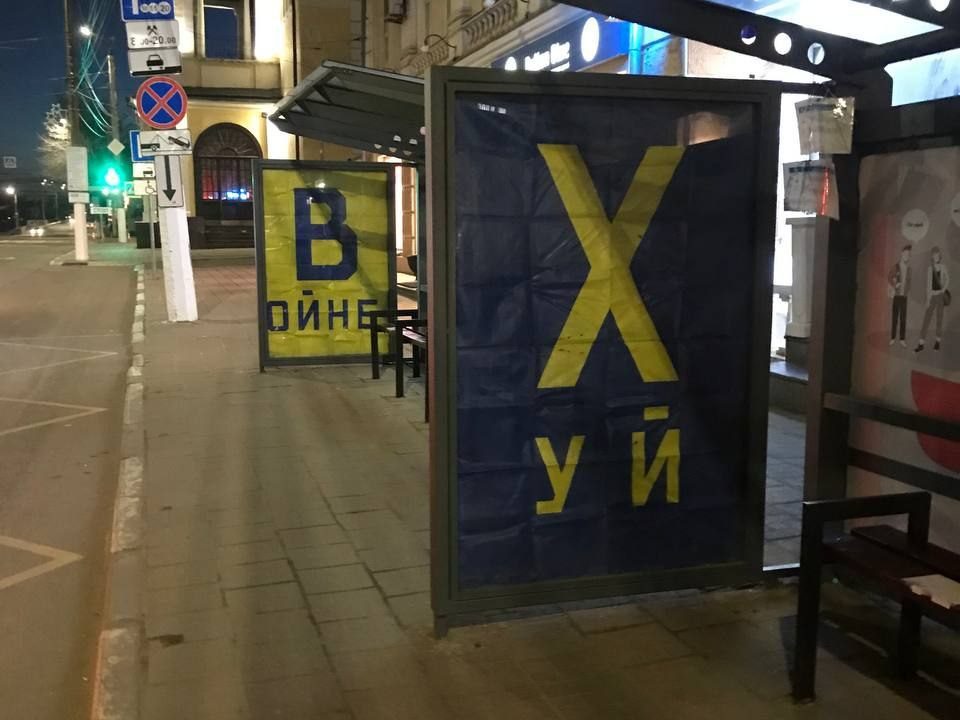
“Fuck the War”: a street art piece attributed to Ivan Kudryashov, photographed in Tver on 1 May 2022. Photo courtesy of Solidarity Zone

Ivan Kudryashov: Tver resident accused of planning arson of military enlistment office

The Telegram channel Stasia and Letters reports that Tver activist Ivan Kudryashov is in a pretrial detention center, charged with planning to set fire to a military enlistment office.

It is reported that Kudryashov repeatedly carried out anti-war protests in Tver. He was arrested on September 30 and charging with “preparing to commit a terrorist act” (per Article 30.1 and Article 205 of the Russian Federal Criminal Code). If found guilty, he faces a maximum prison sentence of eleven years and three months.

Kudryashov is, possibly, the author of the resonant “Fuck the War” street art pieces at bus stops in Tver. In any case, the VK page “Ivan Kudryashov” contains an entry about them, dated September 22.

Stasia and Letters quotes a letter from Andrei Trofimov, accused of making anti-war statements, who was held in the same cell as Kudryashov for three weeks:

“[Ivan Kudryashov] was born in the city of Bologoye and grew up in an orphanage and, later, with a foster family in Torzhok, Tver Region. He graduated from an eleven-year school. After school, he enrolled in the economics department at Tver State University. In the second year, he dropped out of university and did his obligatory military service in the Armed Forces of the Russian Federation. After that he lived in Tver and worked as a fitter at a train carriage factory. At school, he liked mathematics and was a checkers champion. He is fond of contemporary music, and is also a fan of the British TV series Sherlock.”

It is reported that Ivan Kudryashov is now in solitary confinement, which means it is especially important to write to him.

✉️📦 Address for letters and parcels:

Kudryashov Ivan Valeryevich (born 1996)

141 Vagazhanov Street

Pretriel Detention Center No. 1

Tver 170010 Russian Federation

(It is possible to send letters via the FSIN-Pismo service.)

#prisoners#solidarity #nowar#writing letters

Source: Solidarity Zone, 5 December 2022. Translated by the Russian Reader. People living outside Russia will not be able to use the Russian Federal Penitentiary Service’s FSIN-Pismo service. It is also probably impossible or nearly impossible to send parcels to Russian detention facilities from abroad. In many cases, however, you can send letters (which must written in or translated into Russian) via the free, volunteer-run service RosUznik, but as of this writing Mr. Kudryashov has not appeared on their list of addressees. You can also ask me (avvakum@pm.me) for assistance and advice in sending letters.

Plato Strikes Again: Russian Trucker Mikhail Vedrov Charged with Assaulting Police Officer

Criminal Charges Filed in Tver Against Man Involved in Anti-Plato Road Tolls Protest
Vlad Yanyushkin
OVD Info
September 23, 2020

In Tver, criminal charges have been filed against trucker Mikhail Vedrov, who was involved in a protest against the Plato road tolls system. Vedrov is accused of violence against an official (punishable under Article 318.1 of the criminal code). According to investigators, he slapped a traffic police officer. The court has placed Vedrov under house arrest. Officials attempted to prevent Vedrov’s lawyer and members of the public from attending the court hearing, and several people were detained.

On September 10 and 11, the Association of Russian Carriers (OPR) held a two-day protest in Tver against the Plato system. As the organization’s chairman Sergei Vladimirov told OVD Info, thirty-seven people from seventeen regions took part in the protest. Truckers called for abolishing the transport tax and making government spending on the transport industry more transparent. Drivers also held a founding congress to establish their own trade union.

On September 10, the protesters stopped outside the Plato data processing center on Red Navy Street. They expected Plato management to negotiate with them, but no one came out of the building. Instead, the police and the Russian National Guard came to meet them. Three regional OPR coordinators were detained for having posters on their cars featuring anti-Plato slogans. They were taken to Tver’s central police precinct, but soon released since the maximum time for keeping [people suspected of administrative violations, i.e., three hours] in police custody was exceeded. The protesters were given an undertaking to report again to the precinct to be formally charged with violating the rules for mass events (punishable under Article 20.2 of the Administrative Code), but the truckers failed to produce themselves at the precinct.

The second day of the protests on September 11 came off quietly. In the evening, as the truckers were leaving Tver, they were stopped by a traffic police patrol. Senior Lieutenant Sergei Nikishin asked Sergei Ryabintsev, who was behind the wheel, for his papers.

The entire convoy of truckers stopped, including OPR member Mikhail Vedrov from North Ossetia. According to investigators, “exhibiting direct criminal intent,” Vedrov approached the traffic policeman and, “realizing the public danger and illegality of his actions,” “struck at least one blow” to the officer’s neck. Thus, according to the formal written charges, the trucker caused the police officer physical pain and bruising of soft tissues in the neck.

Trucker Sergei Rudametkin provided OVD Info with an audio recording of a conversation with Ryabintsev, in which the trucker says that law enforcement stopped the convoy as it was leaving Tver. One of the officers asked to see the drivers’ papers. In response to a question about the grounds for this procedure, the police officer began yelling at everyone. At some point, the officer started shouting at Vedrov as well. Consequently, Vedrov was detained and accused of assaulting the police officer.

“There is nothing but the testimony of the victim [the police officer] and the testimony of the victim’s partner. Everything is based on the testimony of two police officers,” explains OVD Info lawyer Sergei Telnov. He added that Vedrov had invoked Article 51 of the Russian Constitution [which protects people from self-incrimination], so the defense lawyer did not have the right to answer some of our questions, for example, why Vedrov appears as if from nowhere in the police’s version of events, and whether he was in the car with Ryabintsev when the conflict with the police officer erupted.

Vedrov was taken to the central police precinct in Tver. Petersburg human rights activist Dinar Idrisov told OVD Info that over the course of the evening, the police investigator tried to pressure Vedrov to sign a confession, despite the lack of evidence. Around two o’clock in the morning, Vedrov was released under an obligation to appear before the investigator on September 14.

On the appointed day, Vedrov, accompanied by Telnov, reported to the Investigative Committee for questioning as subpoenaed. After a conversation with the investigator, they were given a summons for questioning, scheduled for the next day. On September 15, Vedrov was already interrogated as a suspect in a criminal case of violence against authorities. He was taken into custody.

Two days later, at Vedrov’s custody hearing, the bailiffs refused to let members of the public into the courtroom. Telnov explained that the official pretext was combating the spread of the coronavirus. Exceptions were made for one journalist and Vedrov’s wife and children, who had flown from North Ossetia for the hearing.

Telnov also had problems entering the courthouse.

“I got in the first time without no problems,” Telnov says. “Just before the hearing started, I went outside to talk, but when I tried to go back in they tried to stop me.”

According to Telnov, the bailiffs illegally demanded that he lay out the entire contents of his bag. When he tried to enter again, the bailiffs yielded.

Around four o’clock the judge retired to chambers to deliberate. It was then that Sergei Belyaev, editor of the Telegram channel I’m a Citizen! was detained and charged with failing to comply with the orders of a court bailiff (punishable under Article 17.3.2 of the Administrative Code) for recording video in the courthouse without permission from the presiding judge. The journalist was released after the arrest sheet was drawn up.

At the same time, OPR chair Sergei Vladimirov, who had come to support Vedrov, was detained in the courtyard in front of the court building. He was roughly shoved into a police car and taken to the Tver interior ministry directorate, where he was charged with disobeying the commands of a police officer (punishable under Article 19.3 of the Administrative Code) and left overnight in custody pending trial. He was released the next day.

Returning from chambers, the judge placed Vedrov under house arrest for two months, ignoring the prosecution’s request to remand the trucker in custody at a pretrial detention center. The prosecutor had argued that Vedrov could take flight, influence witnesses, and hinder the criminal proceedings.

Telnov explained in court that his client was unlikely to be able pressure the witnesses, since they were all police officers. Nor would he be able to destroy the evidence, since the whole case was based on the testimony of witnesses at the scene.

Photo of Mikhail Vedrov courtesy of the Association of Russian Carriers (OPR) and OVD Info. Translated by the Russian Reader. I have published numerous articles over the past several years about the inspiring militancy of Russian truckers.