Twenty-two-year-old Yulia Moskovskaya (née Joban) was detained in Petersburg in mid-June. She is suspected of attempting to carry out a terrorist attack against a drone design company employee. She failed to plant an explosive device [sic], according to the press service of the Petersburg municipal courts.
Moskovskaya was remanded in custody to a pretrial detention center. Investigators say that she “espouses a pro-Ukrainian ideology and is hostile to the current Russian government,” and claim that the young woman tried to “impact decision-making” by means of a terrorist attack. Criminal terrorist cases are opened every month, but usually they do not involve harm to specific people. In 2024, seventy-five people, including ten women, were convicted in Russia for carrying out terrorist attacks.
Bumaga has learned that Moskovskaya is not speaking with her family, and that a female friend of her has become her spokesperson. We chatted with this young woman about how the suspect behaved before her arrest, how she got into debt, and when she moved to Petersburg.
The detainee’s family: “Yulia changed her surname: she didn’t want anything to remind her of her kin”
Yulia and I are quite close friends. Her lawyer informed me of her arrest. I was shocked when he contacted me. At first I thought it was some kind of prank. I still can’t believe it has really happened.
I have known Yulia since 2017. We are from different cities and met online in a fan group for our favorite singer. At first, we were pen pals, but then we took our relationship offline and saw each other in person many times.
Yulia wasn’t in touch with many people, so she must have given the lawyer my contact info. She didn’t have many friends. Yulia didn’t speak with her relatives. She has a mother and a younger brother [who live in Moscow], as well as her grandparents, who live in some other city.
Yulia has always had bad relations with her mother. Her mother had a live-in boyfriend who always treated Yulia badly and beat her. Her mother took the boyfriend’s side and didn’t stand up for her daughter.
Yulia Moskovskaya. Source: social media
Yulia’s father died in 2020, and Yulia didn’t have a close relationship with him either. He drank heavily. He regularly brought his drinking buddies home and would get so drunk that he couldn’t stand up. Yulia often escaped to the neighbors when her father, out of his mind, tried to beat her. When we talked on the phone, I could hear her father getting into a fighting mood; he would be saying something to Yulia, and she would scream and run off. The neighbors would even call the police, but they could calm him down only for a while, and only once did take him to the slammer. Yulia essentially had no one to whom she could turn. In difficult situations, she would call the mental health hotline.
As an adult, Yulia changed her surname [from Joban to Moskovskaya]: according to her, she didn’t want anything to remind her of her kin. She sought treatment from psychologists. In the beginning, she had hope that they would help her, but then she just went to them to get things off her chest.
Debts and the move from Moscow to Petersburg: “Creative work was her only stable hobby”
Three times, Yulia enrolled in different [institutions of higher learning]. But she wouldn’t like something about them and would drop out. For a while, she was studying to be a designer. I don’t remember what her other two majors were.
A few years ago, Yulia moved for the first time from Moscow to Petersburg: she had always liked the city. You could say that she flitted between the two capitals.
Yulia originally had her own place to live. After his death, her father left his children an inheritance. Yulia and her brother sold her father’s flat in Moscow and split the money, so she was able to buy her own place in Petersburg. She lived there for a few months, but got bored and bought a flat in another neighborhood. After a while, she went back [to Moscow], buying a flat in the Moscow Region. Soon afterwards she sold her last home and went back to Petersburg, where she lived in a rented flat.
Yulia often changed jobs. The first place she worked was McDonald’s, before it left Russia. She stayed at that job for several years. After that she worked as a courier, then as a consultant in a store. Almost every month she would change jobs if she wasn’t satisfied with something. She didn’t regard any of her jobs as permanent. She said that she would soon leave [Russia] and that she only needed temporary, part-time work.
Yulia Moskovskaya. Source: social media
I know that Yulia had outstanding loans and that she didn’t have enough money to live on. She said that she had been sued by debt collectors. (In May 2025, a Moscow court ruled in favor of debt collectors trying to recover debts from Moskovskaya under a loan agreement — Bumaga.) She had spent the money on surgery [not covered under free public healthcare], and on braces.
Yeah, she’s not a very steady person. She gets bored with things quickly. Creative work was her only stable hobby. (On social media, Moskovskaya followed a lot of literature and Silver Age poetry groups — Bumaga.) She drew and wrote poems. Recently, she had been making her own jewelry and trying to sell it.
Moskovskaya’s views and her abandoned cat: “Before her arrest, she said she wanted to go to the war”
When the war broke out, Yulia immediately supported Ukraine. She said that she didn’t like the regime in Russia. She had a very firm stance. But I wouldn’t say she was always interested in politics. Before the war, I hadn’t noticed that she followed the news. I was surprised when she suddenly became politicized. Moreover, she has no Ukrainian relatives.
Before her arrest — since last summer — she had been saying that she wanted to go to the war. She mentioned that she had visited military enlistment offices and contacted people who could help her get to Ukraine, but everyone, according to her, had turned her down. I tried to warn her about the consequences: what if she died or something? She replied that she didn’t care, that this was her purpose in life and that such a death would be an act of heroism.
All last month, she kept saying that she would be leaving Petersburg for Ukraine and that some people would help her do this.
When Yulia was detained, I was allowed to speak with her for literally several seconds. The only thing she said was that I should go get her cat, which had been temporarily placed in a shelter.
Yulia Moskovskaya’s cat. Source: social media
I had imagined that Yulia would be hysterical, panicked. According to her lawyer, however, she is surprisingly calm.
The complete text of Alexander Skobov’s speech during closing arguments at his trial today (18 March 2025). Video: SOTAvision
Those who have been following my trial will certainly have noticed that the position of my lawyers and my position are not quite the same. We have emphasized different things, and we have slightly different objectives. My lawyers have sought to draw attention to a problem that is identified in the reports of international organizations as the abuse of anti-terrorist legislation to restrict the freedom of expression, the freedom of speech.
This problem does exist, and in some quite decent countries, particularly the European countries. The European approach to this problem has differed from the American one. The United States of America has the First Amendment of the Constitution, which expressly prohibits any limitations on freedom of speech. In the wake of the severe trauma wrought by the Second World War, the European countries took a somewhat different path. They introduced measures to restrict the dissemination of ethnic hatred, ethnic superiority, and ethnic inferiority — all the ideas associated with Nazism. A whole system of restricting freedom of speech has arisen out of this. Europe has sought a reasonable balance between freedom of speech and its restriction.
I do not regard this experiment as successful. Freedom of speech either exists or it doesn’t exist. Any restrictions on it will always lead to abuse, no matter how well intentioned. The very idea of prohibiting people from condoning anything or anyone is flawed in principle. It means forbidding people from thinking and feeling. Lawyers have the inalienable right to seek to condone their client any way they can, but so does any human being.
Only this whole story has nothing to do with us. There is no abuse of anti-terrorist legislation in Putin’s Nazi Russia. There is legislation explicitly aimed at quashing all expression of disagreement with the authorities. Under this legislation, a theatrical production about the horrible fate of women who were tricked by ISIS fighters into joining their war as their wives is deemed “condoning terrorism.” Those complicit in the guilty verdict against Yevgenia Berkovich and Svetlana Petriichuk have no souls, they are undead, but the law itself is worded in such a way that it can be interpreted this way. Can we speak the language of law with a state which has adopted a law like this and deploys it in this way? Of course we cannot.
My case is fundamentally different from the case against Berkovich and Petriichuk, as well as from the numerous cases against people who limited themselves to voicing moral condemnation of Russia’s aggression against Ukraine. My case is not about freedom of speech, its limitations, and the abuses of these limitations. My case is about the right of a citizen in a country waging an unjust war of aggression to utterly and completely take the side of the victims of the aggression. It is about the right and duty of a citizen in a country waging such a war.
This right is covered by the category of natural law because it cannot, in principle, be regulated by legal norms. All warring states regard going over to the side of their armed enemy as treason. And the aggressor never recognizes himself as the aggressor and calls the robbery and plunder in which they engage “self-defense.” Can we prove legally to the aggressor that they are the aggressor? Of course not.
But Putin’s Nazi dictatorship is an aggressor of a special kind. Having legislatively declared a war a “non-war,” it regards all armed opposition to its aggression as “terrorism.” It does not recognize the existence of a legitimate armed opponent at all. The obligatory reports of the Russian high command persistently refer to the Ukrainian army as “militants.” Does this have anything to do with law? Of course not. But war, in principle, is not compatible with law. By its very nature, the law is a constraint on violence, while war is violence without restraint. When the guns talk, the law is silent.
My case has to do with my involvement in the armed resistance to Russian aggression, even if only as a propagandist. The goal of all my public statements has been to achieve a radical expansion of military assistance to Ukraine, up to and including the direct involvement of the armed forces of NATO countries in combat operations against the Russian army. For the sake of this goal I refused to emigrate and deliberately went to prison. What I say carries more weight and resounds more loudly when I say it here.
Borrowing the wording of the so-called Criminal Code of the so-called Russian Federation, all these actions constitute assistance to a unfriendly foreign power in generating threats to the national security of the Russian Federation, as described in the current Criminal Code’s article on high treason. Why was I not charged with violating this article, nor with violating the many other political articles in the current Criminal Code, charges which should have been brought against me for my publications? The most important of my publications were never included in the indictment, although I had the opportunity to make sure that the investigation was acquainted with them. In addition, the investigation was aware that I had made personal donations to purchase lethal weapons for the Ukrainian army and publicly encouraged others to follow my example. This is the kind of thing for which the authorities now automatically charge people with high treason.
Why didn’t they do it? I think that they didn’t do it not only due to the overloaded repressive apparatus, human laziness, and the typical aversion of Russian authorities to legal norms in general, including their own legal norms. They are our legal norms, they would say. We do what we want with them, we enforce them when and if we want to enforce them. We call the shots.
But there is another reason. Even among the people who have morally condemned the Russian aggression and risked going to prison for it, there are not many who have dared to take the side of the victims of the aggression. The dictatorship is afraid that there will be more such people, and it is afraid of “bad” examples. So it has had a stake in not amplifying my voice too much and not mentioning the specifics of my case, which I have just mentioned. I have tried to focus the public’s attention on these selfsame peculiarities.
Unlike my lawyers, I really have not tried to prove to the aggressor that they are an aggressor who has violated all internationally recognized legal norms. It makes as much sense as discussing human rights with Hitler’s regime or with Stalin’s similar regime. By the way, maybe the judge can recall which article of the Criminal Code criminalizes equating Stalin’s regime with Hitler’s.
But my lawyers and I are unanimous that my case cannot be considered outside the context of the ongoing war. It is a part of this war. And my lawyers’ attempts to speak the language of law with the aggressor’s authorities only illustrate once more that when the guns do the talking, the law is silent.
Free speech is not the issue in my case. In this war, speech is also a weapon that also kills. The Ukrainians write my name on the shells annihilating Putin’s lowlife who have invaded their land. Death to the Russian fascist invaders, death to Putin, the new Hitler, a murderer and scoundrel! Glory to Ukraine, glory to the heroes! I rest my case.
Prosecutors have requested an 18-year prison sentence for Russian dissident Alexander Skobov, whose trial on charges of justifying terrorism over a social media post he wrote about the Ukrainian bombing of the Crimean Bridge is coming to an end in St. Petersburg, independent news outlet Bumaga reported on Tuesday.
Requesting Skobov be given a six-year sentence for justifying terrorism, as well as a 12-year sentence for “involvement with a terrorist community”, prosecutors also asked the court to ban Skobov from administering websites or Telegram channels for four years and to fine him 400,000 rubles (€4,500). Having openly criticised the regime of Vladimir Putin and opposed both Russia’s 2014 annexation of Crimea and its 2022 full-scale invasion of Ukraine, Skobov was arrested in April over a social media post he wrote about the Ukrainian bombing of the Crimean Bridge, which connects Russia to the annexed peninsula.
Skobov had previously said that the destruction of the bridge was “extremely important from a military-political standpoint” and called a failed Ukrainian attempt to destroy it a “shame”. He had also been fined for his links to the pro-democracy Free Russia Forum, an organisation deemed “undesirable” and thus effectively outlawed in Russia. The Free Russia Forum condemned his detention, calling it “arbitrary”, and demanding his immediate release.
Now 68, Skobov is a well known Soviet-era dissident who was part of the New Leftists opposition movement in the late 1970s. He was forced to spend two three-year stints in a psychiatric hospital, a common fate for political dissidents at the time, for publishing the anti-government magazine Perspectives and for participating in protest actions.
Having been deemed a “foreign agent” by the authorities, Skobov nevertheless refused to leave Russia, despite pleas from his family to leave. While in pretrial detention, Skobov’s health in general, and eyesight in particular, have deteriorated rapidly.
I was brought up in the Soviet Union to believe that when a malicious, cruel aggressor attacks civilians, you have to take up arms and go do battle with him, and that if you cannot bear arms, you help the people who are doing battle and call on others to do the same.
All my work as a political commentator has been about calling on people to go do battle with the aggressor which has attacked Ukraine, to assist Ukraine with weapons and ammunition.
No one had attacked or threatened Russia.
It was Putin’s Nazi regime which attacked Ukraine, only because of the megalomania of the regime’s ringleaders, because of their inhuman thirst for power over all they survey.
Murdering hundreds of thousands of people is their way of bolstering their self-esteem. They are degenerates, scum, and Nazi riffraff.
The guilt of Putin’s Nazi dictatorship in plotting, unleashing, and waging a war of aggression is obvious and does not need to be proven. We also do not need to prove our right to offer armed resistance to this aggression on the battlefield and in the aggressor’s rear. It would be laughable to expect this right to be acknowledged by a regime which tosses people in prison for morally condemning its aggression out loud. All legal means of protesting Putinist Russia’s aggression have been eliminated.
My calls to resist the aggressor’s regime with armed force have caused me to be charged with terrorism.* I won’t deign to argue with the aggressor’s officials even if they claim my actions constitute pedophilia. Russia’s courts have long ago shown themselves to be appendages of the Nazi tyranny and seeking justice from them is pointless. I will never stand up before these people, who are the lackeys of murderers and scoundrels.
I see no point in arguing with puppets of the dictatorship about how conscientiously they execute their own laws. In any case, these laws are the laws of a totalitarian state and their aim is to stifle dissent. I do not recognize these laws and I will not obey them.
I also have no intention of appealing any rulings made by or actions taken by representatives of the Nazi regime.
The Putinist dictatorship may murder me, but it cannot force me to stop fighting against it. Wherever I find myself, I will keep calling on honest Russians to join the Ukrainian Armed Forces. I will keep calling for airstrikes on military facilities deep in Russian territory. I will keep calling on the civilized world to inflict a strategic defeat on Nazi Russia. I will keep trying to prove that the new Hitler’s regime must be routed militarily.
Putin is the new Hitler, a vampire driven insane by impunity and drunk on blood. I shall never grow tired of saying, “Crush the viper!”
Death to the murder, tyrant and scoundrel Putin!
Death to the Russian fascist invaders!
Glory to Ukraine!
[Grani.Ru:] Thanks to Alexander Valeryevich’s dedicated wife Olga Shcheglova (pictured above). Thanks to SotaVision for filming at the Petersburg military court (Skobov is participating in the trial via video link from Syktyvkar). Thanks to those who didn’t unsubscribe from Grani.Ru after it closed. It’s as if Skobov timed his brave deed to coincide with the final moral collapse of numerous media brands. And yet he will be heard by a handful of his contemporaries. But he has already gone down in history.
* Skobov has been charged with “publicly calling for terrorism,” “publicly condoning terrorism or promoting terrorism using the mass media, including the internet” and “organizing a terrorist community and participating in it.” If Skobov is convicted on these charges, he faces a maximum penalty of ten to fifteen years in prison and fines of up to one million rubles (approx. 9,500 euros)— TRR.
Since the outbreak of Russia’s full-scale war against Ukraine, the country’s repressive apparatus has turned so severe that absolutely anyone can face serious prison time. You can evince complete indifference to events or even support the “special military operation,” but one day it could happen that a family member of yours has been captured by the security forces. Often these family members are minors. They are now being given quite “adult” prison sentences, but they have virtually no chance of being released as part of high-profile prisoner exchanges.
The number of Russians imprisoned for political offenses has been growing, and the situation is unlikely to improve in the near future. We decided to tell the stories of several family members of political prisoners in order to try and answer the simplest questions: why relatives of prisoners often need support themselves, how best to help relatives of political prisoners, what mistakes it is better to avoid making if your relative is detained by law enforcement, and the vital role played by letters to political prisoners. Ivan Astashin, a human rights activist with the project Solidarity Zone and a former political prisoner himself, and two mothers whose sons have been convicted of “terrorism” by the Russian authorities helped us to answer those questions.
Cast of characters:
Anna, Nikita Uvarov’s mother. Nikita Uvarov was a defendant in the high-profile case of the Kansk teens. The three teens charged in the case were detained by law enforcement after posting leaflets on an FSB building and organizing an anarchist “terrorist” group. Uvarov was sentenced to five years in prison.
Tatyana, Yegor Balazeikin’s mother. Yegor Balazeikin, a prep school student, was detained for allegedly throwing a Molotov cocktail at the wall of a military enlistment center in the Leningrad Region which failed to ignite. According to investigators, in February 2023, Balazeikin tried to set fire to military enlistment offices in St. Petersburg and the town of Kirovsk by way of protesting against the military mobilization. He was sentenced to six years in prison.
Ivan Astashin was a political prisoner in the high-profile 2010s criminal case against the so-called Autonomous Combat Terrorist Organization (ABTO). He spent almost ten years in prison. Nowadays, he does human rights work as part of the project Solidarity Zone, which we featured in a previous article.
Arrest and Verdict
Tatyana and Yegor Balazeikin
Tatyana, Yegor Balazeikin’s mother: The telephone rang at 11:40 p.m. on 28 February. It was an unknown number. A woman’s voice said that our son had been detained whilst attempting to torch a military enlistment office in the town of Kirovsk in the Leningrad Region. At the time [of his arrest], Yegor was in the room which we had rented for him [in St. Petersburg]. He stayed there on school days because it was near the prep school he attended. We live in the Leningrad Region, and it was quite complicated to commute there. When I heard what the woman said, I told my husband what happened and that we should get ready to go. We got ready instantly and went there. What were we feeling at that moment? We probably felt that was happening was not real because Yegor had never broken any rules, not at school or kindergarten, not at his sports club, not outside or in public places. We realized that something out of the ordinary must have happened to move him to do what he did.
We were not allowed to see Yegor when we arrived: he was with the police, the FSB, or the Investigative Committee. I don’t know exactly who was in the room with him, as none of those people introduced themselves to us. We talked with the juvenile justice officer, who took our statements. Yegor at that moment was in a separate room with law enforcement officers, and I was let in there to see him only when another juvenile justice officer had taken his statement, which either his father or I was supposed to sign. Only when Yegor had made his statement was I let into the room.
What was the hardest thing for us during the process? There were a lot of hard things, but the hardest thing was understanding that this was an injustice and that we were powerless, that we had no way to fight back and prove that an injustice was taking place. The verdict was one of the hardest stages. And for me it was not the verdict that was the scariest, but the prosecutor’s oral arguments, when he asked the court to sentence Yegor to six years. That was horrible. It was during the trial, and I had a very hard time coping with my emotions. I started crying, taking sedatives, and drinking water, because my oral arguments were next. I had to put myself together and make my speech. These six years requested by the prosecutor were the most terrible thing.
Nikita and Anna Uvarov
Anna, Nikita Uvarov’s mother: It all began on 6 June 2020. Five teens were detained in Kansk around five o’clock in the evening, and my son Nikita was amongst them. Their telephones were immediately confiscated and they were taken to the Investigative Committee. Among them was the Marxist-leaning grandson of the former mayor of Kansk, Nadezhda Kachan, and a guy who associated himself with antifa and had met the other boys online shortly before their arrests. He was the first to be approached by a police detective and asked to set up a meeting. Those two immediately turned witnesses, while Denis, Bogdan and Nikita were identified as suspects, although only two people had pasted up the leaflets. An FSB detective called me and told me that my son had been detained and that I needed to come to the Investigative Committee. When I arrived there, Nikita and five officers were sitting in an office. There, I learned that Nikita and Denis, who had asked to spend the night at our place, on the night of 5 June, after waiting for me to fall asleep, had pasted a leaflet on the treasury building that read “Their luxury guarantees your poverty!” and next to it, on the FSB building, a leaflet that read “Hands off the anarchists — the state is the main terrorist!” and included four photos of political prisoners.
I was told to sign a form giving consent to a search of our apartment and voluntarily hand over leaflets and other items. At the apartment, Nikita turned the leaflets and the sugar substitute (?) over to them, while a detective went through his notebooks and computer, which was then also confiscated. Then there was another interrogation by a detective from the department for combating extremism and terrorism, in which after examining the contents of the phones he began to ask questions about the Molotov cocktail, and Nikita’s reply that they had just been fooling around didn’t satisfy the detective.
Then there was an interrogation involving investigators and a bunch of FSB guys with a readymade record of the interrogation, which even included the date of the alleged bombing of the FSB, or the Interior Ministry. My son and I refused to sign it, and then they began to write up the arrest. It was horrible, as I realized I could do nothing to help Nikita. I couldn’t get my head around what was happening and what would happen next.
And then there was the arraignment, at which the judge read out terrible character references from the school, while the juvenile justice inspector, who had never been to our apartment and never spoken with our neighbors, nevertheless tried to describe our living conditions. After eleven months, my lawyer Vasin and I managed to get the remand in custody changed, and Nikita was free for nine months. But the lawyer immediately said that the sentence would most likely involve actual prison time, so throughout that whole time it was hard and scary for my son. The verdict was the hardest, because I had hoped for a suspended sentence, even if it was minimal, thinking that due to his age they would take pity on him, because there had been no such instances involving actual prison time, it seems, before Nikita, and these kids had already been punished for their views. The case was an obvious frame-up, and I think the judges saw that too, but they didn’t give the defense much room to make its case, and many of its motions were overruled. Still, I thought to myself that now everything would be over and we would be free at last…. The verdict was meant to make an example of my son, because he hadn’t pleaded guilty or asked for mercy.
Problems and Challenges
Ivan Astashin: Of course, it is better to learn about the problems faced by relatives of political prisoners from them. For my part, as a human rights activist, I can emphasize the fact that after a person is arrested, their relatives often either do not know where to turn, or are afraid to go anywhere for help. This is a big problem, as the initial hours and days are crucial in many respects.
Ivan Astashin
Anna, Nikita Ugarov’s mother: My main difficulties now are emotional fatigue and constant worries about Nikita, his health, and the attitudes of both the prison staff and the people serving time with him. After all, prison is a terrible place, and my son should not be in there. He has a good heart: he is not bitter now, and forgave everyone long ago. We are still coping financially: ordinary, caring people help a little, and I am very grateful to them for this. They write to me and support me, which makes me feel better. Nikita receives a lot of letters, which help him a great deal to hold on and not get discouraged. Thank God, I have not encountered bullying or stigmatization from others. No one cares at all here in Kansk. I get mostly sympathy and understanding from neighbors and the people I know, and many of them ask me to send Nikita their regards.
Tatyana, Yegor Balazeikin’s mother: There are a lot of difficulties we have faced along the way, actually. First of all, getting a decent medical examination, to which Yegor is entitled by law, because he has autoimmune hepatitis, because he has a disability, and he is entitled to certain medical care. It is very difficult to make this happen. We have struggled to get this done while he has been in the pretrial detention center in St. Petersburg. I can’t even imagine what will happen when he goes to the penal colony, because every three months he has to take tests to monitor his health.
Looking at all the political prisoners who have health problems, some of whom are already serving time, I assume that this will be very difficult to achieve. It’s probably even impossible. Psychologically, it is quite difficult, because you go through all the stages. First is the denial stage: “No, it can’t be happening, it can’t be happening to us.” Then there is the hatred stage, in which you hate everybody, just not understanding at all how it could have happened. The acceptance stage, I guess, has come to us a little bit, that is, we have accepted this situation, although we don’t agree with it. And then there is the feeling of powerlessness, the feeling that you are just a speck in this world, that you can’t protect your own child, you can’t defend his rights, you can’t prove in court that his actions were not offenses under Criminal Code Article 205 [“committing a terrorist act”], but offenses under Article 167 [“intentional destruction or damage of property under aggravating circumstances”] at most. They don’t even listen to you, because they already have their marching orders from above. And they have to execute these orders, because they have to maintain the picture they want to create—a picture of universal support for the “ruling party” and universal support for the so-called special military operation. And there is no way to fight it.
As for financial challenges, it is quite difficult financially to support a political prisoner, especially a child, given that Yegor shares a cell with boys who are often from orphanages or dysfunctional families, and they do not get care packages. We have been going to the pretrial detention center for fourteen months, and we bring a very large care package every week, which is meant not only for Yegor but also for the other five boys. Because we know that in order for our child to eat one apple from the care package, we need to pack five more apples, so that each of the boys eats an apple, and the same goes for all the other products. They are children. And we can’t feed only our own child and leave the other five hungry, so we certainly bring very large care packages, once a week. Each care package costs about seventeen to twenty thousand rubles [approx. 200 euros], and financially it is quite difficult. So, I think that financial difficulties are not the least of our difficulties either, actually.
Letters to Inmates
Ivan Astashin: Letters and correspondence are first of all personal interactions. A person in prison often does not have a telephone or internet, and is very limited in terms of personal interactions: they have their cellmates (although sometimes people are in solitary confinement) and the prison staff—that’s it. And their lawyer, if they have one, who visits them. Therefore, correspondence should be used first of all as a tool for personal interaction. In the first letter, it is better to tell them a little about yourself and your interests, so that in the future general topics for personal interaction can take shape. You can write almost anything, but the best option is to tell the inmate about your own interests, and ask them what they would be interested in finding out. Often people are interested in the news, and they have interests in a particular area. This should all be taken into account individually. And of course, you shouldn’t write anything that could harm a person by discrediting them or giving additional information to the prosecution
Anna and Nikita Uvarov
Anna, Nikita Ugarov’s mother: I would very much like people to not stop writing letters to Nikita: this aid should be the highest priority. I would advise people who would like to help political prisoners and their families to write letters to political prisoners, and if they want to find a connection with their relatives to communicate with them. Information about political prisoners is available on the Telegram channels Memorial: Supporting Political Prisoners and Solidarity Zone.
Support for Relatives
Ivan Astashin: You have to act differently in different cases. In some cases, the families need financial support to pay a lawyer or spend care packages. In other cases, this is not an issue, but emotional support is needed. I think it is always needed, in fact. In my experience, when you telephone the relatives of political prisoners, those conversations often last longer than is strictly necessary for discussing practical matters. People need to speak their mind, to share their feelings with someone. Often, they do not live in an environment in which they can share, as they are often ordinary people who don’t run inb activist circles. Emotional support is thus quite important.
Anna, Nikita Uvarov’s mother: The support of others is actually quite important, because when a person is left alone with this trouble, they can probably go crazy. I don’t know what would have happened to me if the case had not been publicized. I remember those six months of silence and fear, when there was no one I could tell and with whom I could consult, in order to feel that I was not alone…. And then I felt, I recognized how many of us there were, both those who were in such situations ourselves and people who understood everything we were going through and were willing to help and support us!
You can find information about what support Nikita Uvarov and his family need on the Telegram channel Case of the Kansk Teens.
You can send letters, books and articles to Nikita at the following address:
You can also send letters to Nikita via the online service ZT and the volunteer-run project RosUznik.
Yegor Balazeikin’s parents, wearing t-shirts that say “Common cause.”
Tatyana, Yegor Balazeikin’s mother: The support of others is the most important thing we have. We have the support of our son. You wouldn’t believe it, but he manages to support us whilst he is in prison! We support him in every way we can, and he supports us. He gives us the energy to go on with our lives. But at the same time, the support of the people around you is quite important, because you realize that you are not alone in this fight, and the people around you, they understand how unjust the court’s decision is, how unjust and unfair the sentence they passed is.
In fact, we have not dealt with any direct harassment in the wake of Yegor’s criminal case from family or friends. There are people whom we don’t know who write all sorts of nasty things about both Yegor and us in the feedback chat of Yegor’s Telegram channel, but there hasn’t been any large-scale bullying. Thank God, we’ve managed to avoid that. For the most part, people support Yegor and us. They write messages of support and comments that support Yegor and us.
What advice can I give to people who would like to help? To write letters, of course: it is safe, it is inexpensive, and it can be done from anywhere in the world. And, probably, to provide financial assistance to the families of political prisoners. Because it is quite dangerous to send packages or parcels without vetting them with the families, since a prisoner may not be given a care package that their family planned if someone suddenly sends one without vetting it first. And financial assistance is quite important, because relatives know what they sent in the last care package, what they need to send in the next one, and how many kilograms they have left to send. For the time being, this does not concern Yegor: he is a minor, so there are no restrictions on care packages to him. But on 6 August he will turn eighteen and the number of care packages he can get will be strictly limited. Generally speaking, letters and financial support are absolutely necessary. But nothing should be sent to political prisoners without the consent of their support groups or their families.
You can find information about what support Yegor Balazeikin and his family need on the Telegram channel The Yegor Balazeikin Case.
You can send letters to Yegor at the following address:
Balazeikin Yegor Danielevich (born 06.08.2006) Primorsky rayon, pos. Talagi, d. 112, FKU Arkhangelskaya VK UFSIN Rossii po Arkhangelskoi oblasti Arkhangelsk 163530 Russian Federation
You can also send letters to Yegor via the online service ZT and the volunteer-run project RosUznik.
Mistakes to Avoid
Anna, Nikita Ugarov’s mother: I was shocked when Nikita was detained. You see, when I’d gone to bed, the kids were home and I didn’t even suspect they had done something. I asked the police officers right then and there what would happen to the kids, and they replied that they would get off scot-free since they were minors. This reassured me and so I didn’t bother to do anything, but now I very much regret that I didn’t immediately retain counsel. I was completely stunned, at the arraignment, when they read out the statements by Bogdan and Denis (Ugarov’s “accomplices” in the case — Ed.), in which they requested that Nikita be remanded in custody since they feared for their lives because they were cooperating with the investigation. It was quite hard and hurtful that Nikita was betrayed by people he considered friends. The boys had been pressured by their mothers into signing the statements, and persuaded by the investigators, who had told them that due to their age no one would been punished. They had signed confessions, on which the investigators and FSB officers had worked very hard, running back and forth between interrogation rooms and adjusting the boys’ statements so that they coincided down to the last gramme when one of the boys didn’t know or remember a particular detail. Since Nikita refused to confess, he was made the main villain, and the confessions were the basis of the charges against him. Later, though, the mothers understood the mess they had made. They hired good lawyers and we all started sticking to the same position.
Ivan Astashin: It happens that a family turns down the services of civil rights lawyers, entrusting themselves instead to the court-appointed attorney and the lead case investigator, and naturally this harms the defendant. The case of Ilya Podkamenny is a perfect illustration of this. His mother decided that telling everything straight was the best thing to do. She told the authorities that her son had been storing petrol and was also planning to torch a military recruiting office. Ilya was ultimately charged with two more crimes, including planning to torch the military recruiting office. I don’t know whether Ilya also said anything about this or not, but it’s a fact that you don’t have to say anything, especially since Article 51 of the Constitution gives you the right to refuse to testify not only against yourself but also against your close relatives. You can say nothing at all. As we know, any testimony can be used against you and your relatives.
Or there’s the case of Alexei Rozhkov, who was released on his own recognizance in 2022 and could have left Russia. His relatives were opposed to this and tried to talk him out of it. He ultimately left the country but only a few months later. After he left he had to wait several months in Kyrgyzstan for an entry visa to Europe. Whilst he was waiting he was abducted by the security forces and taken back to Russia. It is hard to talk about what “might have been,” but it is possible that, had he left Russia earlier, he would have been able to leave for Europe more quickly and would not have wound up back in a Russian remand prison. But now he’s facing over twenty years in prison.
Accused terrorist Shamsidin Fariduni, with bruising on his face, inside a Moscow courtroom. Photo: Yulia Morozova/Reuters via the New York Times
It seems that one of the consequences of this tragedy [i.e., the terrorist attack on the concert hall in suburban Moscow] has been the legalization, or legitimization, of torture. Torture existed before, but it was concealed and formally condemned. Now torture is openly praised and flaunted, and state institutions, including courts, do not react in any way. Another step towards fascization.
Warning: this newsletter contains numerous descriptions of violence and torture.
People are tortured every day in Russia. For a long time we have been hearing about torture in penal colonies and police departments from victims and human rights activists. Mops and electric shockers have been mentioned in reports in the independent media and in the accounts of people who were subjected to violence, but the Federal Penitentiary Service (FSIN) and the police themselves have usually denied the accusations. Even in today’s Russia, however, the courts have periodically tried to imprison law enforcers who have tortured people, such as those implicated in the Karelian penal colony case, the Yaroslavl case, and the Saratov prison hospital case.
The terrorist attack in suburban Moscow has changed everything.
On 22 March, gunmen killed at least 137 people at the Crocus City Hall concert venue outside Moscow. They set fire to the building and left before the police arrived. Law enforcers have already detained suspects, and the Z bloggers have been salivating over the photos and videos of their abuse at the hands of the authorities. Never before have we had such flagrant acknowledgement of torture.
“The law enforcers have often covered their tracks by sweeping stories of torture under the rug, and we were told that there was no torture, that the reports were nonsense,” Sergei Babinets, head of the Crew Against Torture, said in an interview with Mediazona. “But since yesterday it seems as if there is a path to making torture a little more public.”
Dalerdzhon Mirzoyev (whom propagandist Margarita Simonyan dubbed the “ringleader” of the terrorists) was brought to his arraignment hearing with bruises on his face and remnants of a bag around his neck. He had no bruises at the time of his arrest, and the bag could have been used by law enforcers to strangle Mirzoyev. When the judge announced the pretrial restraint measures (Mirzoyev was remanded in custody to a pretrial detention center) Mirzoyev could not stand up. Instead, he leaned against the wall of the “fish tank” in the courtroom.
Saidakrami Murodali Rachabalizoda was brought to the hearing with his head bandaged. A law enforcer had cut off his ear when he was detained and tried to make him eat it. Neo-Nazi Yevgeny “TopaZ” Rasskazov of the nationalist subversive group Rusich announced an auction for the knife that was allegedly used to cut off Rachabalizoda’s ear.
The third detainee, Shamsidin Fariduni, was also apparently tortured. Telegram channels associated with law enforcement circulated a photo of Fariduni lying on the ground with his pants pulled down and law enforcement officers standing over him. There are wires from a field telephone attached to his groin. Such wires are used to electrocute detainees. (They have been used, for example, on detained Ukrainians in the occupied territories.) And someone is also stepping on Fariduni with a foot shod in an army tactical boot. Fariduni arrived in court with a swollen and beaten face.
Finally, the fourth detainee, Muhammadsobir Faizov, came to the court from the intensive care unit in a wheelchair. He could barely speak, and was hooked up to a catheter and a urinal. One of his eyes was injured. For the duration of the hearing, his doctors—two women in ambulance corps uniforms who had arrived with Faizov—were asked to leave the courtroom.
Why is this happening? Sergei Babinets argues that law enforcers could have been affected by the absence of major terrorist attacks in recent years.
“Many people were simply not ready for it—not ready emotionally, not ready psychologically, not ready on various fronts. And people may have started to lose their nerve due to this. That’s why there have been calls to reinstate the death penalty, to locate all the guilty parties and execute them, for example,” he said.
Аccording to Babinеts, Russian aggression in Ukraine has also played a role.
“The normalization of violence may have aggravated the situation with torture. We can see that law enforcement officers are really starting to let themselves go more,” he said.
Babinets adds, however, that there is no point to this violence.
“Torture most often leads to the torturer obtaining the information he wanted to obtain initially,” he said. “If they want a person to confess that they had been working, for example, for the Ukrainian army, they can be tortured until they confess. It is impossible to effectively investigate crimes in this way.”
It’s more than two decades since I read the late Stanley Cohen’s ground-breaking States of Denial: Knowing About Atrocities and Suffering (2001). In the introduction, Cohen recalls his own experiences growing up in apartheid South Africa, when he asked himself why his own outrage at the injustice he observed all around was not reflected in the society around him:
Why did others, even those raised in similar families, school and neighbourhoods, who read the same papers, walked the same streets, apparently not “see” what we saw. Could they be living in another perceptual universe — where the horrors of apartheid were invisible and the physical presence of black people often slipped from awareness? Or perhaps they saw exactly what we saw, but just didn’t care or didn’t see anything wrong.
Cohen went on to become a sociologist and a lifelong human rights activist. States of Denial was a valiant attempt to bring his discipline to bear on the subject of why people become become ‘everyday bystanders’ of atrocities who ‘block out, shut off or repress’ troubling or disturbing information to the point when they ‘react as if they do not know what they know.’
Some of these observations related to Israel, where Cohen moved in 1980. A Zionist in his youth, Cohen opposed the military occupation of the West Bank and Gaza, and became a strong critic of Israeli repression of the Palestinians. In his book, he describes his work with the Israeli human rights group B’Ttselemon the torture of Palestinian detainees and the obstacles it encountered:
Our evidence of the routine use of violent and illegal methods of interrogation was to be confirmed by numerous other sources. But we were immediately thrown into the politics of denial. The official and mainstream response was venomous: outright denial (it doesn’t happen); discrediting (the organization was biased, manipulated or gullible); renaming (yes, something does happen, but it is not torture); and justification (anyway ‘it’ was morally justified). Liberals were uneasy and concerned. Yet there was no outrage.
Cohen returned to the UK in 1996, and died in 2013, but were he alive today, I suspect he would have recognized the ongoing devastation of Gaza as a textbook example of the ‘politics of denial’. According to the latest figures from the United Nations Office for the Coordination of Humanitarian Affairs, the IDF has killed more than 31,988 people, most of whom are women and children, with another 7,000 buried in the rubble, and wounded 74,188. To put these figures in perspective, this February civilian casualties in Ukraine were estimated at 10,582 dead and 19,875 injured since the Russian invasion began on 24 February 2022.
So in just under six months, Israel has killed more civilians in Gaza than Russia has killed in two years. It has destroyed or damaged more than 60 percent of Gaza’s housing stock, 3 churches, 224 mosques, 155 health centres, 126 ambulances. Nearly 2.3 million Palestinians have been displaced, and 1.1 million people are facing ‘catastrophic levels of food insecurity,’ which threatens to become a famine.
All this has been done with the indirect support or direct collusion of the United States government, the European Union, and the British government. Despite the outpouring of rage and horror on the streets of so many cities across the world, liberal democracies that claim to uphold an international order based on human rights and universal moral norms have ‘known and not known’ what has been taking place in front of their eyes.
Many of these governments once railed against ‘dictators killing their own people’, and used atrocities and human rights abuses as a moral lubricant for liberal ‘interventions’ and ‘ humanitarian’ wars to prevent ‘massacres’ and ‘bloodbaths.’ Apart from a few tepid words of condemnation, when the obscenity of what is unfolding became too much to ignore, these same governments have enabled Israel to inflict incredible carnage on a mostly unarmed and defenceless population.
None of is taking place in secret. In February, Amnesty claimed that ‘Fresh evidence of deadly unlawful attacks in the occupied Gaza Strip…demonstrates how Israeli forces continue to flout international humanitarian law, obliterating entire families with total impunity.’ Israeli soldiers routinely post tweets and TikTok videos of themselves gleefully blowing up Palestinian homes, wearing Palestinian lingerie and women’s dresses, humiliating Palestinian prisoners made to strip down to their underwear, and generally exulting in the destruction.
Bohdan Ziza, a Ukrainian artist, poet and activist, is serving a 15-year sentence for “terrorism” after pouring blue and yellow paint – the colours of the Ukrainian flag – on to a municipal administration building in Evpatoria, Crimea, his home town. He made and circulated a video of the action – on 16 May 2022, shortly after the all-out Russian invasion of Ukraine – and for that was also charged with “incitement to terrorism”.
Bohdan Ziza. From his instagram channel
This is Bohdan’s speech from the dock, before being sentenced by a Russian military court on 5 June last year.
Do I regret what I have done?
I am sorry that I over-reached, and that my action resulted in charges under the Article [of the Russian criminal code] on terrorism. I am sorry that my grandmother is now without the care and support that she needs. Apart from me, she has nobody. And I am sorry that I can not now help others who are close to me, who need that help now.
As for the rest: I acted according to my conscience.
And also, according to my conscience, I do not deny or disavow what I did. I behaved stupidly, and could have expressed my opinion in some other way. But did I deserve, for what I did, to be deprived of my freedom for ten years or more?
I would like to appeal to the court: do not follow the regime’s script, do not participate in these awful repressions. But obviously that would have no effect. The judges and other similar political actors are just doing what they are told.
For these reasons, I will continue to protest, even in prison. And I am well aware of the sentence I may receive, and how it may affect my health and even my life.
But am I worthy of the life that I live? Is each one of us worthy of a carefree life, when we stay silent at a time when, every day, innocent people’s lives are being taken?
This was the worst night of my life. I never experienced anything like it. I thought we would die. There were three Kinzhal rockets, and loads of Kalibrs. They fell very close, they were right above our building. The building shook – several explosions, one after the other. For the first time in the war there was a white glow, the sky was white from the explosions. It was as though we were in a trench, not in our own home. At one moment I thought that it was all flying towards us. There was the very clear sound of a rocket, and then a very powerful explosion. But we have been lucky, again, and we are still alive.
That was a message from my sister, in Kyiv, who had to live through another night of bombardment of the city by the Russian armed forces.
When she went out in the morning, she learned that one of the rockets had hit the next-door building.
For many people, this war that is going on now is happening over there somewhere, far away.
One of the staff at the pre-trial detention centre said to me: “Bloody hell, I am sick of this war. Whenever you turn on the TV, it’s more of the same.” I answered that the war is not over and so you can not get away from it. And then he said: “Yeah, yeah, I know. It’s just that everything is getting more expensive. The cost of running a car now!”
And that’s the problem, here in Russia. For you, this war is an inconvenience, an irritation. You try to wait it out, living your usual life, trying to avoid bad news, and in that way simply not valuing simple things, not valuing the fact that you can wake up in a warm bed, in a warm flat, and say to someone who is dear to you, “good morning”. At a time when in the country next door, millions of people are losing their homes, losing their loved ones, when whole cities are being destroyed. Every day. That’s the everyday reality for Ukrainian citizens now.
In theory, Russian people’s failure to act could be explained, if only what is happening was not being done by Russian hands. The hands of those who bear arms, and those who don’t do anything to stop them. Every day that an ordinary Russian person carries on, reasoning that this is all politics and doesn’t concern him, and living his normal life, he adds money to the Russian Federation budget and in that way sponsors this criminal war.
Of course there are those who do not support what is happening, who take action, who are not silent participants: journalists, various activists – those who refuse to keep quiet.
My action was a cry from the heart, from my conscience, to those who were and are afraid – just as I was afraid – but who also did not want, and do not want, this war. Each of us separately are small, unnoticed people – but people whose loud actions can be heard. Yes, it is frightening. Yes, you can end up behind bars – where I, for sure, did not plan to be. Even for these words I could face a new criminal case. But it is better to be in prison with a clear conscience, than to be a wretched, dumb beast on the outside.
I am also an ordinary citizen of my country – Ukraine – who is not used to keeping quiet when confronted with lawlessness. I am not alone here today in this “goldfish bowl” [slang for the glass cage in which the accused appears in Russian courts]. There are more than 200 people with me: Ukrainian political prisoners, serving time in Russian prisons on fabricated charges. Many of them are Crimean Tatars, who are once again faced with repression by Russia. I am myself half Crimean Tatar, and angry at our people’s suffering.
Many Ukrainians are serving time in Russian prisons simply because they are Ukrainians, and were somewhere that the Russian state thought they should not be. In Russian prisons people are beaten up for speaking in Ukrainian. Or not even for speaking it, but simply for understanding it. Bastards among the guards at pre-trial detention centres or other places where people are imprisoned address prisoners in Ukrainian, to see if they get a reaction, to see if they provoke an answer or a response. If a person reacts, they beat him up.
Those who so passionately seek “Nazis” in Ukraine have not opened their eyes to the Nazism that has emerged in Russia, with its ephemeral “Russian world”, with which armed forces have come to us, to try to extirpate Ukrainian identity.
People in prison suffer in the most terrible conditions. Many of them are elderly. More than 40 people [in the pre-trial detention centre] have critical health problems, and can not access the medical treatment that they need. People die in prison. They are not criminals. Deport them from the country! Why do you keep them here?
I am no kind of terrorist. It sounds ridiculous to even say that. I am a person with morals and principles, who would rather give his own life than take the life of another person. But I am not ready to give my life to the Federal Penal Enforcement Service of the Russian Federation.
I declare a hunger strike, and demand that I be stripped of my Russian citizenship. I demand that all Ukrainian political prisoners be freed. If anything happens to me in prison, I want the world to know that it happened only because I am a Ukrainian, who took a stand against the war in his country.
And if this is my last word, let it be my last word in the Russian language. The last thing I will say publicly in Russian in this country, as long as this regime lasts. The reddish regime.
[Ziza then switched from Russian to Ukrainian, and recited this poem. Explanation of names mentioned below.]
I am not Red, I am Crimson!
I am not playing to the gallery!
These are not rhymes, they are wounds!
And I am not Melnik, I am Bandera!
The weather: it’s snowing in my summer,
From Symonenko’s motherland
I go to the end, like Teliha!
And I believe in wings, like Kostenko!
□ Note. The Ukrainian for “crimson” (“bahrianyi”), was also the pseudonym of Ivan Lozoviaha, a dissident writer and political exile from 1932 to his death in 1963. Andriy Melnik and Stepan Bandera were leaders of Ukrainian nationalist partisan military formations in the 1940s. Vasyl Symonenko was a Ukrainian poet, active in dissident circles until his death in 1963. Olena Teliha was a feminist poet, member of a nationalist underground cell in Nazi-occupied Kyiv, killed by the Nazis in 1942. Lina Kostenko is a Soviet-era dissident who has continued working as a poet and writer in post-Soviet Ukraine.
□ This is translated from the Russian text on the Graty news site, with reference to the Crimea Human Rights Group report.Thanks to M for help with translation.
□ What happened next. After Bohdan Ziza made this speech to the Southern District Military Court in Rostov, Russia, on 5 June 2023, he was sentenced by the judge, Roman Plisko, to 15 years in a high-security penal colony. Shortly after that, Ziza wrote to Zmina, the Ukrainian human rights organisation. He ended his hunger strike and then wrote to Uznik on-line, which coordinates correspondence with anti-war prisoners in Russia, to thank them and the many supporters who had written to him.
Bohdan, who marked his 29th birthday on 23 November, was moved to Vladimir prison. On 5 December, the Kharkiv Human Rights Protection Group reported that he had been visited by his lawyer and is in good spirits. He is sharing a cell with Appaz Kurtamet, another Crimean Tatar political prisoner, and was serving time in a punishment cell after stating that he is not a criminal and refusing to wear prison clothing.
□ What we can do. Advice to non-Russian speakers who wish to write to Bohdan and Appaz is included in this article on the Kharkiv Human Rights Protection Group site. The group also appeals to other countries’ diplomats to help Ukrainian citizens in Russian prisons (although this does not include Bohdan, since he was compelled, as a teenager, to take Russian citizenship after Crimea was annexed by Russia in 2014).
□ More information. Solidarity Zone (see facebook, telegram and twitter) supports anti-war activists jailed in Russia. The Kharkiv Human Rights Protection Group, Crimea SOS and Zmina are among the Ukrainian human rights organisation that publicise the fate of more than 180 Crimean political prisoners in Russian jails. SP, 17 January 2024.
Yegor Balazeikin is sixteen years old. In late February, he was detained in Kirovsk, a town in the Leningrad Region: according to police investigators, he wanted to set fire to a military enlistment office, and now he stands accused of “attempted terrorism.” Later, a second criminal case was launched against the schoolboy, also for allegedly attempting to torch a military enlistment office, this time in Petersburg. Our correspondent found out how a teenager who had supported the war in Ukraine a year ago changed his views one hundred eighty degrees and how this has impacted his entire family.
After Yegor was detained, he admitted that he had in fact tossed homemade Molotov cocktails at a military enlistment office, but none of them had started a fire or caused other serious damage. Now the teenager is at risk of going to prison and spending as many years there as the time he has already spent on earth. His family are convinced that the security forces want to ruin the boy’s life. His parents and his lawyer have been forbidden from sharing information about the case with third parties.
Yegor turned sixteen last August. He loves the humanities, especially history and social studies. After finishing school, he wanted to enroll in the law school or economics faculty at [St. Petersburg State U]niversity. His parents had transferred him to School No. 166, one of the leading liberal arts prep schools in St. Petersburg.
“Yegor has always done very well at school. He passed the OGE (the basic state exam taken by pupils after they complete the ninth grade) with flying colors. It was decided to apply to several Petersburg schools at once, and School No. 166 was among them. His parents spent a long time talking it over. They were prepared for the fact that Yegor would have a long commute, since they lived in a single-family dwelling in Otradnoye[forty kilometers east of Petersburg]. Consequently, Yegor’s knowledge so impressed the headmaster at the 166th (who is a historian, by the way) that Yegor was unconditionally accepted into the tenth grade,” says Natalia Krylova, a friend of Yegor’s mother. (Her name has been changed to protect her identity.)
Natalia is close to Yegor’s family. She has know the boy since he was four. She is aware of the details of his life and had tutored him in English. According to her, Yegor’s father, Daniel, was quite supportive of his passion for Russian history.
“He was especially interested in military history and studied all the wars. When Yegor was still a little boy, he got interested in the history of weaponry at his father’s suggestion. I remember his getting books about tanks for New Year’s. He’s just such a dogged young fellow — if he starts doing something, he goes all the way. He knew all the places connected with the Great Patriotic War, he went several times to historical sites near Petersburg, and he often visited military museums,” says Natalia.
Yegor’s interest in military history was also encouraged by his uncle Dmitry, Daniel’s older brother. Dmitry [was] a professional military man with combat experience. He had always been an authority for Yegor when it came to complex historical matters.
When Yegor had just started school, he began having health problems. His mother, Tatiana Balazeikina, took him to the doctors, and they discovered that the boy had a serious disease — autoimmune hepatitis.
“To put it simply, his immune system attacks the liver cells for some reason. Maybe there is some kind of pathogen or virus hidden there, and so the immune system went crazy and began attacking its own tissues in an attempt to get this virus. It is a serious problem, especially if the liver is involved,” says Natalia.
The disease proved to be hereditary: Yegor’s mother also has an autoimmune disease, only it affects a different organ in her body.
“His parents spent so much time with Yegor at all kinds of hospitals trying to understand what was happening to their child that there was practically nothing left in his life except medical tests. He was even classified as a disabled person, a status that was later rescinded,” Natalia recalls. “When he was ten, they had to do something to prevent him from seeing himself as disabled. That’s why they signed him up for kyokushin, a style of Japanese karate.”
Yegor lucked out with his coaches and grew quite fond of this difficult, harsh style of karate. He took part in competitions, often winning, and the Balazeikin home was chockablock with martial arts trophies and medals. After emerging victorious at regional championships, Yegor often judged children’s competitions himself.
But Yegor had to give up his promising sporting career due to his transfer to the new school and having to study for the state exams. His disease eventually went into persistent remission, but he still has to visit a hematologist every three months, have a comprehensive physical once a year, and constantly take life-saving medications.
When Yegor transferred to the new school, his load seriously increased: his classes were harder, and every day he had to spend several hours traveling to the prep school and back. His parents eventually rented him a room directly opposite the school. The family had no extra money for this. Tatiana, who worked as an English teacher, had to go into business as freelance tutor, although there were few lessons to be had, mostly with the children of friends and acquaintances. The family’s main source of income are the wages that Daniel earns as an electrician.
“The child was dying from fatigue, from the huge workload, but his studies were important to him. After arriving home, it would happen that he would fall asleep in the hallway with his coat and shoes still on. Can you imagine how tired he was? Yegor would stay the night at this [rented] room [in the city] when he realized that he could not make it home after school. He would spend all weekends at home. The media has written that his mother left her son to live alone, but this is a lie. He did very well at the new school. Although it was difficult, he got excellent marks. He was looking at several fields to go into. For a long time he dreamed of becoming a diplomat and started studying English in depth, but then he settled on studying history, law, and economics,” says Natalia.
According to Yegor’s new classmates, he is a very kind and intelligent boy. He unfailingly attended all outings, electives, and lectures, and not only always took a clear stance on historical issues, but also knew how to argue his point well.
“Yegor is not terribly talkative, and he didn’t hang out a lot with many people, but he always gave the impression of being a decent, good person. It is a pity that he is in such circumstances now,” a female classmate told our correspondent.
His teachers and the parents of his classmates spoke well of Yegor.
“My son spoke very positively of Yegor. He is a very good boy. It would be a pity to ruin the young fellow’s life,” says one of the parents.
According to Yegor’s relatives, the family had always respected his right to his own opinion and position, and always gave him the opportunity to choose. With the support of his parents, he had grown up to be an individual interested in the history of his country.
When the war in Ukraine began, life in the Balazeikin family changed a great deal. At first there were no disagreements between the parents and the teenager: they all fully supported Vladimir Putin’s decisions.
“I found it strange, but we never quarreled about it, because we are adults who can share their own opinions in the spirit of friendship and grant the other person the right to be different. At first, Yegor was like everyone in his family, like his mom, his dad, his grandmother and, especially, his father’s brother, his uncle, a professional military man. But Uncle Dima was killed almost at the outset of the special military operation. And after his uncle was killed, Yegor’s position began to change,” recalls Natalia Krylova.
It was early April. Dmitry Balazeikin, Yegor’s uncle, volunteered to go to Ukraine as part of an army reserve unit (BARS). He was no longer of military service age, but had a lot of experience. He had served in hot spots, and his relatives called him a “real officer.”
“He didn’t say anything to anyone — he just went off to the front. And he was almost immediately killed near Izyum, where there were terrible battles and heavy losses last March and April,” says Natalia. “He died with dignity, as Tanya told me: he was a platoon commander and was defending his soldiers. But it happened that it was at the beginning of the special military operation, when everything was still unorganized, and he was a volunteer, so his funeral was quite difficult to arrange, including financially. His body had to be claimed and all the paperwork done. Tanya took care of this, since Dima’s mother was completely unable to do it. Besides, she was in Kazakhstan. Dima’s two ex-wives, who have children to care for, couldn’t handle it either.”
It so happened that it was Yegor’s parents who took on most of the chores associated with Dmitry’s funeral, and Yegor watched the whole difficult process unfold.
“It was the first funeral in the family for him. Some time before, his paternal grandfather had died from covid. But Yegor was not involved in any funeral-related events at that time: the covid restrictions were still in effect, and only his father flew to the funeral. The funeral of his uncle, who had been killed, was bound to leave a mark on him,” says Natalia.
“At first, the intensity of his emotions was off the scale. It seems to me that he felt quite conflicted. His uncle had been killed, but you go on the internet and there’s hoople. It’s the same thing on TV. At school, Yegor’s class was studying the First World War, it seems. If it had been me, I really wouldn’t have been able to handle it. It’s a lot of stress at sixteen. I remember when Tanya and I were talking about what was happening in our families, she spoke in great detail about how Yegor was having a rough time processing events, that he was against people getting killed on either side. I thought the right thing to do would be to advise her to take Yegor to a therapist, because it’s a little odd that a child of his age is not interested in girls and friends, but is all tense like a coiled spring. You see, he steered almost all conversations to a single topic, to how Russia was doing wrong. I think everything overlapped so terribly, both this war and his inner emotions,” Natalia says, sighing.
On the evening of February 28, Yegor’s mother received a call from the police informing her of her son’s arrest. According to Russian National Guard officers, it was Yegor who had thrown the Molotov cocktail at the military enlistment office in Kirovsk. The bottle “had broken, but nothing had caught on fire.”
“That day, I received a message from Tanya. It opened with the words, ‘Our family is dead.’ Later, she told me that Yegor had taken his arrest calmly. Perhaps he had anticipated it. He hadn’t tried to break free or run from the police. So far, he has been behaving absolutely calmly, as far as I know. It’s quite strange. I can’t understand it. Apparently, he had thought through all the options, including this one. A person who has decided to carry out a protest like that must be mentally prepared for such an outcome,” Natalia says.
Before she was forbidden to talk about the case, Tatyana Balazeikina managed to tell the media that, immediately after her son’s arrest, she was able to have a short conversation with him, during which he said, “If I hadn’t done what I did, I would probably have hanged myself, because I can’t go around with this weight in my heart, seeing how many people are getting killed.” Yegor was first charged with arson, but later charged with attempted terrorism. According to his mother, during the interrogation, “the investigators very clearly pushed” the teenager to say what they wanted to hear. As was reported on the Telegram channel in support of Yegor, FSB officers threatened that he would be raped in the pretrial detention center and sent to a mental hospital, to which Yegor said, “Do with me what you wish, I will not change my position.”
The 12 March 2023 broadcast of the TV Rain program “Here and Now.” The interview with Tatiana Balazeikina begins at the 48:02 mark.
Yegor is currently in custody at Pretrial Detention Center No. 5. His relatives and other people directly involved in the case have been forced to sign an agreement not to disclose any information about it. His mother was able to deliver to him the medicines and textbooks he needed, along with warm clothes, because it is cold at the detention center. According to Natalia, Yegor has been trying to work out in his spare time and has been thinking a lot about what is happening in the country.
“No one takes into account the age of the offender. There are different circumstances, different life experiences, different motives, and different people. Why can’t he be put under house arrest? He’s just a kid! My only hope and all my prayers are that the criminal code article under which has been charged will be changed. Initially, when he was detained, he was under investigation for violating a completely different article. Now [if he is convicted] he will be imprisoned for ten to fifteen years — at the age of sixteen. This is neither education nor social adaptation. It is a very deep trauma, so many years of isolation. Our state does not value human life as much as it does its own peace of mind,” says Natalia, indignantly.
“Despite their differences over the war, Yegor’s dad has supported his son,” she says. “What has happened has very much brought the family together. Such tragedies either break up families, or, on the contrary, people become even closer to each other. In their case, the second has happened. I think Yegor’s father blames himself for what happened, no less than his mother. Tanya said, ‘Did we bring him up wrong? But how? I really did want him to be a good person…’ I can say that he is in fact a good person. After all, bad deeds don’t always make you a bad person. Everyone can make mistakes. It is a life experience for which you bear responsibility.”
His relatives and human rights activists have launched a Telegram channel in support of Yegor on which they report on his condition. According to Natalia, he really wants people to write him letters.
Petersburg lawyer Leonid Krikun, who is known for having defended a number of activists and public figures, is confident that the court will return a guilty verdict and the length of the sentence it hand downs will depend directly on the defendant’s admission or non-admission of guilt in court.
“With a full confession, the extent of punishment may be smaller. If there is no confession, judges give close to the maximum [sentence] within the scope mandated by the criminal code. The current regime is aware of the populace’s discontent with the mobilization and has been doing everything to stop attempts to prevent it from implementing the mobilization. If criminal cases are launched against disapproving social media posts about mobilization, then for direct actions aimed at disrupting the mobilization, the authorities would have people shot if they could,” Krikun argues. ” The authorities punish assaults on ‘sacred thing’ to the fullest extent of the law, which changes at any time at their discretion.”
Without reliable information about an arsonist’s objectives, the investigating authorities are free to launch criminal proceedings in cases of arson under various articles in the Criminal Code, but after receiving testimony from the suspect, the article under which they are charged may be changed..
Krikun notes that the strictest form of pretrial restriction — detention in a remand prison — is mandated for “undesirables,” and [their lawyers and loved ones] are prohibited from disclosing the investigation’s preliminary findings. The general public thus has no information about the civil rights violations committed by police investigators. Meanwhile, the security forces do not even take into consideration who exactly they are dealing with, even when the suspect is a teenage boy, a young woman, or an elderly lady.
“This is how the authorities intimidate detainees in these cases in order to persuade them to make a full confession of guilt and to repent, and to present them to society not as opposition activists, but as lost sheep who have realized that their own behavior was mistaken,” the lawyer argues.
Source: Yelizaveta Dobrovinskaya, “‘Our Family Is Dead’: The Story of Yegor Balazeikin, Suspected of Torching a Military Enlistment Office,”Sever.Realii (Radio Svoboda), 22 March 2023. Translated by the Russian Reader. If you don’t want the Russian Reader to turn into a chatbot, or for it to be switched off altogether, show your support today by liking, commenting, sharing, or donating. I have to see that there are other human beings out there reacting tangibly to my unpaid labor of love, which is now in the middle of its sixteenth year. I have received only $117 in donations so far in 2023. That’s not enough financial support for me for to keep doing this much longer, considering that last year, for example, my overhead costs alone were $1,620 (for internet, hosting, and subscriptions to online independent Russian media), against only $1,403 in reader donations on the year. ||| TRR
Logging truck driver Ruslan Zinin grabbed a sawed-off shotgun when, in the wake of the “partial” mobilization’s annoucement, a summons arrived for his brother. On September 26, Zinin went to the military enlistment office in Ust-Ilimsk (Irkutsk Region). Military commissar Alexander Yeliseyev was giving a speech as he dispatched dozens of people to the slaughter. His disdainful attitude towards the mobilized men, as well as his remarks that they themselves were to blame, that they had “piled up loans” and “had heaps of children,” outraged Zinin to the depths of his soul. At that moment, someone in the room asked, “Where are we going?” “We’re all going home now!” Zinin shouted back and fired twice at the military commissar.
Consequently, Zinin’s brother was not mobilized (and, perhaps, the mobilization was temporarily suspended in the district), and military commissar Yeliseyev spent a month and a half in the hospital.
Zinin himself was remanded in custody and charged with “encroachment on the life of a law enforcement officer” (per Article 317 of the Russian Federal Criminal Code of the Russian Federation).
The charge was incommensurate with Zinin’s actions [and the circumstances]: the military commissar is not a law enforcement officer and was not performing tasks to protect public order.
However, police investigators went even further and reclassified the charge to “commission of a terrorist act” (per Article 205.2.b of the Criminal Code).
Formally speaking, this is a lesser charge since it does not stipulate life imprisonment, unlike the previous one. However, there cannot be a jury trial for those charged with “terrorism,” judges cannot impose sentences below the statutory minimum, and part of the sentence must be served in a closed prison [as opposed to a penal colony, in which inmates live together in open-plan barracks]. This is not to mention the mass of smaller infringements on the rights of a person convicted as a “terrorist.” Person convicted under this article must be sentenced to between twelve and twenty years in prison.
Currently, we do not know Zinin’s opinion on the matter, nor the specifics of the indictment, because the defense lawyer was forced to sign a non-disclosure agreement. However, the Solidarity Zone team in any case considers the accusation unfounded, regarding it as nothing other than lawlessness on the part of law enforcement agencies and an attempt to intimidate society. One of the main points of the criminal code article on “terrorism” is to terrorize the populace. In this case it is not Zinin’s actions that constitute “terrorism,” but, on the contrary, the actions of the authorities.
As before, you can support Ruslan by sending him a letter or parcel. If your letters are not passed by the censor or you do not receive a reply from Ruslan, let us know and file a complaint. Templates for complaints can be found on our Telegram channel.
Address for letters and parcels:
Zinin Ruslan Alexandrovich (born 1997)
63 ul. Barrikad, SIZO-1
Irkutsk 664019 Russian Federation
You can send letters electronically from anywhere in the world via the FSIN-Pismo service (subject to payment with a Russian-issued bank card) or the free, volunteer-run resource RosUznik (which allows you to remain anonymous).
Solidarity Zone is providing comprehensive assistance to Ruslan Zinin and his family.
Source: Solidarity Zone (Facebook), 9 March 2023. Translated by the Russian Reader. People living outside Russia will find it difficult, if not impossible, to use the Russian Federal Penitentiary Service’s FSIN-Pismo service. It is also probably impossible or nearly impossible to send parcels to Russian detention facilities from abroad. But you can send letters — translated into Russian (if you don’t know a competent translator, you can use a free online translation service such as Google Translate) — to Ruslan Zinin (and many other Russian political prisoners) via RosUznik, as mentioned above. You can also ask me (avvakum@pm.me) for assistance and advice in sending letters.
Valeria Zotova is a new prisoner of Putin’s regime
19-year-old Valeria Zotova was detained in the wee hours of February 17. She is accused of planning to set fire to a warehouse from which supplies are sent to military personnel involved in the war against Ukraine. According to the security forces, the young woman has been charged with committing a “terrorist act” (per Article 205 of the Russian Federal Criminal Code).
You can support Valeria Zotova right now by writing her a letter!
Address for letters:
Zotova Valeria Igorevna (born 2003) 53 ul. Portovaya nab., SIZO-1 Yaroslavl 150001 Russian Federation
(It is possible to send letters via the electronic services FSIN-Pismo and Zonatelecom.)
Source: Solidarity Zone (Facebook), 21 February 2023. Translated by the Russian Reader. Thanks to Sergey Ogurtsov for the heads-up.People living outside Russia will find it difficult or impossible to use the FSIN-Pismo and Zonatelecom services. In many cases, however, you can send letters (which must be written in Russian or translated into Russian) via the free, volunteer-run service RosUznik. As of this writing, however, Ms. Zotova has not appeared on their list of supported addressees. You can also ask me (avvakum@pm.me) for assistance and advice in sending letters to Russian political prisoners.
The Yaroslavl District Court has remanded in custody 19-year-old Valeria Zotova, accused of attempted terrorism (per Article 30.3 and Article 205.1 of the Russian Federal Criminal Code), reports TASS, citing the press service of the Yaroslavl Regional Court.
A day earlier, Zotova’s mother told OVD Info that her daughter had left the house on the evening of February 16, saying that she was going for a walk with friends, but did not return home. At about one o’clock in the morning, security forces came to search the Zotov home. The officers did not identify themselves and did not state the grounds for their investigation.
The young woman was taken to Yaroslavl’s Pretrial Detention Center No. 1. On February 20, a Telegram channel linked to the local security forces posted a video of Zotova’s arrest. The report said that she had been charged with terrorism (per Article 205.1 of the Criminal Code). If convicted on this charge, she could face between ten and fifteen years in prison.
Following the footage of the detention, a “confession” appears on the video: Valeria Zotova says that she transmitted information, coordinates and photos of a building for a monetary reward. According to her, [the people who paid her the money] “wanted to set fire to this building,” in which “parcels for the mobilized are collected and sent to Donbas.”
Svetlana Zotova said that in October of last year she herself had been fined for “discrediting” the army (per Article 20.3.3 of the Administrative Offenses Code) over a “No war” message, graffitied on a local kiosk. During the search, the security forces threatened to make her a suspect in her daughter’s case, claiming that she had been involved in anti-war rallies. The woman stated that she was not involved in anti-war protests, despite her views. Before the invasion of Ukraine, she had picketed in support of politician Alexei Navalny and the Khabarovsk protesters.
On 11 October 2022, amidst the recently announced military mobilization, Roman Nasryev and his friend Alexei Nuriyev broke a window on the first floor of the municipal administration building in the town of Bakal in the Chelyabinsk Region and threw Molotov cocktails into it. There was a military enlistment office in the building.
Local pro-government media outlets dubbed the young men “the rockers who threw Molotov cocktails at city hall.”
Initially, Nasryev and Nuriyev were charged with “destroying or damaging property” (per Article 167.2 of the Russian Federal Criminal Code). Later, however, after the FSB had homed in on the case, the charge was revised to “committing a terrorist act” (per Article 205.2 of the Criminal Code).
Roman and Alexei were also later accused of “undergoing training in order to carry out terrorist activities” (per Article 205.3 of the Criminal Code).
Law enforcement claimed that the accused “took courses on carrying out terrorist activities via the Internet and by phone.” In response to such a strange and dubious claim, a subscriber to one of the Telegram channels ironically quipped, “Apparently, they did not train well. Distance learning is still not as good as in-person instruction.”
Roman and Alexei face from fifteen to thirty years of imprisonment or life in prison if convicted as charged. To date, these are the most serious charges brought against suspects or defendants in anti-war arson cases.
On October 21, Rosfinmonitoring added Nuriyev and Nasryev to its list of “extremists and terrorists.”
27-year-old Roman Nasryev worked as a driver in the Interior Ministry’s extra-departmental security guard service (now overseen by the Russian National Guard). He and Nuriyev played in the Bakal rock band Room 32. Relatives tell us that he liked to learn to play musical instruments on his own, including guitar, mouth harp, harmonica, dombra, and flute. Roman’s other hobbies were sports, especially running and calisthenics, skiing, writing poetry, cars, and fishing.
Room 32, performing “Hug Me” at the Emergenza Festival four years ago
Both of the accused men hold anti-war views. Politically, Nasryev describes himself as a libertarian. (Earlier, we mistakenly wrote that he held left-wing views.) Roman explains that he did what he did to protest the war in Ukraine and the military mobilization.
Roman is married and has two children, a four-year-old daughter and a son, who was born in November, when Roman was already in remand prison.
On January 27, the young men’s remand in custody was extended for six months, until 4 August 2023. Both prisoners of conscience are currently being held at Pretrial Detention Center No. 1 in Chelyabinsk. Nasryev is being held in solitary confinement.
You can support Roman by sending him a letter or parcel. (There is no limit on the number of parcels inmates at the pretrial detention center can receive). Letters not only cheer up inmates and strengthen their spirits, but also show the security forces that people are paying keen attention to what happens to them, and this can prevent the security forces from engaging in lawlessness and torture.
You can also start a correspondence with Roman — his wide-ranging interests are listed above.
Address for letters and parcels:
Nasryev Roman Raifovich (born 1995)
53 ul. Rossiyskaya, SIZO-1
Chelyabinsk 456006 Russian Federation
(It is also possible to send emails to inmates via the Zonatelecom service.)
Solidarity Zone supports Roman Nasryev.
Source: Solidarity Zone (Facebook), 31 January 2023. Translated by Thomas Campbell. People living outside Russia will not be able to use the Zonatelecom service. It is also impossible or nearly impossible to send parcels to Russian detention facilities from abroad. In many cases, however, you can send letters (which must be written in Russian or translated into Russian) via the free, volunteer-run service RosUznik. As of this writing, Mr. Nasryev has not appeared on their list of supported addressees. You can also ask me (avvakum@pm.me) for assistance and advice in sending letters to Russian political prisoners.
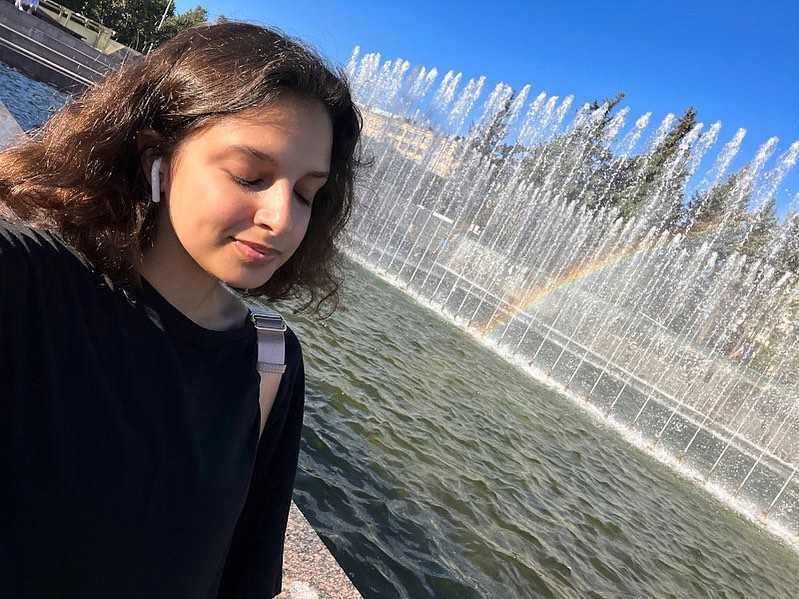

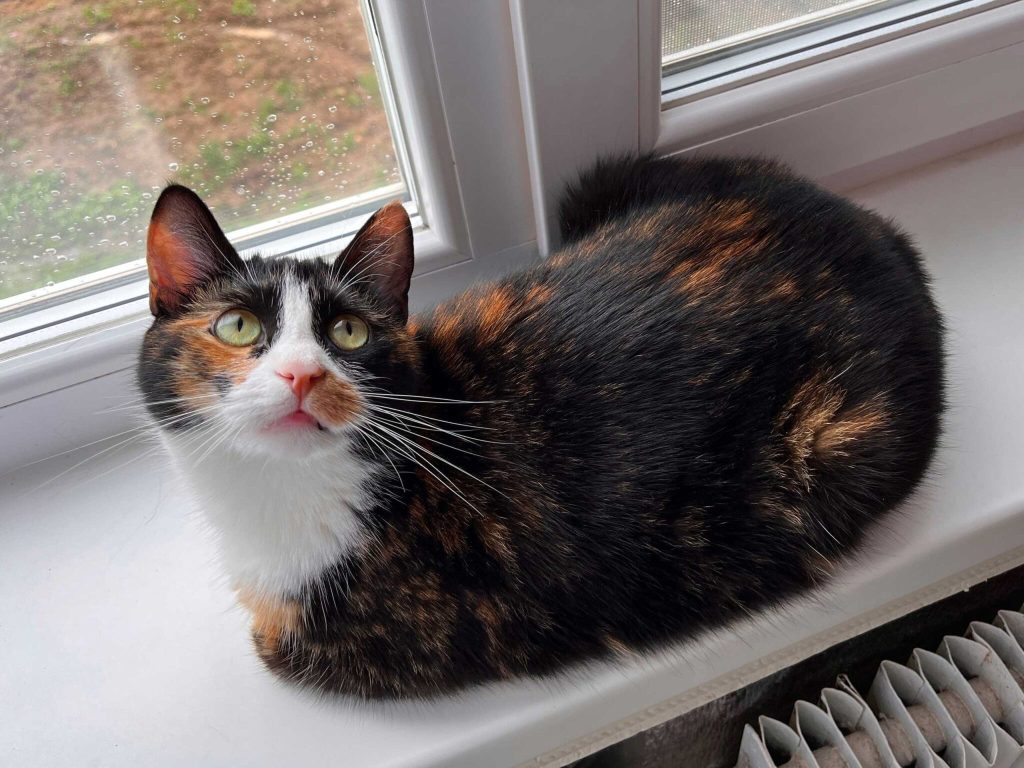




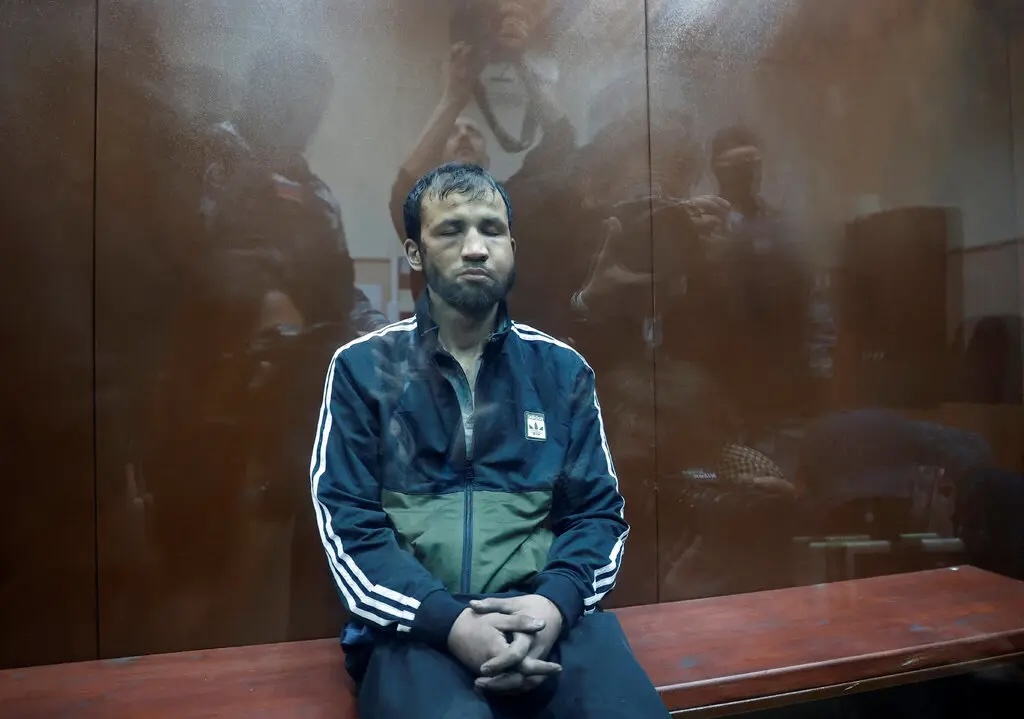


 Ruslan Zinin charged with terrorism
 As before, you can support Ruslan by sending him a letter or parcel. If your letters are not passed by the censor or you do not receive a reply from Ruslan, let us know and file a complaint. Templates for complaints can be found on
 Address for letters and parcels:
 You can send letters electronically from anywhere in the world via the
