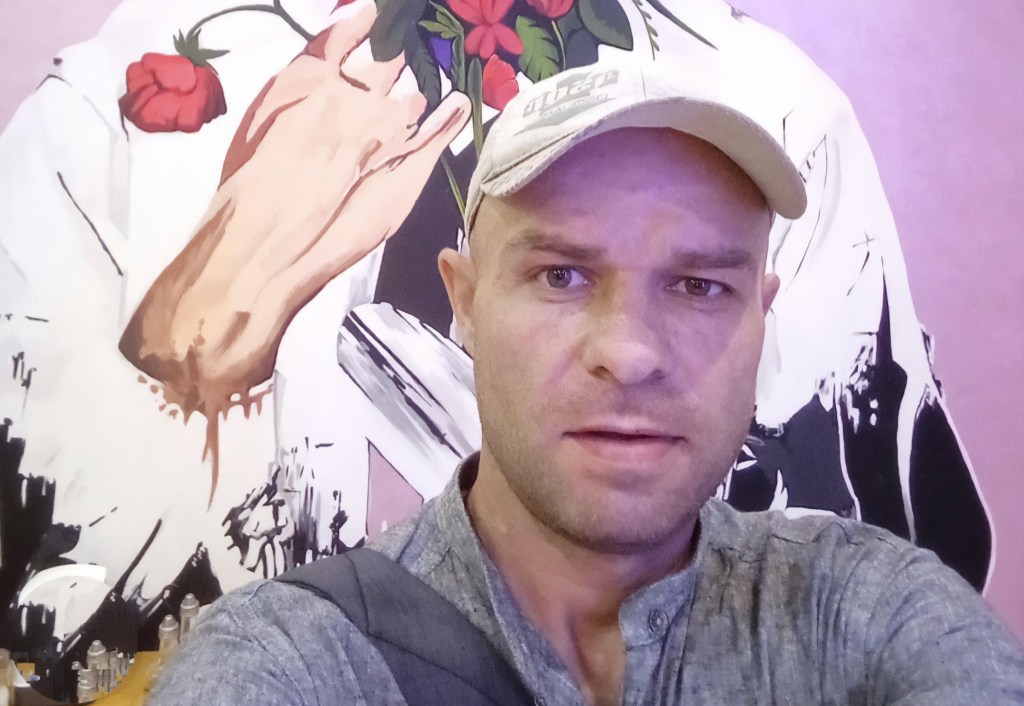
Igor Paskar has been sentenced to eight-and-a-half years’ imprisonment for two anti-war actions. In June 2022, in the centre of Krasnodar, Igor set fire to a “Z” banner [a symbol of support for the Russian military]. Two days later, he protested at the local office of the Federal Security Service (FSB), by throwing a Molotov cocktail at the stone porch of the building, while his face was painted with the colours of the Ukrainian flag. The FSB and the courts defined this as “vandalism” and an “act of terrorism.”
Igor Paskar
Igor Paskar was born in Nikolaevsky village, a working-class community in the northern part of Volgograd Region. He went to school there. After doing national service on building sites in Samara, he worked as a courier, and for haulage and construction companies.
Paskar had three previous convictions. The first time he went to court, at the age of 22, was for possession of a few grams of cannabis: he was given a five-year suspended sentence. “In the milieu in which I grew up, half of the people I knew – if not more than half – smoked cannabis. It was not considered to be asocial or objectionable. But the motherland has decided that, in contrast to drinking alcohol, that’s serious criminal behaviour,” Igor said. Three years later, Paskar was in court again, and this time was sentenced to two years in prison for the theft of, and possession of, drugs. He points out that, from the moment of his first time in court, the police searched him regularly, and said quite openly that they were looking for weed. Igor’s third time in court was in 2006, when he received a one-and-a-half year suspended sentence for possession of narcotics. “That’s how I came to the attention of our law enforcement agencies. And from then on, I didn’t have a life,” he recalled. Given these circumstances, in 2013 Igor moved to Moscow.
In the capital, Igor continued working in various jobs, and helping his mother, until she died in 2017. This was around the time his social conscience took shape.
“As far back as I remember, even when I was very young, I was always concerned about what was happening in our country. Our motherland, in the guise of the Russian state, always seemed like a stepmother to me, not a real mother. I was never indifferent to the pressure that the state brought to bear on those who dissented or disagreed,” Igor said in court.
In 2020 Igor went to the Belarusian embassy to express solidarity with those who protested after the blatant falsification of the results of the presidential election, in which Belarusian president Alyaksandr Lukashenko gave himself 93% of the votes. “That summer and autumn, in 2020, when Belarus’s tinpot dictator was pushing his people around, I was still hoping that here in Russia we would avoid that kind of thing,” Igor says.
In 2021 Igor participated in a big protest staged after the arrest of Alexei Navalny. He was detained, brought to court and fined 10,000 rubles.
The all-out Russian invasion of Ukraine in 2022 decided things for Igor once and for all. He decided to undertake a symbolic anti-war action, to support people in Ukraine. On 12 June 2022, the Russia Day national holiday, Igor set fire to a pro-war banner displaying the letter “Z” and the militarist slogan “We don’t abandon our own.” However, the action did not attract the attention Igor had hoped it would.
He decided on a second protest. On 14 June he threw an improvised Molotov cocktail at the stone porch of the FSB offices in Krasnodar. It set fire only to a plastic mat. As Igor later stated in court, his action was entirely symbolic and posed no threat to anyone’s life. For Paskar, the action was an expression of solidarity with people in Ukraine, and a signal to those in Russia who did not support the war that they were not alone. “My action was peaceful, and aimed to show all who opposed this monstrous war that they were not isolated, and to show our Ukrainian neighbours, that we [in Russia] have not all been turned in to zombies by state propaganda,” he said in court.
Igor was arrested a few minutes after throwing the Molotov cocktail at the FSB building. “I stood outside the building and waited for them. I made no attempt to hide or to evade arrest,” Igor recalled in court. The police arrived, asked if it was him who had started the fire, and, when he confirmed that it was, they put him in handcuffs and took him in to the FSB premises.
“There were people in uniform, perhaps six to eight of them,” Igor said. “They snapped a photo of me on a phone: that picture is in the case file, and it shows that I had no injuries. Then they asked me what I wanted, why I did that. I answered that I wanted to make use of Article 51 of the Constitution, that gives you the right not to incriminate yourself. They obviously found that funny, because a split-second later a sack was put over my head. The next few hours were among the very worst of my life.”
Russian FSB come for 70-year-old mother of imprisoned Crimean Tatar civic journalist Seiran Saliyev (Kharkiv Human Rights Protection Group, September 2nd)
Court in Russia rules that 20-year sentence against Ukrainian POW for defending Mariupol is not long enough (Kharkiv Human Rights Protection Group, September 2nd)
News from the front:
“We will meet the most resistance in Kursk.” The Kursk offensive through the eyes of three Ukrainian servicemen (Ukrainska Pravda, August 27th)
What draft laws for the protection of war victims should be adopted during the new session of the Verkhovna Rada – road map (Zmina, September 3rd)
The team of the film “Songs of Slow Burning Earth” organized an event at the Venice Film Festival to support Ukrainians in captivity (Center for Civil Liberties, September 6th)
“Degradation. Torture. Degradation”. A poetical video project in Kyiv talks about Russian captivity (Center for Civil Liberties, September 3rd)
Our friend Taras Bilous has been awarded the Daniel Singer Prize (Solidarity Collectives, September 3rd)
Savage torture and 11-year sentence for opposing Russia’s occupation of Kherson (Kharkiv Human Rights Protection Group, September 6th)
Cultural genocide is hard to prove, says US professor (Tribunal for Putin, September 6th)
Ukraine lodges war crimes probe after Russians shoot unarmed Ukrainian POWs in the back (Kharkiv Human Rights Protection Group, September 4th)
International solidarity:
On 7 September, our banner, “From Ukraine to Palestine, occupation is a crime”, was on the national march for a ceasefire in Gaza, carried by supporters of the Ukraine Information Group and Unite the Struggles (Ukraine Information Group, 8 September).
This bulletin is put together by labour movement activists in solidarity with Ukrainian resistance. To receive it by email each Monday, email us at 2022ukrainesolidarity@gmail.com. To stop the bulletin, reply with the word “STOP” in the subject field.
A letter from Alexander Chervov, sentenced to seventeen and a half years in prison
Alexander Chervov is a pathologist from Kemerovo. On 4 August 2023, the First Eastern District Military Court in Khabarovsk sentenced Chervov to seventeen and a half years in prison after convicting him on charges of damaging a power line and planning to set fire to a military recruitment office.
We share excerpts from Alexander’s letters, which were sent to us by a subscriber.
‘This episode in my life has actually been brief. Until 24 February 2022, I wasn’t involved in politics, partly because I was lazy, and partly because Moscow’s propaganda worked effectively on me. Just consider my age [42 years old], and you will realize that the period when political views are usually formed overlapped in my case with the beginning of a massive misinformation campaign about the hopelessness of all action and the benefits of a rigid power vertical. I had a worldview that was typical for the Russian Federation until 2019, but the covid epidemic kicked off in the summer of 2019 [sic], and that’s when I saw and felt at my workplace that my responsibility is really mine—it’s not the bosses who decide; and the second thing is how the vertical behaves in emergencies. Without going into details, it has come to the point that the very essence of propaganda is unsuitable for structuring behavior based on conscience, professional pride, and plain common sense. To make myself clearer: if you have crossed paths with Russian medicine, you can understand how it will function if it takes on the additional load of an epidemic, for example, and what the stated outcomes are—for example, (almost) the lowest percentage of mortality among the infected. In short, until it hit me personally, I did not notice obvious problems and obvious discrepancies between stated claims and reality. That’s when the reliability of almost all mass media in the Russian Federation became at least partially clear. I experienced shock (though not in the medical sense). It was not yet enough for me, though, as I still did not get involved in politics. But it was impossible to ignore the onset of open hostilities against a peaceful neighboring country: my conscience kicks into gear in extreme circumstances, and these circumstances were extreme. I don’t know what I was alleged to have done, officially, but I didn’t really commit a terrorist act, while the second part of the accusation was mostly a travesty of justice, although there are some real grounds [to it]. The result was a nearly suicidal antiwar protest. Shit happens. I freaked out. I freaked out to the tune of 17 years’ worth of maximum security, to hear the prosecutor tell it.
[…]
‘As for the news, I wonder what’s really going on, behind the scenes so to speak. There are topics that are actively hyped, that generate buzz, and I know how the [official] news spins them, as there is no other news here [in prison[. So the choice is up to you: [you can write to me] about any hyped topic, only [tell me] the real story, the actual what, where, and how of. But before you write something, I advise that you read the Criminal Code, especially Articles 205 and 280 [which criminalize “public calls for terrorism” and “public calls for extremism,” respectively]. For example, Georgia has now adopted a law on foreign agents, seemingly modeled on the Russian one. But what’s the real story? Who got their hands on Prigozhin’s companies is also interesting, as is how they were divvied up.
‘Subscriptions to newspapers and magazines from the outside won’t work—they’ve already checked that here. You don’t need to send anything: I can receive only one parcel per year, they won’t allow more. I guess that’s it.’
‘I had a court-appointed lawyer. She is practically the only one in Kemerovo in all political cases. In retrospect, I understand that she is needed to keep up appearances. For example, before the trial she didn’t even read the case file, only the indictment, and she got it from me; either she didn’t get a copy herself or she couldn’t open the electronic version. I actually came up with the talking points for her [closing?] argument.’
[…]
‘I’m curious now: what is the real situation with gas supplies from Russia to Europe? Has the percentage of these deliveries actually decreased since 2022, or has it remained the same?’
You can support Alexander by writing him a letter or sending money to his personal account in prison so that he can subscribe to newspapers, among other things.
Address for letters:
Chervov Alexander Yevgenyevich (born 27.02.1982) 11 ul. Dekabristov, T-2 Yeniseysk, Krasnoyarsk Territory 663180 Russian Federation
Source: Solidarity Zone (Facebook), 13 July 2024. Translated by the Russian Reader. Translated by the Russian Reader. People living outside of Russia will find it difficult or impossible to send letters to Russian prisons via F-Pismo, PrisonMail.Online, or regular mail. In many cases, however, you can send letters (which must be written in Russian or translated into Russian) via the free, volunteer-run service RosUznik. Mr. Chervov has not yet appeared on their list of supported addressees, however. You can write to me (avvakum@pm.me) for assistance and advice in sending letters and messages to him and other Russian political prisoners.
Report on Solidarity Zone’s Work: First Half of 2024
The first half of 2024 has passed, and we are reviewing the results of work in that time. We present figures that show the amount of support that we have given to political prisoners.
What did we do?
We successfully completed nine fundraisers for individual prisoners, amounting to €28,540. As a result, we could ensure that defendants had legal support during investigations and at court, and support appeals against conviction lodged by seven prisoners who carried out acts of anti-war resistance.
We supported lawyers who could search for prisoners, make prison visits on an emergency basis, and provide help in cases for which we had not yet organised fundraisers. These were often situations in which there was a real threat that prisoners would be tortured. On this work we spent €7930 of your donations.
We sent foodstuffs and other urgently needed supplies, items of clothing, books and newspapers to 17 prisoners who faced persecution, having been accused of carrying out, or preparing, anti-war actions. On this work we spent €6560 of your donations.
We publicised 20 cases of prisoners to whom we give support of one kind or another, and many other cases of those arrested for undertaking anti-war actions. We wrote more than 400 social media posts.
We spent dozens of hours in telephone calls with lawyers, with prisoners’ families, and with each other, to achieve everything mentioned above.
We took care of our own security and well-being, and did a great deal of other unseen work, without which our activity in support of political prisoners in Russia could not have happened.
We produced hoodies and scarves with original designs, all the proceeds from which go to support the Solidarity Zone collective.
Solidarity Zone is a self-organised, horizontal initiative, and we do not have a regular source of financing. None of this would be possible without the powerful support we received from you! We are very grateful for every single donations, repost and like!
Please support this post with a like, a repost, a comment — so that more people see it. Your comments, too, are a form of support for the Solidarity Zone team.
You can donate to support prisoners in several ways:
To make a donation in USDT via other networks, or in other cryptocurrencies, write to us at solidarity_zone@riseup.net and ask for the necessary details.
You may also subscribe to our Patreon. The money from there goes to support the Solidarity Zone collective.
Independently of whether you are able to give financial support to Solidarity Zone, you can help us by reposting this or circulating information about us in other ways.
UK General Election 2024: help Ukraine win (Ukraine Solidarity Campaign, 31 May)
Upcoming solidarity events:
Tuesday 11 June, 7.0pm: Discussion meeting: “From Ukraine to Palestine, occupation is a crime” – Tuesday 11 June, 7.00 pm. Marchmont Community Centre, 62 Marchmont Street, London WC1N 1AB, and on line. Register to attend on eventbrite here or register to participate on line here. Organised by the Ukraine Information Group.
This bulletin is put together by labour movement activists in solidarity with Ukrainian resistance. Please subscribe and tell friends. If people email us at 2022ukrainesolidarity@gmail.com, we’ll send them the bulletin direct every Monday. More information at https://ukraine-solidarity.org/. We are also on twitter, Facebook and Substack, and the bulletin is stored on line here. To stop the bulletin, reply with the word “STOP” in the subject field.
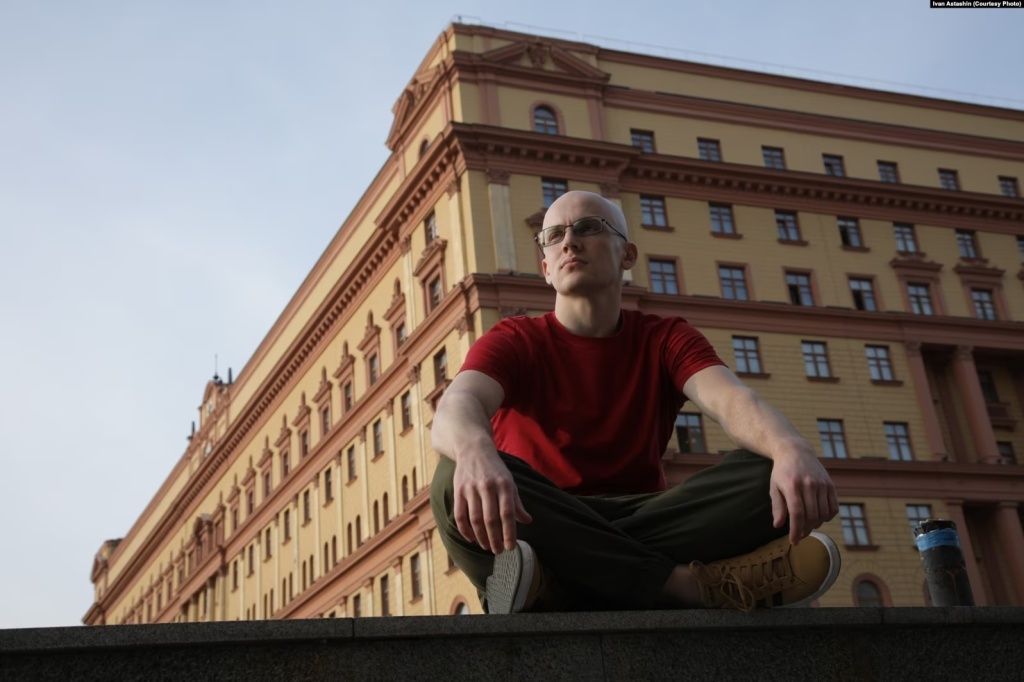
Muscovite Ivan Astashin knows firsthand what human rights activism, Russian prisons, and terrorism and arson charges look like. As a young man, he was close to Eduard Limonov’s National Bolsheviks and was arrested as part of the high-profile Autonomous Combat Terrorist Organization (ABTO) case, in which a group of young men were charged with a series of arson and terrorist attacks.
At the turn of the 2000s and 2010s, this story was widely discussed in the media, sparking debates over whether the arson attacks were justified. Astashin was convicted of torching an FSB district office in 2012 and spent over nine years behind bars.
Upon his release, Astashin worked for Andrei Babushkin’s Committee for Civil Rights and was involved in defending the rights of prison inmates. In February 2022, Astashin joined the protests against the invasion of Ukraine and was soon forced to leave Russia.
Astashin is now involved in the campaign Solidarity Zone, which aids Russians who have been arrested for radical anti-war protests.
How did the “Solidarity Zone” come into being?
When full-scale war broke out, large protests took place in many Russian cities, and criminal charges were filed against protesters, both charges of “violence against police officers,” which have been routine at protest rallies (police officers themselves use violence, but they don’t pay for it), and charges that were newish for Russia.
There was Anastasia Levashova, who threw a Molotov cocktail at police officers. There was the case against Anton Zhuchkov and Vladimir Sergeyev: they were detained near Pushkin Square in Moscow on 6 March 2022 on their way to an anti-war rally. A Molotov cocktail was found in Sergeyev’s backpack. The police did not know what they guys were planning, so they were able to accomplish part of what they’d planned. Zhuchkov and Sergeyev had planned to commit suicide publicly at an anti-war rally as a sign of protest—they were so desperate. As they were being detained, they took lethal doses of methadone. The police failed to notice this. They put them in a paddy wagon and beat them up there, but on the way to the station the police realized that their detainees were quite sick and took them to hospital. They were saved in the intensive care unit at the Sklifosovsky Institute.
Zhuchkov and Sergeyev were sent from the intensive care unit to a pretrial detention center after being charged with “attempted disorderly conduct.” According to police investigators, the men had been planning to set fire to empty paddy wagons. When detained, Sergeyev said that they “wanted to torch a couple of paddy wagons,” emphasizing that it was empty vehicles they had intended to target. At first, we wanted to find out the address where we could write to Zhuchkov and Sergeyev at the pretrial detention center, so we asked OVD Info, but we also learned that OVD Info would not defend them, as theirs was not a peaceful protest.
We realized that none of the existing human rights organizations was willing to take on such cases. We decided to take on Zhuchkov and Sergeyev’s case: we published the address to which people could send them letters and found them a lawyer. A little later, the authorities started charging people with arson attacks on military recruitment centers, and so we decided that we should also aid such people. By September 2022, we had launched Solidarity Zone’s social media accounts and expanded our work.
Do I understand correctly that the attitude of OVD Info, Memorial, and other human rights organizations to people engaging in “non-peaceful” anti-war protests has changed? Have their motives become clearer to these human rights organizations?
Yes, their attitude has changed. As I see it, it changed after the military mobilization, when people began setting fire to military recruitment offices en masse in protest. Now it is easier to get announcements of fundraisers for such detainees reposted. But the position of human rights organizations has remained the same.
We had a public discussion with Sergei Davidis, head of Memorial’s Support for Political Prisoners project. He said these people should certainly be supported, that in most cases they have been wrongfully charged with violating Article 205 of the Russian Criminal Code (“terrorism”), but that whereas the criminal code articles on “discrediting” the army and “disseminating fake news” about the army clearly contradict Russian law and international conventions, and people charged with violating these laws can be designated political prisoners without a detailed examination of their cases, then with regard to people who attempt to torch military recruitment centers, Memorial examines the cases in detail and is guided by international criteria. They have designated twenty such people political prisoners, but the number of these cases is many times greater.
All human rights organizations have their own focus. OVD Info deals with cases related to peaceful protest; First Department, with high treason cases; and the Net Freedoms Project, with freedom of expression cases. Our cases do not fit these criteria. Before we started, there was no organization which was willing to support such people.
Is your campaign volunteer-driven? How many people are you assisting now? How do you define the people you support?
We support people who have been arrested for anti-war protests, for radical anti-war actions, although nowadays virtually all anti-war protests are radical. We handle cases where people actually set fire to a military recruitment center or a railroad signal relay box, and cases where they were merely planning to do such things.
Or they weren’t even planning to do such things, but the security services have fabricated a case against them, alleging that they were planning to torch a military recruitment center, as happened to Ivan Kudryashov.
We are currently supporting nineteen political prisoners. In almost all cases we pay their defense lawyers and organize fundraisers to this end, and in many cases we are also involved in arranging for parcels and care packages to be sent to the prisoners and replenishing their personal commissary accounts at their detention facilities. We talk publicly about their cases and similar criminal cases. We did a count in September 2023, and at that time there were around three hundred people in Russia facing criminal charges over radical anti-war protests. There was no further info on half of these people: we could not find out whether they were under arrest or wanted by the police.
We try to cover such cases as much as we can because we are a volunteer organization: we don’t get paid or have permanent funding, although we would certainly like to have such things. We raise money for political prisoners through cryptocurrency and PayPal donations. We also do personal ruble-denominated fundraisers to pay lawyers through the platform Zaodno (“In Cahoots”).
In the first quarter of 2024, we spent 900 thousand rubles (approx. 9,100 euros) paying for care packages and one-off visits by defense lawyers. When lawyers defend our prisoners in court, we organize personal fundraisers. Sometimes we hold events in Europe to raise money, and sometimes other campaigns hold events to raise money for us.
Let’s imagine that a programmer in Tver has been arrested for attempting to set fire to a military recruitment center. His relatives are scared: they are unlikely to want to do business with a volunteer campaign based in Europe. How do you reach out to those accused of anti-war protest?
Actually, we are increasingly being approached by relatives of arrestees as we are becoming famous. We are recommended in various chat rooms dealing with support for political prisoners. Often people contact OVD Info, and they suggest contacting us.
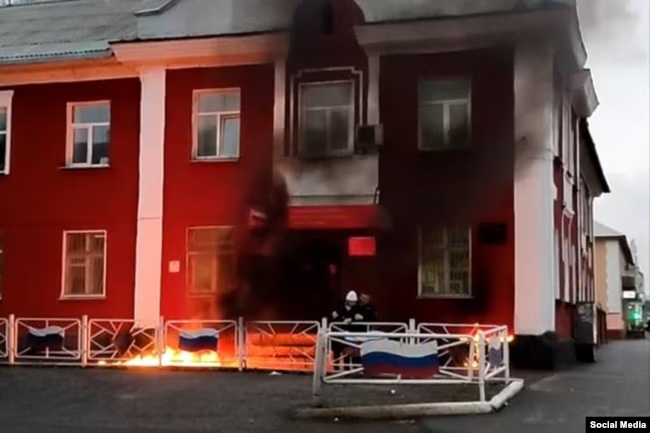
Aftermath of an arson attack on a military recruitment center in Kemerovo
We also search for information on detainees ourselves. If you have at least a first name and a surname, you can find the rest of the information in the public domain. But sometimes you cannot find out which thirty-year-old native of Voronezh has been detained. There are such case, unfortunately. Information can be obtained when a person is added to the list of “terrorists and extremists” via court filing. When a person is in the database, the locale of the pretrial detention center where they are held is identified as well. In many cities there is only one pretrial detention center, so we can dispatch a lawyer there to offer assistance to the arrestee and get their take on the case.
Some argue that publicity is not always beneficial to defendants in political criminal cases given the current conditions. Does Solidarity Zone not take this approach?
Our opinion is that publicity is beneficial in most cases. Despite everything, the security services still don’t like their lawlessness to become public. This still entails inspections, which, although they are formal procedures, are still unpleasant for them.
Publicity is a defense against torture and coercion. Also, you cannot raise money to pay a lawyer if there is no publicity. Without publicity, a person will not receive letters from supporters and well-wishers, but letters are very important. Publicity has practically no effect on the sentence nowadays, neither positively nor negatively.
So the lawyer is the prisoner’s link with the outside world? If a person ends up in this situation, they will still get a brutal sentence of ten, fifteen or twenty years or more, won’t they?
The lawyer is the only person who can visit someone in pretrial detention centers and penal colonies without limits on the number and length of visits. During the investigation phase of a case, relatives usually do not have visitation rights, especially if the individual has not pleaded guilty. So the support of a lawyer is very important.
As time goes on, this is less and less the case, but what the lawyer does can still affect the sentence. If a person has a court-appointed defense lawyer, they often tell them to agree to every deal offered by the prosecution and to sign every paper they ask them to sign, so the sentence will be shorter. Ultimately, however, the investigators and prosecutors add new charges, and the sentence is huge. But if there is a lawyer who really defends their client, they at least make sure that no new charges are filed.
A lawyer can go after the gross violations on the part of the state. Take Ivan Kudryashov: there was no evidence in his case, and so he should have been acquitted. But there are no acquittals in Russia, so he was sentenced to six years for “planning a terrorist act.” This is a short sentence by today’s standards, but his lawyer got it reduced on appeal to four years and ten months.
Although Ilya Baburin was just sentenced to twenty-five years in prison for violating six articles of the Criminal Code. For one incident—planning to torch a military recruitment center—he was charged with violating four different articles, for one and the same thing! And the lawyer could do nothing.
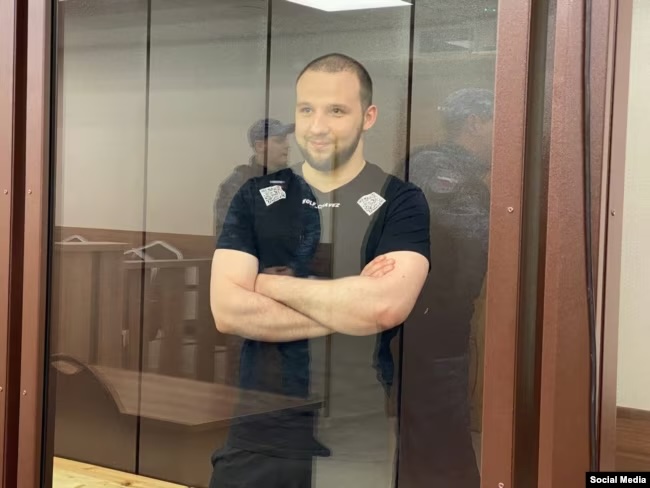
Ilya Baburin in court
There are news stories of phone scammers conning people into torching military enlistment office, of people being offered money on Telegram to torch railway signal relay boxes. Do you handle these cases?
We have been approached about such cases. Those people shouldn’t be in jail, of course. It is doubly cynical that the pensioners who were conned have also been charged with terrorism, although in terrorism cases what matters most is the person’s intent. We have limited resources, however, so we only assist people who take an anti-war stance, which is an important criterion for us.
You also have the criterion that the defendant not testify against anyone else. Whether they pleaded guilty or not doesn’t matter.
What matters is that they didn’t willingly testify against others. Anything can happen under torture.
The number of people who go down the road of torching military recruitment centers and railway relay boxes has not been decreasing, has it? Not all those who oppose the war and Putin have left the country or gone to jail, have they?
On the contrary. Whereas previously we tried to write about all arrests on such charges, we now realize that our small team cannot cover all the arrests because they occur almost daily. Often little is known about the detainees, but the news reports say that the person was on a mission for the Free Russia Legion, meaning that the person has an anti-war stance.
When a person engages in such actions, they seemingly first of all undergo an existential crisis because they live in a quasi-fascist empire that has also attacked its neighbors. Does this person want to do something even though they realize that their life may be in danger?
Yeah, that’s right. In the cases that are well known, the defendants say they wanted to do something, to take radical action by way of protesting.
In 2022, Navalny supporters were often detained for such actions, such as Igor Paskar, who threw a Molotov cocktail at an FSB building, or Vladimir Zolotarev, who set fire to a Russian National Guard building in Komsomolsk-on-Amur. People used to go to protest rallies, but then there were no more protest rallies. Another motive we can observe among such people (Zolotarev and the anarchist Alexei Rozhkov, who set fire to a military recruitment center in March 2022, spoke of it) is that they couldn’t tear themselves away from the news about Ukraine. At some point it was impossible for them to just read all of it: they had to do something as well.
When the military mobilization began, people realized that all of this was not happening somewhere far away, but could affect them. Many people realized that they would go to jail, but they went to commit arson because they thought it was better to go to jail than to go fight a criminal war. Roman Nasryev and Alexei Nuriyev were sentenced to nineteen years each for attempting to set fire to a military registration office in the Chelyabinsk Region. This phrase in Nasryev’s correspondence jumps out: “It’s time to start—or we’ll die as slaves.”
There are now people who are primed for a long-term confrontation with the military machine, for guerrilla actions, and for greater degrees of security. And if you look at the reports of sabotage, not every one leads to the capture of the perpetrators.
It is clear what could have prompted radical action in February 2022. In the autumn of 2022, it was the mobilization. But how can it be that someone tolerated the war for a long time and decides to act only now? Or are these just “guerrillas” who have avoided capture for a long time?
That is a good question, to which I have no answer. We know generally about those detained for radical protests in 2022, but there is still little data even for 2023. We can assume that some people went abroad in 2022, but had to return to Russia because they could not settle down here. Some people may not have resisted in 2022 because they hoped that everything would end quickly, but now they see that nothing ends by itself.
The case of Sergei Okrushko can be cited as an example. He is Ukrainian but has a Russian passport. In 2022, he went to Moldova, whence he wanted to enter Ukraine and work on humanitarian projects. But he was not allowed to enter Ukraine because of his Russian passport. He was forced to return to Russia. He got a job at an oil refinery (as an electrician) and set off an explosion there.
Are you also a wanted man in Russia? What are the charges?
The authorities have not yet responded to inquiries about what the criminal charges are, although my lawyer submitted a request over a month ago.
After this interview was recorded, Moscow’s Cheremushkinsky District Court published information that it had been petitioned to arrest Ivan Astashin in absentia on charges of “condoning terrorism.” Other details of the case are still unknown.
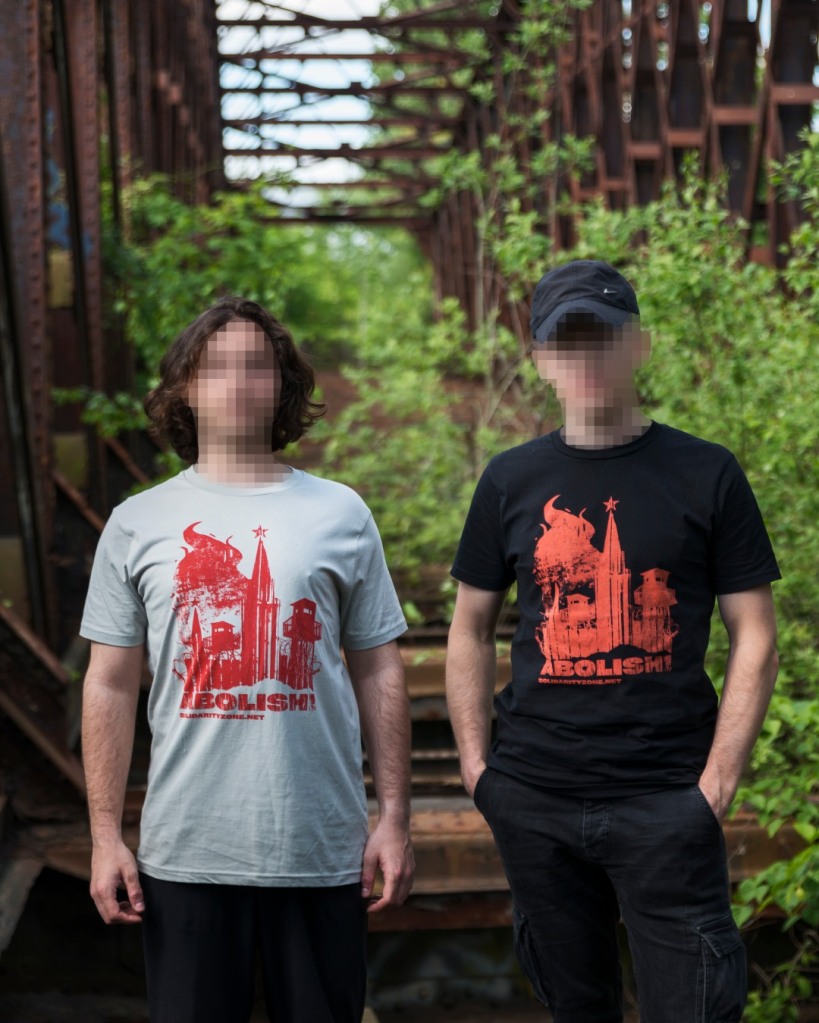
It’s May already! Are there enough T-shirts with radical slogans in your cupboard? Maybe Abolish and Derail the Empire work for you. By buying these T-shirts from us, you support Solidarity Zone, a human rights initiative that defends imprisoned members of the Russian anti-war resistance.
Sizes:
— Abolish! print from XS to 2XL
— Derail the Empire print from S to 2XL
If you need another size, get in touch — we will see about arranging that the next time we print up the T-shirts.
The T-shirts are delivered by post from within the EU. For security reasons we do not send merch to the Russian Federation or the republic of Belarus. We also can not guarantee delivery to Georgia, due to the way the postal system there works.
Funds raised from the sale of this merch go to support Solidarity Zone—a horizontal initiative providing support to those arrested in Russia for anti-war actions.
Military court of appeal to consider the case of photographer Mikhail Babintsev
In October, Mikhail Babintsev, a resident of Buryatia, was sentenced to thirteen years in prison: the investigation argued and the court ruled that his attempt to set fire to the military recruitment center in the village of Mukhorshibir was a a “terrorist act.” Mikhail disagrees with this ruling and has appealed the verdict. With support from you, we aided the prisoner’s family in paying the defense lawyer’s fees during the appeals phase.
Mikhail Babintsev
On 17 January, the Military Court of Appeal in Vlasikha (Moscow Region) will hear the defence’s appeal of the verdict.
Solidarity Zone argues that treating arsons of military recruitment centres as violations of Article 205 of the Russian Federal Criminal Code (“Terrorist Act”) is unreasonable and politically motivated. The same conclusion has been reached by Memorial’s Political Prisoners Support Project, for example, in the case of Roman Nasryev and Alexei Nuriyev.
The Military Court of Appeal is located in a closed military town in the Moscow Region. The headquarters of the Strategic Missile Forces is also located there. Therefore, no one is allowed to enter the court or the town itself, but a live broadcast of the court hearings will be arranged at the security checkpoint on the edge of the town.
Come follow the trial and support Mikhail with your presence!
10:00 a.m., 17 January 2024
Military Court of Appeal, 25 Solnechnaya Street, Vlasikha, Odintsovo District, Moscow Region, Security Checkpoint 1
To travel by public transport from Moscow, you can use one of the following options:
from the Kievsky railway station by bus No. 477 to the Vlasikha security checkpoint;
from the Belorussky railway station (or from Fili or Kuntsevskaya metro stations) by train to Odintsovo station, then by minibus No. 46 to the Vlasikha security checkpoint.
We recommend that you call the court in advance at 8(495)598-74-29 and tell them that you wish to attend the court hearing so that the broadcast is definitely organised.
#political prisoners #crackdowns #no war #solidarity #arson attack #buryatia #court
“I finally decided to demonstrate my civic stance and commit arson”: a letter from Maxim Chishkovsky
On the night of 28 September 2022, a person unknown shattered the window of a military registration and enlistment office in Vladivostok with a hammer and threw a Molotov cocktail through it. The media wrote that the window sill and window frame caught fire as a result, but the fire was extinguished by persons on the scene without contacting firefighters.
Forty-three-year-old Maxim Chishkovsky was later arrested on suspicion of the arson. In April of this year, he was sentenced to eleven (11) years in prison for “terrorism” (per Article 205.1 of the Russian Federal Criminal Code). His sentence has been upheld on appeal.
A penpal of Maxim’s shared his letter to her with us, excerpts from which we publish below.
There’s nothing special I can tell you about myself—work, home, family. I worked as a construction manager, would go skiing in the winter, would dive into an ice hole on Epiphany, once used to ride bike in the summer, had an interest in motocross, and studied the Polish language. Someday after my release I’m thinking of changing my occupation. I’ll be an estimator: the work is not dirty, and your weekends are free.
In 2014, I was against the “Ukro-Nazis,” and was glad that Crimea was Russia’s again. But when the LPR and DPR “stopped short” of joining Russia, doubts crept into my mind about whether the objective was to aid a fraternal people and who really benefited from the domestic turmoil in Ukraine. I did not take a public stand except for comments on Instagram: I was not at all opposed to what was happening. I regularly watched Channels 1 and 2, and conscientiously voted for Putin, but one day I realized that TV was all propaganda and stopped watching. And after the pension reforms and the amendments to the Constitution, I came across a video from 2004, in which [Putin] said that “brains need to be changed, not the Constitution.” And, basically, I still adhere to this opinion, but I cannot explain what has happened except in terms of insanity. I thus regarded the special military operation extremely negatively, but I did not take part in protests, although I wanted to, but I was afraid of trouble at work, fines, and arrests. And, having taken the stance that it was no business of mine, I simply followed the situation on Telegram. I saw reports about the torching of military registration and enlistment offices, and it seemed to me that this was a good way of taking a public stand, better than holding protest rallies.
When the military mobilization began, I felt that now I was affected too. Amidst all the confusion of those days over uniforms, equipment, salaries for the mobilized, and, basically, the lack of understanding of what would happen to my family if something happened and why I should go off and kill people for some reason, I experienced absolutely no increase in “patriotism.” When the [conscription] summons was delivered, I was not at home, but I figured that if not today, then the next day it would be hand-delivered to me, and I was not going to run and hide. I finally decided to take a public stand and commit arson. Of course, to a greater extent, it was a protest action, but if my son’s personal file had been burned, that would have been a good outcome. I also knew that, sitting in the trenches, I would regret that I had not done it. Considering that, in the near future, I would be mobilized anyway, when I went out to do what I did, I didn’t take great pains to conceal my identity, which now, after I’ve received a prison sentence of eleven years, of course, I regret. But I think that such sentences aren’t handed out for nothing, which means that I did wasn’t in vain, and at least I somehow delayedthe second wave [of mobilization].
I am interested in the history of Poland, both medieval and more modern. I would like to read books in Polish. And I would like news that is different from the news provided by Komsomolskaya Pravda and Vesti FM. My cellmate was getting the prison newsletter, but the local [prison] administration banned it: they didn’t seem to like the pictures.
Source: Solidarity Zone (Facebook), 28 November 2023. Translated by the Russian Reader. People living outside of Russia will find it difficult or impossible to send letters to Russian prisons via Zonatelecom or regular mail. In many cases, however, you can send letters (which must be written in Russian or translated into Russian) via the free, volunteer-run service RosUznik. Mr. Chishkovsky has not yet appeared on their list of supported addressees, however. You can write to me (avvakum@pm.me) for assistance and advice in sending letters and messages to him and other Russian political prisoners.
The Hustle, “The Economics of Pickleball and the Sport’s Sound Problems”
MBARI, “Scientists solve mystery of why thousands of octopus migrate to deep-sea thermal springs”Sergei Okrushko
Solidarity Zone has begun supporting Sergei Okrushko
On July 28, an explosion occurred at the Kuibyshev Oil Refinery in Samara. The same day, 42-year-old Sergei Okrushko, who was born in Ukraine and worked as an electrician at the refinery, was detained at the border with Kazakhstan whilst trying to leave Russia. The FSB charged him with “sabotage” (per Article 281 of the Russian Federal Criminal Code of the Russian Federation “Sabotage”, and a court in Samara remanded him in custody to a pretrial detention center.
Okrushko confessed, and at his bail hearing he said that he held anti-war views and committed the action for political reasons.
It also transpired that Okrushko had earlier tried to enter Ukraine, but he was not admitted because of his Russian passport. During his stay in Moldova, he had repeatedly participated in anti-war protests.
No one was injured during the explosion at the refinery. According to the investigation, more than 30 million rubles in physical damage was caused, however.
The Kuibyshev Oil Refinery is the largest enterprise in the Samara Region, processing about seven million tons of oil per year. The plant specializes in the production of fuel for all types of transport from automobiles to ships.
On August 3, Okrushko refused the services of Solidarity Zone-affiliated lawyer Zakhar Lebedev, whom he had agreed to let defend him two days earlier. While Okrushko was writing the waiver of counsel, the lawyer noticed fresh injuries on Okrushko’s body: “I noticed that his left arm, namely most of his shoulder and forearm, was purple. It was clear that these were hematomas, which hadn’t been there on August 1 when I visited him at the pretrial detention center. When I asked Sergei where he had got such bruises, he said, without hesitating, “When they arrested me.” When I asked why they had not been there when I’d visited him at the pretrial detention center, Sergei hesitantly said that they’d shown up only now.”
We believe that the fresh bruises and his sudden and unmotivated waiver of counsel testify to the fact that Sergei Okrushko was tortured between August 1 and August 3.
Subsequently, the authorities stopped admitting any lawyers into the pretrial detention center, except for the court-appointed lawyer Vyacheslav Pavelkin. Later, it transpired that Okrushko was taken to the FSB several times without a lawyer.
Unfortunately, at this stage we have been unable to provide Sergei with defense counsel. But at the very outset of his ordeal, we sent him a care package and books, placed an order at the online Federal Penitentiary Service store, and transferred money to his personal account at the pretrial detention center. We recently learned that Sergei received all these things, which means that we were able to provide him with at least minimal humanitarian support. In the coming days, we will put together another care package for Sergei and continue to support him as much as possible.
Solidarity Zone’s mission is to support people imprisoned for anti-war direct-action protests and not let them face the system alone. We cannot always provide full-fledged support due to interference from the security forces, but we consider any reduction in the harm caused by the actions of the Russian state to be a decent outcome.
If you want to support us, you can find our details here.
Address for letters and parcels:
Okrushko Sergei Aleksandrovich (born 01.03.1981) 22 Sadovyi proyezd, SIZO-1 Samara 443021 Russian Federation
Source: Solidarity Zone (Facebook), 24 August 2023. Translated by the Russian Reader. People living outside of Russia will find it difficult or impossible to send letters to Russian prisons via Zonatelecom or regular mail. In many cases, however, you can send letters (which must be written in Russian or translated into Russian) via the free, volunteer-run service RosUznik. Mr. Okrushko has not yet appeared on their list of supported addressees, however. You can write to me (avvakum@pm.me) for assistance and advice in sending letters to her and other Russian political prisoners.
Recommended for ages 16 and up. This production contains sexually suggestive language, references to suicide, and depictions of drug use, extreme physical violence towards humans and animals, and self harm. This production also contains the use of herbal cigarettes, haze, and a brief flash of light.
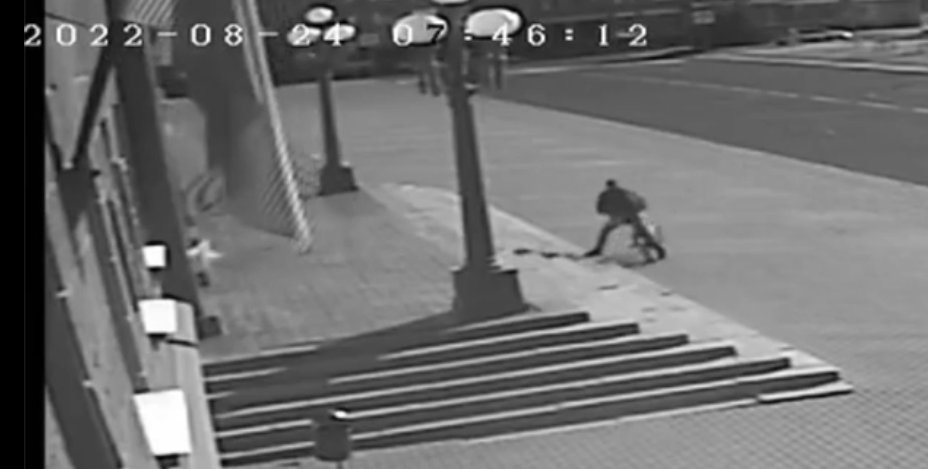
A still from CCTV footage of the attack on Oryol regional government building
Compulsory psychiatric treatment for man alleged to have thrown Molotov cocktails on Ukrainian Independence Day
On 1 August 2023, the 2nd Western District Military Court sentenced 49-year-old Mikhail Davydov to compulsory psychiatric treatment. Davydov had been charged with “terrorism” (per Article 205.1 of the Russian Federal Criminal Code) over Molotov cocktails thrown at the regional administration building in Oryol last year.
The criminal case was launched after an unknown cyclist threw two Molotov cocktails at the front doors of the Oryol regional government building on Ukrainian Independence Day (24 August) last years. The cyclist’s actions were captured by a surveillance camera.
The alleged perpetrator, Mikhail Davydov, was apprehended only a week later, on 31 August 2022. A 48-year-old resident of the region, Davydov was allegedly on the federal wanted list for “refusal to testify” (per Article 308 of the Criminal Code). According to investigators, Davydov had been hiding from the FSB since 22 April 2019. Davydov and his lawyer Larisa Melikhova denied this, however. According to them, Davydov had not been hiding from anyone, “since he had been providing for himself since 2019 and had petitioned the Federal Bailiffs Service for alimony payments, which request was denied. He was not in hiding, but had lived the entire time in the Oryol Region’s Bolkhov District, where he was detained by police officers.”
On 8 September 2022, Davydov was charged with “reckless attempted murder” (per Articles 30.3.e and 105.2 of the Criminal Code of the Russian Federation). The region’s governor, Andrei Klychkov, reported that a regional administration staffer had been wounded during the attack. However, the surveillance footage shows that the cyclist began throwing the Molotov cocktails before the doors opened (that is, they had no intention of killing anyone). In addition, the governor wrote that the employee in question was “doing fine.”
Davydov’s remand in custody at the pretrial detention center was extended several times, each time on the attempted murder charges. Davydov, however, was sent to a psychiatric hospital, apparently in February 2023. At any rate, in March 2023 the court extended his term of detention at a psychiatric hospital.
In June 2023, the case was submitted to the 2nd Western District Military Court, but now on charges of “terrorism.” On 1 August 2023, the court issued a ruling that Davydov be subjected to compulsory medical treatment. According to Kommersant newspaper, “the defendant was declared insane.”
Compulsory psychiatric treatment, unlike imprisonment, is not limited to a fixed term. It ends when a panel of physicians rules that the individual has been “cured,” and the court seconds their ruling. There have been cases in which people were subjected to compulsory psychiatric treatment for many years.
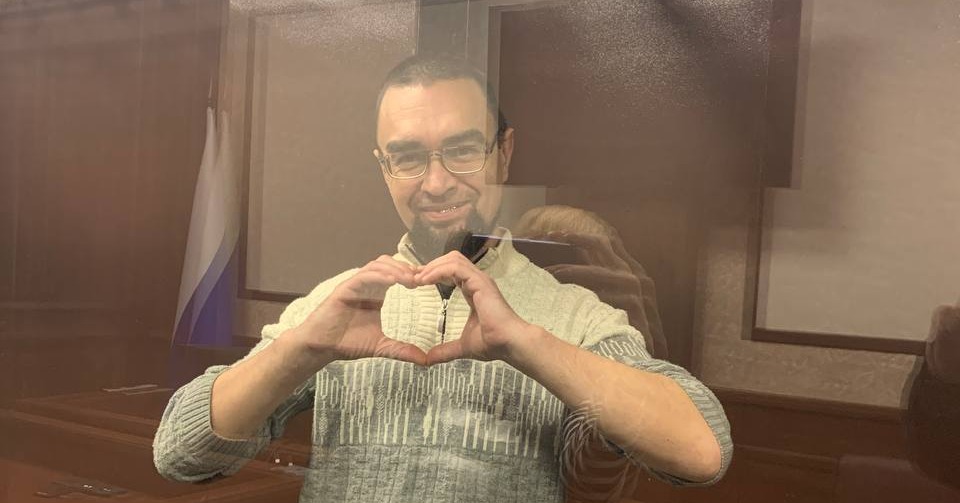


 You can support Alexander by writing him a letter or sending money to his personal account in prison so that he can subscribe to newspapers, among other things.
 Address for letters:
 It is possible to send letters via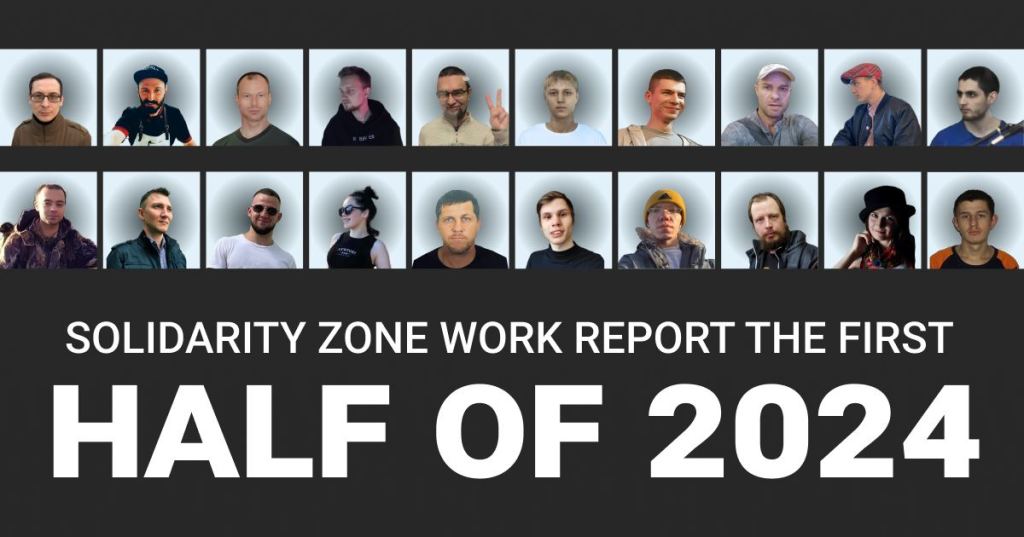
 We successfully completed nine fundraisers for individual prisoners, amounting to €28,540. As a result, we could ensure that defendants had legal support during investigations and at court, and support appeals against conviction lodged by seven prisoners who carried out acts of anti-war resistance.
 Independently of whether you are able to give financial support to Solidarity Zone, you can help us by reposting this or circulating information about us in other ways.



 Sizes:
 Price: €20 + delivery
 To order,
 10:00 a.m., 17 January 2024
 Military Court of Appeal, 25 Solnechnaya Street, Vlasikha, Odintsovo District, Moscow Region, Security Checkpoint 1
 We recommend that you call the court in advance at 8(495)598-74-29 and tell them that you wish to attend the court hearing so that the broadcast is definitely organised.

 Address for letters to Maxim:
 We ask you not to send parcels, since the verdict has entered into legal force and Maxim is now under restrictions.