Alexander Beglov, the governor of St. Petersburg, congratulated all Orthodox Christians on yesterday’s Easter holiday during his weekly program on Radio Russia, wishing them peace and health.
“Easter is a symbol of the victory of life over death, light over darkness, good over evil. Today, our soldiers are defending by force of arms the ideals of goodness and justice, and protecting the historical truth and our culture,” the official added.
In his opinion, it was observance of the ancient Christian traditions that made Russia “strong and invincible.”
Announcing his upcoming trip to the St. Petersburg Days celebration in Belarus, Beglov said that both countries opposed fascism. This year, the city will be sending its largest delegation in the history of Petersburg-Belarusian bilateral relations to the neighboring state.
“Christ is risen!”: the traditional Russian Easter greeting, as seen here on a card I received yesterday.
Basically, what I want to say is that I have been incredibly lucky when it comes to people. It is the only real thing, the future. The rest is hell.
Source: An Easter greeting sent to me by an old friend and lifelong resident of St. Petersburg. Translated by TRR
Petersburg mayor [sic] Alexander Beglov and the head of the city’s parliament [sic] Alexander Belsky addressed the residents of the Northern Capital on the occasion of the Orthodox holiday of Easter. The speeches made by the politicians were quoted by the press service for the Smolny.
Beglov and Belsky spent last night at a service in Our Lady of Kazan Cathedral.
Metropolitan Varsonofy conducted the service. Addressing the residents of St. Petersburg, the mayor [sic] recalled the special military operation.
“Today our country is undertaking a special mission. Our military has been facing difficult trials in the name of justice and the future of our children. Our hearts are with them. Our prayers are for them!” the governor said.
In his address, Beglov mentioned Mariupol, St. Petersburg’s sister city, as well as the involvement of Russians in the SMO.
“Our Church prays for them, for the soldiers, for all who are united with us in our values,” Beglov concluded.
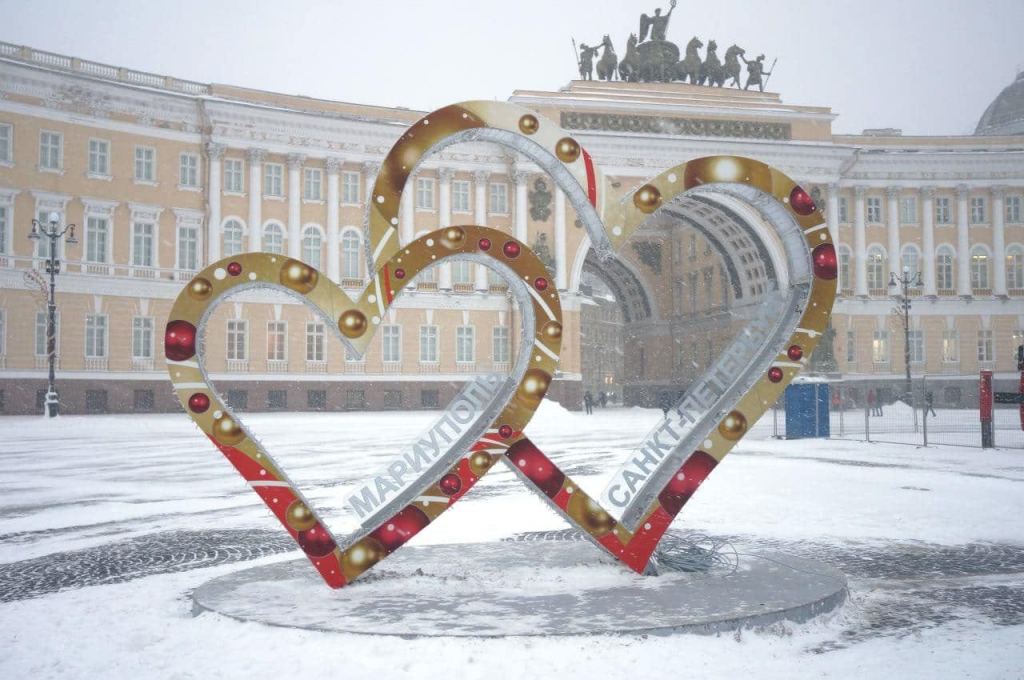
“Mariupol. Saint Petersburg.” A snapshot purportedly taken earlier today by Tatyana Razumovskaya (see her Facebook post, below).
The LED composition “Double Hearts” has been installed on Palace Square in honor of the sister city relationship between Petersburg and Mariupol, as reported on the city’s VK page.
The “Double Hearts” project was approved by Governor Alexander Beglov. Earlier, the installation was on display in a Mariupol city park. It symbolizes the unity, friendship, and love between people living in the sister cities.
Earlier, 78.ru reported that Petersburg authorities would hold a “Wish Tree” event for children from Mariupol.
Palace Square right now. It’s a three-minute walk from here to the house where I grew up and the school where I studied. Right there is the Hermitage, where I used to work.
I wish this were a dream and I could wake up.
Source: Tatyana Razumovskaya, Facebook, 13 December 2022. Thanks to VG for the heads-up. Translated by the Russian Reader
Alexander Andreyev from St. Petersburg has been killed in the military operations in Ukraine. In 2020, he graduated from School No. 368 in the city’s Frunzensky District. The school administration reported the news on its VK page.
During his school years, Andreyev was the captain of the 368 Superheroes volunteer group, and “from the very beginning he was eager to defend his Motherland,” reports the school’s VK page. In the summer, the young man went to serve and was enlisted in the 76th Pskov Airborne Division, the page reports. Later, he signed a contact, and in early October he was sent to the war zone, the post says.
Alexander was killed on October 18, according to the school administration, when the observation post where the soldier was located came under mortar attack. Andreyev was awarded the Order of Courage and buried in the Avenue of Heroes at Babigon Cemetery, the message says.
This is at least the fourth known death of a Petersburger in the war in Ukraine. Earlier, a school teacher from Petersburg, physical education teacher Vadim Sedov, was killed there. In addition, in the first week of October, Andrei Nikiforov, a member of the Nevsky Bar Association, was killed near Lisichansk. In mid-November, news arrived of the death in Mariupol of Konstantin Simonov, a Petersburger who volunteered to fight in March.
The Smolny [Petersburg city hall] is considering three options for special parking permits for residents of the Admiralty District [rayon], Fontanka.ruwrites. On November 1, paid parking was introduced there, and locals were given the option to park their cars in their municipal precinct [okrug] for 1,800 rubles a year, the online media outlet reported.
Petersburgers recalled that residents of the Central District use similar permits throughout its territory, and not only in their own [smaller] municipal precincts, Fontanka.rureports.
As the media outlet’s journalists have written without specifying their source, there are now three possible options for how paid parking will work for Admiralty District residents:
— everything will remain as it is: supporters of this proposal say that permits are needed so that a person can park outside their house for free, while trips around the district only increase traffic, which is what the reform is meant to combat
— the validity of permits will extend to the entire district: proponents of this idea believe that such innovations will soften the public outcry
— residents of the Admiralty District will be able to choose another district in which their permits are valid, giving them the opportunity to travel around nearby districts without worrying about paying for parking.
According to the media outlet, the Smolny will make a choice in the coming days.
Paid parking was introduced in the Admiralty District on November 1. Now those who want to park their car here have to pay 39 or 100 rubles per hour, depending on the type of vehicle, or buy an expensive monthly or annual pass.
But for those who live in the district, the authorities have introduced special annual parking permits that cost 1,800 rubles a year, but are valid only in the municipal precinct in which the motorist owns property or is registered to live. To park a car in any other municipal precinct, one has to pay the standard fare.
On December 9, our country celebrates Day of Heroes of the Fatherland. On this day, Heroes of the Soviet Union, Heroes of the Russian Federation, and recipients of the Order of St. George and the Order of Glory are honored.
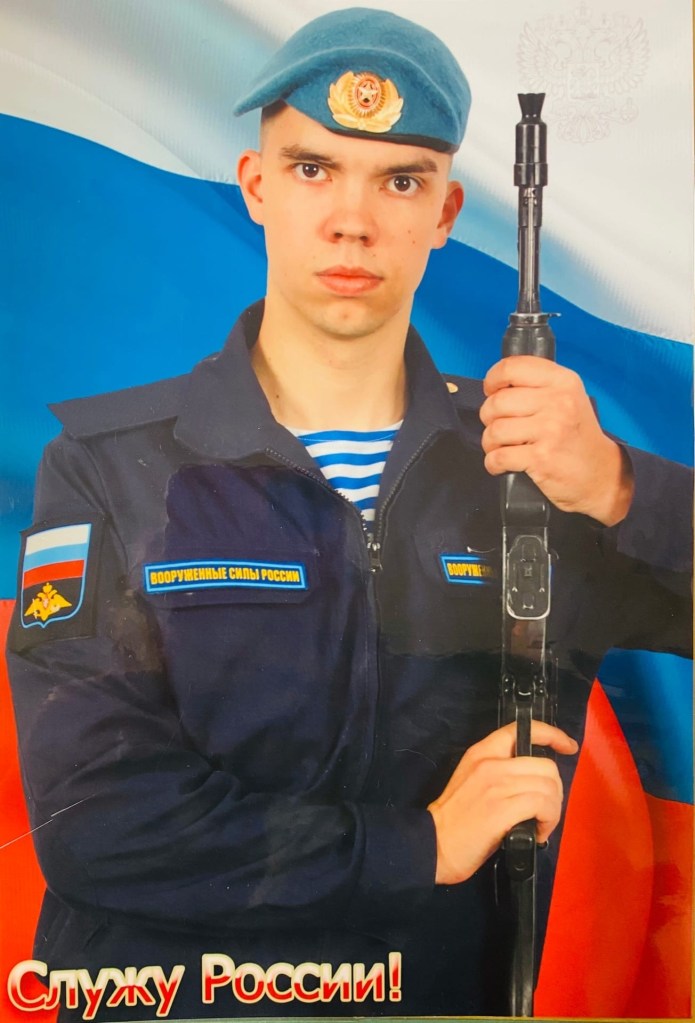
And on this day we want to tell you about a hero of our time, Alexander Igorevich Andreyev, a graduate of our school.
ALEXANDER IGOREVICH ANDREYEV
During his school years, Sasha was the team captain of the 368 Superheroes volunteer movement.
From the very beginning of the SMO, he sought to defend the Motherland. In the summer he went to serve and was able to enlist in the legendary Pskov 76th Airborne Division.
He signed a contract [as a volunteer] and just recently, in early October, was deployed in the special military operation.
On October 17, his unit was involved in heavy combat. When a comrade’s machine gun jammed, Alexander covered him before he himself attacked the enemy’s positions, thus contributing to the further advance of the paratroopers. By the end of the day, an enemy fortification had been captured. The next day, October 18, Alexander was at an observation post when the enemy opened fire with a mortar. He was hit by a shell and fatally wounded.
He died at his combat post. He was twenty years old.
By decree of the President of the Russian Federation, Alexander Andreyev has been awarded the Order of Courage.
Alexander is buried at the Babigon Cemetery on the Avenue of Heroes.
May the memory of this Russian Hero, friend and faithful comrade live forever.
We will never forget you!
Source: Secondary School No. 368 Frunzensky District of St. Petersburg, VK, 9 December 2022. Image of Alexander Andreyev courtesy of School No. 368. Translated by the Russian Reader
Petersburg is all gussied up in sparkling joyful lights. The holiday is coming to our town.
I have just read a letter from an acquaintance in a neighboring country:
“There has been no electricity in my city for almost a month. Previously, it was on for four hours a day, then for two, and then for one to two hours every few days. The last time the electricity was on was Friday for two hours. There are no schedules: it can be turned on at three a.m. when everyone is asleep and you just miss it. Along with electricity, there is also no water and heating, although it’s winter outside. Since electricity is provided for one to two hours every few days, it is only at this time that the cellphone tower begins to send out a signal. The rest of the time there is no mobile connection or internet. We have been plunged into the nineteenth century and life has come to a grinding halt.”
Source: Sergey Abashin, Facebook, 13 December 2022. Photo, above, by the author. Translated by the Russian Reader
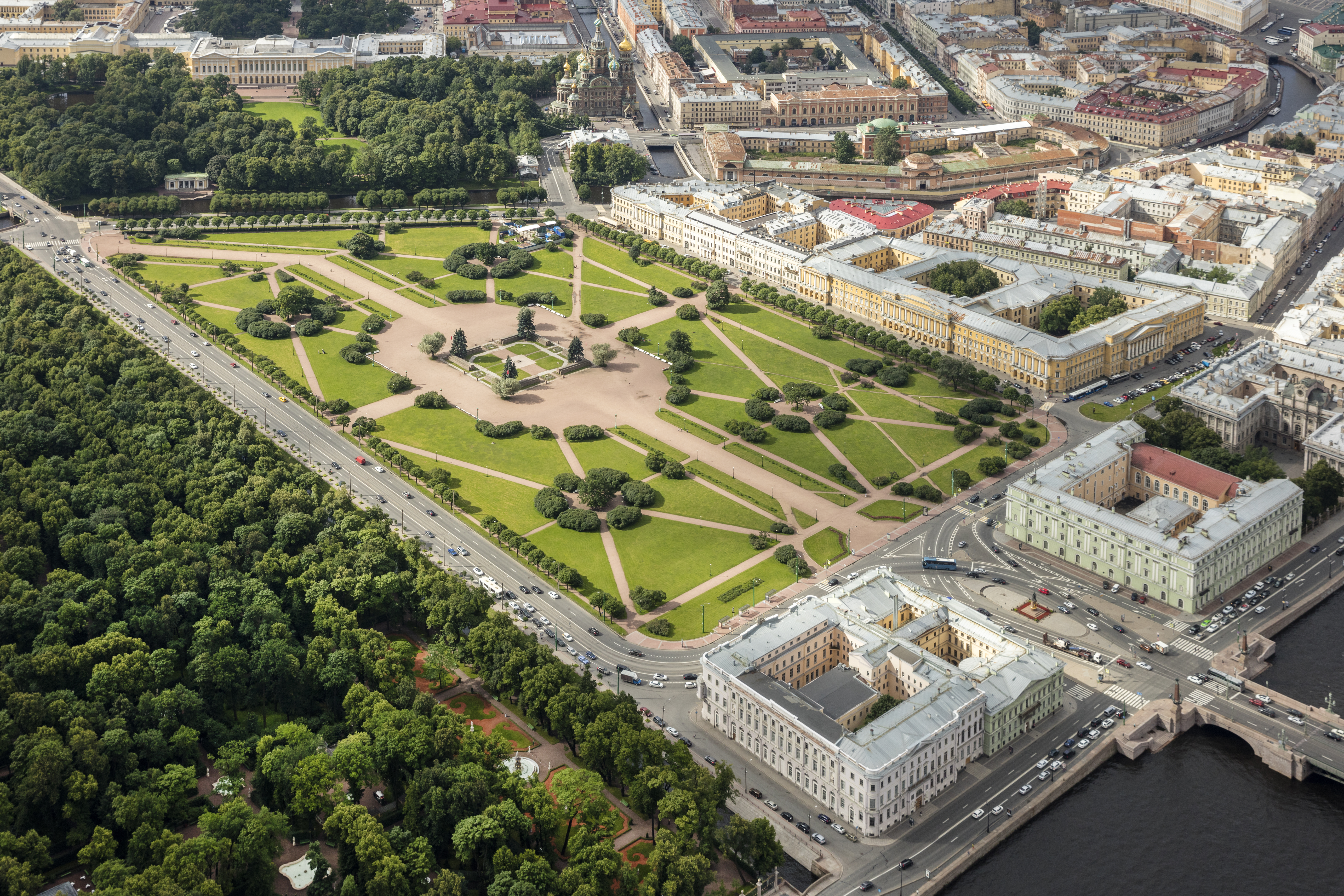
The Field of Mars is in the center of Petersburg, but it is conveniently isolated from well-populated residential neighborhoods and high streets. Unless they are extremely well attended, most political rallies held on the famous former parade grounds and revolutioanry mass burial site go unnoticed by the vast majority of Petersburgers. Photo courtesy of Andrew Shiva and Wikipedia
Up the River: The Smolny Will Expand List of Venues for Political Rallies
Mikhail Shevchuk Delovoi Peterburg
December 4, 2018
As soon as he took up his duties as acting governor of St. Petersburg, Alexander Beglov announced plans to amend the law on political rallies.
“We need to make changes and introduce order, so there were will be no violations on either side,” he said at a meeting of the Presidential Council for Civil Society and Human Rights in October.
The Smolny has now drafted amendments to the law. The principle of “Hyde Parks,” that is, of specially designated places where Petersburgers can vent their indignation without prior notification of the authorites, remains in force. However, the Smolny has proposed establishing a minimum number of such places, eight in all.
The current law on political rallies does not specify the number of venues. City hall publishes the list of political rally sites in an ordinance. Originally, in 2012, the Field of Mars (or, rather, a small part of it) was designated the city’s “Hyde Park.” Two years later, four more venues were added: Udelny Park, Polyustrovsky Park, Yuzhno-Primorsky Park, and 30th Anniversary of October Gardens. The Field of Mars was struck from the list last year.
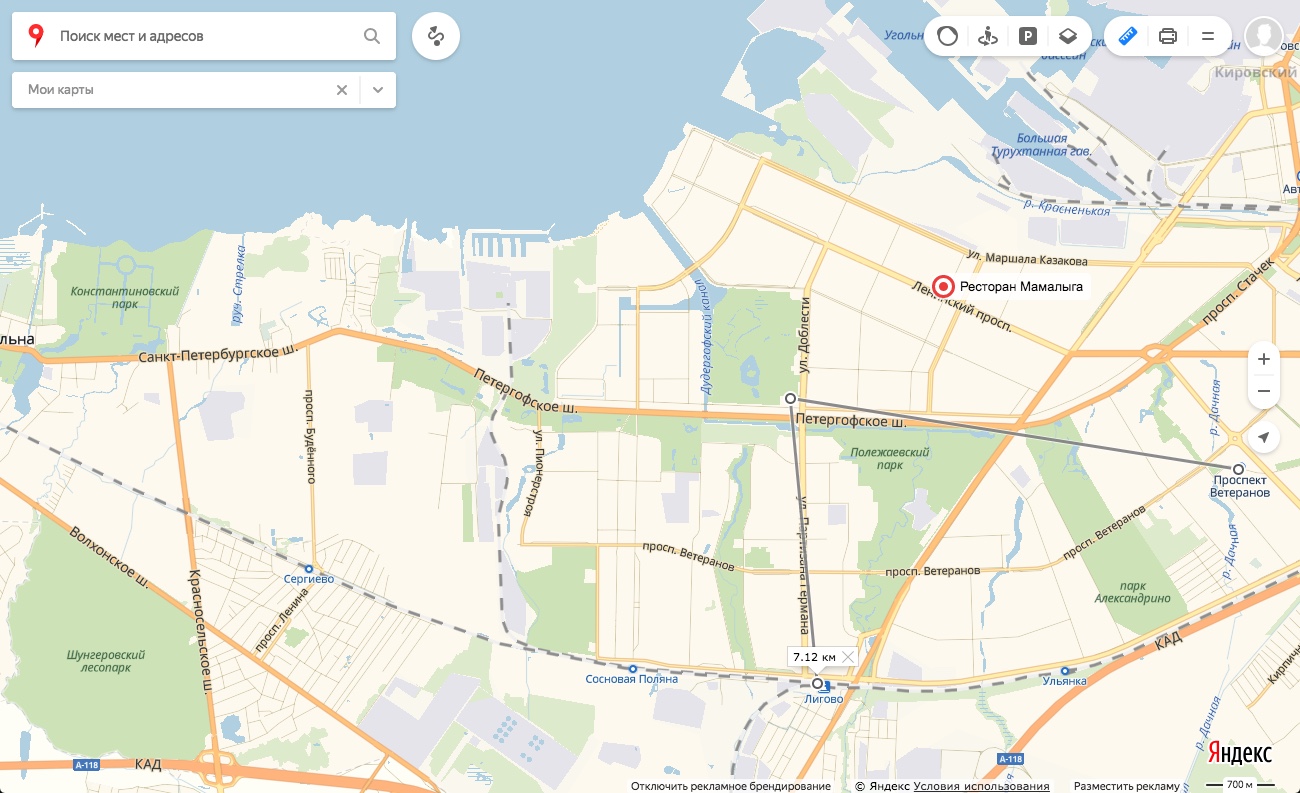
Yuzhno-Primorsky Park is located in the far southwest of Petersburg. It is four kilometers from the nearest subway station, and three kilometers from the nearest suburban railroad station. Map courtesy of Yandex
Theoretically, it is possible to organize demonstrations in other places, but city hall usually refuses to sanction the rallies under various pretexts, suggesting to organizers they use one of the designated “Hyde Parks.” As a matter of principle, however, the opposition avoids the “Hyde Parks,” which are all situated in the city’s outskirts. Instead, they prefer to assemble at such traditional sites for political rallies as Lenin Square, Pioneer Square and, sometimes, even Palace Square, although they risk fines and forcible dispersal by police.
The maximum number of people who can attend a political rally held without prior notification of the authorities would range from 200 to 500 people under the amended law. As under the old law, State Duma MPs, members of the St. Petersburg Legislative Assembly, and members of the city’s municipal district councils would be able to hold meetings with constituents on the streets.
Officials would now calculate how many people can attend a political rally at a particular venue according to the norm of one person per square meter. Lenin Square and Pioneer Square would thus be able to accommodate rallies attended by as many as 10,000 people. Organizers would also be obliged to inform officials of canceled rallies under the threat of a fine of 5,000 rubles for individuals and 100,000 rubles for legal entities.
“It’s not the number of sites that matters,” said Andrei Pivovarov, leader of the local office of Open Russia. “And no one has ever been fined for going over the maximum number of attendees. One venue would be enough for us, but as long as it is in downtown Petersburg. If the venues are going to be in the outskirts, city hall could give us a dozen such places, but we would try to protest downtown anyway.”
However, Pivovarov said that if the new list included the Field of Mars, Lenin Square, and Pioneer Square, the opposition would be quite satisfied and make use of these venues.
St. Petersburg Legislative Assembly member Maxim Reznik also named the two squares. He said the number of people attending a rally and the convenience of Petersburgers were more important than a particular place. The opposition was always ready for dialogue, he said. However, if the regime made a point of tightening the screws, dissenters, Reznik said, would choose the paddy wagon, that is, they would choose to attend an unauthorized rally rather than cancel it.


 On December 9, our country celebrates Day of Heroes of the Fatherland. On this day, Heroes of the Soviet Union, Heroes of the Russian Federation, and recipients of the Order of St. George and the Order of Glory are honored.
 May the memory of this Russian Hero, friend and faithful comrade live forever.
 Yuzhno-Primorsky Park is located in the far southwest of Petersburg. It is four kilometers from the nearest subway station, and three kilometers from the nearest suburban railroad station. Map courtesy of