The Help

An exhibit at the Cooper Molera Adobe museum in Monterey, California. Photo: The Russian Reader

Cooper Molera Adobe is now pursuing the interpretation of Ohlone/Esselen/Costonoan Native Indian slaves at our historic site. This includes evaluating our history, beyond gaining simple historical information and respectfully work with descendants to then forge a richer, more diverse narrative and legacy.

Three pillars of multi-disciplinary research, relationship building, and interpretation as major benchmarks will guide our methodology as we move forward with this project. Cooper Molera Adobe has partnered with Woodlawn Pope Leighey and Shadows on the Teche as a working group in a large network of sites the National Trust has to move toward this collective goal.

Failing to tell the truth about race and slavery results in widely-held fears of engaging with people who look, speak, act or think differently than oneself. It is lived out in anger and despair in feeling marginalized, erased, and invisible due to demographics or identity.

Follow us on InstagramFacebook, and our website to see more of our updates in the future for this project.

Source: “Cooper Molera Adobe Joins the National Trust Group Sites of Enslavement,” Cooper Molera Adobe, 6 June 2021


On April 27, 1863, nearly five months after President Abraham Lincoln issued the Emancipation Proclamation, California abolished its system of forced apprenticeship for American Indians. Under the apprenticeship provisions of the state’s Act for the Government and Protection of Indians, several thousand California Indians, mostly children, had suffered kidnapping, sale and involuntary servitude for over a decade.

Newly elected California Republicans, eager to bring California in line with the national march toward emancipation, agitated for two years in the early 1860s to repeal Indian apprenticeship. And yet those Republicans’ limited vision of Indian freedom — one in which Indians would be free to reap the fruits of their labor, but not free from the duty to labor altogether — made for an incomplete Indian Emancipation Proclamation. Although California was distant from the battlefields of the Civil War, the state endured its own struggle over freedom that paralleled that of the North and the South.

The Republican campaign to abolish Indian servitude ran up against nearly a century of coerced Indian labor in California. Under Spanish and Mexican rule, thousands of California Indians worked on missions and ranches, bound to their employment through a combination of economic necessity, captivity, physical compulsion and debt.

With the United States’ conquest of California in 1847, the discovery of gold in 1848 and the formation of a state government in 1849, new American lawmakers expanded and formalized Indian servitude to meet growing demands for labor. The 1850 Act for the Government and Protection of Indians authorized whites to hold Indian children as wards until they reached adulthood. Indian adults convicted of vagrancy or other crimes could be forced to work for whites who paid their bail.

Skyrocketing demand for farmworkers and domestic servants, combined with violence between Indians and invading whites in the northwestern part of the state, left Democrats in war-torn counties clamoring for the expansion of the 1850 Indian act. A “general system of peonage or apprenticeship” was the only way to quell Indian wars, one Democrat argued. A stint of involuntary labor would civilize Indians, establish them in “permanent and comfortable homes,” and provide white settlers with “profitable and convenient servants.” In 1860, Democrats proposed new amendments to the Act for the Government and Protection of Indians that allowed whites to bind Indian children as apprentices until they reached their mid-20s. Indian adults accused of being vagrants without steady employment, or taken as captives of war, could be apprenticed for 10-year terms. The amendments passed with little debate.

As the nation hurtled toward a war over slavery, Californians watched as their own state became a battleground over the future of human bondage. Apprenticeship laws aimed at “civilizing” the state’s Indians encouraged a robust and horrific slave trade in the northwestern counties. Frontier whites eagerly paid from $50 to $100 for Indian children to apprentice. Groups of kidnappers, dubbed “baby hunters” in the California press, supplied this market by attacking isolated Indian villages and snatching up children in the chaos of battle. Some assailants murdered Indian parents who refused to give up their children.

Once deposited in white homes, captive apprentices often suffered abuse and neglect. The death of Rosa, a 10-year-old apprentice from either the Yuki or Pomo tribes, provides a grim case in point. Just two weeks before the repeal of Indian apprenticeship, the Mendocino County coroner found the dead girl “nearly naked, lying in a box out of doors” next to the home of her mistress, a Mrs. Bassett of Ukiah. Neighbors testified that the child was sick and restless and that Basset shut her out of the house in the middle of a raging snowstorm. Huge bruises on Rosa’s abdomen suggested that Bassett had mercilessly beaten the ill child before tossing her out into the blizzard. Mendocino officials never brought charges in the case.

The horrors of kidnapping and apprenticeship filled the state’s newspapers just as antislavery California Republicans swept into power in 1861–2. Republicans assailed the apprentice system and blamed Democrats for the “abominable system of Indian apprenticeship, which has been used as a means of introducing actual slavery into our free State.” George Hanson, an Illinois Republican whose close relationship with Abraham Lincoln earned him an appointment as Northern California’s superintendent of Indian affairs, vowed to eliminate the state’s “unholy traffic in human blood and souls.” He tracked down and prosecuted kidnappers in the northwestern counties (with mixed success) and petitioned the State Legislature to abolish the apprenticeship system.

In 1862, Republican legislators proposed two new measures to overturn the 1860 apprenticeship amendments. Democrats blocked these bills and insisted that apprenticeship “embodied one of the most important measures” for Indians’ “improvement and civilization.” Indian servitude lived on.

By the time the legislature met again in the spring of 1863, however, all signs pointed to the destruction of the apprenticeship system. Republicans won firm majorities in both houses of the State Legislature, and in January California became the first state to endorse Lincoln’s Emancipation Proclamation. Republicans again proposed to repeal the apprenticeship amendments, and this time they achieved their goal with no debate or dissent. Involuntary labor for American Indians died quietly.

Or did it? Republicans had eliminated all the 1860 amendments authorizing the forced apprenticeship of American Indians. But they had left intact sections of the original 1850 act that mandated the forcible binding out of Indian convicts and vagrants. Moreover, repeal only prevented future apprenticeships; Republican legislation did not liberate Indians already legally apprenticed. After repeal, as many as 6,000 Indian children remained servants in white homes.

The incomplete nature of Indian emancipation in California reflected Republicans’ own ambivalence toward Indian freedom. Most Republicans opposed the kidnapping and enslavement of Indians. They believed that Indians, like former African-American slaves, should be entitled to reap the economic rewards of their own work. On the other hand, they asserted that the key to “civilizing” Indians was to force them to participate in the California labor market. They could not be free to support themselves through traditional mobile hunting and gathering practices that removed their labor from white supervision and tied up valuable natural resources. Such a lifestyle was, in Republicans’ minds, little more than idle vagrancy. Just as their Republican colleagues on the East Coast argued that ex-slaves should be schooled to labor by being bound to plantation wage work through long-term contracts, California Republicans began to advocate compulsory labor as the only way to cure Indian vagrancy.

The Republican vision for Indian freedom quickly took shape after the Civil War. Republican appointees who oversaw California’s Indian reservations compelled all able-bodied Indians to work on the reservation farms. Those who refused, or who pursued native food-gathering practices, forfeited the meager federal rations allotted to reservation Indians. By 1867, one Republican agent declared that “the hoe and the broadaxe will sooner civilize and Christianize than the spelling book and the Bible.” He advocated forcing Indians to work until they had been “humanized by systematic labor.” These policies persisted long after the war. At Round Valley Reservation, one critic observed in 1874 that “compulsion is used to keep the Indians and to drive them to work.” Indian workers received no payment for “labor and no opportunity to accumulate individual property.”

The ambiguous postwar liberty of California Indians reveals that the Civil War was a transcontinental conflict that reached west to the Pacific. The freedoms won in wartime, and the unfulfilled promises of emancipation, encompassed not only black and white, free and slave, but also American Indian peoples who suffered from distinctly Western systems of unfree labor. The Civil War and Reconstruction are best understood as truly national struggles over the meaning and limits of freedom, north, south and west.

Source: Stacey L. Smith, “Freedom for California’s Indians,” New York Times, 29 April 2013


The gardens at the Cooper Molera Adobe in Monterey, California. Photo: The Russian Reader

[…]

Confusion about how sex trafficking works and who qualifies as a victim has compounded the problem. The government’s 2019 indictment charged Epstein with trafficking minors between 2002 and 2005, the period covered by his earlier Florida plea deal. The adult women Epstein entrapped after his 2008 conviction weren’t included in the indictment.

In 2019, prosecutors brought charges using the minimum number of victims needed to apprehend Epstein in order to keep the case secret and avoid him fleeing, according to people familiar with the investigation.

Prosecutors continued interviewing victims after his July 2019 arrest and had planned to expand the indictment, including potentially to adult women, had Epstein not died the following month, according to these people and a 2019 Justice Department memo released in the files.

For sex-trafficking cases involving adults, prosecutors must prove the victim was compelled into sexual exploitation through force, fraud or coercion. Fraud typically involves false promises of employment or a better life; coercion can be psychological and take the form of threats of deportation, blackmail or debt bondage, lawyers said.

Federal prosecutors have successfully prosecuted cases of adult sex trafficking. In 2019, the Nxivm group founder Keith Raniere was convicted for his exploitation of adult women and sentenced to 120 years in prison.

Most recently, the Alexander brothers were convicted in a case in which adult women testified that they had been lured to exclusive parties and trips, then drugged and assaulted. Lawyers for the Alexander brothers said they planned to appeal.

Pyramid scheme

After his 2008 plea deal, Epstein shifted his focus to adult women who looked like teenagers—many of them fashion models from Europe and Russia. He dangled fake jobs linked to his famous connections, promising work at places like Victoria’s Secret. He rarely delivered.

Once inside his orbit, the women said they were coerced into performing massages that escalated into sexual demands. Several have said he required at least one such encounter a day, and when no other women were available, he turned to his “assistants.” 

Continue reading “The Help”
Slave States

Racist text messages invoking slavery raised alarm across the country this week after they were sent to Black men, women and students, including middle schoolers, prompting inquiries by the FBI and other agencies.

The messages, sent anonymously, were reported in several states, including New York, Alabama, California, Ohio, Pennsylvania and Tennessee. They generally used a similar tone but varied in wording.

Some instructed the recipient to show up at an address at a particular time “with your belongings,” while others didn’t include a location. Some of them mentioned the incoming presidential administration.

It wasn’t yet clear who was behind the messages and there was no comprehensive list of where they were sent, but high school and college students were among the recipients.

The FBI said it was in touch with the Justice Department on the messages, and the Federal Communications Commission said it was investigating the texts “alongside federal and state law enforcement.” The Ohio Attorney General’s office also said it was looking into the matter.

Tasha Dunham of Lodi, California, said her 16-year-old daughter showed her one of the messages Wednesday evening before her basketball practice.

The text not only used her daughter’s name, but it directed her to report to a “plantation” in North Carolina, where Dunham said they’ve never lived. When they looked up the address, it was the location of a museum.

“It was very disturbing,” Dunham said. “Everybody’s just trying to figure out what does this all mean for me? So, I definitely had a lot of fear and concern.”

Her daughter initially thought it was a prank, but emotions are high following Tuesday’s presidential election. Dunham and her family thought it could be more nefarious and reported it to local law enforcement.

“I wasn’t in slavery. My mother wasn’t in slavery. But we’re a couple of generations away. So, when you think about how brutal and awful slavery was for our people, it’s awful and concerning,” Dunham said.

About six middle school students in Montgomery County, Pennsylvania, received the messages too, said Megan Shafer, acting superintendent of the Lower Merion School District.

“The racist nature of these text messages is extremely disturbing, made even more so by the fact that children have been targeted,” she wrote in a letter to parents.

Students at some major universities, including Clemson in South Carolina and the University of Alabama, said they received the messages. The Clemson Police Department said in a statement that it been notified of the “deplorable racially motivated text and email messages” and encouraged anyone who received one to report it.

University of Alabama freshman Alyse McCall told sister station WVTMM that she was in class when she got the text, and it brought her to tears.

“I can say, ‘Oh, it’s a spoof message, oh, it’s a spam message,’ but that’s truly scary,” McCall said. “These messages are going out to thousands of young African-American students who fought just as hard to get into college as everybody else did and make opportunities for themselves to thrive, and getting those messages and then walking around or not even going to class because you’re scared to walk on your own campus. It’s not fair.”

Fisk University, a historically Black university in Nashville, Tennessee, issued a statement calling the messages that targeted some of its students “deeply unsettling.” It urged calm and assured students that the texts likely were from bots or malicious actors with “no real intentions or credibility.”

Nick Ludlum, a senior vice president for the wireless industry trade group CTIA, said “wireless providers are aware of these threatening spam messages and are aggressively working to block them and the numbers that they are coming from.”

David Brody, director of the Digital Justice Initiative at The Lawyers’ Committee for Civil Rights Under Law, said that they aren’t sure who is behind the messages but estimated they had been sent to more than 10 states, including most Southern states, Maryland, Oklahoma and even the District of Columbia. The district’s Metropolitan Police force said in a statement that its intelligence unit was investigating the origins of the message.

Brody said a number of civil rights laws can be applied to hate-related incidents. The leaders of several other civil rights organizations condemned the messages, including Margaret Huang, president and CEO of the Southern Poverty Law Center, who said, “Hate speech has no place in the South or our nation.”

“The threat — and the mention of slavery in 2024 — is not only deeply disturbing, but perpetuates a legacy of evil that dates back to before the Jim Crow era, and now seeks to prevent Black Americans from enjoying the same freedom to pursue life, liberty, and happiness,” said NAACP President and CEO Derrick Johnson. “These actions are not normal. And we refuse to let them be normalized.”

Source: Ayanna Alexander, Ali Swenson and Gary Fields, “Racist text messages referencing slavery raise alarms in multiple states and prompt investigations,” Associated Press, 8 November 2024


Aside from occasionally noting that Russian serfs and American slaves were emancipated within less than two years of each other, historians — especially American historians — have made little effort to compare the development, treatment and status of the two servile labor groups. It apparently has been concluded a priori that there was no solid basis for such a comparison. American slaves were, after all, a race apart — Africans who had been uprooted from their homeland and brought to the New World in chains where they were systematically exploited and degraded in a peculiarly vicious form of involuntary servitude. Conversely, Russian serfdom has been generally accepted as an anachronistic legacy of medieval Europe that had finally run its course by the mid nineteenth century.

Thus the assumption that there was no common ground for a useful comparison of the two labor systems has meant the absence of any such comparative study. What follows is a preliminary and brief attempt to take the first steps toward filling that historical void.

Source: JSTOR

Juneteenth

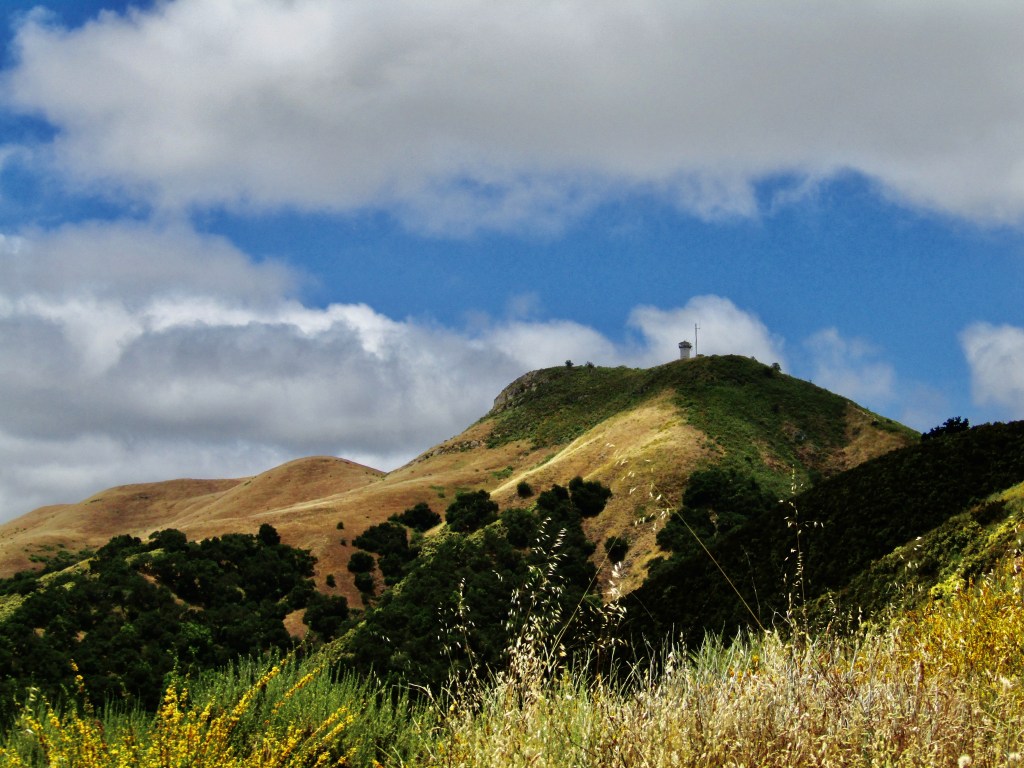
A view of the fire watch tower on Snively’s Ridge, Garland Ranch Regional Park, Carmel Valley, California, 19 June 2023.
Photo by the Russian Reader

The supposed ‘trial’ has begun in Rostov[-on-Don] (Russia) of 22 Ukrainian prisoners of war, many of whom, though not all, are members of the Azov Battalion who were seized while defending Mariupol against the Russian invaders in 2022. Moscow is using a baseless, and post-dated, ruling claiming the Azov Battalion to be a ‘terrorist organization’ as its excuse for violating international law and trying men and women for defending their own country against an invading enemy. The photos from the first hearing on 14 June suggest that at least the Ukrainian men are being held without enough to eat and probably in conditions which are, in themselves, a breach of the Geneva Conventions.

This legal travesty is to take place at the same Southern District Military Court which has been passing politically motivated sentences against Crimean Tatar and other Ukrainian political prisoners since 2014.  That, however, is not the only similarity, since Russia is effectively using identical charges as those used to pass sentences of up to 19 years’ imprisonment against political prisoners from occupied Crimea, most of them Crimean Tatar civic journalists and activists.

The charges against the Ukrainian POWs are, firstly, of involvement in an organization recognized in Russia (and nowhere else) as ‘terrorist, under Article 205.5 of Russia’s criminal code.  All of the men and women, however, were taken prisoner before Russia’s Supreme Court declared Azov to be ‘terrorist’ on 2 August 2022, making the charges illegal even according to Russian law.  The second charge is more incredible.  All are accused of ‘actions aimed at violent seizure of power or violent retention of power and violation of Russia’s constitution’.  Even if, as is possible, the Russian Investigative Committee is claiming that the Ukrainians were seeking ‘to overthrow’ Russia’s proxy ‘Donetsk people’s republic’, this could still not begin to justify such a charge since Mariupol was not within this pseudo formation until Russia bombed and destroyed around 90% of Mariupol’s infrastructure in order to gain control of it.  Those convicted, and the ‘court’ in question invariably passes only those sentences demanded of it, face sentences of from 15 years to life imprisonment. 

It was originally reported that 24 men and women were to go on trial, however on 14 June, it was learned that two POWs — David Kasatkin and Dmytro Lablinsky — had been released in an exchange of prisoners.

Most reports call all of the 22 remaining members of the Azov Battalion, however the Russian newspaper Kommersant has indicated that several were either members of Ukraine’s National Guard or were seized in Mariupol, but had served in the Azov Battalion long before Russia’s full-scale invasion.  The eight (perhaps nine) women were, Kommersant asserts, cooks for the Azov Battalion and, purportedly, all signed ‘confessions’.  It is possible that those ‘confessions’, making it possible for claims that some ‘admit guilt’, are the reason why Russia has included them in the ‘trial’, as well as their assertion that they were only there because they needed a job, etc.

From the reports available, it would seem that many of those whom Russia has put on ‘trial’ should, in fact, be treated as civilians. Those who were defending Mariupol and the Azovstal Steelworks are prisoners of war who are protected, under the relevant Geneva Convention, from prosecution merely for taking part in hostilities.  The only exception is if they are found guilty of war crimes.  It is telling that Russia has thus far used its proxy ‘Donetsk and Luhansk people’s republics’ to stage any supposed ‘trials’ on war crimes charges.  These illegal entities are not recognized by the international community and one of the many reasons why Freedom House earlier rated the two entities together as almost on a par with North Korea was the total lack of rule of law and mechanisms for a fair trial.  There are absolutely no grounds for believing that the men sentenced to terms from 12 to 25 years by these quasi ‘republics’ were guilty of the crimes alleged, or indeed, that the supposed war crimes even took place.  Among these ‘sentences’ was the 13-year term of imprisonment against well-known human rights activist and journalist Maksym Butkevych.  He is known to have been denied access to a lawyer, and there is evidence that he was not even in Donbas when the ‘war crime’ was alleged to have taken place.

The farcical nature of such ‘court’ stunts was, in fact, seen and condemned by the international community when the so-called ‘Donetsk people’s republic’ ‘sentenced’ two Britons (Shaun Pinner and Aiden Aslin) and Moroccan Brahim Saadoun to death, claiming them to have been ‘mercenaries’ although all were contract soldiers in Ukraine’s Armed Forces and, unequivocally, prisoners of war.

Russia first showed its contempt for the lives of Ukrainian and other prisoners of war, and for international law, when, on 29 July 2022, as many as 50 Azovstal defenders and other Ukrainian POWs were killed in an unexplained explosion at the Russian-controlled Olenivka Prison.  While Russia followed its usual policy and blamed Ukraine, it also actively blocked investigations by the UN and International Red Cross which made sense only if they were behind this effective mass murder of men protected under international law.

The ’trial’ now underway is presumably for internal consumption as the images of emaciated Ukrainian prisoners of war are shocking, as is the cynical lawlessness of the charges against the Ukrainian men and women.

Source: Halya Coynash, “Russia begins illegal show ‘trial’ of Ukrainian POWs for defending Ukraine in besieged Mariupol,” Human Rights in Ukraine, 16 June 2023. Thanks to News from Ukraine Bulletin No. 51 for the heads-up.


This story starts — but certainly doesn’t end — in 19th century Maryland, when John Townshend updated his will.

Townshend grew convinced at the end of his life that God would punish him if he did not free the enslaved people he owned and give them all of his property. But Townshend’s relatives challenged his final wishes in court, arguing that his decision had been the result of a delusion.

That 1848 case was the first U.S. appearance of what became known as the “insane delusion rule,” which remains grounds for contesting wills to this day. And Townshend v. Townshend itself has been cited in at least 70 other cases across the country — from New Hampshire to California — over the years, as recently as 2007.

It’s one of thousands of cases involving enslaved people that lawyers and judges continue to cite as good precedent, more than a century after the 13th Amendment abolished slavery in the U.S.

Justin Simard, an assistant professor at Michigan State University’s College of Law, estimates there are about 11,000 such cases out there — and about one million more that use them to back up their arguments.

“I’ve done some analysis just with a sample of cases and concluded that 18% of all published American cases are within two steps of a slave case, so they either cite the slave case or cite a case that cites a slave case,” Simard tells NPR. “The influence is really, really extensive.”

Simard has spent years documenting them, with the help of some two dozen law students.

The result is the Citing Slavery Project, a comprehensive online database (and map) of slave cases and the modern cases that cite them as precedent. They expect to add the last of their nearly 9,000 collected cases to the website this summer.

The project aims to push the legal profession to grapple with its links to slavery, an overdue reckoning that Simard hopes will start with lawyers and judges acknowledging their use of the troubling precedents.

He says 80% of the time judges don’t mention that these cases involve slavery at all, either because they’re unaware or uncomfortable.

“We’re not saying don’t cite them,” he explains. “All I’m asking people to do is just don’t cite them without acknowledgement, without thinking through whether it actually makes sense to cite them, which I think is a pretty reasonable thing to ask.”

[…]

Source: Rachel Treisman, “Slave cases are still cited as good law across the U.S. This team aims to change that,” NPR, 14 June 2023