
The following two stories turned up next to each other in my inbox several mornings ago. The first story (about the hidden costs of common areas in Petersburg’s new estates) was promoted as its “Article of the Week” by the business daily Delovoi Peterburg, whose chronicles of post-Soviet capitalism on the march in my favorite city I have been reading and sharing here for two decades, usually against the grain. The second story (about how the authorities in Kaliningrad hushed up the recent death by self-immolation of an antiwar protester at the city’s main WWII memorial) was published by the exiled investigative journalism website Important Stories aka IStories, which is celebrating its sixth birthday. Seemingly written on different planets in different languages, they give an accurate sounding of the bewildered, muted condition of the “Russian soul” (i.e., Russian society) after four-plus years of a vicious, genocidal war unleashed by a thoroughly corrupt “post-fascist” dictatorship. ||||| TRR
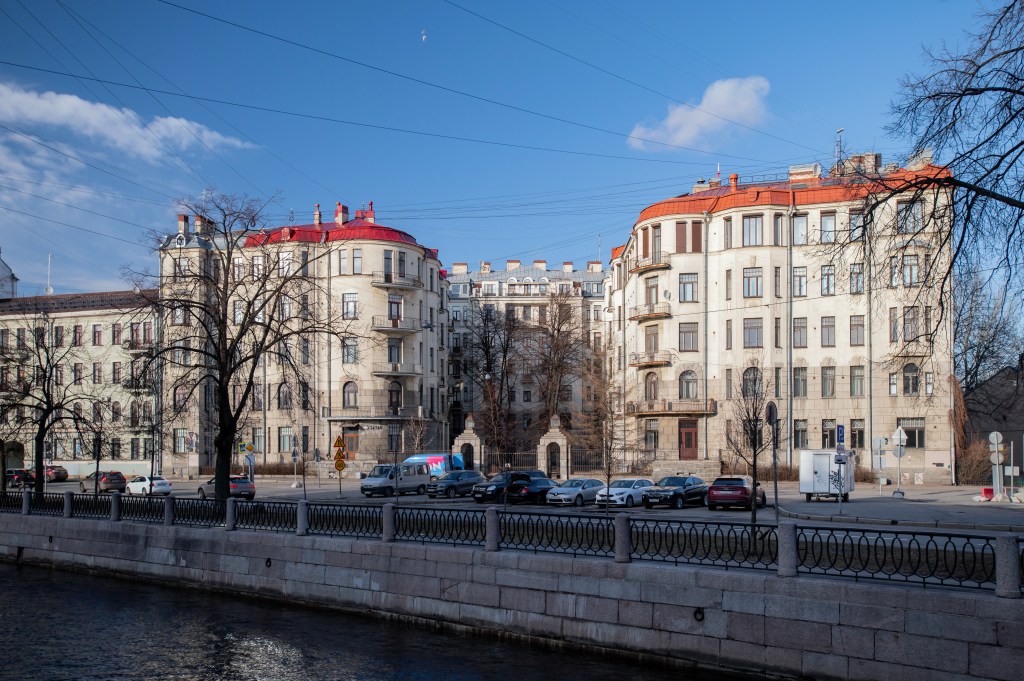
When she buys a flat—a fifty-square-meter flat, for example—a tenant also gets into the bargain several hundred square meters of lobbies, corridors, and stairways, for whose upkeep she will pay monthly. Those same square meters determine whether she will be able to squeeze past her neighbor in the lift lobby, whether it is easy to push a pram into the building , and whether coming home is a pleasurable experience.
The common areas are the only part of the apartment block the buyer does not choose although she passses through them every day.
How many square meters are not allocated to flats
The proportion of sellable space in apartment blocks depends primarily on their category.
“In the comfort class, the average is sixty-five to seventy percent; in the business segment, sixty to sixty-five; in the premium class, sixty; and it’s fifty to sixty for the elite class,” explains Olga Ryankel, head of residential property research at Nikoliers.
ELEMENT product director Alexander Matyushkin cites a target figure of up to seventy percent in his firm’s projects, with the actual average standing at around sixty-five percent
Lenstroytrest reports a ratio of seventy-five to eighty-two percent, and considers this to be balanced. According to Maxim Zhabin, development director at the Edino Group, the range for market heavy hitters hovers between sixty-five and eighty-five percent.
“If a developer artificially ‘squeezes’ common areas for the sake of the ratio, this is usually interpreted in practice as cutting corners on the facilities,” he says.
What constitutes non-residential space
An increase in total floor area is determined not by a single factor, but by a combination of factors, and the contribution of each depends on the project category and architectural designs.
In the mass-market segment, the primary contributors to floor area are landings, corridors, and stairwells. And yet, an increase in the number of lifts expands the non-sellable area by fifteen to twenty percent, smoke-free stairwells add a further eight to ten percent, and complexly designed building exteriors also increase the non-sellable perimeter, notes Matyushkin.
Zhabin also cites lift lobbies and stairwells as primary factors, adding to them the utility areas and entrance lobbies.
Optional spaces the developer includes over and above the standard requirements comprise a separate category.
Natalia Kukushkina, head of product and analytics at the CDS Group, differentiates between two categories of common spaces.
“The total floor area includes both essential elements, such as stairwells, basements, entrance lobbies, and communal facilities on each floor, spaces without which a building cannot be constructed, as well as spaces added at the developer’s discretion. These may include non-essential spaces such as spacious lobbies, coworking spaces, pram storage rooms, gyms, swimming pools, communal terraces on top floors, and so on.”
Where comfort ends and excess begins
Ultimately, each developer decides for themself how much common space to include in their project. Yekaterina Zaporozhchenko, chief executive officer at PRO Aparty, suggests a specific indicator: arrears on maintenance fees exceeding ten percent are a sign that residents do not feel the spaces they are paying for are value for their money.
“There should be just enough common spaces for them to be used, and the maintenance budget should not exceed the average figures for the segment,” she explains.
Yudita Grigaite, marketing director at Lenstroytrest, is convinced that excessive common space increases costs and operational burdens without adding any value.
Matyushkin highlights the reverse risk: excessive optimization is also dangerous. A shortage of lifts or narrow corridors diminish the quality of the built environment more than is apparent when a tenant is purchasing an apartment.
“A well-designed common space sets down a clear daily route from courtyard to flat without imposing unnecessary obstacles, and it provides practical arrangements for dealing with prams and deliveries, adequate ventilation and lighting, and clearly defined areas of liability,” says Zhabin in describing the working model.
Inefficiency arises when maintenance costs are high yet residents are unclear about what exactly they are paying for.
How square meters of common space are converted into a line item on the bill
The ratio of sellable space to total floor area translates into two figures residents encounter on a regular basis: the price per square meter at the time of purchase and the maintenace charges they pay after they move into their flat.
The math is straightforward: the higher the percentage of common space, the more expensive each square meter of living space. Developers figure the cost of building and finishing common space into the price of flats.
“The ratio between living space and total floor area directly impacts both the cost of a square meter and future operating expenses, all of which are reflected in the maintenance rates. Therefore, a building’s economic model should be balanced. The comfort of the common areas should be in line with the project’s class and the buyer’s expectations, while maintenance costs should be reasonable,” says Anzhelika Alshayeva, commercial director at the KVS Group, when asked to describe the process.
The difference in maintenance bills among segments is tenfold.
According to PRO Aparty, the difference ranges from sixty to six hundred rubles per square meter. Kukushkina warns of the scenario that this gap generates in practice.
“All additional expenses in a maintenance bill are regarded as too high, and some residents absolutely refuse to pay them. Ultimately, a building might end up with a swimming pool which is closed, a common terrace which is not cleaned, and facade lighting which is turned off.”
The third factor is density which, as Zhabin reminds us, is manifested in “queues to the lift, acoustics, and the amount of traffic in the courtyard,” that is, in factors which are not visible when potential buyers look at flats but which are felt daily.
What buyers don’t see
Ryankel notes a systemic problem in the mass-market segment: prams.
“Unfortunately, the spaces for storing prams and bikes are not separated n the majority of new apartment blocks, ultimately giving rise to a conflict of interests and the impossibility of organizing the space comfortably. And yet, developers often mention a pram storage area without specifying its size. As a result, a space of just seven square meters ends up trying to accommodate prams, bicycles, and tires.”
“Up to eighty percent of the user experience is shaped not inside their flat, but on the way there: from the building’s entrance to their front door. This includes logistics, how the lift works, acoustics, traffic flow, and the convenience of the infrastructure,” says Matyushkin.
There is also a time-related factor that is not taken into account at all when purchasing a flat.
Zaporozhchenko points out the costs of renovating furniture in common areas and maintaining the building’s utility systems after five to seven years, as well as keeping the building’s exterior clean—expenses that no buyer factors into their budget when signing the contract.
Zhabin adds that without a cleaning schedule and proper ventilation even the most luxurious finishes in a building’s entrance lobby will cease to feel “upscale” after a few years.
According to the market players surveyed, pressure on profit margins in the mass-market and comfort-class segments will soon compel developers to increase the share of floor space sold while maintaining visible indicators of quality, such as high ceilings in lobbies and high-quality finishes in entrance areas.
Club-style venues—coworking spaces, community centers, and gyms—will remain a key marketing tool, but some of them will be switched to a fee-based model or be leased out to external management companies on a commercial basis to ease the burden on utility bills.
The gap between rates in the mass-market and premium segments will continue to grow, along with the number of conflicts over maintenance bills in buildings whose infrastructure is at odds with the financial solvency of its residents.
Source: Pavel Nikiforov, “The non-residential building: what the tenant gets along with the flat,” Delovoi Peterburg, 5 May 2026. Translated by the Russian Reader
Information about the self-immolation of a resident of Kaliningrad born in 1988 in protest against the war was first published in an open report of the Estonian Foreign Intelligence Service. The authors of the report did not disclose the name of the deceased. We managed to find out the details of the incident together with Delfi Estonia and Lithuanian broadcaster LRT. We reconstructed what happened based on Russian Investigative Committee documents, conversations with Okunev’s relatives and colleagues, and European security sources.
Five CCTV cameras are installed in front of the 1200 Guardsmen Memorial in Kaliningrad, the USSR’s first monument to soldiers killed in the Great Patriotic War, 1941–1945. In the center of the memorial is the Eternal Flame. From time to time, various incidents occur near the memorial, which are then widely reported in the local news, and their perpetrators become the subjects of criminal cases. Since last year, for the “desecration of war memorials,” a sentence of up to five years in prison has been [stipulated].
Thus, in February this year, a drunken Kaliningrad resident wanted to light a cigarette from the fire and warmed his feet over the flames. In January 2026, a couple of residents stole a basket of flowers from the monument. In September 2025, another couple had sex at the memorial.
Six months before that, around 5 am on February 24, 2025, 37-year-old Kaliningrad resident Alexander Okunev burned himself alive at the memorial to 1200 Guardsmen in protest against the war — and no one found out about it.
“He was sitting in a corner, not where all the people were”
In the 2010s, Kaliningrad earned the title of the protest capital of Russia, and a series of large-scale rallies even led to the replacement of Governor Georgy Boos.
However, since the start of the full-scale war in Ukraine, the city has not exhibited any notable protest activity. In the first days of the invasion, a wave of anti-war actions swept through Kaliningrad. At one point, the city became a leader in the number of protocols issued for “discrediting” the army. But almost immediately, protests died down as they did throughout the country. Igor Luzin, a Kaliningrad activist and former employee of Navalny’s local headquarters, explains that the “political field” in Kaliningrad has been cleaned up just like the rest of Russia.
Alexander Okunev was not an activist. He avoided talking politics at work (he was a sysadmin at a firm selling retail equipment), did not argue about the full-scale war with his family, and apparently was not active on social media. Okunev had almost no friends, had no girlfriend, and lived alone.
He practically did not talk to his colleagues, could ignore even his superiors: he could keep silent in response to a greeting or not answer the questions. At corporate parties, New Year’s Eve, for example, he tried not to leave his office.
“Was sitting there in a corner, not where all the people … Somehow always in himself, lived his own life,” recalls his former colleague. “Closed. Strange.” However, there were no complaints about his work: “His programmer’s brains were cool”. His colleague believes that Alexander could have made a good career, “but it feels like he didn’t care much about money”. When Okunev decided to quit (about six months before the incident), everyone was upset.
“We asked him, have you found another job? No. Are you going somewhere? Maybe. No one had any idea what or why he left,” says his former colleague. Acquaintances call Okunev “kind, responsive, fair”: “He always helped everyone”. He was fond of origami, and when one of his colleagues had a birthday, he could secretly put “some flowers” on their table. Regarding his hobbies, people close to him say that he liked to watch movies and ride a bicycle.
After the dismissal, Okunev really did not find another job. “Sat at home, practically did not communicate with anyone,” heard his ex-colleague.
Cleanup
Having decided on such a desperate protest act as self-immolation, Alexander Okunev did not seem to be trying to attract attention. Maybe he was afraid that someone could stop him. But he obviously chose the date (the anniversary of the Russian full-scale invasion of Ukraine) and the place (the main war memorial in the city) for a reason. Perhaps the time too: the Russian missile struck Kyiv on February 24, 2022, began just about five in the morning.
Okunev’s charred corpse, despite the numerous cameras at the memorial, was discovered by a random passerby only at around 6:40 a.m. The snow appears to have been spray-painted with the words “No to War”. Employees of the investigative department for the Leninsky district of Kaliningrad went to the scene. In the report of the events of the night, Okunev’s self-immolation is mentioned along with reports of two other corpses and a ninth-grade girl who had left home.
The incident was reported to the head of the city administration, Elena Dyatlova. She immediately took everything under her control, the European intelligence officer knows. She was assisted by Evgeny Maslov, head of the local service for the protection of cultural heritage. The main thing for them was to quickly get rid of the body and the words on the snow — the officials were worried mostly that journalists would know what happened. The Minister of Culture and Tourism of the Kaliningrad Oblast, Andrey Yermak, was especially worried that the self-immolation took place near the monument of the Great Patriotic War — too symbolic.
Everything was settled by 9:15 am. Traces of the incident were removed, and authorities were relieved to report to the local governor and other local officials that no one had seen anything, the source of IStories Media said.
Information about the self-immolation of an unnamed Kaliningrad resident first went public only along with a report by Estonian intelligence in the winter of 2026: “On the third anniversary of Russia’s full-scale war, at five o’clock in the morning on February 24, 2025, a man born in 1988 wrote ‘No to War’ in the snow near the monument to a Russian soldier in Kaliningrad and set himself on fire in protest.”
None of the Kaliningrad media ever reported the news. There were no local or propaganda Telegram channels or other social media posts about Okunev. [Alexander’s] family did not spread the word about the incident either. “What’s the point of somehow publicizing and telling all this? What for?” one of them told reporters.
“There is another way”
An acquaintance of Okunev says that on the eve of his suicide, he behaved “absolutely normally.” There was no hint of what he was going to do, and “what happened came as a shock to everyone.” Okunev’s relatives speak of some “expert examinations” conducted as part of the investigation, which found that “there was no outside influence” on A[l]exander. The family was questioned by the local Investigative Committee; the police came to Okunev’s former colleagues for a “character [profile]” but came away with “Worked well, did not communicate with anyone.”
A close friend of Okunev recounted to IStories Media the content of his suicide note.
“He wrote that there is another way. Apparently, he meant a world with peace. And he didn’t want to live in the world we have, so he made this decision… But we are all aware that world peace is a utopia.”
The note also shows that Okunev understood that “most likely, it will not be in the news anywhere, it will not be widely covered anywhere,” the source tells IStories Media.
Elena Maslova, head of the Kaliningrad administration, and Evgeny Maslov, head of the cultural heritage protection service, have not responded to journalists’ requests.
Culture Minister Andrei Yermak replied that he was not familiar with the results of the investigation of this “accident”, so he would not comment on anything. He expressed confidence that law enforcement agencies “will comment on the situation as soon as the investigation is finalized.”
“These people are afraid not of the people, but of their superiors”
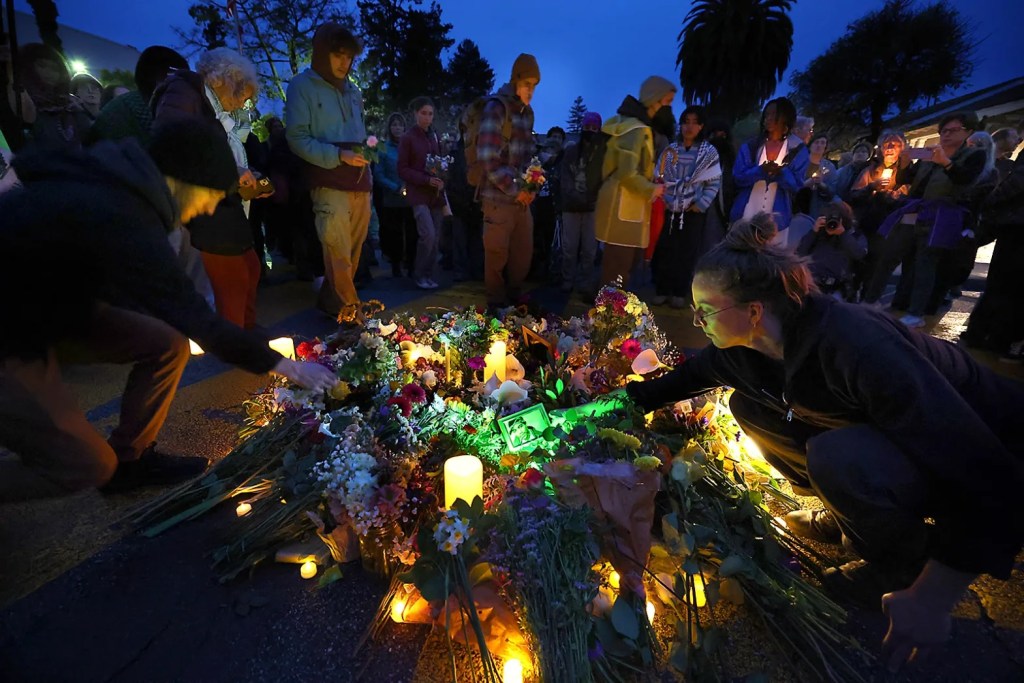
In January 1969, the self-immolation of Jan Palach, a philosophy student at Charles University, brought tens of thousands of people onto the streets and became a symbol of resistance to the Soviet occupation in Czechoslovakia. The self-immolation of street vendor Mohammed Bouazizi provoked mass protests in Tunisia, which eventually led to the resignation of the country’s president.
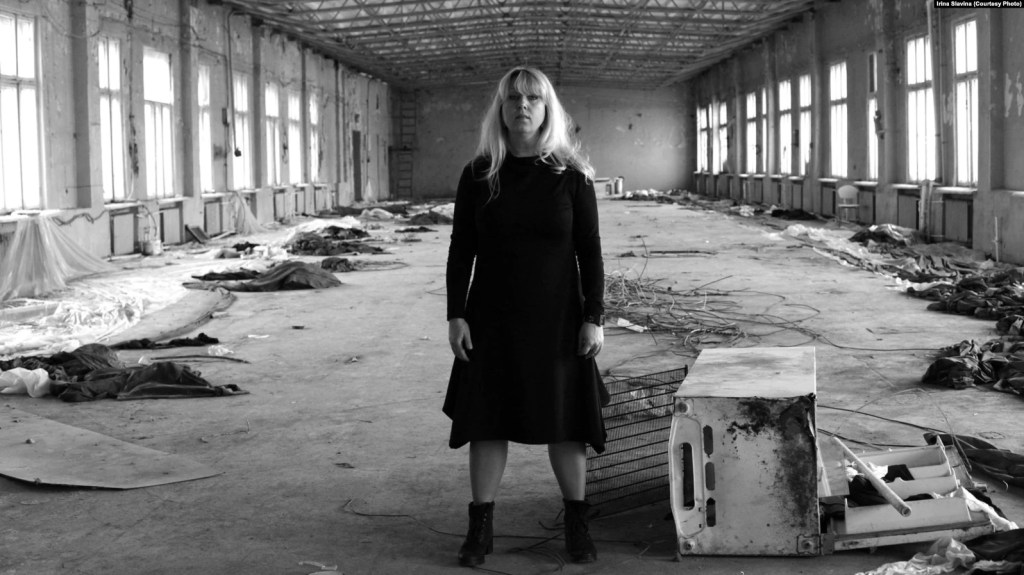
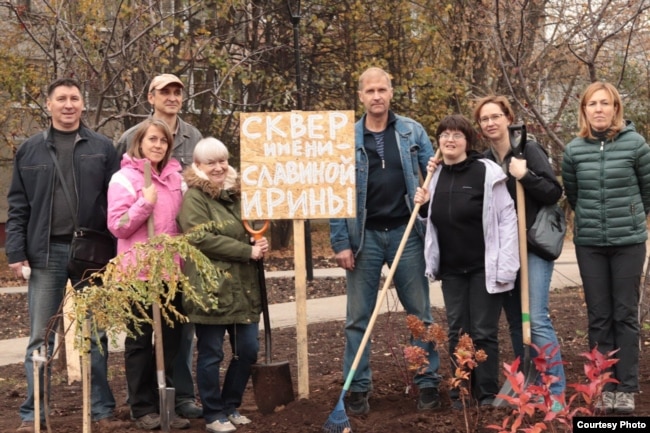
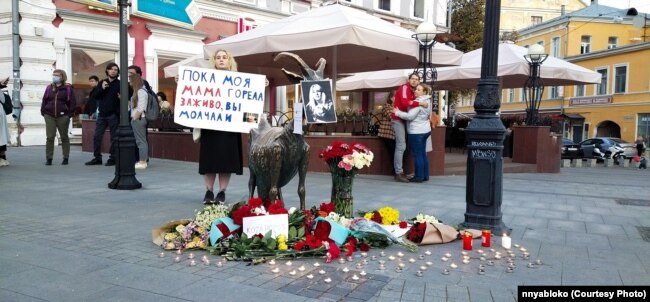
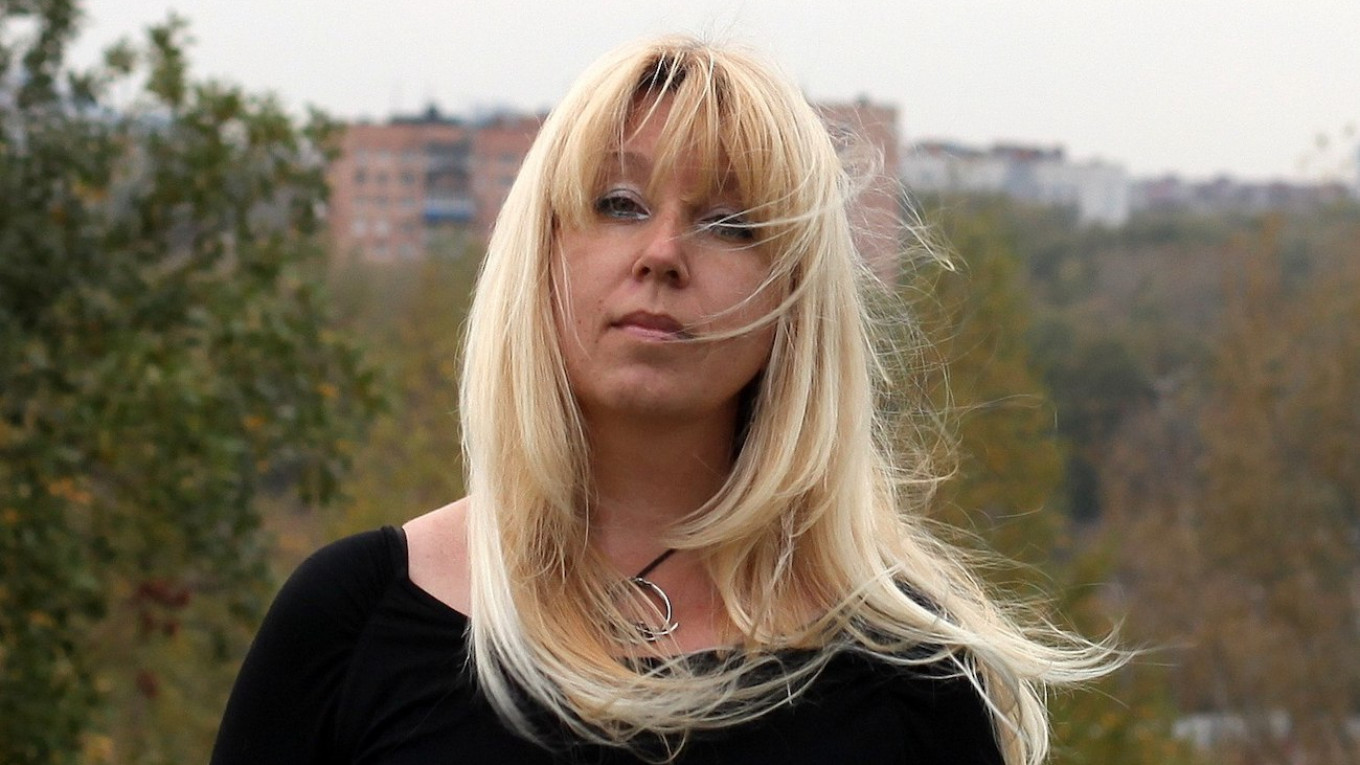
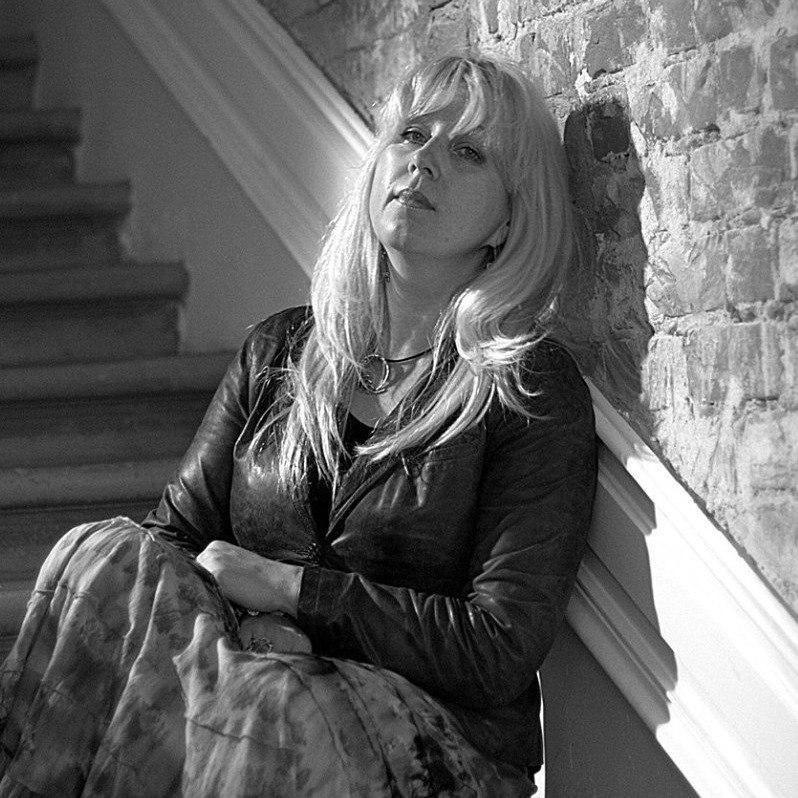
In Russia, the self-immolations of journalist Irina Slavina and Udmurt scientist Albert Razin did not lead to any notable collective action. Could Okunev’s suicide have provoked some protest if people had learned about it?
Sociologist Margarita Zavadskaya thinks not.
“Self-immolation is a powerful symbolic act,” she says, “but public outrage alone is not enough to trigger large-scale collective action under conditions of severe repression and limited access to information.”
So why did the Russian authorities try so hard to conceal information about what happened? To prevent “protest contagion” and imitation, she explains. Moreover, such an anti-war suicide contradicts the government’s theory of a universal public consensus on war. And local officials would look incapable of maintaining control in the eyes of their superiors.
Political scientist Ekaterina Shulman also does not believe that fear of further protests was behind the Kaliningrad authorities’ actions.
“Local authorities are not afraid of the people, not of protests. They are afraid of their superiors,” she says, “they were afraid to hear: ‘You oversaw, allowed a scandal, there are media publications, what do you eat your bread for?'”
“Authoritarian regimes are afraid of symbolic sparks. They understand that a single act of protest may not cause an immediate mass movement, but can become a moral symbol around which scattered anxiety and discontent begin to crystallize,” says Lithuanian political scientist Nerijus Malukiavicius. “That is why such regimes seek to ‘clean up’ the scene, silence history, and discredit the victim.”
Source: Maria Zholobov et al., “He Burned Himself Alive to Protest Russia’s War in Ukraine. The State Tried to Erase Him,” Important Stories, 6 May 2026. A disturbing caveat appears above the English-language version of the article: “AI based translation. If you find a mistake, please highlight it and press Ctrl + Enter.” ||||| TRR
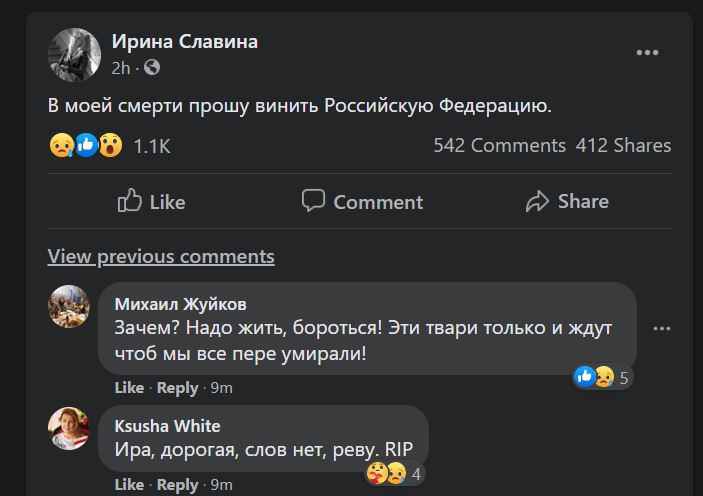 Slavina’s alleged suicide note on Facebook