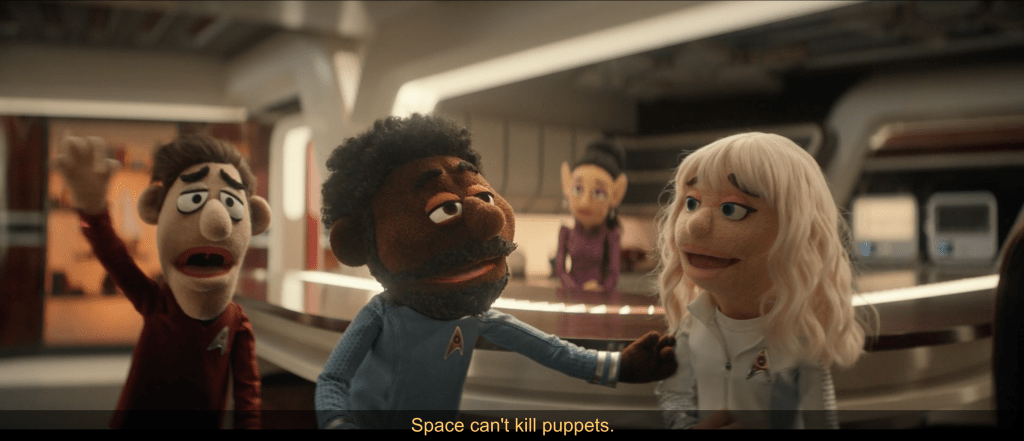
Space Can’t Kill Puppets

Still from Strange New Worlds, Season 4 Episode 5: “Level-Five Transporter Accident”

Ukraine has been carrying out intensive attacks on Russia’s export infrastructure along the Black Sea coast and on oil refineries across the country. Optimistic observers predict significant challenges for the Russian economy and, as a result, a depletion of the resources it needs to wage war. In light of this, common sense dictates that responsible politicians should return to the negotiating table.

The outlook is bleak because the Russian regime is devoid of responsible politicians who would be swayed by common sense. The political elite inhabit another reality—a reality in which they are doing a crackerjack job with the economy, inflation remains at tolerable levels, there are no hiccoughs with petrol (the Kremlin’s limousines don’t fill up at ordinary petrol stations plagued by kilometers-long queues, after all), the populace unanimously supports the war, and the deaths of hundreds of thousands of men at the front are mere collateral damage, not a serious demographic blow to the country. The regime are doing a great job with everything, and there is nothing to worry about. And the regime has the police, the FSB, the Investigative Committee, the prosecutor’s office, the Russian National Guard, obedient judges, and the penitentiary system to deal with the malcontents.

That is why the political crackdown will ratchet up in synch with the worsening of the military or economic situation and the rise of popular discontent. Russian history is chockablock with examples of when growing discontent, fueled by grassroots hardships, was nipped in the bud by the most brutal terror. Examples include the Russian Civil War and the Holodomor. The Russian authorities have never spared their fellow citizens, whether to further the war effort or to protect their own privilege.

Certain dreamers among the opposition bank all their hopes on a Ukrainian victory: in their reckoning, it would open a window of possibility to rebuilding politics in Russia. This is actually possible: it has happened in Russian history that military defeats have kickstarted democratic reforms. But it happened under weak regimes, despotic regimes which were frittering away their potential. Does anyone imagine that the current dictatorship is on its last legs and willing to make concessions to society?

Pinning hopes on the force of Ukrainian arms is not only naive but also dubious morally speaking. It is naive because by and large Ukraine could not care less about Russian domestic politics. No one will roar into Moscow on Abrams tanks and bestow either liberty or an occupation government on Russians. This is unrealistic, especially considering that Russia’s irresponsible politicians have their hands on nuclear weapons (a big thanks to Soviet physicists). Hypothetically, military defeat could embolden the society to protest, but in this case, as I noted earlier, the Kremlin has a wide range of tools for cracking down on dissent, and it has a wealth of experience in using them.

The hope that Ukraine will emerge victorious from the war is quite popular among Russian political exiles. This is partly because there is nothing else they can do to liberate Russia. Well, almost nothing. Donating to the Ukrainian Armed Forces is easy, and it washes away all their sins as exiles. It’s like going to church, lighting a candle, making a small offering, and assuming you’ve earned your place in heaven. As gestalt therapy it will do the trick, but it is quite dubious politically. It is disgraceful to reap the rewards of others’ hard work. Counting on a Ukrainian victory as a means of liberating Russia from dictatorship is not a particularly honorable strategy for the opposition. Victory must be forged with one’s own hands, not those of others.

In the last century, the White émigré National Alliance of Russian Solidarists (NTS) had a fine slogan: “No one will do Russia’s business for us.” Bitter experience gave birth to this slogan: the White movement’s betrayal by the Entente, the West’s economic aid in industrializing USSR, the surrender of anti-Stalinist military units at the end of the World War Two, and the Yalta Conference, which left the Eastern Europe at Stalin’s mercy. No one cared in the slightest about our misfortunes. At best, they voiced extreme concern.

That’s how it happened in the past, and it’s still the case today. Had Russia not invaded Ukraine, the West would have gone on buttering up the Russian dictatorship regardless of who sat at the very top of the Kremlin’s power vertical. If the war were to end, Western politicians would gradually go back to their old ways of pursuing mutually beneficial trade and joint ventures, exchanging sweet nothings, and turning a blind eye to what is going on inside Russia. It’s not our business, and they should take care of it themselves, the West shall always decide. This is not a particular attitude toward Russia but realpolitik. Wasn’t that the case at the outset of this year, when the West simply stood by as tens of thousands of demonstrators were gunned down in Iran? Does the communist reign of terror in China really have any impact on the West’s economic interests? There are many such example

We must concede that liberating Russia is Russia’s business. There is no use in our relying either on the empathy of foreigners or on their arms. While Ukraine’s current military successes cannot fail to gladden all opponents of the war, of course, there is no point in our placing unwarranted, exaggerated hopes on them when it comes to Russia’s long-term future. It is highly unlikely that these military successes will bring about a sea change in the Kremlin’s political priorities and thus open the floodgates to democracy.

Source: Alexander Podrabinek, “The outlook is bleak,” Radio Svoboda, 24 August 2026. Translated by the Russian Reader
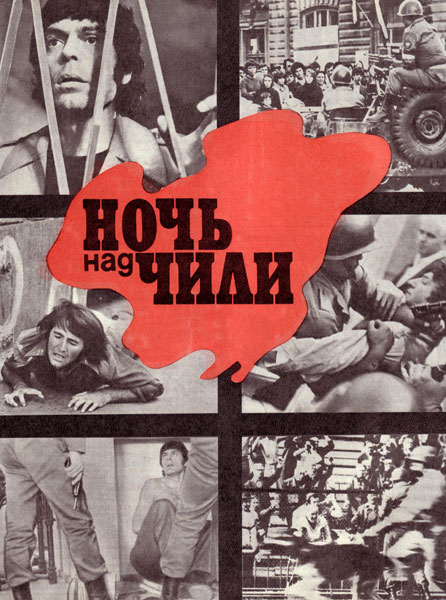
Night over Chile

Poster for the 1977 Soviet film Night Over Chile

George Losev
Facebook
March 13, 2021

I watched the old Soviet movie Night over Chile on the TV at work. Despite a certain theatricality that was slightly inappropriate for a Soviet mockumentary (yes, yes), it does a very good job of conveying the atmosphere of fear and hopelessness that we are experiencing now, when faced with the Russian state.

And perhaps that was why the film didn’t cause the average Soviet person to feel anything. They knew what it was about, but they didn’t feel it.

Night over Chile is a film by Chilean film director Sebastián Alarcón and Soviet film director Alexander Kosarev, shot at Mosfilm Studios (USSR) in 1977. The historical drama recounts realistic accuracy the 1973 military coup in Chile and the subsequent crackdown, as seen through the eyes of the young architect Manuel, who is at the center of the events. The 10th Moscow Film Festival celebrated the work of the directors by awarding them a special prize for their directorial debut.

Young architect Manuel’s (Grigore Grigoriu) life purpose is to construct new beautiful houses. He is not interested in politics, showing everyone around him complete neutrality. However the events of 11 September 1973 shatter his perfect little world. The murder of lawful President Allende, arrests without charges and court decisions fundamentally change Manuel’s outlook on what is happening. Because a leftist activist escaped from a raid through his apartment, the architect gets thrown into jail, goes through torture and abuse, and witnesses mass executions (at the infamous National Stadium). Manuel understands that the only way for an honest man is the path of the political struggle, the national resistance.

The film was shot on location in Baku, but the recreation of the events at the National Stadium was filmed at the Luzhniki Stadium in Moscow.

Cast:
Grigore Gregoriu — Manuel Valdiva
Baadur Tsuladze — Maria’s Husband
Giuli Chokhonelidze — Juan Gonzalez
Islam Kaziyev – Junta Officer
Sadykh Huseynov — Rolando Machuc
Vytautas Kancleris — Don Carlos
Roman Khomyatov — Junta Officer
Victor Soțchi-Voinicescu — Domingo
Mircea Soțchi-Voinicescu — Roberto
Vsevolod Gavrilov — Padre
Nartai Begalin — Soldier
Maria Sagaidak — Esperanza
Bakhrom Akramov
Leon Kukulyan — Orlando
Oleg Fedorov — Reporter
Sebastián Alarcón
Mayak Kerimov
Nina Pushkova — Pamela

Source: articles on the film published in the Russian and English versions of Wikipedia. Translated by the Russian Reader

The Helmets Come Off

The Helmets Come Off
Alexander Skobov
Grani.ru
January 24, 2021

Alexander Skobov. Photo: Anna Plitman/Grani.ru

Ksenia Sobchak has equated the cruelty and violence against a woman who was kicked in the stomach by a riot policeman with the violence and cruelty against a riot policeman’s helmet, which was kicked around [during Saturday’s anti-Putin rallies] by “radicals.”

“This is all, or almost all, that you need to know about Ksenia Sobchak’s mental makeup,” writes Igor Yakovenko. It’s almost everything, because Sobchak’s short text contains another interesting tidbit. She also argues that resistance to tyranny is not only futile, but also harmful, because it pushes tyranny to get tougher. The “unbroken generation” will simply have to be “broken.” The bloodthirsty lady recommends relaxing and having fun.

In some ways, however, it is worth heeding Sobchak. We should not, indeed, hope for a “thaw,” for concessions from the authorities. The Putin regime is organically incapable of this, for the whole thing is built on criminal grandstanding. The very flesh and blood of the “new Putin elite,” Sobchak knows what she is talking about.

The criminal grandstanding is just a shell. The bottom line is that Putin’s regime  carried the germ of fascism from the get-go, and now this “alien” is finally hatching from the egg. The ruling class abhors liberal democracy, with its rule of law and its prioritization of human rights. It hates everything that limits its power over the serfs, and now it is trying to finally tear off the “hybrid” liberal-democratic bunting.

A riot policeman in Petersburg kicks a woman in the stomach when she attempts to ask why they have detained the young man they are escorting, January 23, 2021. Video: Fontanka.ru. Courtesy of Mediazona

Of course, the regime will respond to the protests with a further tightening of the screws—with new criminal cases, with new pogroms of opposition organizations, with new repressive and prohibitive laws. It will try and break the unbroken generation broken. I’m afraid that the new generation will not manage to avoid having this life experience. It must firmly understand that the current regime is an enemy with which compromise is impossible, and so everyone is faced with an extremely simple and tough choice of what way to choose in life.

One way is to capitulate, relax, have fun, and eventually become an accomplice of riot policemen who kick women in the stomach. The other way is to stand up for your own dignity, despite the price you have to pay for it, to resist by all available means, and ultimately to overthrow Putin’s fascist regime. And not worry about the fact that, meanwhile, some people are kicking a riot policeman’s helmet around.

The prospect of such a tough choice scares those who are used to living according to the principle voiced by a character in the epoch-making TV series Gangster Petersburg, a corrupt cop who was fond of saying, “I’m mean, but in moderation.” The fascist system increasingly and imperiously demands that they go beyond the moderate meanness that they are used to deeming permissible for themselves. And they feel uncomfortable about it.

Hence Sobchak’s long-standing complaints about escalating confrontation and mutual bitterness, about black-and-white thinking that admits no shades of gray. She now has to solve a truly existential question: who is she? A woman, or a riot police helmet?

Sobchak has not said anything fundamentally new. She has consistently defended the Putin regime from revolution. After all, revolution is worse than when a woman is kicked in the stomach. Revolution is when a riot policeman’s helmet is kicked around.

Protesters snowballing riot police on Tsvetnoy Boulevard in Moscow yesterday, January 23, 2021. Courtesy of Ksenia Larina’s Facebook page

The power of today’s protest was far from enough for revolution. Its reserves of strengths are unknown. In any case, it proved much more powerful than those who believed Fukuyama had expected. No one can predict when and why Putin’s autocratic fascist regime will be overthrown, and who will overthrow it. We must be prepared for a long period of resistance under a repressive dictatorship.

To avoid coming apart during this period, we must nurture in ourselves not only faith in the beautiful Russia of the future, but also a hatred of lies, meanness, and violence—a hatred for the powerful scoundrels who have trampled law and justice to death, a hatred for riot police who kick a woman in stomach, and a hatred for their helmets.

Five days ago, Alexander Skobov reported on his Facebook page that he had been summoned by the FSB for questioning at 2 p.m., January 27, 2021, at its Petersburg headquarters. Translated by the Russian Reader

Alexander Skobov: Coping with Putin’s Fascism Lite

“Russia Day, June 12.” Petersburg, June 8, 2015
Alexander Skobov
Facebook
October 2, 2020

My deepest condolences to the family and friends of Irina Slavina. The words get stuck in our throat, and we clench our fists, but something has to be said. We must force ourselves.

The fascist Putin regime has killed tens of thousands of people from its very emergence in 1999. It has killed them with carpet bombing and rocket and artillery attacks. But it has killed them outside of Russia—in the Chechen Republic, in Ukraine, in Syria.

The fascist Putin regime has also killed undesirables in Russia. Some have been struck down by assassin’s bullets in the entryway of their buildings, other with poison. Still others were denied timely medical care in prison. Nevertheless, within Russia, the fascist Putin regime has killed piecemeal, not by the thousands. Its crackdowns on dissenters have not been nearly as brutal as that of the fascist regimes of the past.

In comparison with the crackdowns of fascist regimes in the past, the crackdowns administered by the fascist Putin regime could even be called child’s play. For this reason, the fascist Putin regime has been dubbed a “hybrid” regime by some political scientists.

The lower level of brutality the Putin fascist regime has meted out compared to the well-known classic examples of fascism has rendered these crackdowns routine, almost ordinary, tolerable, as it were. At the same time, the utter inability to prove one’s innocence and protect oneself from blatant lawlessness and tyranny has become something routine, ordinary, seemingly tolerable, seemingly normal.

Has anyone ever wondered how humiliating it is to exist in this sort of everyday life, this twisted “normality,” about the constant torment it is for people with a heightened sense of justice and self-esteem? The fascist Putin regime kills people through this continuous torture—through the systematic humiliation of human dignity and the impossibility of proving that it is, in fact, abnormal, that things should not be this way.

Like the fascist regimes of the past, Putin’s improved postmodern fascism lite continues to destroy what makes people human and continues to destroy people who have preserved their own humanity.

Alexander Skobov, a left-liberal writer and activist, is a former Soviet dissident and political prisoner. Photo and translation by the Russian Reader

Let’s Boycott All Contemporary Art

Editor’s Note. I’ve had it with “contemporary art” in general, not just Russian contemporary art or international art events held in Russia, fabled land of officially enforced homophobia. We think all people everywhere, progressive humanity and regressive humanity, the indifferent and the enthusiastic, everyone from Maine to Moscow to Melbourne, should boycott contemporary art. Otherwise, mouth breathers like the eurocuratorial nightmares caught shilling for the Putin regime in the article, below, will keep getting away with this fraud, which sucks up tons of intellectual, physical, financial, and technical resources that could be put to much better and more imaginative use elsewhere.

haka-desktop
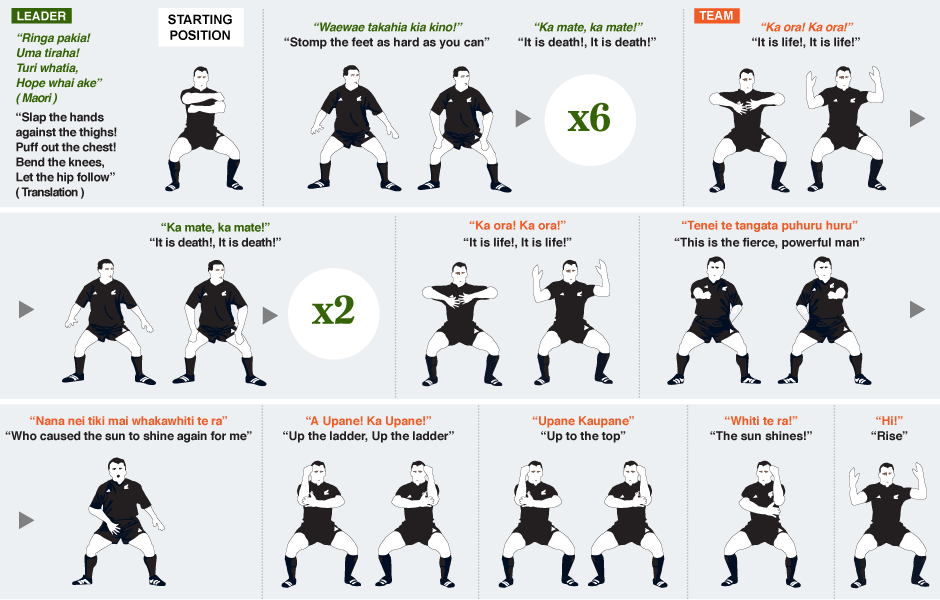
When threatened by contemporary art, do the haka!

www.theartnewspaper.com
Moscow biennial curator and artists explain why we shouldn’t boycott Russia
While critics cry out against the country’s draconian anti-gay laws, cultural exchange is still important
By Sophia Kishkovsky
9 September 2013

Despite recent controversy over the country’s restrictive anti-gay laws, the curator of the Fifth Moscow Biennale says this is not the time to reject Russia. Her comments follow similar responses from the organisers of the Manifesta biennial, as critics call for a cultural boycott.

“I feel I am responsible to keep the platform going,” the Belgian-born Catherine de Zegher tells The Art Newspaper. The latest edition of the contemporary art exhibition opens on 19 September at the Manege Exhibition Hall.

De Zegher says that the biennale’s organisers have not placed any restrictions on what she can show. She adds that “only one or two” artists, whom she refused to identify, said they would pull out of the biennial because of the situation in Russia, but she convinced them to reconsider.

Visitors, however, are unlikely to see much art that aggressively confronts the country’s conservative laws. “I’m not a big believer in provocation,” De Zegher says. “Art that is very provocative is like fast food almost. It flares up, then it’s finished. Of course I do believe in activist gestures, and movement and action, but I think art works in a different way.”

Her comments echo those of the veteran German curator Kasper Konig, who is organising the next edition of Manifesta, Europe’s roving contemporary art biennial. Speaking at a news conference at the State Hermitage Museum, St Petersburg on 5 September, Konig said the 2014 biennial will avoid “cheap provocations”. A petition calling for the biennial’s organisers to choose another city, postpone or cancel the exhibition has drawn nearly 2,000 signatures. Manifesta has responded with a statement on its website, expressing concern about the anti-gay laws but stressing that the biennial is based on “dialogue with those with whom we may disagree”. The biennial’s founding director, Hedwig Fijen, says that isolating Russia is wrong “especially as it deprives younger people of access to a broader scope of voices and points of view”.

“I think the 20th century was very much about shock and awe,” De Zegher says. “We’re entering another age, where there is more about collaboration, collective thinking.” Artists at the biennale are addressing controversial issues, she said, “but they are in nobody’s face”.

In the Moscow Biennale for example, the Chechen artist Aslan Gaisumov’s work touches on the intersection of religion and secularity, Islam and its relationship with Western culture, but does so with a sense of the “ambiguity of the negotiation between cultures, between religions, between the sexes, between ethnicities”, she says.

The Polish-born artist Gosia Wlodarczak, who has been working in Australia since the 1990s, is coming to Russia for the first time for the biennial. She explains why foreign artists should come to Moscow now by recalling her days as a student in Poland, when Communist rulers tried to crush the opposition Solidarity movement with martial law.

“I remember how important it was when anybody actually came [to Poland] instead of avoiding us. Every visit from somewhere else meant that people cared instead of just abandoning you, leaving you to your own,” the artist told The Art Newspaper as she worked on her intricate glass drawing installation in Manege, where the Kremlin is always in sight next door, outside the windows. “Every visit was like a contribution, and every exchange of dialogue was valued, because that’s how things change.”

“Who Knows What a Girl with Bright-Green Shoelaces Might Have in Mind?”

We are all different, but when we ask for the Lord’s blessings, we must not forget that God created us equal.

All you need to know about the Putin regime, packed into one minute and forty-seven seconds.

Gold shoelaces, flaming red hair, a provocative text on someone’s jeans. This evening, the attention of these police officers is directed to everything unusual. Operation “Leader” is underway. Its objective is to locate and neutralize teenage subculture groups.

It is said that these groups have recently begun acting particularly aggressively. The other day, for example, two classes at a school in Kirov staged a rumble, and now police inspectors have increased their vigilance to be on the safe side. Who knows what a girl with bright-green shoelaces might have in mind?

Girl: “I like the color green.”

The color of this young man’s hair also prompted the curiosity of the police inspectors. The young man calls himself a “punk.”

Female police inspector: “Why do you look that way?”

Punk: “Why do you look the way you do? I don’t ask you that.”

Male police officer: “Her hair isn’t dyed. Your hair is dyed. You stand out.”

Punk: “So I’m not one of the crowd. Give me a cigarette.”

Now the “punk” will be meeting more often with the folks in gray. The police have decided to screen him—to find out whom he associates with and whether he is involved in anything illegal.

Olga Yergina, Inspector, Juvenile Affairs Department: “As a rule, groups in Russia have a leader. [The leader] comes up with and hatches, say, a plan and proposes it to the other members of the group. Say, let’s commit the theft of some property or other or some things. As a rule, members of the group usually agree to commit the wrongful act, and so it turns out that they are guilty of conspiracy.”

This group of young people was also unable to hide from the inspectors. The teenagers do not admit to being skinheads, although several of them are already on file with the police.

Female police officer: “That one was born in 1995.”

Skinhead: “I’m fifteen.”

They claim they are well behaved: that they don’t drink and that they go in for sports sometimes.

The inspectors have their work cut out for them with this bunch, work that goes by the code name of “prevention.” The key now is to keep them from committing a crime or attending an unauthorized political rally. Although a written promise is a mere formality, teenagers have to be kept on a leash somehow, don’t they?

Translated by the Russian Reader