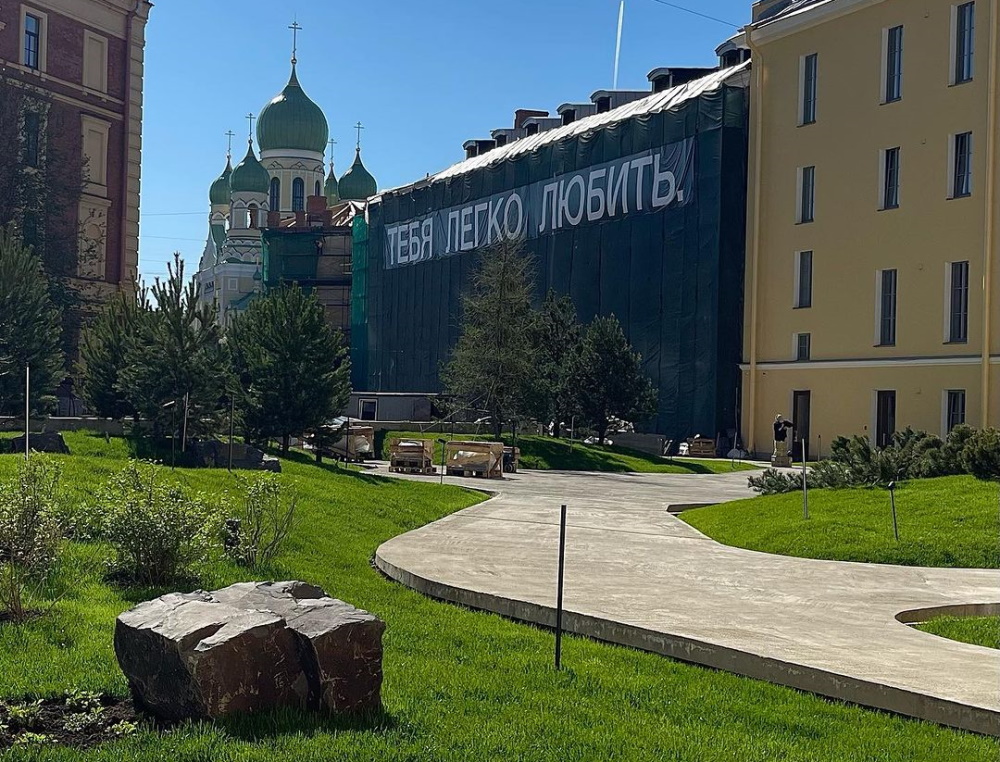
1,289 political prisoners in Russia remain in prison (according to OVD Info).
Source: TV Rain (Instagram), 2 August 2024
Experiencing all of the Tiny Desks this Black Music Month has made many of my dreams come true, and Meshell Ndegeocello’s performance was no exception. For 30 years the Grammy-winning artist’s music has cast an unflinching gaze on love, race, sexuality and religion. Her new album out in August, No More Water: The Gospel of James Baldwin, zooms out to focus on the love of humanity as inspired by the writer and civil rights activist.
Her performance includes three songs from that album, starting with “Travel,” which features Kenita Miller’s swirling whispers alongside Jake Sherman’s organ and Ndegeocello’s bass, which ushers us into her church service. “Thus Sayeth The Lorde” references the writings of Audre Lorde: “If I did not define myself for myself, I’d be crunched into other people’s fantasies for me and eaten alive.” This conviction has been the binding agent of Ndegeocello’s career. Releasing her debut album at a time when many of the women who dominated Black music were singers who adopted an ultra-feminine aesthetic, as a bassist and vocalist she gallantly eschewed that standard for androgyny, fully embracing her queer, two-spirit identity.
“Love” continues this theme, urging you to allow love to take over and accept yourself in the face of existential crisis. The final songs of Ndegeocello’s Tiny Desk Concert are fan favorites. First, we’re sent off into space with the playful “Virgo,” from Ndegeocello’s album The Omnichord Real Book. Then she brings us back to Earth with the yearning “Outside Your Door.”
SET LIST: “Travel,” “Thus Sayeth The Lorde,” “Love,” “Virgo,” “Outside Your Door”
MUSICIANS: Meshell Ndegeocello, vocals, bass; Jake Sherman, organ; Justin Hicks, vocals; Abe Rounds, drums, vocals; Chris Bruce, guitar; Kenita Miller, vocals; Kyle Miles, bass
Source: NPR Music (YouTube), 18 June 2024

15 political prisoners were exchanged.
Source: TV Rain (Instagram), 2 August 2024
The Kremlin has sent recommendations to state-run and pro-government media outlets on how to cover the prisoner exchange between Russia and the West, Meduza has reported, citing sources close to the Russian presidential administration and a source in a major Russian online media outlet. The presidential administration has not prepared detailed instructions this time, the publication notes.
The mass media have been advised that when mentioning the names of Russian political prisoners, they should cite the crimes of which they were convicted, such as “discrediting” the army, “espionage,” or “treason,” as well as the terms of imprisonment to which the court sentenced them.
The presidential administration thus wants to emphasize that “saboteurs and traitors, their own agents, were handed over to the West,” one of the sources explained to Meduza. “Quote: nothing terrible has happened—we got rid of some unwanted people,” they said. Another of the publication’s sources, a political scientist who gives official comments on state-run and pro-Kremlin media, holds a similar view.
On the contrary, when reporting on those who have been returned to Russia after the prisoner exchange the media have been told to say they are people who “worked for their motherland.” In particular, when discussing Vadim Krasikov—an agent of the Russian security services who murdered former Chechen commander Zelimkhan Khangoshvili in central Berlin in 2019—the mass media are urged to say that he “eliminated the enemy.” One of the publication’s sources suggests that Vladimir Putin will want to make Krasikov a public figure, as he did with Maria Butina and Victor Bout, but so far the presidential administration has not received any such instructions from the president.
In addition to the murder of Khangoshvili, Krasikov and two accomplices (other FSB officers) shot businessman and Kostomuksha city councillor Yuri Kozlov in 2007. Krasikov was also the main suspect in the murder of businessman Albert Nazarov in Moscow in 2013.
[…]
Source: Moscow Times Russian Service, 2 August 2024. Translated by the Russian Reader
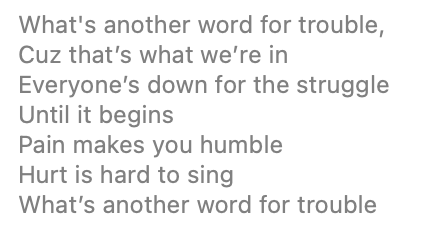
Source: Meshell Ndegeocello, “Trouble,” No More Water: The Gospel of James Baldwin (2024)