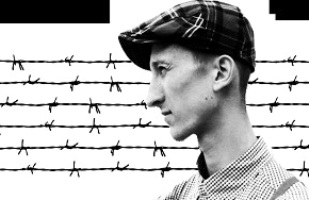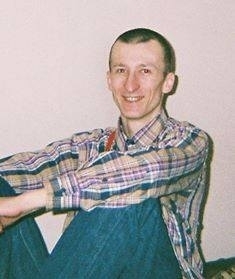
Alexander Kolchenko and Oleg Sentsov Are Hostages

On Kolchenko and Sentsov’s Sentences
August 26, 2015
www.shiitman.ninja

179003Alexander Kolchenko and Oleg Sentsov

It is important to realize that the sentences that Kolchenko and Sentsov received are a fiction.

No one actually takes the charges against them seriously.

Even the most loyal Putinists do not take the charges seriously. What terrorism? What does the Right Sector have to do with any of this?

Kolchenko and Sentsov are hostages. Their being held in a Russian prison is an act of intimidation directed at the Crimeans who stayed home but could have fought back. Their being held in prison is an act of intimidation directed against all the people of Ukraine and those Russian citizens who could have supported them.

The trial was a fiction. The verdict is a fiction. That is why I reacted without emotion to the sentences, although I understand the shock felt by many comrades, among whom there are close friends of both Kolchenko and Sentsov. Twenty years and ten years in prison? The Russian judges could have give them sentences of forty years and twenty-five years. Or given both of them life sentences. Or given them each six months in prison, then retried the case. Or they could have not announced the verdict at all, but just laughed and made faces. Or mannequins dressed in judicial robes could have replaced the judges. Nobody would have noticed the difference.

Kolchenko and Sentsov are in prison as long as the Russian Federation is ruled by Putin’s repressive, aggressive authoritarian regime. They cannot be freed using lawyer’s tricks. They cannot be freed via “diplomatic channels.” They can be freed only by defeating Putinist Russia. Or if it “defeats” itself by choking on its own rage and madness.

And when that happens, it will not matter a whit what numbers have been written in Kolchenko and Sentsov’s sentences. It doesn’t matter what the judges whip up in Savchenko’s sentence. The release of the hostages does not depend on the actions of lawyers. It depends on politicans and military men. And, in part, on the price of petroleum.

As soon as the “Russian bear,” who has turned out to be a rabid rat, finally kicks the bucket, all the regime’s hostages will be freed.

Translated by The Russian Reader. As is nearly always the case, my opinions might not coincide entirely with those expressed by the authors whose texts I translate and post here. But it has been strange to read the angry reactions of leftist progressive Russian comrades to this particular text given the almost total lack of any visible, public solidarity with Sentsov and Kolchenko on their part.

I won’t even go into the haziness they and many other “ordinary” “apolitical” Russian citizens experience when figuring out who to blame for the whole mess in Ukraine. But this is the privilege all imperialist, metropolitan peoples enjoy: pretending not to know or understand what is being done in their name somewhere else in the world.

_________

Russia’s Sentsov–Kolchenko case “an absolutely Stalinist trial”
Halya Coynash
August 21, 2015
khpg.org

The prosecutor has demanded 23 years for Ukrainian film director Oleg Sentsov, and 12 years for civic activist Oleksandr Kolchenko in a case with no crime and where all evidence was obtained through torture. Russian human rights activist Zoya Svetova likens this to Stalinist repression, not a court trial.

Svetova has seen a huge number of trials over the last 15 years, but nothing like the “absolutely insane hearing” on Aug 19. She can’t remember a case where, with no elements of a crime, or criminal (terrorist) acts, the prosecutor should be seriously demanding 23-year and 12-year sentences. This, the fact that everybody expects the court on August 25 to convict two innocent men, and much more, she says, is reminiscent of Stalinist repressions where people were arrested for nothing.

Sentsov is charged with leading a ‘terrorist organization,’ Kolchenko of taking part in it and involvement in one specific firebomb attack on a pro-Russian organization active in helping Russia seize control of Crimea in 2014.  There is no evidence that an organization even existed, and the only specific charge against Kolchenko is one that has not previously been classified by any Russian court as ‘terrorism.’

“The prosecutor is demanding 23 and 12 years for people accused of crimes they didn’t commit. Today Sentsov and Kolchenko’s lawyers clearly demonstrated that there are no elements of a crime in this case, nor any criminal act. On August 19, 2015, I saw a totally Stalinist trial. Three judges were sitting there, a real ‘troika,’ with cold, virtually dead eyes who were listening to the prosecutor and the lawyers,” Svetova writes here.

Another of the disturbingly Stalinist features of this case has been the fixation on some demonized organization, in this case the far-right and nationalist Right Sector. Russia has constantly exaggerated this organization’s role in both Euromaidan and subsequent events in Ukraine.  There was even a Russian media attempt on the night of the Ukrainian presidential elections on May 25, 2014, to claim distortion of the election result after the Right Sector candidate gained a pitiful 0.9% of the votes. It was therefore no surprise that five days after those elections, the FSB should have claimed that it had uncovered a supposed Right Sector ‘terrorist plot.’  It has never produced any evidence at all, nor did any of the witnesses for the prosecution even demonstrate a clear understanding of what the Right Sector is, although they were all convinced it was dangerous, etc.  There is nothing to link Sentsov, the left-wing and anarchist Kolchenko or Gennady Afanasyev with the far-right organization. In court on Wednesday, the prosecutor Oleg Tkachenko changed their story, saying that Sentsov and Kolchenko are not accused of membership in Right Sector, but of having “taken on the ideology of this organization as a guide for action.” What this means remains a mystery since the court has not demonstrated any interest in seeking clarification on this subject or with respect to the numerous other discrepancies in the prosecution’s case.

At the final hearing on Wednesday, the defence demolished all of the charges against the two men, then Dmitry Dinze, Sentsov’s lawyer, read out the account given by Gennady Afanasyev of how he had been tortured to get him to testify against Sentsov.

As reported, Afanasyev and Oleksy Chirniy were arrested at the same time as Sentsov and Kolchenko.  Their ‘confessions’ and testimony are literally all that the charges against Sentsov are based on. It is therefore of critical importance that Afanasyev retracted his testimony on July 31, stating that it had been given under duress.  He then spoke for the first time to a lawyer not provided by the investigators and gave a detailed account of the torture applied immediately after his arrest, and also the pressure placed on him to repeat this testimony in court. As well as threats against him, a FSB officer who appeared at the prison warned him that his mother “could have an accident” if he didn’t cooperate.

All of this information was read to the court. The judges simply looked down and did not react in any way, and the prosecutor continued to demand 23 and 12 years.  It should be stressed that the details in Afanasyev’s account fully coincide with those given by Sentsov, and Chirniy is also known to have told the Ukrainian consul that he had been forced to ‘confess.’

Unlike the players in this modern-day show trial, the renowned Memorial Human Rights Centre has taken Afanasyev’s account seriously.  On August 19, it issued a statement recognizing Afanasyev as a political prisoner and warning of the danger he is now in. This follows a similar statement and damning assessment of the ‘trial’ of Sentsov and Kolchenko.

Sentsov’s final statement was, as all previous statements, courageous and moving. So too was Kolchenko’s, who spoke of the fact that the court had heard about the use of threats and torture by the FSB against Sentsov and Afanasyev.

“It’s interesting that people using such methods to obtain testimony have no qualms about accusing us of terrorism.”

He called the charges against them fabricated and politically motivated, and said that this trial, like those against Nadiya Savchenko, the Bolotnaya Square protester, and others are aimed at extending the life of the current regime.

“Yet throwing us in prison, this regime speeds up its end, and those people who still yesterday believed in law and order, today, watching such trials, have lost that faith. And tomorrow or the day after tomorrow, those people who are part of the 86 percent [supposedly supporting President Vladimir Putin – HC] will overturn this authoritarian regime.”

Kolchenko noted that, in the letter read out to the court, Afanasyev said that the FSB officer had told him that the day he gave testimony in court would be the most important day in his life.

“Seemingly, Afanasyev took those words to heart and interpreted them in his own way. I was very taken with this great and powerful act of his.”

Gennady Afanasyev is in danger; Oleg Sentsov and Oleksandr Kolchenko are facing long sentences on preposterous charges.  And Russia is descending into a frightening Soviet tradition in which people are tortured for ‘confessions’ with neither the prosecutor nor the judges even batting an eyelid when this is demonstrated to the world.

Please write to all three men!

The website of the Solidarity Committee with the Crimean Hostages will try to get messages to them.

solidarityua.info

In the first box, write one of the following names one at a time:

Олег Сенцов (Oleg Sentsov)

Олександр Кольченко (Oleksandr Kolchenko)

Геннадий Афанасьев  (Gennady Afanasyev)

Then in the next box, write your name.

The next box asks for a telephone number if you wish to give it. An email address is, however, needed (the fourth box).

Finally, in the fifth box, write your message.

The key aim is to ensure that all three men know that they are not forgotten. The following would be quite sufficient (if you do write in Russian, please avoid anything controversial or overly political).

Мы восхищаемся Вашим мужеством и надеемся на Ваше скорое освобождение.

Спасибо, что нашли в себе силы остаться честным с самим собой.

Держитесь!

(We admire your courage and hope for your speedy release. Thank you for finding the strength to remain true to yourself. The last word is a word of support, like “take care!”)

The question under the last box asks whether you are on social networks: yes, no, in that order (or leave it blank)

Then hit SEND.

Thanks to Comrade SP for the heads-up. I have lightly edited the text to make it more readable.

Tolokonnikova and Alyokhina on the Sentsov-Kolchenko Verdict

Masha Alyokhina
August 25, 2015
Facebook

“I don’t know what is worth doing if you cannot die for it,” said Sentsov.

“We are discussing narrow questions,” said the judge, interrupting him.

Our “twofer” was piddly shit compared with this. Just imagine being locked up in a prison colony not for two autumns, but twenty, and for just as many winters. Sentsov is a single father who has been sentenced to twenty years in a maximum security prison by Russia.

His sister says, “We fear Oleg will be forgotten.”

If convicts in Russia can be forgotten by those on the outside, inside they can be killed. I hate this system under which it is so easy to kill.

The anarchist Kolchenko was sentenced by Russia to ten years hard time.

We must not forget them. They laugh at the verdict of a country that took them hostage.

Ten and twenty years in prison.

Hang in there, please, we are with you.

11889477_1182943075054229_5283665799208464809_nAlexander Kolchenko and Oleg Sentsov

__________

Nadya Tolokonnikova
August 25, 2015
Facebook

“Well, what did you need to go and do that for? You’re a young, pretty girl, and what have you got yourself into? When you get out, who’s going to remember you? Who’s going to want you, silly goose? Why are you so stuck on politics?”

Coppers and screws always talk this way, because they don’t understand how someone could not break down and admit their guilt. After all, if you confess, they promise to reduce your sentence.

Oleg, you will get out earlier, of course. And whatever they say to you in there, we will not forget you.

Translated by the Russian Reader. Photo courtesy of Masha Alyokhina

Yesterday Was an Especially Good Day in Russia

a-good-day-to-die-hard-bruce-willis-43066110

Sergey Abashin
August 25, 2015
Facebook

Today’s news is impressive even compared to the usual madhouse. The ruble has “stabilized” at just under seventy to the dollar. Vasilyeva, a minister’s lover who stole millions, was released “for good behavior” almost immediately after being sentenced [in May of this year], while the filmmaker Sentsov, who stole nothing and killed no one, was sentenced to twenty years in prison for “terrorism.” Rospotrebnadzor [The Federal Service for Supervision of Consumer Rights Protection and Human Well-Being], which has now replaced the chief sanitary inspector, has banned imported washing products in order to “protect consumers.” And someone else tried to block access to Wikipedia, because it contained “extremism” or something of the sort. The symptoms are clear.

Sergey Abashin is British Petroleum Professor of Migration Studies at the European University in Saint Petersburg. His most recent book is Sovetskii kishlak: Mezhdu kolonializmom i modernizatsiei [The Soviet Central Asian village: between colonialism and modernization], Moscow: Novoe literaturnoe obozrenie, 2015. Translated and annotated by the Russian Reader. Photo of Bruce Willis and Russian flag wavers courtesy of Google Images.

Askold Kurov: The Importance of Solidarity

Askold Kurov, filmmaker:

I have been shooting the film Release Oleg Sentsov for over a year, since Oleg was brought to Lefortovo Remand Prison in Moscow, and the first hearings in his case were held. The case is an unbelievable absurdity, an absolutely Kafkaesque story. I hope that the film will draw attention to these terrible events. Unfortunately, however, hopes for a favorable outcome, for Sentsov and Kolchenko’s acquittal, are nil.

But this does not mean we should all keep quiet and give up on attempts to do something. It is clear that the lives of Sentsov, Kolchenko, and Afanasiev hinge on people who ignore appeals from cultural figures and people’s public expressions of support for the arrested men. Maybe the appeals and protests even anger and irritate them. But sooner or latter they will have an effect. The time will come when the regime will no longer be able to hold the men hostage. Due to the fact that directors, filmmakers, and the public showed their solidarity and constantly brought up the case, the men might be freed from prison.

Source: snob.ru

_________

Alexander Kolchenko: Closing Statement in Court

“By throwing us in prison, the regime is hastening its end”
Closing statement by anarchist Alexander Kolchenko, accused of terrorism
August 19, 2015
kasparov.ru

I deny the charges of terrorism. This criminal case was fabricated and politically motivated. This is borne out by the fact that a criminal arson case was filed only ten days after the arson itself under [Russian Federal Criminal Code] Article 167 (“Intentional damage and destruction of property by means of arson”) and was changed to a terrorism case only on May 13, after [Gennady] Afanasiev and [Alexei] Chirniy were detained, and the necessary testimony had been obtained from them.

1438171138-7230-sentsov-i-kolchenkoOleg Sentsov and Alexander Kolchenko

As regards the wording used by the investigation and the prosecution [in their formal charges against Kolchenko], it is really remarkable: “[The accused] committed accessory to arson in order to destabilize the authorities of the Republic of Crimea with the aim of influencing the decisions of Russian Federation authorities on the withdrawal of the Republic of Crimea from [the Russian Federation].”

In keeping with the prosecution’s line of thinking, if you use contraceptives, your objective is destabilizing the demographic situation in the country and the country’s defensive capabilities as a whole. If you criticize an official, you do this in order to undermine your country’s image in the international arena.

The list of such assertions is potentially endless.

During the trial itself, we had the chance to hear about the use of threats and torture against [Oleg] Sentsov and Afanasiev by FSB officers.

Interestingly enough, the people who use such methods to obtain testimony do not hesitate to accuse us of terrorism.

The Bolotnaya Square trial in several acts, the trial of Alexei Sutuga, the trial of Ilya Romanov, our trial, and the trial of [Nadiya] Savchenko all have the aim of extending this regime’s time in power. But, by throwing us in prison, this regime hastens its end, and people who only yesterday believed in law and order, are today losing this faith as they observe such trials. And tomorrow or the day after tomorrow, these people, who are part of that selfsame eighty-six percent [of Russians, who, allegedly, according to Russian pollsters, support Putin] will demolish this authoritarian regime.

I also want to note that in Afanasiev’s affidavit [a letter that he wrote from Remand Prison No. 4 in Rostov-on-Don and which defense attorney Dmitry Dinze read aloud during closing arguments—Kasparov.ru], it says that an FSB officer told Afanasiev that the day when he testified in court would be the most important day of his life. Apparently, Afanasiev took these words to heart, and in his own way. I was amazed by this gutsy, strong deed of his.

I would also like to thank those who have supported Oleg and me.

I agree with the arguments of our attorney. I consider them reasonable and fair, and I will not ask the court for anything.

____________

On August 19, 2015, the Russian prosecutor asked a military court to sentence Alexander Kolchenko to twelve years in prison, and his co-defendant, filmmaker Oleg Sentsov, to twenty-three years in prison. The verdict is scheduled to be read out in Rostov-on-Don, where the trial has been taking place, on August 25.

Read more about the Sentsov-Kolchenko case:

Translated by The Russian Reader. Photo courtesy of Unian.net

Alexander Kolchenko: The “Terrorist” from Simferopol

The “Terrorist” from Simferopol
On April 9, Moscow City Court Ordered Alexander Kolchenko’s Arrest Extended for a Month, until May 16
Dmitry Okrest
April 13, 2015
The New Times

According to the FSB, Alexander Kolchenko is a member of the anti-Russian underground in Crimea. Along with three other arrested residents of the peninsula, he has been accused of terrorism. The New Times has tried to find out what the charges are based on (it took nearly a year to gather the evidence), how the Russian security services took over Crimea, and what residents of Simferopol think about the relatives of the arrestees.

kolchenko3_1

Alexander Kolchenko

“Sasha is now accused of terrorism, but he is not a terrorist, and I am not the mother of a terrorist,” says Larisa Kolchenko. “My son literally grew up in front of my coworkers, and after his arrest they have continued to treat me well.”

Larisa Kolchenko works in a grocery store near the Simferopol railway station. She speaks softly and quickly.

“In fact, the arson of which they are accused basically, you could say, left no trace on the city. It popped up in the news once, and that was it. There was no discussion, no publicity.”

The arson at the Russian Community of Crimea building, on the night of April 14, 2014, damaged the front door, the stoop, and an awning above the door. A few days later, a Molotov cocktail flew through the window of the United Russian party’s local office. The fire damage caused to a five-meter-square kitchen in the office was estimated at 200,000 rubles. Doesn’t that sound more like disorderly conduct?

On March 31, 2015, however, Kolchenko was accused of involvement in a terrorist network and committing a terrorist attack. It was then that solidarity actions in support of Kolchenko were held, under the slogan “Send Tundra Back to Crimea,” in Berlin, Bremen, Kyiv, Minsk, Paris, Strasbourg, and Tunis. “Tundra” is Kolchenko’s nickname within the peninsula’s activist scene.

“Only those who cooperate are allowed visits”

According to the FSB, the leader of the Bandera underground in Crimea is filmmaker Oleg Sentsov, who along with Alexei Chirniy, a lecturer in the military history department at the Crimean University of Culture, has been charged with violating Article 205 Part 2 of the Russian Federal Criminal Code (“Terrorist attacks”) and Article 205.4 Part 2 (“Organizing a terrorist network”). In early February, Sentsov was additionally charged under Article 222 Part 3 (“Arms trafficking”).

Before his arrest, Chirniy pursued the hobby of reconstructing medieval armor, considered himself a pagan, and posted Nazi propaganda posters on social networks. A court-appointed attorney is now defending him, and his case will be heard in the military district court in Rostov-on-Don by special procedure. [Translator’s Note: On April 21, 2014, after this article went to press, Chirniy was sentenced to seven years in a maximum-security facility.]

Besides damaging the two offices, the “Sentsov gang” has been accused of planning to blow up the Eternal Flame and a Lenin monument on May 9, 2014. According to the security services, the suspects were also planning to “destroy a number of vital infrastructure sites, railway bridges, and power lines.”

On May 8, 2014, Gennady Afanasiev, an employee of the Zheleznodorozhny District prosecutor’s office in Simferopol, made a deal with the investigation. Afanasiev was tried by special procedure—meaning, without court proceedings, which entitles the defendant to mitigation of punishment. On December 25, 2014, Afanasiev was sentenced to seven years in a maximum-security facility.

Sentsov has denied the charges against him. Kolchenko has admitted he was near the office but was not involved in the attack. He has refused to testify against the others. If Sentsov and Kolchenko are found guilty, they could be sent away for twenty years. Afanasiev and Chirniy will be main witnesses for the prosecution at their trial.

The prosecution alleges that Kolchenko met with Sentsov “at mass events of supporters of Crimea’s being a part of Ukraine,” at which the filmmaker allegedly suggested organizing a gang “for performing attacks in keeping with the Right Sector ideology.” According to the FSB, this gang was to destabilize the work of the newly created authorities “in order to encourage them to decide to withdraw the Republic of Crimea from the Russian Federation.”

Despite the gravity of the charges, nearly all of Kolchenko’s letters begin with the words, “I am still doing well.” He labels the arson a symbolic gesture of protest, rather than an attempt to “intimidate the population of Crimea,” and stresses that at midnight the building was empty.

“I was against the war, against violence. My actions were directed against the United Russia party, which voted for sending in troops,” Kolchenko writes.

In his letters, Kolchenko relates that he has been following the Bolotnaya Square case.

“Doing three and half years in prison for something like that is not really great. In that light, it is frightening to think about the sentence I can expect. I guess my prospects aren’t very bright.”

Larisa Kolchenko is worried that she has not been allowed to visit Alexander.

“They explain that since he refuses to cooperate, there is no reason for his family to talk with him. Visits are allowed to those who cooperate.”

“People in Simferopol won’t understand”

“At school, my son was a justice seeker,” says Larisa. “His heart bled for all of Crimea, and he was involved literally in everything.”

Kolchenko ended up in the radical left crowd because of hardcore music, which he became interested in while still at school. He went on archaeological digs, and marched under the red-and-black banners of the anarchists during demonstrations. He organized a protest campaign against construction of a transport terminal on the Black Sea, and was among the founders of the union Student Action, which fought against the monetization of education in Ukraine. (The nationwide rallies against monetization kicked off in Simferopol.) Later, he advised striking employees at Crimea Trolleybus.

“We literally supported him in everything,” says Kolchenko’s mother. “But when he was planning to go to Euromaidan, and was literally standing in the door with his backpack on, I rushed to him and tried to discourage him from going. I told him that people were being killed in the square [in Kyiv], and that people in Simferopol won’t understand.”

According to Kolchenko’s defense attorney, Svetlana Sidorkina, as an activist, Kolchenko had long been in the works among the security services.

“He has never been afraid of voicing his dissatisfaction. He has always openly advertised his position,” says Larisa Kolchenko.

When the so-called Russian Spring began, Kolchenko opposed the annexation. His mother agreed with him: she refused to vote in the referendum. Not all of Larisa’s kith and kin abided by her stance. Several relatives have ceased communicating with Kolchenko’s family.

“Russia has come: we’re going to act tougher”

“Sasha is a committed antifascist. Every year, he would organize a picket in memory of the murdered lawyer Stanislav Markelov and murdered journalist Anastasia Baburova. She was a local girl, after all, from Sevastopol,” says Larisa Kolchenko. “But now my son has been accused of being a member of Right Sector.”

“The activists were not and are not members of the Right Sector political party,” the press service of the organization, which is banned in Russia, has said in response. “However, we demand their immediate release and an end to political terror in the occupied territory.”

Later, Kolchenko’s defense sent a formal request directly to Right Sector, and got the same answer.

“But it is doubtful whether this is enough for a Russian court,” says Larisa Kolchenko. “Thank God, this absurd accusation played no role for people in Crimea. When we were collecting character references for the court, the attitude to him at the university was still good. At the printing plant where he worked as a freight handler, which did not move to the mainland until after the referendum, his colleagues said the accusation was unfair.”

It is difficult to suspect Kolchenko of being sympathetic to nationalists. In 2012, thirty rightwing radicals assaulted Tundra and three comrades after a screening of a film about Baburova.

Since Kolchenko has been arrested, no Ukrainian officials have attempted to contact him. This worries his mother.

“They seemed to have forgotten about the detainees,” Larisa Kolchenko says.

The Ukrainian Consul in Moscow has not visited the suspects. Russia has declared the men its citizens, but on February 4, 2015, the Russian Prosecutor General suddenly determined that Sentsov had dual citizenship. However, a judge rejected Kolchenko’s lawsuit against the Russian Federal Migration Service after an FMS employee provided the court with a passport request form containing Kolchenko’s information and his alleged signature. The defense now plans to a have a handwriting analysis of the document performed.

“He was forcibly made the citizen of another country,” says Kolchenko’s mother. “He did not fill out any forms.”

In turn, the State Migration Service of Ukraine confirmed Kolchenko’s Ukrainian citizenship in February, and on March 27, 2015, the Kyiv Prosecutor’s Office finally opened a case in the abduction of Ukrainian citizen Alexander Kolchenko. Svetlana Sidorkina said her client has sent a complaint to the European Court of Human Rights against Russian citizenship forcibly having been conferred on him.

When the new academic year began, many Crimean universities were missing students, who had left to complete their studies in Ukraine.

“Some people with whom I was friendly on the civic activism front have shoved off,” says Anton Trofimov, a lecturer in philosophy at the College of Taurida National University. “I even wondered: have all the problems ended? Is the environment no longer a matter of concern?”

Trofimov is an organizer of the carnivalesque Monstration marches, and he cofounded the student union with Kolchenko.

“In the end, a lot of friends have left, and for good reason,” says Trofimov. “FSB officers—former Ukrainian SBU security officers—have paid me a visit as well. They warned me, ‘Russia has come, and we’re going act differently, we’re going act tougher—in accordance with Russian laws.’”

“Sasha also wanted to leave,” says his mother. “But we tried to dissuade him. I didn’t want to let him go far away. We were all afraid—but of the wrong thing!”

A geography major, Kolchenko was deciding between Uzhgorod University and Lviv University, but on May 23, 2014, he was transferred to the Lefortovo remand prison in Moscow.

A friend of Kolchenko, who introduced himself as Roman, explains the cause of the crackdown.

“Throughout the spring, [pro-Russian forces] frightened the people with talk about the militants from Maidan. Except for the Tatars, no one stood up for themselves, and the authorities needed to show that the threat was still real.”

“After the arrest of the first four guys from the pro-Ukrainian movement, the FSB began conducting ‘preventive’ conversations with everyone else,” says Maxim Osadchuk, a history lecturer and buddy of Kolchenko from the leftist movement. “Almost all my friends who had anything to do with public life have left. The question of whether to emigrate or go underground and risk arrest became critical.”

Osadchuk himself left Crimea several days before the referendum and is now fighting as part of the Aydar Battalion.

Osadchuk believes the arrest of the four men was a warning to the remaining activists on the peninsula to curb their enthusiasm.

“Through threats and exhortations we were strongly advised either to leave Crimea or curtail all activism.”

“Luxury items like bouillon cubes and ketchup”

Kolchenko does not complain and is extremely laconic.

In a letter from the remand prison, he writes, “My cellmate and I have amassed so many goodies they will last us for a month. But the goodies are not as tasty as they would seem on the outside.”

In another letter, he writes, “My appetite has slumped here: the cafeteria food is quite enough for me.”

But he dreams of getting his hands on popular science magazines, and “luxury items like bouillon cubes and ketchup.”

Kolchenko has been studying Lenin, Marx, Fromm, and Ivan Franko, the last of whom he read in Ukrainian. He regrets that his familiarization with Russia has begun at a remand prison, and in one of his letters, he shares his impressions of Leo Tolstoy’s current affairs writings: “A typical extremist. Nowadays, they would probably charge him under Article 280.”*

In the letter, he quotes Tolstoy’s essay “The End of the Age”: “What will happen to Russia? Russia? Where is its beginning or its end? […] The Caucasus with all its nationalities? The Kazan Tatars? Ferghana Province? The Amur? […] The circumstance that all these nationalities are regarded as parts of Russia is an accidental and temporary one. […] whilst in the present this combination is maintained only by the power which spreads over these nationalities.”

* Article 280.1 of the Russian Federal Criminal Code, “Public calls for action aimed at violating the territorial integrity of the Russian Federation.”

__________

Editor’s Note. For more information about Alexander Kolchenko’s plight and how you can support him, see the Ukraine Solidarity Campaign’s page on the case (in English) and Autonomous Action’s compilation of articles about the case (in Russian). You can also follow events in the case via the Free Aleksandr Kolchenko Facebook page (mostly in Russian) and read this article (in English) about the political context of the case. Image, above, courtesy of Libcom.org.

Translated by The Russian Reader. Anyone has permission to republish this and any other of the translations or original texts found on this blog, but please acknowledge the blog explicitly in your reposts, and provide a clearly indicated URL link back to the original publication.

Release Oleg Sentsov!

Oleg Sentsov first came to the attention of the international film world when he triumphed with his film Gaamer (Gamer) at the 2012 Rotterdam Film Festival. With the cruelty only hindsight can bring, Gaamer screened in the ‘Bright Future’ section of the festival, which aims to draw attention to idiosyncratic and talented newcomers.

The ‘bright future’ that Sentsov is looking at now involves a 20-year stretch in a Russian prison, condemned as traitor and terrorist. Sentsov was arrested by the Russian security services at home in Simferopol on 11 May 2014, and brought to Moscow where he is detained and awaiting trial on charges of terrorism. Though Ukrainian, of Crimean origin, the investigating authorities of the Russian Federation do not recognise Sentsov’s Ukrainian citizenship. In line with the March 2014 law on the assimilation of Crimea, Russia required any permanent resident of Crimea who held Ukrainian citizenship to declare their intentions of maintaining Ukrainian citizenship. The deadline for this process was April 18, after which all Ukrainian passport holders who resided in Crimea were deemed Russian citizens.

So Oleg not only languishes in a Russian jail, he languishes there deprived of his rights as a Ukrainian citizen, deprived of visits from diplomats of his country, and categorised as a Russian national who has betrayed his own country.

Mike Downey, “The ‘bright future’ of Oleg Sentsov,” openDemocracy, February 17, 2015

Sign the petition demanding the release of Oleg Sentsov.

Solidarity with Alexander Kolchenko!

JOIN THE INTERNATIONAL SOLIDARITY CAMPAIGN FOR
ALEXANDER KOLCHENKO!

kolchenko0
Alexander Kolchenko is a Crimean anarchist, social activist, and antifascist who is being held by the Russian authorities. Along with other Crimean activists, he was kidnapped by the Russian FSB (ex-KGB) and is now detained as a political hostage in Lefortovo Prison in Moscow. He has been charged with committing “acts of terrorism” and “belonging to a terrorist community.”

Why is Alexander Kolchenko in jail?

Alexander, who has proven his antifascist stance over many years, is facing preposterous accusations of belonging to Right Sector, the radical Ukrainian right-wing organization, whose real role in Ukrainian events has been blown out of proportion by Russian official propaganda.

In modern Russia, any activist — left wing, anarchist or liberal — can be slandered as a member or sympathizer of Right Sector. This situation is comparable to the hunt for nonexistent Trotskyists under Stalin, or the McCarthy witch hunt for communists in the US. Putin’s authoritarian and nationalist regime, which uses everything from religious prejudices and conspiracy theories to outright racism in its propaganda, shamelessly steals antifascist rhetoric. And yet anyone who is considered bothersome is called a fascist, even if he/she stands on the opposite side of the political spectrum.

The case against antifascist Alexander Kolchenko and civil activist and film director Oleg Sentsov (investigators enrolled them in the same “terrorist” group) is political. It is meant to intimidate the inhabitants of Crimea and prevent any resistance on the peninsula. The most authoritarian of methods are now used in annexed Crimea to repress all dissent. Many people have been forced to leave Crimea because their life and freedom were threatened: lawyers, left wing activists, student and trade union activists, anarchists, antifascists, and Crimean Tatar activists who have fallen victims of ethnic discrimination.

What does Alexander Kolchenko face?

Alexander Kolchenko is threatened with a terrible prison sentence of up to 20 years for a non-existent “terrorist attack” in which he was not involved. Kolchenko and other Ukrainian political prisoners have been detained only to demoralize the opposition through show trials. Their freedom is directly linked to the stability of the Putin regime. If we can shake Putin’s confidence in his impunity, the prisoners will be set free. There is no hope that Kolchenko, Sentsov, and others will be given fair trials. Their arrests were unlawful, and the charges against them are far-fetched. It was not a mistake: the regime knows what it is doing.

How can you help Alexander Kolchenko?

We are asking international left wing and libertarian forces for help. You can organize and lead actions of protest and solidarity, write letters to Kolchenko, and send donations to pay for lawyers, food parcels, and support for his family. It is also important to spread information about his case. Most of all, we need to dissociate ourselves from any forces that support the aggressive expansion of Russian nationalism, even if they cover it up with leftist and anti-imperialist rhetoric. Putin’s regime is doing just fine without your sympathy. You had better save it for those who are its victims.

When should you start?

You can start right now by helping us spread this appeal, translating it into other languages, and sending it to comrades. We also strongly encourage you to organize demonstrations from April 1 to 7, 2015, in support of Alexander Kolchenko and other political prisoners jailed in Russia. Sentsov’s and Kolchenko’s current terms in pretrial police custody end on April 11 and 16, respectively. In the first half of April, Lefortovo District Court in Moscow will decide whether they should await trial in jail, be placed under house arrest or be released on their own recognizance, Only strong, massive pressure on the Putin regime and protests around the world will make it possible to set our comrades free. We demand their immediate release and the dropping of charges against them.

kolchenko6

You can find more information below.


Contact us at freekolchenko@gmail.com