Pro-Kremlin Telegram channels on Friday circulated a New Year’s video depicting Russian air defense systems shooting down Santa Claus’ reindeer sleigh.
The video, first shared by the Pul N3 Telegram channel, begins with Santa flying over central Moscow to the tune of “We Wish You a Merry Christmas.”
“Hi, Russians! Here are your presents,” says Santa Claus, sipping a Coca-Cola as the camera zooms in on his sleigh, which is loaded with rockets bearing NATO logos.
“Happy New Year,” Santa says before a missile shoots into his sleigh, causing it to explode mid-air.
Ded Moroz and Russian airpower. Image courtesy of Moscow Times
The scene then shifts to a military control room where a Russian serviceman and Ded Moroz — Russia’s version of Santa Claus — monitor the action on a screen as a traditional Russian folk tune plays.
“Is it done?” Ded Moroz asks the headset-wearing serviceman.
“Yes, it’s done. The target was destroyed,” the serviceman replies.
“Good. We don’t need any kind of foreign stuff [in our skies],” Ded Moroz says, embracing the serviceman. “Happy New Year!”
The video’s release comes just days after an Azerbaijani passenger plane crashed in western Kazakhstan, with reports suggesting it was shot down by a Russian surface-to-air missile.
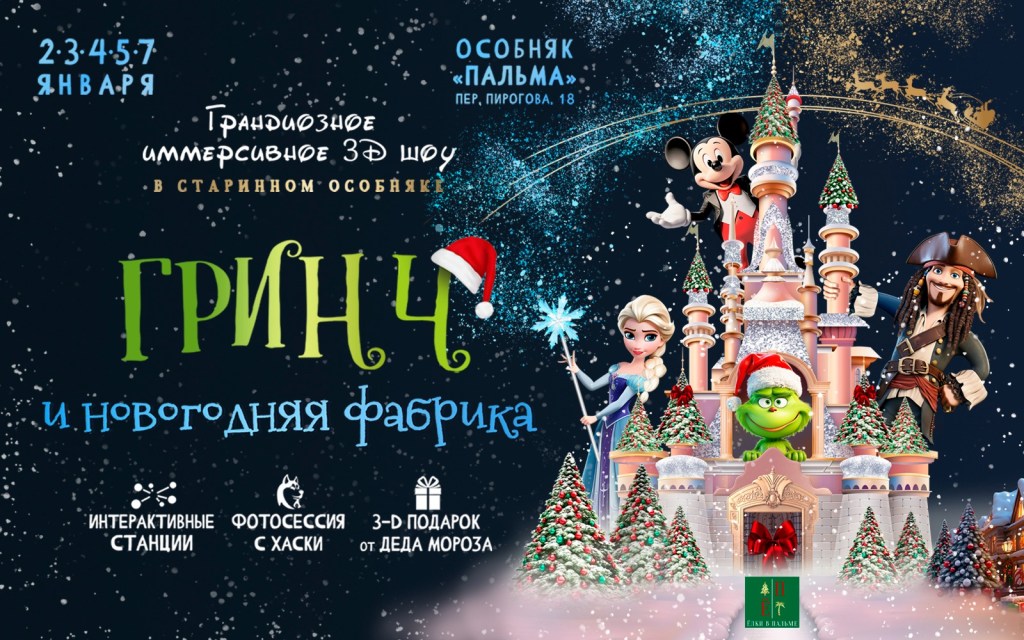
The colossal immersive 3D show The Grinch and the New Year Factory
Palma Mansion (18 Pirogov Lane) Dates: 2.01.2024, 3.01.2024, 4.01.2024, 5.01.2024, 7.01.2024 Time: 11:00, 14:00, 17:00 (daily) We recommend arriving 30 minutes before the start of the event.
New Year is a magical time of miracles and fairy tales! StageMagic Agency has produced a colossal immersive 3D show, The Grinch and the New Year’s Factory, that will entertain children of all ages and even adults! The show can be seen only from January 2 to 7 in the old Palma Mansion!
This New Year’s week will be full of magic, and even the walls of the mansion will come to life as if by magic! No, no, we’re not kidding! Thanks to cutting-edge 3D mapping technologies we will create a Petersburg Disneyland in an old mansion featuring enchanting sets, an incredibly colorful light show, and an exciting performance, including musical numbers performed by the city’s best artists!
Little viewers can look forward to becoming full-fledged participants in a exciting journey through Cartoonland and along with their favorite Disney characters saving the New Year from the insidious Grinch, who decided to spoil the children’s holiday and stole all the gifts from the elves’ magic factory! Elsa, Jack Sparrow, a wizard on a real magic carpet, and many more will come to the aid of the good elves! Will the cartoon characters manage to save the New Year? Will goodness prevail? Come and find out at the main New Year’s celebration in Petersburg, The Grinch and the New Year Factory.
Before the show starts, children will enjoy an exciting welcome program including interactive games with their favorite cartoon characters, a TikTok show, a beauty bar, a magician’s show, and even a photo shoot with adorable husky dogs.
But that’s not all! Every child will receive a 3D gift from Santa Claus, and every adult will receive a welcome cocktail from the owner of the mansion!
All categories of children’s tickets entitle them to receive a gift.
RECOMMENDED FOR CHILDREN BETWEEN 4 AND 10 YEARS OLD ADMISSION WITH PARENTS CHILDREN ARE SEATED IN THE FRONT ROWS BY AGE (YOUNGER CHILDREN IN THE FRONT ROWS, OLDER CHILDREN BEHIND THEM, AND PARENTS BEHIND ALL THE CHILDREN)
There is no such thing as too much magic, StageMagic knows that for sure! See you in the fairy tale!
Duration: 1 hour and 20 minutes We recommend bringing a change of shoes.
Source: Bileter.ru. Translated by the Russian Reader
Dima Zitser. Photo courtesy of Deutsche Welle
Dima Zitser, the well-known educator, writer, and presenter of the weekly program Love Cannot Be Educated, gave a lecture in Berlin in mid-December. Before his “pedagogical standup routine,” as he himself dubs his encounters with audiences, Zitser granted an interview to DW. With Russian schools becoming obedient tools of propaganda, the renowned educator increasingly has to explain to worried parents how to protect their children from the monstrous influence of the government’s lies and manipulation. Zitser told DW how to talk to children about the war, how to teach them to resist propaganda, and how to help them adapt to a new country when they have been forced to move.
DW: Russian parents today often do not know how to talk to their children about the war. They want to protect their children from trauma, but prefer to create an information bubble for them and pretend that nothing is happening. How do you feel about this stance?
Dima Zitser: You cannot avoid talking about the war with your child. You’re forbidden not to talk about it! First of all, it’s tantamount to deception: children are always aware of and know much more about the world around them than we would like them to. If Mom doesn’t talk to it, the child will take its questions to everyone else but Mom. It won’t want to traumatize its mom. It will imagine that this is a painful topic for Mom, that it is not the done thing to talk about it in adult society.
Russian children live in a country that has unleashed a bloodbath. Clearly, we must protect children, and we must choose our words carefully when we talk to them about the subject. But we cannot conceal from them the kind of world they live in. Imagine the level of disenchantment that awaits it when a child bumps its head on this reality. There are no secrets that don’t surface in the end. What do we want our child to grow up to be? A person who doesn’t care about the troubles happening in its midst? It is vital for a person to experience emotional strife.
— Sometimes a child has a hard time coping with the war and even feels ashamed because he or she is Russian. What can parents do in such cases?
You have to explain that it has nothing to do with a people or a nation. Tell your child about the history of Germany, say, which went through its own horror. Tell it about Thomas Mann and Bertolt Brecht, about people who found the strength to stand out. It was hard for them, but if they hadn’t done what they did, the German people would have been finished.
My eldest daughter lives in New York. She does a lot of projects, including ones on behalf of Ukrainians. Her son Yasha is nine years old. [Ukrainians] refused to speak Russian with them in one place. So Yasha asked, “If this language is so hated and it has to do with this war, why do we even speak it?” There is no short answer in this case. Your conversation with your child should start with the fact that the feelings and emotions of people from Ukraine who cannot stand to hear Russian are understandable.
A close friend of mine from Kyiv refused to communicated me after the Russian invasion started, even though I’ve never been a Russian citizen. But later I wrote to her in Ukrainian (my mom and dad are from Ukraine), and we had the most painful conversation for an hour and a half. We met in Europe a month and a half after the war started, and she explained to me that she couldn’t bear to hear Russian being spoke. Although my friend understands that Russian-speaking people may have nothing to do with the war, she feels physically sick and her body hurts when she hears Russian.
I think we need to talk about it. This is what is meant by empathy. We try to understand, albeit incompletely, what is going on with other people.
Dima Zitser, ”Freedom from Education” (TEDx Sadovoe Ring, June 2016, Moscow). With English subtitles
— Suppose a child goes to a Russian school where there is aggressive ideological training, where the war is glorified in “Lessons About What Matters.” Is it enough for the family to talk to the child about what is going on?
I take a very rigid stance in this sense. If people who read DW have these things going on at their child’s school, they have to get the child out of there. There is no other option. If we’re talking about a person around six or seven years old, it believes what adults say without a second thought. It has no sense whatsoever that adults could want to harm it. This, by the way, is the basis of many crimes. The impact of school, propaganda, and indoctrination on this person is enormous! There are absolutely horrible studies on this subject in connection with the Second World War and Nazism.
Get the child out of there! In the Russian law on education, there are different forms of education—for example, homeschooling. Right off the bat tomorrow morning, any family can take their child out of school and start homeschooling it. After that, the technical stuff starts. It will be difficult, but did these people assume that they could live during a war and pretend that there was no war? That they could say things to their child at home, and the child would go to its quasi-Nazi school and everything would be fine? It won’t be fine. It’s a war, guys! It’s a matter of saving our loved ones!
We can’t live in a time of war as if it isn’t happening. We have to make decisions. For example, we can form a study group: parents agree amongst themselves, pool their money, and hire a teacher. This is legal, and there is such a trend in Russia.
If a person is fifteen or sixteen years old, it’s no big deal. Well, they will live amidst doublethink, just as we did when we were growing up. True, it did us no good. There is such an argument amongst adults: “We survived after all.” Like hell we survived! We learned to lie, to be mistrustful, to look for a hidden agenda in everything, to expect the worst. I would prefer to live in a world where people are open and frank.
— Suppose a child has been removed from a Russian school, but other sources of aggressive propaganda continue to harass it. Should children be taught to recognize and combat propaganda?
This is like asking whether a person should be taught critical thinking. Yes, of course they should! We should teach them to seek out alternative sources of information and ask follow-up questions. If someone speaks on behalf of the state, one should immediately question what they say. We must teach children that the phrases “everyone knows,” “anyone would say,” and “there is no doubt” are forms of manipulation.
— In addition to children who have remained in the Motherland, there are thousands of children who have left Russia with their parents. The problems faced by emigrants are often discussed, but what happens to the children is forgotten. How should parents behave so that emigration is less painful for their children?
The most common mistake is to try to maintain the routine you had in place before you left the country. Did you study music? You’ll go to music school here too! Were you studying English? You’ll keep learning English! We played chess on Tuesdays? We’ll do the same thing here!
Not even the best parents are immune to this mistake. They instinctively try to maintain stability at such moments, but they are accomplishing just the opposite. The frame of reference has changed! You can’t live in Berlin as if you were still living in Ryazan! People here are different—they speak differently, look different, behave differently. When we try to stop time, we keep the child from growing.
When we keep a child “packed and ready to go,” it has no chance to grow into the country in which it has arrived. What should it do, pretend it’s in Moscow? Not start speaking a new language? Not make new friends? Not go to the German theater? We are suggesting that these years be excised from its life. It’s a grave mistake.
Children are quite protective of adults, often more protective than adults are of them. They understand that Mom has it rough, and Dad has it rough, so I’ll try not to whine. I’m not very good at it—I get prickly and rude—but I try. Adults are really tempted to say, “What do you know about trauma? You’re only nine years old! What we [adults] are going through, now that’s trauma!” But for all its short nine years, it had lived its little life in familiar conditions, from which it was yanked at the snap of someone’s fingers.
You have to find things to keep yourselves afloat. You have to give yourselves the opportunity to learn things, to be interested in things, to like things. There is a beautiful tree here, a comfortable bench here, a nice store here. You have to establish a new routine: going out to eat delicious ice cream after school, inventing new traditions, having new conversations. Yes, it’s going to be hard, and that’s okay. But we’re together, we’re having lots of experiences, we’re recreating our family bonds. If mom (or dad) doesn’t tell the child that she (or he) is having a hard time, then the child is sure that it doesn’t have the right to say that it is having a hard time either. This is an important point! Sometimes, you have to hug each other and cry on each other’s shoulders. This doesn’t lead to neurosis. It’s a way for the child to realize: I’m normal.
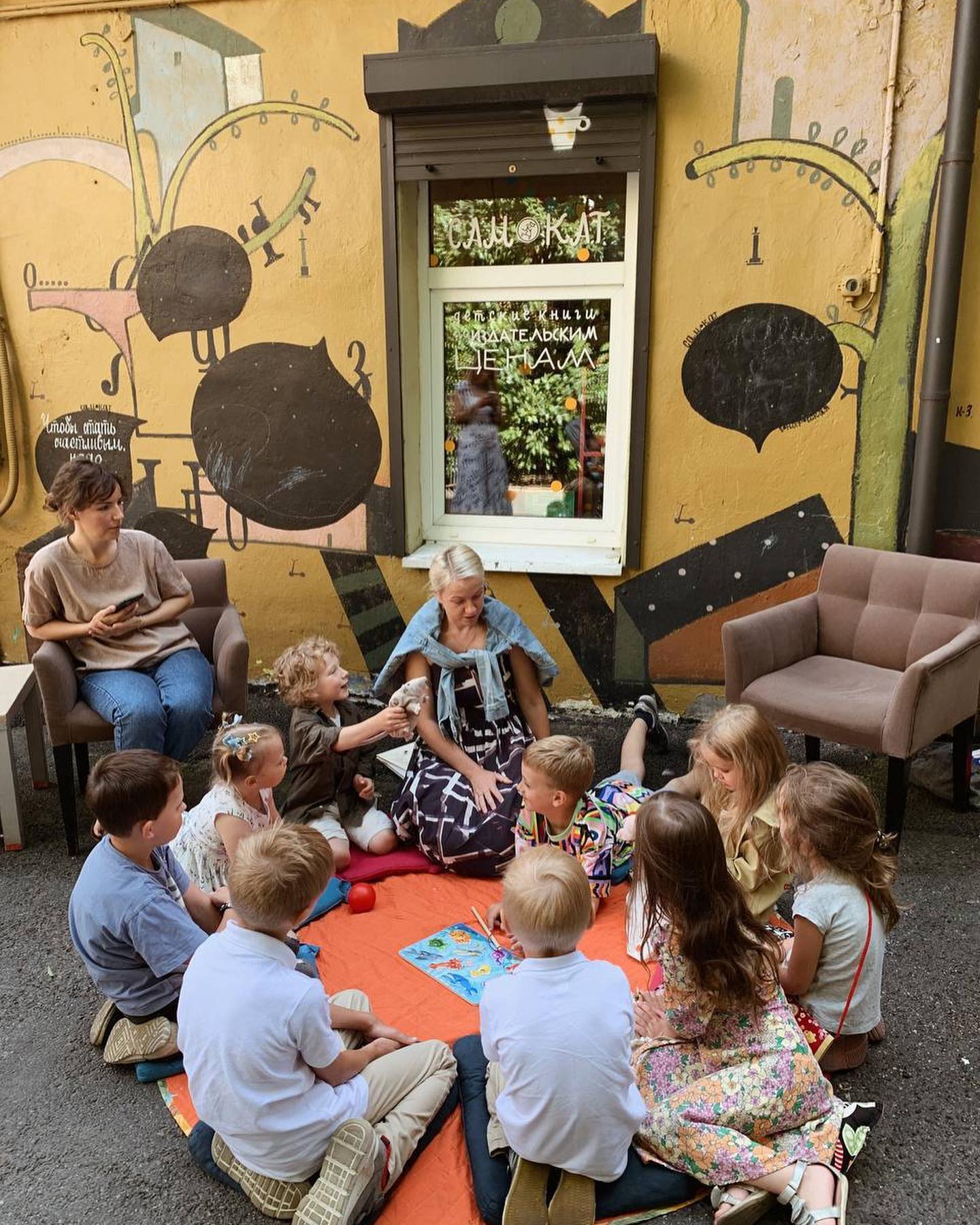
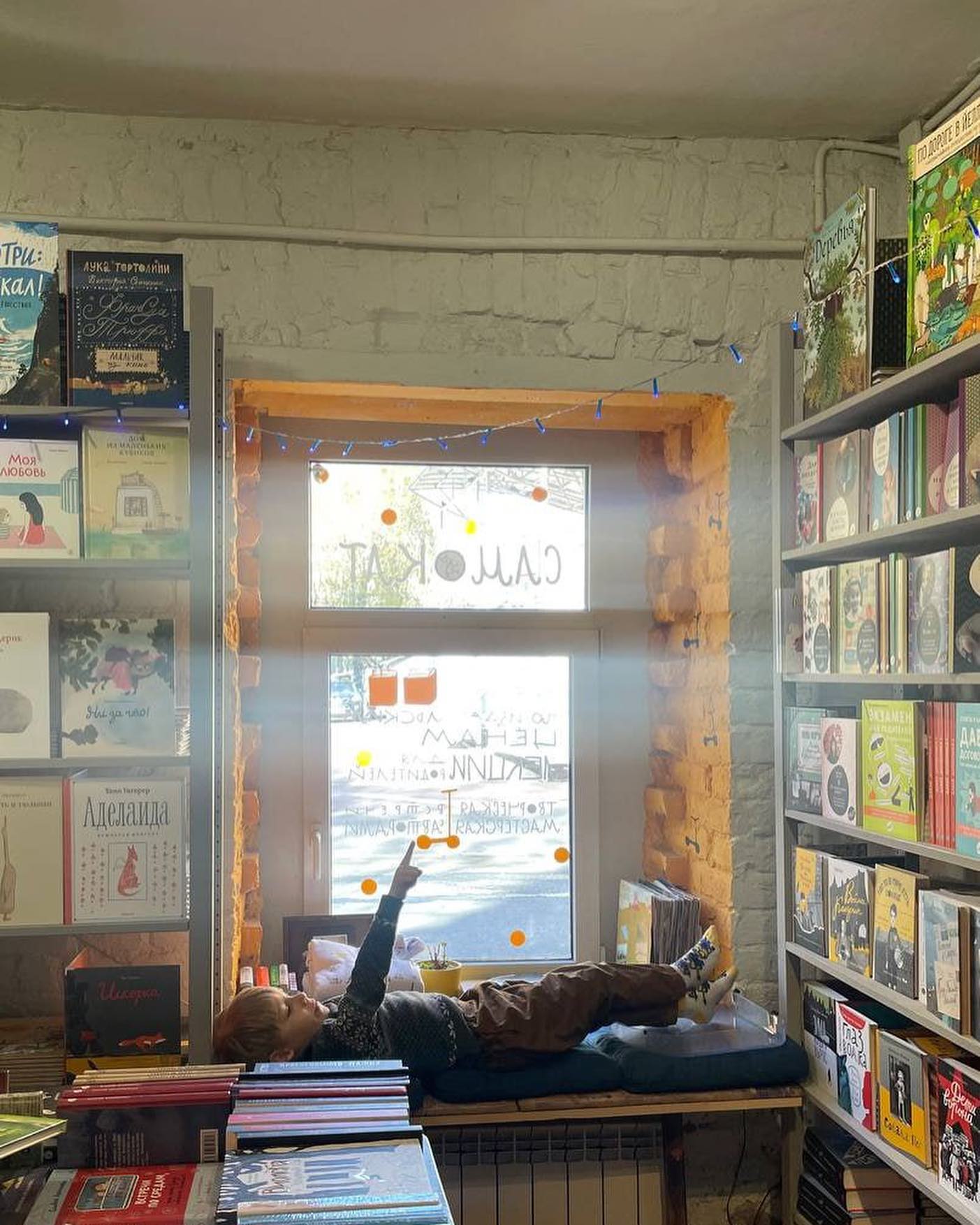
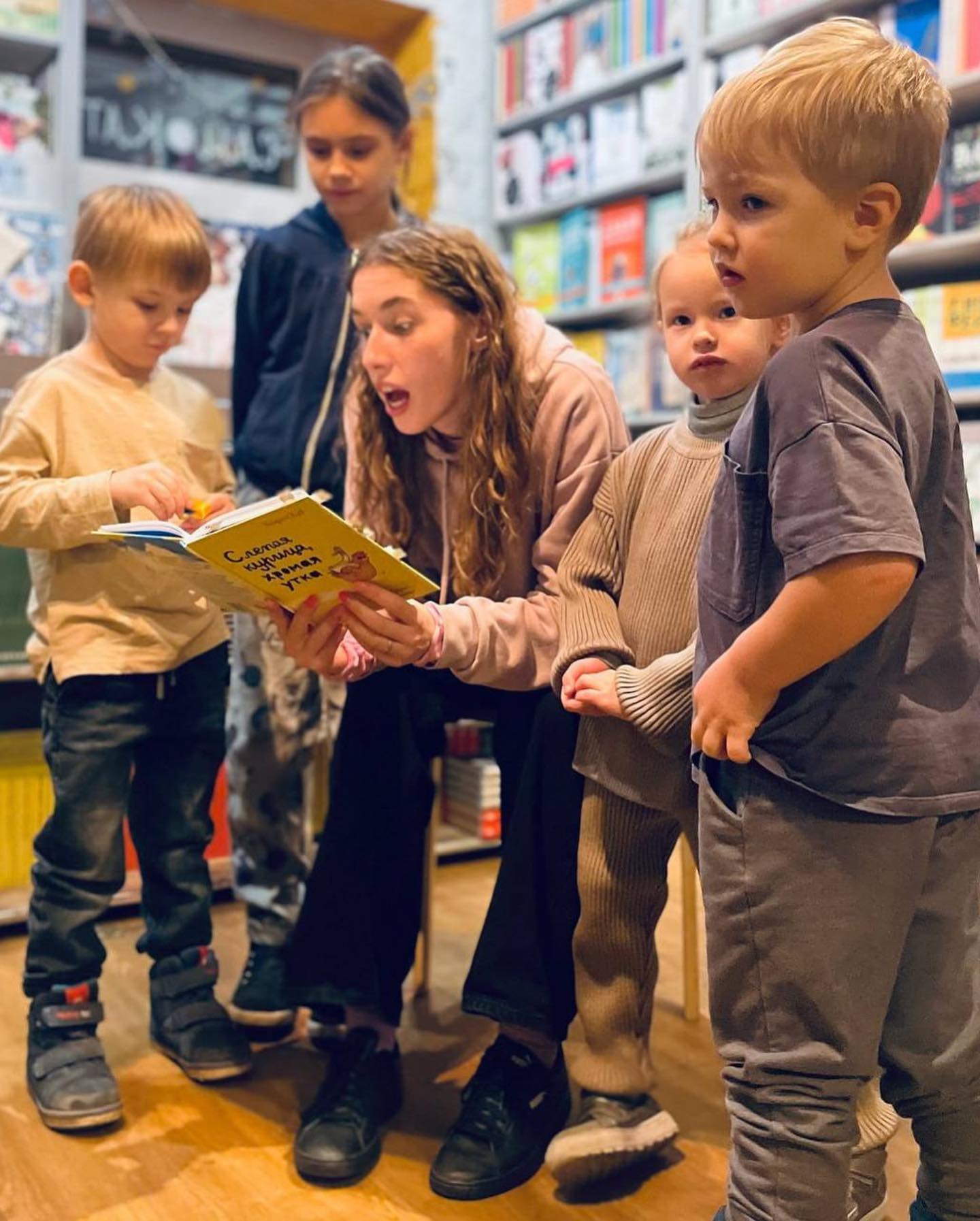
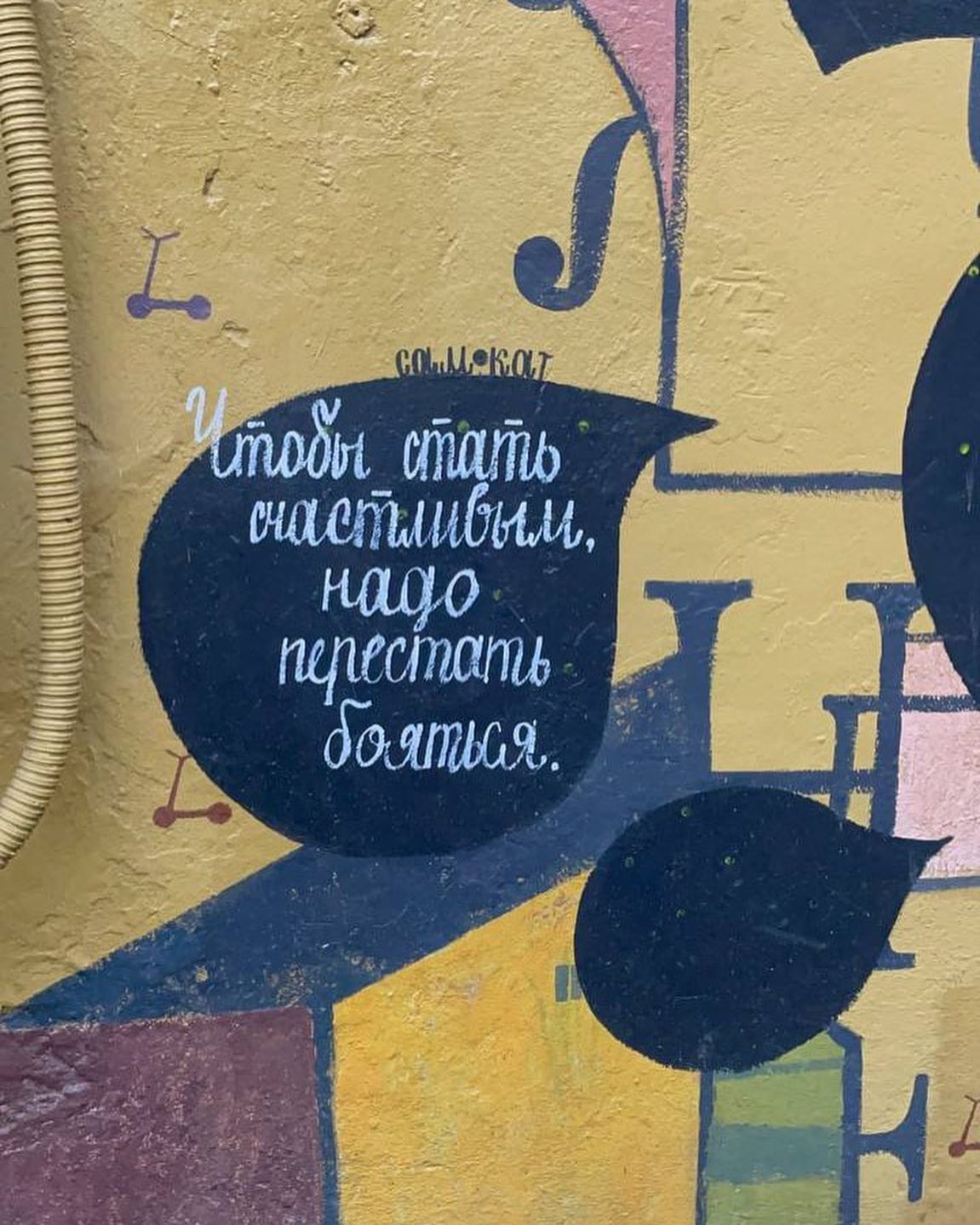
Today, everyone at Samokat is talking about only one thing.
Samokat has been notified that we are being evicted from our little home on Monchegorsk Street in Petersburg. While everyone else is busy with pleasant pre-New Year’s chores, we are being kicked out on the street along with our favorite books and holiday plans. We have just one day to move: tomorrow.
First of all, we appeal to the leadership of St. Petersburg and the Committee for City Property Management. And we hope that the cultural capital is not indifferent to the plight of one of the best bookstores in the city by one of the primary independent children’s publishers in Russia.
Just yesterday we shared a Christmas greeting from Natasha, celebrated our publishing house’s anniversary, showed off our cozy annex, and invited you to our New Year’s workshops. Yes, we share all the news with you. Today, unfortunately, there will be no good news.
Samokat’s annex has become a magnet for our dear readers, a place chockablock with warmth and coziness, and we believe that this warmth amounts to much more than four walls (even if they are the four walls dearest to our hearts). Now we need your help very much.
Tomorrow, our little home at Monchegorsk 8B will be open from 9:00 a.m., and we will be giving away all our books at a thirty-percent discount. Now we basically have nowhere to move the books, and any purchases you make will be a huge support to us. Also, if possible, please pick up confirmed internet orders.
We are looking for volunteers to help us get our little home ready to move. There are only two young women taking care of our little home, Natasha and Polina, and we are confident that you will not leave them in the lurch. If you are willing to help, come to Monchegorsk from 1:00 p.m.
We are urgently looking for a suitable storage facility to temporarily store our books, we have somewhere around 250 boxes of books, furniture and equipment.
And of course, we are looking for a new shelter for our books. We need upwards of 25 square meters for retail space and book events, plus a utility room, in the historical/cultural center of Petersburg.
If you have suggestions and options, please write via Telegram at +7 (921) 809-8519, and Natasha and Polina will be in touch.
“Mariupol. Saint Petersburg.” A snapshot purportedly taken earlier today by Tatyana Razumovskaya (see her Facebook post, below).
The LED composition “Double Hearts” has been installed on Palace Square in honor of the sister city relationship between Petersburg and Mariupol, as reported on the city’s VK page.
The “Double Hearts” project was approved by Governor Alexander Beglov. Earlier, the installation was on display in a Mariupol city park. It symbolizes the unity, friendship, and love between people living in the sister cities.
Earlier, 78.ru reported that Petersburg authorities would hold a “Wish Tree” event for children from Mariupol.
Palace Square right now. It’s a three-minute walk from here to the house where I grew up and the school where I studied. Right there is the Hermitage, where I used to work.
I wish this were a dream and I could wake up.
Source: Tatyana Razumovskaya, Facebook, 13 December 2022. Thanks to VG for the heads-up. Translated by the Russian Reader
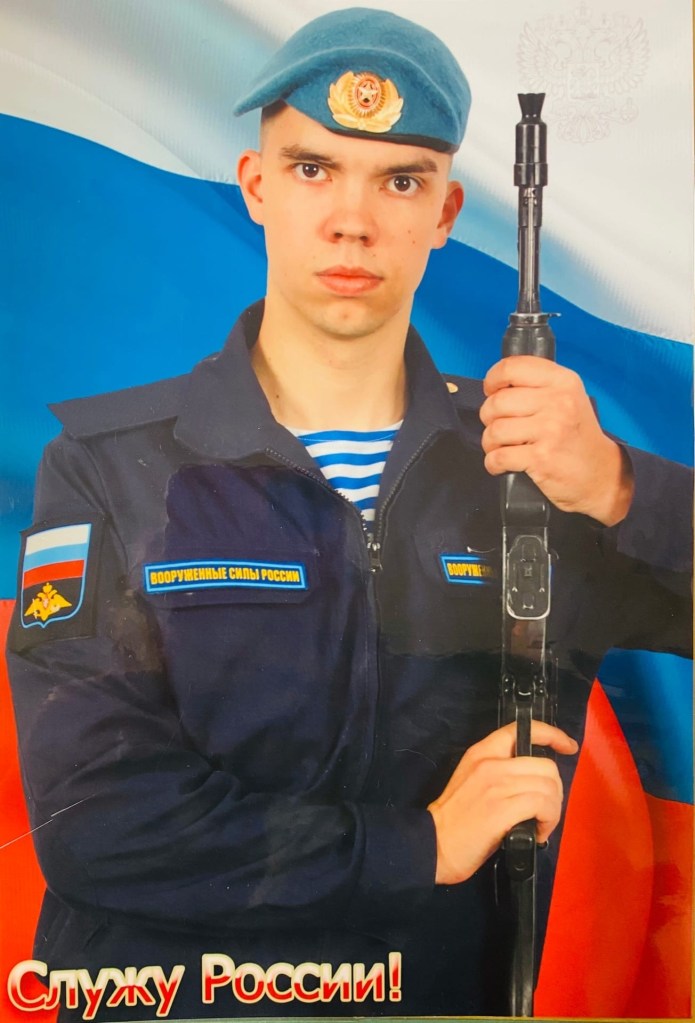
Alexander Andreyev from St. Petersburg has been killed in the military operations in Ukraine. In 2020, he graduated from School No. 368 in the city’s Frunzensky District. The school administration reported the news on its VK page.
During his school years, Andreyev was the captain of the 368 Superheroes volunteer group, and “from the very beginning he was eager to defend his Motherland,” reports the school’s VK page. In the summer, the young man went to serve and was enlisted in the 76th Pskov Airborne Division, the page reports. Later, he signed a contact, and in early October he was sent to the war zone, the post says.
Alexander was killed on October 18, according to the school administration, when the observation post where the soldier was located came under mortar attack. Andreyev was awarded the Order of Courage and buried in the Avenue of Heroes at Babigon Cemetery, the message says.
This is at least the fourth known death of a Petersburger in the war in Ukraine. Earlier, a school teacher from Petersburg, physical education teacher Vadim Sedov, was killed there. In addition, in the first week of October, Andrei Nikiforov, a member of the Nevsky Bar Association, was killed near Lisichansk. In mid-November, news arrived of the death in Mariupol of Konstantin Simonov, a Petersburger who volunteered to fight in March.
The Smolny [Petersburg city hall] is considering three options for special parking permits for residents of the Admiralty District [rayon], Fontanka.ruwrites. On November 1, paid parking was introduced there, and locals were given the option to park their cars in their municipal precinct [okrug] for 1,800 rubles a year, the online media outlet reported.
Petersburgers recalled that residents of the Central District use similar permits throughout its territory, and not only in their own [smaller] municipal precincts, Fontanka.rureports.
As the media outlet’s journalists have written without specifying their source, there are now three possible options for how paid parking will work for Admiralty District residents:
— everything will remain as it is: supporters of this proposal say that permits are needed so that a person can park outside their house for free, while trips around the district only increase traffic, which is what the reform is meant to combat
— the validity of permits will extend to the entire district: proponents of this idea believe that such innovations will soften the public outcry
— residents of the Admiralty District will be able to choose another district in which their permits are valid, giving them the opportunity to travel around nearby districts without worrying about paying for parking.
According to the media outlet, the Smolny will make a choice in the coming days.
Paid parking was introduced in the Admiralty District on November 1. Now those who want to park their car here have to pay 39 or 100 rubles per hour, depending on the type of vehicle, or buy an expensive monthly or annual pass.
But for those who live in the district, the authorities have introduced special annual parking permits that cost 1,800 rubles a year, but are valid only in the municipal precinct in which the motorist owns property or is registered to live. To park a car in any other municipal precinct, one has to pay the standard fare.
On December 9, our country celebrates Day of Heroes of the Fatherland. On this day, Heroes of the Soviet Union, Heroes of the Russian Federation, and recipients of the Order of St. George and the Order of Glory are honored.
And on this day we want to tell you about a hero of our time, Alexander Igorevich Andreyev, a graduate of our school.
ALEXANDER IGOREVICH ANDREYEV
During his school years, Sasha was the team captain of the 368 Superheroes volunteer movement.
From the very beginning of the SMO, he sought to defend the Motherland. In the summer he went to serve and was able to enlist in the legendary Pskov 76th Airborne Division.
He signed a contract [as a volunteer] and just recently, in early October, was deployed in the special military operation.
On October 17, his unit was involved in heavy combat. When a comrade’s machine gun jammed, Alexander covered him before he himself attacked the enemy’s positions, thus contributing to the further advance of the paratroopers. By the end of the day, an enemy fortification had been captured. The next day, October 18, Alexander was at an observation post when the enemy opened fire with a mortar. He was hit by a shell and fatally wounded.
He died at his combat post. He was twenty years old.
By decree of the President of the Russian Federation, Alexander Andreyev has been awarded the Order of Courage.
Alexander is buried at the Babigon Cemetery on the Avenue of Heroes.
May the memory of this Russian Hero, friend and faithful comrade live forever.
We will never forget you!
Source: Secondary School No. 368 Frunzensky District of St. Petersburg, VK, 9 December 2022. Image of Alexander Andreyev courtesy of School No. 368. Translated by the Russian Reader
Petersburg is all gussied up in sparkling joyful lights. The holiday is coming to our town.
I have just read a letter from an acquaintance in a neighboring country:
“There has been no electricity in my city for almost a month. Previously, it was on for four hours a day, then for two, and then for one to two hours every few days. The last time the electricity was on was Friday for two hours. There are no schedules: it can be turned on at three a.m. when everyone is asleep and you just miss it. Along with electricity, there is also no water and heating, although it’s winter outside. Since electricity is provided for one to two hours every few days, it is only at this time that the cellphone tower begins to send out a signal. The rest of the time there is no mobile connection or internet. We have been plunged into the nineteenth century and life has come to a grinding halt.”
Source: Sergey Abashin, Facebook, 13 December 2022. Photo, above, by the author. Translated by the Russian Reader
Why Most Russians Will Stay Home for New Year’s As Incomes Crumble, Even Celebrating with Friends Is Too Expensive for Them
Vladimir Ruvinsky Vedomosti
December 27, 2018
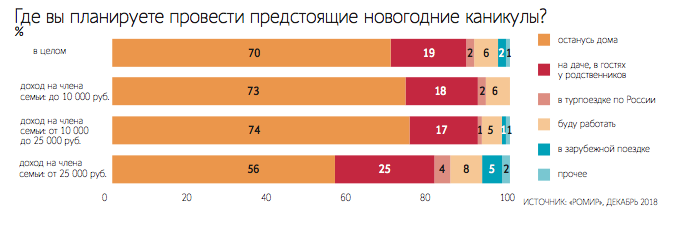
New Year’s, apparently, has become a truly stay-at-home holiday. The number of Russians who plan to spend the long New Year’s holiday at home has jumped from 41% in late 2015 to 70% in late 2018, according to a survey by Romir, a Russian research company. The main reason is the rapid return to the conservative tradition of growing poverty and uncertainty in the future, combined with the desire to maintain previous levels of consumption of the most vital goods and services, which no longer include a winter holiday away from home.
“How do you plan to spend the upcoming New Year’s holidays?” Overall: at home, 70%; at dacha, visiting relatives, 19%; traveling in Russia, 2%; working, 6%; traveling abroad, 2%; other, 1%. Average monthly income per family member of 10,000 rubles: at home, 73%; at dacha, visiting relatives, 18%; traveling in Russia, 2%; working, 6%. Average monthly income per family member of 10,000 rubles–25,000 rubles: at home, 74%; at dacha, visiting relatives, 17%; traveling in Russia, 1%; working, 5%; traveling abroad, 1%; other, 1%. Average monthly income per family member of 25,000 rubles or greater: at home, 56%; at dacha, visiting relatives, 25%; traveling in Russia, 4%; working, 8%; traveling abroad, 5%; other, 2%. Source: Romir, December 2018. Courtesy of Vedomosti
Surveys of the same representative selection of respondents have shown a drop-off in all other ways of spending the New Year’s holidays, which have basically become yet another period of time off work for Russians. The number of Russians planning to spend the holidays at the dacha or visiting friends or relatives has decreased from 34% to 19% in three years. Trips within Russia have dropped from 8% to 2%, while trips abroad have fallen from 4% to 2%. Nearly everyone has been scrimping, including Russians with above-median incomes. Fifty-six percent of Russian with monthly incomes of 25,000 rubles [approx. $364] per family memberwill stay home, as will 74% of Russians with monthly incomes between 10,000 rubles and 25,000 rubles per family member. As Tatyana Maleva, an economist from RANEPA, notes, the Russian urban middle class, which has grown accustomed to traveling, cannot afford it.
The picture emerging from the survey reflects the mood of many Russians. Since 2014, real incomes have fallen four years in a row, and all indications are they will be shown to have fallen in 2018 as well. According to Rosstat, the monthly modal income in in 2017 was 13,274 rubles [approx. $233], while the monthly median income was 23,500 rubles [approx. $412]. Given these circumstances, the ruble’s devaluation, which has made trips abroad more expensive, is not such an important factor. In December 2015, one dollar cost as much as it does currently, 67 rubles, and its value was rising.
Holidays at home are not cheap, either. In November 2018, the percentage of Russians who had noticed a rise in prices had grown in comparison with October 2018, according to the Russian Central Bank. Forty percent of Russians noticed upticks in prices for meat and poultry; 32%, rises in the price of petrol; 28%, rising prices for cheese and sausage; while 26% had noticed that milk and dairy products were more expensive. All of these goods are part of the home holiday menu.
In comparison with 2014, consumption levels have fallen. They have not returned to their previous levels. Attempting to wriggle their way out of poverty or maintain their previous income levels, Russians have taken out an ever-growing number of consumer loans, which have proven difficult to pay back. Every fourth Russian who had outstanding loans in 2015–2017 spent 30% of their incomes paying them off, note Olga Kuzina and Nikita Krupensky, economists at the Higher School of Economics, in an article entitled “The High Debt of Russians: Myth or Reality?” published in the November 2018 issue of the journal Voprosy ekonomiki.
Generally, the Russian populace has transitioned to a minimalist model of consumerism, notes Maleva. Scrimping begins literally with the New Year. As Romir’s survey indicates, this transition has become a trend that will, apparently, shape the strategies and tactics of Russian consumers in the future, too. The only thing that has not changed over the years is the president’s televised New Year’s greeting: it costs nothing.



 First of all, we appeal to the leadership of St. Petersburg and the Committee for City Property Management. And we hope that the cultural capital is not indifferent to the plight of one of the best bookstores in the city by one of the primary independent children’s publishers in Russia.
 If you have suggestions and options, please write via Telegram at +7 (921) 809-8519, and Natasha and Polina will be in touch.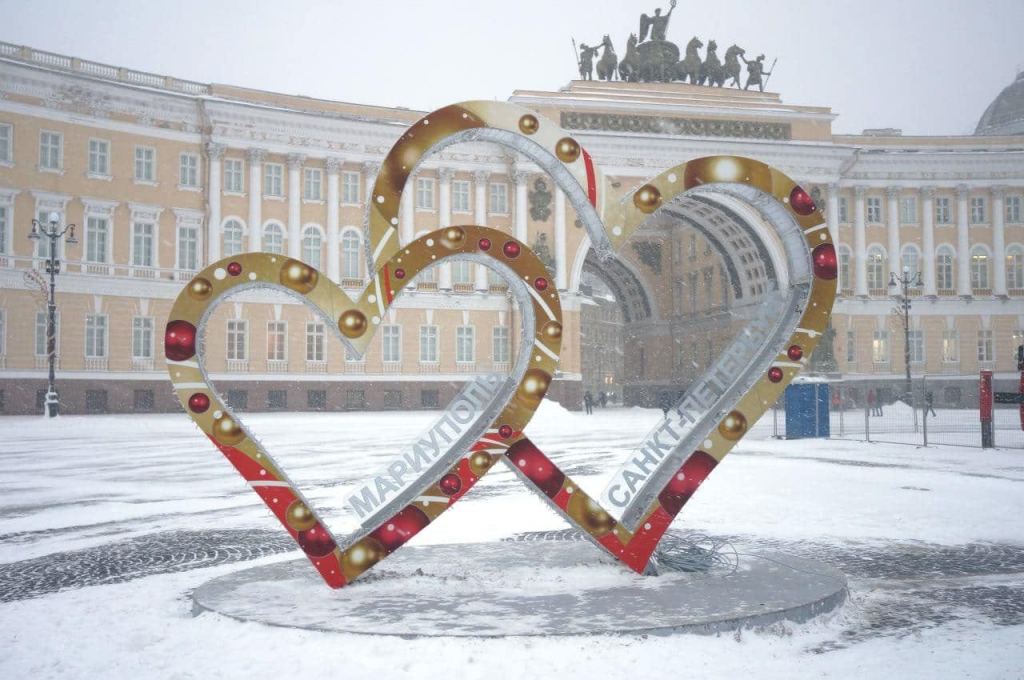
 On December 9, our country celebrates Day of Heroes of the Fatherland. On this day, Heroes of the Soviet Union, Heroes of the Russian Federation, and recipients of the Order of St. George and the Order of Glory are honored.
 May the memory of this Russian Hero, friend and faithful comrade live forever.