El lector ruso: Bielorrusia cinco años después

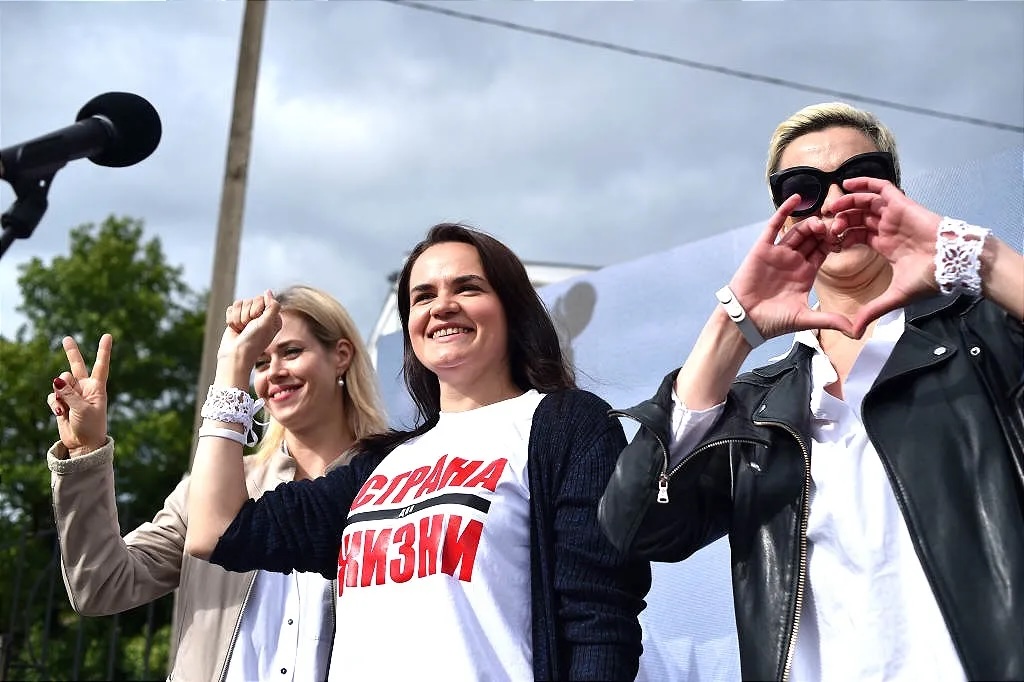
Svetlana Tikhanovskaya (al centro), Veronika Tsepkalo (a la izquierda) y Maria Kolesnikova hacen sus famosos gestos en una reunión en Minsk el 2020. © Getty Images

Alexander Lukashenko, exdirector de una granja estatal soviética convertido en dictador de Bielorrusia dijo alguna vez que jamás una mujer gobernaría su país. Entonces, tres mujeres lo desafiaron.

Cinco años después de las protestas más grandes en la historia de Bielorrusia, Svetlana Tikhanovskaya y Veronika Tsepkalo, ambas en el exilio actualmente, hablan con la BBC sobre el precio que tuvieron que pagar para inspirar a cientos de miles de bielorrusos a salir a las calles para exigir un cambio.

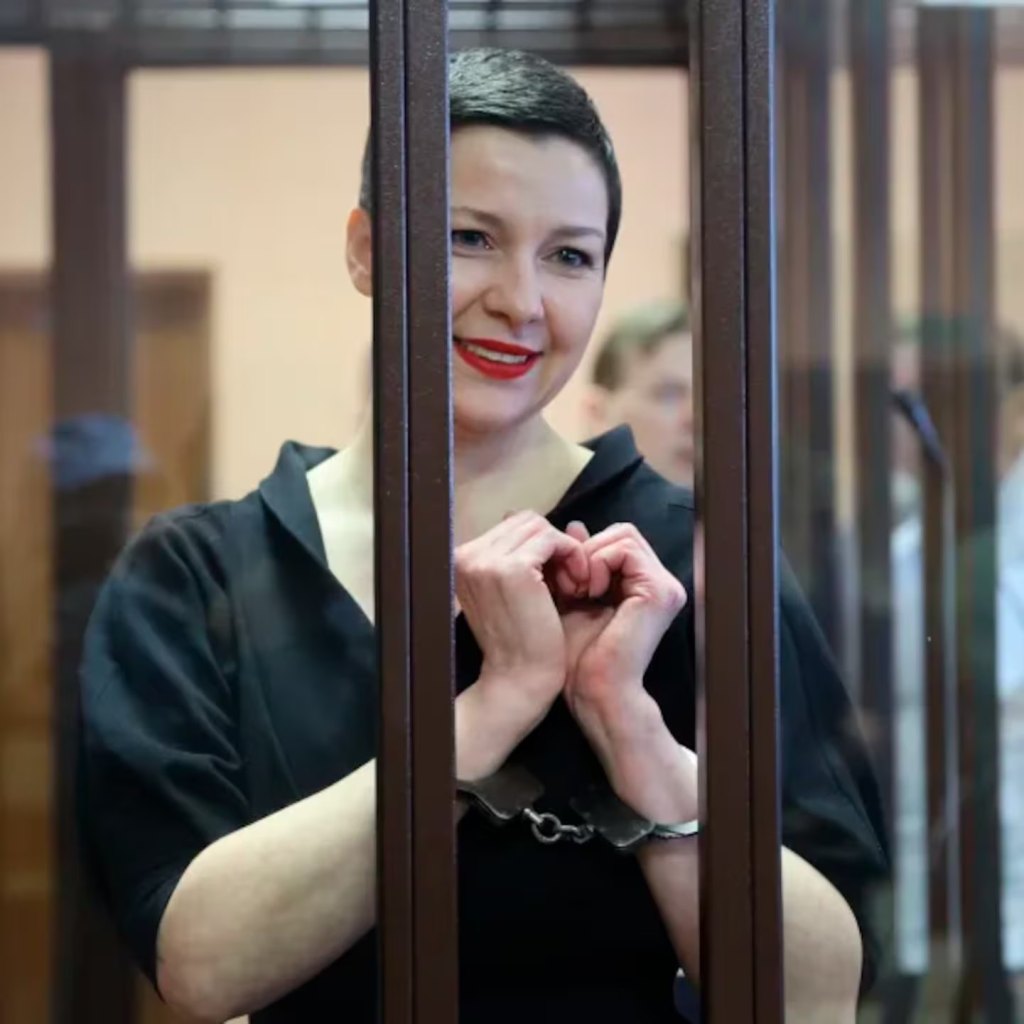
Maria Kolesnikova, su ex compañera de campaña, se encuentra ahora en una prisión bielorrusa, condenada  a 11 años, el 2021, por extremismo y conspiración para derrocar al gobierno.

Su hermana, Tatsiana Khomich, ha dicho a la BBC que su familia no ha tenido noticias de Maria desde el año pasado.

Las tres mujeres unieron fuerzas en agosto de 2020, cuando los candidatos de la oposición a los que apoyaban fueron obligados a retirar sus candidaturas presidenciales.

Su efímera alianza y sus imágenes mostrando un corazón, un puño y un signo de victoria con las manos estuvieron en titulares de todo el mundo

Afirman que les tomó 15 minutos ponerse de acuerdo para unir fuerzas contra Lukashenko, que se aferra al poder en Bielorrusia desde 1994.

“Fue muchísimo más rápido de lo que les tomaría a los hombres”, dijo Veronika Tsepkalo en ese momento.

Ella quedó a cargo de la campaña de su esposo, Valery Tsepkalo, después de que al ex embajador bielorruso en Estados Unidos se le prohibiera registrarse como candidato y tuviera que huir del país por temor a ser arrestado.

Maria Kolesnikova hizo campaña a favor del banquero Viktor Babaryko, a quien también se le impidió presentarse como candidato y fue arrestado antes de las elecciones.

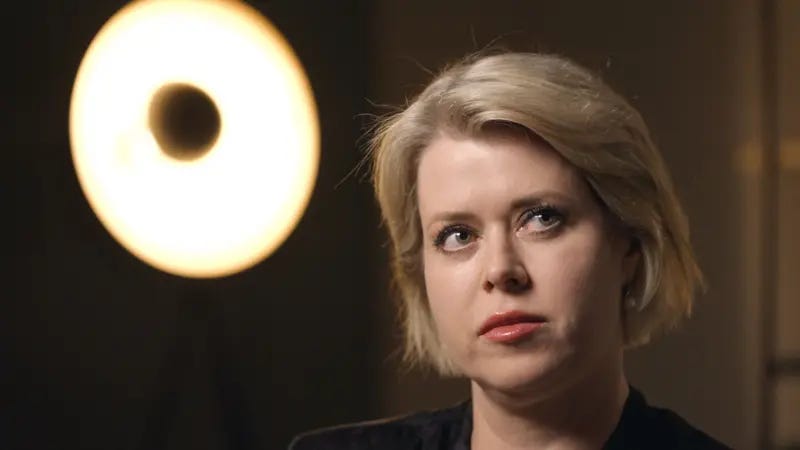
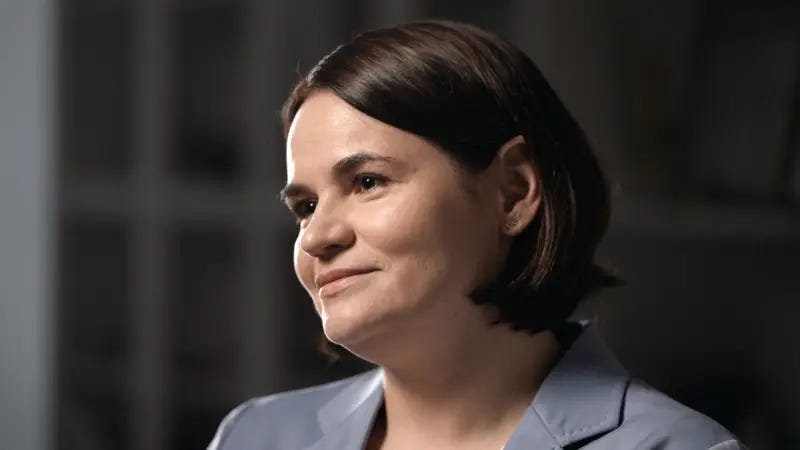
Svetlana Tikhanovskaya es ampliamente reconocida como líder de la oposición democrática en el exilio. © BBC News Ruso

Pero fue Svetlana Tikhanovskaya quien terminó en la cédula de votación reemplazando a su esposo, el activista y popular videobloguero Sergei Tikhanovsky, después de que este también fuera encarcelado.

Juntas, las tres mujeres viajaron por todo el país, convocando  multitud de seguidores ansioso por un cambio. La promesa era sencilla: libertad para todos los presos políticos y, entonces, elecciones libres y justas.

En 2025 Svetlana Tikhanovskaya habla del “aliento emocional” que todos sintieron durante esos días.

“Logramos unir a los bielorrusos”, declaró a la BBC.

Cuando el día de las elecciones llegó, el 9 de agosto, la gente acudió en masa a las urnas. Los partidarios de Svetlana estaban convencidos de su victoria, pero Alexander Lukashenko se atribuyó un triunfo categórico.

Esto desencadenó masivas manifestaciones, sin precedentes en todo el país, que duraron varios meses. Las autoridades respondieron con una brutal represión. Al menos cuatro personas murieron, muertes que han sido atribuidas a las fuerzas de seguridad.

Pero ninguna de las tres mujeres que electrizaron la campaña electoral estaban allí para liderar las protestas.

Tsepkalo abandonó Bielorrusia justo antes de las elecciones. Tikhanovskaya fue detenida por la KGB un día después de la votación y, entonces, fue obligada a abandonar el país bajo amenaza de ser encarcelada y de que sus hijos pasaran a la tutela del Estado.

La familia de Maria Kolesnikova continúa su campaña para que todos los presos políticos sean liberados © BBC News Ruso

María Kolesnikova se quedó. Fue arrestada en septiembre tras romper su pasaporte en la frontera con Ucrania para evitar una expulsión forzosa.

Junto con su ex jefe Viktor Babaryko, es una de los más de mil presos políticos que aún permanecen detenidos en Bielorrusia según el grupo de derechos humanos Viasna.

Desde el 2020, decenas de miles de personas han sido arrestadas por oponerse al régimen y muchas afirman haber sufrido tortura y vejaciones durante su detención.

Hoy en día en Bielorrusia cualquier disidencia pública es eliminada.

“Sinceramente creí que el régimen de Lukashenko caería”, comentó  Veronika Tsepkalo a la BBC.

Al igual que cientos de miles de bielorrusos que abandonaron el país tras el 2020, ahora vive en el extranjero con su familia y trabaja en una gran empresa tecnológica del Reino Unido.
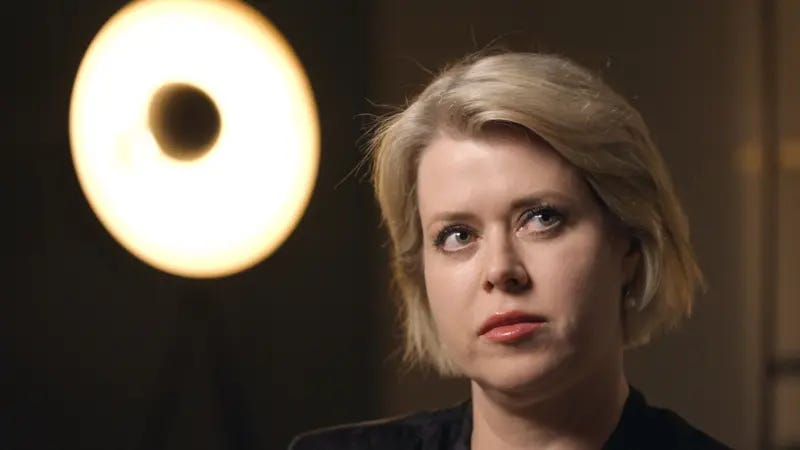
Veronika Tsepkalo ha sido premiada por su labor en defensa de los derechos de las mujeres bielorrusas. ©BBC News Ruso

Entonces, ¿qué salió mal con las protestas?

“Era una estrategia de todo o nada”, dice Tatsiana Khomich, hermana de Kolesnikova, quien ahora lidera una campaña por la liberación de los presos políticos bielorrusos. “Nos sobreestimamos y subestimamos la capacidad de las autoridades”.

Svetlana Tikhanovskaya dice que ahora entiende que no tenían ningún plan y “no estaban preparados para ningún cambio radical”.

Esta mujer, que en su día era una madre ama de casa y admitió ser tímida y carecer del carisma de su marido, ahora es reconocida como líder de la oposición democrática en el exilio y se reúne periódicamente con jefes de Estado y presiona para que se impongan sanciones contra el gobierno de Lukashenko.

«Si pudiera aplicar mis conocimientos actuales y mi experiencia de hace cinco años, sin duda me habría sentido más segura», dice Tikhanovskaya. «He aprendido algo de diplomacia, a hablar con políticos y a sentirme cómoda con personas influyentes».

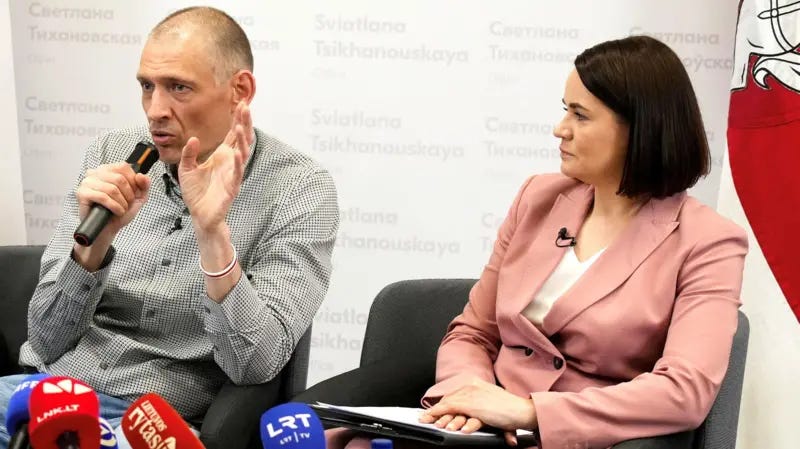
Svetlana y Sergei Tikhanovsky en una conferencia de prensa tras la liberación de Sergei. © Reuters

Hace menos de dos meses, Svetlana recuperó inesperadamente a su marido: Sergei Tikhanovsky fue liberado junto con otros 13 presos políticos y enviado a Lituania con su familia.

Después de haber dicho que había ingresado en la política “por amor” a su marido, Tikhanovskaya ahora admite que desde entonces también se ha enamorado de Bielorrusia y de la visión que tiene de su país.

“No vamos a competir con Sergei sobre quién es más importante, quién tiene más seguidores, etc. Sergei encajará a la perfección en nuestro movimiento”, afirma.

Tikhanovskaya rara vez habla con Veronika Tsepkalo y en la entrevista con la BBC no quiere entrar en detalles de lo que pasó con su relación.

Tsepkalo es más sincera: acusa a su ex “compañera de armas” de secuestrar el movimiento y expulsarla.

“El trío se disolvió”, afirma Tatsiana Khomich.

Khomich, quien todavía forma parte del equipo de su hermana, dice que todas tienen sus propios proyectos ahora.

Tatsiana Khomich dice que no ha tenido noticias de su hermana este año. © BBC News Ruso

Svetlana Tikhanovskaya dice que su prioridad es trabajar por la liberación de los presos políticos y enumera como sus logros ayudar a los bielorrusos en el extranjero y mantener a Bielorrusia en la agenda internacional.

Veronika Tsepkalo se muestra escéptica ante estos éxitos y los califica de “acción por la acción”.

De regreso al equipo de su marido, ha estado haciendo campaña para llevar a Alexander Lukashenko ante la justicia internacional.

Tatsiana Khomich considera que intentar forzar un cambio de régimen desde el extranjero “no tiene sentido”.

“En realidad, ahora estamos mucho más lejos que hace cinco años”, afirma.

Tanto Tikhanovskaya como Tsepkalo creen que en algún momento en el futuro Bielorrusia será libre y democrática.

Ante las críticas de que haber puesto sus propias ambiciones por delante de las de su equipo, Tikhanovskaya responde: “Quizás eso es lo que dicen quienes no me conocen de verdad. Me gustaría que por fin celebrácemos nuevas y justas elecciones, pero, desde luego, no participaré en ellas.

Fuente: Tatsiana Yanutsevich y Tatiana Preobrazhenskaya, “Las mujeres que se enfrentaron al “último dictador” de Europa”. Lo mejor de BBC News Rusia — en inglés”, 5 de setiembre del 2025. Traducido al español por Hugo Palomino.


Kapela (ensemble) Rej es un grupo de música tradicional bielorrusa. Sus instrumentos principales son la duda (gaita bielorrusa) y el violín.

El ensemble en la grabación:

Vital Voranau: duda

Ursula Oleksiak: violín, voz

con Sergi Llena (España): tambor de marco, gaita de boto

Las grabaciones se realizaron en Serbia durante el festival Rog Banata en las ciudades de Zrenjanin (2024, pistas 1-9) y Bečej (2023, pistas 10-13). La foto de la portada del álbum fue tomada de la actuación en Belgrado el 2024 por Sandra Crepulja.

Lanzamiento: 27 de agosto de 2025

Fuente: Antonovka Records (Bandcamp). Traducido al español por Hugo Palomino.


Maria Kalesnikava, música, activista y prisionera política, fue detenida un día como hoy en 2020. Secuestrada en una calle de Minsk por las autoridades bielorrusas, fue llevada a la frontera de Bielorrusia y Ucrania para ser expulsada del país al día siguiente. Pero rompió su pasaporte y por consiguiente no pudo cruzar la frontera. El 2021, fue condenada a 11 años de prisión junto a Maksim Znak, quien recibió 10 años. Actualmente se encuentra recluida en la prisión de mujeres de Homiel.

Kalesnikava tiene mi edad y ya ha pasado cinco años de su vida en prisión. Desde febrero del 2025, María y su familia no han intercambiado cartas ni llamadas… Al menos, no está en régimen de aislamiento, sino con otras prisioneras.

Llevo un tiempo sin escribir sobre la situación política en Bielorrusia, pero no porque esta haya mejorado. No, cada día leemos sobre nuevas detenciones. Esta semana, defensores de derechos humanos han reconocido a 14 nuevos presos políticos y las autoridades han añadido 68 nombres a la llamada “lista de extremistas”. En total, sabemos ahora de 1197 presos políticos, entre ellos 32 ciudadanos extranjeros. Un caso reciente: una ciudadana británica de 52 años (que también tiene ciudadanía bielorrusa) fue detenida al entrar al país  y condenada a 7 años de prisión (https://spring96.org/en/news/118604).

Pero otros cientos de personas siguen sin ser reconocidas por diversas razones. Sin una Bielorrusia libre, no habrá paz en Europa.

Fuente: Julia Cimafiejeva (Facebook), 7 de setiembre del 2025. Traducido al español por Hugo Palomino.
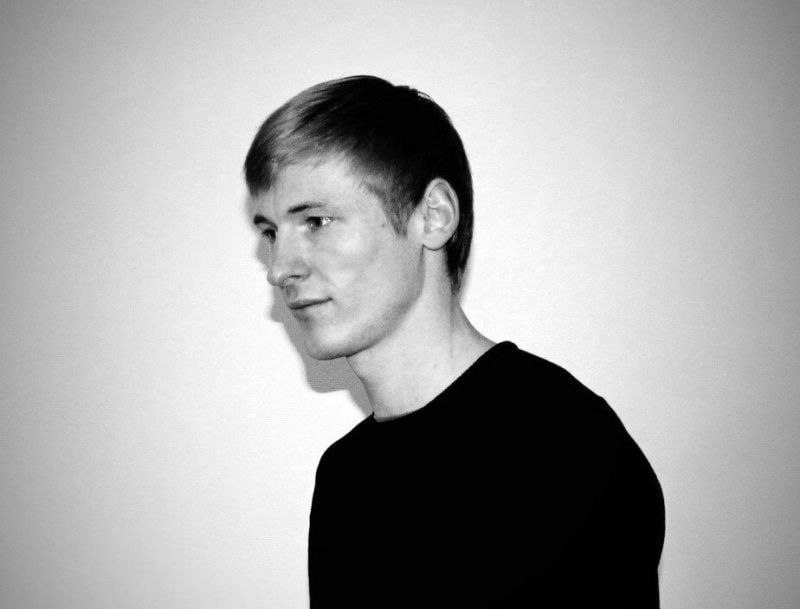

Escribía ayer sobre los cinco años que llevaba ya Maria Kalesnikava en prisión y sobre los 1197 presos políticos en Bielorrusia. Y hoy nos enteramos de otra muerte.

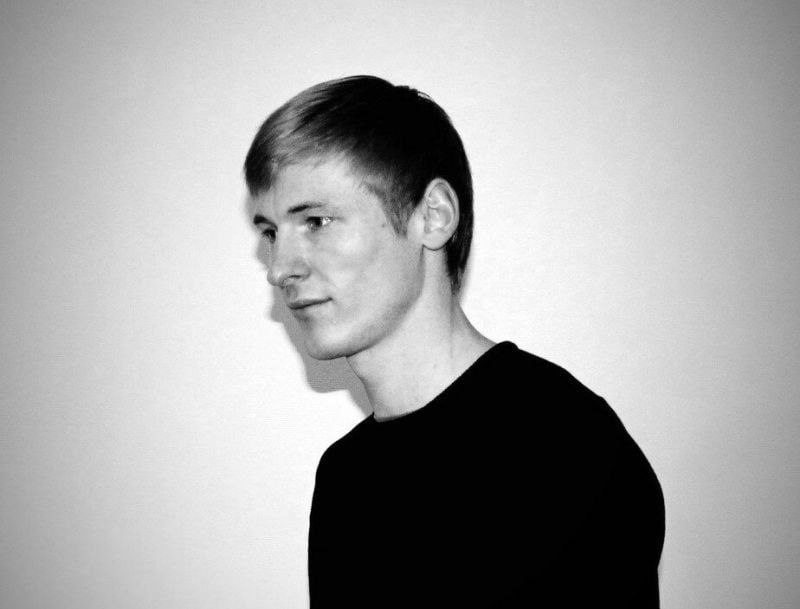
Andrei Padniabenny, ciudadano ruso de 36 años y prisionero político ha muerto en la prisión n. 15 de Mahiloŭ. Él fue enjuiciado dos veces con acusaciones criminales y sentenciado a 16 años y ochos meses de prisión en una colonia de seguridad media. Llevaba casi cuatro años tras las rejas. Se desconoce la causa de su muerte.

Su madre Valiantsina informó en su perfil de Facebook: “Mis queridos nietos se quedan sin padre… El único consuelo que queda es que ya nadie podrá torturar a mi hijo, ni física ni psicológicamente… Creo que la justicia de Dios alcanzará a los culpables y ningún crimen quedará impune…”

Según la publicación, Andrei murió el 3 de septiembre. Esta es la novena muerte de un preso político en Bielorrusia y la segunda muerte de un ciudadano ruso tras las rejas.

Otros presos políticos que murieron en cautiverio:

Vitold Ašurak

Aleś Puškin

Mikałaj Klimovič

Vadzim Kraśko

Ihar Lednik

Dźmitry Šlethaŭer

Valancin Štermier

Alaksandr Kulinič

Fuente: Julia Cimafiejeva (Facebook), 8 de septiembre de 2025. Traducido al español por Hugo Palomino.
Belarus: Five Years Later

Svetlana Tikhanovskaya (centre), Veronika Tsepkalo (left), and Maria Kolesnikova making their signature hand gestures at a meeting in Minsk in 2020. ©Getty Images

Alexander Lukashenko, the former Soviet state farm director turned Belarus strongman, once said that a woman could never run his country. Then three of them challenged him.

Five years on from the biggest protests in Belarusian history, Svetlana Tikhanovskaya and Veronika Tsepkalo, both now in exile, have been speaking to the BBC about the price they paid for inspiring hundreds of thousands of Belarusians to take to the streets to call for change.

Their former teammate, Maria Kolesnikova, is now in a Belarusian prison, sentenced in 2021 to 11 years for extremism and plotting to overthrow the government.

Her sister Tatsiana Khomich tells the BBC the family haven’t heard from her since last year.

The three women joined forces in August 2020, when the opposition candidates they were supporting were all forced to end their presidential bids.

Their short-lived alliance made global headlines with pictures of them showing a heart, a fist, and a victory sign with their hands.

They claimed it took them 15 minutes to agree to join forces against Lukashenko, who has been in charge of Belarus since 1994.

“Far quicker than it would take men to do it,” said Veronika Tsepkalo, at the time.

She was left in charge of her husband Valery Tsepkalo’s campaign after the former Belarusian ambassador to the US was barred from registering as a candidate and fled the country fearing arrest.

Maria Kolesnikova campaigned for banker Viktor Babaryko, who was also prevented from standing and arrested ahead of the election.

Svetlana Tikhanovskaya is widely recognised as the leader of the democratic opposition in exile. © BBC News Russian

But it was Svetlana Tikhanovskaya who ended up on the ballot, stepping in for her husband, the activist and popular video blogger Sergei Tikhanovsky, after he too was thrown in jail.

Together the three women travelled around the country, drawing big crowds of supporters eager for change. Their promise was simple: release all political prisoners, then hold a free and fair election.

In 2025, Svetlana Tikhanovskaya speaks about the “emotional uplift” all of them felt during those days.

“We managed to unite Belarusians”, she tells the BBC.

When election day came on 9 August, people flocked to the polls. Svetlana’s supporters were convinced she had won the vote, but Alexander Lukashenko claimed a landslide victory.

This sparked unprecedented mass demonstrations across the country, which lasted for several months. The authorities responded with a brutal crackdown. At least four people were killed – their deaths blamed on the security forces.

But none of the three women who had electrified the campaign, were there to lead the protestors.

Tsepkalo left Belarus just before the election. Tikhanovskaya was detained by the KGB a day after the vote and forced out of the country under threat of being jailed and losing her children to state care.

Maria Kolesnikova’s family are continuing their campaign for all political prisoners to be released © BBC News Russian

Maria Kolesnikova stayed behind. She was arrested in September, after tearing up her passport at the border with Ukraine to prevent a forceful expulsion.

Along with her former boss Viktor Babaryko, she is one of more than a thousand political prisoners still held in Belarus, according to a human rights group Viasna.

Since 2020 tens of thousands of people have been arrested for opposing the regime, many say they have suffered torture and mistreatment while in detention.

Today, any public dissent in Belarus is crushed.

“I sincerely believed that Lukashenko’s regime would fall”, Veronika Tsepkalo tells the BBC.

Like hundreds of thousands of Belarusians who are estimated to have left the county after 2020, she now lives abroad with her family, working at a big tech company in the UK.

Veronika Tsepkalo has won awards for her work defending the rights of Belarusian women. ©BBC News Russian

So what went wrong with the protest movement?

“It was this all-or-nothing approach”, says Tatsiana Khomich, Kolesnikova’s sister who is now campaigning for release of Belarusian political prisoners. “We overestimated ourselves and underestimated what the authorities are capable of.”

Svetlana Tikhanovskaya says she now understands they had no plan and “weren’t ready for any radical change”.

Once a stay-at-home mum who admitted to being shy and lacking her husband’s charisma, she is now recognised as leader of the democratic opposition in exile, and regularly meets heads of state and lobbies for sanctions against Lukashenko’s government.

“If I could transfer my present knowledge, my experience to myself five years ago, I would definitely have felt more confident,” Tikhanovskaya says. “I’ve learned a bit of diplomacy, how to talk to politicians, how to be comfortable around powerful people”.

Svetlana and Sergei Tikhanovsky at a press-conference following Sergei’s release. ©Reuters

Less than two months ago Svetlana unexpectedly got her husband back: Sergei Tikhanovsky was released along with 13 other political prisoners and sent to Lithuania to his family.

It is thought that Donald Trump’s administration was key in securing their release.

Having said in the past that she went into politics “out of love” for her husband, Tikhanovskaya now admits she’s since also fallen in love with Belarus and the vision for her country.

“We’re not going to compete with Sergei about who’s more important, who has more followers et cetera. Sergei will be a natural fit for our movement,” she says.

Tikhanovskaya rarely speaks to Veronika Tsepkalo and in the interview with the BBC doesn’t want to go into details of what happened to their relationship.

Tsepkalo is more candid: she accuses her former “sister-in-arms” of hijacking their movement and pushing her out.

“The trio has broken up”, states Tatsiana Khomich.

Khomich, who is still part of her sister’s team, says all of them now have their own projects.

Tatsiana Khomich says she hasn’t heard from her sister this year. ©BBC News Russian

Svetlana Tikhanovskaya says her priority is working towards the release of political prisoners and lists helping Belarusians abroad and keeping Belarus on the international agenda as her achievements.

Veronika Tsepkalo is sceptical of these successes, calling them “action for action’s sake”.

Back in her husband’s team, she has been campaigning to bring Alexander Lukashenko to international justice.

Tatsiana Khomich thinks that trying to force regime change from abroad is “meaningless”.

“In reality, we’re now much further away from it than we were five years ago”, she says.

Both Tikhanovskaya and Tsepkalo believe at some point in the future there will be a free and democratic Belarus.

When asked to respond to criticism that she had put her own ambitions before her team, Tikhanovskaya says:

“Maybe that’s the kind of thing people who don’t really know me would say. I’d like us to finally hold new and fair elections but I certainly won’t be taking part in them.”

Source: Tatsiana Yanutsevich & Tatiana Preobrazhenskaya, “The women who stood up to Europe’s ‘last dictator,’” The Best of BBC News Russian — in English,” 5 September 2025


Kapela (ensemble) Rej is a group performing traditional Belarusian music. Their main instruments are the duda (Belarusian bagpipe) and the violin.

The ensemble on the recording:
Vital Voranaŭ: duda
Ursula Oleksiak: violin, vocals
featuring Sergi Llena (Spain): frame drum, gaita de boto

The recordings were made in Serbia during the Rog Banata festival in the towns of Zrenjanin (2024, tracks 1-9) and Bečej (2023, tracks 10-13). The album cover photo was taken at the performance in Belgrade in 2024 by Sandra Crepulja.

Released August 27, 2025

Source: Antonovka Records (Bandcamp)


Maria Kalesnikava, musician, activist, and political prisoner, was detained on this day in 2020. She was kidnapped on the Minsk street by the Belarusian authorities and the next day taken to the Belarusian-Ukrainian border to be thrown out of the country. But she tore up her passport and thus could not cross the border. In 2021, together with Maksim Znak, she was sentenced to 11 years of imprisonment (Maksim got 10 years). Now she is kept in Homiel women’s colony.

Kalesnikava is of my age, and five years of her life she has already spent in jail. Since February 2025, Maria and her family have exchanged no letters or calls… At least, she is not in solitary confinement but kept together with other female prisoners.

I’ve not been writing about the political situation in Belarus for a while, but that is not because there is some improvement. No, every day we read about new detentions. This week human rights defenders have recognized 14 new political prisoners, and the authorities have added 68 names to the so-called “extremist list”. All in all, we now know about 1197 political prisoners, 32 foreign citizens among them. A recent case: a 52-year old British citizen (she also has the Belarusian citizenship) was arrested while crossing the Belarusian border and sentenced to 7 years of prison (https://spring96.org/en/news/118604).

But still hundreds stay unrecognized because of different reasons. Without free Belarus, you won’t have peace in Europe.

Source: Julia Cimafiejeva (Facebook), 7 September 2025


Yesterday, I wrote about the five years Maria Kalesnikava had already spent in jail and about 1197 political prisoners in Belarus. And today, we’ve learned about another death.

Political prisoner Andrei Padniabenny, a 36-year-old Russian citizen, has died in Mahiloŭ penal colony No. 15. He was tried twice on criminal charges and sentenced to 16 years and eight months in a medium-security penal colony. He had been behind bars for nearly four years. The exact cause of his death is unknown.

His mother Valiantsina, reported on Facebook:

“My precious grandchildren are left without a father… The only consolation is that no one will be able to torture my son anymore, either physically or psychologically… I believe that God’s justice will reach the guilty, and no crime will go unpunished….”

According to the publication, Andrei died on September 3. This is the ninth death of a political prisoner in Belarus and the second death of a Russian citizen behind bars.

Other political prisoners who died in captivity:

Vitold Ašurak

Aleś Puškin

Mikałaj Klimovič

Vadzim Kraśko

Ihar Lednik

Dźmitry Šlethaŭer

Valancin Štermier

Alaksandr Kulinič

Source: Julia Cimafiejeva (Facebook), 8 September 2025

Dmitry Kuzmin: To Save One Person

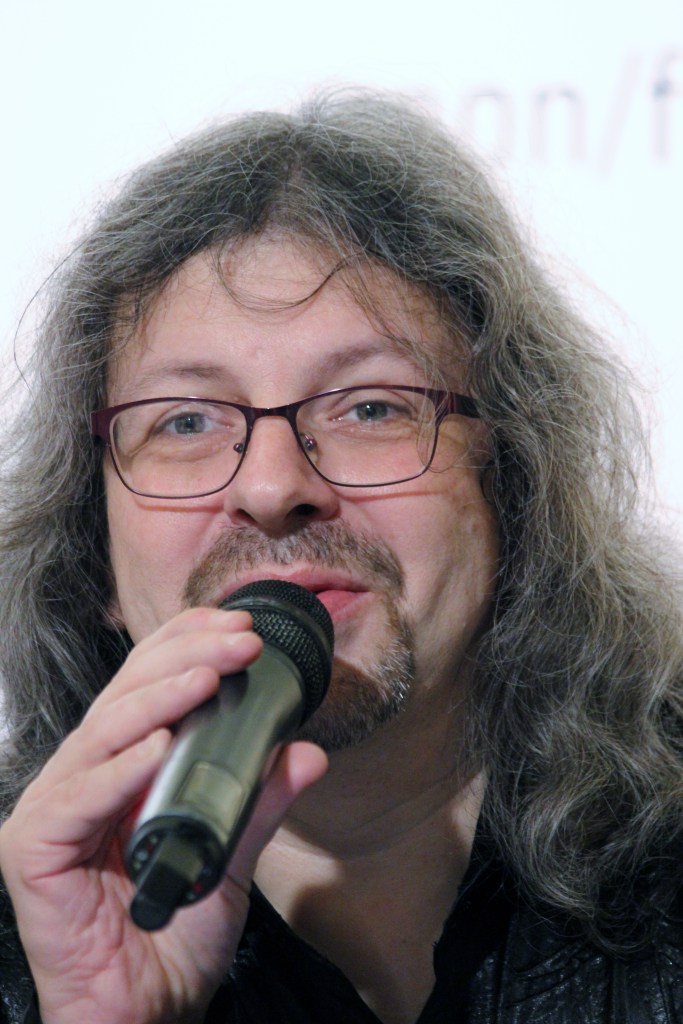
Dmitry Kuzmin in 2019. Photo courtesy of Wikipedia

“It is probably too late for the world, but for the individual man there always remains a chance.” This formulation from Joseph Brodsky’s Nobel Prize speech grew out of the two-hundred-year Russian liberal tradition of tiny, good deeds accomplished in the maw of Leviathan, and over the past two years it has inspired many. Each refugee rescued from the occupied Ukrainian territories via the Rubikus volunteer network is the best evidence of this inspiration. But we of course know that this is not true. There is not always a chance to save the individual. And the death of Alexei Navalny has reminded us of this with irrefutable clarity. Although with no greater clarity than the death a few days earlier of three children, burned alive with their parents at their home in Kharkiv as a result of a Russian rocket strike.

But empathy is only ever individual: in your head you may be on the side of all the Ukrainians and all the political prisoners, but your heart responds to concrete stories, names, and faces. And the media reality of today brings them to us. By following a couple of links, you can look into the eyes of every victim of a rocket attack. You can read the last text messages sent by Ukrainian women to their loved ones killed in this war. You can see the frontline dugout where the phenomenal poet Maksym Kryvtsov, the hope of Ukraine’s rising literary generation, slept alongside his tabby cat—just a few days before they were both killed there.

It’s a little more complicated with the victims on the other side of the frontlines, the ones whom the Kremlin regime is trying to exterminate on its own soil. Navalny’s singularity and even exceptionalism lies in the fact that even in a prison camp literally at the ends of the earth he was still able to turn his story into a gripping, if agonizing, show. Others do not have this opportunity. Where is Nikita Uvarov, the teenager sentenced to five years for talking with his friends about anarchism and for constructing an FSB building in Minecraft and planning to blow it up? Where are Salekh Magamadov and Ismail Isayev, the Chechen youths who dared to start a chat group for atheists and received eight- and six-year prison sentences, respectively? Or this thing that didn’t even get picked up in the news: where is the “transgender LGBT activist and OVD Info volunteer” who sent money to the Ukrainian army? Their name is unknown but their prison sentence, they say, is twelve years. And this is not to mention Belarus, which has practically disappeared from the Russian news, and where one of the main opposition figures, Maria Kolesnikova, is in prison and has not been heard from for over a year. Navalny, who even from the Yamal Peninsula was able to maintain Russian society’s focus and interest, was also doing this for all the above-named individuals and many more unnamed ones, even if it didn’t actually help them at all. Along with Navalny’s murder, the topic of internal crackdowns, the domestic frontline in the Putinist walking dead’s war against all the living, will inevitably exit the field of daily scrutiny. It is entirely likely that this was indeed the motivation for finishing off a reprisal that had lasted for years, and now we can expect an abrupt post-election uptick in those selfsame crackdowns.

In theory, there are people working on the other side. But they are, in typical fashion, incapable of drawing attention to themselves—and they intentionally avoid it. The prosecutors advocating for the prosecution, the judges issuing the sentences, the prison wardens carrying out their dirty work (even if we don’t take straight-up murder into account)—they all have names and faces, but no one worries about them: it seems that only the extremely scrupulous Gabriel Superfin remembered today who is nominally responsible for the tragedy on the Yamal Peninsula. After all, every rocket dropped onto Ukrainian targets was designed by someone, assembled, shipped by someone, and someone pressed the button. You can fantasize about how each of these people will eventually pay for their involvement, but we know from historical experience that at best their grandchildren and great-grandchildren will feel ashamed of them. In the stand-off between individuals and the system it is immaterial who personally represents the system. In the recent story of the rock group Bi-2’s lucky liberation from imprisonment in Thailand it was openly discussed how the Russian consul was pulling the strings in the devilish machinations—but where is this consul, who has seen him? He is probably an inventive paper-pusher—a “first-rate pupil,” in Yevgeny Schwartz’s words—but he is not meant to have any personal qualities. 

Safe to say we won’t get anything out of Thailand: this country, so beloved by Russian tourists, where the king can kick his former wife out to a dilapidated shack, having first ordered his minions to destroy the shack’s toilet and to hang a sign over the waste pit saying, “I hope you are as comfortable here as in the palace,” should easily find common cause with a country where the president’s main opponent had his underpants smeared with poison. Yet a month earlier, for example, Russian national Yevgeny Gerasimenko was arrested at Russia’s request in Prague, at Vaclav Havel Airport (you can imagine what Havel would have said about this). It seems that no one had to lobby for this arrest, the system worked on its own: some Russian agency put in a request to Interpol, some international bureaucratic authority received the request, some Czech law enforcement officials carried out their routine duty. What does it matter that Gerasimenko’s application for political asylum was already being reviewed by the authorities of a different EU country: they were looking for him, the former manager of a computer school in Norilsk, a city built on the bones of political prisoners, allegedly for dangerous financial crimes… Wait, and of what crimes had Alexei Navalny been convicted, sent to a village built on the bones of political prisoners, and murdered there? Does no one remember anymore?

A long time ago there was a Soviet film about a group of teenagers who got lost in caves: they ran out of food and water, they lost their sense of time, all the underground passages led them again and again to a bunker built by the Germans in WWII, with the word Tod (“death”) written in huge letters on the wall. When they’re on their last legs one of the boys has the thought that Death, in fact, is fascist, that everything that’s bad for the Nazis has to be good, everything that the Nazis prohibit should be allowed—and he pulls the lever below the word. The wall collapses and they’re set free. And that’s what the story by Magsud Ibrahimbeyov, on which the film is based, is called: “Death to All That’s Good.”

You might think that something which was clear to Soviet teens has become unclear to many people in today’s democratic world: when you are up against an inhuman system, the whole system is inhumane. Its criminal sentences for discrediting the army and its legitimation of Nazism are legal to the same extent as its fines for traffic violations. Its special services aim to root out good and inculcate evil to exactly the same extent as its therapists who have developed “acceptance and responsibility” therapy for Russian LGBT people, or its preschool teachers who dress the little ones in camouflage and line them up to make the letter “Z.” There are no such scales that could determine which of the system’s nodes and mechanisms are more harmful or more guilty: the rabid steamroller that has decided to crush you moves all the more efficiently because its rollers, hydraulics, and electric starter are working in perfect unison.

This unison starts to fall apart when one single individual drops out of the system.

Among the various individual people scattered across the icy wasteland of Russia, for the past six months I’ve been steadily observing two perfectly ordinary schoolchildren (albeit in snatches since it’s not entirely up to me). They have no father, their wingnut mother unfailingly supports the authorities, and every week at their very average school on the outskirts of Moscow they get to listen to the “Important Conversations” lesson—a repulsive propagandist mishmash that make the Brezhnev-era political-information sessions of my youth look like ambrosia. You might think that the fate of these kids in the foreseeable future is predetermined. But here we have an interesting result. The older brother is studying Ukrainian on his own. The young one, who isn’t yet up to that task, is diligently drawing Ukrainian flags in all of his school notebooks. It seems that they haven’t even discussed this with each other.

I don’t know how to convey to these kids that they’re playing with fire. I am not sure it will be possible to save them if it comes to that. But I see in them what Daniil Kharms once promised: “Life has defeated death by means unknown to me.” And if Brodsky was wrong about the possibility of saving the individual person, then maybe he was wrong about the world as well. Although from today’s perspective how the world can be saved is entirely unclear.

Source: Dmitry Kuzmin, “To Save One Person: On the Victims and the Executioners,” Radio Svoboda, 18 February 2024. Translated by the Fabulous AM. Mr. Kuzmin is a poet, translator, and editor-in-chief of the poetry journal Vozdukh.