International Children’s Day (June 1)

Important Stories • “Putin, Lvova-Belova and their crimes: how Ukrainian orphans are registered as Russians” • 31 May 2023

The Russian authorities have been removing children en masse from occupied Ukrainian territories and do not consider it a crime. But the International Criminal Court in the Hague thinks differently, accusing Vladimir Putin and Russian children’s ombudsman Maria Lvova-Belova of war crimes—namely, the illegal deportation of minors from Ukraine.

Orphans and children left without parental care have been sent all over Russia, even to the Far North. Important Stories found out how this system works and how abducted Ukrainian orphans are forcibly turned into Russian nationals.

[…]

Timecode

00:00 Why Putin and Lviv-Belova have been accused of kidnapping Ukrainian children

01:12 How 2,500 new children appeared in Russia’s database of orphans

02:32 The story of Sasha from Donetsk and his two sisters

03:56 The environment in which Ukrainian children are raised in Russia

05:23 “The children categorically refused to go to the Far North, where we live”

07:12 “The parents were killed there. The children told us terrible things”

07:48 Ukrainian orphans are provided with housing, for which Russians spend years on the waiting list

08:39 “There have never been such crimes in the history of humankind”

Source: Important Stories (YouTube), 31 May 2023. Annotation translated by the Russian Reader


SOTA • “Putin is readying young people to rebuild the army” • 31 May 2023

It won’t be possible to wage wars forever, but Putin is trying very hard. Since February 24, 2022, the lives of young people have changed. Starting in kindergarten, children are now taught that serving in the army is the best job in the world, and that the most beautiful thing in life is dying for the good of the Motherland.

[Endlessly repeat the message that] Russia is surrounded by Nazis, the whole world is against it, its soldiers are defenders, and you’re good to go. You’ve raised a whole new generation of soldiers.

This assembly line for producing soldiers has existed for several years. Even before the war, schoolchildren were inspired with imperialism and a desire to go to war. Now, however, everything has reached new levels. Military parades are organized in kindergartens. Schoolchildren are taught to dig trenches, shoot, and render first aid in combat. And university students are trained to serve in the military.

See more about how children are turned into soldiers in our new video.

Source: SOTA (YouTube), 31 May 2023. Annotation translated by the Russian Reader
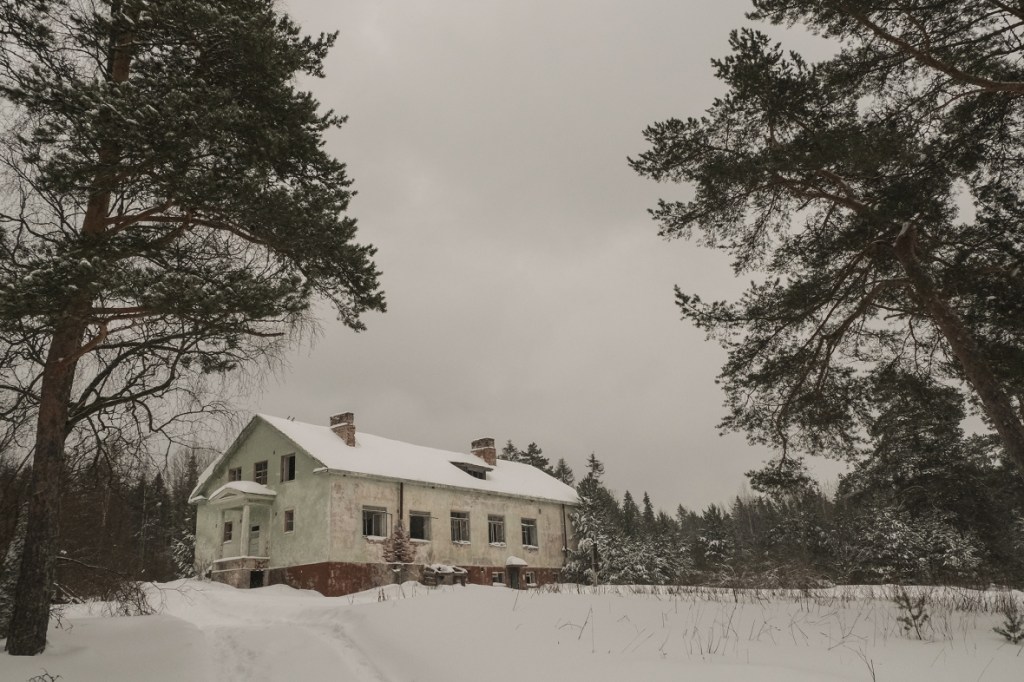

A ruined building of the Burenevo Auxiliary Boarding School for Mentally Retarded Children.
Village of Burnevo, Priozersk District (Leningrad Region), 2021. Photo: Olga Matveeva/Republic

“Hello Irina Alexandrovna! This is your pupil writing to you. I decided to write to you. Please write a letter here so that they let me go on my own, whatever date you need, so that I can study from the beginning of the school year, that is, beginning September 1. Say hello to everyone at the school. When you write the letter, address it to the 11th department… Irina Alexandrovna what was the reason you sent me to the mental hospital again. I told you that I would remain at camp…”

This is an excerpt from a letter written by a pupil to the director of the Burnevo Auxiliary School for Mentally Retarded Children. I found the letter in his personal file.

In 1970, the Priozersk Sanatorium Forest School was reorganized into an auxiliary boarding school for mentally retarded children. According to the school’s fact sheet, “Forty-eight mentally retarded children studied [sic] at the school. Ten of them are disabled. All of the children are from at-risk families. Classes are held in one shift, five days a week. On weekends and holidays, ten to fifteen of them, mostly orphans, stay. There are twelve of them in the school.”

It seems that many of the pupils were not mentally retarded or disabled, but they were neglected. Sergei, a resident of the village of Burnevo, spoke to this fact: “Half of the children there were sick, while half of the healthy ones were from dysfunctional families. I attended this school until 1970, and my mother worked there as a minder.”

The school was closed in 2005 due to poor epidemiological conditions. There was only stove heating in the building, and the water was pumped from the lake. The school consisted of several buildings. In the main building there were four classrooms, a teacher’s room, a curriculum office, and the director’s office. There were sleeping quarters in a wooden building. Carpentry workshops, sewing workshops, a recreation and sports equipment room were located in separate buildings. There was also a medical unit with an isolation ward and a speech therapist’s office. There I found an archive containing the personal files of the school’s graduates.

“His grandmother telephoned. She said that her grandson was very bad, it was hard to deal him, his socks were wet and dirty. He gave a jacket to a girl, but lied to his grandmother that he had dropped it off at the laundry. At the class meeting, it was decided to refer him to the psychiatrist to prescribe treatment.”

“Slava ended up the border zone this summer: he told the border guards that he was flying in a spaceship. I had a frank talk with him. He still wants to go see his mother in Vyborg (she does not live with their family). He didn’t find her, got lost, and ended up in the border zone. Slava, smiling, told how me he deceived a border guard and a policeman. Slava was referred to a psychiatrist, who detected no abnormalities.”

“Oleg systematically wipes the dust from his bed badly. This was discussed at a class meeting. There are no results.”

“If children skip classes, they should be reported to the police without delay.”

These are quotes from pupil observation logs. Along with memos, letters, and assessments, they were kept in the students’ personal files. These records about the children were kept for years—from the first grade to graduation. Perusing them, you begin to imagine these children, how they lived, what they worried about, what they did. Their childhoods are written down in slim notebooks. You watch them grow up and go out into the world, or to a psychoneurological residential treatment facility, or to prison.

For bad behavior, children were referred to a psychiatrist and prescribed treatment. There is no data on how many orphans are placed in psychiatric clinics nowadays. The roots of what is happening in this system to this day must be sought in the past.

This project is based on archival materials and interviews with graduates of the Burnevo Auxiliary School for Mentally Retarded Children whom I managed to find.

[…]

Source: Olga Matveeva, “‘A slight degree of imbecility’: the stories of graduates of an auxiliary boarding school for mentally retarded children,” Republic, 31 May 2023. Translated by the Russian Reader
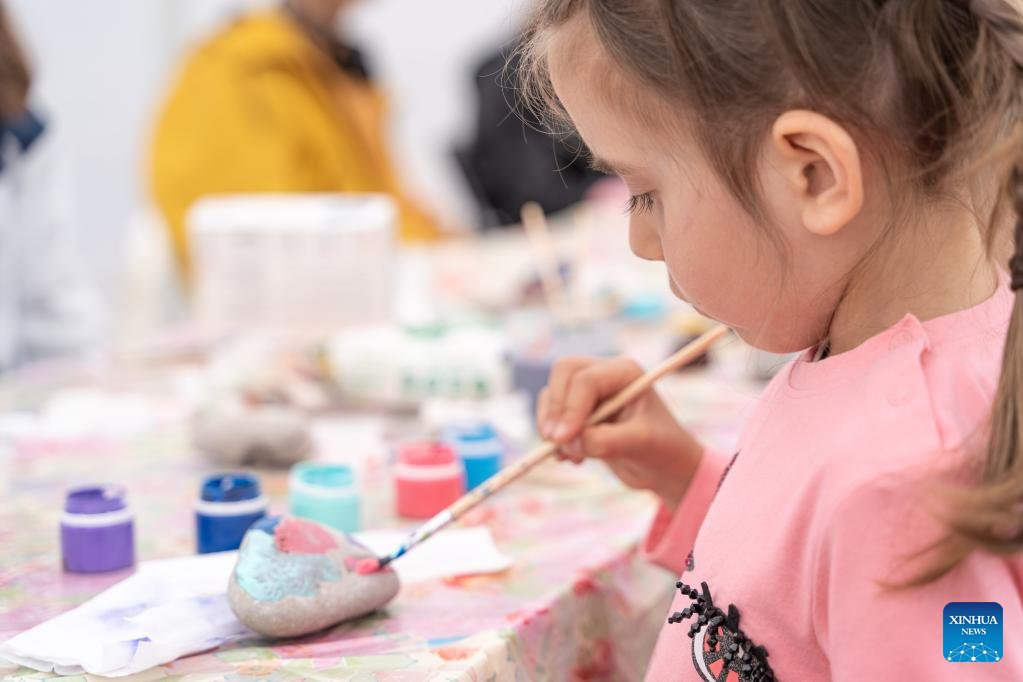

A girl paints a pebble during an event to mark the International Children’s Day in Vladivostok, Russia, June 1, 2023. (Photo by Guo Feizhou/Xinhua)
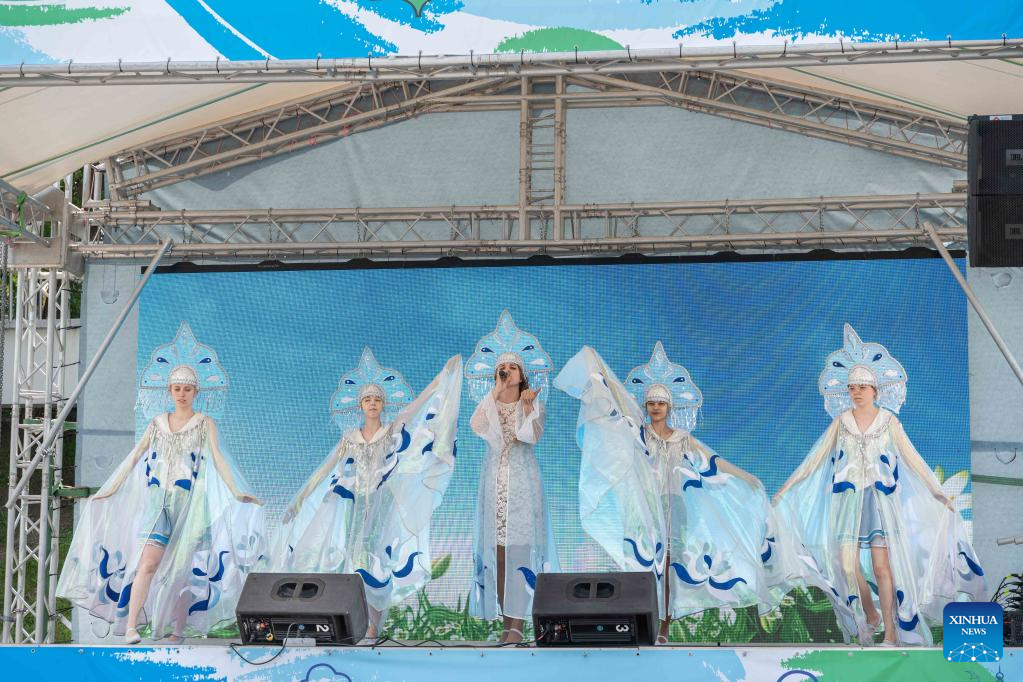
Students from a special education school perform during an event to mark the International Children’s Day in Vladivostok, Russia, June 1, 2023. (Photo by Guo Feizhou/Xinhua)
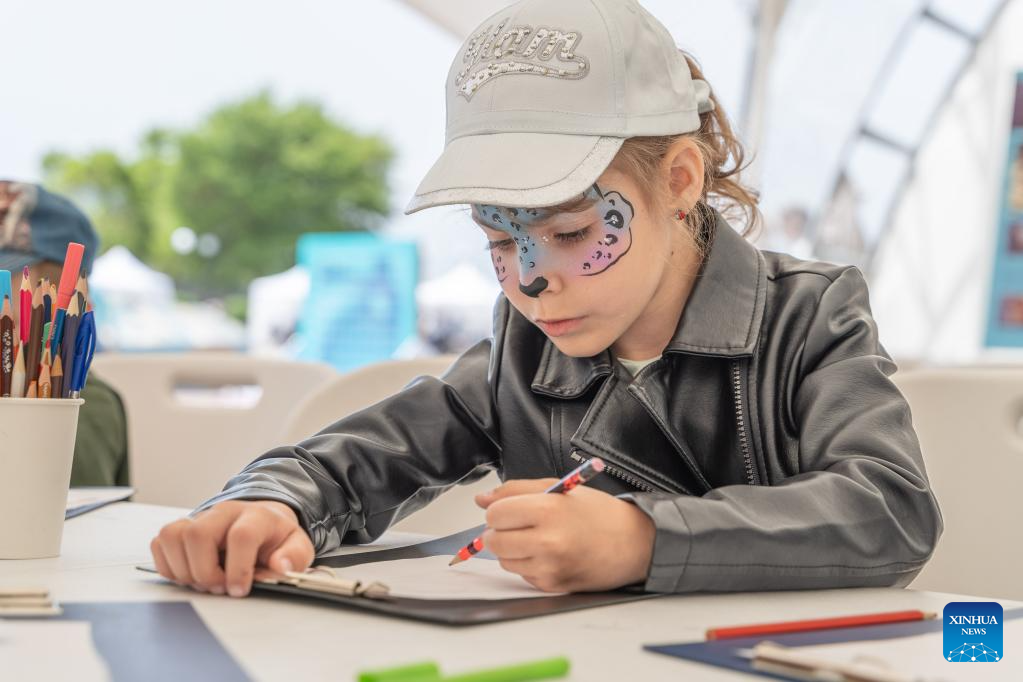
A girl draws during an event to mark the International Children’s Day in Vladivostok, Russia, June 1, 2023. (Photo by Guo Feizhou/Xinhua)
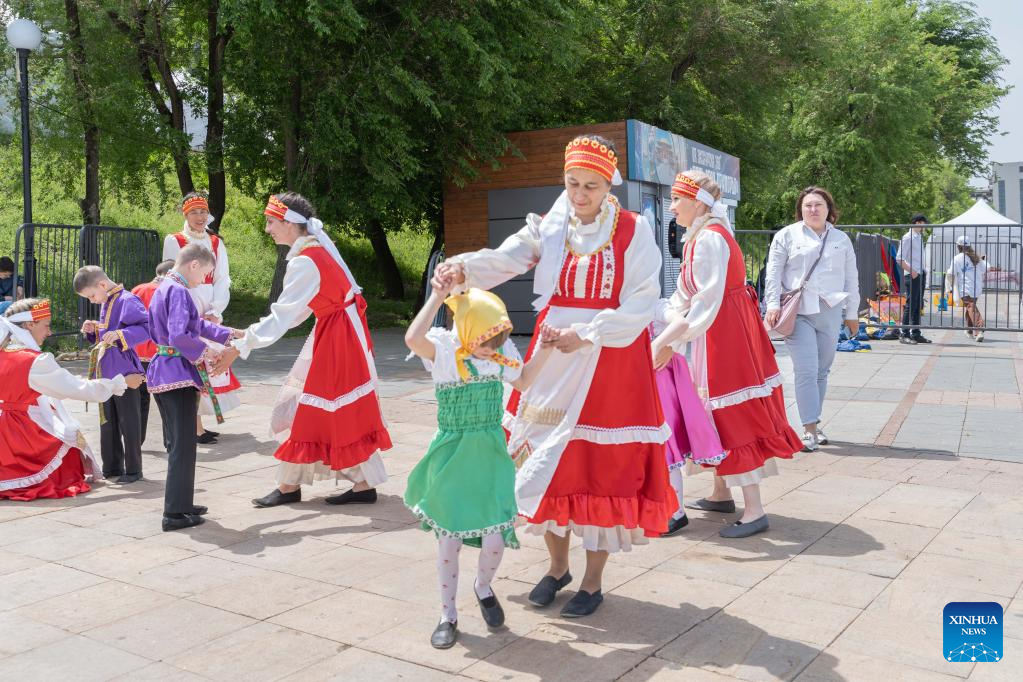
Teachers and students in traditional attire dance during an event to mark the International Children’s Day in Vladivostok, Russia, June 1, 2023. (Photo by Guo Feizhou/Xinhua)

[…]

Source: “Int’l Children’s Day marked around world,” Xinhua, 1 June 2023
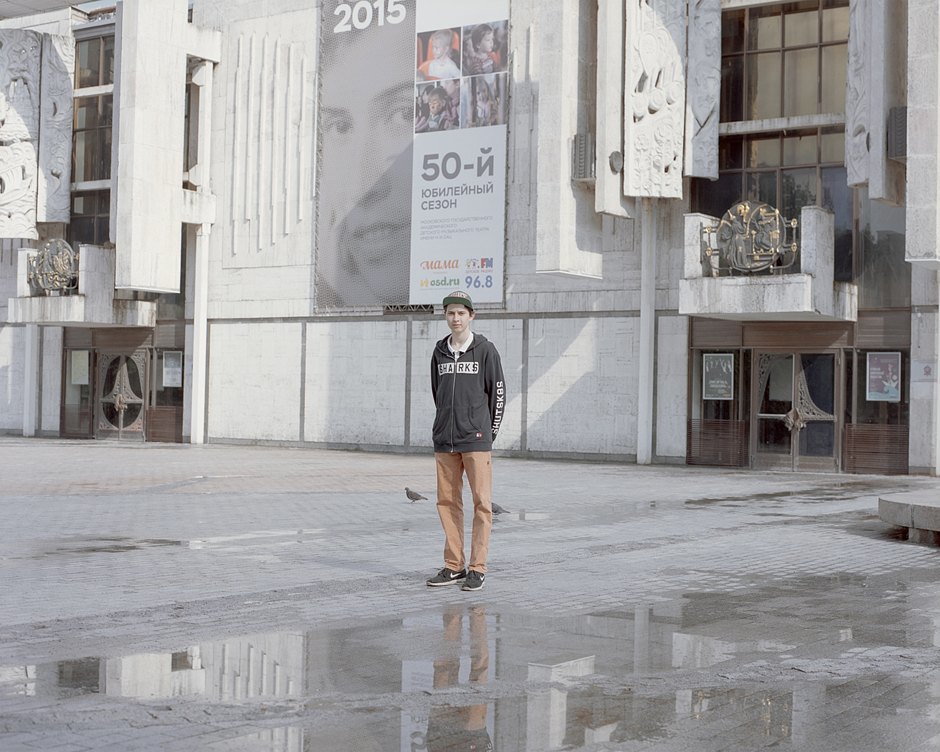
Sixteen Blue

“Putin Has Been in Power My Whole Life”
On the occasion of International Children’s Defense Day, The Village spoke with 16-year-olds about Vladimir Putin, social networks, and future plans
Lena Vereshchagina
The Village
June 1, 2016

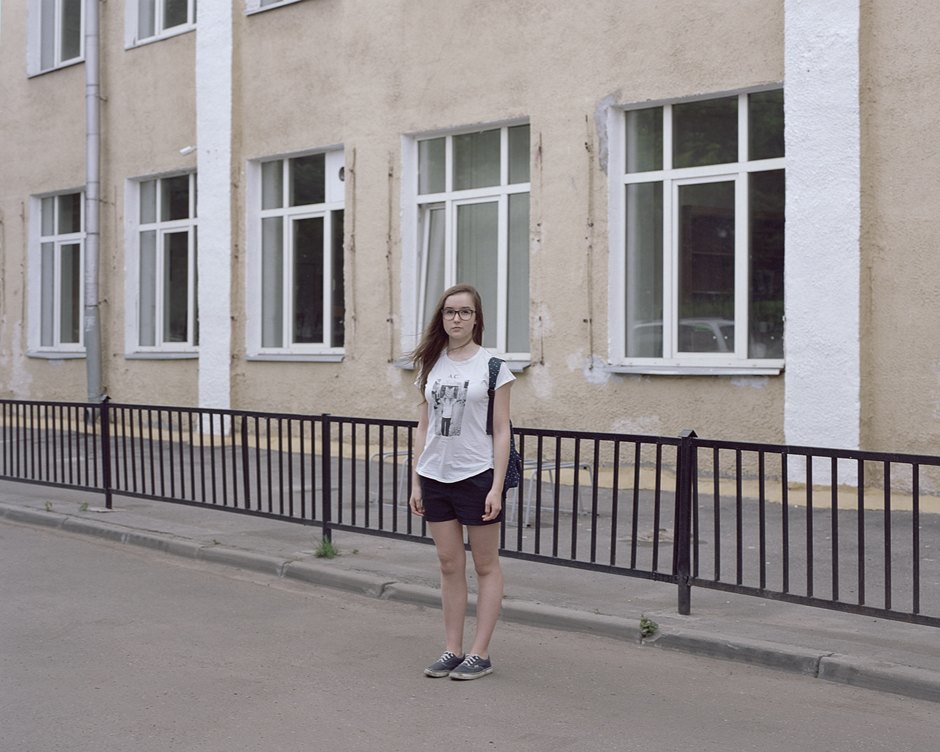
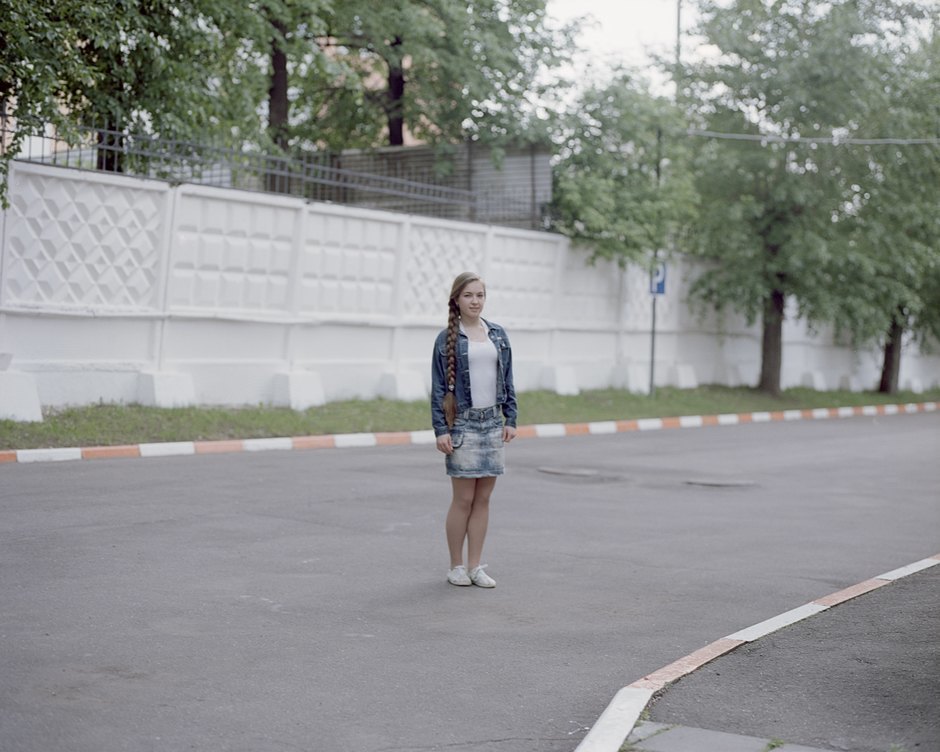
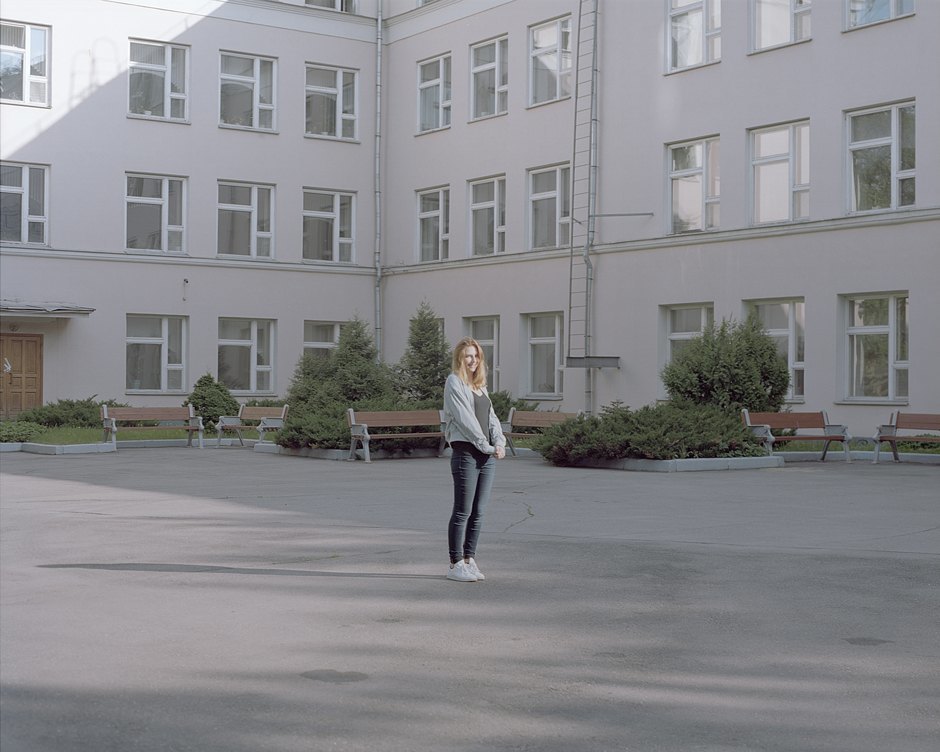
Vladimir Putin has been in power, as president and prime minister, for over sixteen years. During this long period, a whole generation of people has come of age who never lived in the “pre-tandem” era and have a faint idea of what political succession is and why it is necessary. On the occasion of International Children’s Defense Day, the Village met with four 16-year-old schoolchildren and talked with them not only about politics and the permanent leader but also about social networks, the Soviet Union, and their priorities in life.

Vasya, 16. Photograph by Ivan Vanyutin

I am in the tenth grade at a French-language magnet school. I studied for six months in the US in the ninth grade. Things are definitely different there. I wound up at a private school where everything revolves around providing a full-fledged education. There was virtually no free time, and the schedule was quite hard. Under those circumstances, it is probably easier to find yourself. I remember I was invited to attend charcoal drawing lessons. They had everything to make them happen: a wonderful studio with huge windows and an unlimited supply of charcoal pencils. The atmosphere at my school in Russia is less creative.

Now I am in the physics and mathematics stream. Mom influenced my choice of specialization. She said the hard sciences were a good occupation for men. I am interested in programming. I would like my job to jibe wholly with my personal interests, for my profession to be my mission in life. At the same time, Mom has advised me to seek work abroad. Russia is going to stay put, after all, and working abroad can be a very rewarding experience.

We have not had a TV at home since 2006. When wired Internet became available, we immediately began using it alone. I try and spend as little time on the web as possible. I am aware that the flow of information from the social networks is unlimited. You read one thing, you get distracted by another thing, and you look through something else. You can fritter away your whole life like that. I try and be on the Internet for short periods of times. Sometimes, when I am riding the subway to practice, I get on the web and look at something.

I read voraciously. When I have free time and want to read a book, I read it without stopping. I can not pick up a book for two weeks, but then come home from school and blaze through the entire second volume of War and Peace in three hours. It took me two or three hours to read it. I read fairly quickly. I read it when I was ill, and then I immediately grabbed the third volume. Besides what is in the school curriculum, I read books Mom recommends. She gave me, for example, Yuri Lotman’s Conversations on Russian Culture and Vladimir Nabokov’s Lectures on Russian Literature.

I imagine the Soviet Union as a strict regime. I know that people could not just go abroad in those days. You could not just pick up and go to England or France. People had fewer opportunities.

The main principle I saw abroad was that power must change hands. But we have had the same president for sixteen years. Vladimir Putin has personally done nothing bad to me, and I wish him all the best.  But I realize it is beneficial for him to hold this office, and profitable for his friends. Power does not change hands, and accordingly society makes no progress in any direction. I think it is good when there is at least elementary competition. Some people in my class do not care about this. They are happy about the annexation of Crimea and believe it was legal. Some have never been abroad, but think the US and Europe have been behaving aggressively towards Russia, and now we are going to get up off our knees and show them all. Due to this, I have no desire to socialize a lot with my classmates.

My grandmother and grandfather live in Smolensk. They watch a lot of TV, and everything shown on TV is the unquestionable truth to them. It is really hard to talk with them about politics, so we have agreed not to touch the topic. Mom and I do not discuss politics, because we get home late and try and talk about peaceful topics.

Nika, 16. Photograph by Ivan Vanyutin

I am a pupil in the Higher School of Economic’s magnet school in the liberal arts stream. I study literature, philosophy, cognition theory, and subjects related to philology. In the future, I plan on applying to the HSE and majoring in philology.

I read everything I can get my hands on, because for now I am only learning to distinguish good literature from bad. For example, I read the stories for teenagers Mom buys me, the things on the reading list at school, and beyond that. Right now, I am reading Leo Tolstoy’s novella Family Happiness. I also love Iain Banks and Richard Bach. I read about four books a month.

In my free time, I hang out and watch movies. What kind of movies? Everything under the sun. I like something simple. I watch a lot of TV series, even more than movies. They are somehow easier to process. My favorites include The Big Bang Theory, Friends, How I Met Your Mother, and Game of Thrones. I never watch TV. Only occasionally do I watch morning cartoons with my little brother.

My friends and I often discuss plans for the future, important world events, life at school, and other kids. I think the life of modern schoolchildren would be impossible without social networks. Many of our teachers also have accounts on them, and they often put our homework assignments on VKontakte to simplify things. I don’t spend more time on the social networks than anyone else: a few hours a day.

Some of the classes in my school are taught by teachers who are only twenty-five or so. In fact, we are not so different from them. They also spend time on social networks and socialize with their friends in a similar way.

I imagine the Soviet Union the way it is shown in old movies, meaning there are jolly schoolchildren and ice cream, it is always a beautiful time of year, and there are lots of tyrannical adults who tell the young people what to do. The 1990s, in my opinion, were really cool. You could easily get what you wanted without hassle. Without making any effort, you could make a fortune.

I don’t understand anything about Russian politics. I just know that Vladimir Putin runs the country, and some reforms should be implemented, but they are not being implemented. Or they are being implemented, but not in the way many people would like. But I cannot make heads or tails of it. At home, we do not touch on the topic, because my mom is not interested in politics. At school, if someone talks about it, I just listen and draw my own conclusions.

Putin has been in power my whole life. It is funny. I just don’t how it could be otherwise. I think everything is okay, and there have been no visible changes in my life over the past ten years. I think Putin has done a good job as president: no wonder he has been in power for such a long time. Meaning he has experience and knowledge that he can draw on. He is fairly influential, and the whole nation listens to him, so I think he is okay.  The other politicians whose names come to mind are Dmitry Medvedev, Vladimir Zhirinovsky, Sergei Shoigu, and Vitali Klitschko.

Arina, 16. Photograph by Ivan Vanyutin

I go to an English-language magnet school and am in the engineering stream. My favorite subjects are English, Russian, mathematics, and probably physics.

In the second grade, we went on a tour, and the guide asked us, “Who wants to be president?” No one replied, but I thought, “Why not?” I said out loud I wanted to be president. Since then the idea has stuck in my head. Now I am involved in youth politics and am a member of the Young Guard of United Russia. I have learned a lot of things about politics there. I have been growing personally, and meeting and socializing with lots of interesting people from this area. I don’t know what way life will turn, but maybe in the future I will be able to join the party, and if I don’t become president, I can simply be involved in politics. Politics attracts me, because I feel I can change things. I like situations in which there are business-like relationships, turns of events, excitement and competition, socializing with interesting people, and the possibility of taking responsibility and making important decisions.

I communicate with people on social networks, but I cannot say I hang out there. Sometimes, I make a point of not going on Vkontakte to read the news so I can get more done in real life, not in virtual life. I think life was more interesting before the advent of the Internet. Children were more focused, more interesting in learning and growing. But now the Internet does everything for them.

I don’t have much time to read. We are assigned a lot in school, so mainly I have to study the literature in the curriculum. My favorite Russian writer is Alexander Pushkin.

We are different from the generation of 25-year-olds. We have more technology, information, and stress. I look at children younger than me, remember what I was like at their age, and realize I didn’t know the words they know and couldn’t do the things they are able to do. I think 25-year-olds think the same thing about us.

It is a pity the Soviet Union collapsed. It was a good time. I cannot say that people lived very badly then. After all, the country was developing its industries, and the factories were working. But now, when practically none of it is left, it is hard to recover.

If you believe the stories, films, and history lessons, the 1990s were a time of bandits. Money and connections reigned then, and there were many murders. I have nothing more to add.

My classmates and I mainly take about our classes at school and the events we have there. I discuss politics with Dad. He enjoys talking about it.

I am fine with the fact that Vladimir Putin has been in power so long. After all, for anything to change, something like fifteen to twenty years have to pass. If any reforms are taking place, they include plans for the future. Such reforms are taking place right now. Of course, there are downsides to Vladimir Vladimirovich’s policies, but they are not overwhelming.

Putin is a strong and worthy president for our country. In the current circumstances, another leader would have done worse or would have been crushed. But not Vladimir Vladimirovich. I respect him.

Masha, 16. Photography by Ivan Vanyutin
Masha, 16. Photograph by Ivan Vanyutin

I go to the Physical and Mathematical Lyceum, but I am in the socio-economic stream. I love social studies, history, and English, and mathematics, too. I hate physics and computer science.

I have also been studying German so that in the future I can go to university in Germany, a plan my parents have really been encouraging. I would not even think about leaving Russia were it not for them. I think students suffer in our country, and lecturers are not at all amenable to them. In Europe, on the contrary, they try to help and support students, and if they don’t get something, they explain it to them. I would like to work in the social sphere, for example, as a psychologist in some company, but for the time being it is just a dream.

My classmates and I often discuss the news, but not political news. Rather, we gab about what is happening in the world. And of course we gossip.

Throughout the day, I periodically log onto the social networks to reply to messages and read what friends have posted.  But now I have been conducting an experiment. I deleted my page on VKontakte, and I try to use the phone only in cases of real need. Then I started reading a book, and real life became more dynamic.

I read a lot, but I am rarely manage to read what I want. I spend a lot of time reading what is in the school curriculum. I have very little free time: every day there are tutoring sessions, extra classes, and evening courses. But when I get a free minute, I spend time with friends or alone, read, watch movies or play the guitar.

My parents and I have a tradition: we often watch TV series in the evening together, sometimes Russian series, sometimes American. But I don’t watch TV at all. There is simply no time for it.

I think people who lived in the Soviet Union had it very hard, simply because there was no freedom of choice. There were things you had to do, and things you could not do. Joseph Stalin was a very controversial person. Although maybe he was doing the best he could. I can believe this was what he thought.

I know that there was perestroika in the 1990s. According to Dad, things were very hard, because there lots of bandits.

I know quite a lot about current politics. My parents are ardently in the opposition. Since I was little, I have been hearing from them how bad Vladimir Putin is and how horrible Russia is.  Of course, I discount half of what they say, and I keep track of events in the country myself. I don’t like everything, of course, but I try to be nonjudgemental.

The accession of Crimea is one of the most significant political changes of recent times, of course. I think everything in Russia changed dramatically in the aftermath. Those two viewpoints: Crimea is ours or Crimea is not ours; I think everything went wrong then. One also immediately recalls Nemtsov’s murder. It is unclear why a leader of the Russian opposition was murdered on the street.

I have lots of thoughts about Putin. I said that Stalin, perhaps, had good intentions, but for some reason I am certain that Putin doesn’t have them. He says one thing, and then does the complete opposite, at least when it comes to fighting corruption. Corruption is well developed in Russia, but Putin tries not to do anything about it. There have also been reports (I don’t know whether they have been confirmed or not) that he has bought houses in Italy and Spain.

It is hard to imagine anyone else in Putin’s place, because he has been president my whole life. I even get a bit scared that he will never resign. Things are also complicated by the fact that I don’t see any other candidates for the job.

I am not sure that things will be better if someone takes his place. I think it depends not on the government, but on society itself. He has not just been sitting there for so many years. People have voted for him.

Translated by the Russian Reader. Photos courtesy of The Village. See my previous posts in this occasional series on young people in Russia today and the moral panics generated around them by the media, politicians, and the public.

____________