¡Me monté en la montaña rusa tres veces!

Hello, Moscow Times readers! This is your weekly newsletter, which will shed light on:

  • a time of rapid price growth in Russia
  • how Africa feels about free Russian cheese grain
  • why Vladimir Putin remained standing.

But first we will discuss a seemingly not too high-profile event—the arrest of the Soviet dissident and prominent Russian leftist Boris Kagarlitsky.
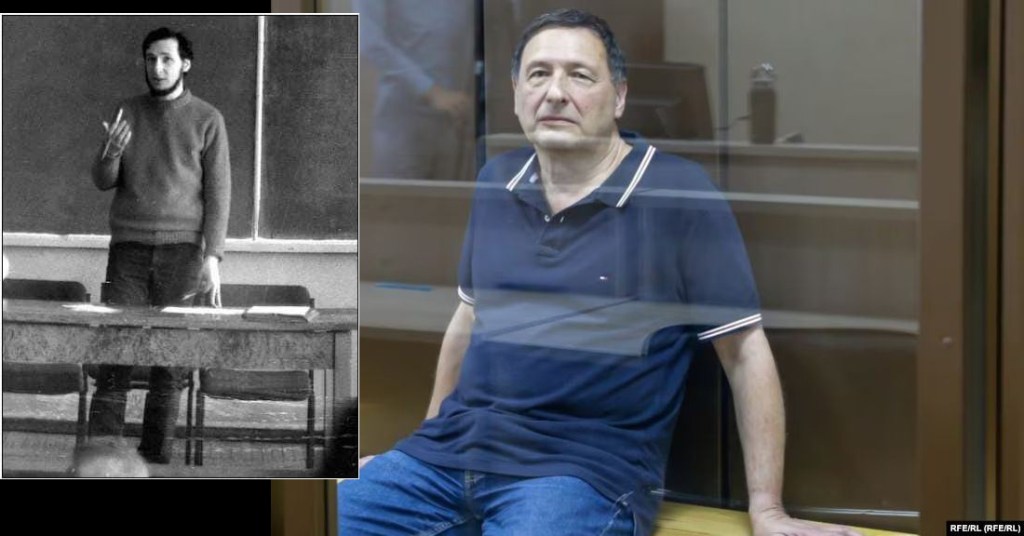
Boris Kagarlitsky was jailed by the Soviet regime, and now he’s been jailed by the Putin regime too.

On the face of it, it looks like yet another trumped-up “condoning terrorism” case! Zhenya Berkovich and Svetlana Petriichuk were also arrested under this article and are currently in pretrial detention.

But Boris Kagarlitsky is not a great theater director chockablock with interesting creative ideas. He is a veteran anti–American and anti-globalist. Few people remember how vigorously Kagarlitsky supported Russia’s invasion of Georgia, how he spoke as critically as possible about the Ukrainian Maidan of 2013, and how later he consistently criticized what he saw as Volodymyr Zelensky’s “puppet” government. And he lent his support to the “separatists” in the Donetsk and Luhansk regions.

In other words, Kagarlitsky has generally been an ideological ally of the Russian regime, and his criticism of the Kremlin is based on the argument that the regime has been insufficiently consistent in its anti-Americanism and anti-globalism, in its fight against the global financial monster and its ubiquitous outstretched tentacles.

Does that remind you of anyone? That’s right: Igor Girkin-Strelkov. The arrested leader of the so-called Russian World likewise did not just support the Kremlin’s plans for conquering Ukraine. He onstantly stressed the insufficient efforts and inconsistency evinced by the Russian authorities in its “final solution” of the “Ukrainian question.”
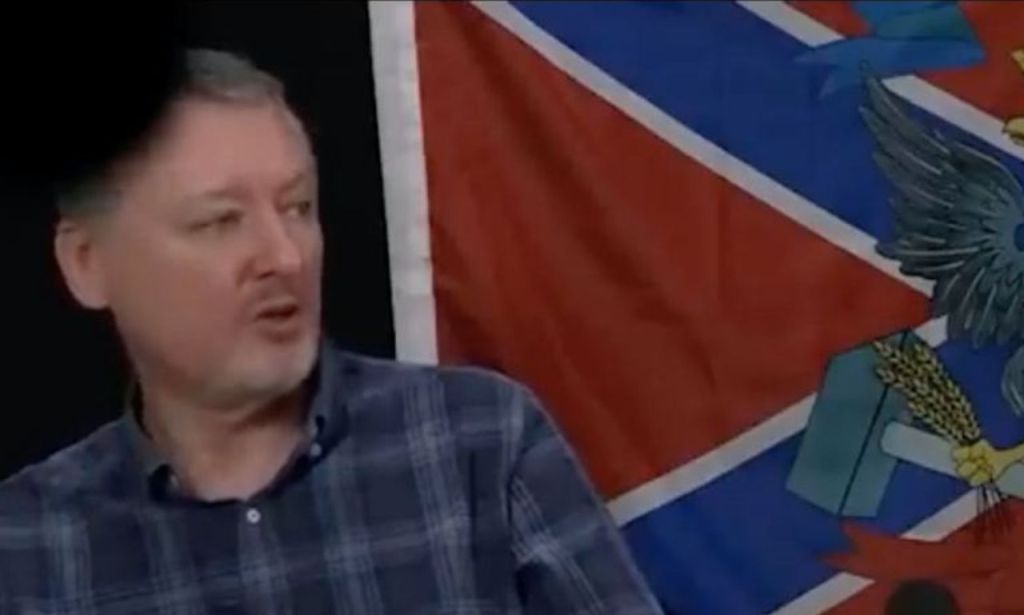
Igor Girkin accused Putin of indecisiveness.

Thus, in the wake of Yevgeny Prigozhin’s rebellion (but not necessarily because of it, although this could be the case), the authorities, realizing that liberals no longer pose any danger, have gone after political opponents of a different stripe—after fellow travelers who rabidly dared to tell them what to do. Prigozhin did something similar, but he bit his tongue after his pseudo-mutiny. Unlike Kagarlitsky and Girkin, he stands for no ideology other than self-enrichment, and this stance is is something the Kremlin can comprehend and even adore.

What matters is that Kagarlitsky’s arrest, hard on the heels of Girkin’s arrest, shows that the regime is at a total ideological impasse. Its amorphous anti–western rhetoric has no clear conceptual basis, and hence anyone who espouses something resembling a real concept is an indubitable threat.

Putin’s only real ideological ally remains Alexander Lukashenko, a politician who has an immense arsenal of ridiculous arguments for explaining away the actions of his aggressive Moscow meal ticket.
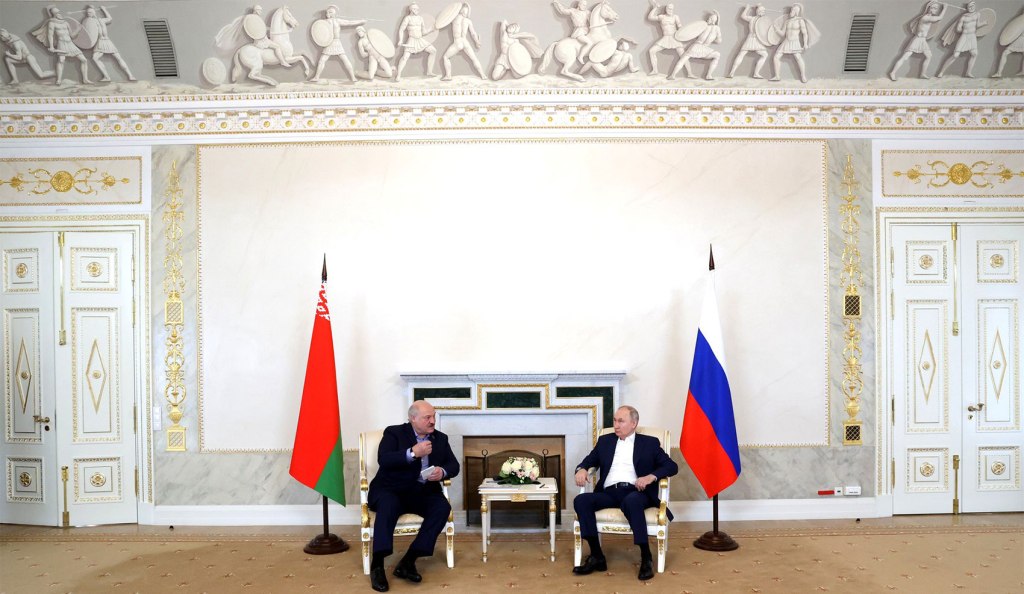
The Belarusian pretender always points out where the attack is coming from.

[…]

Alexei Navalny also made a very unexpected public statement. He stood up for Girkin-Strelkov and even counted him among his fellow political prisoners. Note that from a formal point of view, the herald of the Russian World, who has the blood of many people on his hands, cannot be classified as a political prisoner.
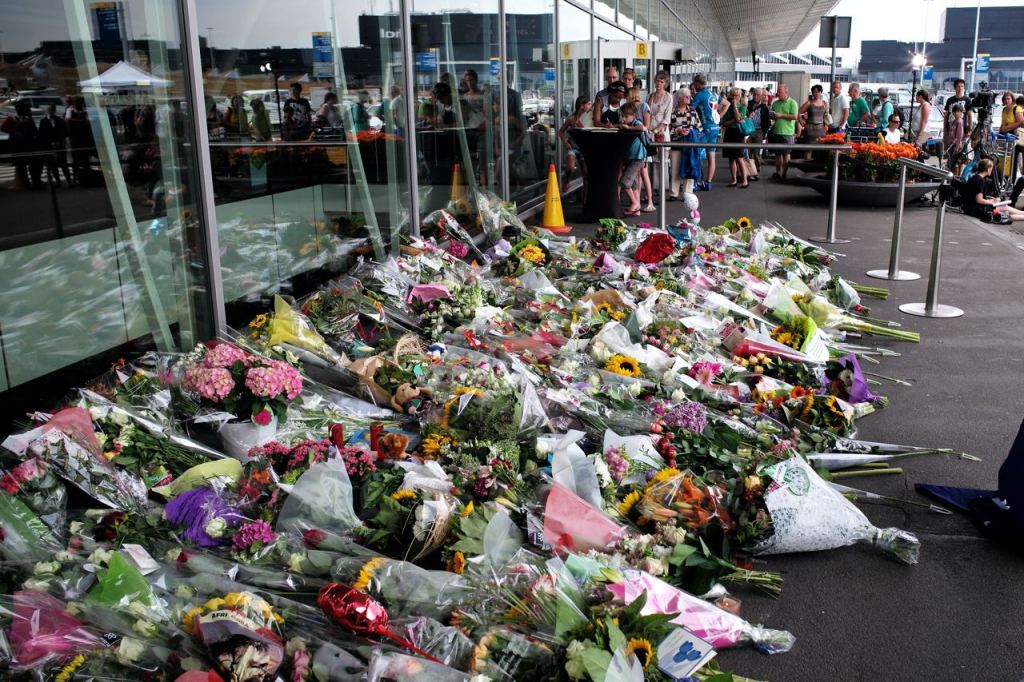
Игорь Гиркин осужден за сбитый Boeing Гаагским судом

[…]

Source: Moscow Times Russian Service weekly newsletter, 30 July 2023. Translated by the Russian Reader. The photos, above, were captioned as such by the authors, not by me. Thanks to SpanishDictionary.com for the quotation that I used as the title of this post.


Vladyslav Starodubtsev, historian – contribution to debate on Boris Kagarlitsky, antiwar activism in Russia and more:

“Its just very hard to agitate for person, who called for occupation of your land and promoted and helped, including monetarly, people who kill your friends. Calling this “a difference of opinions” doesn’t seem a right thing. In 2014 he took huge effort to align far-right and far-left in support of Russian war against Ukraine, and got Presidential grant for it. Had strong connections with both Putinist elite and Russian neo-nazi criminals in Donbass. And before — justifying need to invade Georgia https://rabkor.ru/columns/debates/2008/09/09/debate-53/

“It is not surprising that the Western left, having no illusions about the order prevailing in our country, unanimously supported Russia. The blow inflicted on the United States has global implications and opens up new perspectives for their struggle. It would be naive, to say the least, to maintain power. This is not our government, and it will never be ours. But you need to take advantage of the situation. And if the government nevertheless did something that meets our own requirements, this should be treated as a success, and this success should be developed.

We have always been against NATO, against orientation towards the United States. We have always opposed the WTO. These are our fundamental positions.

It would not only be foolish to miss the chances that history offers us today. That would be criminal!” – Boris Kagarlitsky in times of Russian invasion in Georgia

The person who not only called, but participated in promoting violence and occupation, using millions given directly by Putin’s office, then helping monetarly to occupational forces and using any possible platform to promote campism and pro-Russian views amongst the Western left. He justified terrorism. And he become the architector of his own fate. The power that he critically supported in his nationalist crusade against “The West”, against Georgians and Ukrainians, now consumed him. It seems that he relied that connections with Putinist elite will save him. But after Wagner coup, Russia represses everyone. It doesn’t make these people political prisoners. I won’t agitate for any morally compromised

He by definition is not a political prisoner, so agitate for his release doesn’t make much sense. In the biggest – agitate to his extradiction to Ukrainian court. Organize media campaigns for any of it would be pretty absurd.

“3.3. A person is not to be regarded as a political prisoner, if, under the above circumstances, the person has committed:

a violent offence against persons, except in cases of self-defence or necessity;

a hate crime against a person or property; or the person has called for violent action on national, ethnic, racial, religious or other grounds.”

(https://memohrc.org/…/guidelines-definition-political…)

That is why I never called for release of any nazi in Russia, even if they had the change of heart, either because of elite reshuffle in Putin’s office, and their allies falling down, or because they understood what horrible monstrosity they helped to build and in what they participated, under tens of thousand people were killed by Russia’s full-scale invasion. Why nobody thinks from perspective who Kagarlitsky agitated to roll over on tanks? And yes, it is a part of bigger problem, that all the left is crazy when Russian left-nationalist Kagarlitsky is arrested, after a year of being allowed to criticize Russia, but the genuine activists, who aren’t xenophobic – ignored.”

Source: Maire Kelly (Facebook), 29 July 2023. The spelling and punctuation of the original post have been preserved.
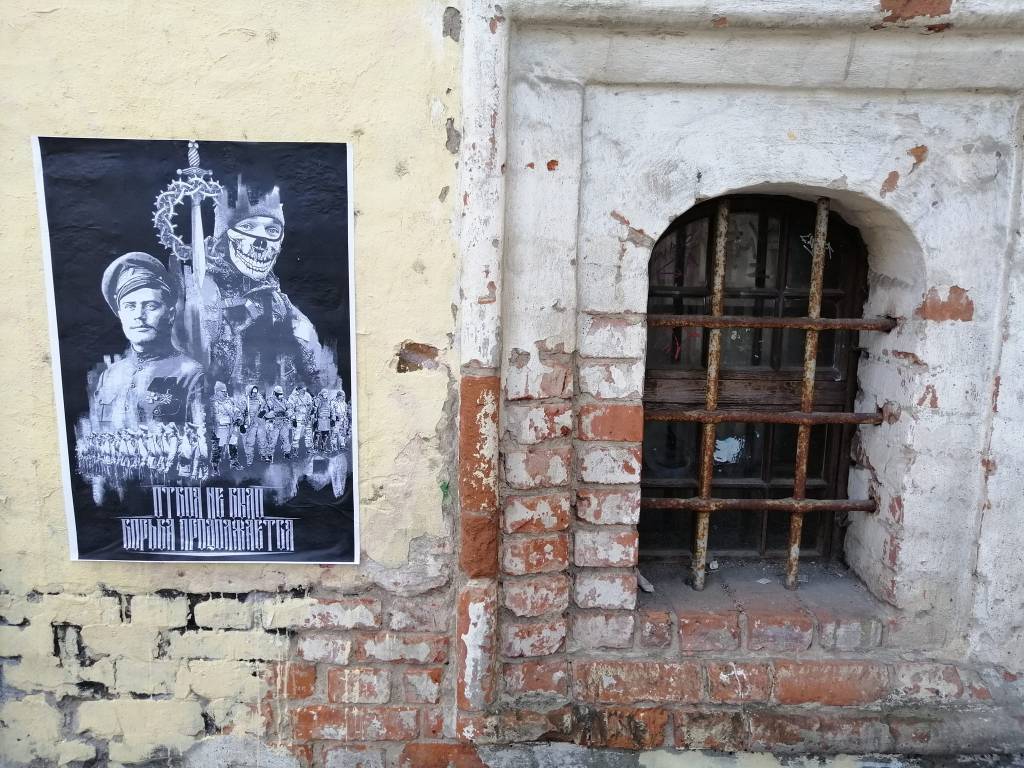
Stand with all antiwar protest -stop Russia – tell the whole story Ukraine Socialist Solidarity Campaign: “Many people on this FB page are familiar with Russian leftist commentator and intellectual Boris Kagarlitsky. He has been a controversial figure for good reason. He supported the annexation of Crimea and the war in Donbass in 2014. He is a friend of Girkiin, the committed war criminal.

For reasons unknown he chose to stay in Russia while many of his colleagues fled. And this week he was detained by the FSB in Moscow, taken to a pre trial detention center where he will stay until the end of September when he will face charges on “justifying terrorism” for his criticisms of Russia’s invasion of Ukraine. A petition is being circulated calling for his freedom, along with other anti war Russians. Supporting Kagarlitsky as a political prisoner does not in any way imply an endorsement of his extremely objectional views. As Ilya Budraitsis writes in the statement below, Kagarlitsky’s arrest is part of a new wave of repression against any critics of the war.

The following statement was released by Russian socialist and anti war dissident Ilya Budraitskis and other comrades. Please see the petition below and sign/share if you support it.

Two days ago in Moscow, FSB officers detained well-known leftist theorist, activist and commentator Boris Kagarlitsky. At present, Boris has been transferred to the pre-trial detention center in Syktyvkar, where he will stay at least until the end of September. Kagarlitsky was charged with “justifying terrorism”, for which he could face up to 7 years in prison. At the same time, in Moscow, Yekaterinburg and Penza, searches were carried out at the homes of Kagarlitsky’s associates on the YouTube channel Rabkor. It is obvious to us that the arrest of Kagarlitsky is part of a new large-scale repressive campaign by the authorities aimed at completely clearing the political space of any critics of the war. Since February 2022, Boris has taken a pronounced anti-war stance, and we are sure that this was the only real reason for his arrest.

Boris’s personal political trajectory began more than 40 years ago and has not always been flawless. In the early 1980s, Kagarlitsky was a member of the underground group of “young socialists” and was subjected to repression by the KGB, and since the early 1990s he played a prominent role in the left opposition, first to the Yeltsin and then to the Putin regime. His numerous books and public speeches had a great influence on several generations of the Russian left, and that is why his responsibility for certain assessments remained exceptionally high. In 2014, Kagarlitsky actively supported the annexation of Crimea and the creation of the so-called. “People’s Republics” in eastern Ukraine. And this support, unfortunately, played a role in disorienting part of the Russian left. These, like many other moments in Kagarlitsky’s activities, are completely unacceptable for the members of the “After” team. And now our fundamental differences have not gone away, and we will certainly discuss them with Boris – but only after his release.

It must also be acknowledged that after the start of the full-scale invasion, Kagarlitsky was one of the few Russian leftists who, while remaining in the country, continued to publicly condemn the war on the part of Russia. It can be assumed that only the wide popularity of Kagarlitsky has kept the authorities from arresting him until now. Now that this has happened, it has become clear that repression is reaching a new level and the number of activists in the immediate risk zone has increased significantly. That is why we call for an international campaign in support of Kagarlitsky and all political prisoners in the Russian Federation”.

Source: Maire Kelly (Facebook), 29 July 2023. The spelling and punctuation of the original post have been preserved.

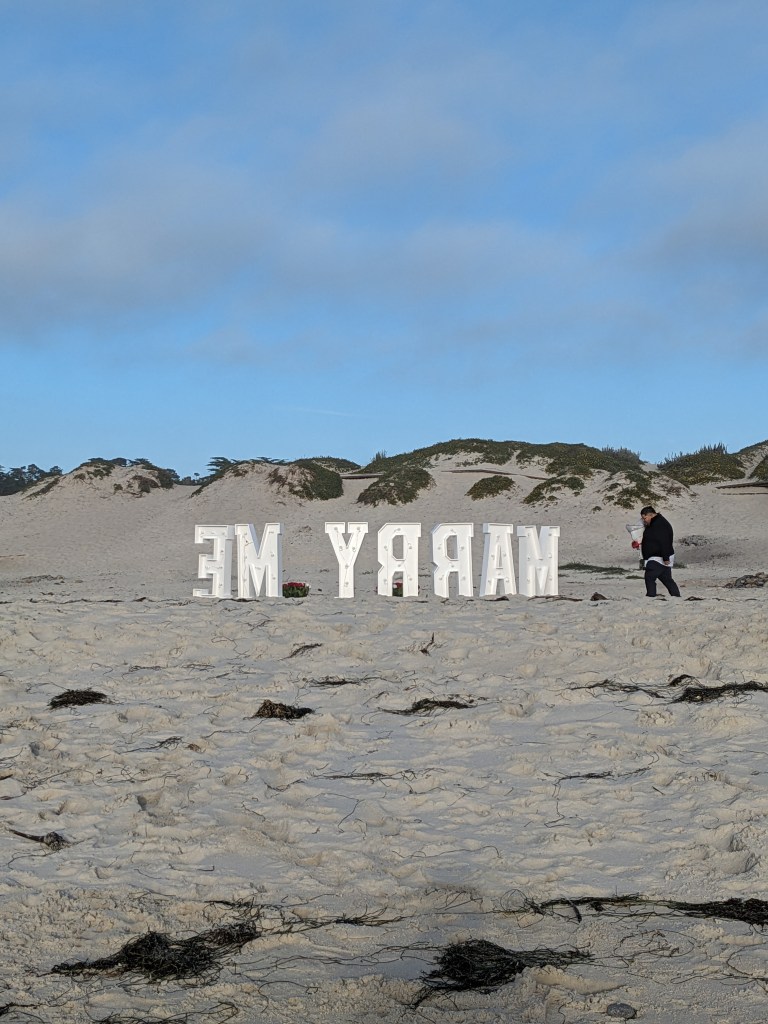
Em Uyaya’am (Things I Saw, Read and Watched This Week)

Asilomar State Beach, 21 July 2023. Photo by the Russian Reader

Who is Girkin?

Igor Girkin (Strelkov) is an ethno-fascist FSB officer and the warlord who prepared the ground and then launched the war in Donbas in 2014. He stated that without him, “there wouldn’t be any war”. He is also responsible for ordering the execution of numerous civilians, for which he still face justice. He was sentenced to life imprisonment in absentia by the International Criminal Court on November 17, 2022 as perpetrator of the downing of Malaysian Airlines 17 and the murder of 298 people—a war criminal.

[…]

Source: Monique Camarra, “Igor Girkin arrested in Moscow: the Kremlin is clamping down,” EuroFile, 22 July 2023


“The all-clear hasn’t sounded, the fight continues.”

Source: Sergey Abashin (Facebook), 21 July 2023


Stunning drone footage has revealed details of the Batagaika crater, a one-kilometer-long gash in Russia’s Far East that forms the world’s biggest permafrost crater.

In the video two explorers clamber across uneven terrain at the base of the depression, marked by irregular surfaces and small hummocks, which began to form after the surrounding forest was cleared in the 1960s and the permafrost underground began to melt, causing the land to sink.

“We locals call it ‘the cave-in,'” local resident and crater explorer Erel Struchkov told Reuters as he stood on the crater’s rim. “It developed in the 1970s, first as a ravine. Then by thawing in the heat of sunny days, it started to expand.”

Scientists say Russia is warming at least 2.5 times faster than the rest of the world, melting the long-frozen tundra that covers about 65% of the country’s landmass and releasing greenhouse gases stored in the thawed soil.

[…]

Source: “World’s biggest permafrost crater in Russia’s Far East thaws as planet warms,” Reuters, 21 July 2023


“Let’s remember these people”

After the court hearing [in his criminal case], Oleg Orlov read out a long list of names of people convicted of “disseminating fake news” or “discrediting the army.” He mentioned Alexei Gorinov, Dmitry Ivanov, Samiel Vedel (aka Sergei Klokov), Vladimir Kara-Murza, Ilya Yashin, Maxim Lypkan, and many others.

“I am not imprisoned, and I can say what I deem necessary. I can answer your questions. But how many of my and your kindred spirits are deprived of this opportunity,” Orlov reminded. “I consider it my duty to read out the list. These are only some of the people who have been imprisoned for their anti-war stance.”

After reading out the names, Orlov cited data from OVD Info. “634 people from 78 regions [of Russia] have faced criminal charges for anti-war protests, for words and statements,” the human rights activist said. “And 200 of them have already been incarcerated. Let’s remember these people.”

Orlov stressed that he was fighting not only for his own sake. “Both my lawyer Katerina Tertukhina and my public defender Dmitry Muratov — we are fighting like this and trying to prove the nullity of the charges [against him], the nullity of the [prosecution’s] expert witness analysis, because we are trying to fight for all people.”

Video courtesy of SOTA

Source: memorial.hrc (Instagram), 21 July 2023. Translated by the Russian Reader


Crimean Tatar-led underground movement is already active behind Russian lines and hundreds of young Tatar men are ready to take up arms to liberate the occupied peninsula, a veteran community leader has said.

Mustafa Dzemilev, widely seen as the godfather of the Crimean Tatar rights movement, pointed to operations by the Atesh guerrilla group, comprising Crimean Tatars, Ukrainians and Russians, in Crimea and other occupied Ukrainian regions.

Atesh, which means “fire” in Crimean Tatar, was created in September last year, primarily to carry out acts of sabotage from within the ranks of the Russian army. It claims more than 4,000 Russian soldiers have already enrolled in an online course on how to “survive the war” by wrecking their own equipment.

There is no evidence linking the group to the latest attack on the Kerch Bridge, early on Monday morning, but the group has claimed a string of smaller-scale attacks, blowing up Russian checkpoints, assassinating Russian officers, setting fire to barracks and feeding sensitive information to Ukrainian intelligence. It recently accused Russian sappers of laying mines in the Krymskyi Titan chemical works in Armiansk, northern Crimea. An explosion there could spread an ammonia cloud across the land bridge between the peninsula and mainland Ukraine.

“Atesh is very deep underground,” Dzhemilev, 79, told the Guardian in an interview in Kyiv. “There was not a single arrest among Atesh members, but they are working inside Crimea territory blowing up targets.”

[…]

Source: Julian Borger, “The underground Crimean Tatar group taking up arms against Russia,” Guardian, 17 July 2023


Hello! This is Alexandra Prokopenko with your weekly guide to the Russian economy — brought to you by The Bell. In this newsletter we focus on the Kremlin’s decision to seize the Russian assets of two major foreign companies and what it means for the business climate and the other Western businesses who cannot — or will not — leave Russia. We also look at Friday’s interest rate hike and new Western sanctions on Russia.

Nationalization of Western assets heralds broader property redistribution

Finland’s Fortum and Germany’s Uniper saw their Russian assets seized by the Kremlin earlier this year. This week was the turn of France’s Danone and Denmark’s Carlsberg. It feels like we are witnessing the final chapter in the history of Western business in post-Soviet Russia. If the transfer of Fortum and Uniper’s energy assets to external management was explained as a response to the European Union’s treatment of Russian energy companies, there is no such obvious reason for the behavior toward Carlsberg and Danone and it likely reveals the Kremlin’s real intentions. This is direct nationalization — and opens the door to a new distribution of property in Russia.

[…]

Source: Alexandra Prokopenko, “Kremlin asset seizures the new normal,” The Bell, 21 July 2023


This image has an empty alt attribute; its file name is 360096182_6574069839310211_6569062695868766924_n.jpg

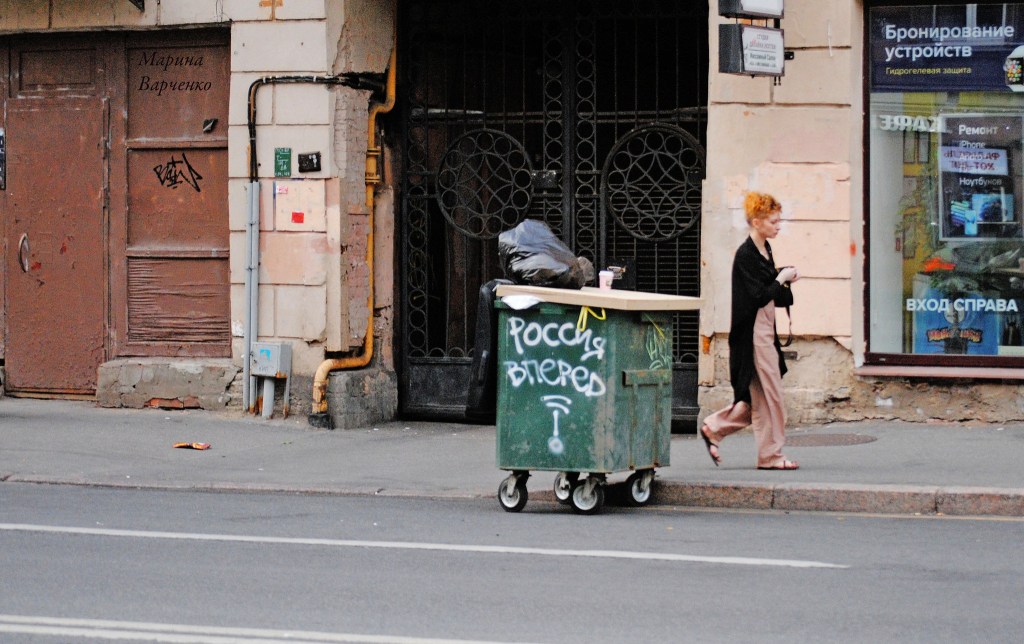
“Russia, forward!”

Source: Marina Varchenko (Facebook), 14 July 2023. She writes: “In our hood) Petersburg, Razyezzhaya Street.


The Arkhangelsk Region has allocated 800 million rubles to the occupied Ukrainian city of Melitopol, which will be used to repair the city, which has suffered from Russia’s invasion. However, the region itself does not have enough money to repair its own housing. Arkhangelsk is considered the capital of the Russian North, but has been informally dubbed the “capital of dilapidated housing.” Many people live in substandard housing: the city is chockablock with barracks and crumbling wooden houses. Watch Valeria Ratnikova’s report on how the region copes with a budget deficit while its money is spent on the war.

00:00 Opening 02:15 Ruins, barracks, and crumbling houses 06:00 Brevennik Island: expensive prices and derelict housing 10:56 Natalia Zubarevich about the lack of money in the region 12:04 The campaign against waste haulage to the region 16:18 The authorities are taking revenge on opposition activists opposed to landfills 31:35 Denunciations and criminal cases for statements about the war 33:22 One of the protesters went to the war 36:15 What residents say about the war 38:26 Getting fired for criticizing the war 39:40 A female student fled to Lithuania — the authorities wanted to jail her for talking about the war 46:25 The region’s environmental problems 49:10 Journalists detained during Putin’s visit 51:11 How the war has affected life in the region

Source: “The ruins of Arkhangelsk: how people whose money was given to occupied city live,” TV Rain (YouTube), 16 July 2023. Annotation translated by the Russian Reader

Nikolay Mitrokhin: The Woman in Black

min
Mother Superior Ksenia (Chernega). Photo courtesy of Monasterium.ru

The Woman in Black
Nikolay Mitrokhin
Grani.ru
March 2, 2017

The fantastic story of how a small Moscow monastery has contrived to sue the state and take over a huge wing of the Fisheries Research Institute forces us to take a closer look at at a church official who has long remained partly in the shadows, Mother Superior Ksenia (Chernega), abbess of the selfsame St. Alexius Convent that sued the state and, simulaneously, head of the Moscow Patriarchate’s legal department. Chernega is not entirely unknown to the public. She has often been quoted in official reports of restitution of large pieces of real estate to the Russian Orthodox Church (ROC). However, as holder of a “boring” post, she has not been particularly prominent in the public eye.

And that’s too bad. Chernega is not only one of the most influential women in the ROC (in 2013, she took fourth place in an internal church rating) but also a successful raider who skillfully manipulates clerics and laymen alike. The adjudged research institute, a huge building that incorporated part of the foundations and a wall of a demolished church, is the most striking but hardly the largest victory in her career. The 46-year-old Oksana Chernega (her name until 2009, a name she still uses in secular contexts) is probably the longest-serving staff member of the Moscow Patriarchate’s legal office. She has worked there since 1993, while also working in secular law schools, achieving professorial rank. She became a leading authority on church law in the early 2000s. Generations of politicians and MPs have come and gone, but Chernega has the whole time testified at hearings of the relevant parliamentary committees and governmental review boards, lobbying the laws the ROC has wanted passed.

Her main achievement has been the law, signed by President Medvedev in late 2010, “On the Transfer of Religious Assets in State or Municipal Ownership to Religious Organizations.” It is this law under which movable and immovable property has been transferred to the ROC the past six years. Yet the Church has behaved capriciously, taking only what looks good or has real value. The Perm Diocese is unlikely to restore to its former use the huge military institute that took over what used to be its seminary: there are catastrophically few people who want to go into the priesthood, and the poor diocese is incapable of maintaining the enormous premises. But how sweet it is to get a huge building on the river embankment in the city center as a freebie. Whatever you do with it you’re bound to make money.

But not everything has been had so smoothly. The property the ROC has set its sights on has owners, and they are capable of mounting a resistance. That is when Chernega takes the stage. When she announces the Church has set its sights on a piece of real estate, it is usually a bad sign. The day before yesterday, it was St. Isaac’s Cathedral, yesterday it was the Andronikov Monastery, today it is the Fisheries Research Institute. What will it be tomorrow? Anything whatsoever.

On the eve of March 8 [International Women’s Day] and amidst the debates on feminism in Russia, it would seem that Chernegas has pursued a successful, independent career as a woman in the Church.  But it’s not as simple as all that.

It is well known in ecclesiastical circles that Chernega acts in tandem with a notable priest, Artemy Vladimirov. He is not only confessor at the St. Alexius Convent but is also well known throughout the Church. A graduate of Moscow State University’s philolology department and rector of All Saints Church (a neighbor of the convent and the reclaimed fisheries institute), Vladimirov is a glib preacher who specializes in denouncing fornication; he is, therefore, a member of the Patriarchal Council on Family and Motherhood. The council has become a haven for the Church’s choicest monarchistically inclined conservatives, including Dmitry Smirnov, who has led an aggressive campaign against Silver Rain radio station, Konstantin Malofeev, Igor Girkin‘s ex-boss and, concurrently, an expert on web-based pedophilia, and the wife of Vladimir Yakunin, former director of Russian Railways, a billionaire, and former KGB officer.

Vladimirov vigorously espouses monarchist views and has made a huge number of basically stupid public statements, such as the demand to remove a number of works by Chekhov and Bunin from the school curriculum and a call to campaign against Coca-Cola. Such radicalism is not rare in the ROC, however, Since the late 1990s and the publication of the novel Celibacy by church journalist Natalya Babasyan, Vladimirov has served as a clear example for many observant and quasi-observant Orthodox believers of where the line should be drawn in interactions between a priest and his flock, especially his young, female parishioners.

Because of this reputation, Vladimirov has remained in the background even during periods when the grouping of monarchists and Russian nationalists to which he has belonged has had the upper hand in the ROC. But if you can’t do something directly, you can do it indirectly, and Oksana Chernega has come in very handy in this case. As is typical of a young woman in the modern ROC, she is utterly dependent on her confessor. During the late 1980s and early 1990s, Orthodox fundamentalists and monarchist heterosexuals developed a curious lifestyle. Young and handsome, usually university grads with the gift of gab, and often married, many of them newly arrived in the Church, they formed small “communities” consisting of young women, communities with unclear or flexible status in terms of ecclesiastical law.

In theory, a convent is established by order of a bishop, and a married or elderly priest is appointed as the convent’s confessor. He does not live on the convent’s grounds and is present there during “working hours,” when he has to serve mass and take confession from the women who inhabit the convent. As part of the so-called Orthodox revival, a monk or a young priest who had “complicated” relations with his wife would first form a group of female “adorers” in the church, later organizing them into a “sisterhood” and then a “convent community,” which he would settle in a building reclaimed from local authorities, sometimes the site of a former convent, sometimes not. He would immediately take up residence there himself in order to “revive Orthodoxy” and denounce fornicators and homosexuals in the outside world. The record holder in this respect was Archimandrite Ambrosius (Yurasov) of the Ivanovo Diocese, who built a huge convent in Ivanovo, where he officially lived in the same house as the mother superior and yet never left the apartments of the rapturous Moscow women whom he had pushed to come live with him after they had bequeathed their dwellings to the convent.

For those who did not want to leave the capital even nominally, historical buildings in the city center were found. That, for example, was the story of the ultra-fundamentalist Abbot Kirill (Sakharov), who took over St. Nicholas Church on Bersenevka opposite the Kremlin. There, according to a correspondent of mine, “the Old Believer girls creatively accessorized their robes with manicures.” In Petersburg, the so-called Leushinskaya community, led by the main local monarchist Archpriest Gennady Belobolov, has been “restoring” a church townhouse for twenty years. However, the archpriest himself lives on site, while his wife raises their children somewhere else in town. It is a good arrangement for a young man from the provinces: come to the capital, occupy a large building in the city center under a plausible pretext, and shack up there with attractive and spiritually congenial sisters in the faith while putting on shows at press conferences stacked with selected reporters and confessing pious female sponsors who are thrilled by their pastor’s superficial strictness and inaccessibility.

So in this system of interwoven personal and political interests how could one not help out a dear friend? The affairs of the alliance between Vladimirov and Chernega, especially when it comes to dispensing other people’s property, are so broad and varied that observers sometimes wonder whether it isn’t time for police investigators to have a crack at them.

However, the couple’s activities are not limited to Moscow. Gennady Belovolov, with whom they organized an “evening in memory of the Patriarch” in 2009, involving a “boys’ choir from the Young Pioneer Studio” and other young talents, has recently been having obvious problems with the diocesan authorities. On January 17 of this year, he was removed from his post as abbot of the church townhouse he had been “restoring.” Like the majority of such priests, he regarded the property he was managing as personal property: “When I read the document [dismissing him from his post], I realized that now all my churches and parishes were not mine, that now I could not serve in them. I remember the feeling I experienced. No I was no one’s and nobody, a pastor without a flock, a captain without a ship, a father without a family.” It transpired, however, that Belovolov, as an organizer of the apartment museum of St. John of Kronstadt, an important figure for the modern ROC, had registered it as private property, either as his own or through frontmen.

Where do you think the part of the church community sympathetic to Belovolov’s plight would want to transfer such a managerially gifted and cultured pastor, a pastor capable of creating a little museum and one who knows a thing or two about restoration? To St. Isaac’s Cathedral, of course, and the post of sexton, the chief steward of the church and its property. What would Chernega, who is coordinating the legal aspects of transferring such a huge chunk of public property, have to do with this? Formally, of course, nothing, and it isn’t a sure bet that the appointment will take place, just as it’s not a sure bet the ROC will get its hands on the entire cathedral.

Translated by the Russian Reader