Russia spent approximately 10.9 trillion rubles [approx. 118 billion euros] on military operations against Ukraine in 2025: this is five times the combined income of all Russians living below the poverty line. This estimation is based on Rosstat’s data (as of Saturday, March 14) on the country’s GDP (213.5 trillion rubles), as well as on a statement by Defense Minister Andrei Belousov, who reported at a Defense Ministry meeting that expenditures “directly related to the special military operation” (as the Russian Federation refers to its armed aggression against its neighbor) amounted to 5.1% of GDP. The combined income of all Russians living below the poverty line was less than two trillion rubles.
According to Rosstat, 9.8 million Russians lived below the poverty line in 2025; this is the first time the figure has fallen below ten million. Their percentage of the country’s total population thus decreased from 7.1% to 6.7%. The poverty line, as calculated by Russia’s federal statistics agency, stood at 16,903 rubles [approx. 183 euros] per month.
One-fifth of the cost of the war against Ukraine would thus technically suffice to completely eradicate poverty in Russia—simply by raising the incomes of the poorest Russians to the official poverty line.
Inflation for the poor
The methodology used to define the poverty line raises questions among experts. The index is based on the minimum subsistence level for the fourth quarter of 2020, adjusted for official inflation. For low-income citizens, however, real inflation is generally higher than the average.
TsMAKP (Center for Macroeconomic Analysis and Short-Term Forecasting), a think tank with close ties to the Russian government, calculates a separate metric,“inflation for the poor.” It is based on a simplified consumer goods basket which includes a minimal assortment of food, medicines, cleaning products, and housing and utility services, but excludes hotels and transportation. This metric regularly exceeds the average inflation rate for Russia.
TsMAKP calculates that that last year’s actual poverty line stood at 18,311 rubles per month for working-age Russians, 16,621 rubles per month for children, and 13,947 rubles per month for pensioners—which is sixty percent lower than last year’s average pension of 23,425 rubles per month.
Income inequality in Russia has reached its highest level in more than a decade, according to an analysis by the independent research group Yesli Byt Tochnim.
The state statistics agency Rosstat initially published and later removed the inequality measure known as the Gini Index from its January 2026 social and economic report, Yesli Byt Tochnim said.
The group said it was able to reconstruct the indicator using other publicly available data on income distribution.
According to its analysis, Russia’s Gini Index rose 2.2% over the past year, from 0.410 in 2024 to 0.419 in 2025, the highest level since 2012. On the scale, 0 represents perfect equality while 1 represents maximum inequality.
Income inequality in Russia has risen for four consecutive years and is now approaching the record highs of 0.421-0.422 recorded between 2007 and 2010, Yesli Byt Tochnim said.
President Vladimir Putin has set targets to reduce Russia’s Gini Index to 0.37 by 2030 and to 0.33 by 2036 — the final year he could remain in power under constitutional changes that reset presidential term limits.
Other data in Rosstat’s report also point to a widening wealth gap.
The share of total income going to the richest 20% of Russians rose from 46.9% to 47.6% over the past year, while the share earned by the poorest 20% fell from 5.3% to 5.2%.
The average income of the wealthiest 10% of Russians is now 15.8 times higher than that of the poorest 10%, up from 15.5 times a year earlier.
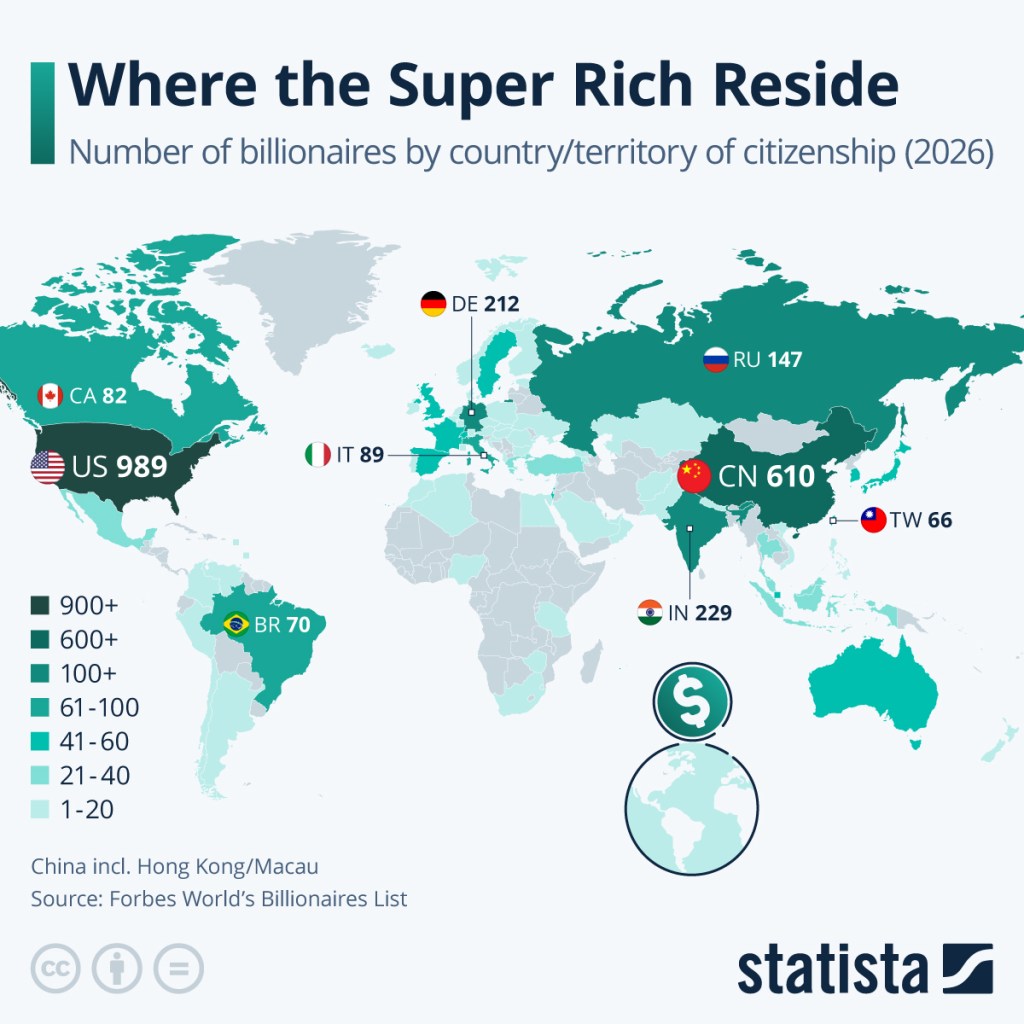
This week, Forbes included a record 155 Russians in its annual ranking of the world’s billionaires, marking the fourth straight year that the number of Russians on the list has increased. Their combined net worth was estimated at $695.5 billion.
“On November 30, we will go to Moscow and shut down the Moscow Ring Road!”: Major protests by truckers in the Caucasus
Irina Gordiyenko | Dagestan
November 22, 2015 Novaya Gazeta
A major protest by truckers is taking place in the Caucasus. Officials are trying to ignore it, and in response truckers are threatening to move on Moscow
“No to Platon! On November 30 We Block the Moscow Ring Road.” Photo: Irina Gordiyenko/Novaya Gazeta
Strikes by truckers against the introduction of a new road tax have swept across Russia. The biggest of them is still underway in Dagestan. Hundreds of truckers have lined up along dozens of kilometers of highway. Manas, Khasavyurt, Kizlyar, and Kayakent are the spots where people have been striking for a week. The protests have been ignored. Officials have avoided contacting the strikers, while television has refused to cover the strike. Amateur videos posted on the web are immediately removed and their users blocked.
The strikers are determined. If their demands are not heard, they intend to move on Moscow on November 30.
The roadside of the Rostov-Baku M29 highway near Khasavyurt looks gaudy at the moment. Trucks with yellow, red, blue, and green cabs are parked in two tight rows next to each other. The trailers are hung with enormous posters reading, “Hands off long-haul trucking!” and “Stop robbing the people!” The chain of trucks stretches for dozens of kilometers, and at any moment the annoyed truckers could block this federal highway.
“We don’t want to do it,” says Dibir, a trucker from a small village nearby. “We know it will be violently dispersed. But they don’t want to hear us. We went to the city administration, to the Ministry of Transportation, and to Rosavtodor (Russian Federal Road Agency). They wouldn’t even let us in the door. We called the TV channels: they have refused to come cover us. Instead, they sent in trucks of riot police.”
An excited crowd of around two hundred people stands around an improvised stage. From time to time, someone mounts the stage to appeal to the truckers not to give up and stand their ground.
They have been here for five days. They sleep in their cabs, cook their own food, and during the daytime they welcome the growing number of colleagues who have been joining the strike. They are no strangers to hardship. They have been tempered by runs on rough roads lasting many days.
As of November 15, vehicles weighing over twelve tons are charged an additional fee for each kilometer of federal highway they travel. The government issued a decree setting the fee at three rubles six kopecks per kilometer. The new system of taxation has been dubbed Plato. In effect, truckers (or trucking companies) are obliged to register with Plato and choose one of two methods of payment. They can either buy a special onboard device that counts the kilometers of federal highway they travel and then calculates the fee, or before each run, they can buy a detailed route map from the company running Plato.
If they refuse to pay, individual entrepreneurs can be fined 40,000 rubles [approx. 580 euros]; legal entities, 450,000 rubles [approx. 6,500 euros].
In the best case scenario, you can make forty to fifty thousand rubles per run,” says Dibir. “The [new] tax adds an additional fifteen thousand rubles in costs. What are we going to live on?! We are not on the Forbes list.”
All Russian truckers now know about the Forbes magazine list of Russia’s wealthiest people and the spot occupied on the list by Arkady Rotenberg.
The surname Rotenberg is now quite popular in Dagestan. Posters bearing it can be seen all along the the M29, for example, “Rotenberg is worse than ISIS” (a terrorist organization banned in Russia) and “Russia without the Rotenbergs.” Every trucker now knows that billionaire Arkady Rotenberg is a friend and supporter of President Putin, that Arkady Rotenberg has a son named Igor Rotenberg, and that Igor Rotenberg owns a little company that mysteriously signed a contract with the government farming the new federal transportation tax out to this private company.
Truckers are not only the people who haul loads from their own regions to other regions, for example, Dagestani cabbage. (There are several districts in Dagestan that traditionally cultivate green cabbage on an industrial scale and then supply it to other parts of Russia during the winter.) Truckers are one of the foundations of the Russian produce economy.
Watermelons, tomatoes, onions, aubergines, pomegranates, and oranges: all this produce is brought from Iran and Azerbaijan, and the geography of further transshipments covers the entire country. For example, Dagestani truckers literally “pick up” and transport the entire harvest of Krasnodar Krai, Stavropol Krai, Astrakhan Region, and Volgograd Region to other parts of the country. They supply the major markets of Moscow and Saint Petersburg with produce.
“We are in the fifth day of our strike. Around three hundred train carloads of persimmons have piled up on the Azerbaijani border, right in the middle of the fruit’s season,” one of the strikers explains to me. “Three hundred train carloads is nine hundred truckloads that we should have delivered to Russian markets. Instead, the produce is spoiling. Take a look at how much persimmon prices skyrocket now.”
“Rotenberg is worse than ISIS.” Photo: Irina Gordiyenko/Novaya Gazeta
There are over two million heavy trucks officially registered in Russia. Around half of these are registered in the south of Russia. Cargo transportation is now in the truest sense one of the most important sources of income in Dagestan, a republic of three million people.
Take, for example, the large village of Gudben. Its population is around fifteen thousand people, and it has two thousand registered trucks. The average family in Gudben consists of five people, so at least ten thousand residents of Gudben survive on the money earned from cargo runs.
“We would love to find other work,” says Guben resident Tahir, “but there is just no other work in Dagestan. This is the only way we can feed our families.”
The second major site of the trucker protests is the federal highway near the small village of Manas. Several days ago, outraged truckers blocked the highway, demanding that authorities come meet with them. The authorities did come, but incognito. They threw up their hands and left. Then they sent in truckloads of riot police, who dispersed the protest.
So far the truckers have agreed not to block the highway. They are waiting. But riot police are on duty there. Every day they detain dozens of people, charge them with misdemeanors and send them to jail for ten days, videotape the truck drivers, and rip the license plates from their trucks.
The truckers are philosophical about such methods of coercion. We will not succumb to provocations. We want to be heard, they say.
The Dagestanis have been joined in their protests by truckers from other regions.
“I cannot imagine how we will go on living. This is going to be a big blow to our wallets,” says Vladimir from Saratov.
A couple days ago, Vladimir unloaded a cargo of Sakhalin fish in Krasnodar. Hearing that a big strike was underway in Dagestan, he decided to join it.
“In other parts of Russia, the protest actions have quickly come to an end. They have been quickly dispersed. But the folks here are stubborn,” says Vladimir.
And Vladimir is not alone. Many truckers from other regions who made runs to the south over the past week have joined the Dagestanis, including Chechens. In Chechnya itself, there is a strict taboo on any protest, so they are forced to travel to neighboring regions to strike against the injustice.
“A liter of diesel costs thirty-three rubles. For example, you need half a ton [of fuel] to get to Moscow,” continues trucker Tahir. “Under Medvedev, the price of diesel went up by seven rubles and we were promised a decrease in the transportation tax. We believed them. But the tax never was decreased. And now a new tax has been introduced to boot.”
In addition to fuel, every trucker has to pay the transportation tax (around forty thousand rubles a year), insurance (around fifteen thousand rubles per run), and customs duties (if the produce hails from Iran or Azerbaijan), plus license fees and a ton of other related formalities. We should also consider that any breakdown is the driver’s responsibility. Spare parts for all trucks, whether they are Volvos or KamAZes, are expensive.
“I ran into a pothole on a dark highway in Volgograd Region. I was stuck there for a week. I paid twenty thousand rubles [for repairs]: that is about half of what I earned from the run. You cannot imagine how awful the roads are around Volgograd and Samara! And for this we have to pay more?!” relates one trucker.
But there is yet another nuance. The new road tax will inevitably lead to higher rates for cargo transportation. The truckers will be forced to include them in the cost of their services, and so prices for the goods they transport will increase nationwide.
“We do not want to do it. People here live very poorly as it is,” says the trucker Dibir. “Price have gone up at the markets in Khasavyurt. We will fight to the last. And if they do not want to hear us, we will drive to Moscow and set up camp on the Moscow Ring Road. We are used to living in field conditions.”
“Peace to the world. No to Plato!” Photo: Irina Gordiyenko/Novaya Gazeta