Trans(national) Solidarity

“Yara Tychina, a young transgender woman and Astana resident, picketed on Vodno-Zelyoniy Boulevard next to the House of Ministries and the Parliament. Unfurling a handmade transgender flag, she demanded that the Senate, the Presidential Administration, and the President reject the ‘LGBT propaganda’ amendments. She was taken to the Yesilskoye District Precinct of the Astana Police. Further details are in the video.”

[In which video Ms. Tychina says] Hello! I am Yara Tychina. I’m an ordinary citizen of Astana. I work in the coffeehouse [?] industry. I’m an openly trans women. I am protesting peacefully today because there are no other means to impact my country’s repressive policies. I don’t simply oppose this law. [It] violates my rights and freedoms, the rights and freedoms of my friends, my colleagues, the people in my life and, most importantly, my family, over half of whom are members of the LGBT minority community. I have carefully scrutinized this law and I can say truthfully that it has nothing whatsoever to do with ‘propaganda,’ since in black and white it says that any mention of LGBT—in a positive vein, in a neutral vein, it doesn’t matter which; in personal profiles, in personal conversations with people, it doesn’t matter where—is considered ‘propaganda.’ The fact that I’m an openly trans woman makes me a criminal, according to the new amendments. These amendments also don’t have anything whatsoever to do with ‘protecting children,’ since hundreds of Kazakhstani LGBT children, who had no way of influencing [who they are], will find themselves outlawed. They will be banned. They will be forbidden from talking about themselves on social media. They will be forbidden from gathering together in public or in private.

[Ms. Tychina is interrupted by Astana police officers, who claim she is violating the law. She repeatedly states her willingness to go with them to the police station. She then continues.] I heartily and tearfully implore the Presidential Administration, the Senate, and the President of the Republic of Kazakhstan, Kassym-Jomart Tokayev, and the Constitutional Court, if that doesn’t work, to reject these amendments. Otherwise, hundreds of thousands, if not millions, of Kazakhstanis, will unavoidably suffer. With these amendments, you will bridge the gap between Kazakhstan and Russia, but you will also drive away all international investments and significantly harm Kazakhstan’s standing in the international arena. But first of all you will harm people. You will harm my family. I implore you to stop it. Thank you!

[Responding to a reporter, who asks her name, Ms. Tychina says] My name is Yara Tychina. I’m in the coffeehouse [?] industry. I have a small business. I’m an ordinary [female] citizen. [Responding to a question about her flag, she says] It’s a transgender flag, the flag of my identity. It’s homemade. [To the police officers] Let’s go! Thank you! [A police officer explains to the press that Ms. Tychina has not been detained but has voluntarily agreed to go with them to the station.]

Source: werequest.kz (Instagram), 3 December 2025. Translated, from the Russian, by the Russian Reader. Thanks to Peter Leonard for the heads-up.


Police in Kazakhstan’s capital detained a transgender activist for staging a solitary protest against pending legislation prohibiting so-called “LGBT propaganda.” Yara Tychyna held up a handmade transgender flag near government buildings in downtown Astana and called for the Senate and the presidential administration to reject changes to the law, which are designed to proscribe “propaganda of non-traditional relations,” a formulation broad enough that positive portrayals of same-sex relations could be treated as prohibited content. Lawmakers have been debating the measure since the lower house approved it in November. Officials insist the restrictions are framed as child-protection rules. Critics warn that the draft’s language is vague and that equating LGBT themes with harmful content risks legitimising discrimination.

Source: Peter Leonard, “Central Asia’s week that was #82,” Havli, 3 December 2025


On Wednesday, November 12, the [lower house of the] Parliament of Kazakhstan (Mäjilis) unanimously passed a law banning “LGBT propaganda” in the media and on the internet. Violators face fines, and in the case of repeat violations, up to ten days in jail.

“Endeavoring to protect children from information detrimental to their health and development, provisions have been made to restrict the dissemination of information promoting pedophilia and non-traditional sexual orientation in public spaces, as well as via the media, telecommunications networks, and online platforms,” the document states.

The changes will affect nine laws. Violations of the ban will be punishable by a fine of up to forty minimum calculation indices (in 2025, this amounted to 157,000 tenge, or approximately 260 euros, or 24,500 rubles), or up to ten days in jail.

Kazakhstan’s Deputy Minister of Culture Yevgeny Kochetov explained that materials containing “propaganda of non-traditional relationships” would have to be labeled “18+.” Content that violates the law would be blocked.

Kochetov added that the strictures currently apply primarily to those who distribute materials. If minors attend a screening of a film rated 18+, the cinema’s managers, not the parents, would face a fine, he explained.

“If, for example, [men] are holding hands in the park, this is not considered propaganda. These are their personal boundaries, and there are no questions here,” said one of the sponsors of the bill, MP Yelnur Beisenbayev.

The Mäjilis initially sought to ban “LGBT propaganda,” in April 2024, by amending the law “On Mass Media.” They later proposed criminalizing “LGBT propaganda” and equating it with incitement to ethnic, social, or religious hatred.

When MPs began discussing banning “LGBT propaganda,” a petition entitled “We oppose open and covert LGBT propaganda in the R[epublic of] K[azakhstan]” was posted on the website E-Petition.kz. It was the third petition in the country to gather the fifty thousand signatures required for consideration by the government.

The Ministry of Culture and Information decided to partly accede to the petitioners’ demands—when it came to strictures aimed at “protecting and shielding adolescents and children from the promotion and cultivation of sexual relations.”

Consequently, the ban was presented as an amendment to the draft law on archiving.

Traditional values

In recent months, Kazakhstan President Kassym-Jomart Tokayev has repeatedly spoken about the need to protect “traditional values.” The day before the Mäjilis passed the bill, and ahead of his visit to Moscow, Tokayev published an article in Rossiiskaya Gazeta in which he spoke about the friendship between the two countries.

“We are united by a common take on traditional values, similar views on the pressing issues of contemporary life, and cooperation in ensuring the welfare of [our two] brotherly peoples,” Tokayev wrote.

In Russia, the law banning “LGBT propaganda” among minors was first introduced in St. Petersburg in 2011, and then at the federal level in 2013. In 2023, the Russian authorities went so far as to declare the “international LGBT movement” extremist.

As of July 2025, Human Rights Watch had catalogued more than one hundred criminal indictments and convictions [in Russia] for involvement in the “international LGBT movement” or for displaying symbols which the authorities attribute to this movement.

Following Russia’s lead, “LGBT propaganda” was banned in Hungary in 2021, and in Georgia in 2024.

LGBTQ+ in Kazakhstan

Homosexuality was decriminalized in Kazakhstan de facto in 1997 and de jure in 1998. Since 2003, transgender people have been able to change their gender marker in official documents.

In 2021, the Williams Institute at UCLA School of Law ranked Kazakhstan 154th out of 175 countries in terms of public acceptance of LGBTQ+, below Uzbekistan, Russia, and Afghanistan.

The online platform Equaldex, which researches the rights of sexual minorities around the world, writes that “[a]ccording to recent survey data, there appears to be strong opposition to LGBTQ+ rights in Kazakhstan.”

Many human rights organizations have already criticized Kazakhstan’s ban on “LGBT propaganda.”

Human Rights Watch urged lawmakers to reject the bill. The NGO argues that the proposed amendments violate fundamental human rights and could make LGBTQ+ people in Kazakhstan more vulnerable.

Organizations including ILGA-Europe (the European branch of the International Lesbian, Gay, Bisexual, Trans and Intersex Association), the World Organisation Against Torture (OMCT), and TGEU (Trans Europe and Central Asia) have also issued a joint statement against the bill.

The Kazakhstani organization Queer.kz commented on the Mäjilis’s passing the amendments banning “LGBT propaganda” as follows: “We continue to write letters! Our organization will continue to work together with our colleagues to defend human rights and freedom!”

Source: “Kazakhstan parliament votes to ban ‘LGBT propaganda,'” BBC Russian Service, 12 November 2025. Translated by the Russian Reader. Thanks to Peter Leonard for the heads-up.


Over the past four years of America’s modern anti-transgender panic, Missouri has been one of its chief laboratories. Each legislative session brings a flood of new proposals targeting transgender people—with each year opening with often more than a dozen bills—and 2026 is already shaping up to continue that pattern. In the first batch of early bills, lawmakers introduced 21 anti-LGBTQ+ measures, many escalating the state’s enforcement tactics beyond even last year’s cruelties. One stands out in particular: a bill that would ban “social transition” in schools—blocking teachers from using a student’s chosen name or pronouns, even with parental consent.

The bill, SB1085, filed by Senator Joe Nicola, states in its summary that it would prohibit “public school staff members from encouraging minor students in their ‘social transition,’” which the measure defines as engaging in any activity “with the goal of helping a student become perceived as a member of the opposite biological sex.” The text defines social transition broadly—“participating” in a student’s gender transition based on “details such as his or her name, appearance, or behavior”—and bars schools from taking part in any conduct that could contribute to a student “not being perceived and treated as a member of the student’s biological sex.”

The bill explicitly forbids all school staff and faculty from “the use of alternative pronouns or names for the minor student, either in school records or otherwise.” Notably, it contains no provision for parental consent—meaning the restrictions apply not only to unsupportive parents but also to parents who affirm their transgender children. The measure appears to single out trans students exclusively: nothing in its text bars name changes for any other reason unrelated to gender transition.

You can see the provisions here:

The bill marks the latest front in anti-transgender legislation: an effort not just to ban medical transition for trans youth, but to prohibit any form of transition at all, including social transition. Earlier this year, reporting out of Texas showed how a similar law led teachers to suddenly deadname students who had used their affirmed names for years without issue. Variations of this language have surfaced in several states, but Missouri’s proposal is among the most explicit and far-reaching attempts yet to regulate social transition in schools.

The ban on social transition—even with parental permission—underscores a shift in how anti-trans legislation is being sold to the public. For years, supporters of bathroom bans, sports bans, and “don’t say gay” policies framed their efforts as battles for “parental rights.” Increasingly, though, that language has fallen away as lawmakers move to strip supportive parents of any authority at all, mirroring the approach in medical transition bans that override parental consent entirely. Under Missouri’s proposal, parents would have no right to approve their child’s affirmed name or pronouns, and any teacher who honors a family’s wishes could face the loss of their license.

The social-transition ban is just one front in a broader offensive. Missouri lawmakers have already filed bills to outlaw public drag by defining it as prurient “male or female impersonation,” to strip Pride flags from public schools, and to roll back nondiscrimination protections for transgender people in housing, employment, and public accommodations. And more proposals are almost certain to follow. When the legislature gavels in on January 8, the real question for observers won’t be whether these bills appear—they already have—but which ones Republican leadership chooses to fast-track. That early movement will signal just how aggressive Missouri intends to be in advancing its anti-LGBTQ agenda this session.

Source: Erin Reed, “New Missouri Bill Would Ban “Social Transition” In Schools, Even With Parental Permission,” Erin in the Morning, 3 December 2025


On April 27, 2023, Kansas became the first state in the country to institute a statewide definition of sex. “A ‘female’ is an individual whose biological reproductive system is developed to produce ova,” the law declared, “and a ‘male’ is an individual whose biological reproductive system is developed to fertilize the ova of a female.” Since then dozens of state legislatures have introduced similar bills; sixteen have passed. In Indiana and Nebraska governors have issued executive orders to the same end. Each of these measures effectively strips transgender people of legal recognition.

The language of these policies usually distinguishes men from women by their reproductive capacity, which is assumed to be determined at birth or even at conception. Each statute mandates that its definitions of “sex,” “female,” and “male” be used whenever those words appear in any part of the state code. Some purport to be establishing a “women’s bill of rights,” as the titles of Kansas’s and Oklahoma’s bills suggest; Louisiana’s is titled “The Women’s Safety and Protection Act.” (On the other hand, the name of North Dakota’s bill—into which legislators slipped another term they wanted to define—captures the arbitrariness involved: “The Definition of Female, Male, Sex, and Scrap Metal Dealer.”)

This legislation is part of a broader onslaught. In the past few years Republican-controlled state legislatures have introduced thousands of bills targeting trans people, with measures to ban puberty blockers and hormones for trans youth, bar trans girls and women from sports, mandate that bathroom access be based on birth sex, outlaw drag performances, and more. So far more than two hundred of these laws have passed, with grave, often life-changing consequences for the trans residents of red states across the country.

Continue reading “Trans(national) Solidarity”
Trump’s War on Trans: An American Story

Late Monday evening, President Donald Trump signed an executive order that effectively lays the groundwork for a sweeping ban on the 15,000 transgender troops currently serving in the United States military. The order, delegating much of its implementation to Defense Secretary Pete Hegseth, declares that being transgender is “incompatible with service.” It further mandates that all transgender personnel must be misgendered in official military communication and policy. Most notably, the order frames transgender identity as inherently at odds with “a soldier’s commitment to an honorable, truthful, and disciplined lifestyle, even in one’s personal life.”

The executive order, titled “Prioritizing Military Excellence and Readiness,” claims its purpose is to “protect unit cohesion” from “ideologies harmful” to it—explicitly targeting the service of transgender troops. It asserts that the medical needs of transgender individuals are incompatible with military service, despite evidence that treatments like hormone therapy result in no operational downtime. Aware of this contradiction, the order offers an additional justification for the ban, framing transgender individuals as inherently “selfish” and “false.”

See the rationale given by the order here:

Consistent with the military mission and longstanding DoD policy, expressing a false “gender identity” divergent from an individual’s sex cannot satisfy the rigorous standards necessary for military service. Beyond the hormonal and surgical medical interventions involved, adoption of a gender identity inconsistent with an individual’s sex conflicts with a soldier’s commitment to an honorable, truthful, and disciplined lifestyle, even in one’s personal life. A man’s assertion that he is a woman, and his requirement that others honor this falsehood, is not consistent with the humility and selflessness required of a service member.

While the order itself is vague on the specifics of implementation, its intent is clear: to serve as a ban on transgender service members. It declares that being transgender is “inconsistent with service” and mandates that pronouns used by the military must “accurately reflect an individual’s sex.” The order gives Defense Secretary Pete Hegseth 60 days to implement these directives, including ending “invented and identification-based pronoun usage” and prohibiting transgender service members from bunking with others of their gender.

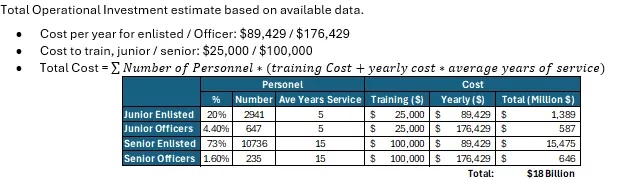
If implemented broadly, the ban will have immediate and damaging consequences for both transgender service members and military readiness across the United States. SPARTA, a leading transgender military advocacy organization, estimates that removing 15,000 transgender service members would result in the loss of an $18 billion capital investment, with the Palm Center projecting an additional $1 billion cost to recruit and train replacements. Notably, up to 73% of these service members are senior enlisted personnel with 12-21 years of experience—expertise that cannot be easily replaced by the U.S. government.

You can see SPARTA’s figures here:

When asked about the potential for a ban when it was first floated in November, Emily Shilling, President of SPARTA, stated, “The most immediate impact is that transgender people serve in every theater of the world. If it were a fairly fast-moving ban, you would be pulling these individuals out of their units, leaving critical gaps in skill sets, experience, and leadership positions that you’re just not going to be able to fill with equivalent people anytime soon, especially given the shortfalls in recruiting,”

A transgender officer with years of military experience, speaking anonymously about the rumors of an impending transgender military ban, shared that she had recently spoken with several transgender service members deeply concerned about the possibility. When asked about claims that transgender people are a liability to the military, she dismissed the notion outright, stating, “Every trans service member that I have observed performing their job excels at their job, and that’s because we have to… Every trans sailor, every trans soldier, every trans Marine, and airman that I have known has excelled at their job.”

It remains unclear how swiftly or extensively Defense Secretary Hegseth will implement these changes, how many transgender service members will face discharge, or whether the administration will revert to a “don’t ask, don’t tell” approach—forcing transgender personnel back into the closet or demanding their detransition. What is clear, however, is the administration’s framing of being transgender not as an inherent aspect of human diversity but as a dishonorable and incompatible choice. This rhetoric signals a chilling disregard for the thousands of transgender service members who have served with distinction for decades, suggesting the administration feels no obligation to temper its actions with respect or restraint.

Source: Erin Reed, “Trump Military Ban Says Being Trans Conflicts With ‘Honorable, Truthful, Disciplined Lifestyle,” Erin in the Morning, 27 January 2025


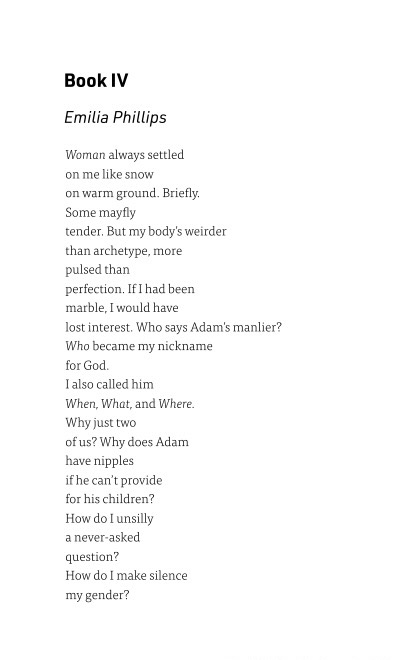
Source: Poetry Daily


Within hours of his inauguration, President Trump signed an executive order titled “Defending women from gender ideology extremism and restoring biological truth to the federal government”, following a whipping up of anti-trans feeling during the US election.

The order states that Trump’s administration will make it “the policy of the United States to recognise two sexes, male and female. These sexes are not changeable and are grounded in fundamental and incontrovertible reality.”

The response from LGBTQ+ groups was dismay and fear. Quoted in the Detroit Free Press, trans woman Rachel Crannell-Crocker remarked that Trump “wants to say we are not real,” while Bobbie Hirsch said “I’m scared, I’m really scared for my future.” Kimberly Frost, co-director of ILGA World, said Trump was “emboldened by anti-gender movements” to “use the lives of trans people as tools to sow divisions in society. Our communities deserve better.”

Trump’s move is not unexpected. During a fraught and divisive election campaign, Republicans spent nearly $215m alone on network TV ads that vilified transgender people, according to recent data from AdImpact. The past few years have seen a rush of anti-trans bills in red states, such as banning changes to birth certificates or defining sex as immutably set at birth. Books featuring LGBTQ+ content have been banned, and drag shows have faced protests and been subject to lurid conspiracy theories by Trump’s far right supporters.

Having spent nearly a decade reporting on far right threats to gender rights, the order’s purpose is clear to me: it sits squarely within the attack on so-called “gender ideology” with the ultimate aim to restore a “natural order” of white male supremacy. And while the target is trans people, the threat goes much wider, potentially laying the groundwork for further attacks on the US’s already degraded abortion rights.

What is gender ideology?

Originating in the mid-1990s in Catholic and other conservative Christian circles, the term “gender ideology” sprung up in response to feminists seeking to place “gender” into a United Nations report on its 1994 women’s conference. Initially the term focused on abortion rights, but quickly expanded to criticise any rights related to gender and sexuality, including LGBTQ+ and trans rights.

As the term gathered momentum, it became framed as a threat to ‘traditional’ – see conservative and Christian nationalist – values. LGBTQ+ activists and feminists were accused of imposing “gender ideology” on everything from schools to families and government, determined to “indoctrinate” children and young people with the “transgender agenda.”

Attacks on “gender ideology” were amplified by conservative writers such as Dale O’Leary who popularised the term in her book Gender Agenda, and picked up by the Vatican, as well as the anti-abortion, anti-LGBTQ+ ‘religious freedom’ organisations such as Alliance Defending Freedom and the Heritage Foundation. The right-wing think tank is behind the controversial Project 2025, with ADF on the project’s advisory board.

The project – which brings “together … over 100 respected organizations from across the conservative movement, to take down the Deep State and return the government to the people” – is key to understanding Trump’s move.

Project 2025 published a “Mandate for Leadership”, providing an anti-rights blueprint for the incoming administration. It offered policy ideas to demolish so-called “gender ideology”, demanding that “enforcement of civil rights should be based on a proper understanding of those laws, rejecting gender ideology.” It demanded that “gender ideology” be removed from school curricula and, in language echoed in Trump’s order, warned “radical gender ideology is having a devastating effect on … young girls.”

The project also called on the government to “reverse the DEI [diversity, equality, inclusion] revolution in Labor policy”. Trump’s order did so willingly, revoking previous executive orders that protected against discrimination and stating that government agencies must “take immediate steps to end Federal implementation of unlawful and radical DEI ideology.”

A threat to abortion?

While the executive order is first and foremost a frightening attack on trans people, its wording sets alarm bells ringing for abortion rights, too. It will be no surprise that curtailing abortion rights is a key focus of Project 2025 – the mandate mentions “abortion” 199 times.

Trump’s previous administration created a conservative-majority Supreme Court that overruled Roe vs Wade, opening the door for individual states to implement deadly and devastating abortion bans across the US. Now, the executive order’s wording suggests a wider attack on reproductive rights.

The order defines “female” as meaning “a person belonging, at conception, to the sex that produces the large reproductive cell”, while male is defined as “a person belonging, at conception, to the sex that produces the small reproductive cell.”

As well as being troubling for trans identity, the wording defines male and female foetal personhood from conception. If the foetus is recognised as a person at conception, then that foetus legally has the same rights as a born person, with catastrophic consequences for pregnant women and people. Foetal personhood means a woman can be prosecuted for murder if she has an abortion, as it violates the right to life. She can face manslaughter charges if she has a miscarriage for which she is blamed.

Bethany Van Kampen Saravia, senior legal and policy adviser at the gender rights NGO Ipas, told openDemocracy that “the language used in this cruel and dehumanising executive order is undoubtedly deliberate and deeply flawed on several counts. Simply put, it is outside of the executive authority to declare a fertilized egg a ‘person’ who has constitutionally protected rights.”

This is not a new threat. So far, 24 US states have included foetal personhood language in laws regulating or banning abortion, while 17 states have foetal personhood by law or judicial decision that applies to either criminal or civil law, or both. There have already been multiple cases where women in the States have been criminalised for miscarriage.

“Personhood arguments have long been used by anti-rights actors in attempts to fully ban and criminalize abortion and to punish pregnant people,” warned Van Kampen Saravia. “This language can also ban some forms of birth control and fertility treatments like IVF. This is a clear and deliberate signal of what is to come from this Administration.”

“It is outside of the executive authority of the President to instate a nationwide abortion ban, yet there is much that he can do to limit access to medication abortion and those threats need to be taken seriously,” she added. “Ipas US condemns these egregious acts of hate and bigotry. These executive orders are nothing shy of human rights violations and the world should be paying very close attention now to what is being feigned as ‘defending women’ and who is actually being targeted and criminalized.”

The ideology behind the ‘natural order’

The attacks on abortion and LGBTQ+ rights are often interlinked, as both pose a threat to the far right idea of a ‘natural order’ which has been undermined by feminism and human rights, and must be returned to through reversing social progress and protections.

The idea that there is a ‘natural order’ which needs to be re-established has its roots in fascist ideology, and its intent is found in almost all attacks on gender rights including from Trump, Putin, and anti-gender ideologues in Europe. It valorises male supremacy, female subordination, and declares the non-existence of LGBTQ+ people.

As I write in my book, the existence of trans people is a grave threat to the natural order and its advocates who want to reassert male supremacy and abolish the rights of LGBTQ+ people. The goal of male supremacist, anti-gender movements is to ‘naturalise’ gendered stereotypes about men’s and women’s behaviour and status: they want to naturalise male supremacy and female inferiority.

The far right wants to tie women’s inferiority to biology, and to claim that harmful gendered stereotypes are biologically innate in order to pin women to specific roles in society. These same stereotypes are used to justify women’s oppression: women are just more nurturing, or they are bad at leadership, for example, they should stay in the domestic sphere and leave the public sphere to the boys. The anti-gender movement wants to claim that women’s oppression is natural, rooted in women’s biology, and therefore cannot be challenged.

But biology is not destiny, as the famous feminist slogan states. The ‘natural order’ of female inferiority and male supremacy is disrupted by feminists saying women can have control over their fertility, or LGBTQ+ people saying one can express their gender identity as they choose. They therefore have to be stopped.

This order has nothing to do with “defending women” from “extreme gender ideology.” The extreme gender ideology is the one that tries to push women into oppressive boxes, ban abortion, and seek to abolish the existence of trans people and the LGBTQ+ community more widely.

The extreme gender ideology is the movement that elects a President after a judge in New York found a rape allegation made against him to be “substantially true”. It is the movement that celebrates his election with the slogan “your body, my choice.”

Source: Sian Norris, “Trump’s new anti-trans executive order is a ‘human rights violation’: Trump’s first act in office is part of the global far-right’s war on so-called ‘gender ideology’,” openDemocracy, 23 January 2025

The Russian Reader Reads: Erin in the Morning

This is the second in a series of posts in which I showcase some of the newsletters, blogs, Substacks, and websites — all of them produced by hardworking, passionate lone wolves or tiny, perpetually underfunded grassroots collectives — which inspire me to continue making the Russian Reader and inform me about parts of the world and communities about which otherwise I would be utterly clueless.

Erin Reed describes Erin in the Morning as a place to “stay up to date on all of the most important pieces of trans and queer news and legislation for the week. I summarize it all complete with links to source documents. I hope to distill the information that you get from me in other places like @erininthemorn on TikTok and Twitter into a digest so that you can be sure you didn’t miss anything!”

Ms. Reed’s latest post on Erin in the Morning, endorsing Kamala Harris for U.S. president, could not be timelier, of course. More importantly, as a blogger who has chronicled the Putin’s regime ferocious war on Russia’s LGBT community and their rights, I cannot help but be inspired by Ms. Reed’s fierce, fact-driven defense of the transgender community and their rights in the U.S. I hope you’ll consider subscribing to Erin in the Morning and supporting it financially, as I have done. \\\ TRR


As one of America’s leading transgender journalists, I have reported on the wave of anti-transgender legislation sweeping across the United States over the past four years. These laws impact nearly every aspect of our lives: from using restrooms in peace to accessing essential medical care, from seeing our histories taught in schools to expressing our identities through art at Pride parades. I’ve listened to thousands of hours of testimony on these bills. Facing the 2024 election, I can’t stay silent on the dangers a second Trump term would pose to my community. For the long-term safety and dignity of transgender Americans, I believe there is only one viable path forward: electing Kamala Harris this November.

In some of my earliest reporting on anti-trans laws, many Republican elected officials were less fanatical than they are today. For instance, the first bill banning transgender healthcare in Arkansas was vetoed by Republican Governor Asa Hutchinson. In his veto statement, Gov. Hutchinson described the bill as “overbroad and extreme,” noting that it would “create new standards of legislative interference with physicians and parents.” In early 2022, Republican Gov. Spencer Cox vetoed a sports ban, making an impassioned plea: “I want them to live.” Many anti-trans bills failed early on, failing to gather enough Republican votes. Even Republican-nominated justices crossed party lines to side with Democratic-nominated justices, affirming that transgender individuals deserve protection under the constitution.

But soon after, the party began waging a fear campaign, leaving countless people in my community harmed in the process. I watched as one Republican-controlled statehouse after another, spurred on by far-right Freedom Caucus members, voted to enact some of the most draconian laws targeting transgender individuals ever seen. I listened as members of my community were labeled “dangerous,” “an infection,” and even “demons.” Gov. Cox no longer “wanted us to live,” and instead quietly signed the first bathroom ban to cross his desk.

I have seen transgender people forced to flee anti-trans states, seeking new lives in places where they are protected. Some of my earliest work involved families in Texas with transgender children who were targeted by Attorney General Ken Paxton, accused of child abuse simply for supporting their kids. Soon, other states followed with healthcare bans, bathroom bans, and more. I reported on these bills as families begged their state legislators for dignity, only to be ignored. I then helped these families raise funds, and I’m glad to report that many now lead fulfilling lives as valued members of their new communities.

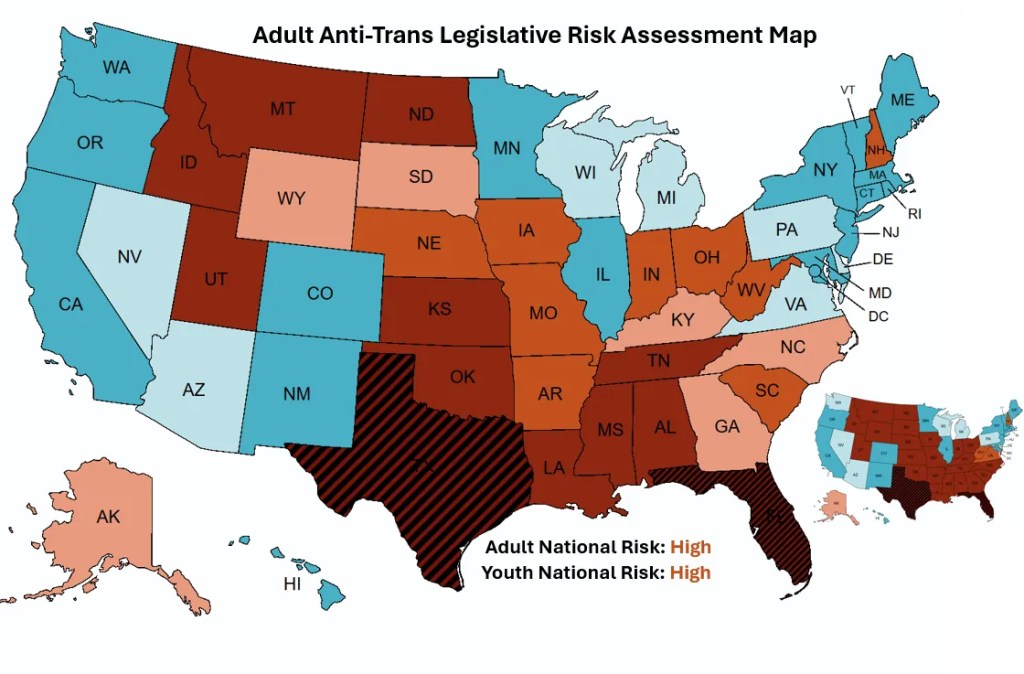
I am keenly aware of which states transgender people are fleeing—and which ones they are fleeing to. Every state enacting extreme anti-trans laws has either a Republican trifecta or a Republican supermajority. Meanwhile, transgender people are finding refuge in states where Democrats have established safe havens. One of those havens is Minnesota, thanks to Governor Tim Walz. I know people whose lives were saved by his actions—people who can now live authentically and freely, without fear of government persecution.

Erin Reed posted the latest edition of this periodically updated map yesterday. It was not included in her endorsement of Ms. Harris, but I’ve inserted it to show what is at stake in the upcoming election.

I have followed this election cycle intently and was among the first to report that transgender people would be a primary target of Trump’s 2024 campaign. In early 2023, Trump released a video outlining a dozen anti-transgender policies he would enact upon taking office, including national bans on trans care for youth, investigations into hormone therapy manufacturers, probes into affirming teachers, and eliminating funding for schools that treat transgender students with dignity and respect. These policies would take the harmful measures I’ve seen in Republican statehouses and nationalize them.

In 2024, it’s clear that the Trump campaign intends to follow through. If you’ve watched any sporting event or turned on the TV in a battleground state, you’ve seen the culmination of this fear campaign against transgender people, now led by Trump himself. Nearly $100 million in anti-trans ads have blanketed the nation, with Trump spending more on these ads than on immigration, housing, and the economy combined. I have seen what other Republican leaders do when they center their focus on my community, and I know the end results are not pretty.

When Kamala Harris was chosen as the Democratic nominee, I watched her closely. While the Biden administration was not flawless on transgender rights—and I often criticized it for these shortcomings—no federal anti-trans laws passed during his presidency. I reported on the defeat of 50 anti-trans and anti-LGBTQ+ policy riders as Republicans threatened to shut down the entire government over transgender issues, and Biden did not back down. His nominees have overturned anti-trans laws and policies. Thanks to Biden, I was able to change my passport, even though my home state of Louisiana doesn’t allow birth certificate changes. I wanted to see if Harris would continue that commitment.

I’m convinced she will. One of Harris’s first moves that reassured me was selecting Gov. Tim Walz as her choice for vice president, fully aware of the Republican attacks against him for making Minnesota a safe haven for those fleeing anti-trans laws in other states. Walz, who campaigned on his record of starting his high school’s first Gay-Straight Alliance decades ago, has consistently been at the forefront of supporting LGBTQIA+ people. He brought that commitment with him to the Governor’s office, where he governed with a focus on making the state welcoming and inclusive for all.

Then in the final weeks of the campaign, she and Tim Walz were asked no less than three times about transgender people in interviews with Fox News, NBC, and Glennon Doyle’s podcast. I was encouraged to see Harris stand on her record of supporting transgender people when questioned. She had ample opportunity to throw us under the bus—as some other Democrats have done this campaign cycle—but she did not.

On Fox News, she criticized Trump for spending $20 million on ads targeting our community. On NBC, echoing her stance on abortion, she emphasized that transgender care is a decision to be made between doctors and patients. Her framework mirrored the approach used by many Democrats—and even some Republicans—to successfully push back against anti-trans bills in dozens of states. Meanwhile, that same week, Walz passionately defended transgender youth, stating that Donald Trump was attempting to “demonize a group of people for being who they are” and pledging that the administration would appoint justices committed to protecting our rights.

With over 1,000 bills introduced in the past three years targeting trans and queer people, undoing the harm they’ve caused will require sustained and strategic effort. The path forward depends on nominating justices who can help reverse these laws, while also protecting our rights in cities and states that offer refuge. For those living in oppressive states where their care, bodily autonomy, and right to exist freely have been threatened, we will continue organizing, supporting each other through mutual aid, and building the foundation to dismantle these discriminatory laws for good. The future rights of transgender people depend on electing Harris, uplifting Walz’s leadership, and securing the justices their administration will appoint.

If Trump wins a second term, we could be bound by his justices for an entire generation. Many transgender adults may never see the day when his court no longer controls our right to exist peacefully in public. Project 2025 could become a national reality, turning the same hateful bills and rhetoric shaping statehouses across the country into federal law. Schools could be defunded for allowing transgender youth to use restrooms in peace, and our very existence could be labeled obscene. There may be no return from the harm he intends to inflict on our community.

Transgender people are in a fight for our lives, and we are a powerful voting force, with millions of us across the United States. In an election that could come down to a few thousand votes in key swing states, we have the numbers to make a difference. In states like Georgia and Arizona, the transgender population is four times the size of the previous vote margins. We cannot afford complacency this election cycle. There is a path forward from the harm inflicted by Republican policies championed by Trump—a path that depends on us showing up and casting our votes for Kamala Harris.

Source: Erin Reed, “As A Leading Transgender Journalist, Here’s Why I’m Endorsing Kamala Harris,” Erin in the Morning, 29 October 2024

Pride (and Shame)

Guerneville, Calfornia, 11 August 2024. Photo by the Russian Reader

KOBLENZ, Germany (AP) — Sasha Skochilenko and Sofya Subbotina are planning to get married. That wasn’t an option in their native Russia, but it’s possible now that they live in Germany, which recognizes same-sex weddings.

“We don’t know how or in which city we will do it, but that’s the plan,” Skochilenko, 33, told the Associated Press, looking lovingly at Subbotina, who radiated happiness.

They reunited earlier this month in Germany, shortly after Skochilenko and other Russian prisoners were exchanged in a historic East-West swap — a happy if unlikely ending to an over two-year ordeal.

Skochilenko, an artist and musician, was jailed for speaking out against Russia’s war in Ukraine. Subbotina campaigned for her partner’s release while also trying to make her life behind bars as tolerable as possible.

They talked about marriage in Russia, too, but same-sex weddings have been effectively banned there. Laws restricting LGBTQ+ rights have been on the books for over a decade and intensified since the war began as part of the Kremlin’s campaign for “traditional values,” fueled by its anti-Western views and close ties to the Russian Orthodox Church.

Now, “I feel that I’m in a really free country,” Subbotina said, as they make plans for a life together in the quiet city of Koblenz in western Germany.

Skochilenko was arrested in her native St. Petersburg in 2022, just weeks after the invasion of Ukraine, for replacing price tags in a supermarket with anti-war messages like saying that Russia bombed civilian targets. She was charged with making false statements about the military, part of the massive crackdown on all dissent over the invasion.

She struggled in pre-trial detention, suffering from chronic illness, including celiac disease, requiring gluten-free meals. Subbotina commuted to Skochilenko’s jail at least twice a week, bringing food, medicine and other necessities. She and their friends made sure the case, which drew public outrage, stayed in the headlines.

Last year, Subbotina was diagnosed with cancer. “I just felt like I was giving up, and honestly, I was just ready to die,” she said.

The couple didn’t see each other for a year. Since they weren’t married, investigators made Subbotina a witness in the case and refused to allow her visits or to receive phone calls from Skochilenko.

“It is not a small thing, when a person you love can’t visit you,” Skochilenko said.

Subbotina added it was “very painful,” noting that she knows many women who married imprisoned men — often with the wedding held in pre-trial detention facilities or in penal colonies.

“It gives them the right for long visits, it gives them the right to get phone calls, short visits, because they have a certain status in the eyes of the authorities,” she said. “We’ve never had this opportunity.”

Subbotina says she eventually was allowed short visits.

They were always very open about their relationship, despite laws against any public endorsement of LGBTQ+ activities, driven by President Vladimir Putin’s close ties with the Russian Orthodox Church.

Skochilenko said it was clear in the early 2010s the Kremlin was headed in a “homophobic direction,” and some of the laws the authorities were adopting drove her to protest back then. In recent years, she said her openness was a form of activism.

People “often have distorted opinions about the LGBTQ+ community because they don’t know anyone” who loves someone of the same sex, and their views often change once they do, she said.

In November 2023, Skochilenko was convicted and sentenced to seven years in prison — an unusually harsh verdict.

This summer, while awaiting an appeal hearing at a detention center in St. Petersburg, she said there was a point when she reached a particular point of desperation about her long sentence. She said she was traumatized by the lack of freedom and privacy, the constant body searches, and the persisting hunger from being unable to eat prison food.

Subbotina visited her in July, and Skochilenko recalls bursting into tears for the first time in months.

“I told her, ‘Sonya, I’m tired of wanting to go home. Please tell me that I won’t have to serve the entire sentence, that some miracle will happen.’ And she said, ‘Yes, why don’t you hope for a miracle?’” Skochilenko said.

That same day, a prison official told Skochilenko to “urgently” apply for a presidential pardon, she said. The artist did not want to admit guilt, but the official said she could simply explain her health problems. She wrote the request and forgot about it, thinking that it would take a long time to even process.

Several days later, she was transferred to Moscow without explanation. In the same van was Andrei Pivovarov, an imprisoned opposition politician that she knew from years earlier. There was hardly any reason for them both to be transferred at the same time, so it suggested that perhaps something good was happening.

Skochilenko spent several long days in Moscow’s notorious Lefortovo Prison, where she was cold and hungry, unable to eat much of the food she was given.

Subbotina learned of the transfer and rushed to Moscow with a care package, visiting every detention center she could think of, without success.

The rest became what many Russians critical of the Kremlin describe as the first good news since the start of the war. On Aug. 1, Skochilenko and 15 others were put on a bus, driven to an airport and flown to Ankara, Turkey, where they were exchanged for eight Russians imprisoned in the West.

From Ankara, the former prisoners were flown to Germany, where Chancellor Olaf Scholz greeted them on the tarmac. The next day, Skochilenko was finally able to embrace Subbotina, who flew to Germany when she heard the news.

The days since then have been “euphoric,” Skochilenko said, filled with small pleasures like walking and buying the food she wants — but also spending time with the woman she loves.

Subbotina particularly enjoys being able to hold Skochilenko’s hand and kiss her in public without worry. In Germany, she says, it is something that is “just in the nature of things.”

They’ve settled for now in Koblenz but want to visit other cities in Germany before they decide where to live permanently. They’re eager to learn German and begin their new lives.

Skochilenko plans to return to making art, displaying sketches she drew about the prisoner swap -– a moment in history in which she became an unlikely participant. She also said she intends to seek treatment for post-traumatic stress disorder from her time in prison.

Subbotina, a nurse and a pharmacist whose cancer treatment was successful in Russia, hopes to work in the human rights field and help the hundreds of political prisoners in her former country.

Both admit that they never expected to leave Russia in the way they did.

“I don’t feel stressed about moving, because I’m very happy. I’m very happy that Sasha is with me,” Subbotina said with a smile.

Added Skochilenko: “My relationship with Russia is over. I need to accept that. I’m glad there’s a new life.”

Source: Dasha Litvinova, “Russian artist released in swap builds a new life in Germany, now free to marry her partner,” Press Democrat, 12 August 2024. (“The Press Democrat, with the largest circulation in California’s North Bay, is a daily newspaper published in Santa Rosa, California.” Santa Rosa is twenty miles from Guerneville, both of which are located in California’s Sonoma County, which I have had the pleasure of visiting three times this year.)


On Friday, Trump appeared in Bozeman, Montana, marking his first public appearance since Kamala Harris selected Tim Walz as her running mate. The former president took the stage later than scheduled, citing engine troubles on his plane. The event garnered significant attention from political pundits, especially in light of Trump’s declining poll numbers. Many speculated on how his campaign messaging might evolve. A noticeable shift emerged quickly: a heightened focus on attacking transgender people.

You can see a compilation of his attacks on transgender people here:

Erin in the Morning, “Trump Targets Trans People in Montana”

Trump’s initial attack targeted Imane Khelif, the Olympic athlete who was falsely accused by prominent right-wing figures of “being a man.” Trump commented on Khelif, saying, “I’d like to congratulate the young woman who transitioned from a man into a boxer. You saw he won—she won—the gold medal. How about the beautiful young Italian boxer? She got in there, didn’t know what was going on… she was a very good boxer, against other women. She didn’t count on this. She said, ‘OK, I had enough.’ It’s crazy what they are doing… this person won the gold medal. How crazy is this? And she wants it. She wants men to play in women’s sports.”

Imane Kehelif is not transgender, and has never transitioned. She was assigned female at birth, has always been cisgender, and was ruled out of competition by the International Boxing Association (IBA) after defeating an undefeated Russian boxer. Notably, the IBA is presided over by Umar Kremlev of Russia, and has been suspended by the International Olympic Committee due to corruption, judging scandals, and more.

Trump then shifted his focus to Tim Walz, declaring, “He signed a law letting the state kidnap children to change their gender so that they go home… I’m not talking about him, I’m talking about her. This is her ideology, this is why she picked him. And he signed a bill allowing pedophiles to claim human rights protections under the state law.”

The law Trump referenced is Minnesota’s legislation designating the state as a refuge for transgender individuals seeking care across state lines. The law does not permit the state to “kidnap children.” This misconception arises from a misinterpretation of a provision that allows Minnesota to “take jurisdiction” in cases involving youth transitions where one parent resides in a state that criminalizes such care and the other in a state where it is legal, particularly during divorce or custody disputes. As for the claim of “allowing pedophiles to claim human rights protections,” this is also false. The confusion stems from the removal of pedophilia from the definition of sexual orientation, but pedophilia remains illegal under Minnesota law.

Finally, Trump addressed schools, stating that he would “remove funding from any school pushing critical race theory, transgender insanity, and other inappropriate racial, sexual, or political content onto the lives of our children.” While this could be referring to book bans, which have proliferated in many states, Trump might also be threatening to use similar tactics against schools that allow transgender youth to use bathrooms matching their gender identity, change their names, or avoid forcibly outing trans youth to their parents.

Attacks on transgender people have little record of electoral success, with similar efforts failing in many campaigns over the last few elections. In elections where Republicans made trans people the major issue, the Republican Party faltered: 70% of Moms for Liberty and Project 1776 candidates lost their races in 2023. In Kentucky, the American Principles Project spent millions on anti-trans ads against Democratic Governor Andy Beshear, who won by a larger margin than his first election. Other losses Republicans have suffered on this issue occurred in the Virginia legislature elections, the Arizona Governor’s race, the Michigan legislature elections, the Wisconsin Supreme Court election, the Walker-Warnock Senate race, and in dozens more places. Furthermore, recent polling from GallupNavigator, and the LA Times indicates fading public support for such laws, with huge majorities of respondents seeing them as a distraction and opposing bans on trans youth care.

Despite a history of limited success with these tactics, Trump seems to be doubling down on the issue in a desperate bid to boost his poll numbers. If he succeeds and regains office, transgender individuals could face unprecedented threats as his administration intensifies its targeting of their rights and protections.

Source: Erin Reed, “Seeing Falling Poll Numbers, Trump Targets Trans People In Montana,” Erin in the Morning, 13 August 2024

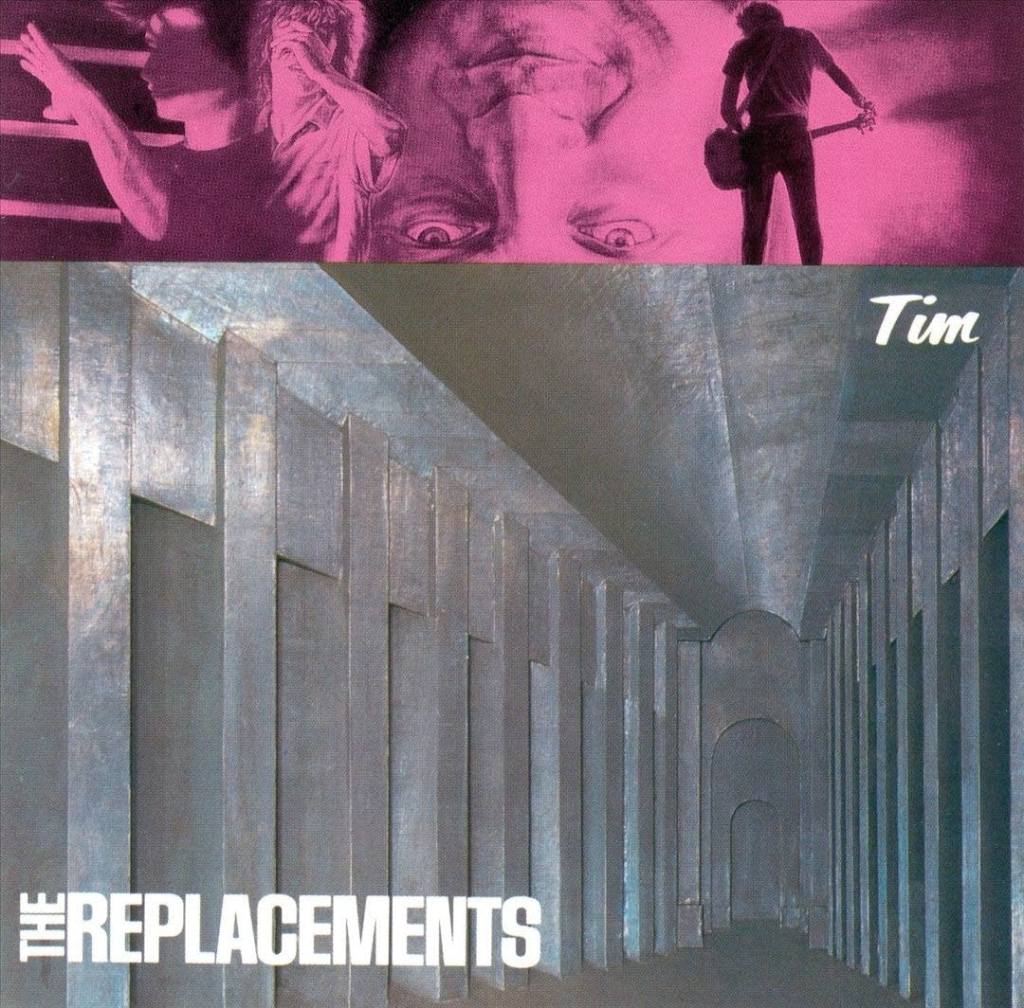
Tim

Source: The Current


On Tuesday, Democratic presidential nominee Kamala Harris announced that her pick for Vice President is Tim Walz, the governor of Minnesota. In recent years, as trans and queer people have come under attack from over a thousand proposed bills, Walz is expected to serve as a source of optimism for LGBTQ+ people. The governor’s long track record on LGBTQ+ rights positions him as a strong oppositional force against what has become a national attack on LGBTQ+ people, particularly transgender individuals.

“I am proud to announce that I’ve asked Tim Walz to be my running mate. As a governor, a coach, a teacher, and a veteran, he’s delivered for working families like his. It’s great to have him on the team. Now let’s get to work. Join us,” read Harris’ statement on Twitter.

Walz has taken decisive action against attacks on transgender people in surrounding states, making Minnesota a refuge for those seeking care. In 2023, he signed an executive order protecting transgender people from out-of-state prosecution if they seek care within Minnesota’s borders. The executive order also issued a bulletin to health insurance companies, mandating coverage and initiating investigations into health insurance denials in the state.

In 2024, Walz signed a bill banning the gay and transgender panic defense. This defense is often used to help individuals avoid murder charges or receive lighter sentences by asserting that they were “deceived” by a romantic partner who was gay or transgender. According to one study, the transgender panic defense has been used at least 351 times.

Walz’s pro-LGBTQ+ record goes back much further than his time as governor. In 1999, he sponsored the first gay-straight alliance at his high school while working as a teacher. In Congress, he co-sponsored the repeal of the Defense of Marriage Act and voted to repeal Don’t Ask, Don’t Tell.

Having a Vice President with a track record of protecting trans and queer people will be important for LGBTQ+ members of the Democratic Party. Currently, 24 states have passed bans on transgender care for youth and some adults. Nationally, Republicans are attempting to negotiate over 50 anti-LGBTQ+ provisions into the national budget, including bans on federal funding for any entity offering gender-affirming care for trans youth, as well as trans military bans for dependent care, threatening to shut down the government over such provisions. Walz’s history of fighting against anti-trans and anti-LGBTQ+ provisions could aid the White House in opposing such policies should Harris be elected President.

As for LGBTQ+ allies and organizations, they appear happy with the pick. Kelly Robinson of HRC stated, “Her pick of Governor Walz sends a message that a Harris-Walz Administration will be committed to advancing equality and justice for all. That is the choice we are faced with in America. A Trump-Vance Administration that would demonize LGBTQ+ people, terrorize our families, send our rights and freedoms back to The Land Before Time and install Project 2025. Or a Harris-Walz Administration that will fight for our freedoms, defend our families, and make America a place where people don’t just get by — but can get ahead.”

Source: Erin Reed, “Tim Walz Took Historic Action To Protect Trans People, Now He’s The Dem VP Choice,” Erin in the Morning, 6 August 2024


The Replacements, “Bastards of Young” (1985)

Ah

God, what a mess, on the ladder of success
Where you take one step and miss the whole first rung
Dreams unfulfilled, graduate unskilled
It beats pickin’ cotton and waitin’ to be forgotten

Wait on the sons of no one, bastards of young
The daughters and the sons

Clean your baby womb, trash that baby boom
Elvis in the ground, no way he’ll be here tonight
Income tax deduction, one hell of a function
It beats pickin’ cotton or waitin’ to be forgotten

Wait on the sons of no one, bastards of young
Now the daughters and the sons

Unwillingness to claim us, ya got no war to name us

The ones love us best are the ones we’ll lay to rest
And visit their graves on holidays at best
The ones love us least are the ones we’ll die to please
If it’s any consolation, I don’t begin to understand them

Wait on the sons of no one, bastards of young
Daughters and the sons

Young, of young, young, young, young

Take it, it’s yours, take it, it’s yours
Take it, it’s yours

Source: LyricFind


Today Vice President Kamala Harris named her choice for her vice presidential running mate: Governor Tim Walz of Minnesota. Walz grew up in rural Nebraska. He enlisted in the Army National Guard when he was 17 and served for 24 years, retiring in 2005 as a command sergeant major, making him the highest-ranking enlisted soldier ever to serve in Congress, according to the House Committee on Veterans’ Affairs.  

He went to college with the educational benefits afforded him by the Army, and graduated from Chadron (Nebraska) State College. From 1989 to 1990, he taught at a high school in China, then became a social studies teacher in Alliance, Nebraska, where he met fellow teacher Gwen Whipple, who became his wife. They moved to Minnesota, where they both continued teaching and had two children, Hope and Gus, through IVF. 

Walz became the faculty advisor for the school’s gay-straight alliance organization at the same time that he coached the high-school football team from a 0–27 record to a state championship. The advisor “really needed to be the football coach, who was the soldier and was straight and was married,” Walz said in 2018. 

Walz ran for Congress in 2005 after some of his students were asked to leave a rally for George W. Bush because one of them had a sticker for Democratic presidential nominee John Kerry. Walz won and served in Congress for twelve years, sitting on the House Agriculture Committee, the Transportation and Infrastructure Committee, and the Committee on Veterans’ Affairs.

Voters elected Walz to the Minnesota state house in 2018, and in his second term they gave him a slim majority in the state legislature. With that support, Walz signed into law protections for abortion rights, supported gender-affirming care, and legalized the recreational use of marijuana. He signed into law gun safety legislation and protections for voting rights, and pushed for action to combat climate change and to promote renewable energy. 

Strong tax revenues and spending cuts gave the state a $17.6 billion surplus, and the Democrats under Walz used the money not to cut taxes, as Republicans wanted, but to invest in education, fund free breakfast and lunch for schoolchildren, make tuition free at the state’s public colleges for students whose families earned less than $80,000 a year, and invest in paid family and medical leave and health insurance coverage regardless of immigration status. 

While MAGA Republicans are already trying to define Walz as “far left,” his votes in Congress put him pretty squarely in the middle.  His work with Lieutenant Governor Peggy Flanagan to expand technology production and infrastructure funding in the state was rewarded in 2023, when Minnesota knocked Texas out of the top five states for business. The CNBC rating looked at 86 indicators in 10 categories, including the workforce, infrastructure, health, and business friendliness. 

Walz checks a number of boxes for the 2024 election, most notably that he hails from near the battleground states of Wisconsin, Michigan, and Pennsylvania and comes across as a normal, nice guy. He favors unions, workers’ rights, and a $15 minimum wage. He is also the person who coined the phrase that took away the dangerous overtones of today’s MAGA Republicans by dubbing them “weird.” As a student of his said: “In politics he’s good at calling out B.S. without getting nasty or too down in the dirt…. It’s the kind of common sense he showed as a coach: practical and kinda goofy.”

Walz is also a symbol of an important resetting of the Democratic Party. He has been unapologetic about his popular programs. On Sunday, July 28, when CNN’s Jake Tapper listed some of Walz’s policies and asked if they made Walz vulnerable to Trump calling him a “big government liberal.” Walz joked that he was, indeed, a “monster.” 

“Kids are eating and having full bellies so they can go learn, and women are making their own health care decisions, and we’re a top five business state, and we also rank in the top three of happiness…. The fact of the matter is,” where Democratic policies are implemented, “quality of life is higher, the economies are better…educational attainment is better. So yeah, my kids are going to eat here, and you’re going to have a chance to go to college, and you’re going to have an opportunity to live where we’re working on reducing carbon emissions. Oh, and by the way, you’re going to have personal incomes that are higher, and you’re going to have health insurance. So if that’s where they want to label me, I’m more than happy to take the label.” 

Right-wing reactionary politicians have claimed to represent ordinary Americans since the time of the passage of the Voting Rights Act—on August 6, 1965, exactly 59 years ago today—by insisting that a government that works for communities is a “socialist” plan to elevate undeserving women and racial, ethnic, and gender minorities at the expense of hardworking white men. 

Historically, though, rural America has quite often been the heart of the country’s progressive politics, and the Midwest has had a central place in that progressivism. Walz reintegrates that history with today’s Democratic Party. 

That reintegration has left the Republicans flatfooted. Trump and J.D. Vance expected to continue their posturing as champions of the common man, but on that front the credentials of a New York real estate developer who inherited millions of dollars and of a Yale-educated venture capitalist pale next to a Nebraska-born schoolteacher. Bryan Metzger, politics reporter at Business Insider, pointed out that J.D. Vance tried to hit Walz as a “San Francisco-style liberal,” but while Vance lived in San Francisco as a venture capitalist between 2013 and 2017, Walz went to San Francisco for the first time just last month. 

Head writer and producer of A Closer Look at Late Night with Seth Meyers Sal Gentile summed up Walz’s progressive politics and community vibe when he wrote on social media: “Tim Walz will expand free school lunches, raise the minimum wage, make it easier to unionize, fix your [carburetor], replace the old wiring in your basement, spray that wasp’s nest under the deck, install a new spring for your garage door and put a new chain on your lawnmower.” 

Vice President Harris had a very deep bench from which to choose a running mate, but her choice of Walz seems to have been widely popular. Representatives [sic] Alexandria Ocasio-Cortez of New York and Joe Manchin of West Virginia, who are usually on opposite sides of the party, both praised the choice, prompting Ocasio-Cortez to post: “Dems in disconcerting levels of array.” 

Harris and Walz held their first rally together tonight in Philadelphia, where Pennsylvania governor Josh Shapiro, who had been a top contender for the vice presidential slot, fired up the crowd. “Each of us has a responsibility to get off the sidelines, to get in the game, and to do our part,” he said. “Are you ready to do your part? Are you ready to form a more perfect union? Are you ready to build an America where no matter what you look like, where you come from, who you love, or who you pray to, that this will be a place for you? And are you ready to look the next president of the United States in the eye and say, ‘Hello, Madam President?’ I am too, so let’s get to work!”

Pennsylvania is a crucial state, and Shapiro issued a statement offering his “enthusiastic support” to the ticket. He pledged to work to unite Pennsylvanians behind my friends Kamala Harris and Tim Walz and defeat Donald Trump.”

Notes:

https://www.businessinsider.com/kamala-harris-vice-president-tim-walz-career-facts-2024-8#tim-walz-was-born-in-rural-west-point-nebraska-in-1964-1

https://www.thenation.com/article/politics/tim-walz-harris-vp

https://www.washingtonpost.com/style/power/2024/08/02/tim-walz-kamala-harris/

https://apnews.com/article/business-minnesota-legislature-state-budgets-government-and-politics-99f78b46d4bd90ccb9f1ce7525f759f9

https://apnews.com/article/election-2024-harris-vice-president-walz-minnesota-006bca6e18be7ce39ef4bfd97547c3b5

https://www.cbsnews.com/minnesota/news/minnesota-ranked-as-a-top-state-for-businesses/

https://www.democracydocket.com/news-alerts/tim-walz-is-kamala-harris-vp-pick-heres-his-record-on-voting-rights

https://abcnews.go.com/Technology/climate-advocacy-groups-call-harris-walz-pairing-winning/story?id=112607332

https://www.inquirer.com/politics/election/how-gov-josh-shapiro-lost-vp-kamala-harris-tim-walz-20240806.html#loaded

X:

Fritschner/status/1820874987315613913

atrupar/status/1820944764843274286

atrupar/status/1820940281572724920

Acyn/status/1820943608595493026

JoshShapiroPA/status/1820827281658446166

metzgov/status/1820872498235253035

AOC/status/1820846151920230812

salgentile/status/1820815724178285013

Source: Heather Cox Richardson, “August 6, 2024,” Letters from an American, 7 August 2024


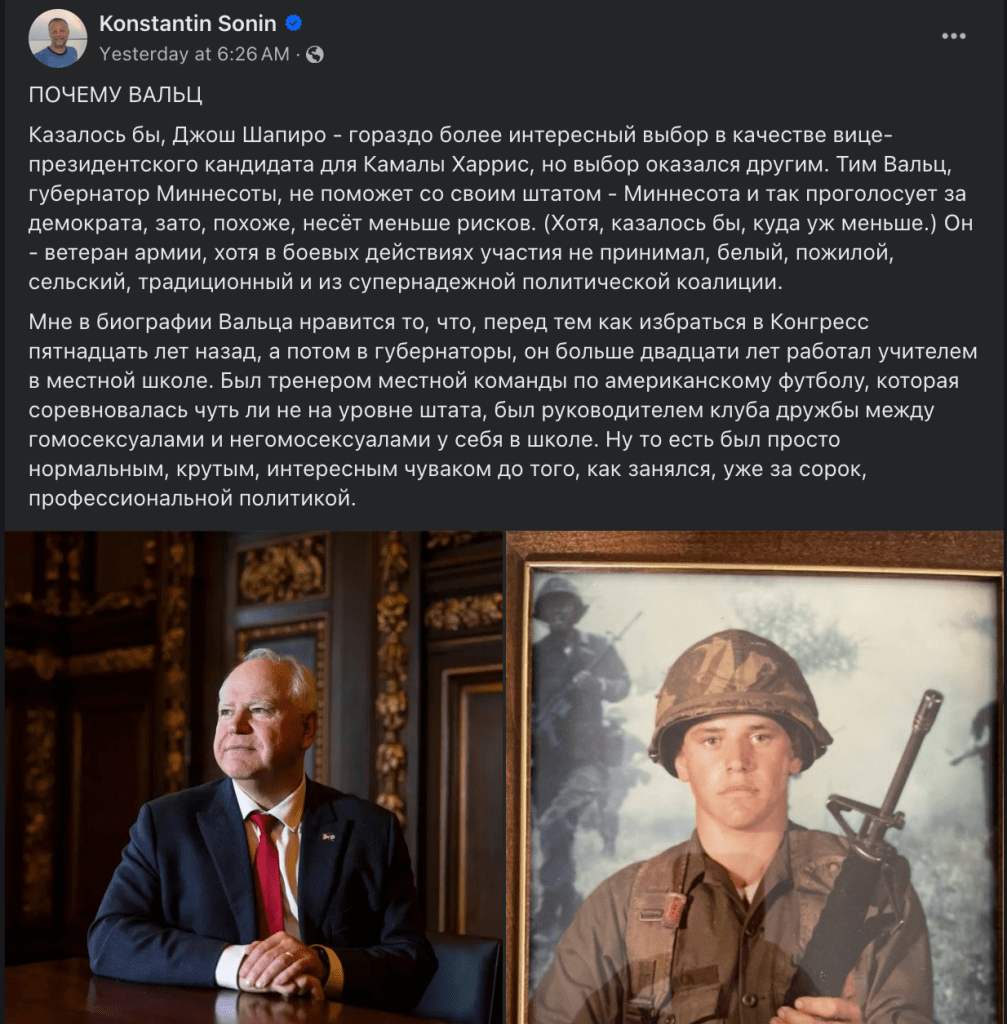
WHY WALTZ
Josh Shapiro would seemingly have been a much more interesting choice as a vice presidential candidate for Kamala Harris, but her choice was different. Tim Walz, governor of Minnesota, won’t help with his state—Minnesota will vote Democrat anyway—but seems to pose less risk. (Although, it would seem, how much less risk could he pose?) He’s an army veteran, although he wasn’t in combat. He’s white, elderly, rural, and traditional, and he’s from a super reliable political coalition.

What I like about Waltz’s biography is that, before being elected to Congress fifteen years ago and then to the governorship, he was a teacher at a local school for over twenty years. He coached a local American football team that competed almost at the state level, and he was the head of the homosexual/non-homosexual friendship club at his school. I mean, he was just a regular, cool, interesting dude before he went into professional politics in his forties.

Source: Konstantin Sonin (Facebook), 6 August 2024