We don’t ever think. We just have a small collection of tapes we stick in slots in the back of our heads when the need to say something “smart” arises.
* * * * *
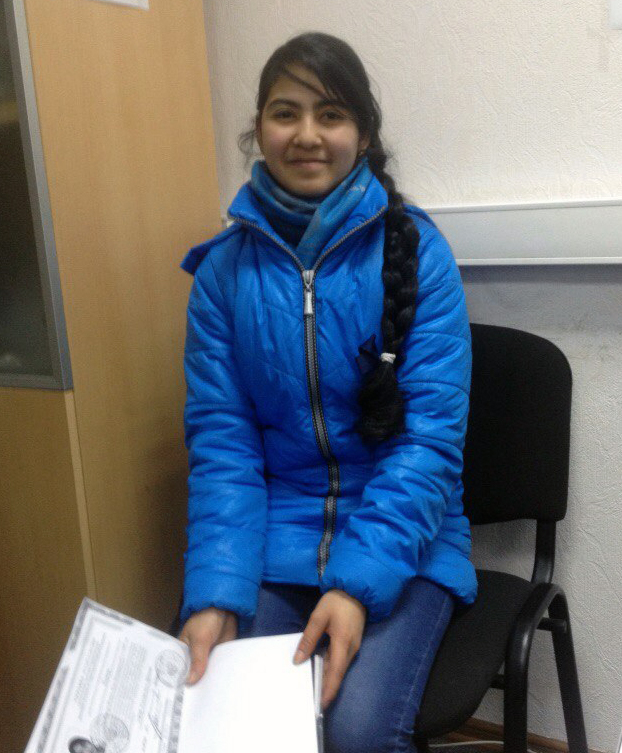
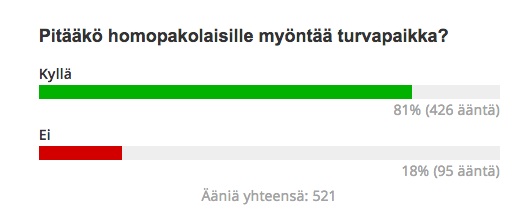
Russian speakers living in Finland are not a homogeneous group, but one thing unites them strongly: a large number of them regard asylum seekers with a grain of salt.
“I relate to the phenomenon negatively. I think the people coming here do not have the necessary information on how people live here. They are trying to come here with their own traditions and customs, and at the moment this hinders their adaptation,” say Gleb Ulanov, who lives in Helsinki.
[. . .]
Despite the fact that the Russians themselves are immigrants, they do not want to compare themselves to the people now arriving from the Middle East. Russian speakers are of the view that they do not have similar adaptation problems.
“The biggest difference is the mentality. Most Russian speakers adapt,find work, and respect Finnish customs and celebrations. In my experience, only a small minority of people from the east does this. They prefer to form their own communities,” says Grigory Berkinfand, who lives in Helsinki.
[. . .]
Many Russian speakers fear that Finns have a naive attitude toward the asylum seekers, and do not properly distinguish those who are genuinely in need of protection.
Just like Finns, Russians are primarily concerned about safety. Many say that traditionally peaceful Finland is changing at a rapid pace.
Gleb Ulanov, who in Soviet times lived for about a year in the Caucasus, is of the opinion that merely integrating the refugees is not enough. In addition to telling the asylum seekers about Finnish customs and laws, Finns should also tell the refugees about culture and how they should behave around them.
[. . .]
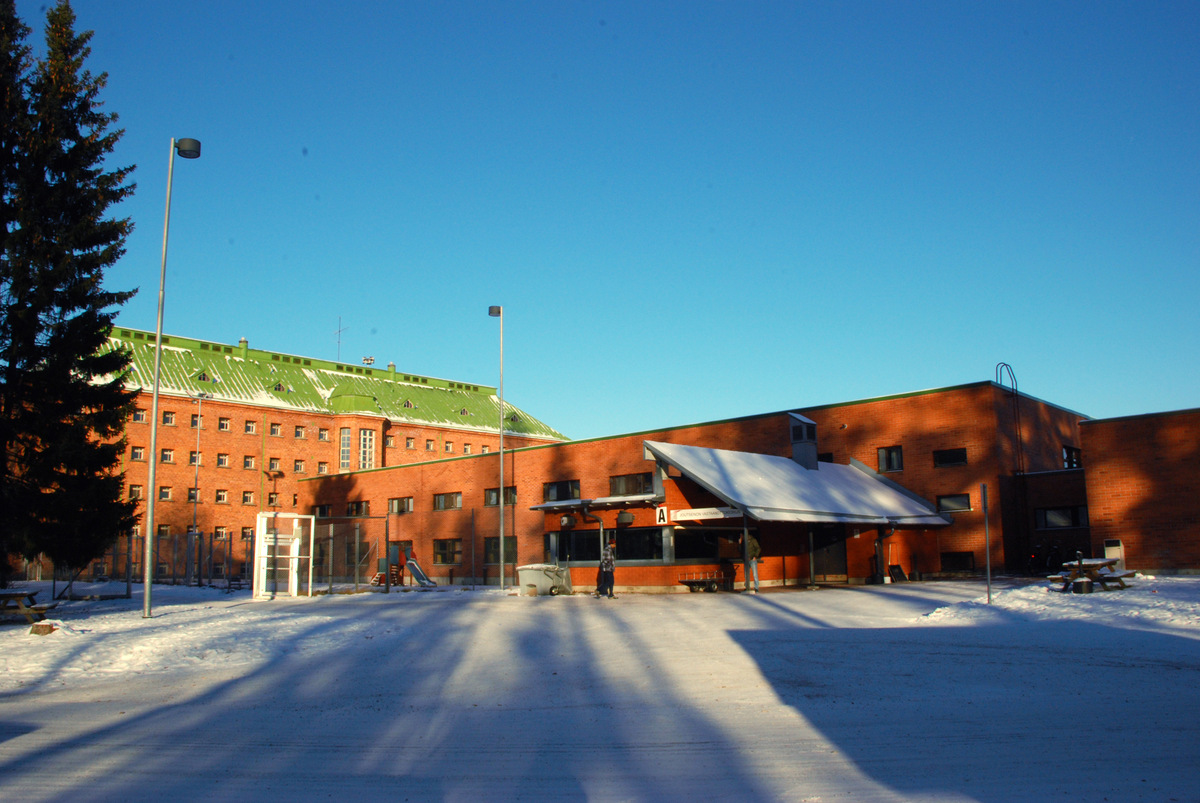
Even a man from Russian Karelia who is living in a reception center and applying for political asylum questions the motives for coming to Finland of many of the people living with him. The man wished to remain anonymous.
“I can see what is happening here. They do not appreciate either the local culture or the help they receive. The majority are of the opinion that the Finns are obliged to help them. Many of them say that one can live here without working, and everything is given free of charge. They are quarrelsome if they notice they have not been given something and they complain about conditions. For example, I am really satisfied with everything here. Ihave not received such a warm reception in my own country,” he said.
Emergencies Ministry Flights Brought Yemeni Refugees to Russian Dead End
Elena Srapyan (Civic Assistance Committee) refugee.ru
January 29, 2016
Refugees from Yemen, who came to Russia in April 2014 aboard Emergencies Ministry (MChS) flights, have found themselves in a desperate situation. As they have attempted to gain asylum in Russia, they have run not only into bureaucratic hurdles but also deliberate resistance from migration service officers. Thus, instead of being received during office hours on January 11 at the Moscow office of the Russian Federal Migration Service (FMS) on Kirpichnaya Street, the Waqidi family was taken to the immigration control department and threatened with expulsion for overstaying.
The family became refugees in April of last year, when armed conflict erupted in Yemen, and many countries began evacuating the civilian population from the country. Russia was also involved in this operation. MChS planes delivered several hundred people to Moscow. Among them were nationals of other countries as well as Yemeni nationals who planned to seek asylum.
It was then that an MChS plane took on board Amina Hassan Hadi Mohamed Waqidi, her husband Mohamed Abdo Naji, their nine-year-son Abdul Karim Mohamed Abdo, and seventeen-year-old daughter Yasmin Mohamed Abdo. They arrived in Moscow on April 23, 2014.
Nobody gave the Yemenis any advice on how to obtain asylum status. Instead, the Waqidis found out everything on their own and applied for asylum at the appropriate time. On August 3, however, the FMS refused to grant refugee status in Russia to any members of the Waqidi family.
In November, Amina and Yasmin first applied for temporary refugee status. But instead of accepting their applications, FMS officers transported the women to the Izmailovo District Court. The court, in turn, returned the matter to the local FMS office, underscoring the fact the family had arrived on an MChS plane from Yemen and had already, at the time of the hearing, submitted an application for temporary asylum to the head of the FMS Moscow office.
Amina and Yasmin finally submitted their documents on November 10. Yasmin’s passport was taken and she was issued a certificate stating her application for temporary asylum was under review. Her mother, who was not issued the same certificate, was asked to submit translations of several documents. Amina also had no luck during the interview, either. Here it would be appropriate to mention that Amina is originally from Vietnam. While Yasmin easily got through the interview at the FMS office with assistance from an Arabic translator, her mother, who speaks only her native Vietnamese fluently, was not provided with a Vietnamese translator. The interview was nevertheless conducted in December, but in Arabic, which Amina speaks quite poorly.
Yasmin Wadiqi. Photo courtesy of Civic Assistance Committee
By the new year, the translated documents, certified by the UNHCR, were ready. On the first working day of January, Yasmin and Amina went once again to the FMS Moscow office on Kirpichnaya to secure the certificate. Without certificates that their documents were under review, the Yemenis would be vulnerable to police, who periodically detain migrants for violating their terms of stay, whereas FMS-issued certificates would attest to the legality of the Waqidi family’s presence in Russia.
But strange things began to happen on Kirpichnaya Street. Instead of issuing the certificate to Amina, FMS officers summoned an immigration control officer. He took the certificate and her mother’s passport from Yasmin, went into Office No. 104, where the refugees were planning to submit documents, and reemerged with two passports. He took them upstairs to Yuri Yevdokimov, head of the department for refugees and displaced persons. The Yemenis were then taken to the FMS immigration control department at Sadovnicheskaya Street, 63.
Laila Rogozina, head of the Civic Assistance Committee’s community liaison office, contacted the immigration control department on Sadovnicheskaya and suggested the officers there familiarize themselves with the text of the United Nations 1951 Convention Relating to the Status of Refugees.
“I picked up the telephone and told the man on the other end of the line to read Article 31.* He read it and said, ‘Well, everything is clear. I will give them back their passports and let them go wherever they like,'” recounted Svetlana Gannushkina, chair of the Civic Assistance Committee.
Indeed, there had been no grounds for sending Yasmin and Amina Waqidi to the immigration control department. Their applications were in the midst of processing, and they had applied for asylum in due time, so it had been unlawful to confiscate Yasmin’s certificate and take her and her mother’s passports. The passports were returned to the women and they were released.
“What was once a trend has become a regular practice,” concluded Svetlana Gannushkina. “When people come to the FMS Moscow office to file asylum applications, Mr. Yevdokimov immediately calls immigration control to come and get them. They are written up for having violated Russian federal migration rules, and the asylum seekers are taken to court. Whereas earlier this happened only to those people who had been in Russian illegally for long periods and, according to the migration service, intended to be legalized by submitting an asylum application, now it applies to everyone, both new arrivals and even those whose applications are already in process. This practice has led us to accompany every refugee [to the FMS]. Otherwise, we run the risk of finding our applicants later at the Special Detention Facility for Foreign Nationals (SUVSIG), without their even having had the chance to apply for asylum.”
Gannushkina discussed the Waqidi family’s case with both Svetlana Pleshakova, deputy head of the Moscow migration service, and Valentina Kazakova, head of the citizenship department at the Russian FMS. Both officials agreed that the refugees had been treated improperly. Amina and Yasmin then went to see Marina Kapustina, deputy head of the department for refugees and displaced persons. She issued application processing certificates to both women.
“Maybe Mr. Yevdokimov should also read the 1951 Convention and the Russian federal law ‘On Refugees’?” Gannushkina commented. “It is important to note here that this is a matter of people who not only arrived from a dangerous region but were brought here by Russian MChS planes. You get the impression that our foreign and domestic policy are totally inconsistent. People arrive from a war zone, where their lives were definitely in danger, and it is obvious they are going to apply for asylum. However, the Moscow migration service apparently has no access to geographical information or reports from other agencies about how the people came to Russia, and tries to avoid doing any work to this end.”
1. The Contracting States shall not impose penalties, on account of their illegal entry or presence, on refugees who, coming directly from a territory where their life or freedom was threatened in the sense of article 1, enter or are present in their territory without authorization, provided they present themselves without delay to the authorities and show good cause for their illegal entry or presence.
2. The Contracting States shall not apply to the movements of such refugees restrictions other than those which are necessary and such restrictions shall only be applied until their status in the country is regularized or they obtain admission into another country. The Contracting States shall allow such refugees a reasonable period and all the necessary facilities to obtain admission into another country.
AntiNote: Hafsa Sabr is a vital presence at the enormous, improvised, and barely survivable camp in Dunkirk, northern France. She has been instrumental both in coordinating with independent aid and solidarity organizations operating in the camp as well as in insurgent media work, filming conditions in camp and reporting day-to-day on activities and incidents there.
The following could be a model script for the dystopian road-trip movie of the future. Its hopeful, tragic anger not only fits the Antidote vibe, but it also reveals much about revered institutions and the real effects their often arbitrary decisions have on people. We have edited it lightly for clarity, and thank Hafsa for her kind permission to print it.
Geneva or Bust
23 January 2016
by Hafsa Sabr
We need to talk. Everyone asked us what we did in Switzerland. This is our answer.
One week ago we heard that the UN would make an urgent conference in Switzerland: A journalist from New York came with her team to film the miserable conditions in the camp. She also made interviews. Her video was supposed to be shown during the UN meeting!
At this moment we all thought that the UN could change the world, and would make huge decisions about the camps of Dunkirk and Calais.
On Tuesday morning we (Sarhang, Besh and I) prepared ourselves to go to Paris. We were in a hurry and positively excited, thinking about what we were going to say.
We had an invitation from the UN, and that’s right: Sarhang and Besh are refugees and they don’t have any passport or ID card, but according to international laws on humans rights after 1948, everyone is free to travel anywhere.
Anyway, in Paris we met the journalist, Dina. She organized the way to participate in the conference (the open forum “Immigration to Integration”) and talk, mainly about the jungle in Dunkirk and the more than three thousand refugees there—men, women and children, and babies of course.
In the train station the French police surrounded Sarhang and Besh. They said they could be potential terrorists! I told the police guy that the refugees ran away from ISIS; how can they be terrorists? After ten minutes of negotiations they let us go to take the train.
While we were in the train, the journalist told us that the UN warned the police! Because Sarhang and Besh don’t have any papers! And if they enter Swiss territory, some people who invited us will be fired from the their jobs. This is the UN.
We wanted to go back home! The UN canceled our invitation!
When we crossed the border from France into Switzerland, at the first train station the border police stopped us. They were looking for us! They put us in jail for almost six hours! We were interrogated! And one guy from the police told me, “I’m sorry, what I’m going to say might hurt you, but we received the order to focus on Arab people. We don’t distinguish between Kurdish or Amazigh.”
After a few hours they asked for a lot of money from us. They wanted 170 euros. Sarhang and Besh could not afford it, so they let them off it. We even showed them the paper of invitation, but they didn’t care…After that, they told us we were all free. On our way to the last train to go back to France, a woman and a man from the police team stopped me once again and told me to stay here, and to pay 480 euros in taxes!
Sarhang and Besh told the lady they would not go back to France without me. I warned the two police that I would not give one euro to them because this money in my wallet was not mine! This money was for the refugees! And in my religion it’s called amana, which means a trust! I was upset and crying. The police man was kind. He told us, “I know that, but it’s my boss’s orders…otherwise I’m so sorry for what’s happened to you.” We were disappointed about everything, and we went back to the police office.
I will stop here and go back to history, to the 1880s when the people of southern Europe ran away because of inequality and the dictatorial law of rich people. Many people sacrificed to get to a life with rights and safety. In 1908 the same thing happened in Europe with African people.
And now in 2016, in a period of modernity and technology: in power and politics, no one cares about people who fled because of war, even Kurdish people who are fighting ISIS.
Dina was in contact with UN staff to find a way to get us free of the Swiss border police. But after another five hours they fingerprinted Sarhang and Besh. Then the police started shouting among each other. And then they let us go. We were FREE. El hamdullilah.
We thanked the one kind policeman, he had tears in his eyes.
We returned by bus to Mulhouse, and we slept there; the day after, we took a train to Paris and from Paris to Dunkirk. We were “home.”
We had spent a lot of the money that the refugees raised to help Sarhang and Besh join the conference. But it’s the UN: everyone in the jungle was waiting for great news from Sarhang and Besh. Unfortunately, they didn’t have anything to say.
They had a last hope with the UN.
Just think about it: the UN made a conference about refugees in Dunkirk and Calais, but they didn’t let one refugee come to represent them.
Shame on them.
They called the cops! The UN.
I give up on humanity.
Please share this post as much as possible.
Sarhang, Besh and Hafsa
* * * * *
The Russian Reader has strayed fairly far from its usual beat here, seemingly, but in fact I have been covering as well as I possibly can not only the treatment of refugees, asylum seekers, and immigrants and migrant workers in Russia itself (including Syrian refugees) but also attitudes towards Europe’s refugee crisis in the Russophone world. I thank Ed Sutton for permission to repost Hafsa Sabr’s story on my website. You should think about reposting it wherever you can, too. It does not amount to much, it’s true, but it is one tiny way to show your solidarity with people like Sarhang and Besh.
Ripe for Exploitation
Oleg Pshenichny
August 24, 2015 Grani.ru
This morning, instead of giving lessons, the teachers at a school for Syrian refugee children loaded the school’s belongings into a car. Classes had suddenly been cancelled, and the school closed. The proprietor of the room in a private house where classes had been held showed the children and teachers the door.
This happened after local Russian Federal Migration Service (FMS) officers had shown up on Saturday at the house on Rogozhskaya Street where the school was located to carry out a spot check, which had mushroomed into a full-blown search. The officers inspected not only the rooms and the grounds of the house but also the personal belongings and furniture of both the house’s owner and the school.
The occasion for the spot check had been information about a Syrian terrorist who had, allegedly, been registered under false pretenses at the house. As the school’s organizer, Syrian journalist and political refugee Muiz Abu Aljail, told Grani.ru, the reason for the search was contrived. The local authorities had simply wanted to get rid of the school.
Classes had begun in May of this year under the auspices of the Civic Assistance Committee’s Adaptation and Education Center for Refugee Children, with assistance from the United Nations High Commissioner for Refugees. Around thirty Syrian children who had settled in Noginsk in recent years were pupils at the school.
Olga Nikolayenko, director of the Adaptation and Education Center, told Grani.ru that Muiz Abu Aljail had actively helped his compatriots in the Moscow Region by providing legal and other assistance. When he found out that many Syrian children in Noginsk had nothing to do and were simply roaming the streets, Muiz organized a informal study group, initially in Arabic, after which the Civic Assistance Committee got involved and recruited professional teachers.
Muiz Abu Aljail and pupils from the Noginsk School for Refugee Children. Photo from Muiz Abu Aljail’s Facebook page
“We organized a Russian language summer intensive course to prepare the children to enroll in regular schools in Noginsk in September,” said Nikolayenko, “As you know, there is now a lawsuit underway against the Ministry of Education in order to force Russian schools to enroll migrant and refugee children regardless of whether they have residence permits. [The Supreme Court will hear the case on August 27 — Grani.ru.] We are counting on winning and wanted to get the children’s Russian up to speed. But now the owner of the house has been thoroughly intimidated. They summoned her for questioning and told her they were looking for an agent of Al Qaeda. Classes have been disrupted.”
According to Nikolayenko, the Noginsk authorities had immediately reacted with hostility to the idea of setting up the school. When people from the Adaptation and Education Center had come to Noginsk in May to secure the assistance of the local education department, a meeting was held at which Alla Artyomova, head of the local FMS office, had categorically stated that no classrooms would be provided for the school, because on paper there were no Syrian children in Noginsk and no one cared about what happened to them.
At the same time, in neighboring Losino-Petrovsky, a similar school for migrant children has received a lot of assistance from the local authorities, who found classroom space and promised to help the children enroll in school. In Noginsk, however, the school was left to its own devices and had to hold classes in a private home.
“The kids really liked it,” says Elena Drozdova, a teacher at the school, “and we managed to get a lot done. After all, teaching a person to read and write Russian from scratch in three months is a big deal. But now we’ve loaded our things in the car, and we don’t know what will happen to the school, what will happen to the children, and after this incident, whether the parents will let their children go to school at all.”
Pupils from the Noginsk School for Refugee Children. Photo from Muiz Abu Aljail’s Facebook page. The placard reads, “We are not animals. Please give us the right to a childhood.”
Muiz Abu Aljail believes the problems are much more serious than red tape. Officials are not interested in helping the refugees to adapt since an unsettled community is a good source of bribes.
“There is a police and FMS mafia who have created a whole system of slave labor and extortion. I once published an investigation entitled ‘Slavery in Russia: A Special Dossier on Syrian Refugees.’ At every stage of the decision-making, the corrupt system gets tens of thousands of rubles from each person. For example, getting registrations costs twenty thousand rubles [approx. 250 euros at current exchange rates], another twenty thousand rubles for your wife, and another twenty thousand rubles for your children. It used to cost from sixty to seventy thousand rubles to get registration, but after the FMS ordered that asylum be granted automatically, the rate went down to twenty thousand rubles. But the price for being granted asylum has risen. In Moscow, a special business has been organized to this end. Getting into the queue costs fifteen thousand rubles. Getting a certificate stating your case is under review costs from three to fifteen thousand rubles. It costs forty thousand rubles to get temporary asylum. Without it, you will either not get a job or be forced to work illegally, which has led to the emergence of entire slave-labor enterprises.”