The Intensifying Crackdown in Russia

Varvara Volkova

“My friends died at the hands of Russian soldiers. Why can’t I talk about it?” 

This question will cost Varvara Volkova 7 years in a Russian penal colony. Here’s her story.

Varvara was a flight attendant, not an impassioned political activist. In a neighbourhood chat, she stated the obvious: Russian forces are killing civilians in Ukraine. The prosecution framed it as “fake news” motivated by hatred toward the armed forces, and the court accepted it.

The mechanism used to go after her relies on a Soviet-style culture of snitching: a Russian tank driver complained about her comments, then a professional informer, who intentionally hunts dissidents, amplified the case and demanded she be jailed.

In fact, there’s a whole network of these informers — they call themselves “SMERSH.” For those who don’t know Russian history, it is a reference to Stalin’s WWII counter-intelligence service. It means “Death to Spies” — a direct revival of the terror methods of the 1930s. They published screenshots of her messages everywhere trying to ruin her life; claimed she called the soldier a “fascist”; said she offered to make tea for Ukrainian soldiers if they reached the Moscow region. For words spoken in anger, the system decided to smash her life to pieces.

There is a grim irony in this tragedy: the regime destroyed Varvara to protect the “honor” of the military and her accuser. But the tank driver who reported her is already dead: he was killed in the war earlier this March. 

Observers abroad often underestimate the price of resistance in today’s Russia. It is not just a fine anymore, but years and years of one’s life. Varvara Volkova shows us the true bill — and it is devastating. 

I track the consequences of speech in modern-day Russia, make sure to follow for more updates.

Source: Khodorkovsky Communications Center (Facebook), 25 November 2025


Preface by the Editorial Board: Below we publish the translation of an article of our Russian comrades about state repression in their country. The article reports, among others, about the situation of comrade Felix Eliseev. He has been in prison for 2.5 years as part of a 14-year prison term. Felix was sentenced for “treason” as he was accused of making propaganda against Putin’s imperialist war against Ukraine and sending money to Ukraine to buy weapons. While the prison authorities do everything to break him, Felix does not lose his spirit and endures his imprisonment stoically. (See https://www.thecommunists.net/rcit/felix-eliseev-a-revolutionary-communist-in-russian-prison/)

We call readers to support Felix by spreading this information about a communist and anti-fascist serving an unjust sentence!

You can also support Felix financially at www.paypal.me/irinablackbook, with the note “for Felix”.

* * * * *

According to the human rights organization Memorial, there are currently over 1,000 political prisoners in Russia, while other groups estimate the number could be as high as 2,500. This number is three times higher than in 2020, more than twice as high as in 2022, and continues to grow. In 2025, there was a sharp increase in criminal cases under articles on “justification of terrorism,” “sponsoring terrorist activity,” and “treason.” This is not due to increased terrorism, but to the fact that the security forces, having perfected their repression mechanisms, have begun to intensify their crackdown on “sponsorship” cases, such as those of the FBK (Anti-Corruption Foundation, recognized as an extremist organization in Russia) or cases related to money transfers to the Ukrainian army, which occurred back in 2022. The term “terrorism” itself has become so vague that even the average person doesn’t always understand what it actually means.

Among political prisoners are many individuals with progressive leftist views, serving time for anti-war activities or “inaccurate” public statements online. The “Foundation for Support of Left-Wing Political Prisoners” provides support to at least some of these individuals. Among them are: defendants in the “Tyumen Case”; defendants in the “Chita Case”; Anton Orlov, a trade union and leftist activist, coordinator of the independent medical workers’ union “Action” in Bashkortostan; Daria Kozyreva, an activist from St. Petersburg known for her anti-war protests and criticism of the Russian army; Gagik Grigoryan, a young activist imprisoned in 2023 at the age of 17; Azat Miftakhov is a Russian mathematician and anarchist, sentenced in 2021 to six years in prison for allegedly setting fire to the United Russia office in 2018. After serving this sentence, he was arrested again in 2023 on charges of “justifying terrorism” in a private conversation with a prison cellmate and sentenced to four years in prison; defendants in the “Kansk teenagers case”; defendants in the “Network case”; Boris Kagarlitsky is a left-wing publicist known in many parts of the world; Ruslan Ushakov is the author of articles published on opposition Telegram channels, sentenced to eight years in prison for posts in a public chat.

The case of the communist Felix Eliseev

Another political prisoner is Felix Eliseev, a Russian communist, blogger, and administrator of the Telegram channels “She Fell Apart” and “Kolkhoznoye Madness.” He was arrested in December 2022 and charged with justifying terrorism. According to investigators, Eliseev posted two anti-war posts on his Telegram channel, one of which endorsed a Ukrainian Armed Forces helicopter strike on an oil depot in Belgorod. The charges were later upgraded, and Eliseev was charged with “treason”. The court alleges that he transferred funds through a cryptocurrency account to a “curator,” who used the funds to purchase equipment and weapons for Ukrainian Armed Forces soldiers.

Felix, like many other political prisoners convicted of “terrorist and extremist” offenses, is serving his sentence under intense pressure from the prison administration. He is regularly placed in solitary confinement cells, where they do everything they can to break him mentally and physically.

However, political repression in Russia involves more than just horrific criminal cases of “terrorism,” “treason,” and other “betrayals of the nation.” It also includes the persecution of undesirable and dissenting youth who dare publicly speak out against the war and the ruling elite, thereby gathering many other concerned young people around them.

The “Stop Time” case

One example of such government abuse is the “Stop Time” case. The “Stop Time” case concerns the persecution by Russian authorities of members of the St. Petersburg street music group “Stop Time” – Diana Loginova (pseudonym Naoko), Alexander Orlov, and Vladislav Leontyev – for their participation in impromptu concerts, including one near the Ploshchad Vosstaniya metro station, where they performed anti-war songs by artists designated by the authorities as “foreign agents.” On October 16, 2025, Loginova was arrested and sentenced to 13 days of administrative arrest for performing a song by an artist unpopular with the authorities. The other members of the band were also arrested and sentenced to 12-13 days. These events resonated in the media (both pro-government and opposition) and society, becoming a topic of discussion in the context of artistic freedom and the tightening of censorship in modern Russia.

On October 29-30, the musicians received another 12-13 days of arrest, and on November 11, two of them were arrested for another 13 days. On November 23, the musicians were released from arrest. The lead singer and one of the band members left Russia that same day.

In many Russian cities, street bands followed “Stop Time’s” example and performed opposition songs by artists-foreign agents to large audiences in public squares. They also faced pressure from the authorities and harassment from Z-Neanderthals.

Also, recently, spiders in a jar have started eating each other. Criminal cases have been brought against several well-known military Z-bloggers for discrediting the army! More than two years after Strelkov’s imprisonment and Prigozhin’s murder, a new steamroller of repression is purging those loyalists who are too undesirable.

All of the above demonstrates that Russian society has no legal means to publicly express its attitude toward the events unfolding around it. For any word “against,” the sword of Damocles of Russian justice hangs over every citizen. Despite this, concerned Russians, especially young people, are finding ways to rally together and show the world that not all is lost in this country.

Meanwhile, cowardly security officials and government officials tremble at the mere thought that the masses will sooner or later awaken from their slumber and rise to deliver justice to the imperialist oppressors in the Kremlin. In Russia, literal punishments are being introduced for thought crimes. Thus, in September of this year, an administrative law punishing “searching for extremist materials” came into force. This law allows the FSB to view any citizen’s internet search history, and if it contains views of materials deemed extremist or terrorist, the user faces a visit from masked officers and a fine. The first cases under this law have already been filed.

Furthermore, the country is introducing a so-called “white list” for the internet—only those websites approved by Roskomnadzor are permitted to be accessed; others are inaccessible, and VPNs cannot be connected. So far, in the spirit of Russian tradition, this system is poorly functioning and flawed, but the day is not far off when Russian society will find itself locked in a “cheburnet.” (*)

Freedom for political prisoners!

For freedom of speech, conscience, and the internet!

Down with political repression!

Radical democratization of the country, not the fascist regime of a dictator!

All power to the working class and the working masses, not to a handful of oligarchic monopolists!

(*) Cheburnet is a mixture of two words: Чебурашка (Cheburashka) and internet. Cheburashka is a character from Soviet cartoon for children. Despite it is kind and helpful, in modern mass consciousness it is associated with Soviet censorship. So cheburnet basicaly means internet under the censorship of Russian government and intelligence agencies.
Source: Communist Tendency (RCIT Section in Russia), “Political Repression in Russia,” Revolutionary Communist International Tendency, 25 November 2025


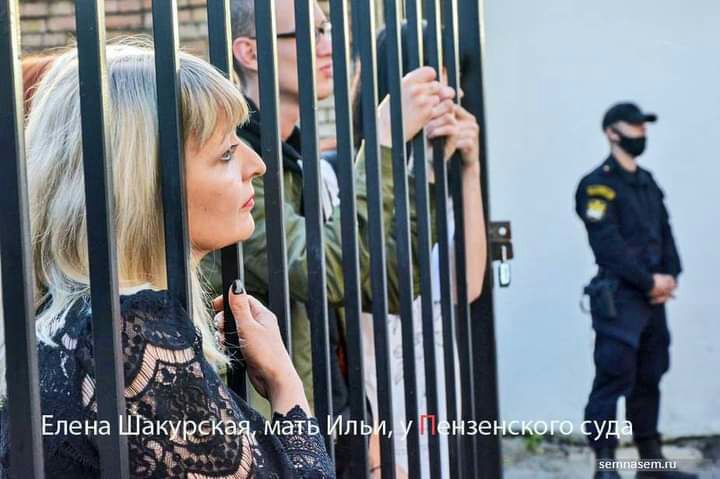
An appeal from Elena, mother of Ilya Shakursky:

My name is Elena Nikolaevna Bogatova, and I am the mother of political prisoner Ilya Alexandrovich Shakursky. I am crying out for help to save my son so that he does not rot away in solitary confinement.

They took my only son away when he was twenty-one years old. He is now twenty-nine. He has been tortured. He has serious health problems that we still cannot solve. He still has eight years to serve, and they could turn him into a disabled person. I cannot help him on my own, so I am asking all caring people to help us.

It is impossible for a mother to know that her child is being destroyed, and that she cannot save him!

Although he committed no crime, he is in prison under the harsh Article 205 [of the Russian Criminal Code; Article 205 proscribes “terrorist acts”], enduring all the hardships of prison life, without ever receiving any encouragement; we cannot even hope for parole. Right now, [the prison authorities] want to turn him into repeat offender so that he cannot have any visits, phone calls, letters, or packages. They want to take everything away from him.

I ask you to write an appeal. I understand that there are many of us now, and everyone is exhausted. But we must stand together for the sake of our loved ones, for the sake of the younger generation, which is currently being destroyed. Hear the cry of a mother who cannot bear the pain for her son and for all those behind bars. If we push with our shoulders, the walls will collapse….

https://t.me/ilyashakursky

Source: Elena Shakurskaya (Facebook), 28 November 2025. Translated by the Russian Reader


OVD-Info Faces a Critical Situation: We Have Lost All Our Ruble Donations

26.11.2025

Russian payment services have refused to continue working with us, without providing any explanation, and have cut off our ability to accept one-time and recurring donations. This has severed our connection to our main source of support—the 12,000 individuals who regularly transfer money to OVD-Info.

The services’ refusal to cooperate with us is one of the many manifestations of state pressure on human rights organizations and independent media. Some of them even had to close due to the loss of donations in rubles.

This is a severe blow to our work. With these donations we were able to pay for the work of defense lawyers and legal experts, travel to the regions, maintain our free hotline, and help those who are politically persecuted in Russia. Furthermore, regular donations allowed us to plan our long-term work and development.

We do not plan to close or reduce the scope of our work, because repression is not diminishing. Any political activity, expressing a view against the invasion of Ukraine, or criticism of Putin instantly becomes grounds for persecution. We simply cannot abandon Russians to face this brutal, repressive system alone. We are defending over 90 defendants in criminal cases, almost every day we send lawyers to police stations, courts, searches, penal colonies, and pre-trial detention centers. We answer dozens of messages and calls daily—and we want to continue doing this.

However, now everything depends on whether we can find another 12,000 people who will regularly support OVD-Info.

You can support us here.

Source: OVD Info


Yulia Lemeshchenko. Photo from the Memorial website

The Second Western Military District court in Moscow last week sentenced Yulia Lemeshchenko to 19 years’ imprisonment for high treason, sabotage, and preparing and training for an act of terrorism.

Yulia, 42, is a Russian citizen, born in Staryi Oskol, in Belgorod region. She lived in Voronezh in southern Russia, until 2014. Then she moved to Kharkiv, Ukraine, with her son and her husband, who had found work there. Later on the couple separated.

Yulia took up powerlifting and in 2021 was named Ukrainian women’s champion.

In 2024 Yulia did military training in Kyiv – firearms, explosives and flying drones – and returned to Russia, via a third country. She sabotaged power transmission infrastructure near St Petersburg, and in Voronezh conducted surveillance on Aleksei Lobodoi, an air force commander responsible for bombing Kharkiv.

Yulia was arrested in January this year. She did not deny the facts outlined in the prosecution case, but told the court that “from a moral standpoint” she considered herself not guilty. This is a translation of her final statement to the court, published by Mediazona.

=

Ukrainian Champion in a Russian Court: Yulia Lemeshchenko’s Final Statement

As you see, I don’t have any sheets of paper and I haven’t especially prepared, but I think I will improvise. I will now probably say a few things that were already said during this hearing, but let this be a sort of summing-up, in a monologue.

So I already spoke here about the fact that, in any war, two sides clash, and each side insists that it is right and that its cause is just. I took one of these sides. I am not a citizen of the country for which I decided to fight, but, all the same, for me, Ukraine is home. I love that country. And I love Kharkiv, with all my heart.

There is a district in Kharkiv called Severnaya Saltovka. About 500,000 people lived there. Half a million. A few people I knew lived there. My hairdresser lived there. After the Russian shelling and bombing, not a single house in that district was left undamaged. Not a single one. And I am not just talking about a few broken windows. I am talking about whole blocks of flats in ruins.

Right next to the block where I lived, there were explosions. In my block, on the ground floor, my neighbour Anya lived with her four-year-old son Nikita. A shell exploded right under their window. Their apartment was completely destroyed. What has happened to Anya and her son I don’t know. I don’t know whether they are still alive.

Friends of mine have died in this war, one relative – my second cousin – and colleagues of mine. War is monstrous. I could not stand aside. When war comes, people who are affected can either try somehow to fight, or they can flee. People flee – I don’t know – maybe because they are cowardly or weak. I don’t consider myself to be a cowardly or weak person. So I decided to fight back – to fight against Russian military aggression.

It is possible that, by saying these things, I am getting myself still deeper into trouble. But my honour, and my conscience, are important to me. I did what I believed to be necessary. I did what I could. To regret, to repent – who knows, maybe I will do that on my deathbed. But for now, what will be, will be. I have nothing further to say.

=

When the court hearing began, Mediazona reported that the judge, Vadim Krasnov, read out evidence that Yulia gave after being arrested in January. After the all-out Russian invasion of Ukraine in 2022, Yulia at first moved to Germany. In 2023 she returned to Ukraine and made contact with the “Free Russia” legion, but did not join.

In 2024, when she did her military training, the instructors – who did not answer questions about which part of the armed forces they served in – said that, by way of payment for her work, she could receive Ukrainian citizenship.

The judge asked if she had done so, to which she replied, with a smile, “not yet”.

During the hearing, Judge Krasnov asked Yulia why she had chosen such a radical method of struggle, rather than, for example, providing medical help to the wounded.

“I can only answer that question with another, rhetorical question”, she replied. “Why did Russia decide to use violent methods to destroy Ukrainian cities? A war had started. Do you understand?”

The judge responded that, by 2022, the war had already been underway for eight years. Yes, but it had become frozen, Lemeshchenko said. After the invasion, she wanted to help Ukraine however she could, and was invited to become a saboteur.

“How far were you prepared to go?” asked the judge. “I did not want to do anything that would take human lives”, Lemeshchenko replied. “They accepted that point. On that we had an agreement.”

The judge said that the sabotage Lemeshchenko carried out near St Petersburg left hospitals without electric light. She replied that the aim had been to paralyse a drone factory, that she was sincerely sorry if anyone in Petersburg had suffered. And that she and her son had many times sat in their apartment, without light, when Kharkiv was being bombed.

Lemeshchenko also told the court that, during interrogation, agents of the federal security service (FSB) had threatened to murder her, and pushed her head against a wall. She had tried to tell them the truth. She said that she did not retract her evidence – and nor would she complain about her treatment, as she did not believe that those responsible would be punished.

□ Here is Yulia’s statement in court, recorded with English interpretation. Yulia is recognised as a political prisoner by Memorial, and her case was reported by the Kharkiv Human Rights Protection Group.

□ The last word in court by Anton Khozhaev, a trainee officer accused of desertion to the Ukrainian side, and more on Russian anti-war protesters

□ Voices Against Putin’s War, just published by Resistance Books, includes 12 statements by anti-war protesters and associated material. The livestream of a launch event is here27 November 2025.

Source: “‘I decided to fight back. Ukraine is my home.’ Yulia Lemeshchenko’s final word in court,” People and Nature, 27 November 2025

The Terror Scam Gig Economy

Petersburg police have arrested a 24-year-old freight handler who threw a Molotov cocktail at a military recruitment office (voenkomat). He had been hoodwinked by scammers whom he had contacted himself.

The Petrograd District Court remanded Daniil Pavlov in custody to a pretrial detention center, Rotunda’s correspondent reports. Pavlov faces ten to twenty years’ imprisonment on charges of “terrorism” (per Article 205 of the Russian Federal Criminal Code). The pretrial restrictions hearing took place in closed chambers.

Baza writes that in early December Pavlov had been unable to log onto the Gosuslugi (municipal and state services) app, and instead of the number for customer support he found the scammers’ number on the internet. They asked him to move the conversation to Telegram and told him that they had hacked the young man’s account. According to RIA Novosti, Pavlov then wired 800,000 rubles [approx. 7,400 euros] to these persons unknown.

“Customer service” told Pavlov that he had to throw a Molotov cocktail at the military recruitment office on Tchaikovsky Street* [in Petersburg’s Liteiny District]. He thus intended to assist in the apprehension of certain “bad guys,” journalists explain.

RIA Novosti writes that he was promised a payment of two million rubles [approx. 18,500 euros] for the job. As soon as the young man threw the flammable mixture, he was detained by police.

📌 Daniil Pavlov lived in [the Petersburg suburb of] Sestroretsk and was employed as a freight handler. Judging by his subscriptions on VKontakte, the young man enjoyed anime and computer games. His girlfriend told Rotunda that they had been planning to get married.

* Tchaikovsky Street in Petersburg is named after the Russian revolutionary Nikolai Tchaikovsky, not the Russian composer Pyotr Tchaikovsky.

Source: Rotunda (Telegram), 18 December 2024. Translated by the Russian Reader


“Just join in!”

🍍🍍🍍🍍 WOW News: the number of pineapples needed to enter prize drawings has dropped! Hurry up and hunt for pineapples and get closer to winning! You still have time to take part in drawings for a flat in Moscow, cars and tours abroad.

It’s simple:

√ Go to the promotion page.

√ Search for pineapples on the product pages in the Ozon app.* The products marked with pineapples change daily. You can also get pineapples for purchases of 500 rubles or more. Pineapples are awarded for redeemed items.

√ Double your pineapples when paying for purchases outside Ozon with the Ozon Bank card (more details in the terms and conditions of the promotion).

*The promotion is available only in app versions 17.40 and up.

Source: Email flyer from news@news.ozon.ru, 18 December 2024. Translated by the Russian Reader


Alleged video footage of the arson attack in Bolshoi Kamen, Maritime Territory, Russia

A resident of Bolshoy Kamen (Maritime Territory) attempted to torch a building after he fell prey to scammers, writes the Telegram channel Mash.

After the 23-year-old male was detained, he told police that telephone scammers from Ukraine had persuaded him to take out a bank loan. He later realized he had been conned.

Sometime later the con men again telephoned the local resident. Identifying themselves as members of the secret services, they asked the young man to torch town hall and a bank branch, saying these actions would allegedly repay the detained man’s [sic] debt.

“They sent him instructions on how to assemble a Molotov cocktail and gave him subsequent orders over the telephone,” Mash writes.

Heeding these recommendations [sic], the young man broke a window in the bank branch and set fire to it. According to Telegram channels, he also attempted to torch town hall. The flames also engulfed fire department vehicles.

The fire in the first building was extinguished quickly, but what happened at the other two locations [lokatsii] is not reported.

Earlier in Blagoveshchensk, four people attempted to torch a military recruitment office and were handed prison sentences of up to seventeen years.

Source: Ekaterina Vasilenko, “Bolshoy Kamen man torches bank branch and town hall on orders of con artists from Ukraine,” Gazeta.ru, 14 December 2024. Translated by the Russian Reader


[…]

Meanwhile, Russia’s Federal Security Services (FSB) published a video of the suspect’s interrogation.

In the footage, a dark-haired man wearing handcuffs with what appears to be a visible rip in his coat is seen speaking directly to the camera.

He is heard saying in Russian that he had been offered a reward of $100,000 and a European passport in exchange for killing Kirillov.

The FSB added that on Ukraine’s instructions, he arrived in Moscow and received a homemade explosive device.

It is unclear whether the suspect’s confession was made under duress.

[…]

Source: Amy Walker, “Russia detains Uzbek man over general’s killing in Moscow,” BBC News, 18 December 2024

Dmitry Lyamin: Hero of the Resistance

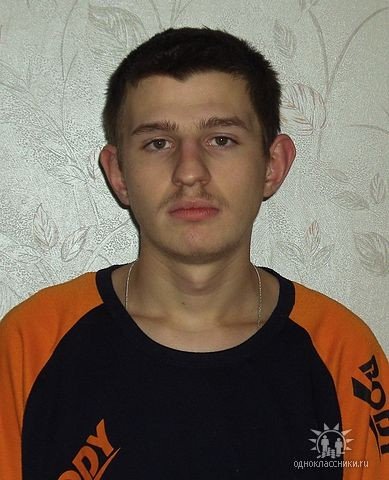
Dmitry Lyamin’s headshot from Odnoklassniki.ru (“Classmates.ru”

If there is an actual “Russian anti-war movement,” this is what it looks like: Dmitry Lyamin, accused of torching a military conscription office in Shuya, the third largest town in the Ivanovo Region. Lyamin has been transferred from Ivanovo to the notorious Butyrka remand prison in Moscow, allegedly, so that he can undergo a psychiatric examination at the equally notorious Serbsky Institute. According to former political prisoner Ivan Astashin, who now spends all his waking hours helping the new wave of political prisoners in Russia and publicizing their cases, there are rumors among the legal community that the criminal charge Lyamin faces will be changed from “destruction of property” (Article 167 in the Russian Federal Criminal Code) to “terrorist act” (Article 205), a much more serious charge that carries a penalty of up to twenty years in prison.

Source: Ivan Astashin, Facebook, 29 June 2022

Ildar Ibragimov: 16 Years in Prison for Nothing

Defendant from Kazan Sentenced to 16 Years in Maximum Security Prison in Hizb ut-Tahrir Case 
OVD Info
March 6, 2021

Ildar Ibragimov in court. Photo: Parents Solidarity 

Parents Solidarity reports that a court in Yekaterinburg has sentenced Ildar Ibragimov, a defendant in the Hizb ut-Tahrir case, to 16 years in a maximum security penal colony.

The ruling on March 5 was rendered by the Central District Military Court. Ibragimov was accused of organizing the activities of a terrorist organization [sic], punishable under Article 205.5.1 of the Criminal Code.

Ibragimov lived in Kazan, where he was detained on December 18, 2019. After the preliminary investigation, the man was taken to Yekaterinburg for trial. No weapons or explosives were found in his possession during a search of his home. According to Parents Solidarity, the case materials also do not indicate any violent actions on Ibragimov’s part or calls for violent actions.

The Islamist party Hizb ut-Tahrir has been declared a terrorist organization by the Russian Supreme Court. However, a number of experts of human rights organizations argue that there is no reason for this, since members of Hizb ut-Tahrir have not been seen to be involved in the commission or preparation of terrorist attacks. Members of the party are accused of terrorism solely on the basis of party activities, i.e., meetings and reading literature.

According to the Memorial Human Rights, as of February 18, 2021, at least 322 people have been under prosecution for alleged involvement in Hizb ut-Tahrir. 208 of them have already been convicted. More than 140 of those convicted were sentenced to imprisonment for a period of 10 years.

Translated by the Russian Reader

Masha Gessen recently admitted, in the New Yorker, that the (fabricated) charges against Karelian historian and human rights activists Yuri Dmitriev were so “heinous” that she had never written about the case. Last year, a rising wave of support for the young men charged in the Network Case was reduced to nought when the Riga-based online newspaper Meduza published an utterly rickety “investigative report” dubiously suggesting that some of the defendants had been involved in a murder.

But at least fairly substantial numbers of people, both in Russia and outside of it, still agitate on behalf of Dmitriev and the Network boys, no matter the harsh verdict of Masha Gessen and wildly fickle Russian public opinion.

If, on the other hand, you’re a Crimean Tatar (in Russian-occupied Crimea) or a plain old Tatar or Bashkir or a member of any of Russia’s several dozen Muslim minorities, all the powers that be have to do to make you “heinous” is say the words “Muslim” and “terrorism,” and you’re toast. There will be no massive domestic or international solidarity campaigns to support you, nor will people take to the streets in their tens of thousands demanding your release. Much worse, none of these democratically minded folks will even hear about what happened to you.

So the news that Ildar Ibragimov, a resident of Kazan, was sentenced on Friday by a court in Yekaterinburg to 16 years in a maximum security prison for “organizing the activities of a terrorist organization” will not ignite a storm of indignation in Ibragimov’s own country.

The recent furore over Alexei Navalny’s alleged “racist nationalism” was misplaced. If anything, Navalny gave that tack up as a political dead end several years ago. But millions of his countrymen live and breathe “racist nationalism” every single day, if only by omission, and no one is losing sleep over it. Blatant Islamophobia can never be a crime in a country where so many people believe that “political correctness” is the world’s biggest problem. || TRR

“The FSB Are the Main Terrorists”: The Political Biography of Ivan Astashin

Ivan Astashin in prison. Photo by Maxim Pivovarov. Courtesy of RFE/RL

“The FSB Are the Main Terrorists”: The Political Biography of Ivan Astashin
Dmitry Volchek
Radio Svoboda
October 3, 2020

On the night of December 20, 2009, the eve of State Security Officers Day, a group of young people threw a Molotov cocktail into the FSB’s offices in Moscow’s Southwest District. No one was injured, and the room was slightly damaged: a windowsill and several chairs were burned. A video of the protest soon appeared on the internet, entitled “Happy Chekists Day, Bastards!” The author of the video was 17-year-old Ivan Astashin.

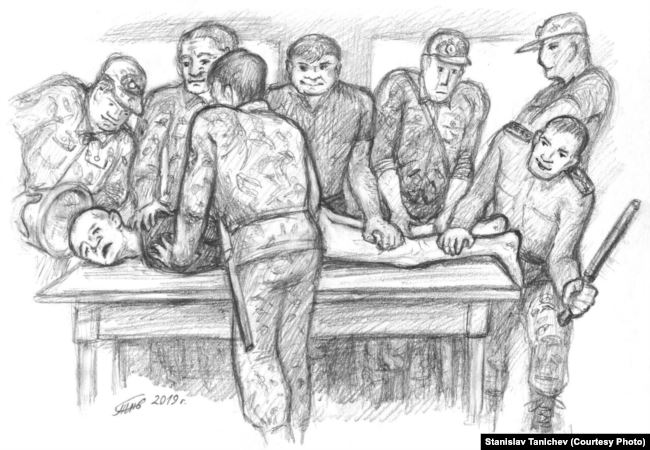
The arson sparked a large-scale, trumped-up criminal case against the so-called Autonomous Combat Terrorist Organization (ABTO), which was headed, according to investigators, by Astashin. Initially, the alleged members of ABTO were charged with property damage, but soon they were also accused of disorderly conduct. The Investigative Committee later decided that the defendants in the case had wanted to impact state policy, so they should be tried for “terrorism”(as punishable under Article 205 of the criminal code). They were tortured into confessing.

Ten young people were involved in the ABTO Case. In 2012, they were sentenced to various terms of imprisonment. Astashin received the longest sentence—13 years in a high-security penal colony, which was later reduced to 9 years and 9 months. Astashin was first sent to Krasnoyarsk Correctional Colony No. 17, but in 2014 he was transferred to Norilsk Correctional Colony No. 15. Lawyers and human rights activists argued that the case was political, pointing out that ABTO did not exist, and the members of the alleged “terrorist organization” did not even know each other.

“In Ivan’s case, the FSB took revenge on teenagers who dared to throw a bottle of petrol through their window. The case was a bellwether. It showed how the security forces had degenerated: why should they stake out real criminals and document their every move, if they could torture children until they lose consciousness, forcing them to sign a horseshit ‘confession’ that will then be called ‘evidence’ in the verdict?” said lawyer Igor Popovsky, who argued Astashin’s case before the Russian Supreme Court.

In recent years, Astashin has become known as an op-ed writer, penning articles about prison mores. On September 1, 2019, Radio Svoboda published his letter “Breaking Convicts Under the Law’s Cover,” which detailed the injustices at Krasnoyarsk CC 17, about the differences among castes of prisoners, their collaboration with wardens, and the psychological coercion employed on prisoners by correctional officers. We soon received a response from the penal colony’s wardens that Astashin had not written the letter and that no violations of the law were permitted in the colony. Although we knew that the letter had been written by Astashin, we took down the article, fearing for his safety.

On September 21, 2020, Astashin completed his sentence and was released. He is currently working on a book about his prison experience. He told Radio Svoboda about what happened to him on the outside and in prison.

Your comrade Alexei Makarov said that he became a revolutionary when he was 15 years old. When did you get interested in politics?

When I was about 14 years old. And it all started with a nationalist agenda. There were violent clashes between [ethnic] Russians and Caucasians in Kondopoga [in 2006]. I looked for information and in early 2007 I joined the Movement Against Illegal Immigration (DPNI).

When they called you a nationalist in court, were they right?

At first I was a nationalist, then my views expanded. I left DPNI and in 2009 joined The Other Russia coalition, which at that time was led by Eduard Limonov, Mikhail Kasyanov, and Garry Kasparov, and it included nationalists, liberals, communists, and anyone else you can think of. In the same year, 2009, I visited Ukraine, where I got acquainted with the movement of autonomous nationalists, and I thought that we should do something like it. At that time, there was a split in The Other Russia coalition, everything there came to a grinding halt. My radicalization occurred because there were no people organizing above ground. Then there was the movement of autonomists in Russia, both nationalists and left-wing anarchists. Direct action against the police began: police departments and police cars were torched. I also thought that we should do something like this. At that time, I felt like a revolutionary. I was 17 years old, and we decided to hold a protest action against the FSB.

You made a video of the action. It is still accessible on the internet, and there is a slogan “Russian action.” So, this was a nationalist protest?

Yes.

Do you regret it or recall it with pleasure?

Neither one nor the other. I don’t regret anything: what’s done is done. At the same time, I now believe that it was ineffective: the protest’s efficiency rating was negative. We had wanted to draw attention to the dictatorship of the Chekists, but [the video had] ten thousand views, which is a drop in the ocean. It did not spark a public discussion, it was all a big waste of time. Meanwhile, the people involved in the protest received long prison sentences. Of course, these were ineffective actions.

You were also accused of trying to blow up a Lexus. Whose car was it?

That was a stupid story. As a chemist, I experimented, I was interested in pyrotechnic devices and explosives. I built this thing and decided to test it. I found a Lexus: I thought it was probably insured. That’s another social subtext.

Attack the rich?

Yeah.

The investigators claimed that you were the leader of an organization that consisted of about ten people. Who were these people?

Guys I knew, but not all of them. They also carried out direct actions: seven arson attacks. The only thing we had in common was that we were acquainted. We were tortured into confessing that we had collaborated. If you read the verdict carefully, there are many inconsistencies. They write that the guys saw a police department and decided to torch it. But why do they then write that I was in charge of the action? Nevertheless, we were tried as an organized criminal group: everything those guys did I was charged with as well, and I was convicted as the organizer.

But did you know of ABTO’s existence? And did the organization even exist?

It was during the investigation that I found out that I was the head of the organization. And I saw the videos that they posted on the internet. Neither they nor we had any organization. The person who posted the videos just decided that it would be more interesting if he wrote that it was some kind of organization. It was four people going round setting fires.

Are the Network and New Greatness cases similar to what happened in the ABTO Case, or have the methods of the Chekists changed over the last ten years?

They are very similar, only worse. We were arrested for real actions. There was no terrorism in our case, but there were actions: they can be qualified as property damage or disorderly conduct. In the Network and New Greatness cases, there were no actions at all, that is, they were tried simply for belonging to mythical organizations. The laws that are now used to judge the defendants in those cases simply did not exist in our time. If we were tried now, we would probably be given twenty years in prison. All those articles [in the criminal code] are getting tougher and tougher, and the cases are now tried by special military courts. In addition, now there is the Rosfinmonitoring list [a financial stop list of “extremists” and “terrorists”], plus probation until your conviction has been expunged from your record. It’s easier for [the security services] to work in this way, because they don’t have to wait for someone to set something on fire, they can just take some guys who behave the wrong way, talk about the wrong things, or look the wrong way, and whip up a nice terrorism case, and get awards and promotions.

Ivan Astashin and comrades holding a rally on Chekists Day, on December 20, 2009, on Triumfalnaya Square in Moscow. Their banner reads, “The FSB are enemies of the people.” Courtesy of Ivan Astashin and RFE/RL

I read the article in which you write that the FSB are the only terrorists in Russia.

Yes, I wrote that, because terrorism is defined in the criminal code as various actions (not necessarily explosions and arson) intended to frighten and intimidate the populace. And who is intimidating the populace now, other than the FSB? We have other security services, but they are also dependent on the FSB. You know, when I carried out the action against the FSB, I really didn’t fully understand what kind of an organization it was. I understood that they had a lot of power, that the country was actually a Chekist dictatorship, but I had no idea how big it was. Even ordinary cops shake in their boots when FSBniks show up. The doors to all government institutions are open to the Chekists. All civil servants, judges, and MPs obey them unquestioningly. That’s why I called the FSB the main terrorists.

Did FSB officers visit you in the prison camp and threaten you?

Yes, that was in 2015. As usual, they did not introduce themselves, but only mentioned that they had flow in from Moscow: I was serving my sentence in Norilsk at the time. They were interested in what I was going to do after my release. I said that there were five more years until the end of my sentence, and I didn’t know yet what I would do after my release. They told me something to the effect that I shouldn’t get it into my head to engage in any political activity. Not that they directly threatened me, but they mentioned that even if I went abroad and mad trouble for them there, they would still get to me.

How did ordinary prisoners perceive you? As a hero or as a weirdo whose motives were impossible to understand?

Differently. There really were convicts who would say, Well done, cool, they need to be burned. There were also who thought it was odd: you’ve been sent down for ten years, what was the point?

Drawing by Stanislav Tanichev. Courtesy of RFE/RL
You said in an interview that you saw all of Russia in the Siberian prison camps. What have you learned about Russia? Is it ready for the revolution you dreamed of?

Many people living in Moscow have no idea what is happening beyond the Moscow Ring Road, how people survive on a salary of 5-10 thousand rubles [a month; meaning between 55 and 110 euros, approximately]. They often live on the outside according to the same concepts as they do in prison. As for whether they are ready for revolution, that is a difficult question. Many people just can’t imagine that things could be different. There is the famous question: who [will be president], if not Putin? Indeed, many people have this notion in their heads.

Did you meet Putin fans even in the camps?

Yes.

Were they outliers or were there many of them?

The ardent Putin supporters were outliers, of course, but I would often hear people say that Putin was doing a great job: he’d lifted up the economy, whereas in the nineties there had been nothing to eat at all. But now the situation is moving away from Putin. Meaning that, whereas in 2014 everyone got behind “Crimea is ours” and Novorossiya, and sometimes a couple of prisoners would argue with several dozen [Putin supporters], but now they mostly chew out Putin’s policies.

Even in the Siberian camps in 2014, there was a patriotic upsurge and people were happy about the annexation of the Crimea?

Yes, but then the situation changed, and the whole upsurge fizzled out.

Last year, we published your letter about the situation at the Krasnoyarsk colony, and then the wardens demanded that it be removed: allegedly, you were not the author. We took it down so you wouldn’t get hurt. What happened to you then?

It was unexpected. It is clear that if you are institutionalized and you write something negative about the institution, then, of course, there will be a reaction. I was in Norilsk, describing the general practices that had developed in the prison system, and I mentioned the Krasnoyarsk camp as an example. And they got so upset! They made threats, very clear threats. In Krasnoyarsk Territory, there is Remand Prison No. 1, known for its torture cells. There is a regional tuberculosis hospital where convicts are absolutely illegally injected with the strongest psychotropic drugs. And when I was summoned for a chat about the matter by the head of the prevention and enforcement department [of the penal colony], he made it clear what could happen to me in the future. I know such stories about how a person wrote complaints about the wardens, and then he was taken to these places of torture, and then the person recanted his testimony while being videotaped. I knew that something similar could be done to me. I had to write the document that your editors received. Of course, when I wrote it, I really hoped that they would understand the situation.

Of course, we understood, but we were afraid for your safety and took down the article.

I was hoping they wouldn’t remove it. Both there and through the convicts, they tried to get to me, and for some time the email server was disabled, and the warden, when he went on rounds, made it clear that it was all because of me. Then I found out that I was to be transferred. Initially, there was information that I would be taken to that hospital in Krasnoyarsk. I had already been given to understand via the convicts that they could take me through the torture remand prisons there. Consequently, everything followed a completely different scenario: I was transferred to CC 17, which I had just been writing about. I was transported without any untoward happening to me. I arrived at the transit and transfer prison, and everything was cool: not a word was said about the situation. I was there for four days before arriving at CC 17, where the deputy warden said to me on my first day, “I know why you have been brought here. I don’t care about that article. Let’s put it this way: you are now going to quietly finish out your sentence, and you’re not going to create problems for me, and I’m not going to create problems for you.”

Did your other articles about life in the prison zones go unnoticed?

The others were also noticed, but there was a fairly calm reaction to them. At one time, there was a special field officer in charge of working with “extremists” and “terrorists,” and he sometimes called me in to say he’d read my articles.

I’m sure you met other prisoners convicted on similar charges.

Yes, there a lot of people convicted in high-profile cases in Krasnoyarsk and Norilsk. When I arrived at CC 15 in Norilsk, there were quite a lot of people who had been convicted under Article 205, but mostly they were people who had been involved in the fighting in the North Caucasus. When you read their verdicts you find mentions of [Chechen rebel commanders] Maskhadov, Khattab, and Shamil. And when I was transferred to CC 17 in Krasnoyarsk a year ago, I also saw quite a lot of people who had been involved in combat or attacks on security forces in the North Caucasus over the years.

Drawing by Stanislav Tanichev. Courtesy of RFE/RL

You rubbed shoulders in the camps with people of different ethnic groups living in Russia. Have you reconsidered the beliefs that moved you to become a revolutionary at the age of seventeen?

Yes, my views have changed. When I joined DPNI, I saw migrants as the problem, but over time I began to see the state as the problem. Migrants are not to blame for anything: they come here out of desperation, because their home countries are even worse than here, just as many people are leaving Russia for Europe now. In other words, these processes are quite natural. People of different ethnic groups and faiths can easily get along with each other. We just need competent policy to avoid conflicts. All this xenophobia is largely groundless. While I was on the inside, I read Robert Sapolsky’s Behave: The Biology of Humans at Our Best and Worst, which examines why people are often biased against those who belong to a different race or ethnic group. If you get to the root of the problem, there is no reason for it. We need to think about what unites us, not what divides us.

I noticed in your interview with the BBC a reference to Vladimir Sorokin. Did you find something in common in what he describes with what you saw in the camps?

Yes, I love Vladimir Sorokin. One of the things that clicked with me was the idea of the new Middle Ages, as described in his novel Tellurium. I can say for sure that the Russian penitentiary system is the new Middle Ages. Here, in each region, there is a special way of life, which is shaped both by prison officials and prisoners, despite the fact that the law seems to be the same, and the codes prisoners live by is the same everywhere. In some places, prisoners live free and easy, while in others the wardens set up a totalitarian regime in the camps through beatings and torture, as, for example, was the case in Omsk before the riot there in 2018. In yet other places, the wardens and the pseudo-kingpins from among the convicts converge. There are unwritten rules, procedures, and forms of interaction everywhere. It really is the new Middle Ages.

Ivan Astashin with the artist Stanislav Tanichev, who illustrated his articles. Courtesy of RFE/RL

You have now been released, but you remain under probation?

Yes. The law on probation was adopted in 2011. I was arrested in 2010, but in 2017, changes were made to the law such that all those convicted of terrorist charges must be placed on probation until their criminal record is expunged, which in my case is eight years. No one cares about you behaved in prison. Whereas earlier, repeat offenders and those who were deemed repeat violators of prison rules were put on probation, now everyone convicted on terrorist charges is put on probation, too. No one cares that I went to prison long before the law was passed. Logically, according to the Russian Constitution and international norms, the law should not apply to me. However, it applies not only to me, but also to other people in this situation. Restrictions are imposed on us: we have to check in at a police department between one to four times a month. (I’m required to check in twice a month.) You cannot leave your home between ten at night and six in the morning. I have filed an appeal against my probation and plan to bring the case to the European Court of Human Rights, as I believe that this practice violates the European Convention on Human Rights. A complaint on similar grounds, filed by one of the defendants in the Bolotnaya Square Case, Sergei Udaltsov, has already been communicated to the European Court of Human Rights.

You don’t want to leave Russia?

I don’t. Everything is bad in Russia nowadays, but there are a lot of areas where you can do something and change things for the better. Nor am I talking about politics in the literal sense. For example, there is human rights advocacy. In any case, no matter what the circumstances, no matter where I am, I will still do something to change society for the better.

• • • • •

This translation is dedicated to Vladimir Akimenkov, a former Russian political prisoner and prisoner rights activist who over the years persuaded me to pay attention to Ivan Astashin’s remarkable story. If you have the means and the opportunity, please consider donating to Vladimir’s fund for Russian political prisoners. You will find the details below. || TRR

Ivan Astashin and Vladimir Akimenkov, October 11, 2020, Moscow. Courtesy of Vladimir Akimenkov’s Facebook page

Vladimir Akimenkov
Facebook
June 7, 2020

My Annual Birthday Fundraising Event for Political Prisoners

On June 10, it will be eight years since I was arrested as part of the Bolotnaya Square Case. Every year on this date I hold a fundraiser in support of the political prisoners with whom I am currently working.

Every year we meet live on my birthday to help political prisoners. This year, for obvious reasons, we will not be able to meet on June 10. We will definitely do this later, when we can get together without the obvious threat of getting sick. (The live fundraising event will be announced later, via a separate post and an update to this post.)

In the meantime, I am launching a remote fundraising event. In recent years, we have managed to find over 16.8 million rubles [approx. 186,000 euros] for people who have been politically repressed. Please chip in. We need to raise a lot of money. I don’t want to be broken record, but such are realities of Russian society.

Bank details:

— Yandex Money: https://money.yandex.ru/to/410012642526680

— Sberbank Visa Card: 4276 3801 0623 4433, Vladimir Georgievich Akimenkov

Bank details for ruble transfer:

Correspondence account 30101810400000000225
Bank BIC 044525225
Recipient’s account 40817810238050715588
Recipient’s Individual Tax Number 7707083893
Recipient’s full name AKIMENKOV VLADIMIR GEORGIEVICH

Bank details for foreign currency transfers:

SWIFT Code SABRRUMM
Recipient’s account 40817810238050715588
Recipient’s full name AKIMENKOV VLADIMIR GEORGIEVICH

You can send funds from one foreign currency account to another via the Western Union website.

If you send me a personal message, I can send you a final report on the funds collected.

Please share information about the fundraiser on different venues.

I’m worried about this fundraiser. But I believe in people.

Thanks.

Translated by the Russian Reader