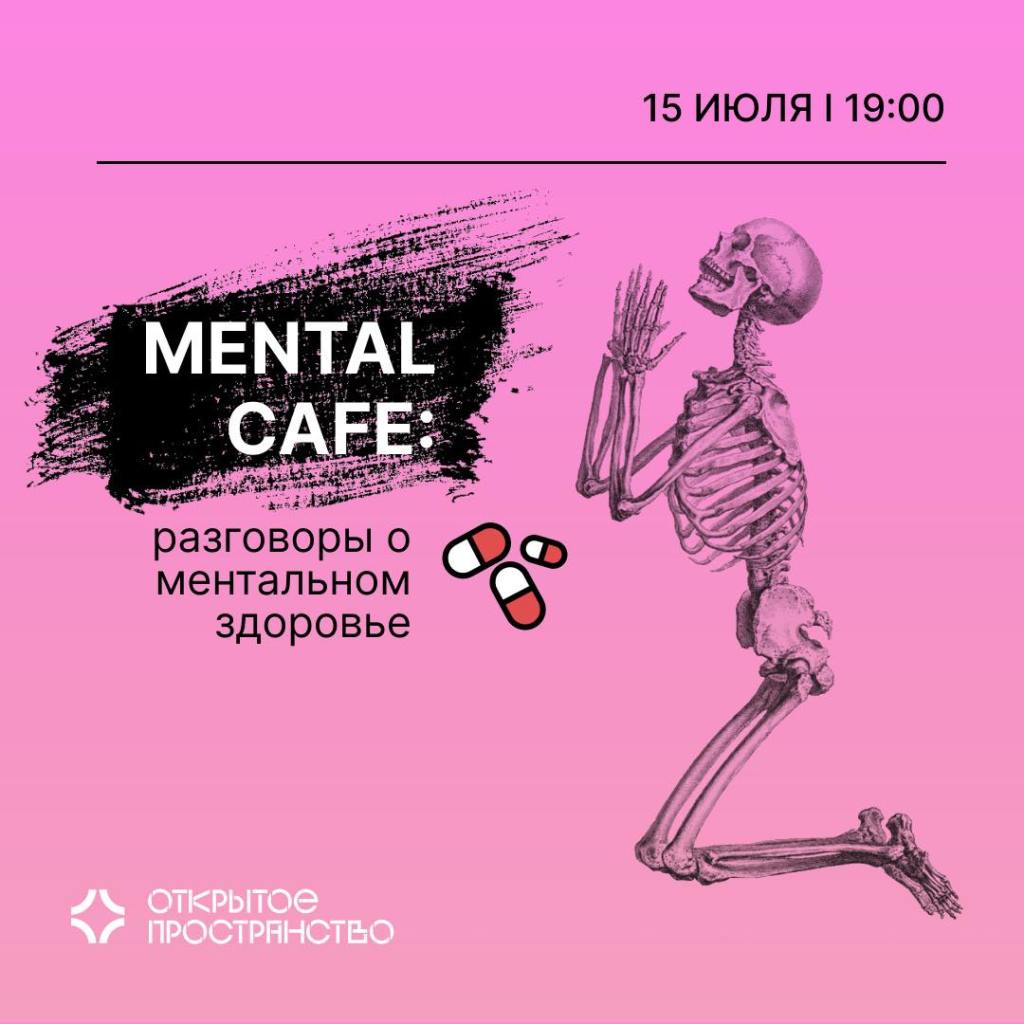
Mental Cafe is a cafe without food service and a permanent address where people come together to discuss topics related to mental health.
It is not a support group or a grief group. It does not provide psychological assistance. It is just a conversation club where you can share your experiences and ask any questions about mental disorders.
You can even choose not to participate in the conversation, but just listen. Anyone—not just people with mental disorders—can attend.
 7 p.m., Saturday, July 15
 Open Space in St. Petersburg, 25 Rubinstein Street
How to find us: https://t.me/spbopenspace/3704
Source: Open Space in Petersburg (Facebook), 15 July 2023. Translated by the Russian Reader
The war with Ukraine, which has been going on for more than a year, continues to intensify the psychoticization of Russian society. Russians spent 4.32 billion rubles on antidepressants in the period from January to May 2023, Vedomosti reports, citing statistics compiled by the DSM Group.
Sales increased by 2% compared to the same period last year. And yet the early months of the invasion of Ukraine were accompanied by a surge in demand for antidepressants, which increased by 87% year on year. Thus, in 2023, Russians set a new record for purchases of antidepressants, whose volumes nearly doubled compared to pre-war levels.
Players in the psychotropic drugs market confirmed to Vedomosti the further increase in demand for antidepressants, despite the high benchmark set last year. According to Eapteca, the demand for this category of medicines increased by 30% in the period from January to May 2023. According to Kirill Yakobenko, general director of Uteca, sales of such products “have grown in terms of both sheer numbers and turnover.”
The increase in demand for antidepressants may indicate that people have become more prone to mental disorders treated with antidepressants. These include not only depression but also adjustment and anxiety disorders, psychiatrist Viktor Lebedev told The Moscow Times.
He notes that his colleagues in Russia speak of their increased workload. “People come to see them more often and talk during their sessions about the special military operation and how it has affected their lives,” he says, adding that large-scaled emigration has also led to an increase in depression and other mental problems among Russians.
It will be possible to make a genuine assessment of the war’s impact on overall mental health only a few years from now, but we should not expect positive forecasts, psychiatrist Dmitry Kutovoy said pessimistically.
“After Putin, the new regime will face the daunting task of normalizing society’s mental state and we, as professionals, must be ready for this,” he adds.
Source: “Russians set record for purchases of antidepressants,” Moscow Times Russian Service, 14 July 2023. Translated by the Russian Reader
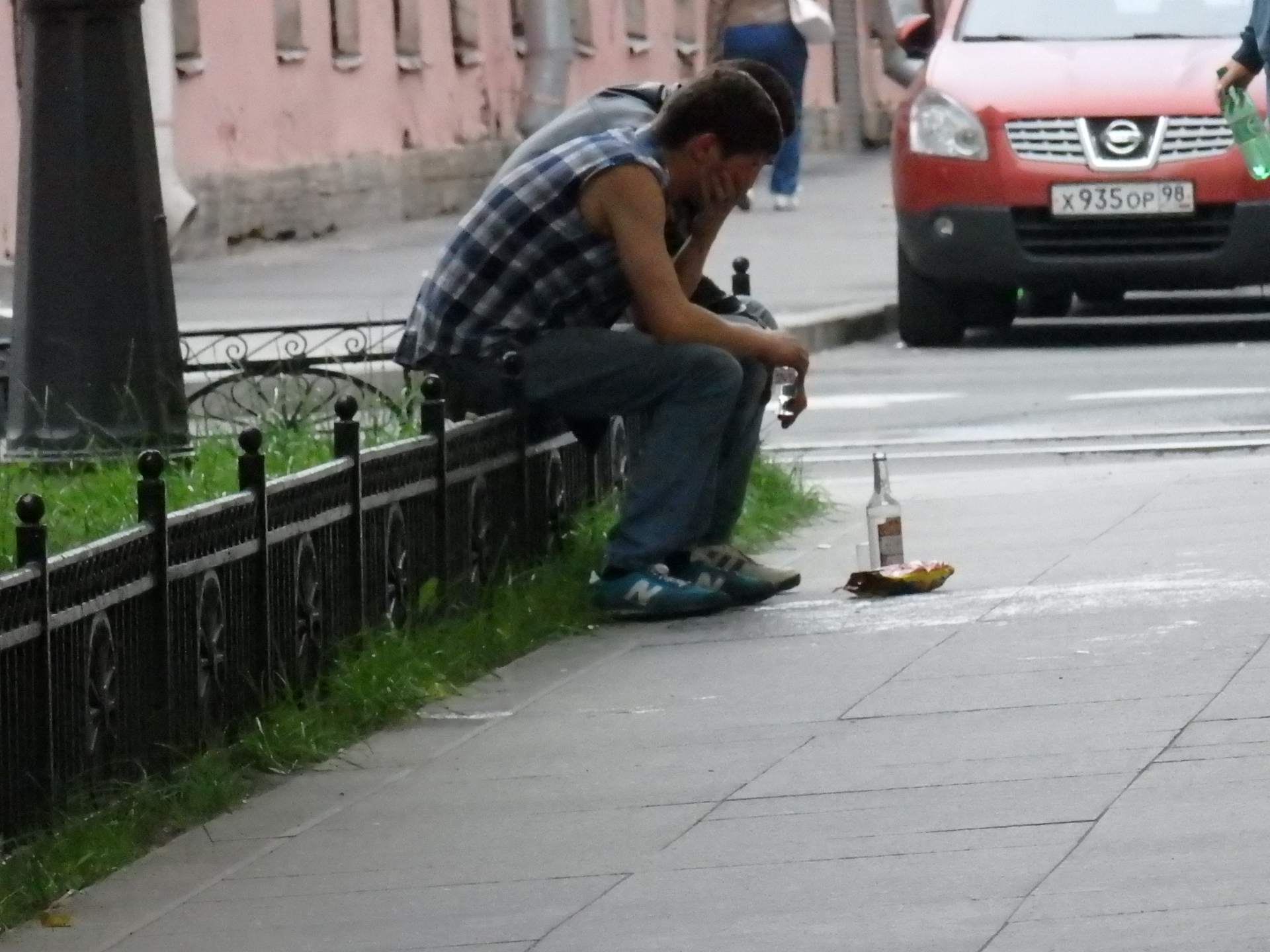
In 2022, alcohol sales in Petersburg increased by 4.8%, although prior to this they had been declining. The demand was powered by cheap and strong Russian drinks, which have replaced the beverages produced by departed foreign producers. At the same time, the reported incidence of alcohol dependence has been growing in Petersburg.
Bumaga requested data from official departments and analysts. We show how much alcohol is consumed both nationwide and in Petersburg, how many people have been diagnosed with alcoholism, and how alcohol consumption is associated with an increase in homicides.
Russians drinking more, alcohol consumption in Petersburg four times greater than in 2021
According to Rosalkogolregulirovanie (Federal Service for Alcohol Market Regulation), Russians are buying more and more alcohol every year. In 2022, this volume reached its peak: 2.2 billion liters of strong alcohol and beer were purchased. Rosalkogolregulirovanie told Bumaga that this was mainly due to an increase in sales of spirits and wine, while beer was bought in roughly the same quantities as a year earlier.
Alcohol consumption decreased in Petersburg from 2018 to 2020, but the trend was reversed in 2021, while growth in 2022 was four times higher than a year earlier.

Strong and cheap alcohol more popular
In 2022, foreign alcohol producers such as Brown-Forman and William Grant & Sons left the Russian market. Because of this, the prices of imported alcohol increased by 10–20% from the beginning of the year, restaurateurs noted. Prices for foreign-made beer increased even more, by an average of 30–50%, Alexander Romanenko, the founder of Bakunin Brewery and several other Petersburg establishments, told Bumaga.
“If we take into account premium brands, then the price increase most likely did not affect their consumption in any way, since elite alcohol is drunk by wealthy people. The consumption of alcohol in the mid-price range has been changing the most. With the price rises of these products, consumers have been looking for cheaper substitutes or switching to other categories of drinks,” said Agvan Mikaelyan, who sits on the board of directors of the audit and consulting network FinExpertiza.
Rosalkogolregulirovanie notes that domestic producers have already more than doubled the volume of alcoholic beverages that were once imported to Russia.
However, new products often prover to be of poorer quality, Mikaelyan told Bumaga. According to him, Russian-made gin, rum, and whiskey are “imitations,” since they have not yet gone through a full production cycle.

In 2022, the level of consumption of beverages with a strength greater than 9% ABV increased by 6% in Petersburg. In the first four months of 2023, Petersburg residents purchased a third of what they had bought during the whole of last year—that is, there has been no slowdown in sales.
According to FinExpertiza, Petersburgers bought 3.2% more strong alcohol (i.e., vodka, cognac, and other distilled beverages), raising their consumption to 6.9 liters per capita. At the same time, in Russia as a whole, purchases of these beverages rose by 7.5%, thus increasing per capita consumptions to 6.8 liters. In 2021, this figure had increased by only 1.2%, while it went up by 3.3% in the pandemic year of 2020.

Mikaelyan added that vodka consumption has been growing, as it remains the cheapest strong drink. In Petersburg, as in all of Russia, 2022 saw a 6% increase in purchases of vodka. Vodka consumption had decreased by about the same percentage in 2021.
Level of alcoholism falling, but more new cases reported in Petersburg every year
Despite the recent rise in alcohol consumption (especially of strong beverages), the number of residents with diagnosed alcohol addiction has been decreasing in Petersburg for the past five years. In 2022, there were a little more than 18,000 people official diagnosed with alcoholism in the city, according to data provided to Bumaga by Petrostat.

However, the number of Petersburgers who were diagnosed with alcoholism for the first time increased last year. It exceeded one thousand people for the first time in five years.
The latest data we have on deaths due to alcohol poisoning is for 2021. In that year, according to Rosstat, 9,274 Russians died of alcohol poisoning, 199 of them from Petersburg.
Only incidents of “accidental alcohol poisoning,” which is classified as an external cause of death, are counted in the official statistics, and so these figures do not show how many people died from diseases caused by alcohol consumption. At the same time, Rosstat points out that among those who died from diseases of the circulatory, nervous or digestive systems, as well as from neoplasms, there are also those who suffered from alcoholism.
The more Russians drink, the more murders occur
Every year, between a quarter and a third of the crimes in Russia are committed under the influence of alcohol, according to data from the Judicial Department. In 2022, however, this figure fell by 2.7% compared to the previous year.

sober – 74%, alcohol inebriation – 25%, narcotic intoxication – 0.5%, other – 0.2%
The Trauma Center Lawyers Association claim that up to 80% of murders in Russia occur after alcohol is consumed. The lawyers point out that in 2022, for the first time in twenty years, the number of murders and attempted murders increased by 4% in Russia. The lawyers attribute this increase to the growth in sales of alcoholic beverages.
Due to alcohol consumption, there are more murders on holidays than on other days. On New Year’s Eve, for example, the murder rate increases as much as fivefold, criminologist Vladimir Kudryavtsev, an associate researcher at the Institute for the Rule of Law, explained to Bumaga.
“During the holidays, a certain standard scenario is replayed that leads to lethal violence: people sit together in a closed room, consuming alcohol. And most often people kill people they know, people with whom they must share things. The holidays are a ‘petri dish’ that reproduces the environment for conflicts,” he said.
Source: “More vodka means more murders: how has alcohol consumption in Russia and Petersburg changed amid the war?” Bumaga, 18 May 2023. Translated by the Russian Reader
The war in Ukraine, which began on 24 February 2022 at the whim of the President of Russia, destroyed the lives of thousands of people overnight. Almost immediately after the outbreak of hostilities, the government of my country issued decrees that cut off the oxygen to independent journalists, forbidding them to cover events truthfully and without partiality toward Russian politicians. News websites were blocked, freedom of speech ceased to exist. As a freelance photographer, I was forced to leave Russia on 4 March 2022 to avoid the risks associated with my work.
Like other Russians who do not support the war, I departed for points unknown, taking with me only a backpack and hope for change. I left tormented by feelings of guilt and shame, which still haunt me at every step. I have been having nightmares the entire time since I left. The news from the frontline and Ukrainian cities has been even more unbearable, however. I still can’t believe that all these events are real. My current project, based on self-portraits, visualizes my nightmares and explores feelings of shame and guilt. The visual sequence also incorporates drawings from the diary I have kept since my departure from Russia and screenshots of the news from Ukraine. All these layers recreate my personal space, thus enabling the viewer to dive deeply into my state of mind. I hope that this work will show that not all Russians support this terrible war or have been brainwashed by propaganda.


[…]
Source: Sergei Stroitelev, “‘I wish it was just a nightmare’: a visual story about emotional states amid the war in Ukraine,” Republic, 18 July 2023. Translated by the Russian Reader, who would like to remind you that he does not necessarily endorse any of the views expressed on this website.
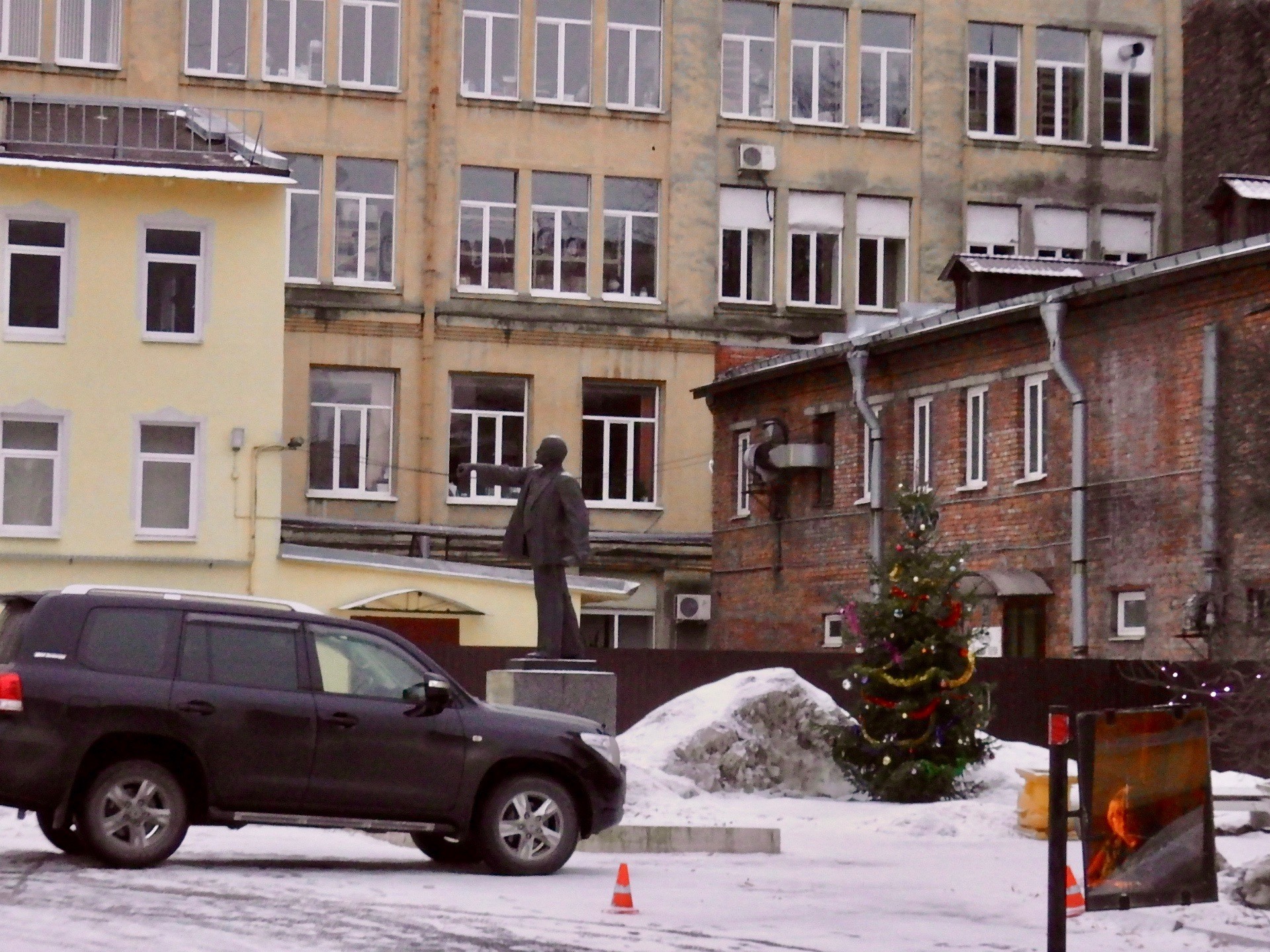 Leader of World Proletariat with Female Gate Attendant Reflected in Security Mirror, SUV, and New Year’s Tree. December 18, 2016, 11 Lomanaya Street, St. Petersburg
 An important public service message from the kleptocratic post-fascist hybrid regime: Make your family strong, not your liquor! “In Russia, 16% of families break up due to alcoholism.” Uff da! ||| TRR, December 18, 2015
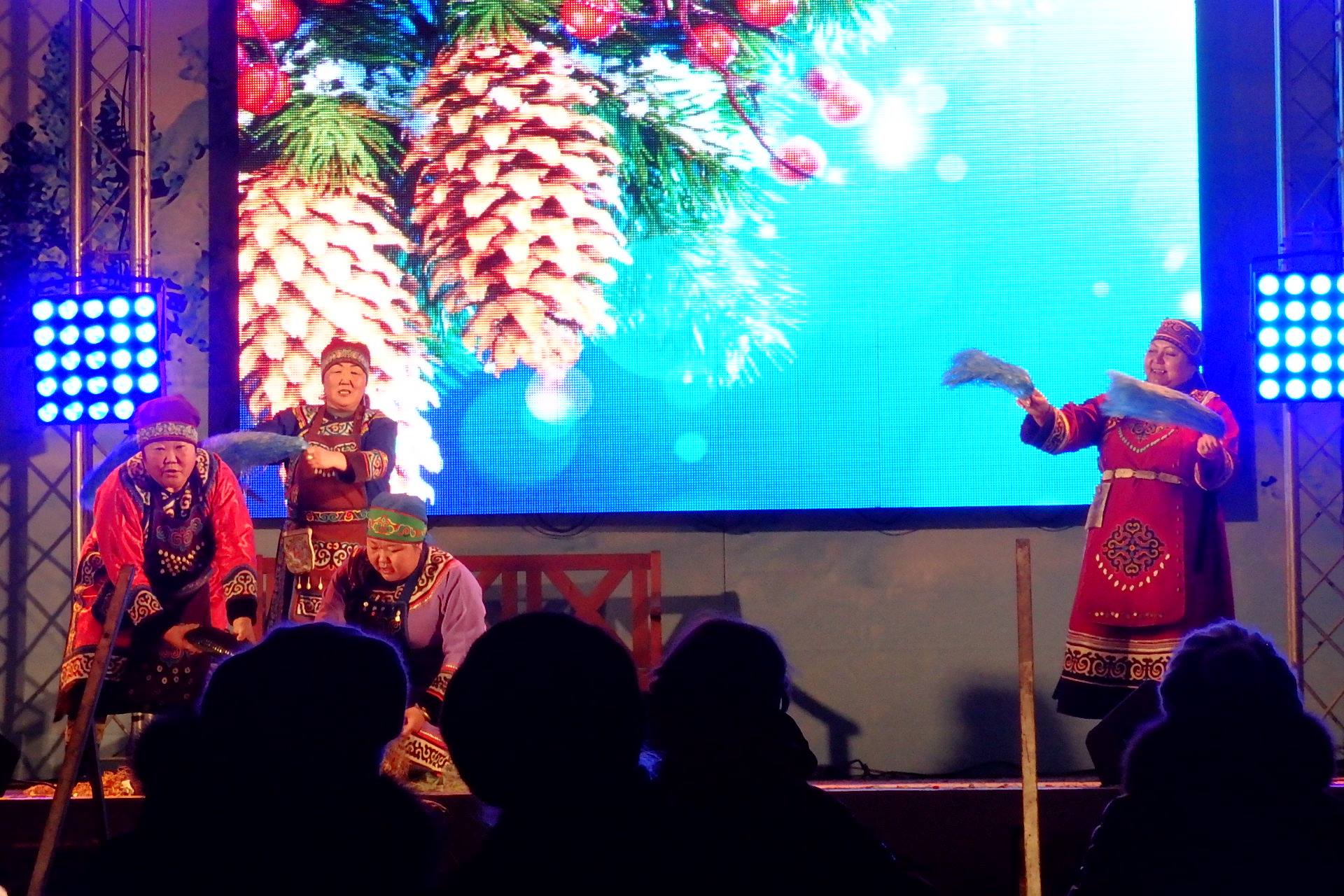 Post-Soviet “ethnic diversity” gone bad. Four “folk singers” from god knows what republic or “little people of the north” lip-synching a folk song at the New Year’s bazaar on Pioneer Square in Petrograd. ||| TRR, December 18, 2015
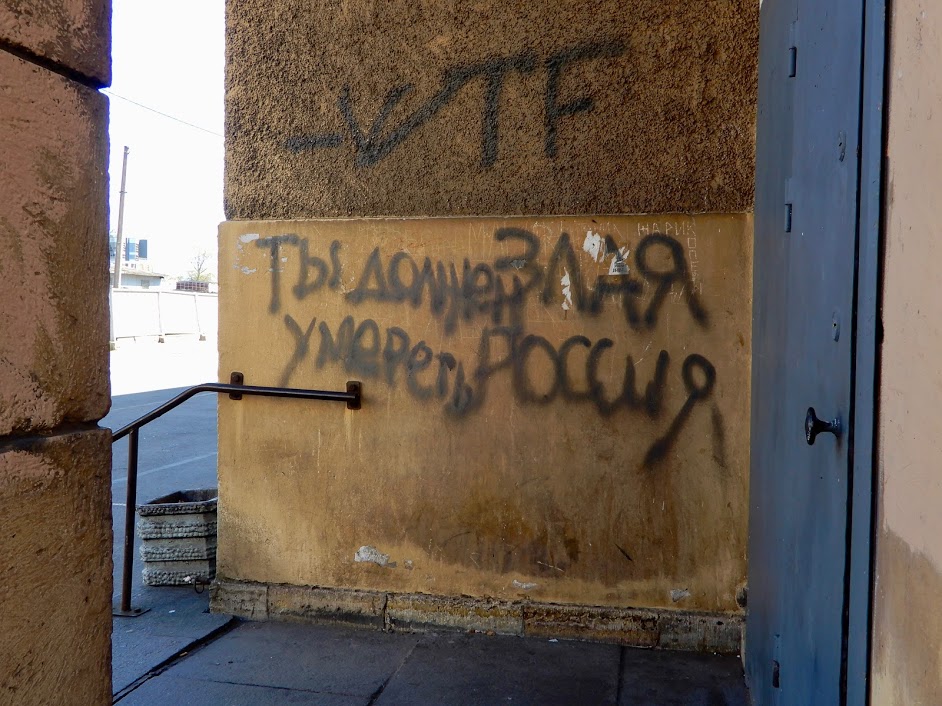 “You must die.” ∴ “Wicked Russia.” Downtown Petersburg, May 6, 2018