
Pavel Chikov: A Managed Thaw

OLYMPUS DIGITAL CAMERA
Is a new thaw on the way?

A Managed Thaw: What the Reversal of Verdicts in the Dadin and Chudnovets Cases Means
Pavel Chikov
RBC
March 6, 2017

The Kurgan Regional Court quashed the verdict against Yevgenia Chudnovets and released her from a penal colony, where she had served four months of a five-month sentence for, allegedly, disseminating child pornography on the web. The Russian Deputy Prosecutor General almost literally copied the arguments made in the appeal by Chudnovets’s attoreny. Previously, during its consideration of the appeal, the selfsame Kurgan Regional Court had refused to release Chudnovets at the request of both the prosecutor and defense attorneys. The same court then denied the appeal against the verdict. The verdict was reversed only after the Prosecutor General’s Office and the Supreme Court intervened. Now Chudnovets will have the right to compensation for the harm caused her by illegal criminal prosecution.

The Chudnovets story unfolded at the same time as the even more high-profile case of Ildar Dadin. Dadin’s case was the first criminal case filed under the newly minted law on violating the law on public rallies, the first guilty verdict handed down under the new law. Dadin was taken into custody in the courtroom. Then came the shocking sentence of three years in a medium-security penal colony for a first offense, a moderately severe offense whose underlying cause was purely political, in a case tried in Moscow under the glare of all the media. During the appeals phase, the verdict was altered slightly, and the sentence reduced a bit. But then there was the drama of Dadin’s transfer to the penal colony, his arrival in a Karelian prison camp infamous for its severe conditions, the immense scandal that erupted after he claimed he had been tortured, and the harsh reaction to these revelations by the Federal Penitentiary Service. Then Dadin was secretly transferred to a remote penal colony in Altai over a demonstratively long period, after which the Constitutional Court, in open session, ruled that the relevant article of the Criminal Code had been wrongly interpreted in Dadin’s case. After this, the Supreme Court jumped quickly into the fray, granting a writ of certiorari, aquitting Dadin, and freeing him from the penal colony.

Politically Motivated Releases
The judicial system acted with phenomenal alacrity in both the Chudnovets and Dadin cases. Chudnovets’s criminal case was literally flown round trip from Kurgan to Moscow and back. Given current realities, this could only have been possible under the so-called manual mode of governance and with authorization at the highest level.

It calls to mind the instantaneous release of Mikhail Khodorkovsky from the same Karelian prison colony in December 2013, and the same sudden early releases, under amnesty, of the Greenpeace activists, convicted in the Arctic Sunrise case, and Masha Alyokhina and Nadya Tolokonnikova, two months before their sentences were up. Of course, the record holder in this sense is the Kirov Regional Court, which in the summer of 2013 quashed Alexei Navalny’s five-year sentence in the Kirovles case.

In all these previous cases, the causes of the system’s sudden softness were self-explanatory. The thaw of December 2013 was due to the upcoming 2014 Winter Olympics in Sochi. Navalny’s pardon was clearly connected with his being able to run in the Moscow mayoral elections. It was hard not to doubt the narrowly political, tactical objectives of these targeted releases.

The latest indulgences—the sudden releases of Dadin and Chudnovets, the transfer of the last defendant in the Bolotnaya Square case, Dmitry Buchenkov, and the Yekaterinburg Pokémon catcher, Ruslan Sokolovsky, from custody in pretrial detention facilities to house arrest—have been greeted with a roar of approval from the progressive public. The liberal genie would have burst out of its bottle altogether were it not for the eleven-hour police search of the home of human rights activist Zoya Svetova in connection with the ancient Yukos case. The search was as sudden and hard to explain as the releases described above.

Federal officials have not tried to dampen the talk of a thaw. On the contrary, they have encouraged it. The president’s press secretary Dmitry Peskov, Supreme Court Chief Justice Vyacheslav Lebedev, federal human right’s ombudsman Tatyana Moskalkova, and Justice Ministry spokespeople have publicly supported decriminalizing the Criminal Code article under which Dadin was convicted.

Putting the Brakes On
Even earlier we had noticed that the number of politically motivated criminal cases had stopped increasing. Twelve years of defending grassroots activists, human rights activists, journalists, and heads of local NGOs mean we are sensitive to changes in which way the wind blows. It would be wrong to speak of an improvement. Rather, the brakes have been put on the slide into deterioration. There are still dozens of political prisoners doing time in Russia’s prisons.

Political scientists have spoken of an unloosening of the screws; lawyers, of necessary legal reforms. One way or another, it is clear these events did not began in February, and the changes have been implemented from the top, quite deliberately, but without any explanation.

Given the tactial objectives pursued in previous reversals of high-profile cases, there are serious grounds for assuming recent events are due to next year’s main political event, the presidential election.

Preparations for the election began last spring with a shakeup of the law enforcement agencies. The superfluous Migration Service and Gosnarkokontrol (Federal Agency for Drug Trafficking Control) were eliminated. A new political special forces unit, the National Guard of Russia, was established. The influence of the Investigative Committee has been sharply reduced, although from 2012 to 2016 it had been the Investigative Committee that served as the main vehicle for domestic political crackdowns.

The old framework has gradually ceased functioning. The effectiveness of show trials has waned. Leading opposition figures have grown accustomed to working with the permanent risk of criminal prosecution hanging over them. Some have left the country and thus are beyond the reach of the security forces, but they have exited politics as well. Protest rallies have not attracted big numbers for a long time, and NGOs have been demoralized by the law on “foreign agents.” The stats for cases of “extremism” are mainly padded by the online statements of web users in the provinces and “non-traditional” Muslims.

In recent years, the state has delegated its function of intimidation and targeted crackdowns to pro-regime para-public organizations. Navalny is no longer pursued by Alexander Bastrykin, but by organizations like NOD (National Liberation Movement) and Anti-Maidan.

Under a Watchful Eye
The foreground is no longer occcupied by the need to intimidate and crack down on dissidents, but by information gathering and protest prevention, and that is the competence of different government bodies altogether. It is the FSB that has recently concentrated the main function of monitoring domestic politics in its hands. FSB officers have been arresting governors, generals, and heavyweight businesmen, destroying the reputations of companies and government agencies, and defending the internet from the west’s baleful influence.

Nothing adds to the work of the FSB’s units like a managed thaw. Bold public statements, new leaders and pressure groups, and planned and envisioned protest rallies immediately attract attention. The upcoming presidential election, the rollout of the campaign, and good news from the courts as spring arrives cannot help but awaken dormant civic protest. Its gradual rise will continue until its apogee in March of next year [when the presidential election is scheduled]. Information will be collected, analyzed, and sent to the relevant decision makers by the summer of 2018. And by the autumn of 2018 lawyers will again have more work than they can handle. This scenario needs to be taken into account.

There is, of course, another option: the Kremlin’s liberal signals may be addressed not to the domestic audience, but to a foreign one. Foreign policy, which has remained the president’s focus, is in a state of turbulence. Vladimir Putin is viewed by the western liberal public as a dark force threatening the world order. Sudden moves toward democratization can only add to the uncertainty and, consequently, the Kremlin can gain a tactical advantage in the game of diplomacy. Considering the fact there are lots of politicians in the world who are happy to be fooled, the ranks of the Russian president’s supporters will only swell.

Pavel Chikov is head of Agora, an international human rights group. Thanks to Comrade AK for the heads-up. Translation and photograph by the Russian Reader
Eliminating Local Government in Russia

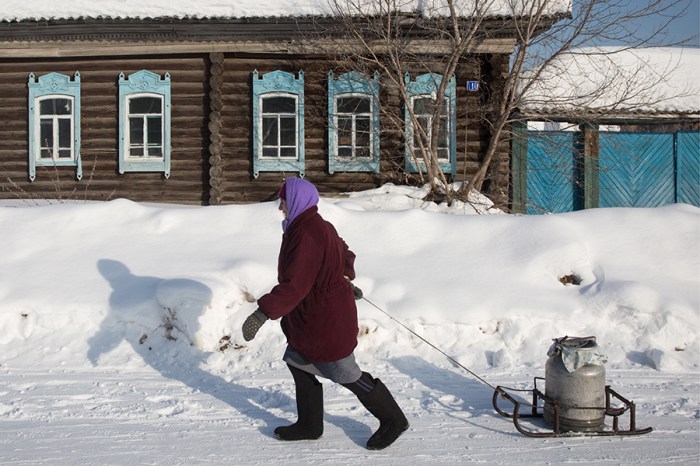
An elderly woman pulling a metal container with water past a snow-covered wooden house with carved window frames in the village of Kondratyevo, Omsk Region, February 17, 2017. Photo courtesy of Dmitry Feoktistov/TASS Россия. Омская область. 19 февраля 2017. Жительница села Кондратьево в Муромцевском районе Омской области. Дмитрий Феоктистов/ТАСС
An elderly woman pulling a container with water in the village of Kondratyevo, Omsk Region, February 19, 2017. Photo courtesy of Dmitry Feoktistov/TASS

Duma to Legalize Elimination of Settlements by the Regions
Maria Makutina
RBC
February 22, 2017

The Duma has tabled an amendment that would legalize converting municipal districts into urban districts. RBC’s sources have informed us the move to eliminate local government in settlements would be supported by the relevant committee. In Moscow Region, such mergers have sparked grassroots protests.

An “Elegant Way” of Eliminating Local Self-Government
Mikhail Terentiev, an United Russia MP from Moscow Region, has submitted amendments to the law on general principles of local self-government to the Duma Committee on Local Self-Government. (RBC has the document in its possession.) The MP has proposed amending the law to make it possible to merge all settlements, including rural settlements, that constitute a municipal district with an urban district. Under such a merger, the settlements and the municipal district would forfeit their status as municipal entities. Decisions about such mergers would be taken by regional authorities “with the consent” of local representative bodies.

Terentiev has also proposed changing the definition of an “urban district,” as stipulated by the law. Currently, it is defined as a urban settlement that is not part of a municipal district. The new draft law defines it as “one or more contiguous populated areas that are not municipal entities.”

Moscow Region authorities have found an “elegant and simple  way” to legalize the single-tier system of local government that, in recent years has, been established in a number of Russia’s regions, including Moscow Region, Andrei Maximov, an analyst with the Committee of Civic Initiatives, explained to RBC.

Moscow Region Governor Andrei Vorobyov. Photo courtesy of Sergei Fadeichev/TASS

Protests
In November of last year, Andrei Vorobyov, governor of Moscow Region, announced plans to convert around twenty municipal districts into urban districts in 2016–2017. According to Vorobyov, the reform would save money by reducing the number of officials.

The proposed move sparked popular protests. Moscow Region municipal district council members, unhappy with the dissolution of local executive and representative bodies, held protest rallies. Public hearings on reforming local systems devolved into clashes with the Russian National Guard.

A Local Self-Government Congress was held in Moscow in February. Local council members from Moscow Region requested that Prime Minister Dmitry Medvedev and law enforcement agencies investigate “numerous incidents in which local government bodies, including municipal districts, rural settlements, and urban settlements, have been forcibly dissolved.”

“The law does not provide for dissolving a municipal district or converting it into a urban district, so Moscow Region authorities conceived a way of getting round the law. First, they merge rural settlements with an urban settlement, and then they turn it into an urban district.  But the municipal districts are left in a limbo,” said Maximov.

The Presidential Human Right Council has argued that the reforms in Moscow Region violate the public’s right to local self-government. HRC deputy chair Yevgeny Bobrov said as much to Vladimir Putin at the council’s December 8, 2016, meeting. The president promised to “work” on the issue.

Nevertheless, in 2015, the Russian Supreme Court ruled that the merger of two rural settlements and the Ozyory urban settlement into an urban district was legal.

Simplifying Governance
MP Terentiev explained to RBC that his amendments were motivated by the need to optimize the budget in Moscow Region.

“The governor and I realized that money could be saved on officials,” he said.

Thanks to the reforms, “there will be an overall approach to wage policies and the opportunity to reduce administrative barriers to business,” Terentiev argued.

The current law stipulates that Russia is divided into settlements, which are organized into municipal districts, and particularly large settlements, which are organized into urban districts, Maximov explained. According to Terentiev’s draft amendments, any territorial entity in Russia can be turned into an urban district, meaning it can be moved from the two-tier system to the one-tier system.

The authorities have been attempting to confer the status of urban districts on municipal districts in order to dissolve settlements and simplify governance. Rural authorities can interfere with the plans of regional authorities to implement urban planning projects and create obstacles to resolving land use issues, which currently require the consent of the settlements affected, political scientist Alexander Kynyev explained to RBC.

The Total Deterioration of Settlements
Experience has shown that populated areas lacking elements of self-governance deteriorate and disappear, RBC’s source on the Local Self-Government Committee told us. According to the source, the draft amendments would lead to the total deterioration of the settlement-tier of governance throughout the entire country.

“It is nonsense to eliminate settlements in densely populated Moscow Region. It doesn’t fit into any paradigm. It is just the governor’s whim. It will be easier for him to manage his affairs this way, and so the law has been mangled for this sake. He has to demolish everything so it will be easier to build it up again,” RBC’s source said.

The reform has been opposed by people of different views and parties. Local self-government as such has been threatened. As the 2018 presidential election approaches, the federal authorities want to avoid such controversies, argues Kynyev.

Through the Back Gate
Terentiev tabled his draft amendments as part of the second reading of a draft law bill that would abolish direct popular votes on whether to change the status of urban and rural settlements. The government tabled the draft law back in the spring of 2015. It was passed in its first reading the same year, after which the Duma has not returned to it.

Radical change in the territorial basis of local self-government has been brought in “through the back gate,” noted our source in the Duma, although the 2014 local self-government reforms were “seriously discussed” in society, he recalled.

Alexei Didenko (LDPR), chair of the Duma’s Local Self-Government Committee, agreed the draft bill could “eliminate the machinery of popular self-government,” and ordinary people would find it harder to defend their interests. According to Didenko, the draft amendments were at odds with what the president said during his 2013 state of the nation address: “Local governance should be organized in such a way  anyone can reach out and touch it.”

Didenko told RBC  the decision whether to support Terentiev’s draft amendments or not would be made by his committee, most of whom are United Russia members, in March. Two sources in the Duma told RBC the committee would approve the draft amendments.

How Local Authorities Have Been Stripped of Their Powers
In his December 2013 address to the Federal Assembly, President Putin asked that the organizational principles of local self-government be clarified. According to Putin, the quantity of responsibilities and resources of municipal officials were out of balance, “hence the frequent confusion over powers.”

In May 2014, a law reforming local self-government was passed, endowing the regions with the right to assume a considerable number of the powers previously exercised by local authorities in taking economic decisions.

The original draft of the bill called for the abolition of direct elections of big-city mayors and city council members. The final draft stipulated the heads of municipal entities could be either elected directly or appointed from among council members.  In the first case, the head of the municipal entity could lead the administration himself. (If the municipal entity in question is a city, he would become city manager.) In the second case, the head of the municipal entity would chair its representative body.

Regional legislative assemblies were accorded the right to divide cities and towns into intra-urban municipal entities. Two new types of municipal entities were introduced for this purpose: urban districts with intra-city divisions, and intra-urban districts.

First-tier council members (that is, council members of urban and rural settlements) are elected directly by voters. Second-tier council members (of municipal districts and urban districts with intra-city divisions) are either elected or delegated from among the heads of settlements and first-tier council members, in the case of municipal districts, or only from among first-tier council members, in the case of urban districts with intra-city divisions. The method of electing council members was also to have been defined by regional law.

In February 2015, two other methods for electing heads of municipal entities were introduced. The first method allows the head of a municipality, chosen by the municipality’s council from among its members, to lead the local administration. However, he surrenders his mandate as a council member. The second method allows a bureaucrat, chosen by council members from a slate of candidates suggested by a hiring committee, to lead the local administration. This had made it possible for city managers to become autocratic mayors.

Translated by the Russian Reader. See my December 15, 2016, post on the same topic, “In Tomilino.”

“We Have a Surrogate Democracy”: An Interview with Ekaterina Schulman

Ekaterina Schulman. Photo courtesy of Andrei Stekachov and The Village

Political Scientist Ekaterina Schulman on Why You Should Vote
Anya Chesova and Natasha Fedorenko
The Village
September 16, 2016

This Sunday, September 18, the country will vote for a new State Duma, the seventh since the fall of the Soviet Union. The peculiarity of this vote is that it will take place under a mixed electoral system for the first time since 2003. 225 MPs will be elected to five-year tears from party lists, while the other 225 MPs will be elected from single-mandate districts. Several days before the elections, The Village met with Ekaterina Schulman, a political scientist and senior lecturer at the Russian Presidential Academy of National Economy and Public Administration (RANEPA). We talked with her about why you should vote if United Russia is going to win in any case, as well as about the changes in store for the Russian political system in the coming years.


The Upcoming Elections

The Village: On Sunday, the country will hold the first elections to the State Duma since 2011. The social climate in the city and the country as a whole has changed completely since that time. Protests erupted in 2011, and the people who protested on Bolotnaya Square and Sakharov Avenue believed they could impact the political situation. Nowadays, few people have held on to such hopes. What should we expect from the upcoming elections? And why should we bother with them?

Ekaterina Schulman: Everything happening now with the State Duma election is a consequence of the 2011–2012 protests, including changes in the laws, the introduction of the mixed system, the return of single-mandate MPs, the lowering of the threshold for parties to be seated in the Duma from seven to five percent, and the increased number of parties on the ballot. These are the political reforms outlined by then-president Dmitry Medvedev as a response to the events of December 2011. Later, we got a new head of state, but it was already impossible to take back these promises. The entire political reality we observe now has grown to one degree or another out of the 2011–2012 protest campaign, whether as rejection, reaction or consequence. It is the most important thing to happen in the Russian political arena in recent years.

The statements made by Vyacheslav Volodin, the president’s deputy chief of staff, on the need to hold honest elections, Vladimir Churov’s replacement by Ella Pamfilova as head of the Central Electoral Commission, the departure of someone more important than Churov from the CEC, deputy chair Leonid Ivlev, and the vigorous sacking of chairs of regional electoral commissions are all consequences of the protests. If they had not taken place, nothing would have changed. We would still have the same proportional voting system, the same seven-percent threshold, the same old Churov or Churov 2.0. Continue reading ““We Have a Surrogate Democracy”: An Interview with Ekaterina Schulman”

Alexander Zamyatin: Three and a Half Theses on the Elections

Three and a Half Theses on the Elections
Alexander Zamyatin
Anticapitalist.ru
July 24, 2016

Thesis No. 0: The Obvious
The parliament in Russia has been reduced to such a condition there is no point in talking about a hypothetical leftist faction or a group of MPs from single-mandate electoral districts tabling or blocking law bills independently of the presidential administration. If there has been anything consistent about the political reforms of the past fifteen years, it is that legislative bodies, the Duma foremost among them, have been stripped of the power to influence the government’s social and economic policies, even despite their formally voting budgets up or down.

The elections to the Seventh State Duma are not a chance to transform the political regime or even have an impact on it.

The entire campaign is controlled to a lesser or greater extent by the presidential administration’s Office for Domestic Policy. The leaders of the current Duma factions have long ago left no doubt as to the complete absence of conflict within parliament. Even such a harmless identity as “systemic opposition” has taken a backseat to rallying round the president by way of combatting the “fifth column.”

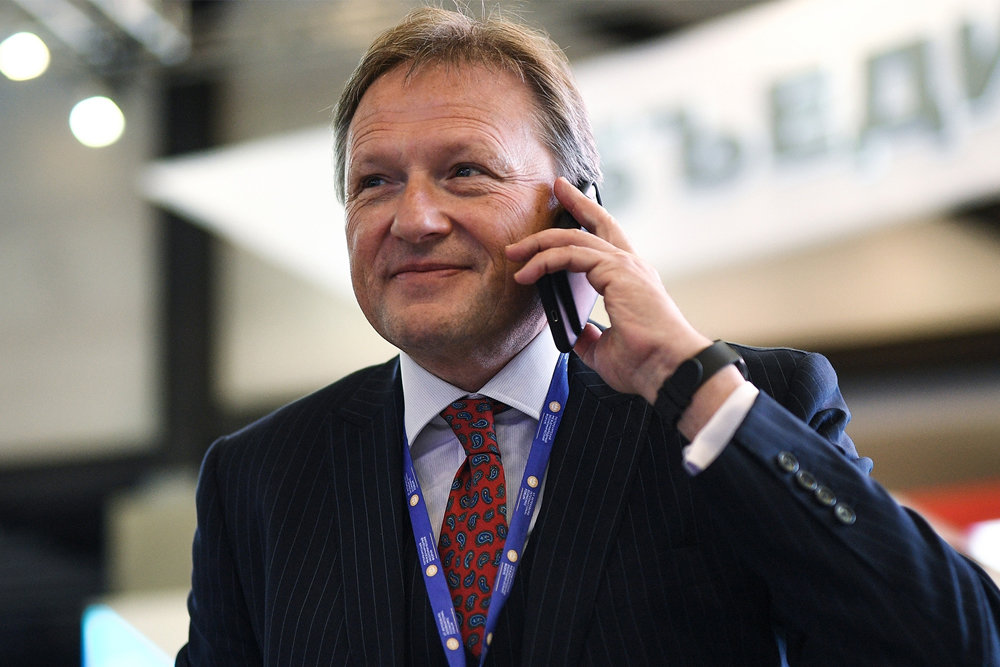
1000_d_850Boris Titov. Photo courtesy of Rossiyskaya gazeta

This stricture applies as well as to the Party of Growth (Partiya Rosta) and its leader Boris Titov, the federal commissioner for the rights of entrepreneurs. The handiwork of spin doctors, the party’s emergence has marked the utter degeneration of the idea of founding an independent right-wing party, a project that has dragged on since the late nineties in shape of parties such as Boris Nemtsov and Nikita Belykh’s Union of Right Forces (SPS) and Leonid Gozman and Mikhail Prokhorov’s Right Cause (Pravoe delo). The fortunes of the Party of Growth’s forerunners have been telling: they immediately fell apart, absorbed by the so-called Crimean consensus.

Despite the transparency of the schemes involved, any conversation about parties and elections has to begin with these textbook truths, not only because they are not obvious to many people but also because certain actors in this process, including people comfortable with leftist ideas, call them into question by the way they behave.

Thesis No. 1: The Possible
A considerable number of the Kremlin’s actions in domestic and foreign policy over the past five years has been aimed at preventing the recurrence of the events surrounding the 2011 parliamentary elections. Despite the fact that, in retrospect, the White Ribbon rallies and Marches of the Millions seem harmless, they were an unprecedented challenge to the Putin regime, a challenge that, moreover, meshes perfectly with the ruling elite’s view of the world.

The ouster of spin doctor extraordinaire Vladislav Surkov and his projects for building “sovereign” democracy and preventing the “orange threat” by establishing quasi-fascist youth movements, and his replacement by the hard and taciturn Vyacheslav Volodin as domestic policy chief were obvious reshuffles meant to be read literally. During Putin’s third term, not even the pretense of political liberalism must remain.

This would seemingly contradict the preservation of certain liberal gains in the realm of electoral law made during Dmitry Medvedev’s single term as president: reduction of the electoral threshold for parties hoping to enter the Duma from 7% to 5%; the return of the mixed voting system, with 225 seats (out of a total of 450) up for grabs in single-mandate districts; and a reduction of the number of members required to officially register a party (from 50,000 to 500). But attempts by the independent right-wing liberal opposition to run in “warm-up” regional elections in 2013-2015 have shown that everything remains under the Kremlin’s total control.

Moving the date of the Duma elections from November to September reveals one of the regime’s main wagers: the election campaign should be as inconspicuous and cushy as possible for all vetted candidates, and the turnout on voting day must be minimal. Previously, parliamentary elections immediately preceded the presidential election, but now, finally, the figure of the president has been detached from the bureaucratic and political body of the country with all its shortcomings.

Should we expect independent candidates in the single-mandate districts who are capable of taking advantage of the simplified electoral procedures, as described above? Hardly. To get his or her name on the ball0t, an independent candidate has to collect the signatures of at least 3% of voters in the district. (Until 2003, they were required to collect the signatures of 1% of all voters and put up a cash surety.) In reality, this amounts to collecting the signatures of 5-6% of all voters in the district [because local electoral commissions make a habit of invalidating large numbers of signatures—TRR], meaning tens of thousands of signatures.

The only legal loophole for independent candidates is to run in single-mandate districts as the nominees of parties, which are not required to collect signatures. This applies to parties that hold seats in the Duma or one of the regional legislatures. All other parties must collect around 200,000 signatures to be registered in the elections. There are only fourteen such parties among the seventy-seven parties registered in the country.

Thesis No. 2: The Unlikely
The right-wing liberal opposition’s march to the elections using the slain Boris Nemtsov’s mandate as an MP in the Yaroslavl Regional Parliament was frustrated after the Democratic Coalition’s primaries proved a failure, with only a tenth of the planned 100,000 participants registering to vote.  The infighting that ensued ended with the dubious, to put it mildly, ex-PM Mikhail Kasyanov being joined on the PARNAS list by the extreme right-wing populist blogger Vyacheslav Maltsev, who is totally at odds with the party’s moderate electorate, and Professor Andrei Zubov, famously sacked from MGIMO (Moscow State Institute for International Relations) for his anti-regime remarks about Crimea, but a man who is otherwise given to alternately spouting liberal truisms or utter monarchist nonsense. That is all you need to know about the Democratic Coalition at present.

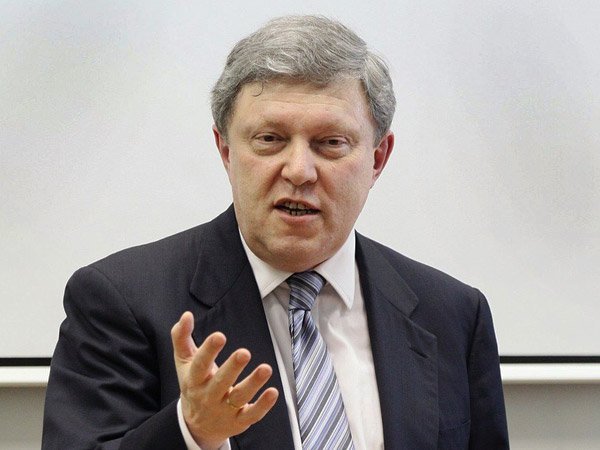
yavlin1_1428604380Grigory Yavlinsky. Photo courtesy of Polit.ru

The only source of intrigue in these elections has, perhaps, been the good old Yabloko Party. For the first time, the party has supported independent politicians from outside the party’s central apparatus, thus benefiting from the collapse of the Democratic Coalition. Yabloko’s willingness to blur its identity both on the right (there are members of Democratic Choice of Russia among Yabloko’s single-mandate candidates) and the left, has given hope to many opposition castaways. At the same time, Yabloko has proposed a strategic deal to everyone who has asked the party’s help in getting access to state campaign financing. Grigory Yavlinsky will need broad support in the 2018 presidential election.

Basically, the intrigue boils down to how honest Yavlinsky and Co. are in their intentions to give the regime a fight and compete with Putin in the presidential election. The first answer that comes to mind would question their independence. The party has been perfectly integrated into the system since 1999 (or even 1996). Party functionaries are kept on a short lease by state financing, and access to national media leaves no doubt as to the existence of an agreement between Yavlinsky and the presidential administration or the president himself.

Yet a more cunning answer is possible as well. Yablokov’s moderateness gives it a tactical advantage over opposition politicians who held the bar high for radicalism in 2012 and are now political outsiders driven to the verge of legality. We will be able to clarify which of these hypotheses is closer to the truth after the elections.

Be that as it may, these parties have been talking seriously about overcoming the five percent barrier and forming a faction in the Duma. Is this possible without a serious mobilization of the protest electorate?

Thesis No. 3: The Imperative
What does the radical left have to do with any of this? The paradox of the situation in which we find ourselves is that while our programs and main slogans answer to the interests of tens of millions of people in Russia (and, in a sense, of the entire society), our campaigning hardly goes beyond a few thousand people. We are excluded from the political process, which is now dominated by anti-popular and, sometimes, simply dangerous forces.

The fact that Russia lacks a full-fledged bourgeois parliamentary democracy sometimes leads people to draw the false conclusion that the country lacks a political process. Of course, it is imitated to a considerable degree by constructs, controlled by the presidential administration, that imitate pluralism in hysterical debates with Alexander Prokhanov and Vladimir Solovyov on national TV. But the very origins of these costly imitations, cultivated for years on end, indicates the presence of political antagonism, in which there are, at least, two sides: the current elite, playing to maintain the status quo, and the active segment of society, opposed to the elite and trying to organize alternatives.

Another common mistake appears at this point in the otherwise correct argument that the right-wing liberal opposition offers no real alternatives and stands programmatically for the very same neoliberal reforms as the regime. Trading the Putinist elite for someone from the opposition, such people argue, would not entail any consequences for the country except, perhaps, the flagrant acceleration of the selfsame unpopular economic reforms.

This claim completely ignores the real state of affairs, in which the loss of power by the Putinist elite (even under a smooth and sophisticated transfer of power to someone from outside that elite) would be tantamount to its death.

Whoever came to power afterwards, the chance to make public the details of how the president’s friends personally enriched themselves both at the expense of individuals knocked out of the game and at the expense of the Russian state and the entire Russian people, would give this person colossal power over the current members of the ruling class. This is clearer to the ruling class than to anyone else, so they have been doing everything to make sure that stripping them of power would be prohibitively costly to their opponents and, thus, the entire country. It is therefore quite likely that the departure of the Putinist elite would be accompanied by tectonic shifts in the societal and political landscapes, shifts that could have quite different consequences. This state of affairs has become a risk factor even for the well-off segments of society, not to mention its least socially protected members.

Coupled with the systemic depravity of the current economic model, the developing political crisis at some stage could bring the country to yet another historical fork in the road. Expectation of this moment, when the accumulated contradictions are revealed as keenly as possible, unites more or less everyone in the leftist opposition. But does our budding leftist movement currently have any sense of how to hasten this moment? No. Does it have a clear, confident answer as to how to prepare for it? No. Nor could it have such an answer, because we cannot know anything about the political struggle without being involved in it. Of course, economic struggle is supposed to shape an organized working class. But it is a classic mistake to believe that by disconnecting ourselves from the “bustle of bourgeois politicking” and redeploying all our forces to the economic struggle and organizing, we will accelerate the awakening of working class consciousness.

Involvement in the political struggle, which in any case does not abolish the economic struggle, encourages the movement to take on qualities necessary for the establishment of a real political force: the know-how of spirited political agitation among the depoliticized masses, the know-how of debating opponents, and, finally, a place in the media that report on politics and society. It is important that even in the embryonic state in which we find ourselves we can begin working in this direction.

When freedom of assembly is practically nonexistent, and freedom of speech and the freedom to agitate are subjected to well-known restrictions, elections remain a venue for developing the three qualities mentioned above. But there is another consideration at work here. It is only during election campaigning that we have a chance to speak to people with the hope of being heard. If you simply hold pickets and hand out leaflets, the only means of drawing considerable attention to yourself is by engaging in tawdry moralizing. As an election campaigner, however, you play a role to which people are accustomed, a role in which they either ask you what we should do or vigorously object to your arguments. And that means you have made contact. What you do with it depends on your skills as a campaigner.

vy_nas_b_1“You don’t represent us.” / “You can’t even imagine us.” Banner at Fair Elections rally in Petersburg, December 2011. Photo courtesy of Colta.ru
Is there currently a party we could support in these elections? No, but that means only that it will have to be created. There is nothing surprising about the fact we still have not founded a party in a country where, with some reservations, there are no independent, grassroots parties, parties not generated by the Kremlin. It is amazing to think it will always be this way and it is not necessary to prepare for change.

The lack of such a party poses the most difficult question: how can we be involved? First, it is possible to back candidates running in single-mandate districts, candidates whose campaigns we can join without forfeiting our own identity. Now, when the registration process has almost ended at the Central Electoral Commission, we can identify such candidates in our districts.

Second, oddly enough, there is the hypothetical possibility of running a campaign against involvement in the elections, since there is no political force advancing a leftist agenda. This campaign tactic could become part of the political struggle if it were run as a full-fledged campaign with a highly refined appeal every activist would be able to defend. There are two significant drawbacks to this option: a) unlike a campaign in support of a particular candidate, there is no source of funding; and b) campaigning “against all” candidates appears more dubious to the authorities than legally campaigning for a registered candidate and is likely to be prohibited altogether.

This paltry slate of options for active involvement in the upcoming elections to the Duma might get a big boost from the municipal council elections scheduled for next fall. Registering as an independent candidate for a municipal council is an accessible option for where we are at now, and all the advantages of running an election campaign can be realized in this case as well.

We have a whole year to answer the question of whether the leftist movement needs to be involved in elections and prepare ourselves should the answer be yes. From this point of view, this September’s elections are useful at least in the sense they confront us with the issue of political involvement, even if some imagine that it has been decided once and for all.

Translated by the Russian Reader

Whipping Bear

Bears
Bears

Whipping Bear: Why the President Needs a “Bad” Prime Minister
Nikolay Mironov
Moskovsky Komsomolets
June 1, 2016

Remember the Soviet joke about the plumber who comes to an apartment to fix a leaky radiator?

“The entire system is rotten here: the entire system has to be changed!” he concludes.

The joke is as topical now as it was then, because the system, it seems, has hit rock bottom. But the nation is clearly of two minds. It is seemingly aware of what has been happening in the country, but at the same time it maintains its loyalty to the regime that has brought us to this pass.

On the one hand, we see a president with a huge rating. On the other hand, we see a rapidly failing economy, a deteriorating social sphere, and, consequently, a high degree of public dissatisfaction with the regime. How can it be that as the foundation crumbles, the president manages to maintain his popularity?

The logic of this social attitude was, I think, nicely expressed by a cabbie who recently gave me a lift.

“Putin is going like gangbusters: the West, America, Syria, Donbas. And Medvedev is supposed to be taking care of the economy instead of fiddling with his iPhone.”

And right then and there he served me up a helping of bad news. He has been getting less work. Prices are rising. Who knows where the hell we are headed.

The taxi driver in fact reproduced the classic propaganda formula he hears every day on the TV. Aside from America, bad officials and liberals are the root of our troubles. The government is clearly underperforming, while the president is terribly busy with foreign policy and lifting Russia from its knees. He is the country’s sacred patron, its guardian angel, and the shortcomings of officials do not stick to him.

If you are thinking straight, cognitive dissonance must kick in, of course. The president has a huge number of powers. He appoints the government, and he could, if he felt like it, sack any minister, including the prime minister, without consulting with anyone. He has the power to kickstart any reforms via presidential decrees. And the Duma is at his beck and call, for United Russia holds the majority of seats there. Why does Putin not appoint a good team, dismiss corrupt officials, and announce a policy shift for the country? How will he lift the country from its knees if the economy tanks? If he is weak and incapable of doing it, why should we support him? If he just does not want to do it, that is another strike against him. But the nation, which has a weak grasp of political institutions and sees no credible alternative in sight, is willing to believe that “Putin has it rough,” that “he is fighting,” and that “they  are getting in his way.”

The massive brainwashing on this point allows the regime to keep a tight lid on the system and change nothing fundamental about it, thus preserving the current inertial scenario, which is favorable to the elites. It is favorable to them because, were the government to decide to undertake economic reforms, the economic interests of the elites would inevitably take a hit, forcing them to surrender some of their comforts and excess profits.

However, while the costs of the crisis are primarily borne by the masses, somebody has to be made the fall guy, the virtual whipping boy. With the exception of defense minister Sergei Shoigu and foreign minister Sergei Lavrov, the cabinet has been appointed to this role along with abstract liberal circles, who, allegedly, have a behind-the-scenes influence on officials.

It is obvious that today the head of state cannot officially support the current course, which has resulted in rampant poverty among the population. Equating this policy with the president would be, if not tantamount to suicide, then certainly a powerful blow to his popularity. But Putin has no intention to change course for the reason given above: the interests of the elites. For this reason, on the eve of the election campaigns, the plan is to deliberately unhook the domestic agenda from the president and hang it on Medvedev and his government. Consequently, the prime minister will no longer be the number two man in Russia, but an expendable, a scapegoat.

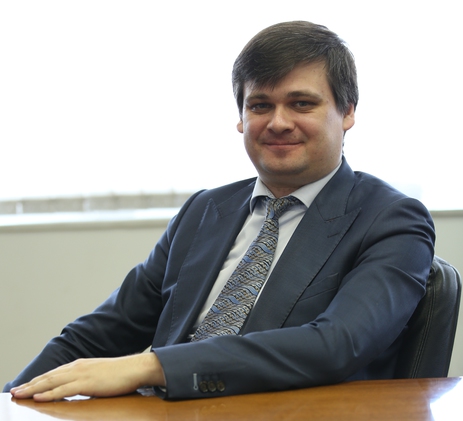
%d0%bc%d0%b8%d1%80%d0%be%d0%bd%d0%be%d0%b2-%d0%bd-%d0%bc
Nikolay Mironov. Photo courtesy of the Center for Economic and Political Reform (Moscow)

Moreover, we should not identify Medvedev with United Russia. Their identities are not blurred in the propaganda, and this is no accident. All the negativity towards officials and the head of the government must not devolve on the party tasked with winning a majority in the Duma in September. United Russia members have thus even been criticizing government ministers, pretending that they and the executive branch are different animals, despite the fact they have the same leader (Medvedev) and a majority in parliament, allowing them to make any and all political appointments and legislative decisions.

This is a quite important part of the spectacle. Medvedev has to be a lightning rod for Putin, and yet United Russia, which Medvedev chairs, has to make it successfully through the campaign for the new seating of the Duma. Since this is the task at hand, the regime will do its utmost to control the volume of criticism leveled at the prime minister, including criticism voiced by opposition parties. As for attacks by forces close to the regime (e.g., the Russian People’s Front’s usual philippics against bureaucrats), they will most likely come down to a matter of tweaking the picture to help the president avoid the impact of potential criticism for the current situation. But the propagandists will avoid belittling the government excessively during the election period. “Local officials” will bear the brunt of the negativity. The government, moreover, will be given carte blanche to spend budgetary funds for populist purposes and to mitigate the crisis, including through a temporary increase in dividends paid out by large corporations. (The figures currently quoted range between 300 and 400 billion, which should be quite enough to get through the summer.)

Thus, during the Duma campaign, Medvedev will draw fire upon himself. So-called managed democracy, however, will ensure this fire will not turn into a conflagration and burn the regime and the elites. The president must remain unharmed, since his main play strategically is the 2018 presidential election, a key election for the elites.

The next act in the political spectacle will be Medvedev’s premiership after the Duma elections in September and in the run-up to 2018. Here, too, he will function as a whipping boy and political expendable, readying the way for the launch of Putin’s next presidential campaign.

After the election, the prime minister, having received formal carte blanche from the voters, can undertake unpopular measures. (Unless, of course, the oil price suddenly rises miraculously.) It is inevitable. Someone has to pay for the crisis, and, apparently, the elites are still not this someone. In any case, it is Medvedev who will have to make ends meet in the 2016 budget, with its whopping 14.7% deficit on the expenditures side, and then rob Peter to pay Paul when drafting the 2017 and 2018 budgets.

If the situation gets ugly, and the populace’s complaints attain a critical mass, Putin can dismiss Medvedev on the eve of the presidential election, appointing him to some cushy post. And he will again profit from the decision, because in the eyes of the electorate, the president will be seen as a virtual national savior. Having dampened tensions in society this way, he will be re-elected to another six-year term as president, winning an acceptable percentage of the vote. The opposition will again be confounded, and someone like Alexei Kudrin can become prime minister. This will nicely symbolize the compromise between “liberals” and “conservatives,” while also functioning as a nod to the west, whose cheap money we need desperately.

The alpha and omega of all this complicated maneuvering is preserving the system, and thus preserving the privileges and assets of the supreme elites, their lifestyle, and their ability to peaceably transfer their wealth to their children. They will be able to breathe a sigh of relief and once again enjoy the sunsets on the French Riviera and in Italy.

Only time and economic conditions will tell what comes next. If the country’s currency reserves run out, and the oil price does not increase, intrigues around choosing Putin’s successor will kick off. Or a new scapegoat will be found, and so on ad infinitum. Generally speaking, the current regime just does not plan that far ahead.

Only one question remains. What is in all of this for Medvedev himself? Does he enjoy being expendable? Here it is like the line from the classic Soviet comedy film The Pokrovsky Gate: “Life is lived not for pleasure’s sake, but for the sake of conscience.”

I think the answer that immediately comes to mind is also the most likely to be the right answer. Medvedev does his job and is loyal to his boss. He cannot imagine himself outside the system, much less as the creator of a new system.

Another joke comes to mind in this connection. President Medvedev wakes up in a sweat. His wife asks what the matter is.

“I dreamt I fired Putin,” Medvedev replies.

2011 clearly showed that staging a revolution or even serious reforms was beyond the prime minister’s scope. Medvedev’s political career consists of brief ascents followed by a series of humiliations. However, his job has numerous upsides, too. Is it so bad being prime minister of such a rich country as Russia for a whole six years?

Nikolay Mironov is head of the Center for Economic and Political Reform, in Moscow, and a frequent columnist for Moskovsky Komsomolets newspaper. Translated by the Russian Reader. Thanks to Sean Guillory for the heads-up.