Dmitri Prigov I’ve Spent My Whole Life Washing Dishes*
I’ve spent my whole life washing dishes
And composing elevated verse
It’s the source of my worldly wisdom
And the fact my nature is mild and firm
Here’s water flowing: I comprehend it
Down on the street: simple folk and the powers that be
What I do not like, I simply invalidate
While what I like is all around me
Alexander Dolgin, Dmitri Prigov, and Iraida Yusupova, Media Opera “Russia” (2005)
The cat who stars in Prigov’s Media Opera “Russia,” refusing to utter the motherland’s name after the poet says it, is just as laconic as the cat in Samuil Marshak’s poem “Whiskered and Striped,” familiar to many generations of Russians from childhood.*
*Stanislav Savitsky, “The Origins of Moscow Conceptualism in Everyday Soviet Life,” unpublished essay, 2020
I acquired a kilogram
Of fish salad at the delicatessen
Nothing wrong with that
I acquired it, and that was that
I ate a little myself
I fed the stuff
To my own native son
We settled down by the window
Next to the transparent glass
Like two male pussycats
So life below would flow
Oleg Kuvaev and patrons present Masyanya, Episode 142: “Isolation”
Masyanya: That’s that. We’re not going outside. It’s a full quarantine. We’re never going outside again.
Uncle Badya: What, never again?
Masyanya: Oh, come on. There was never anything good about the outside. “Outside.” Even the word says it: “outside” is a nasty word. “Outside” is violence, disease, politics, filth, viruses, rudeness, thievery, and other shit. There’s nothing good out there. Forget it, we’ve over it. Yeah, by the way, this is Brodsky. He’s going to stay on our couch for a while.
Grundel: What? What Brodsky? What the hell! No one asked me.
Brodsky: Don’t leave the room, don’t make the mistake and run.
Grundel: You shut up, bro!
Masyanya: We don’t get asked much in this life. There’s nothing to be done about it, Grundel. You’ll have to live with him.
Brodsky: Things are silly out there . . .
Grundel: And how are we going to get the groceries from the courier?
Masyanya: You cut a little hatch on the bottom so only a box can get through.
Grundel: But I don’t want to ruin the door!
Masyanya: Well, then we’re going to order only thin-crust pizza, so it slides under the door. It’s much tastier, too.
Masyanya: We should have a regimen.
Grundel: We’re lying down, that’s our regimen.
Masyanya: We should do calisthenics every day.
Grundel: Kid now . . . but better at night.
Masyanya: And get up at eight in the morning.
Grundel: And go to bed at eighteen in the evening.
Masyanya: And learn Japanese.
Grundel: Well, kid now, go crazy. Arigato gozaimasu, sou desu ka . . .
Masyanya and Grundel: It’s you again . . .
Masyanya: Stop, bitch! I know it’s you again.
Masyanya: I’ve woken up. And the question is, what the heck for?
Masyanya: I didn’t know you were such a sprat lover, Grundel. Is your maiden name Spratman, by chance?
Grundel: Why the hell do you need so much wine, Masyanya?
Masyanya: The dumbest thing you can do when the world ends, Grundel, is be sober. Capeesh?
Masyanya: Things are going badly, my Japanese friend.
Masyanya and Grundel: It’s you again . . .
Masyanya: So listen to me, people of Cell No. 15, and hear what I say. Basically, there was writer and traveler, Thor Heyerdahl.
Grundel: Sorry, who was “high”?
Masyanya: Cover your ears, children. Heyer, Heyerdahl. That’s a last name, damn it. Open your ears, children. Wait, did you hear that? Whatever. Basically, Thor Heyerdahl . . . sailed off. Cut, cut, cut! So, basically, Thor Heyerdahl, traveler, wrote in his book about traveling on the Kon-Tiki that the crew would sometimes lower on a rope from the back of the ship this little sloop . . .
Grundel: Sloo-oop.
Masyanya: Sloo-oop.
Grundel: Sloo-oop, Sloo-oop.
Masyanya: Quiet! Sloo-oop.
Thor Heyerdahl: Sloo-oop.
Masyanya: Sloo-oop.
Grundel: Sloo-oop.
Masyanya: Basically, there would a dude in the sloop who had bugged the shit out of the whole crew, and he’d have a little break from the company of his dear loved ones. Got it? We’re in a similar situation, and so the bedroom is now a sloop.
Grundel: Sloo-oop.
Masyanya: Sloo-oop. Quiet!
Grundel: Sloo-oop.
Masyanya: Basically, if when anyone gets sick of our company, they have the right to say they have problems, and go there and sit alone. Is everyone clear? Dibs! I’m first!
Brodsky: Don’t leave the room, feign that you’ve caught a chill.
Grundel: Hey, Masyanya, is bro going to have a turn, too?
Brodsky: Don’t be a fool! Don’t be like the others.
Grundel: That’s an interesting thought.
Masyanya: What’s going on outside? Any zombies?
Grundel: No, there’s no one at all.
Masyanya: Uh, what a virus, man, it sucks.
Masyanya: Damn, they don’t have that, they don’t have that, and they don’t have that, either. What are we going to do for chow?
Grundel: I can eat beer.
Grundel: Hey, Shaggy, what are you doing?
Shaggy: I’m fine, I’m dating girls. I even like it better this way.
Grundel: Оh, you’re playing GTA! Basically, you have to shoot everyone, break in there and rob it, and then steal a car . . .
Masyanya: Uh, wait, I’m just strolling. I’m going to the beach, then stop by the store and the café. Why do I need to shoot, kill, and chop up people? That was fun before the virus.
A YEAR HAS PASSED
Masyanya: What, just go outside like that?
Grundel: Yes, the quarantine has been lifted. Go ahead, go for a walk!
Masyanya: Outside . . . Ah, what is that? The sky? Ugh . . . what shit! Listen, Grundel, the outside is nothing but trouble. I’ll show you a forest in VR. It rocks! It’s pretty and there’s no shit. Let’s go back. Let’s nail it back up . . . It was nice.
Brodsky: Lock up and let the armoire keep chronos, cosmos, eros, race, and virus from getting in the door . . . Ouch!
Masyanya: You get the heck out of here, bro. You were to blame from the very beginning. Beat it, bro!
Thanks to Comrade Koganzon for the heads-up and transcribing the Russian. Image courtesy of Masyanya website. Translated by the Russian Reader
Private Brodsky Museum Opens in Petersburg, Featuring Room Where Poet Lived. Museum Will Host Tours, Lectures, and Performances Bumaga
January 25, 2020
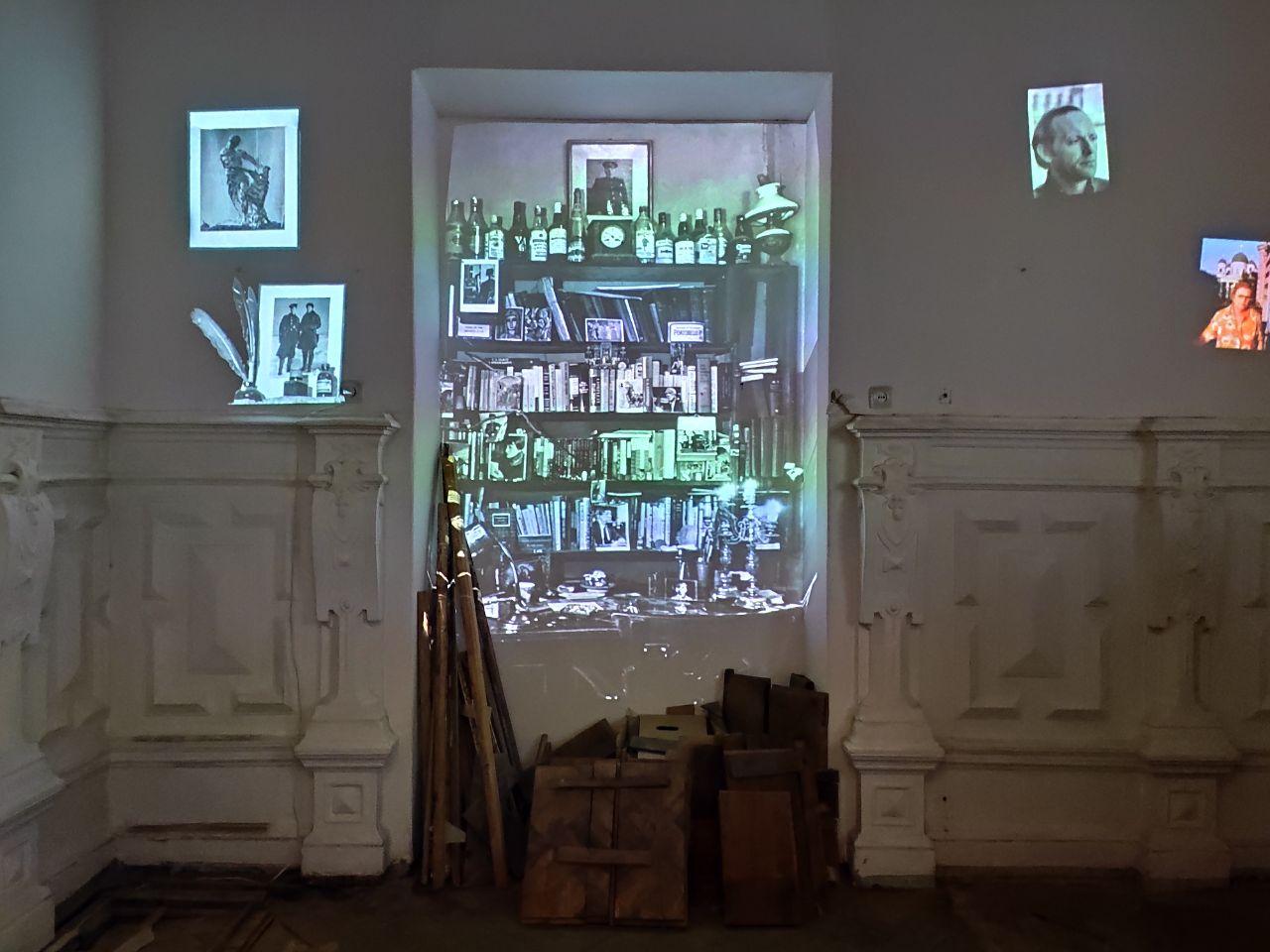
The furnishings in Brodsky’s room have been recreated using projections. Photo by Anastasia Rozhkova for Bumaga
A private Joseph Brodsky museum opened in the Muruzi House on Liteiny Prospect on Saturday, January 25, according to Maxim Levchenko, the museum’s creator and managing partner at the development company FortGroup.
The museum plans to run closed tours for groups of fifteen people. Visitors will need to register for them in advance, and tickets will be sold on the project’s website. The price of the tour has not yet been set. According to Levchenko, the museum will charge enough to cover salaries and maintenance costs.
The memorial section of the museum occupies the room where Brodsky lived with his family. It was uncoupled from the communal apartment to which it was attached. In his works, the poet dubbed the space “a room and a half.” The furnishings have been recreated using projections.
The second part of the museum is housed in the apartment next door. According to experts, its purchase cost about 35 million rubles [approx. 510,000 euros]. The walls have been stripped, floor boards have been put down, and photographs hung on the walls. An amphitheater, where lectures and performances will be held, has also been constructed.
The museum’s creators note that they are collaborating with the Anna Akhmatova Museum, which will provide them with historical objects in the future.
In 2018, Levchenko stated that total investment in the project would amount to more than one million euros. He planned to attract partners after the exhibition was ready.
RBK wrote that the museum would be curated by the people behind Brodsky.online, a virtual memorial to Brodsky, produced in conjunction with the Anna Akhmatova Museum at Fountain House.
Attempts to open a full-fledged Brodsky museum date to 1999, when the Brodsky Museum Foundation was founded. With support from banks and sponsors, it bought almost the entire memorial communal apartment in the Muruzi House. It was not possible to complete the purchase, however, as the proprietress of one of the rooms refused to leave. Because of this, the room where Brodsky lived had to be separated from the rest of the apartment.
Thanks to Eugenia Kikodze for the heads-up. See more photos of the new museum here. Translated by the Russian Reader
Elegy
Once upon a time this southern town
was the place where a friend and I met.
Both of us were young and had agreed
to meet on the seawall,
built in ancient times: we had read
about it in books.
Many waves have crashed against it since then.
Back on dry land, my friend choked on a petty
but bitter lie of his own, while I
hit the road.
And once again I am
standing here tonight. No one
came to meet me, nor do I
anyone to whom I can say, Come
to such-and-such place at such-and-such time.
The gulls scream.
The crashing waves splash.
The lighthouse is more a sight
for the photographer’s sore eyes than the sailor’s.
I stand alone on an ancient stone,
and my sadness doesn’t defile antiquity,
but compounds it. Apparently, the earth
is truly round, since you arrive
at a place where there is nothing but
memories.
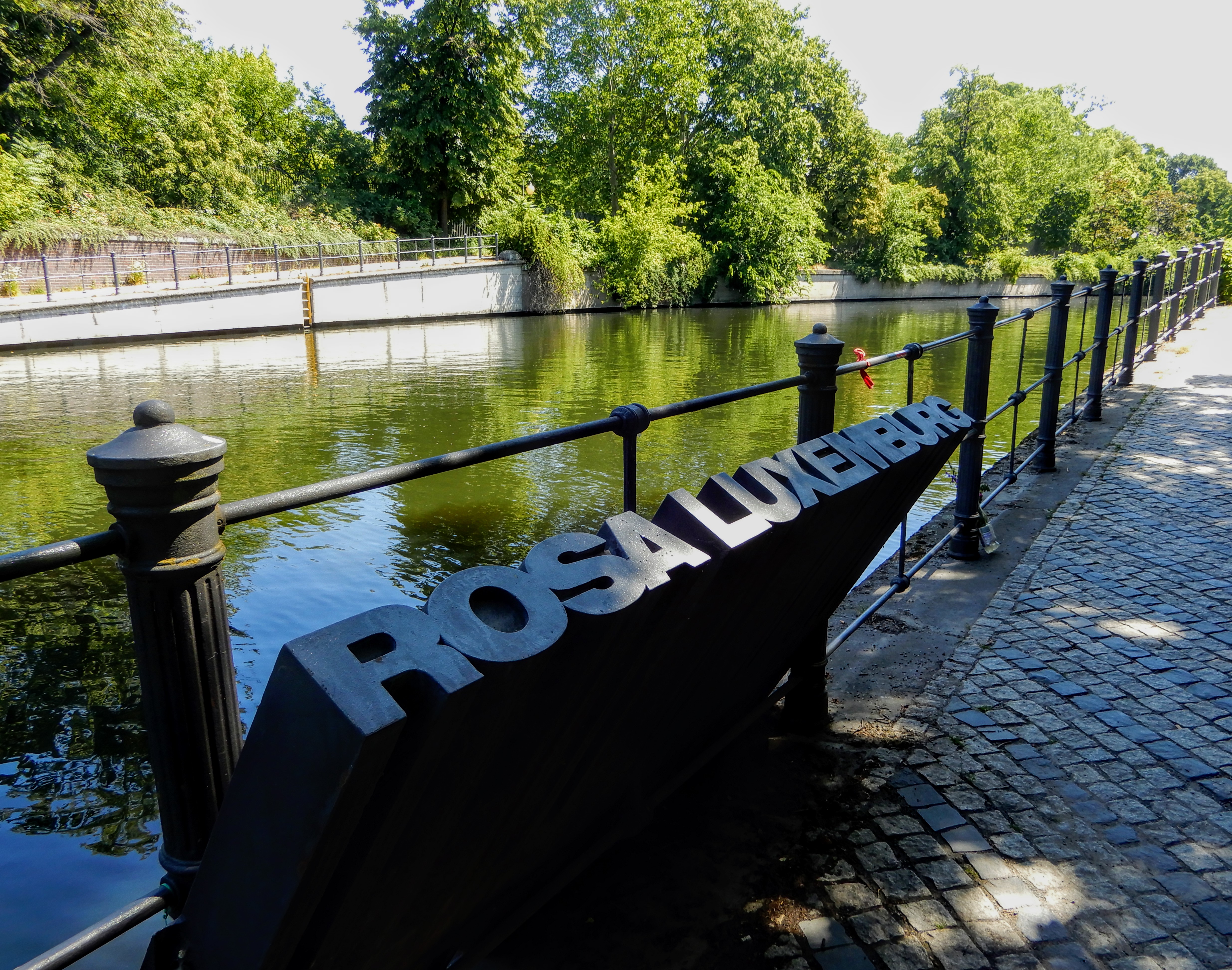
Landwehr Canal, Berlin
The canal where they drowned Rosa
L. like a stubbed out papirosa
Has almost virtually gone wild.
So many roses have moldered since that time,
It is no mean feat to stun the tourists.
The wall, concrete forerunner of Christo,
Runs from city to calf and cow
Through fields blood has scoured.
A factory smokes like a cigar.
And the outlander pulls up the native gal’s
Frock not like a conqueror
But like a finicky sculptor,
Getting ready to unveil
A statue fated to live a while
Longer than a reflection in the canal
Where Rosa was canned.
Source: Radio Svoboda. Photo and translation by the Russian Reader
Boris Mirkin, 1937–2019. Photo courtesy of Iofe Foundation
Boris Savelyevich Mirkin, poet, political prisoner, board member of the St. Petersburg Memorial Society, and our comrade, died on April 1, 2019.
Boris Savelyevich was born in Leningrad in 1937. During the Siege, he was evacuated from the city. He graduated from the Leningrad Chemical and Pharmaceutical Institute in 1964 and went to work at Research Laboratory No. 1 of the Military Medical Academy. After Soviet troops invaded Afghanistan, Boris Savelyevich wrote poems condemning the invasion. He was arrested in 1981 and charged with violating Article 70 Part 1 of the RSFSR Criminal Code [“anti-Soviet agitation”]. The Leningrad City Court convicted him, sentencing him to three years and six months of forced labor. He served his time in the camps of Perm Region. After his release, Boris Savelyevich worked as a lathe operator at the Krasny Vyborzhets factory in Leningrad, a trade he had picked up in the camps. In 2004, he wrote and published a book of memoirs and poems entitled I Face the Music (Derzhu otvet...).
The book included this poem, which he wrote in a labor camp in Perm Region in 1982.
Since childhood I hated lies. They sickened my soul. Truth alone is light and power, Piercing the heart like a knife. Those who lied from podiums And pulpits, who regaled The baron’s hollow tales As truth, I found odious.
Who sent us far not knowing why, Who knew only head-on attacks, So no one got off with a scratch, Who marched us to heaven not knowing the way.
Alas, to this day the liars thrive, Ignoring the truth for falsehoods. Oh, the world is filled with mugs, The smug faces of those who worship lies.
People are invited to pay their last respects to Boris Savelyevich Mirkin from ten to eleven in the morning on April 5 at the morgue of the Elizabeth Hospital, 14 Academician Baykov Street.
Source: Iofe Foundation Newsletter, April 4, 2019. Translated by the Russian Reader
Beshrew that heart that makes my heart to groan
For that deep wound it gives my friend and me!
Is’t not enough to torture me alone,
But slave to slavery my sweet’st friend must be?
Me from myself thy cruel eye hath taken,
And my next self thou harder hast engross’d:
Of him, myself, and thee, I am forsaken;
A torment thrice threefold thus to be cross’d.
Prison my heart in thy steel bosom’s ward,
But then my friend’s heart let my poor heart bail;
Whoe’er keeps me, let my heart be his guard;
Thou canst not then use rigor in my gaol:
And yet thou wilt; for I, being pent in thee,
Perforce am thine, and all that is in me.
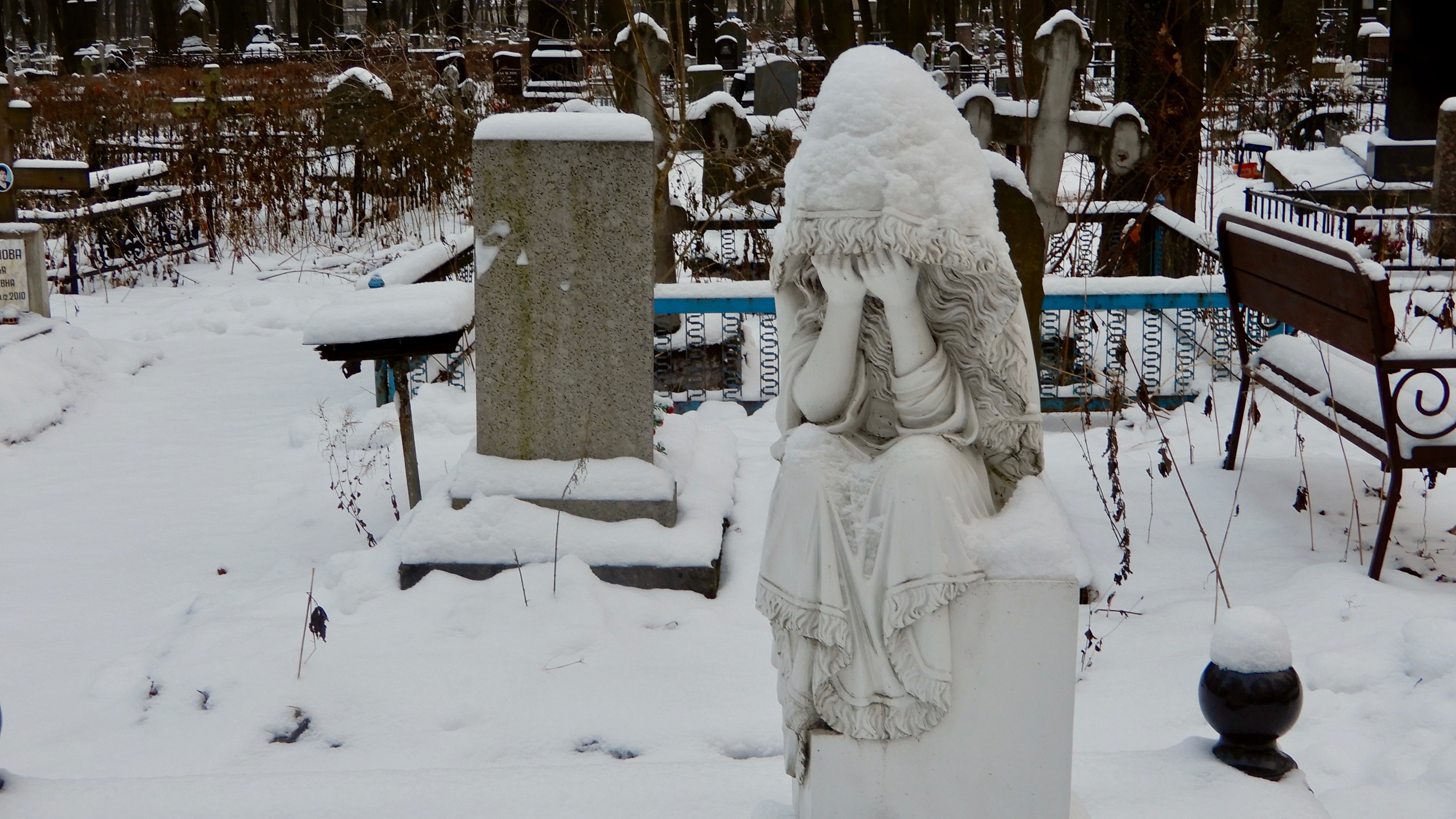
Source: etc.usf.edu. Photo taken at Volkovo Lutheran Cemetery in Petersburg on December 22, 2018, by the Russian Reader
My mistress’ eyes are nothing like the sun; Coral is far more red than her lips’ red; If snow be white, why then her breasts are dun; If hairs be wires, black wires grow on her head. I have seen roses damask’d, red and white, But no such roses see I in her cheeks; And in some perfumes is there more delight Than in the breath that from my mistress reeks. I love to hear her speak, yet well I know That music hath a far more pleasing sound; I grant I never saw a goddess go; My mistress, when she walks, treads on the ground: And yet, by heaven, I think my love as rare As any she belied with false compare.
I never saw that you did painting need And therefore to your fair no painting set; I found, or thought I found, you did exceed The barren tender of a poet’s debt; And therefore have I slept in your report, That you yourself being extant well might show How far a modern quill doth come too short, Speaking of worth, what worth in you doth grow. This silence for my sin you did impute, Which shall be most my glory, being dumb; For I impair not beauty being mute, When others would give life and bring a tomb. There lives more life in one of your fair eyes Than both your poets can in praise devise.
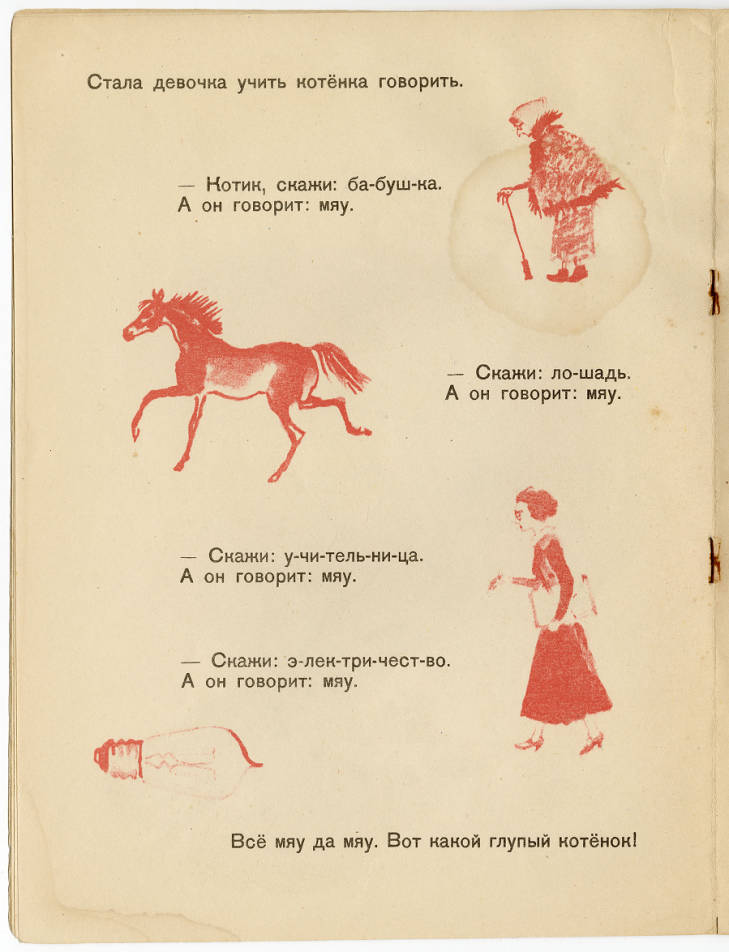 Samuil Marshak, Whiskered and Striped, illustrated by Vladimir Lebedev (Detizdat, 1938)
 Samuil Marshak, Whiskered and Striped, illustrated by Vladimir Lebedev (Detizdat, 1938)
 The furnishings in Brodsky’s room have been recreated using projections. Photo by Anastasia Rozhkova for
 Boris Mirkin, 1937–2019. Photo courtesy of Iofe Foundation