I went to see the spontaneous memorial to Prigozhin on Zolnaya [“Ashes”] Street [near the former (?) Wagner Center office building in St. Petersburg]. I have to say that what I saw impressed me. People kept coming and coming—young dudes and girls, men who were slightly older, and some people even had their kids with them. They brought flowers. They stood and looked for a long while. Some got down on their knees, and this one young dude crossed himself and genuflected. A Chinese guy was videotaping the whole scene and talking in Chinese, but it troubled no one. That’s him sporting a rucksack and filming point-blank the woman in the hat who is putting what looks like a whole bush of roses in a vase.
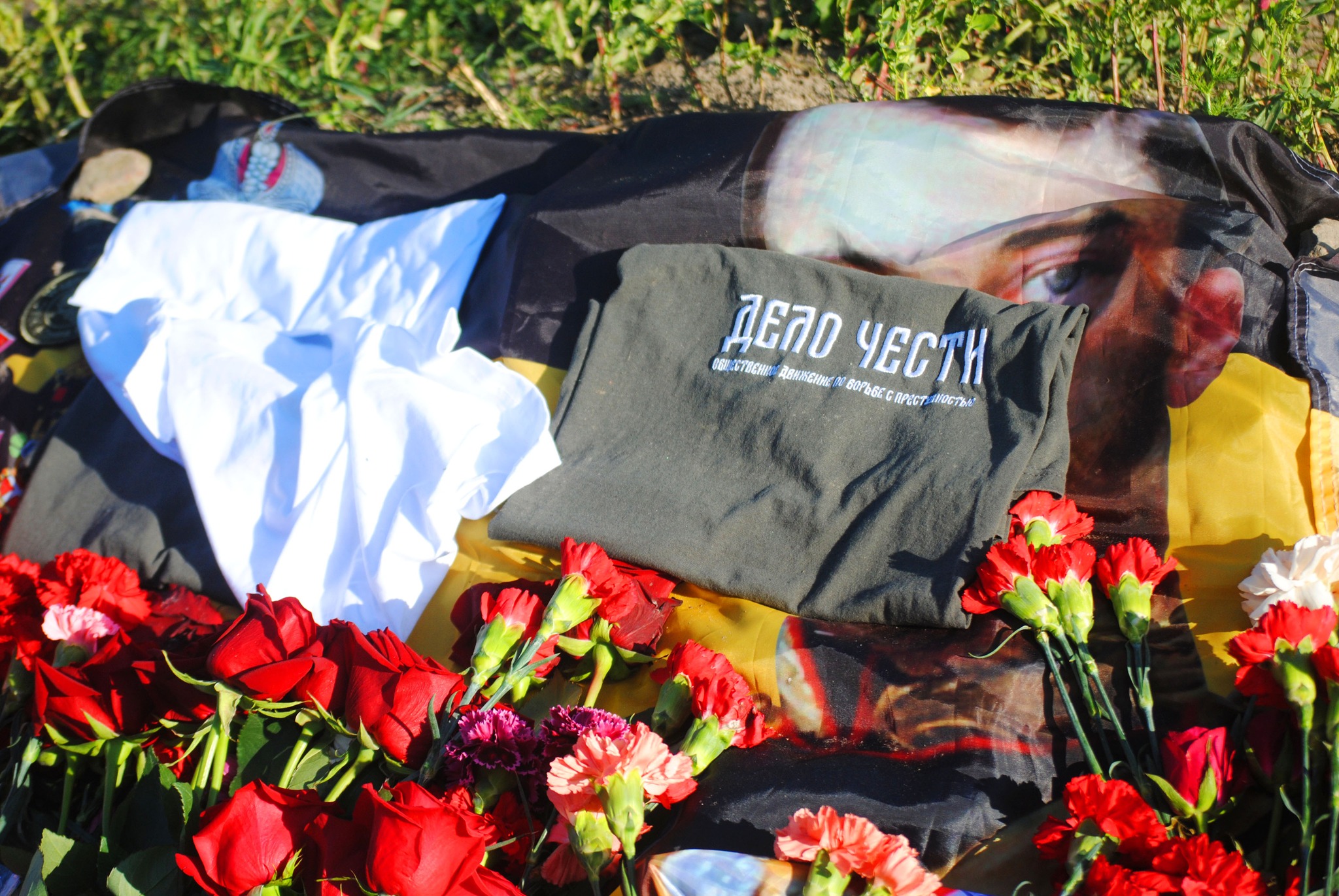
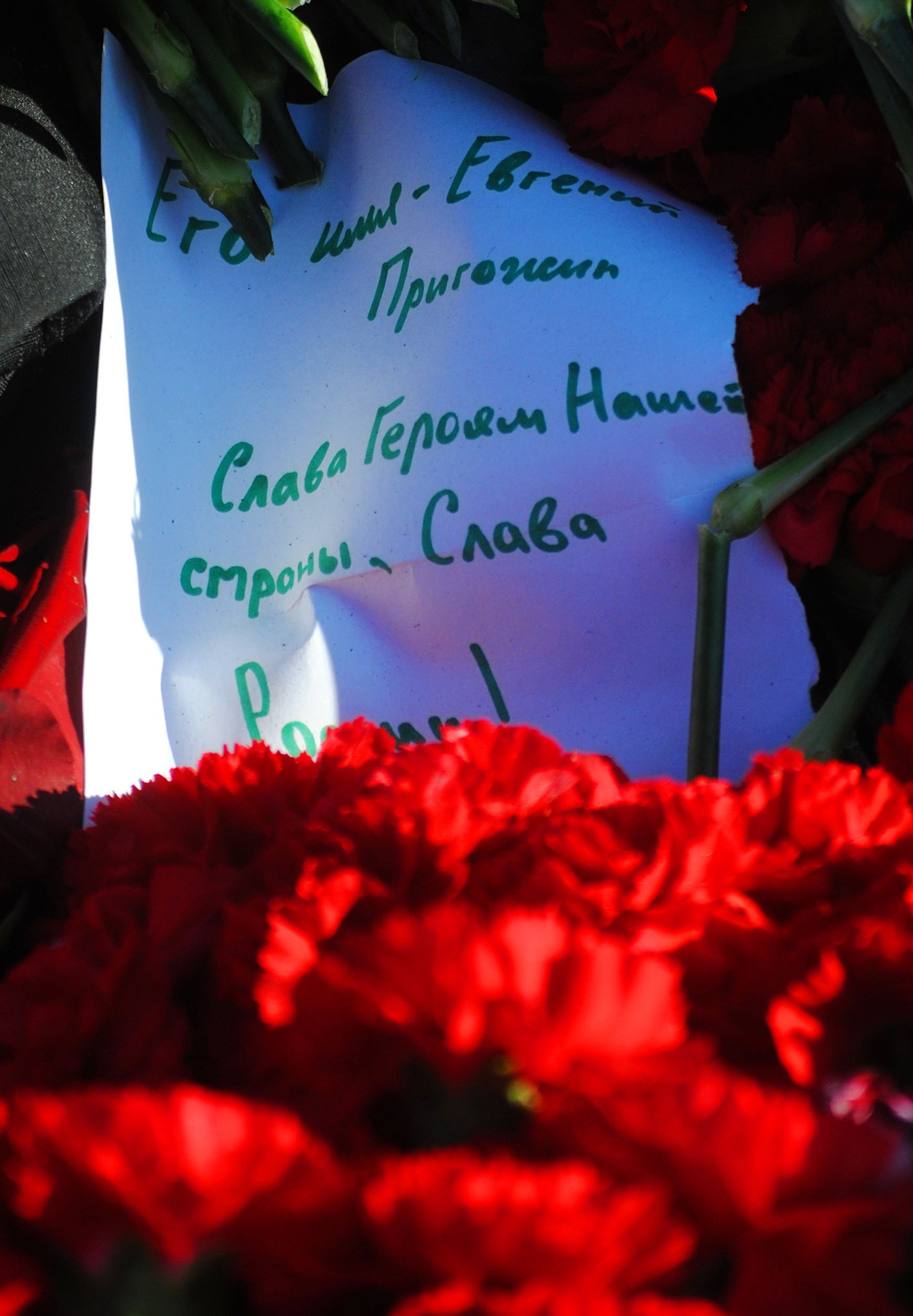
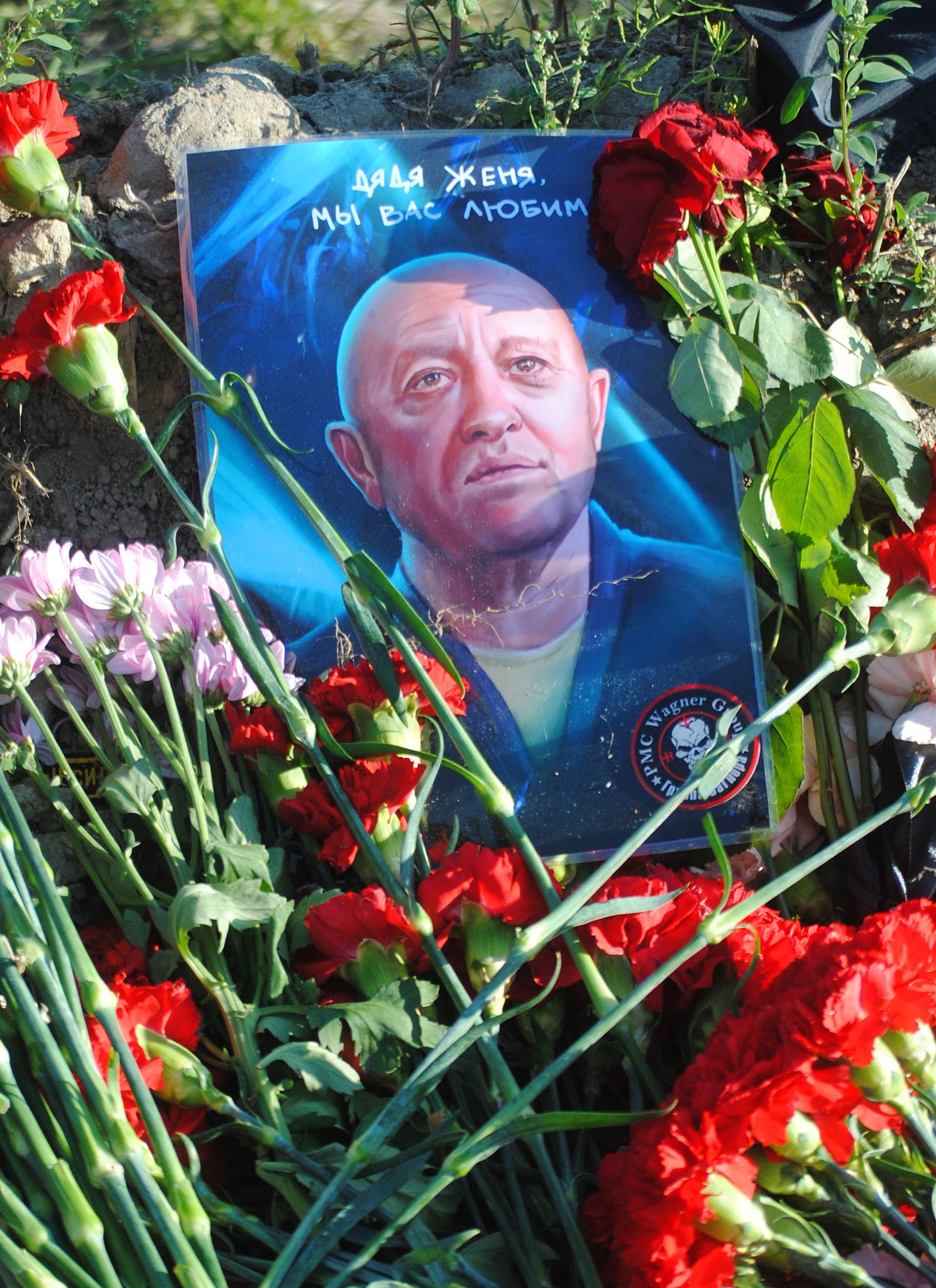

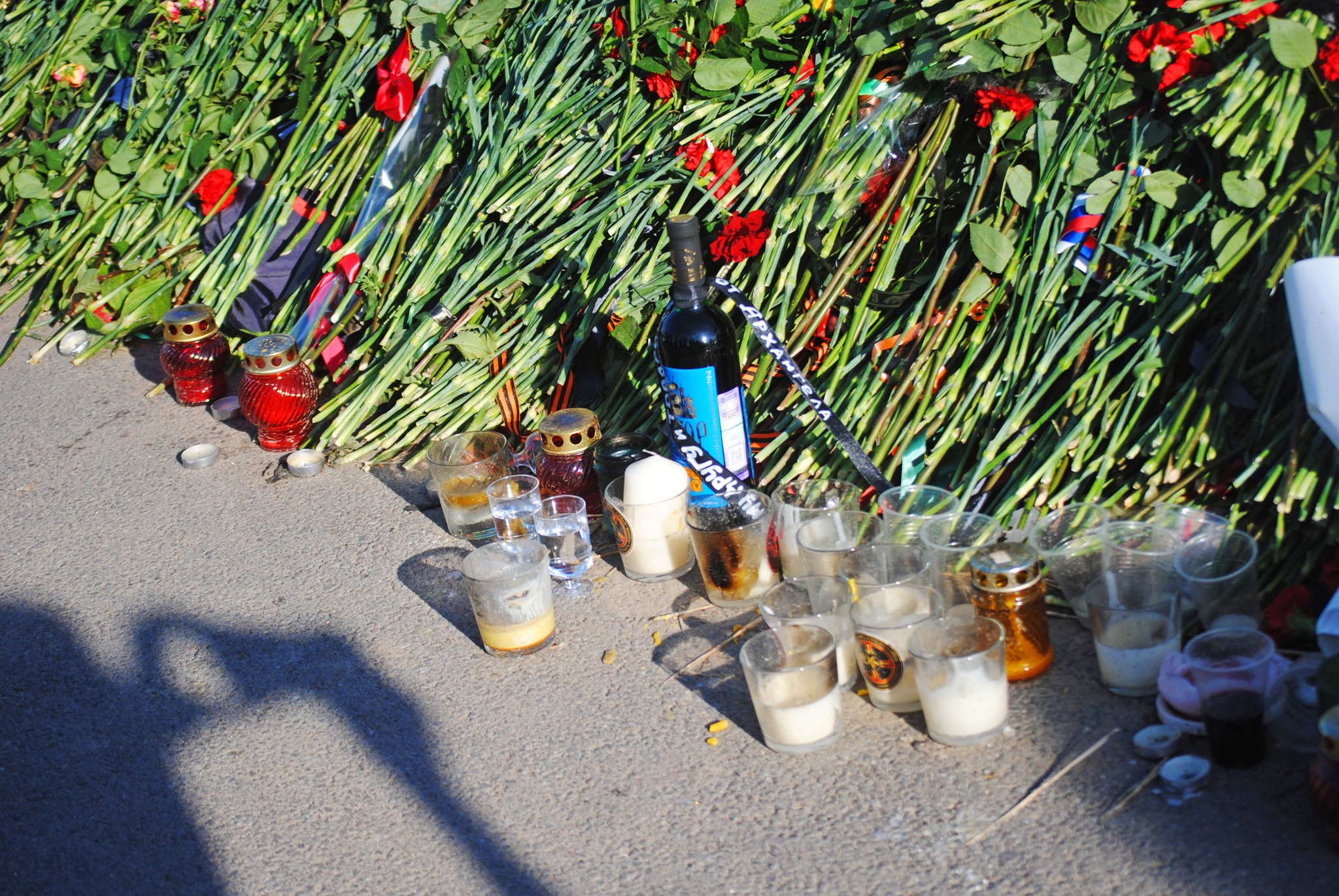
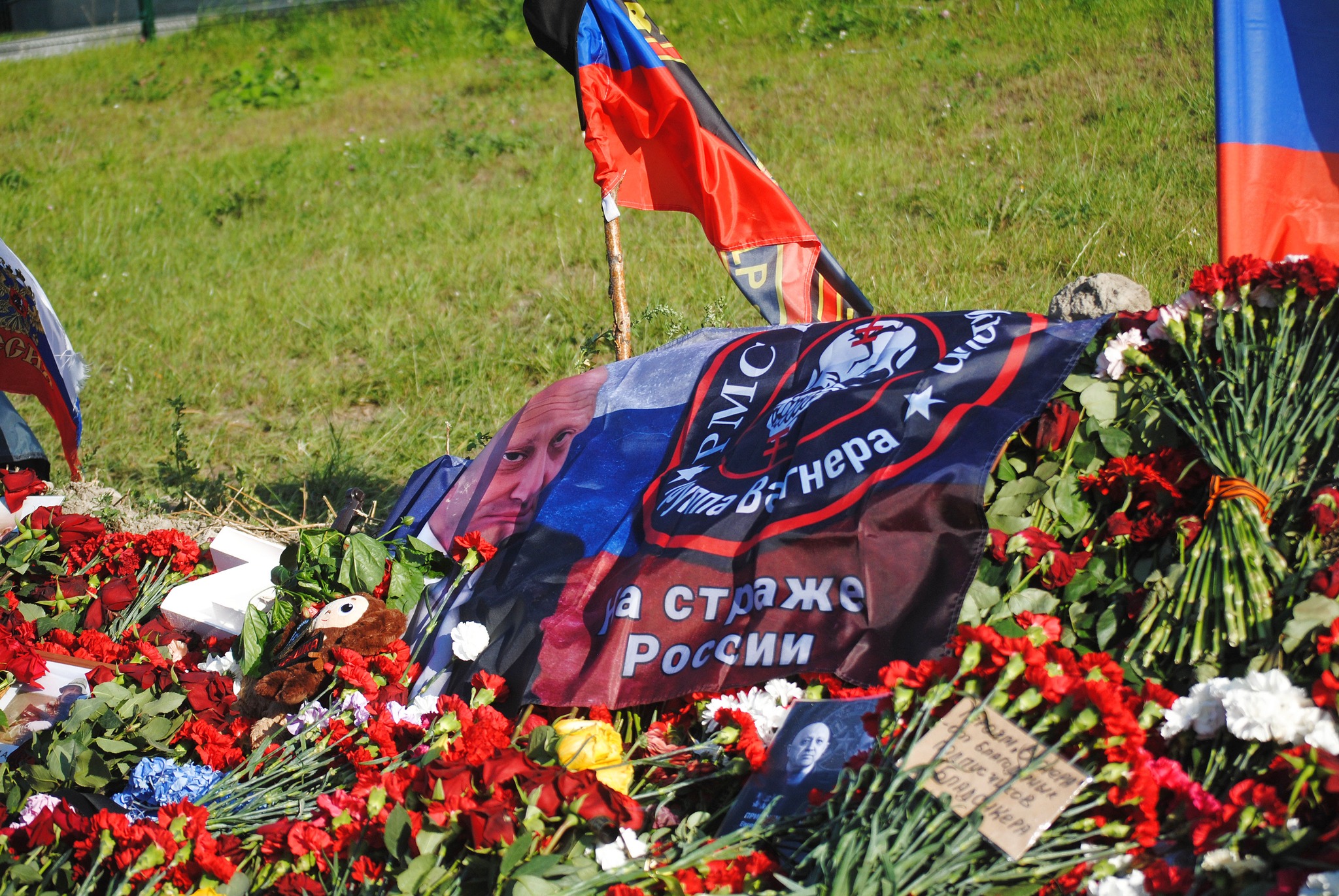


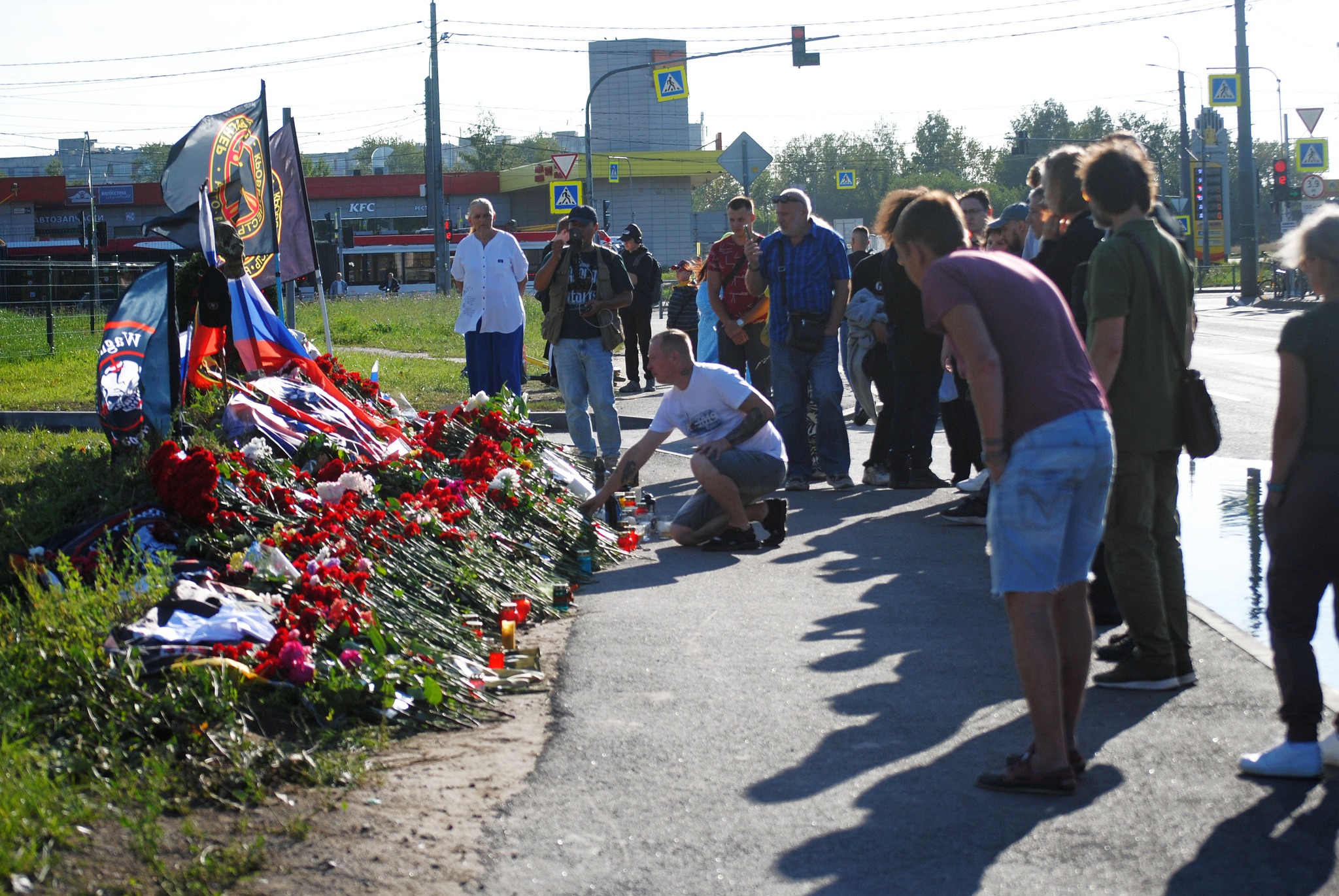
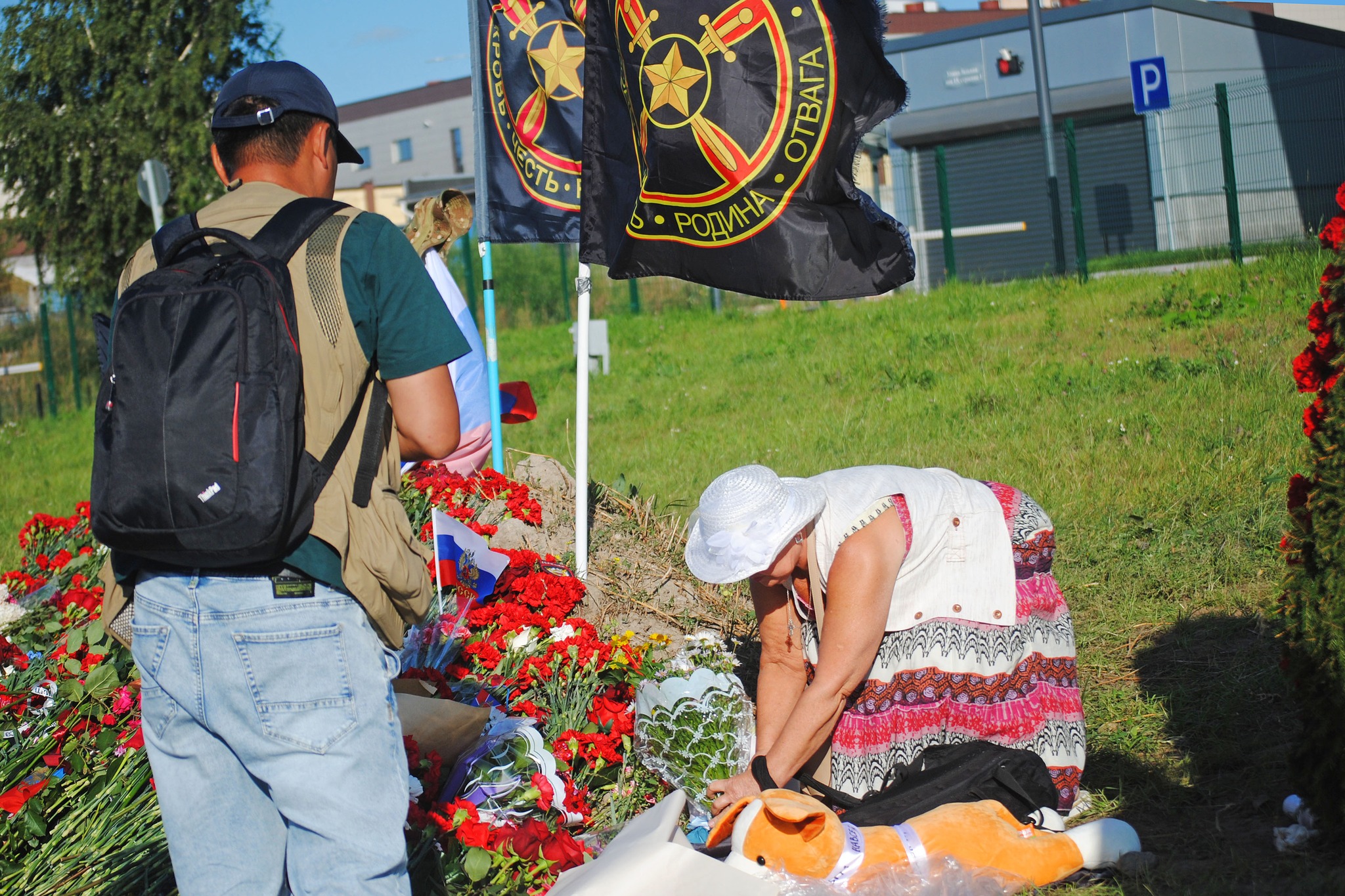
Source: Marina Varchenko (Facebook), 26 August 2023. Translated by the Russian Reader
Hello, dear Moscow Times readers! This is your weekly newsletter, and we’re kicking off with the (near-certain) death of Yevgeny Prigozhin, the man dubbed Vladimir Putin’s “chef.”
However, Prigozhin gained notoriety not for his culinary talents, but for his business ventures. He set up several enterprises that were extremely vital to the Russian authorities. The most well known were the private military company Wagner and the “troll factory” in Olgino, a suburb of Petersburg, which was used as a tool for influencing the information space in the Russian Federation and the world.
Trolls are fantastic creatures, and they vanished of their own accord, you might say, but apparently it was Vladimir Putin who put the kibosh on Wagner. The rowdy band of freewheeling mercenaries, who took their orders from god knows whom, has come to end.
We should recall, of course, that Prigozhin took a long time admitting that Wagner and the Olgino trolls worked for him. He acknowledged this obvious fact only in the midst of the war, and this was the first step toward the mutiny of 23 June and his (near-certain) death on 23 August. The public owner of an effective resource can either use it or give it up. Prigozhin didn’t feel like giving Wagner away—that is, transferring it to the command of the Defense Ministry (and take an oath, as Vladimir Putin has now ordered)—and so the strange mutiny that had such supremely serious political consequences happened, and, later, the Embraer jet plane crashed in the Tver Region. (It was the first time this type of plane had an accident involving fatalities.)
We interviewed people in the know about the moods among Russia’s elites to find out how they were taking the “chef’s” demise. We went further, though, asking several people who kept a close eye on Prigozhin’s rise and (alas, literal) fall to explain the meaning of the story that has unfolded before our eyes.
The first explanation comes from an observer in civil society who claims that the plane crash was caused by underlings going farther than they had been ordered to go. In fact, this observer argues, Putin did not want Prigozhin dead. Without his trolls and without Wagner, which had ceased to operate in the RF and had begun to be transferred to Defense Ministry-controlled outfits in Africa, Prigozhin was no threat to Putin. However, there were people (in the GRU, most likely) who believed that Putin would be pleased if they brought him the mutineer’s head on a plate.
The risks are the same as in the case of the late [Boris] Nemtsov [assassinated near the Kremlin in 2015]. After his untimely death, Prigozhin’s significance as a symbolic figure could increase and thus serve as a consolidating factor. We cannot rule out the possibility that Prigozhin’s memory will lead to the creation of something bigger than what emerged around the man during his lifetime.
The second explanation comes from an observer in the defense sector, who argues that we’re seeing a repeat not of Nemtsov’s murder, but of the death of Polish president Lech Kaczyński in 2010. (The official Polish Tu-154 plane carrying him and other Polish officials crashed while attempting to land in Smolensk, Russia. Many Poles believe that the plane was brought down by a bomb planted onboard by the Russian secret services.)
The hit squad didn’t go too far. On the contrary, [Prigozhin’s plane crash] was a carefully planned operation that was brought off nearly flawlessly. Although we can claim that such things don’t get done without Putin’s consent, there is no way to prove it.
The third explanation comes from a political spin doctor and frequent guest on YouTube channels. He wonders why everyone has decided that the passenger manifest and the presence of his personal effects [at the crash site] is sufficient to prove that Prigozhin was killed. We cannot rule out the possibility that Prigozhin and Putin made a deal and that Yevgeny Viktorovich will be the Kremlin’s secret weapon. I’m joking on this point, of course. But Russian realities are such that a man dies he shakes off all the bad stuff that happened in his life, and people focus on his admirable qualities. Look at Stalin: his bloodthirstiness and lack of principle have been forgotten, and no one remembers the terrible mistakes he made while running the country. He’s a winner, a victor. Stalin and Prigozhin cannot be compared, but nor can we deny that Prigozhin has been the most auspicious commander in the Ukraine war.
The fourth explanation comes from an opinion journalist and writer who asks us to the recall the Russian fairytale about the vixen and the thrush. The vixen terrorizes the thrush by threatening to kill its fledglings. First the vixen asks the thrush to give it something to drink, and then it asks the thrush to feed it, so the thrush helps it to steal food and beer. (The analogy here with the “chef” is obvious.) The sated and drunken predator then orders the thrush to make it laugh, and so the thrush alights on the heads of two peasants, father and son, who cripple (and even kill) each other whilst trying to beat the thrush. (Thus recalling the Olgino trolls and their work on the US elections, for example.) After the vixen has laughed its fill, it says to the thrush, Now scare me! The thrush raises a mutiny against the fox—oh, sorry, it gets hunting dogs to attack the vixen. Depending on which version of the fairytale you find, the vixen either gets killed or escapes the attack, but it is genuinely frightened.
Vladimir Putin wanted to have an alternative both to his own generals and to the supremely dangerous Kadyrovites. He came to count on Prigozhin to carry out sensitive missions both in Africa and the RF, but failed to take into account the man’s ambitions and got carried away. When Putin was faced with Prigozhin as an actual threat, he had to defend himself in earnest.
Source: Moscow Times Russian Service, weekly email newsletter, 27 August 2023. Translated by the Russian Reader
Thanks to Monique Camarra (EuroFile) for the heads-up)
Mykola Honchar lives in a crumbling stone house in what is left of a tiny hamlet of eastern Ukraine. The town was attacked by Russian forces in June of last year, as the Wagner mercenary forces were spearheading a renewed offensive.
Even before the Kremlin set Wagner loose to wreak havoc in Ukraine, the Russian campaign was notable for its brutality. But from the moment Wagner forces entered the war in April 2022, they earned a special reputation for bloodlust from civilians and soldiers alike.
To Mr. Honchar, the death this week of Wagner’s leader, Yevgeny V. Prigozhin, responsible for so much carnage in the war, would be fitting — a violent end to a violent life.
“He has blood on his hands,” said Mr. Honchar, 58. “If there is a god, god will figure out what to do with him.”
Even in a war in which civilians were shot dead in the Kyiv suburb of Bucha, and the town of Mariupol was bombed into oblivion, Wagner and Mr. Prigozhin cultivated an image of brutality.
A video was promoted across Wagner-affiliated social media of the execution of one of Mr. Prigozhin’s own soldiers with a sledgehammer after he was captured and then released by the Ukrainians in a prisoner swap. While in custody, the prisoner had taped an interview saying he did not believe in Russia’s war.
“A dog receives a dog’s death,” Mr. Prigozhin said in the video.
By the time Ukraine regained Mr. Honchar’s village of Bohorodychne, Mr. Honchar was one of only two people left living in the village, once home to around 800 people.
The other person was Nina Honchar, his 92-year-old mother. He had stayed there despite the danger to take care of her. She died earlier this month.
He does not know if Wagner fighters were among the occupiers. “I did not ask for their documents,” he said. But he recalls seeing Russian fighters, who appeared to be on drugs, wandering around town in their underwear, their bodies covered with prison tattoos.
Wagner amplified its force by recruiting prisoners. After Wagner left the battlefield in June of this year, the Russian military continued the use of convicts as part of newly formed “Storm Z” units along the most dangerous front line positions.
To Mr. Honchar, it hardly matters under what banner the soldiers fought. The legacy of Wagner and Russian forces, he said, are one and the same: death, destruction and ruin.
“My brother and his wife were torn apart by shells,” Mr. Honchar said. Before he could bury them, he had to collect their body parts. “There was no skull, his hands were scattered,” he said of his brother.
Once he collected what he could find, he wanted to bury them in the local cemetery but it was under constant attack and too dangerous. He laid their remains in a trench and covered them with dirt.
When his 80-year-old neighbor died, he buried her in the crater of the shell that killed her.
Looming over the village is the Church of the Holy Mother of God, ‘Joy of All Who Sorrow.’ With its sky blue walls visible for miles around and majestic golden domes, it was once a draw for tourists and pilgrims.
Now its walls are blasted apart, one dome has tumbled to the ground and the gold leafing blasted away from another.
[…]
Source: Marc Santora, “In a Gutted Village, No Tears For Prigozhin,” New York Times, 27 August 2023, p. 9
