Goodbye to All That

One thing I find especially charming about certain Russians, often academics, who have lived for decades in “straunge strondes” (чужбина), is their conviction, now that the current “vegan” times have permitted them to make occasional and even annual junkets back to the Motherland, that life here is now nearly the same in every respect as back in the straunge strondes.

I’ll leave to one side the political aspects of this queer conviction, focusing instead on a single aspect of everyday life. I’ve heard it said a million times by many a Russian not resident in God’s Heavenly Kingdom on Earth full time or even part time (really) that wi-fi and internet connections here are the top of the pops, so much better than wherever they live, surrounded by black people and Mexicans and uncultured rednecks.

I have to admit that, outside of Russia, my only experience of wi-fi and internet connections over the last ten years or so has been places in the States and elsewhere where I’ve stayed for short stretches, including my parents’ farm, my sister’s house in the Cities, and the apartments of friends in other cities and countries, as well as my own secret hideout in Free Finland.

In all these places, I enjoyed shockingly fast, nearly outage-free internet and wi-fi connections. I can count on the fingers of one hand the number of times there were full-fledged outages in Free Finland, and all of them were sorted out in a matter of an hour or two, if not in a few minutes, with the sincerest of apologies by my Finnish providers.

As for the Cradle of Three Revolutions, everything was cool and seemingly getting cooler until sometime in the past year when, I suspect, the FSB placed so many demands, both physical and financial, on internet providers, that they are now no longer capable of doing routine maintenance on their networks and upgrading their hardware and software, despite the growing demand for their services on the part of the taxpaying and fee-paying populace.

But the ISPs serve a higher power—the siloviki—who are so out of their minds right now as to imagine you can organize a revolution on VKontakte by reposting pictures of Nazis and Navalny or something of the sort. They thus have to have ever-increasing capacities for surveilling the peons they rule over like medieval liege lords (or so they imagine), and they have tasked the country’s internet providers with giving them lots of electronic windows into the souls of these traitorous worms.

At least, I hope this is the case, because otherwise the sheer misery and torment visited on us since approximately last spring by our once faithful internet provider, long ago swallowed up by another company from Moscow and bereft of all the charms and virtues it had back in the days when I was one of its first customers, are inexplicable.

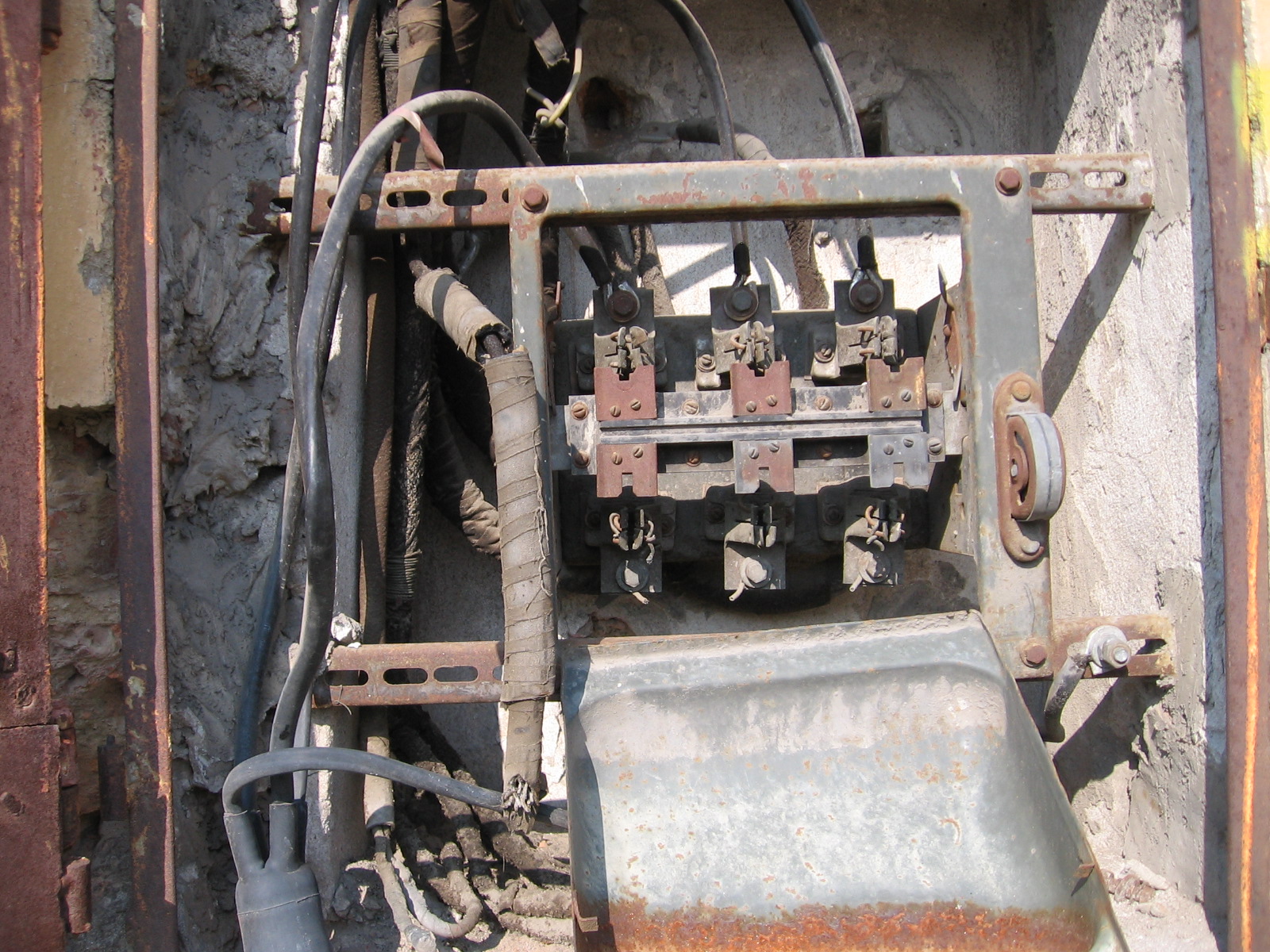
One look at the junction box in our attic will tell you tell that, in fact, is where the problem lies, and yet every time our internet goes under, which can be several times a day, the mumblers who man the phones at our provider’s tech support service run us through the same routines, all meant to persuade us morons that the problem is with our computers or even with our ignorant selves, not with the woeful state of the junction box in the attic or farther down the line.

Things turn from irritating to tragicomic when our provider sends an actual person to fix the mess. Nearly all of them (at this point, a dozen or so have darkened our door since spring) start out by ringing the changes on our wi-fi router, which supposedly has to be replaced, or the plastic snap connector on the end of the broadband cable or the cable itself.

If we can induce them to go up into the attic and open the junction box or just look at the junction box, which has wires poking out from in in all directions, like a Dalek gone south, they break down and admit the problem is on their end. If they’re kind and competent, they might apply a temporary fix by switching out a couple of cables in the box.

Then we have the joy of living humanity’s shared electronic life for an hour or two, or day or three, or, god forbid, a whole week. Sooner or later, though, the plug will be pulled on our meager joy, and our provider, unable or unwilling to give us the real explanation for the problem (our junction box? their servers back at the head office? SORM?), will plunge us back into their rehearsed routine of selling snake oil to their loyal customers, whose nerves shattered and hearts broken, their ability to do their own work suspended indefinitely.

I think all of us who actually live in the real Russia full time could make a long list of the country’s practical shortcomings, without once touching on politics per se, and the list would be long and sobering and, occasionally, incredibly frightening.

But the crypto-Putinists who teach at places like Berkeley and don’t actually live here and never or hardly ever deal with this failed state, don’t want to have the hard talk about how nearly all of these eminently practical failures are caused, ultimately, by wildly bad governance.

And what is the point of having that talk with them? They’ll only get testy and resort to whataboutism, the last refuge of scoundrels. ||| TRR, 19 September 2018. Photo of the beautiful clear blue sky in downtown Petersburg by the Russian Reader
Byudzhetniki

Byudzhetniki (state sector employees), as imagined by Yandex Zen. This image illustrates a 2019 op-ed piece claiming that 51.8% of all workers in Russia are state sector employees or byudzhetniki (and bemoaning that fact because, allegedly, it lowers GDP).

Alexander Skobov | Facebook | September 18, 2021

I am terribly annoyed by the word byudzhetniki [state sector employees], when it is used in relation to those [whose superiors] try and corral them into voting a certain way. And it’s not just that I worked in the public schools for almost twenty years and would have liked to see them try and force me to vote in a certain way. The fact is that the system of coerced corporate loyalty works exactly the same in the private sector as in the state sector. It is exactly the same in private companies. The byudzhetnik is largely a bogey of the liberal mindset. Do you think it is more difficult to make an employee of a private company “fall into rank” than a state employee? Just take a look at Google.

Translated by the Russian Reader

The Fix Is In: Sevastopol

“@novaya_gazeta !! The ballot box at Polling Station 98 in Sevastopol is being stuffed right now, Novaya Gazeta’s correspondent reported. This can be seen on the video surveillance system. About 20 minutes after the site closed, a man is stuffing ballots, and a woman is helping him. Video: Nadezhda Isayeva, Novaya Gazeta.”
#TheFixIsIn

The Fix Is In: “Killing Your Children’s Future”

Polling Station 475, Kletnya, Bryansk Region:
“A member of the [election] commission, [her head] covered with a hood, tosses bundles of ballots for the party of the beloved President [into the ballot box]. That’s how they’re killing your future and your children’s future.”

The Fix Is In (Social Distancing)

https://twitter.com/novaya_gazeta/status/1438842940743372802/photo/1

More evidence that #TheFixIsIn in the 2021 Russian elections, this time from Novaya Gazeta via election observers from A Just Russia party: “The head of the Central Elections Commission, Ella Pamfilova, said that the three-day voting is necessary so that voters can observe social distancing. These are photos of Polling Station No. 343, in Petersburg’s Vyborg district, in the middle of a working day.”


The Fix Is In

Ballot box stuffing in Petersburg, captured on video by Irina Fatyanova and published by the indispensable Mediazona: “This video from Petersburg shows a man in a medical mask and a cap coming out of a curtained booth and having a hard time shoving a pack of ballots into the ballot box.”

From the Lives of the People


George Losev
Facebook
September 14, 2021

I chatted with an 86-year-old woman while I was changing the power outlet on her kitchen stove. She was from a village near Vologda and still pronounced her unstressed o’s as full o’s. She worked for 58 years on construction sites. She started working in ’54 or ’55. She worked for three years as an unskilled laborer, then for eight years as a painter before making the switch to plastering.

“I really liked this work. But then everything fell apart, and anyone could get the job. If you could hold a brush, you could go to work as a painter.”

If I understood her correctly, she said that, in the fifties, sixties and seventies, without a specialized education, it was impossible to get a job anywhere except as a helper.

She said that they had lived quite poorly, that the foreman earned 15 rubles a month. I didn’t understand how this could be and so I expressly asked her again, and she confirmed what she’d said.

In the seventies, the planning got better, and life became easier. But she had still spent her entire life “in poverty.”

“My legs began to give out, and I was forbidden to work. Otherwise I would have kept working. I was already used to this being how things were, that we were working stiffs and this was how we lived.”

Her husband also worked on construction sites, as a finisher. She has a daughter. She lives in her son-in-law’s two-room apartment, renting out one of the rooms. Despite her obvious and visible poverty, the apartment was very clean. She tried to pay me generously, but I didn’t take any money.

We started talking about migrants. She said they were good, hard-working, polite people. They always helped her, carried her groceries. Migrants had saved her life after she had her first or second stroke, which had happened outside. Russians had walked on by, but “Georgians or migrants, basically two non-Russians” had come to her aid, telephoning an ambulance and waiting with her.

“I don’t want to badmouth migrants. I just wonder where our people are, Russians? Have they really all retired? Or don’t they want to work?”

George Losev is a housing authority electrician, veteran grassroots activist and DIY football enthusiast in Petersburg. Thanks to Jeremy Morris for helpful comments on the translation. Photo and translation by the Russian Reader

Navalny’s Musicians

13 musicians not allowed to perform at City Day concert in Moscow due to support for Navalny
The Village
Tasya Elfimova
September 11, 2021

The Federal Protective Service (FSO) did not allow several musicians to perform at a concert in honor of City Day in Moscow due to their alleged support of Alexei Navalny.

Sergei Sobyanin and Vladimir Putin were planning to attend the celebration, so the FSO vetted the lists of performers in advance. The FSO did not admit thirteen people to the performance without explaining the reasons. Dmitry Klyuyev, an employee of the State Academic Chapel Choir, believes that it happened because the musicians were in the leaked databases of Alexei Navalny’s projects or had taken part in protest rallies.

Four employees of the chapel choir, three people from the Svetlanov State Orchestra and six people from the team of directors were removed from the concert.

“The organizers are in shock, no one has explained anything to them,” Klyuyev said.

Source: OVD Info

Translated by the Russian Reader

Alexander Gudkov, “Aquatic Disco,” a song inspired by Alexei Navalny’s revelations that the blueprints for “Putin’s palace” contained a room labeled as such

Moscow Police Use Leaked Personal Data To Investigate Navalny Supporters
RFE/RL Russian Service
August 18, 2021

Moscow police are using leaked online personal data from projects linked to jailed opposition politician Aleksei Navalny to investigate people who have supported the Kremlin critic.

The OVD Info website said on August 17 that police had visited some 20 individuals who registered for online projects developed by Navalny associates or donated to Navalny’s Anti-Corruption Foundation (FBK) and his other projects.

According to OVD Info, police are demanding explanations from the people as to how their names were included in the leaked data related to Navalny’s online projects and why they are involved with him.

In June, a court in Moscow labeled FBK and Navalny’s other projects and groups extremist and banned them. Under Russian law, cooperation with such groups is considered illegal and may lead to criminal prosecution.

Police have not said how they obtained the people’s personal data from Navalny’s websites.

One person, who was not identified, told OVD Info that police asked him to file a legal complaint against Navalny to accuse him of sharing personal data.

Journalist and municipal lawmaker Ilya Azar, whose personal data was among those leaked, wrote on Telegram late on August 17 that police had tried to visit him as well, but he was not at home.

“They talked to [my] neighbors about some personal data leaked on the Internet,” Azar wrote.

One such leak took place in April, when the online campaign called “Freedom to Navalny” was reportedly compromised.

Navalny associates said at the time that a former FBK worker had “stolen” all the personal data of those who registered at the pro-Navalny site.

After that leak, the Moscow [subway] fired dozens of workers whose personal data turned up among the names of Navalny supporters.


Band Practice

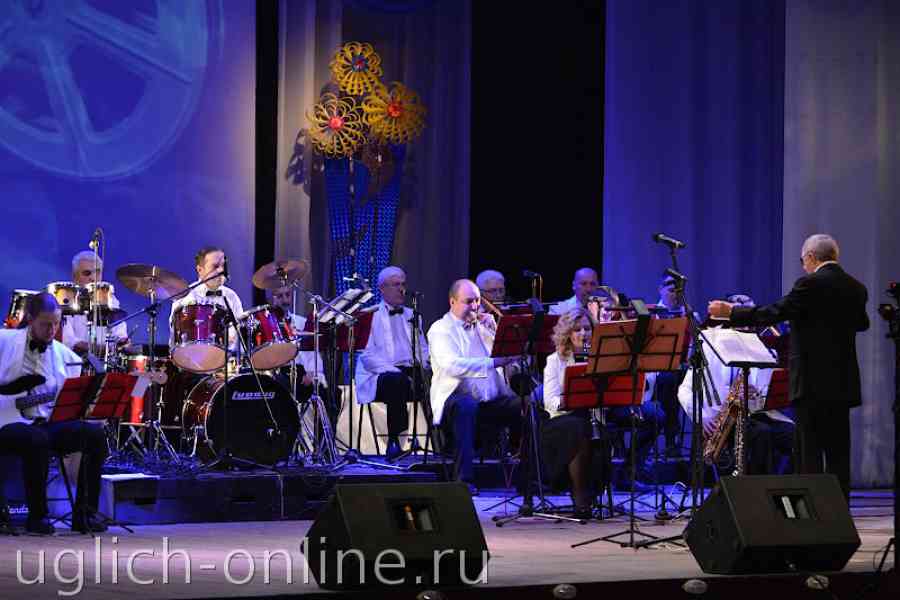
Drivers, workers, and policemen play in the Uglich recreation center’s brass band. The vocalist hosts a children’s program on local television, while the drummer performs as Father Frost at New Year’s celebrations.

Most of the musicians played in the October Club Brass Band as children, and the current ensemble is named the Sysoyev Pop and Brass Band in memory of Alexander Sysoyev, who came to town in 1945, after the war, and organized it. When they grew up, the children went to the army, most often serving in military bands, and if they returned to Uglich, they continued to play. There were two brass bands in the city – at the watch factory and at the engineering works.

In the nineties, the factories shut down and the bands broke up: the musicians were not up to playing music, many of them were just trying to survive. A new band featuring the old musicians was formed in the early noughties thanks to the city’s mayor, Eleonora Sheremetyeva.

The band rehearses in the rec center on Mondays, Wednesdays and Fridays, and sometimes performs in towns for local residents. We hear the stories of the musicians in this documentary film by Yulia Vishnevetskaya, Renato Serrano and Nikita Tatarsky.

“On the corner was the October Club, also called 30 Years of the Komsomol Club. There was a brass band on the second floor, led by Alexander Pavlovich Sysoev. He would recruit us kids. People worked at the watch factory. I ended up in the assembly shop: I assembled watches. The team consisted of forty young women and little old me. It was a great place to work. I worked on the ‘action’: that was one of the jobs.”

“I started leading the band in the late 80s. After a while I went into business and didn’t play for more than ten years, but fate put me back in touch with the band and I returned. I have a transport company. In the mornings, I dispatch cars and buses to places, and sometimes I get behind the wheel myself, and in the evenings I go to practice. Of course, the world of music and the world of transport are completely different things. I don’t usually get distracted when I’m here. You go off into the world of music, and the outside world is somewhere far away: you are only making music… Previously, there were two bands, at the watch factory and at the engineering works. Then, in the early nineties, the factories fell apart. All the musicians came together in a single band: some came from the watch factory, some from the engineering works, someone from somewhere else , someone from the police. Like in Shufutinsky’s song, we have a jazz band, only there is no dentist.”

“I worked in the militia [the previous name for the Russian police] for twenty-five years, and then transferred to the police in 2011 [meaning, when it was renamed]. I might have retired already, but I have a kid to educate, and we pay for his tuition. I do forensic examinations: I’m qualified to analyze fingerprints, trace evidence, and bladed weapons. I hadn’t picked up an instrument for seventeen years. I listened to the band play once, twice, and I thought that I also used to know all this stuff. It was a good thing that the band believed me and let me join. I had to look around on Avito for a horn just like the one I had before. I took the bus to Moscow to buy it… I don’t remember the thefts, but I do remember the murders, of course. There was a cruel murder: a man was hacked with an axe. I can talk about it because the trial has happened. The man didn’t have a head: it was in two pieces. Then a man was strangled. We found the criminal through fingerprints. Bottles were confiscated, and I found handprints and fingerprints on them, which we ran through the computer. The computer doesn’t do things as quickly as in the movies. They’re just fooling people: it’s not comparable. If they showed the way it really worked, no one would watch them. It’s very painstaking work. They brought me several boxes of bottles. I had to process each one of them — lift the prints from them, weed out the witnesses and victims who could have drunk from those bottles. Consequently, we found the people who strangled him in the woods: they had a conflict. Traces are always left behind: trace scents, body oil and sweat, DNA. If there are no fingerprints, there are shoe prints, tire prints, traces left by burglary tools. I have twenty years of experience… People aren’t lined up to replace me. People retire, but there’s no one to replace them. People can’t take it: they’re not machines. I come here and play, so it seems I want to go on living. The negative effects of work build up all the same. When I perform I get goosebumps, honestly. If I have goosebumps, it means we’ve played well.”

Source: Radio Svoboda. Photos of the Sysoyev Pop and Brass Band courtesy of Uglich-Online. Thanks to Comrade Koganzon for the heads-up. Translated by the Russian Reader