The Russian Translator and Her Ukrainian Boyfriend

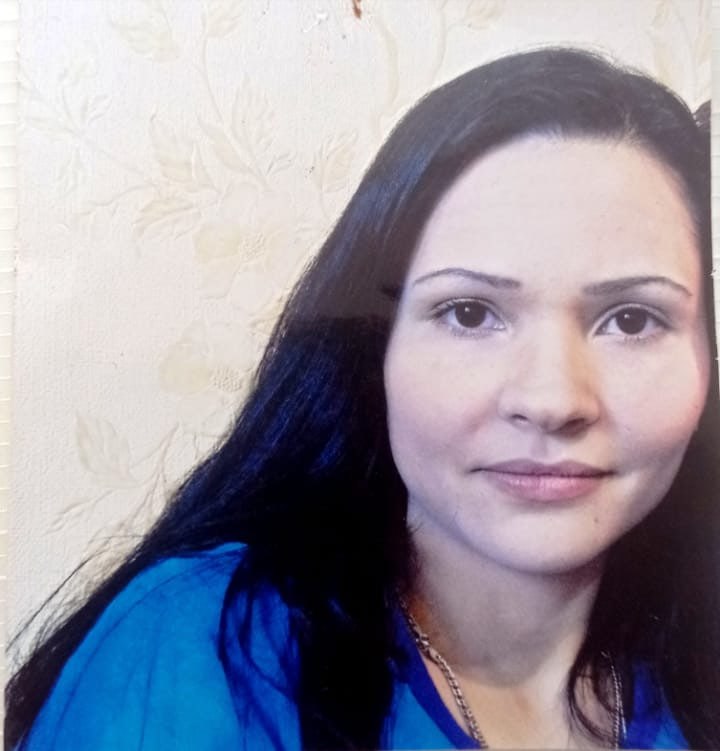
Svetlana Savelyeva. Photo courtesy of Mediazona via Sever.Realii and the Savelyeva family

A translator from the Irkutsk Region wanted to visit her boyfriend in Ukraine. She was detained, tortured, and sentenced to fifteen years in prison.

A court in Kursk has found Svetlana Savelyeva guilty of attempted treason and conspiring to cross the border illegally.

Savelyeva was detained in October 2024 in the Kursk Region and then held under administrative arrest until mid-December on the pretext that she had disobeyed the police’s orders. In December, she was remanded in custody to a pretrial detention center on criminal charges.

According to the FSB investigators, Savelyeva had undergone “military training” in Kazakhstan, after which she planned to join the Ukrainian army during its partial occupation of the Kursk Region.

The translator herself said that she wanted to travel to Ukraine to reunite with her boyfriend, a Ukrainian army soldier named Alexander.

“We tried many ways to get her here to where I was. When Ukrainian troops entered the Kursk Region, Sveta was in Armenia, if I’m not mistaken. And then suddenly she says, Here I am, I’ll try to get into the area controlled by Ukraine. The biggest mistake was that I did, after all, let her go to Kursk,” the Ukrainian soldier told reporters.

FSB officers tortured Savelyeva to obtain a confession: they kept her naked in a cold room, beat and choked her, subjected her to electric shocks, and threatened her with murder and sexual violence.

In addition to Savelyeva, criminal charges were filed against driver Igor Sandulyak, who agreed to drive her to the front line. The regional court fined him 150,000 rubles [approx. 1,600 euros].

Source: Mediazona (Facebook), 2 April 2026. Translated by Thomas Campbell, who asks our fellow translators, wherever they are, to share this post in solidarity with Ms. Savelyeva.

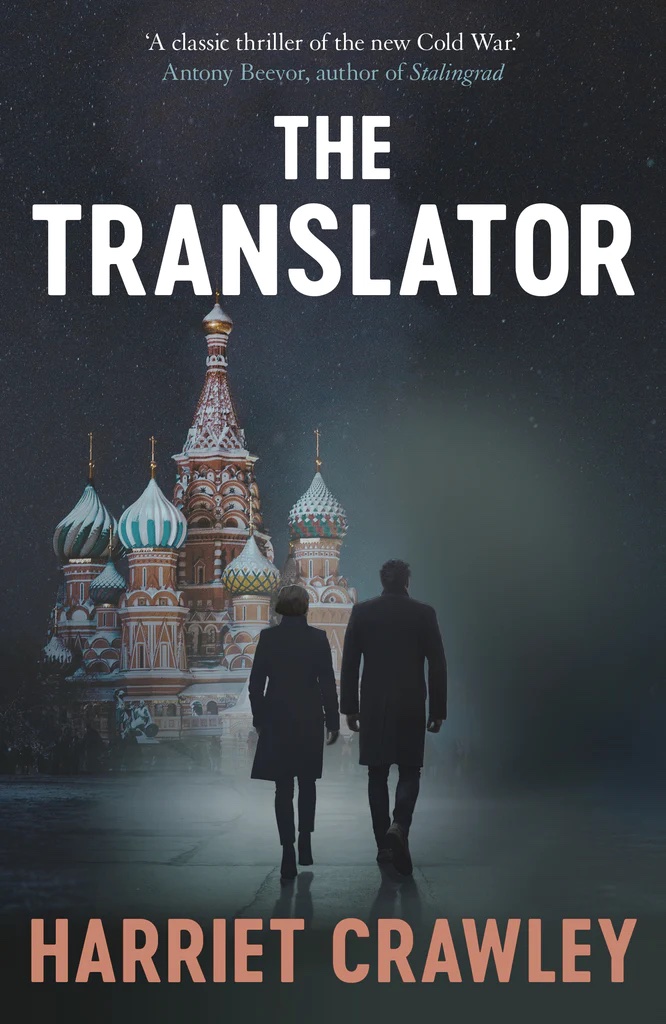
The Translator

This is the fantasy:

At a pinch he could do the same in French, but French specialists were two a penny, and, in any case, Russian was his thing. He loved the Cyrillic alphabet, the byzantine grammar, the soporific, sensuous sound of the Russian language. And once, he had loved a Russian woman.

[…]

“Let’s get some sleep,” said Hyde. “Tomorrow… sorry, make that today, you need to be on top form. The briefing book is right here.” Hyde tapped the file on the table. “Are you up to speed on the current jargon? Post-truth and alternative facts and all of that? What’s fake news in Russian?”

Feykoviye novosti,” Clive said without missing a beat. “But the purists are up in arms. Feykoviye is not a Russian word. It’s an anglicization. They think it should be lozhniye novosti. Lying news.”

[…]

Then he focused on the job in hand. The mental preparation was always the same, a limbering up of the mind, a rigorous testing of himself. He went through various linguistic exercises, tossing English words and phrases into the air like tennis balls, then hitting them across the net in Russian. It was natural, effortless; he felt completely at ease in either language.

[…]

“Clive was member of our Russian book club on the fourteenth floor of the UN,” Marina said, looking at Hyde.

“I was,” said Clive, looking straight at Marina and taking in every detail of a face he had done his best to forget for over a decade. He had also forgotten the particular musicality of her English, which gave her away as a foreigner. Now and then her “o” was slightly too long and her “r” was a little too hard, and sooner or later she would forget an article,* just as she had a moment ago. Her English was almost perfect. But not quite. It was all part of her infinite charm.

[…]

“Alexei had this thing about grammar. Said I had to speak clean Russian. Clean… That was his pet word. ‘Use the instrumental and not the fucking accusative.’”

[…]

After making love, they would lie in bed and smoke and talk about their favourite writers. They showed off to each other, Marina reciting Pushkin, Clive quoting Shakespeare, and then vice versa, switching effortlessly from English to Russian and back again. They chucked proverbs and abstruse words at each other until they dissolved in laughter.

Source: Harriet Crawley, The Translator (London: Bitter Lemon Press, 2023). Cover image courtesy of Bitter Lemon Press

* But check out the abuse and misuse of articles on display here, of all places:

HARRIET CRAWLEY, “THE TRANSLATOR”. IN CONVERSATION WITH SIR RODRIC BRAITHWAITE

  • Tuesday, 2 May 2023, 7:00 pm —8:30 pm
  • 5a Bloomsbury Square, London, WC1A 2TA, United Kingdom

Join us to hear Harriet Crawley discuss her latest novel, a love story and political thriller, with the former British ambassador to Russia, Sir Rodric Braithwaite. The Times has included The Translator in its list of “the best new thrillers”, and the reviews praise author’s descriptions of the everyday life in Moscow, her ability to create suspense, and the political relevance of the plot at the time when the Russian state has once again become a major geopolitical threat.

[…]

The Translator tells a story of two interpreters, one British and one Russian, who embark on a quest to protect vital communication infrastructure connecting the UK and the US from sabotage by Russian special operations forces.

Source: Pushkin House. The emphasis is mine. ||| TRR


While this is a bit closer to the often harsh reality:

Kill the Translator: A Song of Inadequacy


He’s the mad dog of letters, the scrivener of sin.

He stays up nights with dictionaries and gin.

He studies Icelandic with a six-fingered Finn.

            He’s the translator.


He trampled your iambs, desecrated your prose.

He mangled your message and stepped on your toes.

His syntax is suspect, his Swahili a pose.

            Maim the translator.


Your essay’s in tatters, your short story in ruins.

He rendered 'tomato' as 'the mating of loons'.

And tomorrow he’ll english your poem out of tune.

            Harm the translator.


It matters quite little whether he’s stout, thin, or black,

Venetian, Guatemalan, or from Hackensack:

Send him Derrida by mail, and an ounce of crack.

            Suicide the translator.


Stop the presses in Cape Town and summon the cops.

Make a pass at his mother, toss a spear at his pop.

And dare he protest, quote him Lacan till he drops.

            Crush the translator.


Rip his Oxford to shreds, set his grammars on fire.

Break all his pencils, call Nabokov a liar.

Instead of advances, blow him curses by wire.

            Unhinge the translator.


He’s a cheat and a fraud and the foe of good sense.

Promise him the heavens, but repay him in pence.

'Traduttore traditore,' they say, and hence:

            Kill the translator.

Source: The Russian Reader, St. Petersburg, October 1996. The poem was inspired by an incident (one of dozens) in my early career when I was paid a pittance to translate the catalogue for a show of contemporary Russian art in Finland. A few months later, I got a notice from the Finnish tax authority which made it plain that, officially at least, I had been paid several times that amount by the host museum, but the Russian curators had pocketed the difference, thinking I would be none the wiser.

If you don’t want this website and its free, unique, eye-opening content to be maimed, harmed, crushed, suicided, killed, or unhinged, show your support today by liking, commenting, sharing, or donating (via Stripe or PayPal — you’ll find the forms and links in the sidebar). It’s vital for me to know that there are actual people out there who value my unpaid labor of love, which is now in the midst of its sixteenth year. I’ve received only $137 in donations so far this year, alas. That’s not enough financial support for me for to keep doing this much longer, considering that last year, for example, my overhead costs alone were $1,620 (for internet, hosting, and online subscriptions), against only $1,403 in donations for the entire year. ||| TRR

There Is Power in a Union

fart and laugh.jpg“Farting and laughing are healthy.” A life-affirming message photographed by me on the Langenscheidtbrücke in Berlin-Schöneberg, 16 June 2019.

It’s funny to read one of the most celebrated, successful Russian-to-English translators in the world complaining that an equally celebrated, successful scholar of Russian history wrote a less than glowing profile of a famous writer whose works they have translated and published to great acclaim and universal gratitude, and calling for an online campaign against the famous scholar and their allegedly retrograde views.

It’s funny because there is a whole other world of less celebrated, less acclaimed translators who have other, more mundane problems to deal with, such as getting paid fairly for their work or, sometimes, getting paid at all, and having their work stolen by unscrupulous publishers and other clients.

Just minutes ago, I was informed that the people who shanghaied me yesterday (Saturday) into consulting and commenting on someone else’s (extraordinarily bad) translation of a text and asked me to do this before Monday would not pay me the modest fee of 105 euros I asked for two and half hours of intense work commenting on the very bad translation of the odious text they sent me. They want to pay me 32 euros per the number of characters in the source text, although I made it clear that were this an ordinary translating or proofreading job, my minimum fee would be 40 euros in any case.
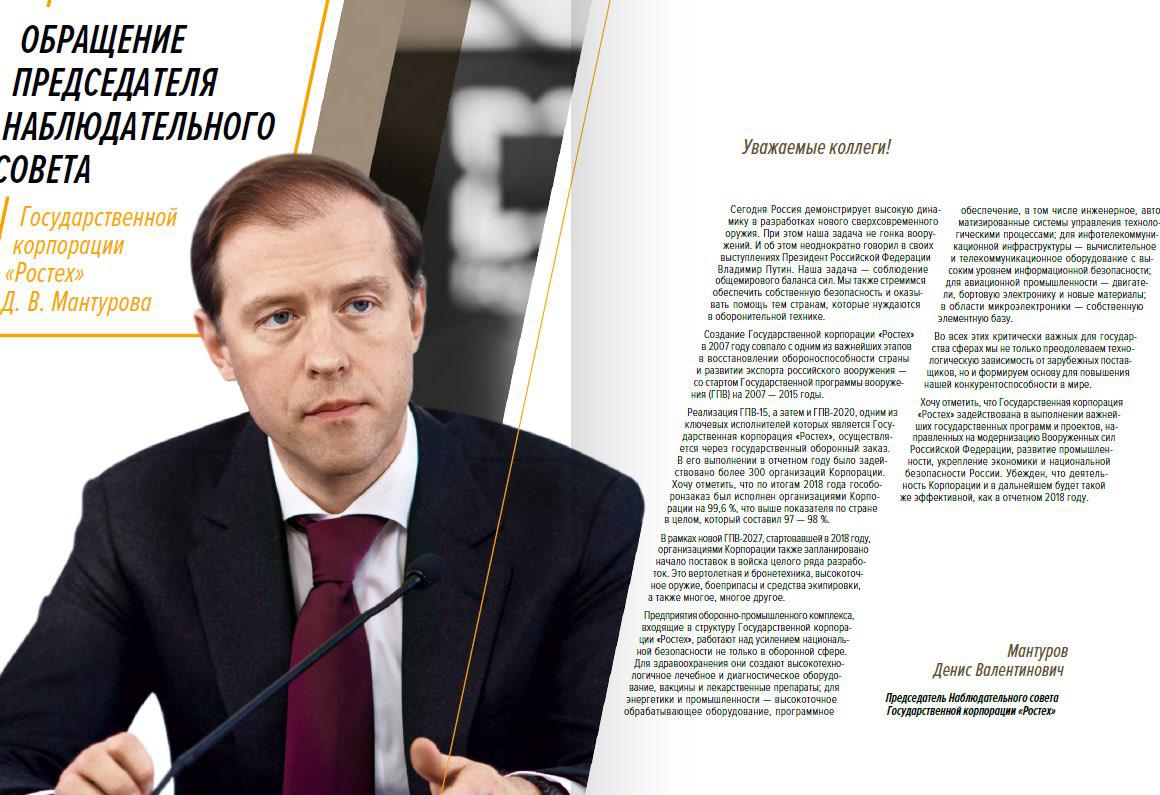
photo_2019-06-15_10-45-35If you read Russian you will understand why I was extremely dispirited to consult on a wretched translation of this source text with no notice and basically no deadline this past weekend. And then the people who asked me to do this thought it should cost them next to nothing.

A few weeks ago, I was perusing the memoirs of a famous anti-Putin dissident, translated into English and published, nearly two years ago, by the world’s largest general-interest paperback publisher.

I was curious to see who translated the book, but no translator is identified by name anywhere in the book. Oddly, however, the publishers had included a plainly false statement in the front matter: “The moral rights of the translators have been asserted.”

How could that be if none of them was identified by name? How could that be if one of them, as it turned out, to my surprise, was me?

You see, I translated a book of memoirs by the same author a few years ago. The book was never published, however — supposedly, because of a nasty conflict with the publisher.

But now this new book has been published (to great acclaim, of course) and, while it is mostly a new book, whoever really wrote it or ghost-wrote it or edited it has inserted chunks of my old, previously unused translation into the new book.

I haven’t gone through the book with a pencil yet to underline and figure out how many such passages there are, but they are there.

In what sense, then, were my or anyone else’s “moral rights” “asserted”? Neither they nor I was identified in any way as being among the translators. I was not paid by the publisher for my work. I was not sent a copy of the book by the publisher.

The same publisher, by the way, had to be forced by the organizing committee of a prestigious literary prize for books about Russia to send me copies of a book I translated that was awarded the prize last year.

In the front matter of this book, I am clearly identified as the translator. I am also identified as the copyright holder of the translation published therein. But until last year, when I won the prize, I had never seen a copy of the book.

Nor has the world’s most powerful English-language publisher ever contacted me about royalties, although per our contract they are owed to me. I am reasonably sure that a decent amount of royalties have piled up by now. Even if they haven’t, they should give me an accounting.

I would say that I really have these royalties coming given that both the world’s most powerful English-language publisher and the US publisher that sold them my translation for a song (after having pleaded poverty and paid me a miserable fee) themselves refused to send me copies of the book. They only did so after pressure was brought to bear on them by influential outsiders.

***********

I would call on more celebrated translators to band together with less celebrated translators to defend the rights of translators great and small.

What I wrote at the beginning of this post was probably wrong. I would be irritated, too, if a celebrated scholar wrote a damning review of a writer whose work I promoted by producing the very best translations of it I possibly could.

But there are translators whose work is ripped off and left unpaid. It comes with the territory, but it shouldn’t. Translators worldwide should organize national and international unions to ensure the fair treatment of translators and their work by publishers and other people who commission translations. When publishers and other clients step way out of line, these unions could intercede forcefully and effectively on behalf of their members.

As it is right now, when clients try and throw me under the bus, I either raise a ruckus on my lonesome or I lump it. I usually do both, usually to no effect. Since many outsiders to the craft do not deem translation “real work” anyway, they are only too happy not to pay you for your efforts.

There is power in a union, however, and there really is strength in numbers.

— Thomas Campbell, the editor of the Russian Reader and other blogs since 2007, and a freelance translator since 1996

P.S. Out of curiosity, I just counted (with a little help from WordPress) the number of words I have published on this website since I launched it in 2007: 1,409,036. Apparently, the median length of a book is 64,000 words. In the last twelve years, then, I have translated (mostly) and written the equivalent of twenty-two books and published them on this website.

Discussing the rates professional translators charge, Job Monkey writes, “The average rate per word is 10 to 20 cents, depending on the type of document to be translated, the language combination, the amount of work involved, the subject matter and the deadline.”

For the sake of the argument, let’s forget all other factors and pay me ten imaginary cents per word for my work on the Russian Reader. If someone were to pay me, the bill would be a hefty $140,903.60.

This is not taking into account the work I did on a website that mostly eclipsed the Russian Reader for over five years, Chtodelat News (740 posts between February 18, 2008, and May 4, 2013) and the work I still do, not often enough, on my “relaxation” blog about Finland, Living in FIN, which mostly functions as a platform for my translations of modern Finnish poetry. 

Of course, I don’t expect anyone to pay me $140,000 or even a fraction of it for work that I made myself do, but even things that are not bought and paid have value. So it is all the more vital that translators (all of whom, in my experience, do a lot of pro bono work for good causes) are paid fairly and promptly when they do work expressly for money.

Finally, you can support the work I do on this website by looking in the left sidebar, where you will find PayPal and Ko-Fi donation buttons. I appreciate all the support I get from my fellow Russian readers. It is what keeps me going.

“Rate This Translation”

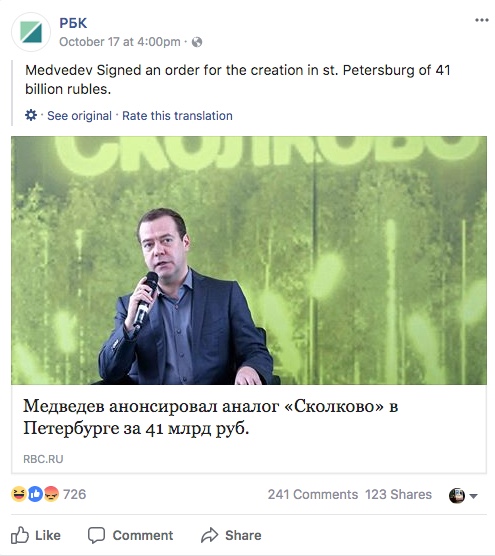
I didn’t ask for the wildly inaccurate translation, screenshotted below. It just showed up on my Facebook newsfeed from RBC as is, yet inadvertently hinting at the real state of affairs in the Kingdom of Denmark.

I wonder how Google Pixel Buds are going to do anything but confuse the hell out of the people who wear them if their translations are similarly brilliant.

Believe me, only trained, experienced human interpreters and translators are capable of making sense out of nonsense.

rate this translation