List of “Non-Russian” First Formers in Suburban Moscow Provokes Nationalist Brouhaha Commentators Divided on Issue of Assimilating Migrant Workers Moskovsky Komsomolets
September 1, 2016
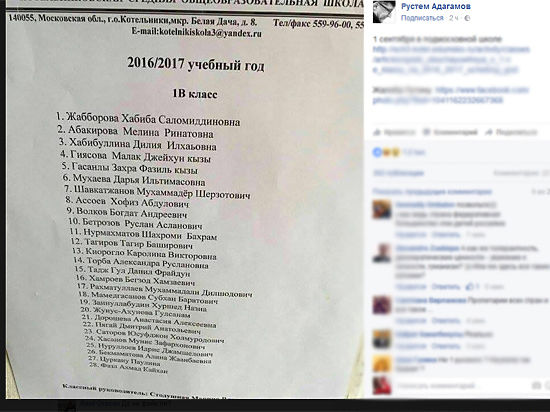
Publication of a list of pupils in a first form class at Kotelniki Comprehensive School No. 3, in suburban Moscow, most of whom have “non-Russian” names and surnames, has set off a row on the web.
The photograph quickly spread among top bloggers and various socio-political discussion groups, garnering a slew of nationalistic comments.
The children’s names, such as Habiba, Medina, Malak, Idris, Yufusjon, Muhammadyor, and Beghod (there are a total of twenty-eight children in the class) goaded users into making nationalist statements.
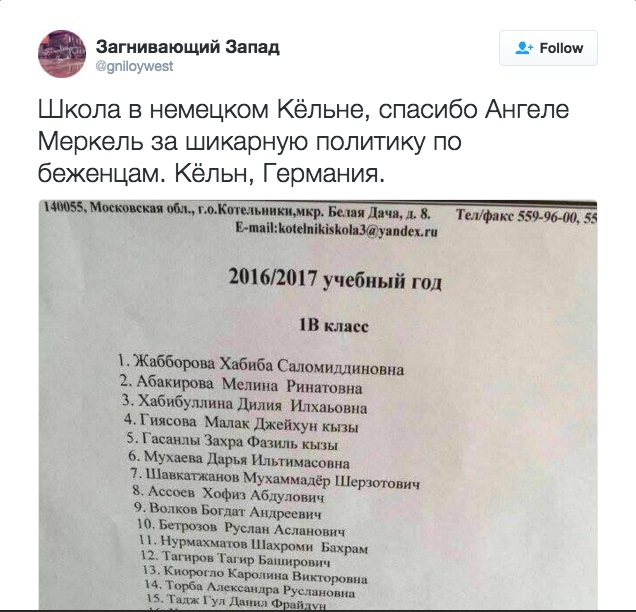
However, [the Twitter account]Decadent West, for example, which ironically passes off Russian realities as foreign, commented on the photograph as follows: “A school in the German city of Cologne. Thank you, Angela Merkel, for your excellent refugee policy. Cologne, Germany.”
Screenshot of Twitter account entry on the topic by Zagnivayushchii Zapad (Decadent West)
Nor all user, however, supported the nationalist rhetoric. Thus, Mitya Aleshkovskiy, director of the website Takie Dela, wrote that “people who are outraged children of migrant workers go to school are animals and a real shame to our country and society.”
He reminded his readers that schooling the children of migrant workers was the best means of assimilating them and claimed that Russia was a country where fascism had emerged victorious.
This prompted users to deluge Aleshkovskiy with nationalist comments.
In 2013, residents of Kotelniki wrote and distributed a letter, complaining to the president, prosecutor general, and governor of Moscow Region that their town had “turned into a ghetto of illegal migrant workers from Tajikistan, Uzbekistan, Kyrgyzstan, and other CIS countries, as well as Vietnam and China,” due to the fact it was close to the Sadovod Market.
“You’re a Future Warrior!” Gender Stereotypes in School
Afisha Daily talked with teenagers from different cities who disagree with traditional gender roles Afisha Daily
June 1, 2016
Lena, 16, Perm Territory
I started thinking hard about violations of rights a couple of years ago when I accidentally happened on a [social network] group featuring the stories of young women. The things they told about were horrifying: rape and domestic violence. But the criminals had not been punished because the police had found no evidence of crimes or no one had believed the young women. I wondered what had happened to justice if such egregious crimes went unpunished.
Since then, I have noticed more often the swinish behavior of males towards females, which is apparently considered the norm in our country. Men whistle at young women as they walk by, and they grope them just because they feel like it. Young women usually just put up with this.
I recently faced a similar situation myself. I like to dress nicely: not for anyone else, but for myself. One fine day, when I was walking downtown in a short skirt and high heels, an unpleasant elderly man touched my leg. My first reaction was shock. Nothing like that had happened to me before. I could not even react, and the man was able to get away. The outrage I had thus not been able to express swirled round in my head for the rest of the day. But it was a lesson to me. From now on, I will know how to behave in such circumstances. If something like that happens, I will try and stop the person from doing it, and then reason with him.
I often notice the unequal treatment of boys and girls at vocational school. We have only three boys in our group, but usually only one of them comes to class. There have been times when I was the only one to raise my hand to answer a questions, but the boy was picked to “take the rap for everyone,” because “the stronger sex must protect us.” During geography class, we learned about the unequal salaries of men and women for the same work. Someone shouted, “Serves them right!” The others laughed. In our nearly entirely female group no one voiced her disagreement. Was I really the only one who thought it was unfair? Back in high school, I was amazed when female teachers would say the main thing for girls was finding a good husband, while doing good in school was another matter.
I have also encountered injustice in the social networks. For example, there was a survey question: who should be the head of the family? The possible answers were “the man” and “both spouses are equal.” “The woman” was not even considered as an option, and more than half the people who responded voted for “the man.”
I am quite glad my parents really are equals in our family. Neither of them orders the other one round, and there is certainly no use of force. But I recently had an unpleasant conversation with Mom. It was explained to me that I would be a woman, and I would have to find a better half of the male sex (that was obligatory!) and have children, because it was, supposedly, my destiny. When I asked for arguments, I was told that was the way things were.
You cannot escape from the patriarchal mindset. We live in a country where ordinary life is closely bound up with the church and traditions. It is as if everyone has forgotten that ours is a secular country. I have the sense that our authorities judge people according to the Domostroi, which says you can beat your wife.
Some young women do not respect each other. As long as men see this, they will go on thinking they can treat them disrespectfully.
Mark, 17, Ivanovo
When I got fired up by feminism, many people thought it was really strange, because I was a boy. My outlook today is that I am against discrimination on any grounds. A lot of things have changed about me, but very little has budged in my environment.
It’s silly to deny the “adult” world is dominated by gender inequality. But things are worse in the world of kids, who have stereotypes and attitudes foisted on them. We are brought up on the standard system, which says that boys must be strong and are not allowed to shed tears, while girls must be dainty princesses.
School often abuses its right to educate children. It all starts with the school uniform. Your appearance, one of the most accessible forms of self-expression, is strictly regulated by other people. Then there is the division into “M” and “F.” Girls are taught to cook in home economics, while boys learn to be carpenters in shop class. Personally, I found it terribly offensive I was unable to learn to cook something tasty, although I consider it a wonderful occupation. Instead, I had to do stupid work that nowadays is done by wage workers for money. In physical education classes, we were divided into strong kids and weak kids. The boys, of course, were automatically the strong kids, so the physical education teacher would always be screaming at us, “Don’t give up! You’re a future warrior! Who is going to protect your wife?”
I felt less of this pressure in high school. Maybe it was because the teachers thought we had turned out “right” by then?
It is a touchy situation with friends. They have been brainwashed: the stereotypes are deeply rooted. They don’t want to see the framework into which they have been driven. They snap at me when I try to take into account the opinion of both boys and girls. As if our personal lives were already prescribed by someone in advance, and everyone follows these instructions.
Things are different at home. Everyone is family, and there is no one to fight with. My parents, who were raised in the seventies, project their gender attitudes onto me and my brothers. But can you blame them for this? My father sees us as future businessmen, entrepreneurs, and holders of high office.
Some might say that only in this way can we save humankind and a normal society. But who defined these standards, and why can’t we violate them? Nowadays, people have suddenly taken it into their heads to preserve certain truths. But if you take a look a history, you find that the “truths” have always been different.
I see feminist and similar ideas as a way out. I think activists should bring these ideas to the schools. Education has to be changed, not radically, but gradually. That is the only possible way to educate a society in which there will be no inequality.
Maria, 17, Transbaikal Territory
I live in a military town where nearly all the families consist of a wife and a husband in the military. The head of such families is the husband. He is considered the protector, and the woman is obliged to stay at home and do all the household chores. There are not so many jobs here nor any chances for self-improvement, either. These families have not even heard about equality. If the topic comes up, the conclusion is always the same. The husband is the breadwinner. The wife stays at home, meaning she doesn’t get tired, so she has no reason to pretend she is oppressed.
Having seen their fill of this, half of the boys definitely want to go into the military. It isn’t hard for them to achieve this goal. These fellows make it known to their girls right away that they should wait for them to come home from obligatory military service. And then, at the drop of a hat, they will have to give up their studies and their jobs and move with them to a godforsaken town to start their new careers as maids.
I have been trying to convey to others (including at school) that this is abnormal. Everyone takes it as a joke. The worse thing is that the girls have the same reaction as the guys. It’s a mystery to me why women don’t recognize this oppression.
I think that women’s rights are systematically violated just because feminism is a secret club spoken about in whispers, and even then not everyone gets to hear them. If all the stories about rape, abduction, and beatings were made public, everything would be a lot better. Women would give a lot more thought to the fact that such a number of crimes is not just a coincidence.
Nastya, 17, Minsk
When I was thirteen or fourteen, I wondered about all the gender stereotypes around me. I couldn’t understand at all why people encouraged this, and I fought back against equality, not even knowing what feminism was. When I found out there was such a movement I immediately supported it.
School is full of gender stereotypes, and that is sad. School should be a place where not only maths and history are taught but also respect. Even the teachers support inequality, to say nothing of the students.
Recently, our biology teacher told us, “If a girl says no, she means yes. Girls are all like that.”
And our home room teacher, a women, ended a public lesson on the bravery of Belarusian women during the war years by saying, “The point of a woman’s life is to have a family and raise children.”
She is a fairly religious woman. She is always saying that girls must be weak and bestow their beauty only on their husbands.
Once, in class, I said women were not obliged to have kids.
A male classmate replied, “If a woman doesn’t have kids, then what is she good for?”
The whole thing is sad.
Anton, 17, Moscow
Until the tenth form or so, I was dead set against modern feminism. I thought it was a total profanation and perversion of the suffragette movement. I changed my mind after meeting feminists and realizing the movement for equal rights was still relevant today as a means of combating domestic violence, rape, and discrimination.
Some girls might make fun of the reluctance of male classmates to go and serve in the army. They might voice incomprehension and ridicule. Personally, I haven’t witnessed such instances. What I saw has been limited to friendly teasing.
Teachers can sometimes have the gall to say boys should do physics, while girls have no need of it. That is a matter for their own conscience. Especially delusional persons have demanded that schoolgirls wear high heels, but that has led to nothing.
The stories my female classmates have told me have once again convinced me of society’s narrow-mindedness. Everyone already knows the list of stereotypes: hysterics and demands to “give us grandkids,” restrictions on socializing with the opposite sex, and insults based on a person’s sexual orientation.
Disrespect for one’s own children, students, and simply people, the rejection of any opinion except one’s own own, and fear of new things are just a short list of the ailments that have afflicted our society.
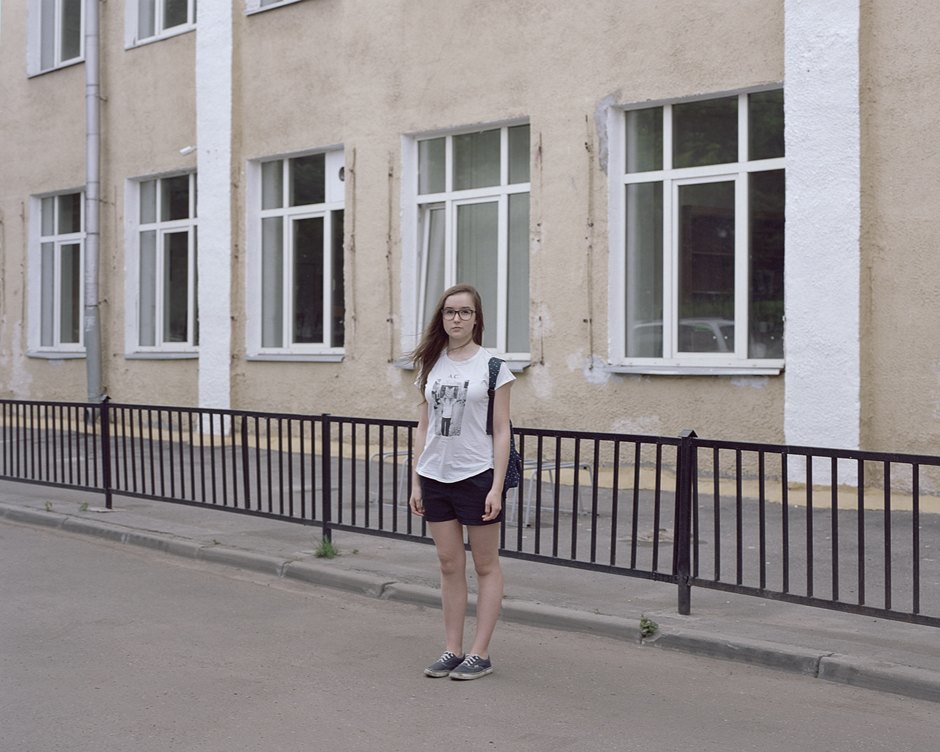
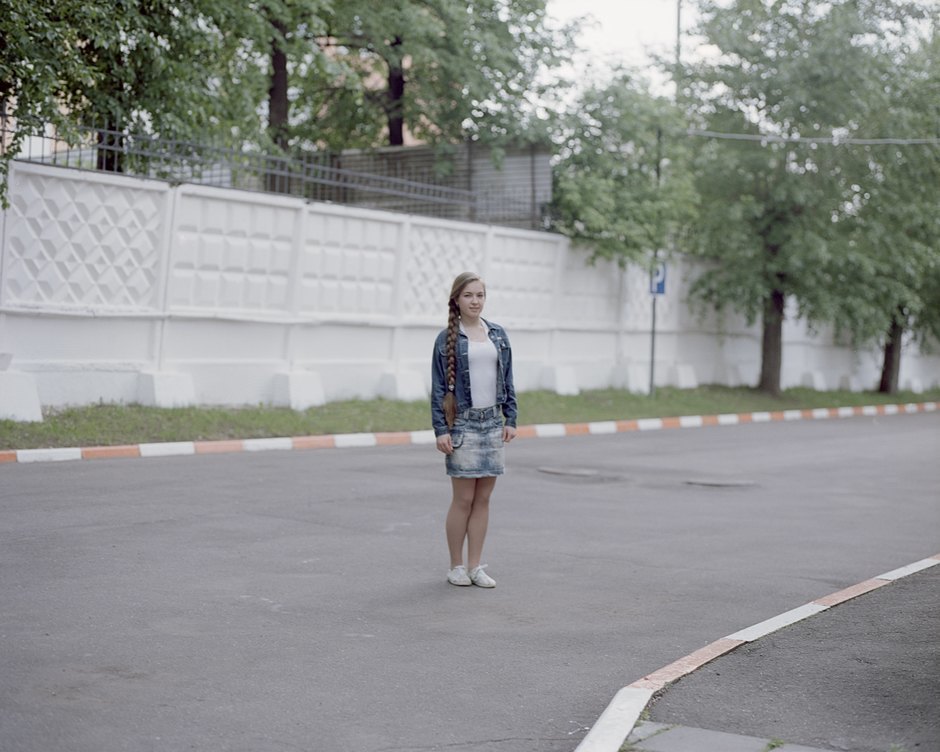
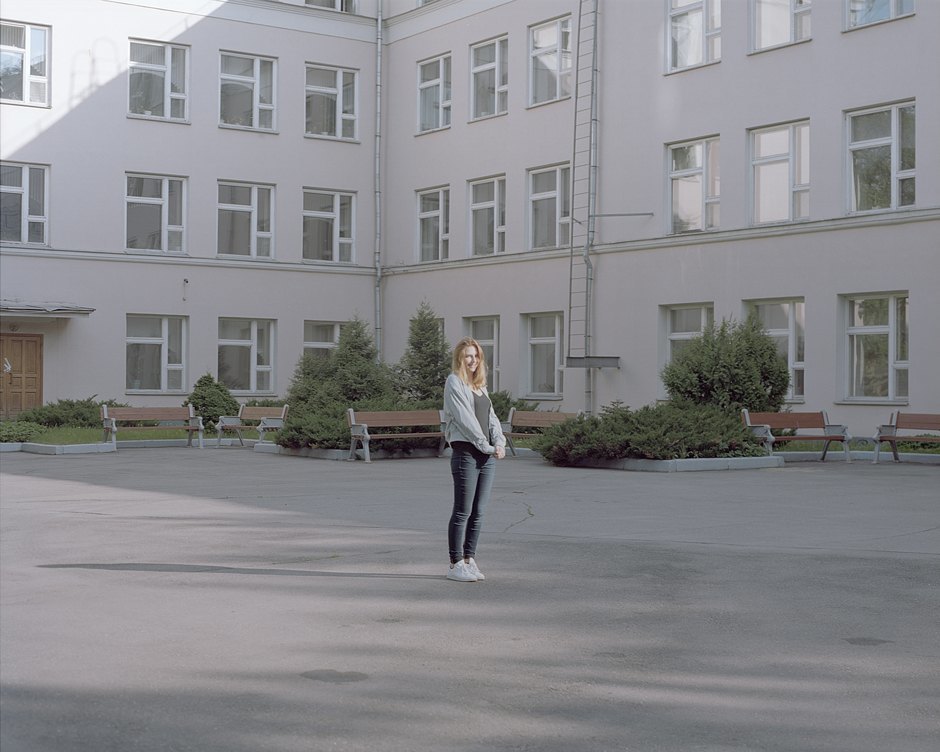
Translation and photo by the Russian Reader. See my previous posts in this occasional series on young people in Russia today and the moral panics generated around them by the media, politicians, and the public.
“Putin Has Been in Power My Whole Life” On the occasion of International Children’s Defense Day, The Village spoke with 16-year-olds about Vladimir Putin, social networks, and future plans
Lena Vereshchagina The Village
June 1, 2016
Vladimir Putin has been in power, as president and prime minister, for over sixteen years. During this long period, a whole generation of people has come of age who never lived in the “pre-tandem” era and have a faint idea of what political succession is and why it is necessary. On the occasion of International Children’s Defense Day, the Village met with four 16-year-old schoolchildren and talked with them not only about politics and the permanent leader but also about social networks, the Soviet Union, and their priorities in life.
Vasya, 16. Photograph by Ivan Vanyutin
I am in the tenth grade at a French-language magnet school. I studied for six months in the US in the ninth grade. Things are definitely different there. I wound up at a private school where everything revolves around providing a full-fledged education. There was virtually no free time, and the schedule was quite hard. Under those circumstances, it is probably easier to find yourself. I remember I was invited to attend charcoal drawing lessons. They had everything to make them happen: a wonderful studio with huge windows and an unlimited supply of charcoal pencils. The atmosphere at my school in Russia is less creative.
Now I am in the physics and mathematics stream. Mom influenced my choice of specialization. She said the hard sciences were a good occupation for men. I am interested in programming. I would like my job to jibe wholly with my personal interests, for my profession to be my mission in life. At the same time, Mom has advised me to seek work abroad. Russia is going to stay put, after all, and working abroad can be a very rewarding experience.
We have not had a TV at home since 2006. When wired Internet became available, we immediately began using it alone. I try and spend as little time on the web as possible. I am aware that the flow of information from the social networks is unlimited. You read one thing, you get distracted by another thing, and you look through something else. You can fritter away your whole life like that. I try and be on the Internet for short periods of times. Sometimes, when I am riding the subway to practice, I get on the web and look at something.
I read voraciously. When I have free time and want to read a book, I read it without stopping. I can not pick up a book for two weeks, but then come home from school and blaze through the entire second volume of War and Peace in three hours. It took me two or three hours to read it. I read fairly quickly. I read it when I was ill, and then I immediately grabbed the third volume. Besides what is in the school curriculum, I read books Mom recommends. She gave me, for example, Yuri Lotman’s Conversations on Russian Culture and Vladimir Nabokov’s Lectures on Russian Literature.
I imagine the Soviet Union as a strict regime. I know that people could not just go abroad in those days. You could not just pick up and go to England or France. People had fewer opportunities.
The main principle I saw abroad was that power must change hands. But we have had the same president for sixteen years. Vladimir Putin has personally done nothing bad to me, and I wish him all the best. But I realize it is beneficial for him to hold this office, and profitable for his friends. Power does not change hands, and accordingly society makes no progress in any direction. I think it is good when there is at least elementary competition. Some people in my class do not care about this. They are happy about the annexation of Crimea and believe it was legal. Some have never been abroad, but think the US and Europe have been behaving aggressively towards Russia, and now we are going to get up off our knees and show them all. Due to this, I have no desire to socialize a lot with my classmates.
My grandmother and grandfather live in Smolensk. They watch a lot of TV, and everything shown on TV is the unquestionable truth to them. It is really hard to talk with them about politics, so we have agreed not to touch the topic. Mom and I do not discuss politics, because we get home late and try and talk about peaceful topics.
Nika, 16. Photograph by Ivan Vanyutin
I am a pupil in the Higher School of Economic’s magnet school in the liberal arts stream. I study literature, philosophy, cognition theory, and subjects related to philology. In the future, I plan on applying to the HSE and majoring in philology.
I read everything I can get my hands on, because for now I am only learning to distinguish good literature from bad. For example, I read the stories for teenagers Mom buys me, the things on the reading list at school, and beyond that. Right now, I am reading Leo Tolstoy’s novella Family Happiness. I also love Iain Banks and Richard Bach. I read about four books a month.
In my free time, I hang out and watch movies. What kind of movies? Everything under the sun. I like something simple. I watch a lot of TV series, even more than movies. They are somehow easier to process. My favorites include TheBig Bang Theory, Friends, How I Met Your Mother, and Game of Thrones. I never watch TV. Only occasionally do I watch morning cartoons with my little brother.
My friends and I often discuss plans for the future, important world events, life at school, and other kids. I think the life of modern schoolchildren would be impossible without social networks. Many of our teachers also have accounts on them, and they often put our homework assignments on VKontakte to simplify things. I don’t spend more time on the social networks than anyone else: a few hours a day.
Some of the classes in my school are taught by teachers who are only twenty-five or so. In fact, we are not so different from them. They also spend time on social networks and socialize with their friends in a similar way.
I imagine the Soviet Union the way it is shown in old movies, meaning there are jolly schoolchildren and ice cream, it is always a beautiful time of year, and there are lots of tyrannical adults who tell the young people what to do. The 1990s, in my opinion, were really cool. You could easily get what you wanted without hassle. Without making any effort, you could make a fortune.
I don’t understand anything about Russian politics. I just know that Vladimir Putin runs the country, and some reforms should be implemented, but they are not being implemented. Or they are being implemented, but not in the way many people would like. But I cannot make heads or tails of it. At home, we do not touch on the topic, because my mom is not interested in politics. At school, if someone talks about it, I just listen and draw my own conclusions.
Putin has been in power my whole life. It is funny. I just don’t how it could be otherwise. I think everything is okay, and there have been no visible changes in my life over the past ten years. I think Putin has done a good job as president: no wonder he has been in power for such a long time. Meaning he has experience and knowledge that he can draw on. He is fairly influential, and the whole nation listens to him, so I think he is okay. The other politicians whose names come to mind are Dmitry Medvedev, Vladimir Zhirinovsky, Sergei Shoigu, and Vitali Klitschko.
Arina, 16. Photograph by Ivan Vanyutin
I go to an English-language magnet school and am in the engineering stream. My favorite subjects are English, Russian, mathematics, and probably physics.
In the second grade, we went on a tour, and the guide asked us, “Who wants to be president?” No one replied, but I thought, “Why not?” I said out loud I wanted to be president. Since then the idea has stuck in my head. Now I am involved in youth politics and am a member of the Young Guard of United Russia. I have learned a lot of things about politics there. I have been growing personally, and meeting and socializing with lots of interesting people from this area. I don’t know what way life will turn, but maybe in the future I will be able to join the party, and if I don’t become president, I can simply be involved in politics. Politics attracts me, because I feel I can change things. I like situations in which there are business-like relationships, turns of events, excitement and competition, socializing with interesting people, and the possibility of taking responsibility and making important decisions.
I communicate with people on social networks, but I cannot say I hang out there. Sometimes, I make a point of not going on Vkontakte to read the news so I can get more done in real life, not in virtual life. I think life was more interesting before the advent of the Internet. Children were more focused, more interesting in learning and growing. But now the Internet does everything for them.
I don’t have much time to read. We are assigned a lot in school, so mainly I have to study the literature in the curriculum. My favorite Russian writer is Alexander Pushkin.
We are different from the generation of 25-year-olds. We have more technology, information, and stress. I look at children younger than me, remember what I was like at their age, and realize I didn’t know the words they know and couldn’t do the things they are able to do. I think 25-year-olds think the same thing about us.
It is a pity the Soviet Union collapsed. It was a good time. I cannot say that people lived very badly then. After all, the country was developing its industries, and the factories were working. But now, when practically none of it is left, it is hard to recover.
If you believe the stories, films, and history lessons, the 1990s were a time of bandits. Money and connections reigned then, and there were many murders. I have nothing more to add.
My classmates and I mainly take about our classes at school and the events we have there. I discuss politics with Dad. He enjoys talking about it.
I am fine with the fact that Vladimir Putin has been in power so long. After all, for anything to change, something like fifteen to twenty years have to pass. If any reforms are taking place, they include plans for the future. Such reforms are taking place right now. Of course, there are downsides to Vladimir Vladimirovich’s policies, but they are not overwhelming.
Putin is a strong and worthy president for our country. In the current circumstances, another leader would have done worse or would have been crushed. But not Vladimir Vladimirovich. I respect him.
Masha, 16. Photograph by Ivan Vanyutin
I go to the Physical and Mathematical Lyceum, but I am in the socio-economic stream. I love social studies, history, and English, and mathematics, too. I hate physics and computer science.
I have also been studying German so that in the future I can go to university in Germany, a plan my parents have really been encouraging. I would not even think about leaving Russia were it not for them. I think students suffer in our country, and lecturers are not at all amenable to them. In Europe, on the contrary, they try to help and support students, and if they don’t get something, they explain it to them. I would like to work in the social sphere, for example, as a psychologist in some company, but for the time being it is just a dream.
My classmates and I often discuss the news, but not political news. Rather, we gab about what is happening in the world. And of course we gossip.
Throughout the day, I periodically log onto the social networks to reply to messages and read what friends have posted. But now I have been conducting an experiment. I deleted my page on VKontakte, and I try to use the phone only in cases of real need. Then I started reading a book, and real life became more dynamic.
I read a lot, but I am rarely manage to read what I want. I spend a lot of time reading what is in the school curriculum. I have very little free time: every day there are tutoring sessions, extra classes, and evening courses. But when I get a free minute, I spend time with friends or alone, read, watch movies or play the guitar.
My parents and I have a tradition: we often watch TV series in the evening together, sometimes Russian series, sometimes American. But I don’t watch TV at all. There is simply no time for it.
I think people who lived in the Soviet Union had it very hard, simply because there was no freedom of choice. There were things you had to do, and things you could not do. Joseph Stalin was a very controversial person. Although maybe he was doing the best he could. I can believe this was what he thought.
I know that there was perestroika in the 1990s. According to Dad, things were very hard, because there lots of bandits.
I know quite a lot about current politics. My parents are ardently in the opposition. Since I was little, I have been hearing from them how bad Vladimir Putin is and how horrible Russia is. Of course, I discount half of what they say, and I keep track of events in the country myself. I don’t like everything, of course, but I try to be nonjudgemental.
The accession of Crimea is one of the most significant political changes of recent times, of course. I think everything in Russia changed dramatically in the aftermath. Those two viewpoints: Crimea is ours or Crimea is not ours; I think everything went wrong then. One also immediately recalls Nemtsov’s murder. It is unclear why a leader of the Russian opposition was murdered on the street.
I have lots of thoughts about Putin. I said that Stalin, perhaps, had good intentions, but for some reason I am certain that Putin doesn’t have them. He says one thing, and then does the complete opposite, at least when it comes to fighting corruption. Corruption is well developed in Russia, but Putin tries not to do anything about it. There have also been reports (I don’t know whether they have been confirmed or not) that he has bought houses in Italy and Spain.
It is hard to imagine anyone else in Putin’s place, because he has been president my whole life. I even get a bit scared that he will never resign. Things are also complicated by the fact that I don’t see any other candidates for the job.
I am not sure that things will be better if someone takes his place. I think it depends not on the government, but on society itself. He has not just been sitting there for so many years. People have voted for him.
Translated by the Russian Reader. Photos courtesy of The Village. See my previous posts in this occasional series on young people in Russia today and the moral panics generated around them by the media, politicians, and the public.