Twenty-Five Years

25 years ago, on March 26, 2000, Vladimir Putin won the Russian presidential election, making him the official successor of Boris Yeltsin, who had resigned three months earlier. Putin, who was prime minister at the time and had served as acting president after Yeltsin’s resignation, won 53.4 percent of the vote in what is widely considered the last truly competitive presidential election in Russia to date. Over the next 25 years, Putin would only tighten his grip on power. To comply with the constitutional limit of two consecutive terms, he switched to the role of prime minister in 2008 while his ally Dmitry Medvedev occupied the presidency. After amending the constitution to extend presidential terms from four to six years starting in 2012, Medvedev made way for Putin to run in the 2012 presidential election. Putin won 63.6 percent of the vote, securing a third term in Russia’s highest office.

After winning re-election again in March 2018, Putin once again faced hitting the constitutional term limit in 2024. To address what became widely known as “the 2024 problem”, Putin proposed wide-ranging amendmen[t]s to the constitution in January 2020, which included a change to presidential term limits. While making the rules stricter on paper by limiting Russian citizens to two presidential terms in their lifetime — disallowing the shuffling between positions that Putin had employed in 2008 and 2012 — the amendmen[t] was designed to disregard past or current terms, effectively erasing Putin’s first four terms. The new rule paved the way for Putin to run again in 2024 and to seek re-election in 2028 if he so chooses, which could keep him in power until 2036.

If Putin remains in power beyond 2030, he would become Russia’s longest-serving leader, surpassing Joseph Stalin, who led the Soviet Union for 29 years between 1922 and his death in 1953.

Source: Felix Richter, “Putin’s Grip on Power,” Statista, 25 March 2025


Tequilajazzz frontman Evgeny Fedorov explains to Konstantin Eggert, the presenter of DW’s #Trendy, why Putin is a genuinely grassroots president, what Fedorov’s wealthy fans asked him to play at company parties, and how Russian chanson masqueraded as Russian rock.

Konstantin Eggert: You and I are speaking in Vilnius, where your manager had to look for quite a long while for a venue for your gig because many people turned him down. Does this bother you?

Evgeny Fedorov: Of course it makes me sad. We realize that, in our case, it is unfair. There are artists playing both sides of the fence who are traveling around the world to make money. We are vocal opponents of the war and everything that has been happening in Russia. So it’s a little bit offensive to us, but we realize that this is the price the times make us pay and nothing can be done about it.

— How easy is it for an artist in exile to survive?

— It’s gotten harder. I can’t say that we were a big box-office band. Our music is specific: we’ve always had a fairly modest audience, and we’re used to it. Business wise, we are now cut off from the Russian market and can’t tour Siberia and the Far East. It’s not a big deal, because on 25 February 2022 I personally announced on social media that we would stop doing concerts in the Russian Federation. It was a deliberate (not hysterical) step on our part. We have been coping with these difficulties. We have a small but very loyal, attentive, smart fan base. As it turned out, a significant number of them left the country with us, and so I see in the audience the same people who used to come out for our concerts in St. Petersburg and Moscow.

— In one interview, you spoke about the muteness that overcame you when the full-scale invasion began. Is that muteness completely gone now?

— No, it’s not gone. It has become obvious that I have to reinvent myself, to devise a new language, both creatively and literally. It’s just inappropriate even to remember now some of the things I wrote songs about. I have to change a lot, and this applies to all areas of my life.

Konstantin Eggert interviews musician Evgeny Fedorov, Deutsche Welle Russian Service, 26 March 2025 (in Russian)

— What do you mean that you have to change? You once said that writing protest songs wasn’t your thing.

— I’m not good at it. I tried to voice my rage and grief, all the emotions that were overwhelming me, but it sounded stupid and unnatural. Despite the fact that they were my emotions, I couldn’t express them adequately in songs. We wrote only one [protest] song, “A Machine Full of Evil.” These were the first lines I wrote down in a notebook after the war started. I was watching a war newsreel from Ukraine, and this line came to my mind: “A machine full of evil was crawling.” It’s the only song on the subject where it’s quite obvious to everyone what it’s about. We don’t use any Aesopian language in it.

— Do you think that most people in Russia are just running this “evil machine”?

— No, of course not. I see a huge number of people who were not able to leave [Russia] for various reasons. Some of them deliberately stayed behind to try and destroy the system and to help each other survive. But I’m still horrified to see what a humungous number of people wholeheartedly support this crap.

Tequilajazzz, “A Machine Full of Evil” (2023)

— Among them are people with whom you have collaborated — [Vyacheslav] Butusov, [Konstantin] Kinchev, and a considerable portion of today’s Z-patriots from the cultural realm. Did you already feel at that time that this could happen? Or are those people just interested in the money?

— Almost none of them was a surprise to me. They had obviously been drifting in that direction. You could see that they were going over to that side, they had got their own personal confessors. […] The guys were fusing with the regime, it was out in the open for everyone to see, and nobody surprised me. You know, I had a dream a couple of times that Putin and I were in an office. He says, “Zhenka, sit down, I’m going to take care of business and then we’ll go fishing.” Something like that. I remember the nasty delight I felt in the dream. How cool, I’m hanging out with Putin himself! That courtier’s joy of being near power. I woke up, horrified to discover that I had it in me too, that no one was immune.

The more popular an artist is, the more often they are in the regime’s domain. I have friends who played at ex-President Medvedev’s dacha. I realize that if my music had suddenly appealed to Putin and I had been invited, I cannot rule out that a metamorphosis would have happened to me, and that I would suddenly have been possessed by this despicable joy of being around powerful people. I thank God and our firmness, which we have maintained all these years, and our aesthetic commitments and our ethical commitments, too, that we escaped the danger.

We played company parties three times in our lives. Each time it was a former fan of ours who, as a university student, used to pogo at our gigs, but then had struck it very rich, and so for his birthday or for his company’s birthday he had engaged our band and asked us to play our most hardcore alternative songs. It was always quite funny, because it was obviously the wrong music for a company party. It was just that the guy had bought himself the kind of hardcore show which he couldn’t permit himself to attend now, because he was a “big man,” surrounded by security guards, and so on. But God spared us from all those parties organized by the presidential administration and all those people who were trying to craft the new imperialist mindset.

— Is Putin a people’s president?

— I wish I could joke about it, but I look at people, how they relate to him, and everything that is happening now, and it seems that he is in fact a people’s president, because this type of president did not “go viral” for nothing and enjoys such popularity. It means that he resonates with the people, so that means he is a people’s president.

— What resonates?

— The jokes, the quips, the anecdotes. The man thinks in memes from Soviet movies. He knows how to speak this language and this appeals to people. I remember that my normal, sane friends, when Putin started making all those jokes, squealed with delight: “What a great joke he made!” I said, Guys, what’s wrong with you, it’s a purely cop joke, filled with contempt for people and the belief that no one is without sin, that “everyone shits somewhere,” that everyone is dirty, and if they aren’t, they should be made dirty. I think his practice is based on that.

— And even the war, all the Cargo 200s coming home, doesn’t change that?

— Those people are certain they are fighting for a just cause, they have been convinced of it. We all grew up completely convinced we were the kindest and most generous [people in the world], that we couldn’t be wrong. It’s a very cozy room from which it’s hard to escape and realize that we [do not do] the most magnanimous things. And when we save nations, we are just saving a lane for business.

— In January 2000, when Radio Liberty journalist Andrei Babitsky was abducted in Chechnya, I realized the new regime were the enemies of the media, and therefore the enemies of everything else that was decent. Did you have a moment when you realized that this was a catastrophe?

September 1999, the apartment building bombings. It was quite obvious this was regime change, that [the bombings] had been necessary to bring that person to power. I lived with that horror for twenty years, trying to resist, not allowing myself to flirt with Russian chanson, with underworld things, with what Russian rock later turned into — this fusion of the guitars, the image, and the courtyard songs of Russian chanson with all the paraphernalia of chthonic values — with vodka, herring, the banya, and so on.

— You once said that the need for protest songs ended in the 90s and the bourgeois era of just being creative dawned. Was it a good time for you?

— It’s generally normal for people to do creative work and sing love songs. The need to write protest songs is not normal. We liked the fact that rock and roll was no longer a genre persecuted by the KGB and that it was safe to play. We sang about ugly things, often without delving into lofty matters. Our music is about different aspects of human life, both lofty and absolutely ordinary, even shameful. That’s normal. What is happening now is not normal.

— If you look at the last thirty years, what Russian music, literature or cinema has stuck with you?

— A few Boris Grebenshchikov albums for sure. Now I’m just cut off. I can’t listen to anything that I liked three years ago. I turn on my favorite album and realize I can’t listen to it because it takes me back to a life which no longer exists. I’ve become an “anti-old fart.” Because old farts listen to the music of their youth and choose to stay in their time bubble. My bubble has burst. I’m listening to the stuff teenagers and young adults listen to, to weird experimental stuff that doesn’t sound like what I used to enjoy.

I’m reading a lot of hundred-year-old émigré prose right now, which has suddenly become timely. It’s interesting to compare [my experiences with] the experiences of people who left [Russia] between 1918 and 1920. There is this sense of horror at the darkness that surfaced and deluged everything, the mundane details, the executions, the horror at this outbreak of self-righteous darkness, spewing saliva, blood, and shit… The horror is quite comparable.

— Let’s imagine that tomorrow Putin falls, we make peace with Ukraine and give them back the occupied territories, and the political prisoners are released. Would you be willing to go home?

— I don’t want to see those mugs. Where will all these cops, FSO officers, and the people who are in league with them go? A huge number of my friends in Russia are in a terrible situation. What is it like for those people who are on our side, but who are [in Russia]? How do they survive? How do they each struggle in their own way, often just on an aesthetic level? I have a quite pessimistic view of the future. I don’t believe that any of this will change quickly, if it didn’t change in the few years of freedom that Russia had, which people didn’t savor, but decided to go back to the Brezhnev-era twilight.

Source: Konstantin Eggert, “Fedorov: People in the Russian Federation have been convinced they are fighting for a just cause,” Deutsche Welle Russian Service, 26 March 2025

Tequilajazz, One Hundred Fifty Billion Steps (LP, 1999)

Evgeny Fedorov is a Russian musician, composer, and producer. Having played and composed music from a young age, he is a well-known and highly regarded figure in the Russian alternative rock scene. Since late August 2024, he has been in ICORN residence in Stockholm after openly criticising Russia’s war in Ukraine.

Evgeny Fedorov joined his first band Объект Насмешек (‘Object of Ridicule’) in 1986 and became very popular in the final years of communism, touring and performing across the USSR until the band broke up in 1991.

In 1993, Fedorov formed another band Tequilajazzz for which he continues to be the lead singer and bass player. The band has recorded and released numerous critically acclaimed albums and has toured all over the world.

In addition to Tequilajazzz, Fedorov has been involved in several other music projects, including Optimystica Orchestra and Zorge, and has composed music for Russian films and TV series.

After openly criticising Russia’s full-scale invasion of Ukraine in February 2022, Fedorov was harassed and threatened with legal action by the Russian government. He was publicly condemned on state-controlled Russian television.

At the end of August 2024, Evgeny Fedorov began an ICORN residency in Stockholm. He continues his work from Kulturhuset Stadsteatern.

Stockholm ICORN City of Refuge

Stockholm has hosted writers and artists at risk since 1998 and has been an ICORN City of Refuge since the network was established in 2006. Since 2012, Kulturhuset Stadsteatern has been managing Stockholm’s ICORN programme, so far hosting 12 ICORN residents, including Faraj Bayrakdar, Arya Aramnejad, and Zahra Hussaini.

Currently, Stockholm offers three ICORN residences simultaneously. Alongside Evgeny Fedorov, music artist Mun Mun from Myanmar and poet and short story writer Raafat Hekmat from Syria are also continuing their work from Stockholm and Kulturhuset Stadsteatern.

Source: “Musician Evgeny Fedorov in ICORN residence in Stockholm,” International Cities of Refuge Network, 17 March 2025


Russia ranks poorly in transparency, corruption, and democracy in many international indexes. Researchers at The Economist ranked it 150th out of 167 countries in its Democracy Index last year, highlighting the country’s lack of political diversity and frequent election manipulation. Russia also received a worrying score for corruption in NGO Transparency International’s most recent annual report, where it ranked 154th out of 180.

The Kremlin regime’s repression and journalistic censorship are also reflected in a ranking on global press freedom, with Reporters Without Borders placing the country 183rd out of 208 last year—a score that is hardly surprising, considering that Russia still regularly imprisons journalists, including on the grounds of “espionage.” The government also restricts access to the internet and critical content online.

Source: Anna Fleck, “Freedom, Corruption, Democracy: Russia’s Poor Record,” Statista, 26 March 2025
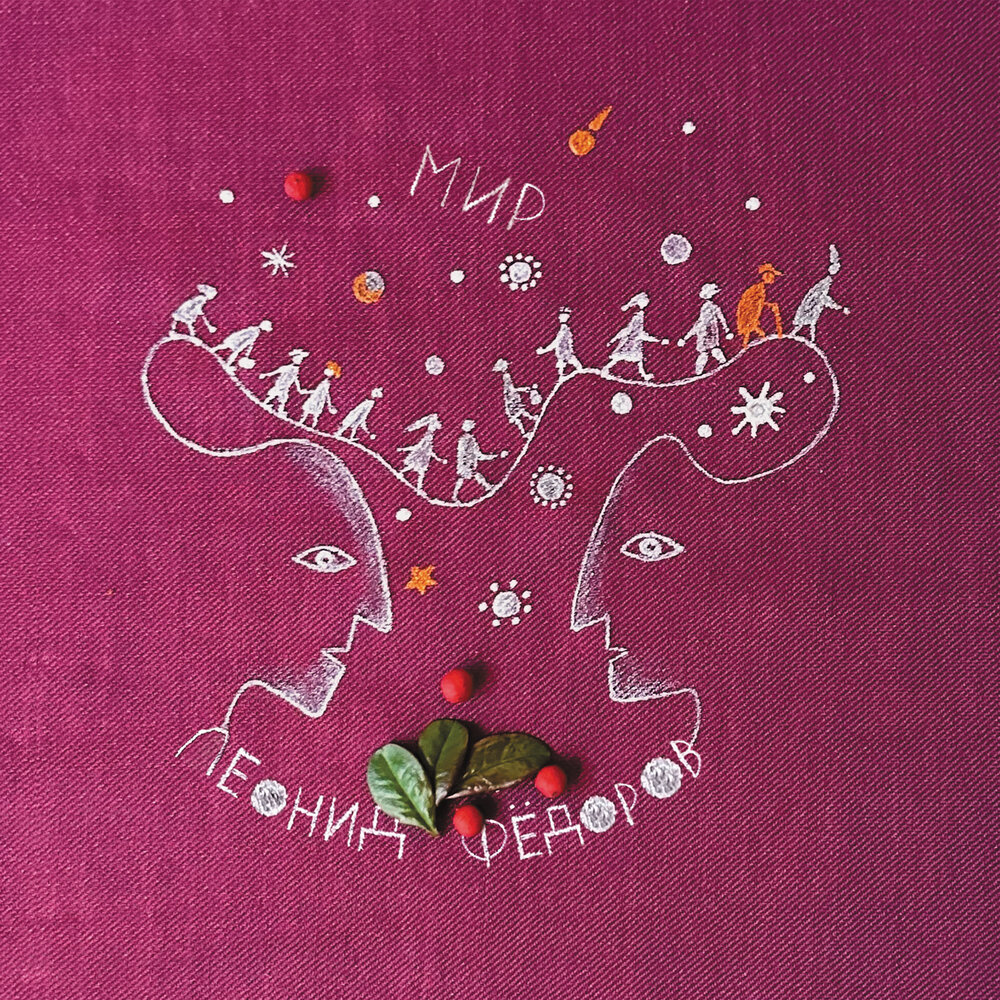
Leonid Fyodorov: Mir

The cover of Leonid Fyodorov’s LP Mir (2024)

I see that I’m quoted on the web all the time in connection with Shaman and other bastards. Yes, I have had to write a lot about them in the line of duty. But it would be a shame if I were to die tomorrow and be remembered for only this. I want to share something more interesting with you, music I’ve been listening to lately. Oddly enough, there’s very little outward political protest in this music.

Leonid Fyodorov has released an album entitled Mir [which means both “peace” and “world” in Russian]. Yes, I do recall that it [peace? world?] is a forbidden word. We understand what Fyodorov’s stance [on the war?] is, although he doesn’t say anything outright, but then again he is not a person who can be measured in terms of his [political] stance — his music is much more interesting. His music is always strange, chockablock with dissonances, avant-garde twists, noises, and sudden pauses. He doesn’t write songs that are not odd.

And this is despite the fact that Fyodorov is an amazing melodist, one of the best in Russia. But he creates melodies of astonishing beauty, sings them in his magical voice, and in the middle of the melodies he inserts unbearable guitar scrapes or something of the sort, as if he wanted to show that he didn’t believe in the very possibility of harmony. I once asked him about it, and he said something like, “It’s the times, I guess. I feel it’s the right thing to do.”

I got so used to it that I was expecting the same thing from every new album. Yes, the album was going to be great, but it was clear in advance exactly how it would be great. Even weirdness can become familiar and predictable.

Suddenly, over the last few years, I see that something has changed. I listen attentively: almost ubiquitously in Fyodorov’s songs there’s a perfectly even, constant rhythm and repetitive bits in the arrangements. In our country, however, even when I was at school, this has been considered a sign of bubblegum pop. There is nothing to it, in point of fact: you turn on a simple drum machine track and out comes fucking “White Roses” or “Svetka Sokolova.” There’s no creativity involved.

But a craftsman of Fyodorov’s stature doesn’t do anything for no reason. If he had wanted to make the rhythm more complicated, he would have made it more complicated. So he has to do it: he’s trying to say something.

I close my eyes and suddenly I see a river flowing. It flows swiftly, swiftly, and birds of prey circle above it. They are shrieking, trying to scare it, but it cannot be stopped. But they are really trying to scare it with all their might, and at times the music is quite scary.

And the lyrics have become different. Fyodorov used to employ lyrics (most often penned by Dmitry Ozersky) like a musical instrument. He had little interest in their meaning: he was mainly interested in how they sounded, how they fit the music. There was a lot of cosmic absurdity, a lot of onomatopoeia and, again, a lot of weirdness. They were lyrics, not poems.

What do we hear now? Almost the entire album consists of perfectly regular couplets with proper rhymes. The lyrics are eminently intelligible and designed to be listened to carefully.

На вопросы есть ответы.
Бедный мальчик, где ты, где ты?
Сам как будто маленький,
Но как будто старенький.
Было грустно, стало пусто.
У меня такое чувство,
Что зачем-то, почему-то
Мы не нравимся кому-то.

[Questions have answers.
Poor little boy, where are you, where are you?
You look like you’re little yourself,
But you look kind of old.
I was sad and now I’m empty.
I have this feeling:
For some reason, for some reason
Somebody doesn’t like us.]

The strange thing is that the music is quite sad, restrained, and expressionless. [Fyodorov] sings as if the jig is up and there’s no point in trying. But the music goes on anyway, and you can’t stop it. Fyodorov’s strange fluidity gives hope for life and peace. You can defeat man, beast, and the state, but you cannot defeat water.

The link to the album is in the first comment.

Source: Yan Shenkman (Facebook), 16 June 2024. Translated by the Russian Reader


The video for “Mir” (“Peace” or “World”), the title track of Auktyon frontman Leonid Fyodorov’s 2024 solo LP

Следите за нами, смотрите за нами,
Идём в путешествие между мирами,
На лестнице странной находится вход,
Чтоб прыгать обманно, ногами вперёд.
Дверь спрятана в мире 134,
Здесь люди похожи на крем на зефире,
Мы здесь никого ни о чём не попросим,
А спрячемся в мире 178.
И тут же ныряем в созвездие Звон,
Здесь звон геликоновый с разных сторон,
И мы принимаемся сразу за дело,
Чтоб громко гремело и звонко звенело.
Приятно орудовать палкой железной —
И звук интересный и опыт полезный.
А в мире 14 дяди и тёти.
Они сразу спросят: «А где вы живёте?
А как вас зовут? А конфетку хотите?
Уходите? Ладно, тогда уходите…
У нас здесь не любят врунов и смутьянов!
Здесь мир тараканов и мир хулиганов!»
Планета 15, и смотрим мы на…
Здесь нет ничего, здесь одна тишина.
На это приятно смотреть и занятно,
Что нет ничего, лишь какие-то пятна.
Есть мир номер 8 и мир номер 3,
Здесь 5 человек заблудились внутри,
У них не осталось ни воли, ни мнений,
И скорбно блуждают в тени отражений.
И плачут во сне, и глаза прикрывают,
Кричат: «Нам противно, таких не бывает»,
Кричат: «Уходите!», и машут руками,
А это они отражаются сами.
Планета 14-76!
Здесь что не придумаешь — всё уже есть.
Приятно девчонкам, приятно мальчишкам,
Здесь весело — очень! Но, тоже, не слишком.
Есть Розовый Штрудель и Мир Голубой.
Где люди бессмысленно спорят с собой.
Они отрицают, что есть и что будет,
И спорят с судьбой. Интересные люди.
На лестнице странной, в созвездии странном,
В краю безымянном, в щели под диваном,
Есть радостный мир, под названием «Где-то»,
Здесь море и солнце, и вечное лето,
А рядом, конечно, находтится «Что-то»,
Здесь только дремота, тоска и зевота,
И петь неохота, и лень веселиться —
Я чувствую: что-то должно приключиться…
Бежим — нас преследует Мир Сорок-дыр!
Он ловит детей — это призрачный мир!
Здесь только часы, и нельзя оставаться,
Здесь можно в себе навсегда потеряться
Здесь всё забываешь, и сны и мечты
И сам не узнаешь, что ты — это ты!
И будешь ходить и дрожать еле-еле…
Успели, наверное… Если успели.
Есть мир Вычислитель и Чёрная Кошка.
Приятно, что каждый из них понарошку.
Есть мир Колесо и созвездие Спящий.
Ужасно, что каждый из них настоящий…
Есть мир Крокодил и вселенная Горе.
Пожалуй, заделаем дырку в заборе.

Follow us, watch us,
We’re going on a journey between worlds.
On a strange staircase the entrance is such
That you leap deceitfully, feet first.
The door is hidden in World 134,
Where the people are like the fluff in a marshmallow.
We won’t ask anyone here for anything,
But we’ll hide in World 178.
And then we dive into the Ringing Constellation:
There’s heliconic ringing from every corner,
And we get right down to business
Loudly rattling, jingling and jangling.
It’s nice to wield a rod of iron —
It’s an interesting sound and a rewarding experience.
There are uncles and aunties in World 14.
They’ll ask you right off the bat, “Where do you live?
And what’s your name? Would you like some candy?
Are you leaving? Okay, then go away…
We don’t like liars and troublemakers here!
It’s a world of cockroaches and a world of bullies!”
Planet 15, and we’re looking at —
There’s nothing here, there’s only silence.
It’s nice to look at and entertaining
That there’s nothing, just spots and specks.
There’s World No. 8 and World No. 3,
There are five people lost inside,
They have no will, no opinions,
And wander mournfully in the shadows of reflections.
They cry in their sleep and cover their eyes,
They shout, “We’re disgusted, such people don’t exist.”
They shout, “Go away!” and wave their hands,
And that’s them reflecting themselves.
Planet 14-76!
Whatever you can think of, they’ve got it all.
It’s nice for the girls, it’s nice for the boys.
It’s a lot of fun! But it’s not too much fun either.
There’s Pink Strudel and Blue World,
Where people argue senselessly with themselves.
They deny what is and what will be,
And argue with fate. Interesting people.
On a strange staircase, in a strange constellation,
In a nameless corner, in a crevice beneath a sofa,
There’s a joyful world called Somewhere,
There’s sea and sunshine and eternal summer.
And next door, of course, there’s Something.
Here, there’s only slumber, languor and yawning:
You don’t feel like singing, you don’t feel like having fun.
I feel something’s going to happen.
Come on, we’re being chased by World Forty-hole!
He catches children, it’s a ghostly world!
There’s only hours and you can’t stay here.
Here you can lose yourself forever.
Here you forget everything, your dreams and your hopes,
And you’ll never know you’re you!
And you’ll walk around shivering.
They must have made it. If they did make it.
There’s the world of the Calculator and the Black Cat.
It’s nice that each of them is made-up.
There’s the world of the Wheel and the Sleeper Constellation.
The terrible thing is that each one is real….
There’s the world of the Crocodile and the universe of Woe.
Let’s patch up the hole in the fence.

Source: Leonid Fyodorov (YouTube), 14 April 2024. Music: Leonid Fyodorov; lyrics: Dmitry Ozersky; video: Lydia and Leonid Fyodorov. Translated by the Russian Reader

I Miss the World

anatrrra, from the series “Petersburg in April,” 2023
You can see the entire series on their LiveJournal

I just spent many hours roaming around Kolomna. I love the neighborhood: it soothes my soul, if only for a short time.

I came upon two dudes approximately my age sitting on a bench and drinking beer. From what I heard them saying it was clear as a bell that they had listened to Kinchev, Sukachov, and Butusov in their youth.

“That’s where such old scum comes from. But they used to be regular guys—bright eyes, rock and roll, the whole deal.”

“They drank, shot up, and snorted away their conscience, but money doesn’t smell, supposedly.”

“It stinks like hell nowadays.”

I was going to walk past them, but I turned around.

“Excuse me,” I said, “but I accidentally overheard what you were saying. I think they were like that from the get-go. They just adopted a stage persona in their youth. It was cool then, the niche was open, and you could no longer go to prison for things like that (unlike now). It was a beauty way to go.”

The men looked up at me, exhaled, and shook their heads.

“If that’s so, it’s even worse,” one of them said.

I apologized again, and went on my way. My back already turned, I heard one of them say:

“Check it out. Our people are still roaming these parts…”

Source: Marina Varchenko (Facebook), 2 June 2023. Translated by the Russian Reader


Body Type, “Miss the World” (2023)

Rock Monsters in Our Midst

“Monsters in our midst! The best urban fantasy”
Source: Ozon.ru email newsletter, 7 July 2022

It’s hilarious how many people, back in the day, thought that Medvedev was a “liberal”:

Reviving Russia’s implicit nuclear threats, Dmitry Medvedev, a former president, has warned that the war in Ukraine might endanger the future of humanity. Mr Medvedev, now deputy chairman of Russia’s security council, wrote on Telegram that “the idea of punishing a country that has one of the largest nuclear potentials is absurd and potentially poses a threat to the existence of humanity.”

Source: The Economist, “The World in Brief” (email newsletter), 7 July 2022


Meeting with Russian rock musicians

Dmitry Medvedev held an informal meeting with Russian rock musicians, during which he answered numerous questions on a variety of topics, including the most pressing ones.

Andrei Makarevich (Time Machine), Dmitry Medvedev, and Boris Grebenshchikov (Aquarium). Moscow, 12 October 2010

One of the questions concerned the Khimki Forest. The President stressed that in the case of such high-profile topics, a wide-ranging discussion is needed to make a final decision. Dmitry Medvedev noted that the authorities should learn a lesson from this situation. “If there is still a feeling that the topic is making huge waves, you cannot close your eyes and say that we have made the optimal decision, even when it is optimal,” he said.

“Trying to pretend that everything is okay, that nothing is happening, can lead to a dead end, putting all of us in a very difficult situation, in which the authorities have to make a difficult, unpopular, and simply bad decision,” Medvedev said.

He stressed that in this case it was necessary to hold consultations, meet, discuss, and only then make a final decision.

The [planned] construction of Okhta Center, a 400-meter-high business complex in Petersburg that has caused great concern amongst the city’s residents, was also discussed. The head of state stressed that he, as someone who had lived in Petersburg for a considerable part of his life, was not unmindful of the architectural appearance of the city, which is virtually an open-air museum. According to Medvedev, this problem should be solved after the conclusion of the relevant lawsuits and consultations with UNESCO, the international agent empowered to resolve such issues.

“It is extremely important for Petersburg have new centers of growth, new architectural landmarks. But must it be done next to Smolny [Cathedral]? That is a very big question.” There are many places in the city that the skyscraper could complement, Medvedev noted.

Alexei Kortnev, leader of the band Accident, asked the head of state about the plight of Zurab Tsereteli’s Peter the Great monument. “It will depend to a great extent on the new mayor of Moscow,” the President replied, stressing that in the very near future he would submit a candidate for the post of the capital’s mayor to the Moscow City Duma.

The problem of combating drug addiction was also touched upon. Vladimir Shakrin, leader of the group Chaif, asked about the criminal case against the head of the City Without Drugs Foundation in Nizhny Tagil, Yegor Bychkov, and about his trial. Shakhrin noted that Bychkov has been charged with torturing people and kidnapping, although the only thing he did was to help people free themselves from drug addiction.

“One must analyze any case carefully. You said your piece, and I heard what you said. I would ask you to pay attention to what is happening there without interfering in the course of the trial or coming into conflict with the law,” Medvedev said.

Andrei Makarevich asked the head of state to support the Creation of Peace rock festival. The idea of the celebration is to gather on a single stage people of different ethnicities and confessions, and even people from countries “that are not friendly with each other.” The President noted that the festival has been underappreciated, promising to support it.

The rock musicians included the leaders of the groups Earring (Sergei Galanin), Aquarium (Boris Grebenshchikov), Accident (Alexei Kortnev), Time Machine (Andrei Makarevich), B2 (Alexander Uman), and Chaif (Vladimir Shakhrin), as well as ex-Agatha Christie leader Vadim Samoilov and Ilya Knabenhof, leader of the group Pilot. They had several surprises [for the President], performing both their own songs and foreign rock classics [for him].

At the end of the meeting, the musicians took a photo with the President of Russia and presented him with an electric guitar which they had autographed.

Source: Kremlin.ru, 12 October 2010. Translated by the Russian Reader

Pasosh, “All My Friends”

Pasosh performing “All My Friends” live in concert in Moscow in October 2016

Pasosh, “All My Friends” (2016)

[Verse 1]
All my friends don’t do shit
They drink from night to morning and wait for the next day to come
My friends are complete assholes
Assholes like you, if that doesn’t mean I’m just like them
My friends sit at home without jobs
They’re fucking up their best years and waiting for the money to come to them
My friends don’t do shit
They drink from night to morning and wait for the next day to come

[Chorus]
All is wasted, wasted, wasted, wasted, wasted, all is wasted

[Verse 2]
All my friends do nothing
Nothing but one thing
They wait for Saturday to get shit-faced drunk
My friends are complete assholes
Assholes like you, if that doesn’t mean I’m just like them
My friends sit in bed all day
Waiting for someone to tell them “enough”
And give them a reason to get up
My friends don’t do shit
They drink from night to morning and wait for the next day to come

[Chorus]
All is wasted, wasted, wasted, wasted, wasted, all is wasted

[Outro]
All my friends
All my friends
All my friends
All my friends

Source: Genius. Translated by the Russian Reader

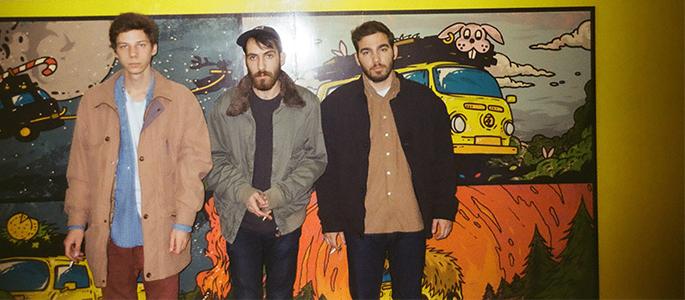
Pasosh performing “All My Friends” on Ebemol Live in 2018


Pasosh. Photo: Dürer Kert