

Very soon — this Sunday — our current exhibition will wrap up, and the Sakharov Center will close its doors.
THIS MATERIAL (INFORMATION) WAS PRODUCED AND/OR DISTRIBUTED BY A FOREIGN AGENT, THE SAKHAROV CENTER, OR CONCERNS THE ACTIVITIES OF A FOREIGN AGENT, THE SAKHAROV CENTER. 18+
Coincidentally, our final exhibition is dedicated to Yelena Georgiyevna Bonner, who founded the center. Eviction, of course, does not mean at all that we are ceasing operations. This year we expect to launch a website in honor of Yelena Georgiyevna, produce a podcast, and do a lot more. And yet, it is clear that an important period in the center’s history is coming to an end.
Source: Sakharov Center (Facebook), 14 April 2023. Translated by TRR
The headquarters of Russian human rights group the Sakharov Center, a rare island of free debate in the Russian capital, will close its doors to the public this weekend in response to an eviction order from local authorities as Russia’s wartime drive to suppress dissent shows no sign of ending.
Opened in 1996 to honor the memory of Soviet dissident and Nobel Peace Prize winner Andrei Sakharov, the center has been an iconic location for talks, exhibitions, funerals and discussions about human rights.
“Without these two buildings, we are no longer a public center,” said Vyacheslav Bakhmin, a veteran human rights activist and the chairman of the board of the Sakharov Center.
“It makes any activity extremely difficult.”
The eviction comes as the few human rights groups still operating inside Russia face intensifying state pressure in the wake of the Kremlin’s decision to invade Ukraine.
The country’s oldest human rights organization, the Moscow Helsinki Group, was closed down by a court order in January, while eight top members of shuttered rights group Memorial, which was jointly awarded the 2022 Nobel Prize last year, were targeted in police raids last month.
The Sakharov’s Center’s final exhibition at its headquarters on the banks of the Yauza River in downtown Moscow was devoted to Yelena Bonner, the wife of Andrei Sakharov and a major Soviet dissident in her own right.
“We did not plan this symbolism, it just happened this way — they started closing us down on the eve of Bonner’s centenary,” curator Natalia Samover told The Moscow Times.
“This center is filled with her name,” she said, standing amid the exhibition that included some of Bonner’s photos and video interviews as well as her desk, notebooks and letters opposing Russia’s 1990s war in the North Caucasus republic of Chechnya.
Bonner was involved in founding the Moscow Helsinki Group in the 1970s and worked tirelessly to raise Sakharov’s profile when he was exiled to Gorky (now Nizhny Novgorod) by the Soviet authorities.
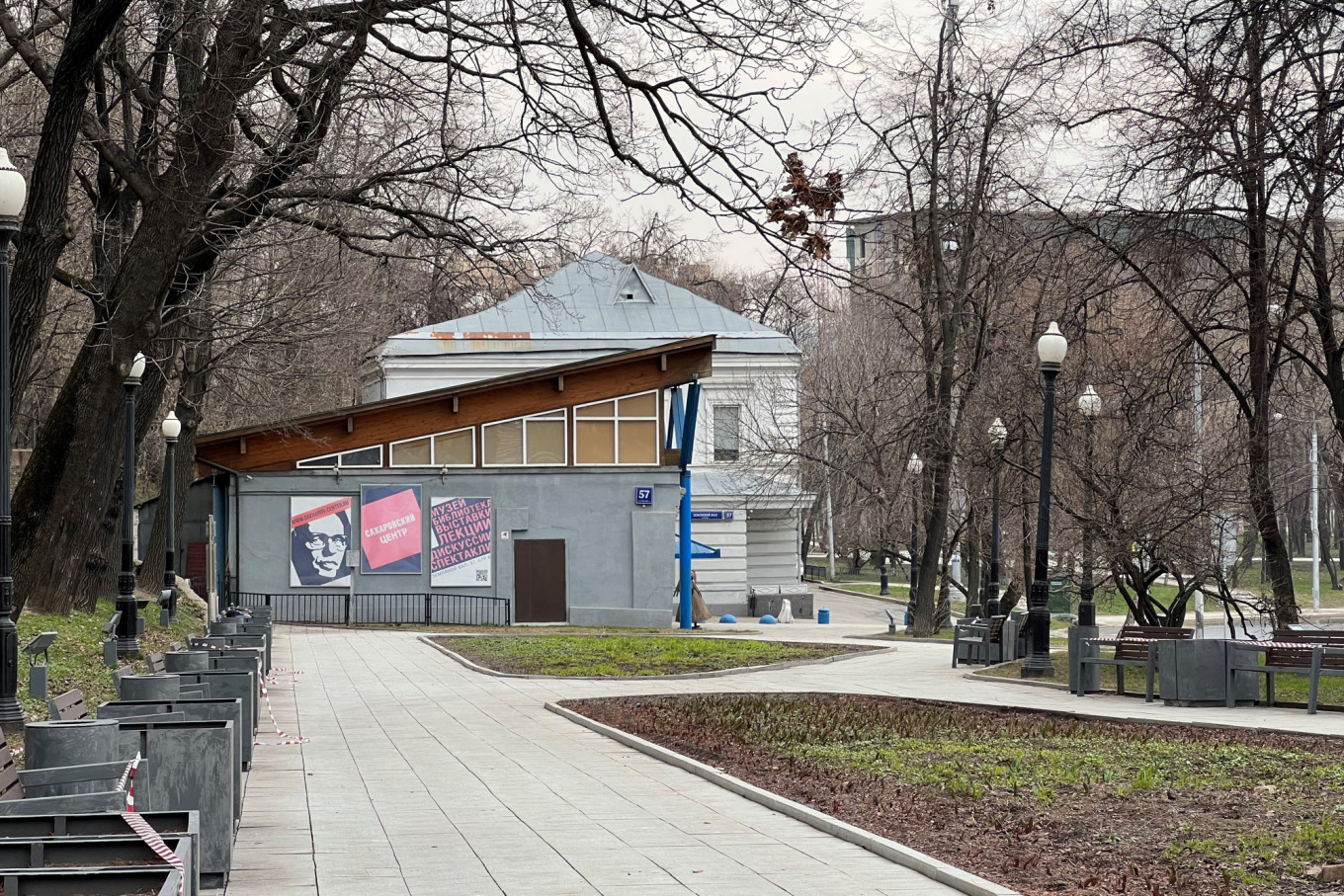
Following Sakharov’s death in 1989, Bonner established the Sakharov Center — gifted rent-free by the Moscow authorities — and opened the Sakharov archives to the public.
On a recent visit by a Moscow Times reporter to the Bonner exhibition, there were a handful of visitors.
“The center is definitely a significant place — it’s important to have different points of view as well as places where these different points of view can be discussed,” said Artemy, an IT specialist, who decided to visit because he knew that the center was due to close.
“I think that everyone can be represented in the public field,” said another visitor, Stanislav, who admitted that he wasn’t aware of “the history of the center.”
The closure of the Bonner exhibition — titled “Life Was Typical, Tragic and Wonderful” — marks the end of the Sakharov Center’s long tradition of public engagement.
Employees earlier this month dismantled the center’s permanent exhibition on the legacy of Sakharov and victims of Soviet-era repression and its final public event — dedicated to Bonner — will take place Sunday evening.
According to the eviction notice, the center must be fully vacated by April 28.
Formally, the authorities’ decision to deprive the Sakharov Center of its Moscow home was a result of the organization’s designation as a “foreign agent” in 2014 — Russian law forbids “foreign agent” organizations from receiving any state support.
But the Sakharov Center has said it believes the order was really motivated by the Kremlin’s desire to destroy “independent organizations that defend the public interest.”
For the moment, the Sakharov Center does not have any new premises lined up and is planning to continue its activities online.
In addition, it is undergoing an unscheduled inspection by the Justice Ministry this month, board chairman Bakhmin told The Moscow Times.
“The results will make it clear whether and how we can continue,” Bakhmin said.
The eviction is just the latest example of official pressure on the Sakharov Center.
Russia’s Prosecutor General’s Office declared the Andrei Sakharov Foundation — a group opened by Bonner in the U.S. — as an “undesirable” organization in January, a designation that means any association with the group could result in criminal charges in Russia.
That means the Russia-based Sakharov Center now avoids any cooperation with its U.S. counterpart.
The current state of human rights in Russia is “unprecedented,” according to Tatiana Lokshina, a Europe and Central Asia expert at Human Rights Watch, which was forced to close its own Moscow office last year.
“While Russia is fighting against Ukraine, it is also fighting against any critical actors within the country. This is a real war with dissenting opinions,” she told The Moscow Times.
Over the years, the Sakharov Center, which describes itself as “a place uniting thousands of Russian citizens who are not indifferent to the fate of the country,” has hosted a number of landmark events — including the unofficial lying-in-state for Soviet dissident Valeria Novodvorskaya and murdered Kremlin critic Boris Nemtsov.
Despite the loss of a physical presence in central Moscow, Bakhmin remains optimistic that the Sakharov Center will survive and the current crackdown will be reversed.
“The situation [in Russia] will change again — the reality we live in right now has no future,” Bakhmin told The Moscow Times.
“There is always hope.”

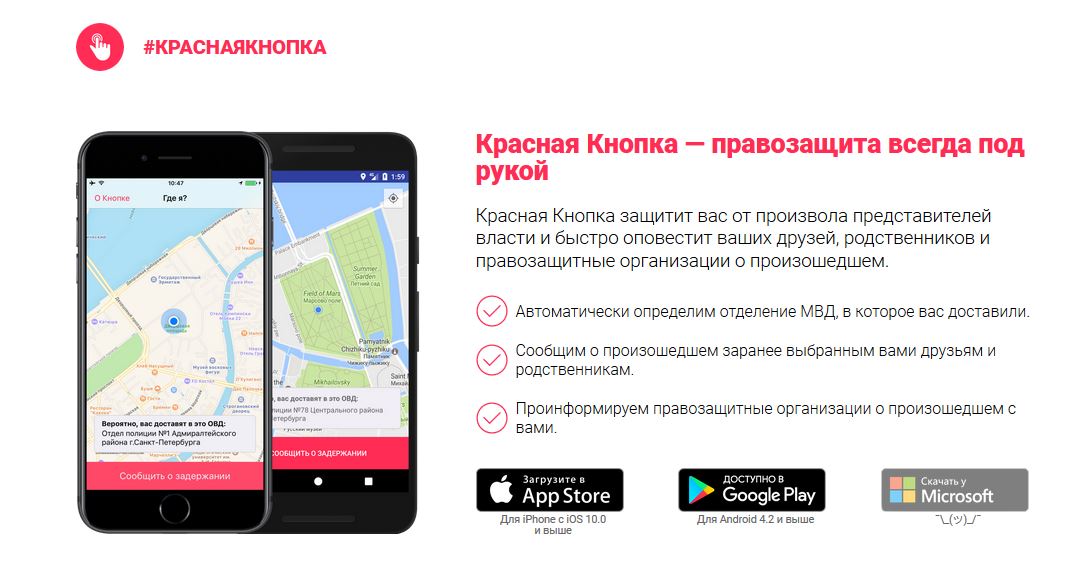 “Red Button—human rights protection is always at hand. Red Button protects you from abuses of power by the authorities and quickly informs your friends, relatives, and human rights organizations about what happened. √We automatically locate the police station where you were taken. √We report the incident to the friends and relatives you selected. √We inform human rights organizations about what happened to you.” Screenshot of the