This is the first in a series of posts in which I showcase a few of the newsletters, blogs, Substacks, and websites — all of them produced by hardworking, passionate lone wolves or tiny, perpetually underfunded grassroots collectives — which inspire me to continue making the Russian Reader and inform me about parts of the world and communities about which I would otherwise be utterly clueless.
Peter Leonard describes Havli as “a Central Asia-themed Substack written by me, Peter Leonard, a former editor at Eurasianet and the one-time Central Asia correspondent for the Associated Press. By drawing on my decades of experience visiting, studying and reporting on the region, I intend to make this newsletter an informative and, fingers crossed, engaging way to keep abreast of developments of note.”
Mr. Leonard’s latest post on Havli dovetails with so many of political and social trends I’ve been tracing over the years that it seems tailor-made for my website. Enjoy! I hope you’ll consider subscribing to Havli and supporting it financially. \\\ TRR
In the worst-case scenario, giving a teacher lip usually ends with the offending pupil visiting the headmaster’s office.
Things have to get pretty bad for a classroom kerfuffle to provoke a diplomatic incident.
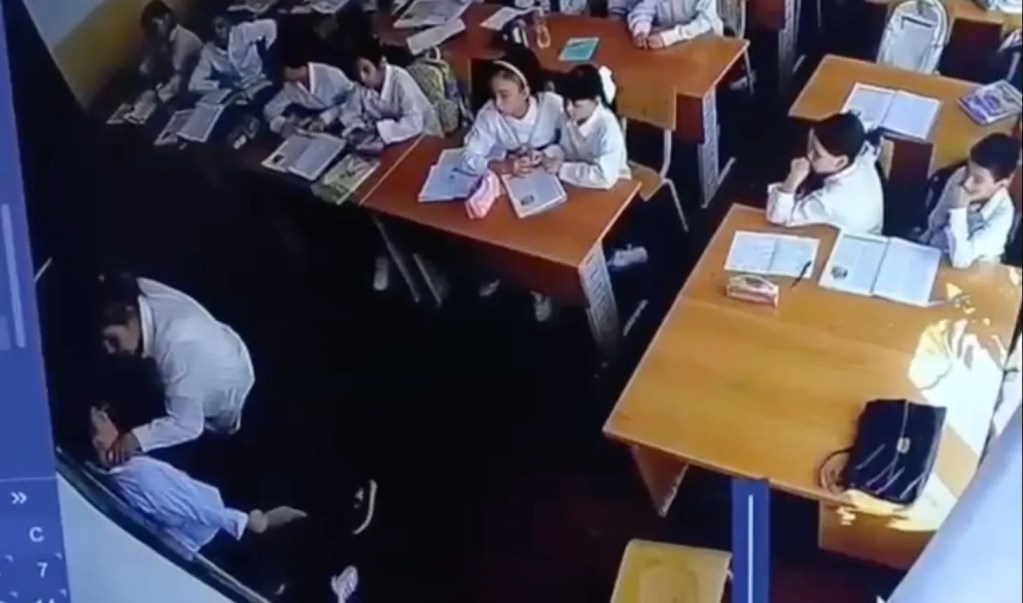
A teacher at a school in Uzbekistan’s capital, Tashkent, managed to do just that this week by manhandling a pupil who complained that she was conducting her Russian language class entirely in Uzbek. Closed-circuit television footage obtained by the boy’s parents shows the teacher grabbing the child by the neck, and then slapping and screaming at him.
The video images quickly circulated on social media, eliciting howls of protest from self-avowed Russian patriots indignant at this alleged case of maltreatment of their ethnic kinfolk.
“You can just imagine what a racket there would be if a similar thing happened in Russia with a migrant. And it is not like Uzbekistan is confronting a wave of ethnic crime from Russia; you don’t get murderers, thugs, drug dealers, and Wahhabis going there from our country,” wrote the author of a Telegram account that disseminated the footage.
This was quite the overreach. Expatriate labourers from Central Asia living in Russia face systematic harassment and violence, often from the police. This happens so frequently it barely makes the news.
The spokeswoman for the Foreign Ministry in Moscow was quick to demand an investigation.
“If it is justified, action must be taken against the perpetrator of this cruel treatment against the child,” Maria Zakharova said. “We are monitoring this situation closely.”
The response from Uzbekistan was swift. Alisher Kadyrov, the deputy speaker of parliament, suggested that Russia “mind its own internal business.”
“The rights of this child are being violated in a school in Uzbekistan, the offence was committed against a child of an Uzbek citizen, and measures will be taken on the basis of laws adopted on behalf of the people of Uzbekistan,” he wrote on Telegram.
Uzbek Foreign Minister Bakhtiyor Saidov delivered the same message in person, albeit more obliquely, to his Russian counterpart on the sidelines of the ongoing United Nations General Assembly, noting that their meeting “underscored the importance of commitment of states to the principle of non-interference to each other’s internal affairs.”
Following this outcry, news emerged that the teacher at the Tashkent school assaulted another pupil in an unrelated incident and has since been sentenced to serve seven days in jail.
Moscow shows every sign of relishing the opportunity to make hay of this episode.
Claims of Central Asia’s allegedly spiralling Russophobia problem have been wielded with increasing readiness by surrogates for the Russian authorities since the start of the invasion of Ukraine. The Kremlin perceives the region’s rulers as more or less loyal, but it worries that the general public is not as reliably slavish. The nightmare scenario for Moscow is that a groundswell of anti-Russia sentiment across parts of Central Asia could eventually force a gradual shift in diplomatic stances.
The concern looks overblown at present, but it is not fully unjustified.
Older generations, especially the shrinking cohort with vivid memories of the Soviet Union, are typically more sympathetic to Russia and its bellicose conduct. Younger people whose media diet does not consist of consuming Russian state propaganda are more hostile.
Russian chauvinists are alarmed that the increasingly exclusive use of local languages in Central Asia is weakening their ability to project their message.
Research by Central Asia Barometer, an attitudes-surveying think tank, suggests that there is some association between language use and views on the war in Ukraine. Russian speakers in countries like Kazakhstan and Kyrgyzstan are more likely to justify the invasion of Ukraine than those who speak their own languages.
Fears that the status of Russian is slipping leads at times to comically petty whining.
Earlier this year, famous Russian TV presenter Tina Kandelaki complained in a Telegram post that Kazakhstan was poised to rename a number of train stations to make them sound less Russian. She cast this move — which comprised in the event of changing names like Railway Siding No. 13 to Akshi Railway Siding — as the start of a slippery slope that would end with the closure of Russian schools, the banning of the Russian language and “[Russian] pensioners getting kicked out into the cold.”
Historians in Central Asia crafting narratives that highlight the negative aspects of Russian and Soviet rule are another trigger. The mere suggestion that the region owes its civilisation to an era pre-dating the arrival of the Russians is enough to irk some.
In August, scholars from all over the region assembled at the Eurasian National University in Astana for the first-ever edition of the Forum of Historians of Central Asian States. “It is important for us to begin to rethink our common history,” Kazakh Science and Higher Education Minister Sayasat Nurbek told the scholars.
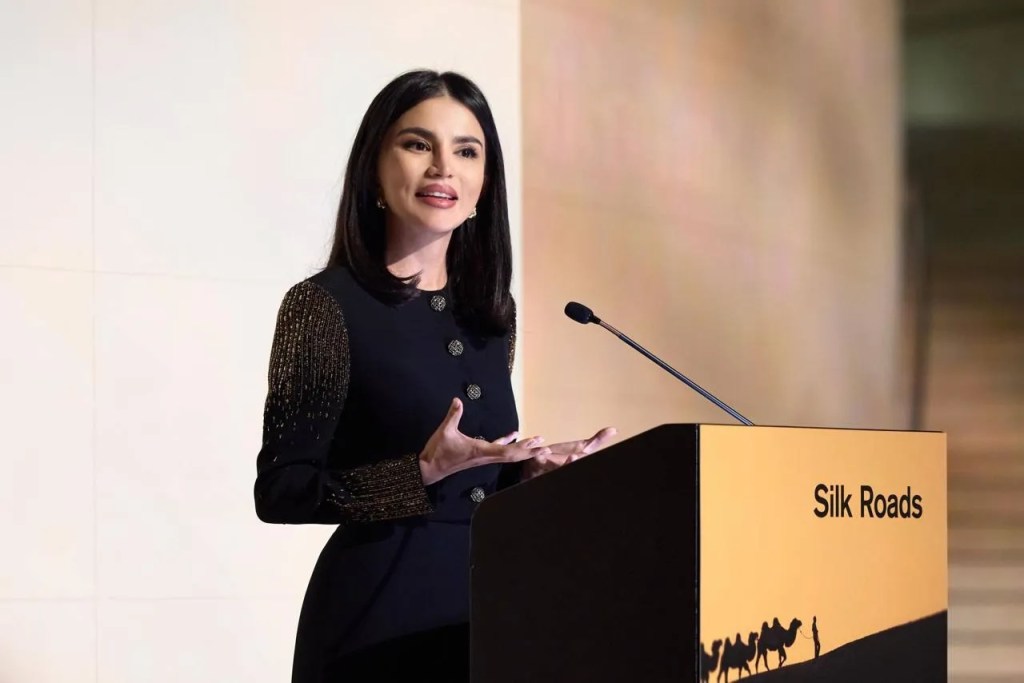
The political elite has taken the lead on this. Saida Mirziyoyeva, a senior advisor to her father, Uzbek President Shavkat Mirziyoyev, in August delivered a speech in Kazakhstan that strongly signals what areas of the official narrative on recent history will be emphasised going forward. She alluded in her talk to a pair of reformist and softly nationalist movements that emerged in what are today Uzbekistan and Kazakhstan as having been thwarted by Soviet oppressors.
“At the beginning of the 20th century, both the Jadids and representatives of the Alash movement fought for a single goal: the liberation of the people, for the development of their motherlands. But they were not given the opportunity to realise their dreams,” she said.
Russian critics of this kind of talk smell a rat.
They point to the content of one history textbook in Uzbekistan as evidence of dangerous revisionism. A passage from a book cited by outraged Russian patriots talks of how the “Soviet regime subordinated Uzbekistan’s economy to the interests of the centre, turning it into a raw materials appendage.” This is loathsome ingratitude designed to demonise Russians, they grumble.
Kyrgyzstan and Tajikistan are far more economically dependent on Russia than either Kazakhstan or Uzbekistan, but they too have in their own small ways worked to forge narratives that are gently but implicitly critical of the legacy of Muscovite rule. In July, Kyrgyz President Sadyr Japarov officially recognized five victims of Soviet repression as founders of the modern statehood of Kyrgyzstan. All the men were executed in 1930s during waves of Stalinist repressions against perceived nationalist movements.
That anti-nationalist campaign was the same one that crushed the Jadidist and Alash movements referenced by Mirziyoyeva.
Central Asian leaders periodically try to soothe the nerves of Russians eager to winkle out evidence of xenophobia in the region.
In his address to the nation earlier this month, Kazakhstan’s President Kassym-Jomart Tokayev reprised a tried-and-tested Astana mantra.
“In Kazakhstan, there is no — and cannot be any — space for discrimination on linguistic, religious, ethnic or social grounds,” he said. “Incidents and provocations do sometimes occur, but these happen because of the thoughtlessness and ignorance of individual citizens. When these things happen, they are dealt with — and will [always] be dealt with — by law enforcement agencies.”
The large community of vocal Russian revanchists monopolising the public conversation inside their country do not buy it. And they are seizing on any excuse to make their point heard.
Source: Peter Leonard, “Russophobia panic fanned by school scuffle in Uzbekistan,” Havli, 27 September 2024. The link in the sixth paragraph was put there by me. \\\ TRR