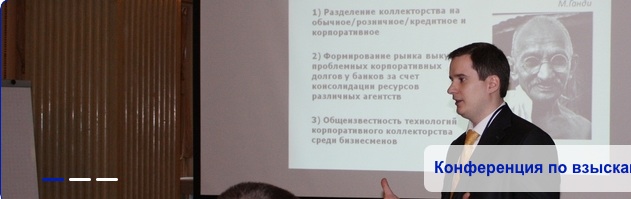
Screenshot of a photograph found on the website of the Debt Collection Development Center. The photograph was taken during a conference on debt collection. The man in glasses displayed on the screen is identified as “M. Gandhi.” Source: Tsentr razvitiia kollektorstva
Russia in the Pit of Stability The state has disclaimed all liability for the country’s future
Elizaveta Alexandrova-Zorina Moskovsky Komsomolets
June 22, 2016
The country has been handed the bill for Crimea, Donbass, and “stability.” The bill includes unemployment, poverty, and hopelessness. The petrodollar dolce vita is over. The only things growing now in Russia are prices, taxes, and utility bills, while incomes, purchasing power, and the standard of living are falling. Nineteen million Russians live below the poverty line. Yet the minimum monthly cost of living in Moscow is 14,413 rubles [approx. 200 euros], and 9,452 rubles nationwide, meaning that a huge number of people who are not officially poor are barely making ends meet. Thirty-nine percent of families do not have spare cash; they spend their entire incomes on groceries. The worst thing is that these people cannot afford to buy not only things but also medicines. Almost fifty percent of the population suffers from structural hunger. And that is not is the limit: the crisis is not over yet.
“Berries Are Sweet,” a song from the film Earthly Love (Yevgeny Matveev, dir., 1974)
The propagandists have, of course, been trying to powder the ugly picture with “poll results” claiming that eighty percent of Russians consider themselves happy, ninety-four percent look to the future with optimism, and eighty-two percent support the president’s policies. Not even the most desperately optimistic patriots believe in this anymore, however. Universal jingoistic boldness has given way to a heavy hangover, and instead of talk about Russia getting up from its knees, you more often hear the saying, “It won’t be worse than the nineties.”
It will be worse. In the nineties, it was only the free hand of the market that suffocated ordinary folk, but now the market will be reinforced by the strong arm of the state. More and more new taxes will be introduced: on property, land, vehicles, securities, and anything that moves. More and more bureaucratic dodges will be devised so the state can get its share, but from everyone and for nothing. There will be more and more new construction projects whose price tags will be doubled or trebled so the “elite” can maintain their prosperity. Phrases like “Crimea tax,” “payment for an extractive economy and decades of incompetent sloth,” and “money for officials and security forces” will be inscribed in invisible ink on each new levy, requisition, and massive construction project.
Sensitive to change, since they have something to lose, and quick off the mark, because they are able to leave, the middle class has quickly realized that hard times are coming. Since the introduction of sanctions, its ranks have thinned: some have been ruined, while others have fled. Even before the crisis, the regime did everything it could to make doing business more or less honestly in Russia unprofitable. Even the sanctions and promises to support domestic producers have changed nothing. Those who steal have it good, those who work have it bad, and the smaller the business, the more it gets fleeced. Due to the government’s anti-western rhetoric, many entrepreneurs who do business with other countries also got scared they would be targeted with everything from travel bans to confiscations of money and property. Hedging their bets, they have taken refuge in the Baltic countries, where it is easy to get a residence permit, as well as in Europe, Asia, and even Latin America. So many economic emigrants have left the country in recent years that we could speak of “economic steamships” bearing them out of the country. Many have purchased citizenships in other countries, and many of those people plan to renounce their Russian citizenships due to the passage of new laws. (The question of whether Russia needs such citizens and whether we should mourn their departure is beyond the scope of the article.)
But what will happen to those people who stay here? Will the nineties seem like a piece of cake to them?
People had no money in the nineties, but neither they did have any debt. Today, around thirty-eight million people have outstanding bank loans. This is fifty-nine percent of the working population, and it excludes people in debt to semi-underground micro lenders. Moreover, eight million people have at least three outstanding loans, and every sixth person has no way to pay back his or her debts. More than half the loans taken out in 2016 were used to pay off outstanding loans. In addition, people raised on the ideology of consumption cannot kick the credit habit even in hard time. Impoverished and unemployed, they mechanically keep on acquiring debt, using the money they have left to buy appliances or a trip to a resort, thus getting bogged down ever deeper in debt. The laws are written in the interests of the banks, and the inaction of the police and the connivance of the authorities favor the debt collectors. Banks get away with things mere mortals could not get away with. Billions are spirited out of the country annually using crooked banking schemes, and these crimes go to trial only in exceptional cases. It is one thing, however, to move capital abroad and not returns millions in loans to the treasury. It is almost a safe thing to do.
It is another matter not to give back a bank 100,000 rubles on time. True, a law regulating the work of debt collectors has finally been passe. As of 2017, absolutely criminal methods of forcing people to pay their debts will be prohibited. The law is quite timely, but you can count on laws only in countries where they are obeyed. Debt collection will thus shift from the legal realm to the semi-legal realm. Instead of official bank employees, debtors will now be getting visits from shaven-headed wise guys who supposedly have no connection to the banks.
By the way, bailiffs have recently been permitted to garnish the bank accounts of debtors. No one could care less whether you need the money for a life-or-death operation or you have a whole house of children to feed. The bank needs the money more than you do. The more the debt burden of the population increases, the more such measures will be adopted to help banks get their money back.
In the nineties, after the collapse of the Soviet Union, utility rates had not yet skyrocketed, and people could put off paying bills for years on end, until better times. There were no methods of debt collection, and besides, the housing and utilities sector had not yet been divvied up among contractors, many of whom are now in the hands of officials and their “subsidiaries,” only minus any government liability.
Nowadays, people who are overdue paying their utility bills for a couple of months are threatened with having their gas, electricity, water, and heating turned off, sued in court (which in Russia is always on the side of the strong), and can legally be evicted from their apartments. The regime, of course, serves the interests of the property management companies by increasing fines and simplifying debt collection procedures. Trying to carve up a meager budget, people wonder whether to pay the utility bills or make their loan payments. They base their decision on whom they fear most: the extortionists from the utility companies or the gangsters from the banks. The water and the power will probably not be turned off nationwide, but targeted outages and evictions will definitely kick off, and the most defenseless will be at risk. In my landing, a pensioner living with her sick son has had her electricity shut off, and the widow of a man disabled during WWII has received a “polite” threat from the housing service.
For the time being, Russians are keeping on top of their bills, but according to experts, the numbers of overdue utility bills will skyrocket and grow exponentially. Already sensing the profits to be made, collection services have taken an interest in the matter. (The new law on debt collectors, by the way, does not extend to people in debt to utility companies.) Considering their methods, this is definitely frightening. The website of the Debt Collection Development Center features a special section on extorting utility bill debts that lists such methods of pressuring debtors as special notices in the media and leafletting, participation of debt collection specialists in general tenant meetings, legal threats, and unorthodox options [nestandartnye varianty].* The last point gives me the creeps. What exactly are these unorthodox options? A clothes iron? A soldering gun? Matchsticks under the fingernails?
Another sign of the times that did not exist in the nineties is that no one feels sorry for anybody nowadays. A young family with a child has no way of paying back its foreign currency mortgage? Parents cannot pay for their son’s eduction? People have to sell the TV, car or dacha to pay off the loan used to buy that selfsame TV, car or dacha? You shouldn’t have borrowed money from a bank! You have no money to pay your bills? Sell your flat and buy one you can afford! You cannot pay for medical treatment or pay your university fees? Get a job! There are no jobs? That is your fault!
People have no sympathy for others or sense of solidarity. Nor should we expect protests and rallies in support of these who have gone into debt, even when the whole country ends up in that pit. The police and judicial system insures our government against any disturbances.
In fact, the punitive apparatus (from the police and the courts to bank debt recovery departments) is a single sector in which the state is present in one way or other. But what does the state do for its own people? It squanders state funds, including the pension fund. It cuts spending on everything not associated with the military, abroad and domestically. It has been exiting the social sector, shutting down hospitals, schools, and kindergartens, eliminating further and supplemental educational programs, canceling benefits, and reducing welfare payments that as they were amounted to kopecks. 24,000 schools, 4,800 hospitals, and 4,800 medical clinics were closed in Russia from 2001 to 2013 alone. (There is no data on the Rosstat website after 201. Apparently, it was decided to classify the information.)
The state has disclaimed all liability for the country’s future, but it still costs a lot to its people. In the nineties, the regime attempted to spend the Soviet inheritance, which was so rich that part of it is still left over today. In the noughties, it cashed in on resource extraction. Today, it has no choice but to shake down its own citizens for money. The entire state vertical, the entire system of power, from the government to the security forces, has focused on this. And since it often has to shake the last kopecks from people’s pockets, the process will be cruel and painful.
The current regime presents itself, at home and abroad, as having brought “stability” and prosperity to Russia. Russians, the storyline goes, are enjoying the fruits of their new consumerist society, and thus social conflict, much less outright resistance to the powers that be, is insignificant. Russians are buying into this new “de-ideologized” ideology because it allows them to buy a better life.
Closer to the ground, however, the picture looks different. In fact, all over Russia, workers are struggling to create independent trade unions and improve the conditions of their work; antifascists are battling to stop the scourge of neo-Nazi attacks on the country’s minorities and foreign residents; and human rights activists, opposition activists, and just ordinary folk are working to make the country’s commitment to democracy and law meaningful (to mention only a few, obvious examples). Because the regime has a near-total lock on the media, most of these conflicts are kept out of the public view or presented to the public in a distorting mirror. And, it has to be said, the numbers of resisters nationwide are such that it would be wrong to say that society at large is (for now) gripped by a revolutionary mood.
In Petersburg, the most significant front in this “quiet” or “cold” civil war in the past few years has been the conflict surrounding the rampant architectural redevelopment of the city. The attention of observers both foreign and domestic has been focused on mega-projects such as the planned 400-meter skyscraper that will serve as the centerpiece of Gazprom’s Okhta Center, just across the Neva River from downtown Petersburg, the demolition of the city’s grand, plentiful “architectural heritage,” and the creative, nonviolent resistance mounted by such grassroots groups as Living City. Less attention is paid to efforts to prevent infill construction, which has become a particular plague in the city’s “non-classical” outlying neighborhoods, most of them built during the post-Stalin, pre-perestroika period.
These neighborhoods offer developers an advantage they cannot find in the historic center: “open” space. In reality, this means the tree-filled courtyards, gardens, and parks that Soviet city planners designed into these new estates in order to give citizens the fresh air, greenery, and recreational areas they were so desperately lacking in the densely built environment of the city center.
These “empty” spaces also present another advantage: they already have the infrastructure (gas, water, and sewerage mains, electrical grids and telephone lines, paved roads, and public transportation) that would be expensive to install in the truly undeveloped territories farther away from the center. Developers also do not have to worry about the building height regulations that still, however feebly, hold sway in the inner districts. They are also encouraged by an overheated economy whose main beneficiaries have few other avenues where they can invest their newfound wealth, and by a plentiful supply of cheap labor in the form of immigrants from the impoverished former Soviet republics.
On the administrative side, they are assisted by the “legal nihilism” of which President Medvedev has spoken so eloquently of in recent months, and by the central state’s identification of new housing construction as a national priority. (It matters little that much of the new housing created in Petersburg is functionally and nominally “elite,” meaning that is both unaffordable for most people and, in many cases, principally serves as a financial instrument for local administrations, banks, real estate agents, and buyers. I.e., it is not built as part of a social welfare program.)
In one seemingly insignificant block in the Piskarevka-Polyustrovo micro-district, in the far northeast of the city, all these factors have recently combined to destroy Submariners Garden, a large inner-courtyard grove dedicated to the memory of Soviet and Russian submariners who lost their lives in peacetime. Local residents have known about plans to build a housing complex on the site of the garden and have been resisting them since 2006. Piquancy has added to their struggle by the fact that the project is backed by the FSB, the Federal Security Service, whose officers have, allegedly, been allotted a certain number of apartments in the new buildings.
In May, the conflict went from simmering to hot when construction contractors tried to install a concrete wall around the garden. They were met with furious resistance from residents, who were assisted by local environmental and political activists. In June, further, unsuccessful attempts to install the wall sparked new stand-offs between construction workers, police, neighbors, and activists. This in turn prompted Alexander Vakhmistrov, one of the city’s vice governors and its construction “czar,” to declare a temporary moratorium on all work.
City officials and legislators also tried to calm residents by claiming that their block would be slated for “renovation”—which is what the administration has dubbed its new, ambitious program to replace many of the city’s Khrushchev- and Brezhnev-era residential buildings with new dwellings that will supposedly be built on the same sites as their dilapidated predecessors and will house the people temporarily resettled from those same buildings. The activists and residents of Submariners Garden have mostly rejected this plan, seeing it as an attempt to put a good face on a bad (con) game that never had anything to do with “renovation.”
Despite all these assurances and promises, however, in the early morning of July 21, construction workers, backed by police and “security guards” (i.e. low-level thugs), arrived at Submariners Garden and began clearing trees. Activists and residents sent out a call for help and tried to mount what resistance they could under the circumstances. They were badly outnumbered, however, and in the event, four of them, including their leader, Yelena Malysheva, were arrested. By evening, the “developers” had accomplished what they had set out to do. They had cut down all the trees in the vast, central section of the courtyard and had surrounded it with a concrete barrier.
Activists promised that the fight has not ended, but, in the absence of a solidarity network capable of reacting quickly and in larger numbers to such “fires,” it is difficult to imagine how they and other Petersburgers in similar straits throughout the city can successfully defend their homes and squares. More important, what is lacking is a compelling alternative political practice that would enlist greater numbers of people in the struggle against hegemonic “aggressive development” (Petersburg Governor Valentina Matviyenko’s coinage) and the other predations of oligarchic capital by advocating real grassroots participation in planning and socially oriented development.
Nevertheless, what prevents its emergence most of all are the many micro-practices and everyday discourses through which both the hegemons and the hegemonized persuade themselves and each other that only silly “beautiful souls,” old women, and hysterics worry about old buildings, beautiful panoramas, and humble groves in shabby Soviet-era neighborhoods. Worse, these “losers” are often represented, by politicians and the media, as paid agents of more sinister forces who wish to undermine Russia’s long-sought “stability.” In this case, as in so many others, solidarity with such unattractive types is out of the question. Everyone has more important things to worry about.
Here we present video testimony, in Russian, by some residents of Submariners Garden, Each video is accompanied by a transcript in English.
For a good summary of the day’s events and the conflict in general, see Sergey Chernov’s July 22 article in The St. Petersburg Times (which has been reproduced in full, below).
Submariners Garden, Petrograd, July 21, 2008
[Yekaterina:] Wherever we called, they told us that this was all renovation, although it’s not renovation at all—it’s infill construction. We all were against it. There were public hearings: we all signed [petitions] against this project. There was a vote for [or against] renovation: we signed [petitions?] against this renovation when we learned how it would be carried out. There are two children’s institutions here. They want to build two buildings for the FSB [and] a 150-car parking lot, which we really don’t need here.
They began working around seven-thirty. Who exactly gave them permission? This mainly comes from our governor [Valentina Matviyenko]. That is, she gave them the green light, although there is a law protecting green spaces. There is also a law about human rights in general: [one has the right] to live in one’s neighborhood and have one’s say about what will be [built] there and what won’t. We have been stripped of this right.
We have already filed a suit in the [European Court of Human Rights] in Strasbourg, and we are waiting for our case to be reviewed. What is going on here is total lawlessness: the land was sold, but no one asked us [what we thought about it].
What is at stake here is the value of the land and the value of our infrastructure (our gas mains and electrical cables), which is all ready to use. And the value of our lives: the outer walls in our buildings shake even when a freight train passes by way over there. When a truck passes by below, the outer walls here shake like crazy. We have these huge cracks in the walls, and the ceilings leak in many apartments.
This renovation is not [being done] for us; it’s for someone else. I don’t know what this is. It’s infill construction, ordinary infill construction. We, the residents of Khrushchev-era blocks and five-story houses, are simply being driven out. We have no rights.
My name is Yekaterina. I live literally in the next house over. I have been fighting here for two years. Some people have been fighting for this garden for three years—for this garden, for our green spaces, for our air. The laminated plastics factory periodically sends out fumes. All the children here have allergies. The Avant-Garde plant regularly spits out who knows what. If there is no foliage here, there won’t be any air to breathe. And if there are also going to be 150 cars here or maybe more, then I cannot vouch for what will happen to the health of our children and our own health. I have asthma myself. I cannot breathe the air downtown and I cannot live there.
[Yekaterina:] Our neighborhood has been slated for infill construction. They have slated this place for infill construction, as if it were an empty place. The law on green spaces was passed in 2004. But they slated this little patch—this beautiful, green patch—for infill construction in 2006. Isn’t that a violation [of the law]? It’s a violation. Isn’t it a violation of human rights when we speak out, when we have spoken out against [this project] more than once? They don’t hear us. No one listens to us, no one hears us.
And all the newspapers are silent. We read only articles commissioned [by the authorities or other interested parties]. [We read] that here there is a pitiful bunch of people who have nothing to do with this district. No, we live here. People have lived for forty, fifty years under these trees. How they can ignore this? We plant everything here, we clean the garden up as well as we can, and we have regular volunteer Saturday workdays. Our children ride their bikes here; there’s nowhere else for them to ride. Where should they ride? On the street, on the pavement? Our children play here, parents walk their babies in prams. What kind of demographics will we end up with if our children breathe exhaust fumes and do not see a single green tree their entire childhood?
[Old Woman:] They think they are chopping down trees. They are chopping down our lives. These trees survived the Siege [of Leningrad, during WWII]. Why are trees being felled in the center of the city? Who gave permission to do this?
[Yekaterina:] They included [this neighborhood in the infill construction program] as an empty place, not as a garden, not as a green zone, but as if there were an empty space here. We have a map on which every tree is marked. The city administration has remained totally deaf to our complaints, to our requests. They came and nodded their heads: “Yes, we’ll suspend the project. We’ll put you on the renovation list. Everything’s fine. We’re temporarily suspending construction.”
Now it turns out that [Vice Governor Alexander Vakhimistrov’s] letter ordering a temporary halt in construction was “recalled.” That is, the construction company got the green light to go ahead here. They have already been selling apartments [in the buildings planned for construction on the site of the demolished garden].
[Old Woman:] In Russian, the law is like the shaft on a wagon. They changed their minds [about whether to include our block in the] renovation program three times: first we were in, then we were out. They changed their minds about our park twice: first they included it [in the list of protected green spaces], then they excluded it.
[Yekaterina:] Nevsky Alliance [real estate agency] started selling apartments [in the unbuilt buildings] as soon as the land was sold. In a building that had not been built, apartments have been sold. They have been selling apartments right and left. People have already bought up apartments here.
[Irina Dmitriyevna:] Sixty apartments have been sold in these buildings. Nevsky Alliance is selling them.
[Irina Dmitriyevna:] Only eight percent of these apartments will go to the FSB. The rest are up for sale. That is, when they tell people that the block will be renovated, it’s not true. This is a purely commercial project.
[Yekaterina:] When the head of the local council tried to talk with Sergeyev from the FSB, she got five minutes of pure threats in response.
“You’re standing on the FSB’s land. We’re warning you for the last time. We’ll give you the full treatment if you don’t get your residents off our land.”
I am quoting Mister Sergeyev word for word. All of us were standing nearby.
[Irina Dmitriyevna:] Four people were arrested today: they nabbed them. Moreover, they knew whom to go after. They nabbed our leader, Yelena Malysheva. They [also] nabbed three others. They are active [in our struggle], but not so active as to drag them in.
[Yekaterina:] They weren’t doing anything illegal. One guy was simply standing with us on the sidewalk and was trying to prevent them from beating women. He simply grabbed a policeman by the jacket and was trying to pull him off the women. After that, he was beaten up. Yes, we tried to pull them off, and they tossed us around. They kicked our legs and punched us. They twisted our arms. Six or seven guys dragged [Malysheva] across the asphalt and threw her into the police van. Five men against one woman. She had a heart attack: they took her to the hospital.
[Yekaterina:] Maybe we will win [the garden] back and plant new trees… We still have to live here. No one is going to move us anywhere.
When the project was up for discussion, they showed us this project. The project started right from that little road, as if our houses were not there at all. That is, our houses aren’t taken into consideration in this project at all. No one intends to move us out [to new buildings] or repair [our houses]. Our houses shake as it is, and we don’t know what will happen if they start building here. There is quick clay everywhere. Our gas main also lies on top of this quick clay, unless they end up re-laying it. If they begin building here, we don’t know what will happen. That is the geodesic situation. I suspect we will lose everything.
[Woman:] Seryozha wouldn’t hurt a fly.
[Yekaterina:] He wasn’t doing anything. He was just trying to defend [Malysheva]. [They are] impudent men. Look over there at our beauty. [Points to a falling tree.]
[Yekaterina:] How can we hold on? How can you can hold on when strapping guys beat up women and old ladies?
This is what the deputy head of the [local] administration said. “Hold on a little longer. We’ll help you and get to the bottom of this.”
They are still getting to the bottom of this. When all that is left here is a wasteland, and they start building houses on it, that is when they’ll get to the bottom of it.
[Yekaterina:] They almost cut off his arm with those chainsaws. They were just swinging at him with those saws.
[Yekaterina:] They—the entire mainstream press, the radio stations—officially announced that we had started a riot here. There was no riot. We simply surrounded the construction workers and got them off their equipment. None of us struck a single blow.
Half of them left on their own. They just left everything and turned off the compressor they had been using when they were welding the fence together. Everything was calm and peaceful: there was no riot. The riot began when the police showed up and began beating up the old women who were trying to stop the equipment from getting through. That is when the riot—old women versus the police, if you can call that a riot—began.
[Old Woman:] I said to them, “Who are you fighting? Look at me: I’m eighty-one years old.” He grabs me by the arms and tries to drag me away. All we did was stand in front of the crane so that it couldn’t get by us. How they were tossing us away from that crane, our police!
[Yekaterina:] That’s how our police defend us. People from the FSB arrived; they stood around and observed. Anything happens and they come flying in at the drop of a hat. Last time, when we began to push the fence over, a lot of people got taken down to the precinct. Because last time the fence was illegal however you look at it. [The construction company] was told to take it down, but they didn’t take it down. We tried to push it over: half the green activists were arrested for “unlawful actions.” Putting a fence up without a permit, that’s not unlawful. But pushing it over turns out to be unlawful. That is how the law is interpreted in Russia. Whatever is profitable, whatever is sold, that is legal. But what ordinary citizens, poor citizens, the people, pensioners, ordinary workers and clerks want, that is against the law. Because what they want is not in the financial interests of our powers that be. The regime here is antidemocratic [against the people]. Our authorities are antidemocratic. I have become wholly convinced of this. I don’t believe there is any social safety net, I don’t believe they are worried about demographic growth. What kind of demographic growth will there be if children have nowhere to play?
[Old Woman:] We have no authorities: there is a power vacuum in the city. A total absence of authority. And the power of moneybags. The guy who stole a lot of money, he is the power.
[Ykaterina:] We don’t have democracy; we have oligarchic capitalism. And this is real proof of that. This isn’t a democracy; this is antidemocratic. It’s so antidemocratic. This is visible proof that here, on this lot, oligarchic capitalism has triumphed.
[Old Woman:] Matviyenko promised to make the city green. This is how she is making our city green. Vakhmistrov wrote that there were 16.5 square meters of greenery per person, and by the end of 2008 there would be 20 square meters of greenery per person. Vakhmistrov said this: I still have a copy of the newspaper. Is this how he intends to produce 20 square meters per person?
[Yekaterina:] We gathered 1600 signatures against this. 1600 signatures.
[Old Woman:] They took them to the Smolny [city hall] a few days ago. The police barely let them in. Matviyenko didn’t receive them. [Her assistants] gave her the packet with the signatures. And what did we get in reply? Silence and our trees cut down.
[Yelena Fradkina:] As one of the developers put it, “You’re lumpens.”
[Yekaterina:] They told us this outright: “You’re lumpens. You won’t be able to do anything. We bought this land. Go home, you lumpens, and keep your nose out our business.”
[Other Woman:] “We’ll bury you here, and we’ll build here all the same.”
[Yekaterina:] They will bury us. They will bury us under the ruins of our homes, which will collapse when construction begins.
[Old Woman:] This house is forty-three years old. A prefab building, and forty-three years old. It has not once undergone major renovations. It’s barely standing as it is. What will happen when they begin driving piles in the ground? It’s the same with these five-storey houses. We’ll end up homeless.
[Yekaterina:] Even if they drill them in. The railroad is over there, behind the hospital. When a train passes, my windows shake, the outer wall shakes. What if they begin drilling here? The soil here is quaky. There is quick clay here, quick clay there. There is unstable karstic sand here.
[Yelena Fradkina:] There is vegetation here, greenery, but they don’t understand greenery. The only greenery they understand is dollars. Now that is “greenery,” but this?
[Old Woman:] Vakhmistrov came here. He stood over there and looked at all this. He said, “I don’t see any trees: this is an empty lot.” That’s what Vakhmistrov said right to our faces.
[Yelena Fradkina:] One of their ladies was quoted in the papers (in Novaya Gazeta, I think), one of the developers who has been walking around here. “We could spit on your children, your old people, and your trees. We’re going to build.” What is there to say to that?
[Yekaterina:] The first public hearing was about reconstruction, about resettlement. Infill construction wasn’t discussed at all. When they showed us this project they announced that this was the second hearing. [NB. Russian law requires two public hearings before a construction project can go ahead.] Naturally, we didn’t recognize this second hearing as legitimate. We said that there had been no initial hearing on the project, and nothing was decided during the second hearing. We were categorically against any and all projects. We were totally against any construction in our courtyard. When they tried to palm off this document on us—“Are you for or against renovation? Send us your comments” (they simply circulated this document in our buildings)—we explained to everyone that [the authorities] were trying again to foist infill construction on us under the pretext of renovation. Once again we marked “against” [on the forms], and we went around [to residents] and gathered signatures. We gathered statements from people saying they were against the project. Everyone was against it. But the land had already been sold. So what is the use in our being against this? Who is going to listen to us?
There were constantly these sham members of the public at the hearings, people who aren’t registered in this district, who do not live here. They were just alcoholics who hollered louder than everyone else, “I’m for [the project because] I’ll get resettled.” No one is going to be resettled. The only people who are for the project are the ones whom they tricked by telling them they would get apartments [in exchange for their support]. But for the time being no one is resettling us anywhere, and no one intends to give us apartments. In short, people were simply conned. Even the ones who put down their signatures “for” the project and live on this block, they have simply been conned. Conned in the most elementary way.
They conned us and lied right to our faces. “This [building project] will pay for your resettlement.” “What’s with you? Do you not want your district to be improved?” And many people [fell for this] Or rather, most people didn’t. The majority, the people who have been actively participating [in the protests] [are against the project]… But everyone is at work for the most part, from morning to evening, doing twelve-hour shifts. And so not everyone can take part. Not everyone can actively support [our cause].
So now they simply picked the right moment: half [the neighbors] are at their dachas, half are at work, and it is a Monday. And this is the outcome. The police arrested the kids from the youth organizations [anarchists and National Bolsheviks] who have been supporting us, and their trials are today. They are being tried for these [protest] actions. [They are being tried] for our courtyard, for the fact that they came to the defense of our green spaces and, generally, for defending a normal human life. Their court hearings are today, and that is why they could not come. [The construction company and the authorities] chose the moment, on purpose, so that we wouldn’t be able to do anything. And they will say again that this was an empty spot. The police are standing over there smiling impudently. There you have it.
[Old Woman:] 1600 signatures against renovation. 1600. They didn’t let them into [the Smolny]. A woman came out to meet them at the entrance. She took a look [at the petition] and said, “Okay, maybe. We’ll take it into consideration.” But we haven’t got a response to the documents that were delivered to Matviyenko in the Smolny. We have not heard anything from the Smolny, but meanwhile here they’re already [cutting down the trees]. [The builders] know quite well that they have to break through [our resistance] while no clear decision has been made yet [in the Smolny]. And there [in the Smolny] they are waiting for them to break through. We understood this quite clearly, too. [Matviyenko] and Vakhmistrov are on vacation: how is that? Because [the builders] were told, “If you break through [the residents’ resistance], then you will be in the right here.” And now they have broken through.
They made preparations. They were walking around here for a whole week, surveying everything, and checking everything out. They smiled mockingly at us; they greeted us in this insolent way. And today they are executing all the plans they made over the last week.
Why should they wait for Matviyenko’s decision, for the Smolny? Because they know that the Smolny will decide in their favor all the same, not in ours. Nowadays, the city’s inhabitants are just mud that gums up the works. They’ll knock down our buildings and send us God knows where, beyond the city limits.
Most of the people who live here are native Leningraders. They are quite sharp-tongued and have to be sent away from here.
[Off-screen Voice:] Yeah, there are no New Russians here for sure. Everyone here is a local.
[Old Woman:] Everyone is a local, everyone has worked hard for what they have. And now, in our old age, this is what we get.
When we were young, the war hit us. At least then it was the Germans who attacked us. They were foreigners: we understood who it was that wanted to break us. But we defended Leningrad. Half of our families remained here to lie [in this ground]. The trees stood their ground with us, too.
During the Siege we didn’t cut down trees. People were dying of hunger and cold. They burned furniture, they burned their own books. I lived in wooden houses on Krestovsky Island. Later, we were moved into large buildings, and these houses were leveled and the logs were used for fuel. But not a single tree was touched. Do you have any idea how many trees there are on Krestovsky? They all survived the war, and these trees here also survived the war. But now our new rulers [do things this way], with one flourish of Matviyenko’s pen. If she had come here just once. We asked, “Look at what you’re signing. Why are you doing this?”
Vakhmistrov tells her, “It’s an empty lot.” Okay, people are endlessly asking her to sign things, they are trying to get in to see her. One [TV] channel, then another channel show that there is a park here, that people are struggling [to defend it]. Why does she [act this way]? It was easier to get an audience with the czar than it is to get in to see Matviyenko.
[Old Woman:] First it’s one law, then it’s another. First they put [our garden] on the protected list, then they take it off. First they put us in the renovation program, then they take us off. Then they put us back in. What kind of mockery is this? How long can they mock the people? How many little blazes like this are burning all over the city? Are they waiting until this flows together into one [great blaze]?
The Russian people takes its time getting into the harness, but then it travels quickly. Do they understand this or not? Why are they pushing people to extremes?
Okay, we are old. But we have children and grandchildren. They will come home from work now and see this; they’ll hear our stories. Do they really think the people will be silent forever? The people won’t be silent.
[Vladimir Dmitriyev, deputy in the Saint Petersburg Legislative Assembly, member of the Communist Party of the Russian Federation:] [I was just at Vice Governor Alexander Polukeyev’s office, because Vakhmistrov isn’t here, he’s on vacation. Polukeyev called Roman Filimonov, chairman of the city construction committee, into his office and told him that they had cut down around twenty trees here. [Filimonov] says to me, “Vladimir Yakovlevich, they’re cutting down only old, rotten poplars.”
[Residents:] Go there and look for yourself. Those are birches, maples. . .
[Dmitriyev:] . . . And he says that last week he met with the residents, that he carefully explained everything to them, that people understood everything. . .
[Residents:] Scoundrel.
[Dmitriyev:] . . . true, there were a few individuals who didn’t quite get it.
[Residents:] What a liar. What impudent lies. What an impudent liar. We were promised renovation, but what is that, “renovation”? We were against renovation, we signed a petition against it. 1600 signatures were submitted to Matviyenko in the Smolny.
[Dmitriyev:] I now asked Polukeyev—they went to Pushkin to do an inspection with Matviyenko—I asked him to personally report to her about what is happening here: three people were detained, arrested. . .
[Residents:] Four people. None of them has been released yet. One woman’s heart started acting up, but they are holding her at the police precinct.
[Dmitriyev:] Which precinct?
[Residents:] The 61st Precinct. [The police fought with us.] They dragged her on her back through a puddle. Six guys beat her up and threw her in a police van. We are all witnesses. The boy got a concussion: what do you call that?
The important thing is to stop this somehow: they will destroy our entire courtyard. Can you stop this? Do you have the power to stop this?
[Dmitriyev:] No, of course not.
[Dmitriyev:] [At the moment, it looks as if they have badly] deceived us. Vakhmistrov said, “Include this block in the renovation zone. At the very first session [of the city government?] I’ll raise the issue of”—they’re planning to build not one building, but two buildings for the FSB; for the time being we are talking about two buildings—“We will table this issue then: the administration’s decision to permit construction of these two buildings is declared null and void, and this entire block goes into the renovation zone.”
This is what you were also talking about now. First, there is a search for investors, and then a project proposal. Before a proposal is made, each resident is surveyed and everyone comes to a common denominator. When everything suits everyone, only then do people move from the blueprints to working directly on the lot. And that is what Vakhmistrov [said] to us about this. . . I’ve just come from the Smolny. I sat there for an hour and half waiting for the small cabinet meeting to end.
[Residents:] Stop this before they have cut down all the trees. Can it be stopped?
[Dmitriyev:] I’ll say it again: no one is going to stop this. The highest-ranking official in the city right now is Polukeyev. He said to me, “Vladimir Yakovlevich, you know that this isn’t my issue. It’s Vakhmistrov’s issue, and he is on vacation now. I’m taking care of some of his affairs, but I don’t have a total handle on this issue.”
I said to him, “Then inform Valentina Ivanovna [Matviyenko] right now, when you’re on the bus (they’re going to Pushkin). Lawlessness has broken out again. They’re grabbing people, beating people, and this is happening in plain view.” He said, “Okay, fine.” Then he summoned Filimonov. Filimonov told me that after lunch (he has a meeting now, and people have been called in), right after lunch he will come here himself and have a look.
[Residents:] There is no longer anything to look at. Everything will be chopped down [by the time he gets here].
[Old Woman (looks at the square being destroyed):] Accursed bandits. Bandits. The park stood here for sixty some years. It survived the Siege. And these scumbags. . . A band of thieves.
P.S. A quick glance at the website of the Nevsky Alliance real estate agency confirms many of the fears and arguments of the residents of Submariners Garden. The colored illustration of the future apartment blocks does not include the houses currently on the site. More amazingly, this is how the agency describes the location:
“Compared to other northern districts, the Kalinin District has a quite well-developed social infrastructure. It is characterized by a satisfactory ecological climate [and] a sufficient number of parks and green spaces. The Piskarevka-Polyustrovo micro-district, where the new house is situated [note the use of the present tense: the house has not even been built], is not far from Pioneer Park and Academic [Andrei!] Sakharov Park.”
And, we should add, at 60,400 rubles (1,648.38 euros) per square meter, it’s a steal.
___________
This past winter, Sanoma Independent Media closed the St. Petersburg Times, the city’s only English-language newspaper, which had been published for over twenty years. Sanoma Independent Media also switched off the newspaper’s website, so its invaluable online archives have gone invisible as well. I am thus extremely grateful to reporter Sergey Chernov for providing me with the copy of his July 22, 2008, article on the conflict in Submariners Garden.
Disputed Submariners Garden Hit By Police, Demolition Begins
By Sergey Chernov
STAFF WRITER
The St. Petersburg Times
July 22, 2008 (page 2)
Backed by dozens of policemen and hired guards, a construction company invaded Submariners Garden (Skver Podvodnikov) on Monday to fell trees and install a concrete fence around the perimeter. A number of the area’s defenders were beaten and arrested, according to residents.
Located at the Block 43 Polyustrovo in the north of the city, the garden was named to commemorate Russian submariners who died in non-combat operations after World War II. When visited early afternoon on Monday it had already been partially demolished.
Old women cried as another massive tree trunk fell under the chainsaws and axes of the workers, who were encircled by the policemen and guards. “I planted these trees during the war,” said one. “During WWII, we defended the city, but then it was from foreigners, so it was more clear-cut; it’s worse now,” said another. The defenders said the company’s representatives failed to present any documents showing they had permission to perform the work.
Earlier in the day, four activists who tried to protect the trees, including Yelena Malysheva, leader of the local residents group, were detained by the police and taken to Precinct 61, the residents said, adding that the detainees had also been beaten.
“We tried to stop it, but the police started to beat us,” said local resident Yekaterina, who only gave her first name.
“We were also beaten by some strange men, allegedly from a private security firm. They didn’t identify themselves or show us any papers.” One defender was hospitalized with concussion, while another experienced heart problems, according to the residents.
The latter was also later hospitalized.
“Courageous women have been on watch here every day from morning to evening,” said Yelena Fradkina, a translator and local resident.
“We stopped them before, but today they brought so many men that we couldn’t do anything. Since 8 a.m. we’ve just been standing here, watching [the destruction] and crying.”
Listed in the city’s official register of public parks and green spaces, Submariners Garden, which includes a monument, a memorial oak lane, a playground, and hundreds of trees, has been under threat since 2006, when it became known that developers had plans to build two to four apartment buildings on the site. The apartment buildings have been ordered by the Federal Security Service (FSB), the successor to the Soviet KGB, according to the construction company, Stroikompleks XXI.
Direct confrontation with the authorities and developers began on May 23, when Stroikompleks XXI attempted to erect a fence around the garden. Since then, residents have been guarding the area and on several occasions have tried to stop the workers, who were escorted by guards and the police. Multiple protests and rallies have been held.
Arrests and beatings were reported on several occasions in June when the company attempted to resume work.
Then, on June 17, Vice Governor Alexander Vakhmistrov asked the company to stop any work in the area “due to heightened social tension.” Last week, the residents were promised by the authorities that no work would be undertaken at least until September, when a “renovation” plan would be put into action, instead of the infill construction attempted by developers.
“They deceived us,” said Vladimir Dmitriyev, a Communist Party deputy in the Legislative Assembly, who arrived at the scene on Monday.
According to Dmitriyev, Vakhmistrov was on vacation while Governor Valentina Matviyenko was scheduled to inspect Pushkin, in the south of the city, in the afternoon. He said his faction would appeal to the Prosecutor’s Office to inquire into the construction company’s “unlawful” activities.
The works in the former garden continued, as this issue went to press, with virtually all the trees cut down and the workers surrounding the area with a concrete fence, according to a telephone report from a local resident.
“Of course, it all comes from Matviyenko. [What happened today] means she gave the go-ahead, despite the law protecting parks and gardens, and in violation of our human rights,” said Yekaterina, adding that the garden was the residents’ only protection from the poisonous smoke emitted by local factories.
The residents also worry that construction will adversely affect their fragile Khrushchev-era houses (many of which were built hastily in 1961), as well as gas and sewage works that were designed to serve only a limited number of buildings.
__________
Editor’s Note. I have reprinted this post from seven years ago (which was originally published on Chtodelat News, a blog I edited for a little over five years, and cross-posted the same day on this blog) for a few reasons. First, because I think it is the best thing I ever did on a blog, despite myself, and despite the disparaging remarks I will make about it, below.
However, it never got the attention it deserved, neither then nor since, although it tells you everything about the Putin regime in a nutshell and what many perfectly invisible, ordinary Russians thought about the regime and still think about it now.
I suggested to the nominal publishers of Chtodelat News that they reproduce the post in an anthology of their own written work they were compiling for a big show at an important art institution in London, but was told it “didn’t fit the format” of the planned publication. Although, at the time, the vigorous efforts being made by grassroots groups in Petersburg, Moscow, and all over Russia to push back against things like infill construction and “neighborhood revitalization” (but not only these things) were the biggest story in Russia, and should have got a lot more coverage everywhere else, and a lot more solidarity from leftist intellectuals and creatives back here at home.
But it was not until the much sexier, endlessly self-enamored (and virtually nonexistent) “Snow Revolution” of 2011–2012 that the international media big guns started cranking their rusty turrets in the direction of Moscow (although not anywhere else in Russia, really) because the “revolutionaries” feebly taking to the streets to oppose Putin’s return to the Kremlin and faked election results were supposedly “middle class people just like us and our readers.”
As you can gather from the videos shakily shot by me with a crappy camera, the resisters at Submariners Square were not sexy or middle-classy enough to warrant such top-flight coverage, although the story got (more or less biased) coverage from local media, especially then, because stories of corrupt city officials allied with greedy developers versus folks from all walks of life defending Petrograd’s historic built environment, whether tsarist, modernist, Stalinist or post-Stalinist, from the wrecking balls, was the hot button topic in town at the time.
All the Submariners got “internationally,” however, was my half-assed blog post and an excellent article, also reproduced here, by the stalwart chronicler of alternative culture and the political grassroots in Petersburg, veteran reporter and photographer Sergey Chernov, most of whose efforts from that period have been reduced to naught, as I have already mentioned, by Sanoma Independent Media’s decision to turn off the website of the St. Petersburg Times and thus kill off at least ten or fifteen years of the city’s political, social, and culture history for people who do not read Russian.
By republishing this post, I do not want to suggest that the ultimately futile defense of Submariners Garden was a revolutionary or utopian moment, or a historical bifurcation point, where the wrong turn was taken by society at large, because, first, there have been zillions of such turning points over the past twenty-five years, and the wrong turn has been taken, collectively, at nearly all of them, and second, the mood at the time was black as pitch in any case, not upbeat.
Who knew that it would only get blacker? I think I did. If only because if you are the powers that be, you cannot continuously lie to ordinary people and grind them into the dirt time after time without it finally going to your head and making you think you can get away with anything. Which is what is happening right now.
And if you are the “vanguard of the proletariat” (the anti-Putin intelligentsia, whether leftist or liberal) you cannot continually opt out of such little skirmishes because you have a conference in Budapest to prepare for or an article to write for a Marxist journal published in Chapel Hill, because, in the end, you will wind up in a totally different moral and mental universe from that of the “lumpens” whose testimony we see and hear in this post. Not, of course, that all local leftists and liberals took such an escape route then. To their credit, many still have not.
But the most compelling reason for republishing this post is to show the world at large that ordinary Russians (i.e., “Putin’s base”) are well aware of how things are done in their country, are perfectly capable of puzzling out who profits and who gets shafted by this state of affairs, and even, God forbid, of sometimes organizing themselves and putting up a fight without some newfangled twenty-first-century Lenin leading them into the fray.
That is, they are hardly “lumpens.”
What is strange to me is that the powers that be and the so-called intelligentsia (liberal and leftist) either do not know this or pretend not to know it. And yet they chatter endlessly about these mostly fictional creatures, “the folk” (narod), either in their supposed defense or, on the contrary, to blame their fabled benightedness for all their country’s woes.
What is most amazing is that all this chatter and flagrant manipulation is thought, by the powers that be and the intelligentsia, to constitute “politics,” “political discourse,” and “populism” in Russia.
Woe is them.
P.S. According to an acquaintance who went to school in the neighborhood, those FSB residential buildings did finally get built. This is borne out by Wikimapia, which shows two buildings, euphemistically entitled the Family Residential Complex, occupying the spot where Submariners Garden once flourished, which Wikimapia does mention, to its credit. It also correctly identifies the developer as the Leningrad Regional Directorate of the Federal Security Service.
The original text of my introduction and the testimony of the residents have been lightly edited to make them more readable.
The Secret of the Putinist Consensus
Vladislav Inozemtsev
February 11, 2015 Snob.ru
Nowadays, when discussing whether the political system produced in Russia in the 2000s is secure, the majority of discussants ignore its internal complexity. Arguments about authoritarianism, the return to the Soviet past, the oil curse, and the propaganda effect, like many others, divert us from the vital principles of how current Russian society functions and prevent us from assessing the potential and prospects of the Putinist stability.
In my opinion, in recent years Russia has developed a unique type of societal structure for which it is difficult to find an analogue. I am least inclined to believe that its image was first shaped in the minds of the inhabitants of the Ozero dacha cooperative and then brought to life, but what has eventually emerged requires long and deep analysis. Essentially, it is a kind of “non-social society,” however clumsy the term sounds.
Russia has entered the second decade of the twenty-first century an utterly peculiar country on several grounds. It is an open society whose citizens are most afraid of this openness. It is a relatively rigidly controlled society, but it has no ideology. It is a society encumbered by a mass of formal constraints, but it permits an incredible degree of personal freedom. Finally, and most importantly, it is a society that seems to be united and cohesive, but is based on unrestricted individualism.
The shaping of this social system proceeded along several vectors, with the regime achieving impressive successes in each of them.
Its first victory was overcoming the threat posed by the outside world. If we recall the Soviet Union and the phobias of the communist elites, the most obvious of these was the fear of transparency and openness. Information about western societies was filtered, and travel abroad was restricted. The assumption was that the authoritarian model could exist only in isolation from the world. However, the 1990s and 2000s specifically showed the opposite was the case. First, large-scale market-based reforms, firmly linked in people’s minds with “western values,” dealt a severe blow to the welfare and pride of Russian citizens, and then growing prosperity came at a time marked by a more independent policy. Yet, preservation of the Soviet principle of identifying oneself with one’s country meant that the successes of the few were regarded as society’s achievements. I myself once overheard rather poor Russian tourists in Paris discussing how the French drove such cheap cars compared with Muscovites, although none of the speakers could afford an oligarch’s limousine.
In the new Russia, the west has come to be seen as a source of problems for our country. “Getting up off its knees,” the great power has nothing to learn from the west, which depends on us more than we depend on it. It bears repeating that these notions were molded by the experience of the 1990s, the economic recovery of the 2000s, and skillful propaganda. But the fact remains that the authorities have managed to achieve full immunity from the influence of the west, which in the twentieth century had destroyed dozens of previously closed authoritarian regimes.
The second outstanding achievement has been the deideologization of society, which in most cases is extremely dangerous for nondemocratic systems. Whereas people in the Soviet Union were united by a particular purpose (moreover, this unity was not purely formal), there is no such goal in today’s Russia. Neither “stability,” “getting up off its knees” nor even rallying the “Russian world” points toward it, because they define not so much a final result (like the “victory of communism”) as a condition or process. Soviet ideology and its manifestations have been replaced by a refined capitalist unscrupulousness, with the principle of personal enrichment as its alpha and omega. Despite all the talk about “spiritual bonds,” it is material bonds that hold the current Russian system together—the mutual and profound consensus amongst thieves who fatten themselves on the public domain.
An ideology that made it possible for the entire society to look in the same direction has been replaced by a conspiracy of silence among corrupt officials and bribe takers that co-opts ever more people to the ruling clique on the basis of personal loyalty. It unites the “elite,” since it culls principled citizens from its ranks and transforms any and all personal qualities into money and wealth. Money and wealth are in fact the new Russian ideology, an ideology that generates not so much a single “platform” as a general principle defining how society operates. Knowledge, positions in the hierarchy, and power are converted into money, and money itself is just as simply converted into anything else. Normal countries have academic, cultural, political, and entrepreneurial elites. In Russia, however, there is a single “elite,” and it unites only those adept at turning any opportunity that comes their way into cash, and vice versa.
In such circumstances, society is divested of its purpose, sense of mission, and role models. It destructures, turning into a crowd.
The third factor is even more important and follows from the two we have already discussed. The renowned Putinist consensus has not involved trading freedom for prosperity, as many liberals have argued. Nobody has taken freedom away from Russians; on the contrary, it exists in abundance in today’s society. Russia’s secret in the Putin era consists, rather, in sham restrictions on freedom that even more strongly underscore its boundlessness. Unlike Soviet times, Russian citizens have the right to leave the country, acquire any form of property, freely disseminate information, and do business. Most importantly, they are virtually unencumbered by any moral constraints in their private lives. Freedom in Russia has not been abolished: it has been ably shunted out of public life into private life. This is what makes the country a “non-social society,” a society where the social interactions habitually dubbed “civil” do not arise, but where at the same time pressure on the regime, always generated by the lack of freedom as such, does not emerge, either. The thousands of petty restrictions about which the indignant press often writes conceal an unlimited space of personal permissiveness. The well-known Russian historian Alexei Miller is quite right when he notes, “[L]iving in Russia, which notoriously lacks in democratic standards, one feels personally free.” [1]
This explains the steady decline in social activism we have observed in the country in recent years, moreover, against a backdrop of ever-growing enthusiasm for quasi-social activism—communicating on the Internet, social networks, forums, and so on. In Russia, freedom has ceased to be a tool for social change. This would probably be Putinism’s supreme achievement were it not for one more circumstance.
The fourth point seems the most fundamental to me. Since the early post-Soviet years, Russia has given rise to a society in which individuals have been able to achieve almost anything, but in an environment where they have acted alone and not sought to rely on social consolidation. If you want to solve a problem, it is easier to pay a bribe, negotiate an exception or just close your eyes to certain rules, but not try and question their legitimacy or demand they be changed. This correlates nicely with the main principle of governance—the merger of business and government, and the transformation of all public offices into sources of personal enrichment. Corruption functions not as an evil but as a natural element (if not a good) in the new system, as it permits the problems the system creates to be solved. More importantly, it allows them to be solved effectively, while collective action, on the contrary, blocks the very possibility of solving them. This is a life, as the well-known sociologist Zygmunt Bauman has written, that consists of “biographic solutions to systemic contradictions.” [2]
As a result, people have, with good reason, come to understand collective action as counterproductive. The system of corruption does not elicit rejection, since it offers an almost ideal version of the daily narrative, making it possible to solve many of the problems every person has, and more efficiently than any other option. The secret of Putin’s Russia consists in the abrupt expansion of the space in which citizens are allowed to solve systemic contradictions individually. Ultimately, the country is populated by people who want to eat and sleep, make money and operate freely within their limited space, see the realities of the other world, but be satisfied with (and even proud of) their own. So Putin can sleep peacefully. He reigns over an absolutely destructured crowd, a liquid postmodernity that engages in apologetics for corrupt government, is incapable of self-organization, and has no common problems and purposes.
Completing the picture and going back a little, we can again recall openness. This is the system’s final chord. Soviet society’s weakness was that it prevented too many people and too many different people and social groups from expressing themselves. People who held different views were persecuted. Initiatives were punished. There was a clampdown on alternative culture. Religious life was suppressed. As soon as Mikhail Gorbachev spoke of change, his intentions found millions of supporters. Some wanted the system to be reformed and renewed, while others wished for its complete destruction. But everyone understood that nobody could solve his or her particular problems without destroying the framework that hampered society as a whole. A system that suited almost no one could not survive. Today, the borders are open, and anyone who is so dissatisfied with the system that they cannot be content with the freedom available within these borders is free to leave. There are more and more such people every year, while the “aggressively obedient majority,” as it was once dubbed, grows ever more consolidated.
Russian society has no future. But the faceless and unprincipled crowd that now populates the country does have one. And that more than suits both the crowd itself and those who parasitize its obedience. After all, nobody is asking the people to make sacrifices: a little humility is all that is required from it. But that means we should not count on rapid change.
Vladislav Inozemtsev is Professor of Economics at Moscow’s Higher School of Economics and Director of the Center for Post-Industrial Studies.
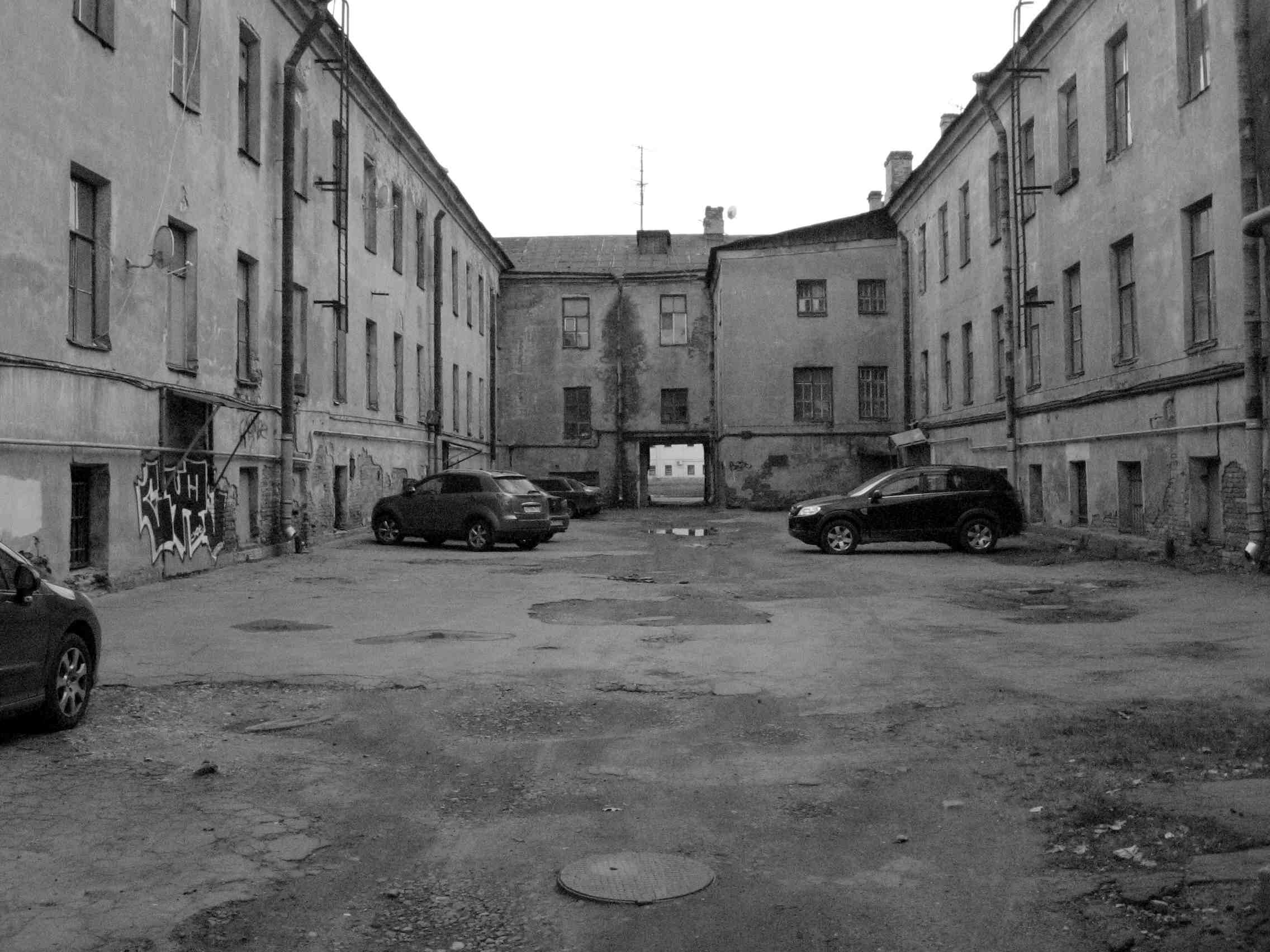
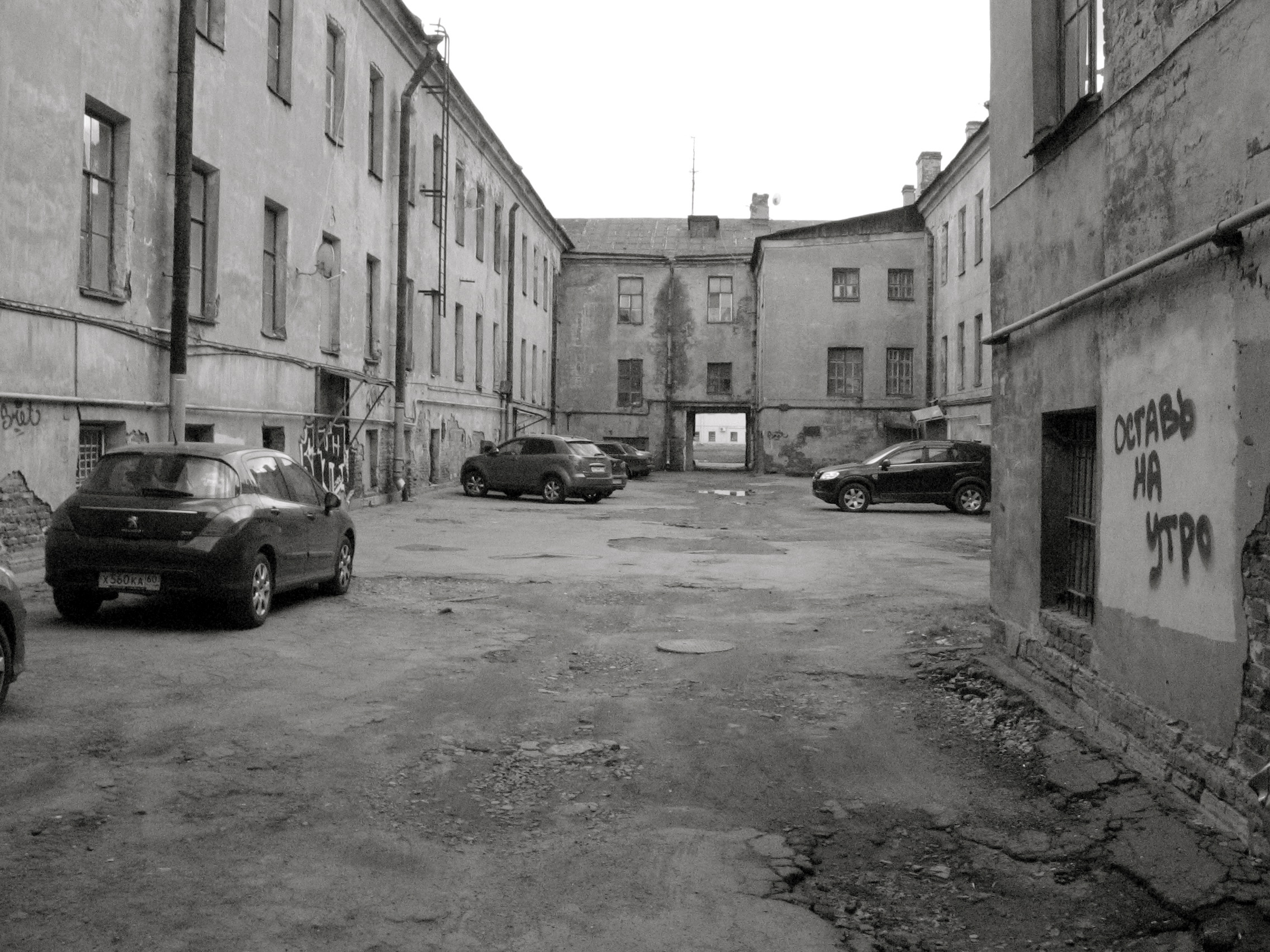
Photos by the Russian Reader
1. Alexei Miller, “Ot demokratii XIX veka k demokratii XXI-go: kakov sleduiushchii shag”? [From nineteenth-century democracy to twenty-first century democracy: what is the next step?], in V.L. Inozemtsev, ed., Demokratiia i modernizatsiia: vzgliad iz XXI stoletiia [Democracy and modernization: the view from the twenty-first century], Moscow: Evropa, 2010, p. 101.
2. Zygmunt Bauman, The Individualized Society, Malden, Mass.: Polity Press, 2001, p. 106.