International Children’s Day (June 1)

Important Stories • “Putin, Lvova-Belova and their crimes: how Ukrainian orphans are registered as Russians” • 31 May 2023

The Russian authorities have been removing children en masse from occupied Ukrainian territories and do not consider it a crime. But the International Criminal Court in the Hague thinks differently, accusing Vladimir Putin and Russian children’s ombudsman Maria Lvova-Belova of war crimes—namely, the illegal deportation of minors from Ukraine.

Orphans and children left without parental care have been sent all over Russia, even to the Far North. Important Stories found out how this system works and how abducted Ukrainian orphans are forcibly turned into Russian nationals.

[…]

Timecode

00:00 Why Putin and Lviv-Belova have been accused of kidnapping Ukrainian children

01:12 How 2,500 new children appeared in Russia’s database of orphans

02:32 The story of Sasha from Donetsk and his two sisters

03:56 The environment in which Ukrainian children are raised in Russia

05:23 “The children categorically refused to go to the Far North, where we live”

07:12 “The parents were killed there. The children told us terrible things”

07:48 Ukrainian orphans are provided with housing, for which Russians spend years on the waiting list

08:39 “There have never been such crimes in the history of humankind”

Source: Important Stories (YouTube), 31 May 2023. Annotation translated by the Russian Reader


SOTA • “Putin is readying young people to rebuild the army” • 31 May 2023

It won’t be possible to wage wars forever, but Putin is trying very hard. Since February 24, 2022, the lives of young people have changed. Starting in kindergarten, children are now taught that serving in the army is the best job in the world, and that the most beautiful thing in life is dying for the good of the Motherland.

[Endlessly repeat the message that] Russia is surrounded by Nazis, the whole world is against it, its soldiers are defenders, and you’re good to go. You’ve raised a whole new generation of soldiers.

This assembly line for producing soldiers has existed for several years. Even before the war, schoolchildren were inspired with imperialism and a desire to go to war. Now, however, everything has reached new levels. Military parades are organized in kindergartens. Schoolchildren are taught to dig trenches, shoot, and render first aid in combat. And university students are trained to serve in the military.

See more about how children are turned into soldiers in our new video.

Source: SOTA (YouTube), 31 May 2023. Annotation translated by the Russian Reader
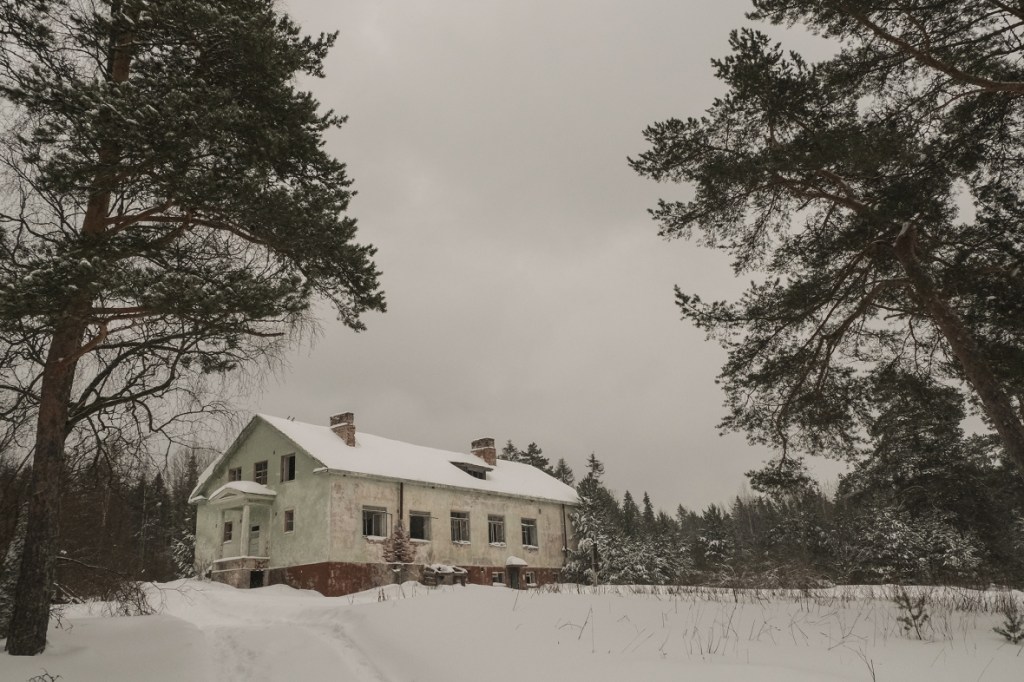

A ruined building of the Burenevo Auxiliary Boarding School for Mentally Retarded Children.
Village of Burnevo, Priozersk District (Leningrad Region), 2021. Photo: Olga Matveeva/Republic

“Hello Irina Alexandrovna! This is your pupil writing to you. I decided to write to you. Please write a letter here so that they let me go on my own, whatever date you need, so that I can study from the beginning of the school year, that is, beginning September 1. Say hello to everyone at the school. When you write the letter, address it to the 11th department… Irina Alexandrovna what was the reason you sent me to the mental hospital again. I told you that I would remain at camp…”

This is an excerpt from a letter written by a pupil to the director of the Burnevo Auxiliary School for Mentally Retarded Children. I found the letter in his personal file.

In 1970, the Priozersk Sanatorium Forest School was reorganized into an auxiliary boarding school for mentally retarded children. According to the school’s fact sheet, “Forty-eight mentally retarded children studied [sic] at the school. Ten of them are disabled. All of the children are from at-risk families. Classes are held in one shift, five days a week. On weekends and holidays, ten to fifteen of them, mostly orphans, stay. There are twelve of them in the school.”

It seems that many of the pupils were not mentally retarded or disabled, but they were neglected. Sergei, a resident of the village of Burnevo, spoke to this fact: “Half of the children there were sick, while half of the healthy ones were from dysfunctional families. I attended this school until 1970, and my mother worked there as a minder.”

The school was closed in 2005 due to poor epidemiological conditions. There was only stove heating in the building, and the water was pumped from the lake. The school consisted of several buildings. In the main building there were four classrooms, a teacher’s room, a curriculum office, and the director’s office. There were sleeping quarters in a wooden building. Carpentry workshops, sewing workshops, a recreation and sports equipment room were located in separate buildings. There was also a medical unit with an isolation ward and a speech therapist’s office. There I found an archive containing the personal files of the school’s graduates.

“His grandmother telephoned. She said that her grandson was very bad, it was hard to deal him, his socks were wet and dirty. He gave a jacket to a girl, but lied to his grandmother that he had dropped it off at the laundry. At the class meeting, it was decided to refer him to the psychiatrist to prescribe treatment.”

“Slava ended up the border zone this summer: he told the border guards that he was flying in a spaceship. I had a frank talk with him. He still wants to go see his mother in Vyborg (she does not live with their family). He didn’t find her, got lost, and ended up in the border zone. Slava, smiling, told how me he deceived a border guard and a policeman. Slava was referred to a psychiatrist, who detected no abnormalities.”

“Oleg systematically wipes the dust from his bed badly. This was discussed at a class meeting. There are no results.”

“If children skip classes, they should be reported to the police without delay.”

These are quotes from pupil observation logs. Along with memos, letters, and assessments, they were kept in the students’ personal files. These records about the children were kept for years—from the first grade to graduation. Perusing them, you begin to imagine these children, how they lived, what they worried about, what they did. Their childhoods are written down in slim notebooks. You watch them grow up and go out into the world, or to a psychoneurological residential treatment facility, or to prison.

For bad behavior, children were referred to a psychiatrist and prescribed treatment. There is no data on how many orphans are placed in psychiatric clinics nowadays. The roots of what is happening in this system to this day must be sought in the past.

This project is based on archival materials and interviews with graduates of the Burnevo Auxiliary School for Mentally Retarded Children whom I managed to find.

[…]

Source: Olga Matveeva, “‘A slight degree of imbecility’: the stories of graduates of an auxiliary boarding school for mentally retarded children,” Republic, 31 May 2023. Translated by the Russian Reader
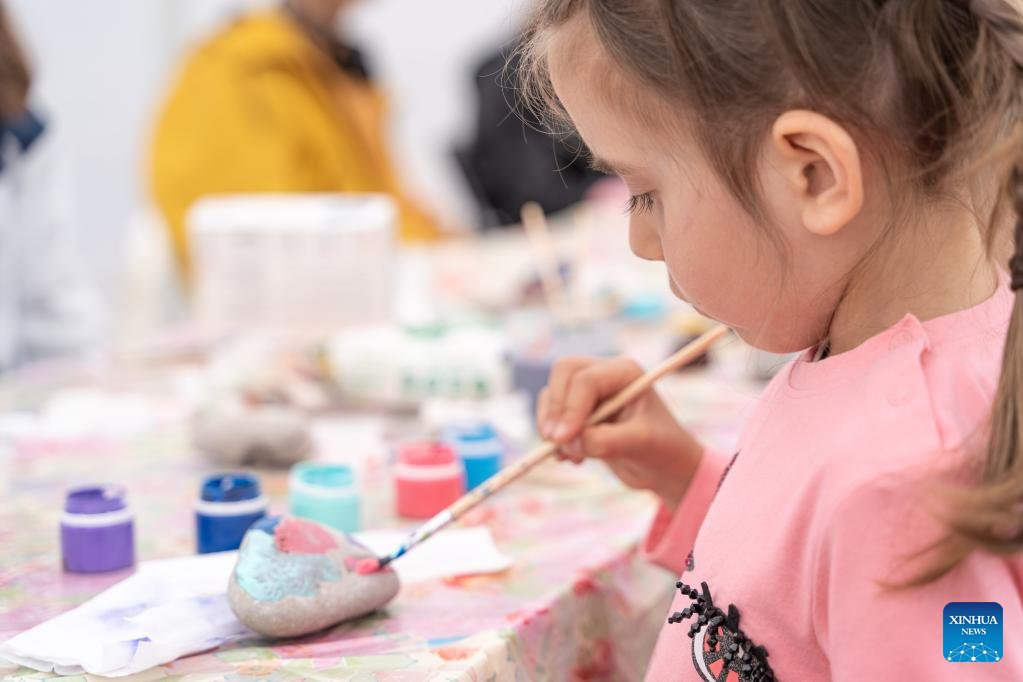

A girl paints a pebble during an event to mark the International Children’s Day in Vladivostok, Russia, June 1, 2023. (Photo by Guo Feizhou/Xinhua)

Students from a special education school perform during an event to mark the International Children’s Day in Vladivostok, Russia, June 1, 2023. (Photo by Guo Feizhou/Xinhua)
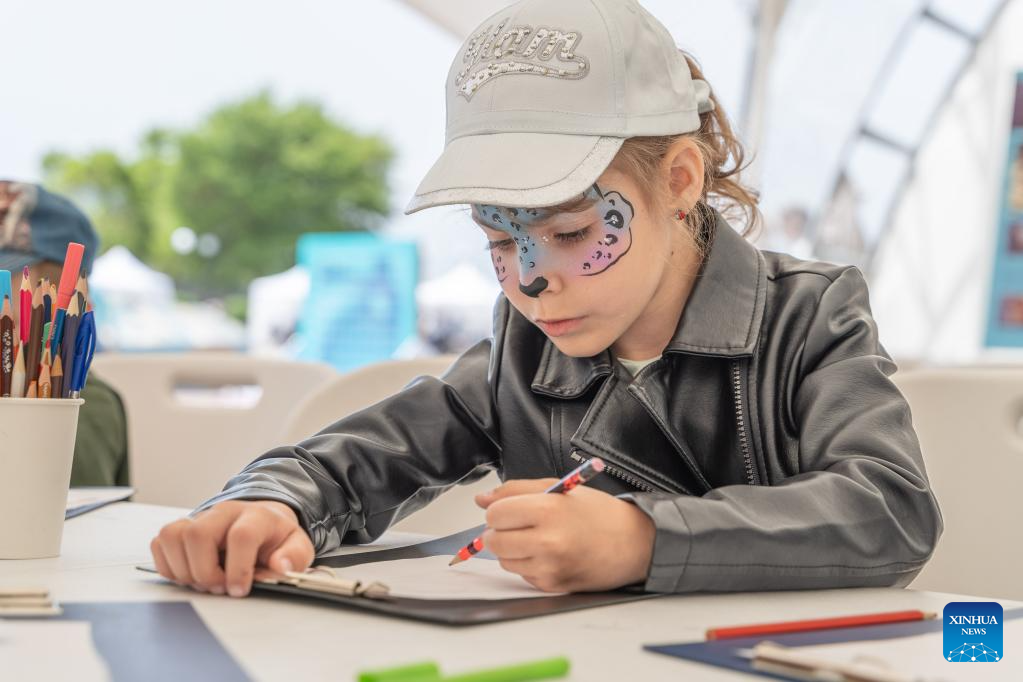
A girl draws during an event to mark the International Children’s Day in Vladivostok, Russia, June 1, 2023. (Photo by Guo Feizhou/Xinhua)
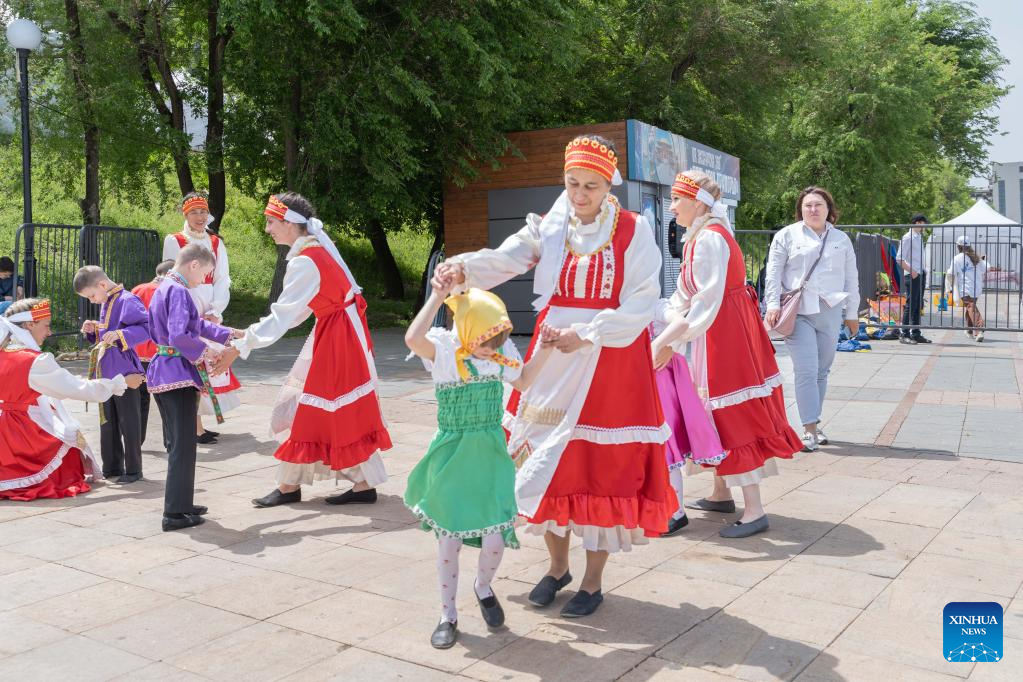
Teachers and students in traditional attire dance during an event to mark the International Children’s Day in Vladivostok, Russia, June 1, 2023. (Photo by Guo Feizhou/Xinhua)

[…]

Source: “Int’l Children’s Day marked around world,” Xinhua, 1 June 2023
And Now We Have to Prove We Got Sick on the Job

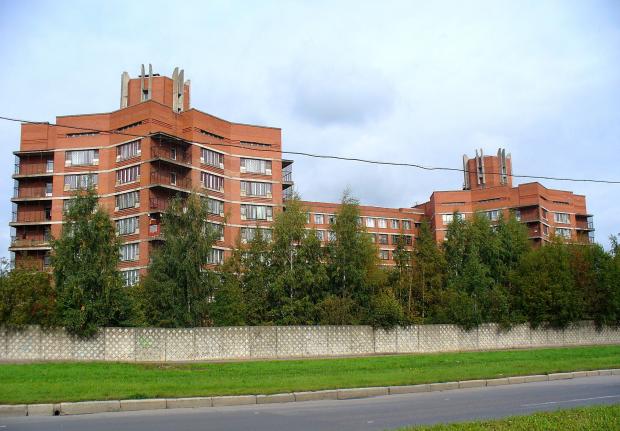
pni-no 10Psychoneurological Resident Treatment Facility (PRTF) No. 10 in Petersburg. Photo courtesy of City Walls

And Now We Have to Prove We Got Sick on the Job
Galina Artemenko
MR7.ru (Moy Rayon)
May 18, 2020

The first case of COVID-19 at Psychoneurological Resident Treatment Facility (PRTF) No. 10 in Petersburg was at the very beginning of April. All efforts were made to hush up the story, but they failed. MR7.ru reported that the Ministry of Labor and Social Protection and three other relevant agencies had recommended that the regions remove the most severely disabled people from PRTFs. The ministry had also recommended that  social welfare facilities switch their employees to long live-in rotations while raising their salaries. Finally, the chief public health physician in the Petersburg office of Rospotrebnadzor had issued an order permitting volunteers to work at PRTFs.

The virus spreads most quickly in closed places such as hospitals, barracks, and residential treatment facilities. And we have heard the sad stories of infection at the nursing home in Vyazma, and the deaths of elderly people in nursing homes in Italy and Sweden. I hope that, after the pandemic, the conclusions will be clear. PRTFs are factories of misery, and facilities housing over a thousand patients should not exist.

On condition of anonymity, Nastya (her name has been changed), a young attendant at PTRF No. 10 told us about her experiences during this time. PTRF No. 10 houses more than a thousand people living with severe disabilities, who are cared for by approximately 400 staff members. According to official reports, more than 400 people at the facility have been infected, and two disabled girls who lived there have died.

At the beginning of April, we all got phone calls: they were asking people whether they were willing to volunteer for long rotations. We were told everyone would be under observation to make sure covid did not get into the residential treatment facility and to keep the patients from getting ill. But the director said there would be no long rotations, because there was no money, and we were supposed to get extra pay for that. But he was unable to pay bonuses to the staff. So we were not shut down and kept working as normal. As during an ordinary quarantine, access to the residents was closed to their parents. But we kept coming in for our shifts as usual—until April 8, when our residents started going off to hospital with pneumonia, while the first case of covid was confirmed on April 10. The same day, the tenth, people from the district office of Rospotrebnadzor came to the facility. There was a meeting, where we were told the decision had been made to shut us down. So we began working on long rotations. Right now, while I’m in hospital, only two wards [at the PRTF] are on watch. They’re under quarantine, while all the rest are clean.

So when they had called and assembled all us volunteers, all of us were locked up in the facility. Hermetically sealed.

We had been promised the ward would be divided into a red zone and a clean zone, but that had not been done. We made the zones ourselves. Well, what I mean is that we assigned the residents to one of two stations so, at least, they wouldn’t be going back and forth. We had two stations on the ward, connected by corridors.

Yes, we have one doctor on duty on the ward, but he or she is a psychiatrist, not an infectious disease specialist.

We did not have any PPE, only gloves, which have always been issued in the residential treatment facility, and the cotton-gauze bandages that we sewed ourselves. The first week was more or less okay. We worked. And then everyone began to get sick—both residents and staff. Everyone’s temperature started to rise. At first, everyone on the ward tried to treat themselves with Antigrippine. We had smears taken on April 13. There were still smears that came back negative, but on April 22, everyone’s smears came back positive, so I think that of the sixty people or so whose smears had come back negative [on April 13], they were false negatives, meaning that the entire facility was sick. Staff who had mild cases went home, while those with more severe cases went to hospital. And the residents also went to hospital.

I was also taken to hospital. When I got there, we were heavily fed malaria pills. I had almost no fever, but I had a cough and was gasping for breath. I have been in hospital since April 20.

The money? I don’t know whether they will pay us—they didn’t even pay all the wages they had promised. We didn’t sign anything about agreeing to work with covid. We took our management’s word for it. Now we have to prove that we worked with covid and got sick at work.

I know that [Petersburg Governor Alexander Beglov] came to the facility, and he and the director agreed that not only the doctors would get paid, but also the nurses, and the attendants, and the cafeteria workers, because everyone had worked directly with covid.

The residents didn’t understand what was happening. And we didn’t understand at first either, we didn’t know what the condition was until we got sick ourselves.

No, I wasn’t scared, I just wanted to go home. Well, it was scary when the young male residents on the ward started having disorders, and the psychiatric hospital wouldn’t accept them because our facility was under quarantine.

Residents who were ill with covid were taken to regular hospitals without being given psychiatric medication. That’s rough. I ended up at the same hospital as an old woman from our facility. I saw how the hospital nurses could not cope with her—they simply could not put her diapers on. Until she was transferred to the psychosomatic ward, I took care of her. Ordinary nurses and attendants don’t have the skills to interact with such people. They don’t know how to dress them, how to feed them, how to give them medicine. I think it was very wrong on the part of the municipal health committee or whoever was involved in this, that such people were sent to ordinary hospitals. This is intolerable. They pissed and shat themselves, and they yelled, and some of them smashed everything up and behaved badly. The staff at ordinary hospitals do not encounter this [ordinarily]. And they were without psychiatric medication. Later, they learned how to tie them down.

What will happen next? As long as we all sit on our asses waiting for something to happen, there is no hope that everyone who was cheated will be paid properly. But we are afraid that if we start this commotion, it will bounce back on us quite hard. So far I have started alone, but one soldier does not make a battle. They will take it out on me and my family. I will be fired and fired with cause, and then I will not be able to get a job anywhere.

PRTF No. 10 in Petersburg had previously been closed for quarantine due to the coronavirus. A patient at the facility had recently returned from treatment for other ailments at another facility, where he contracted the coronavirus. Ivan Veryovkin, the head of PRTF No. 10, then suddenly removed his facility’s intensive care unit from infection surveillance and suggested that volunteers come in the morning and leave in the evening.

As MR7.ru has argued recently, the epidemic has shown that PRTFs are “factories of misery,” and it is time to shut them down.

Translated by the Russian Reader. In case you were wondering who, exactly, was housed in Psychoneurological Residential Treatment Facility No. 10 in Petersburg, the Russian version of Wikipedia has the depressing answer. (The only other language in which there is an article on the subject is French, but the French article merely explains what PRTFs are in Russia.)

By the end of the twentieth century, there were 442 official PRTFs in the Russian Federation, but by the end of the first decade of the twenty-first century, their number was 505. According to data for 2019, there are about 650 PRTFS in the Russian Federation, housing 155,157 patients. Most of these patients (112,157) are officially incapacitated.

According to the data for 2003, more than half of all patients in PRTFS (68.9%) were people with reduced intelligence: people who had been diagnosed with mental retardation and various types of dementia. At the same time, intellectual disabilities in persons transferred from orphanages are often associated not so much with a real decrease in intellectual capabilities, as with pedagogical neglect [sic], lack of proper training and education, insufficient rehabilitation programs, and lack of rehabilitation centers for post-orphanage training.

According to information for 2013, during the year, about a thousand people were admitted to PRTFs in Moscow; in total, 10,500 patients lived in PRTFs in the city (of which 8,245 were men aged 18-58 years). About 5,000 were admitted to PRTFs from orphanages without undergoing psychiatric re-examination.