
A Hard Rain


The main problem with TV Rain is that neither its staffers nor its defenders really understand what the problem with it is.

It is especially funny when people who have been stumping for years for “situational cooperation with the regime in the Kremlin for good ends” are outraged by the revocation of TV Rain’s license.

Sooner or later, they’ll get round to you, too.

“Moderate law-abiding protest” in Russia isn’t worth anything at all, basically. Its value is negative, rather. It does not give one the moral high ground and does not empower one to write off errors. On the contrary. And those who want to continue the policy of compromise shouldn’t be offended that no one regards them as a real opposition and sees no value in them.

[TV Rain’s broadcast was revoked] not because “there are such laws in Latvia”, or because “they are traumatized due to the occupation,” or because [the Latvians] suffer from “Russophobia.”

[It happened] because the real value of “moderate” oppositionists who even in exile remain loyal to the pro-regime “silent majority” is close to nil.

Since they do nothing to bring Russia’s defeat closer even by a second, they perform no important political, humanitarian or military function.

They are thus useless.

Source: Aleksandr Fukson, Facebook, 6 December 2022. Translation and photo by the Russian Reader


The “[TV] Rain Case” has wound up sadly, at the end of the day. After the revocation of its license, the channel’s editorial team had a good opportunity to apologize once again to the audience, to the large group of Russian opposition media located in Latvia, and to the Latvian government and the European Union as a whole, which have been supporting Russian media in exile, and to announce that the editorial team hopes that the license would be restored.

But that’s not what happened. What did happen was much, much worse. Moscow imperial haughtiness came pouring out of all the cracks. For Moscow journalists are “citizens of the world,: and so they are empowered teach other peoples to respect human rights, including “freedom of opinion.” [TV Rain editor-in-chief] Tikhon [Dzyadko] shot off his mouth about the “absurd decision” for some reason. It’s just a mystery: Tikhon is smart, after all, and all of them are quite sensible there, and TV Rain is an essential media institution and does its job well. Why do they have to talk arrogantly to the government of Latvia?

Over the last twenty-four hours, TV Rain’s liberal well-wishers have written tons of disparaging, mocking posts about Latvia, which “is trampling” [on the rights of Russians], etc. They say that it is impossible to relocate there, that the folks in the former outskirts of our empire don’t like us. Well, no fucking wonder, eh?! No, we shall never get over this haughtiness. You knock yourself out trying to argue that it is possible to “recycle experience” and stop this haughtiness, when — oops! —all your work is nullified. Apparently, those who say that we just have to raze the whole MSK down to the foundations are right. Otherwise, there will be no life for anyone.

Source: Alexander Morozov, Facebook, 6 December 2022. Translated by the Russian Reader


It’s impossible, of course, to look at all the Russian chutzpah about “Latvia helped Putin today.”

In the summer, Latvia transferred 200 million euros worth of weapons and uniforms to Ukraine. This is just from what I remember offhand. They also sent six self-propelled howitzers and six helicopters. For Latvia’s small military budget, this is a lot, in relative terms.

What has the Russian opposition sent to Ukraine? Their fervent greetings? The demand not to offend them on the internet? Maxim Katz’s program?

Latvia has already done much more for [a Ukrainian] victory than all the TV Rains and Katzes combined, just millions of times more.

Source: Dmytro Raevsky, Facebook, 6 December 2022. Translated by the Russian Reader


Latvia’s decision Tuesday to withdraw the broadcast license of independent Russian television channel Dozhd caused disbelief and anger among the media outlet’s journalists and soul-searching among other Russian journalists in exile.

The Baltic country’s media watchdog said in a statement announcing the revocation that Dozhd posed “threats to national security and social order” following a series of fines issued over the outlet’s coverage of the war in Ukraine.

“I’ve been fighting for all these years to remain human in any situation… [but] I feel like a disgusting scoundrel,” Dozhd co-founder Natalia Sindeeva said between sobs in a video posted to her Telegram channel after the announcement. 

“The entire TV channel is at stake.”

While Dozhd has yet to announce its response, the Latvian decision poses difficult questions for other independent Russian media outlets forced into exile in the wake of Moscow’s invasion of Ukraine. 

Dozhd was one of a group of independent Russian media outlets that re-established themselves abroad after the passage of repressive wartime censorship laws earlier this year, with many congregating in the Latvian capital. 

Other independent Russian media outlets based in Riga include Meduza, the BBC Russian Service, and Novaya Gazeta Europe.

“It’s a very bad sign for journalists,” said one reporter from a Russian-language media outlet that moved to Riga after the start of the war who requested anonymity as he had been told not to comment on the Dozhd situation. 

“Journalists obviously cannot go back to Russia where they are threatened with criminal prosecution. But they are also unlikely to be able to work quietly in Latvia.”

Many would “think of moving to another country as soon as they have the opportunity,” said another Russian journalist in Latvia who also requested anonymity. 

Dozhd first came under fire when anchor Alexei Korostelev last week asked TV viewers to send information on Russia’s drafted soldiers and mistakes during the mobilization. The channel was subsequently fined for displaying a map showing annexed Crimea as part of Russia and for calling the Russian Armed Forces “our army.”

Some Ukrainian and Latvian commentators interpreted Korostelev’s words as an expression of support for Russian troops in Ukraine. 

The Latvian authorities opened an investigation into Dozhd on Friday, saying that “the statements made in the program are directed against the interests of Latvia’s national security.” The Latvian National Electronic Mass Media Council (NEPLP) on Tuesday also called for a ban of Dozhd’s YouTube channel in Latvia.

Latvia’s State Security Service urged the authorities on Tuesday to bar Korostelev from entering the country, adding that it also warned Dozhd editor-in-chief Tikhon Dzyadko of possible “criminal liability in case of committing criminal offenses.”

“Today’s decision is absurd and it has nothing to do with common sense,” said Dzyadko during Tuesday’s live news show.

“When you are switched off the air for far-fetched reasons for the first time — it is perceived as a tragedy,” Dzyadko said, referring to the channel’s removal from Russian cable packages in 2014.

“When eight years later you are called a threat to the national security of Latvia — it is perceived as a farce,” he said.

Dozhd — which started broadcasting from Latvia in June after its staff fled Russia — said it would continue to broadcast on its YouTube channel. The channel also has offices in Tbilisi and Amsterdam. 

Korostelev, who was fired by Dozhd for his words, said on Friday that they had been no more than “a slip of the tongue.” 

Despite his protestations, his words have caused widespread anger, however.

“When ‘good Russians’ are helping ‘bad Russians’ — can the world finally understand that they are all the same?” Ukrainian Culture Minister Oleksandr Tkachenko wrote on Telegram on Friday.

Over the weekend, at least three journalists resigned from Dozhd to show their solidarity with Korostelev, while others told The Moscow Times that the current situation reminded them of the crackdown on opposition media in Russia and would ultimately only help Moscow push its pro-war narrative.

“It was the worst thing we could do in that situation… I want to say sorry,” Sindeeva said in an emotional video statement on Tuesday after the revocation of the license, in which she also asked the fired journalists, including Korostelev, to return.

International media watchdog Reporters Without Borders (RSF) urged Latvia on Tuesday to rethink its decision. 

“Dozhd is one of the few independent channels with Russian journalists broadcasting to the Russian-speaking public,” Jeanne Cavelier, the head of RSF’s  Eastern Europe and Central Asia desk, said in a statement. 

“The withdrawal of its license would be a serious blow to journalistic freedom, independence and pluralism.”

Some Ukrainian officials also expressed their support for Dozhd. 

“They explained their position absolutely clearly, that their position is anti-war and pro-Ukrainian,” Ukrainian President Volodymyr Zelensky’s adviser Mykhaylo Podolyak said on Tuesday.

Latvia’s decision to revoke Dozhd’s license would make it harder to report “truthful and objective information for Russian-speaking audiences,” a Russian journalist in Latvia, who requested anonymity, told The Moscow Times. 

“That is exactly what the Kremlin is trying to achieve.” 

Source: “Latvian Decision to Revoke Russian TV Station’s License Sparks Fear, Disbelief,” Moscow Times, 6 December 2022
I’ll Show You the Life of the Mind

the life of the mind
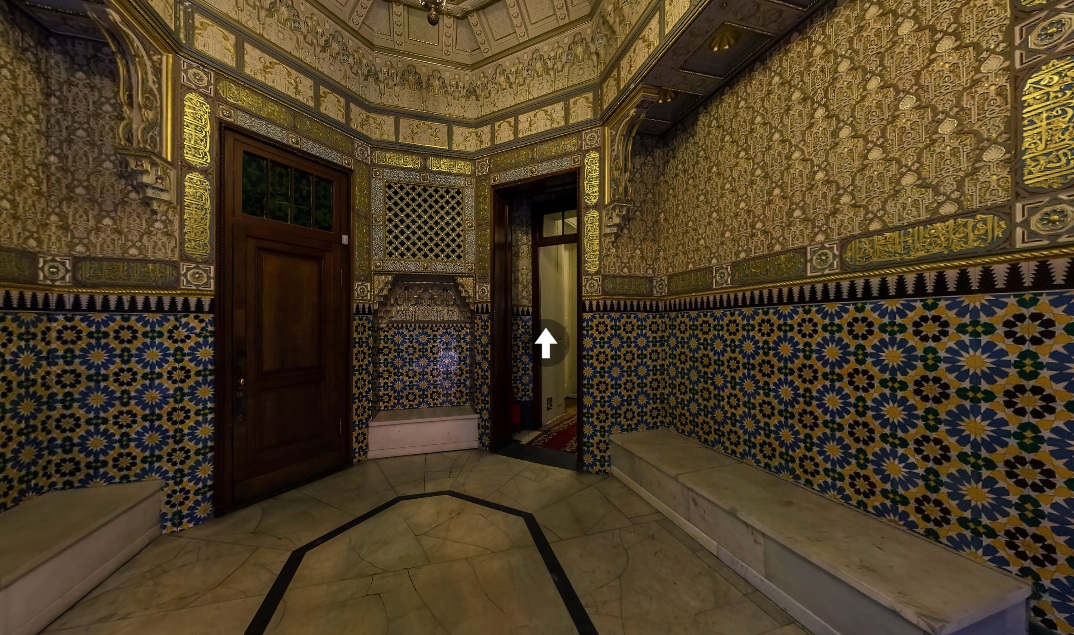
Screenshot of a virtual tour of the Spiridonov Mansion (1895-1896) aka the Baby Palace (since 1965), located at Furshtatskaya Street, 58, in central Petrograd. The room depicted here is known as the Oriental Room. Thanks to Comrade KK for the heads-up

___________________

The Man Behind Dialogues: The FSB Are Listening to Us Now 
The creator of the project Dialogues, which has been shut down, explained to Fontanka.ru why he wants to start it up again at another public venue and why he is not leaving Russia
Elena Kuznetsova
Fontanka.ru
June 27, 2016

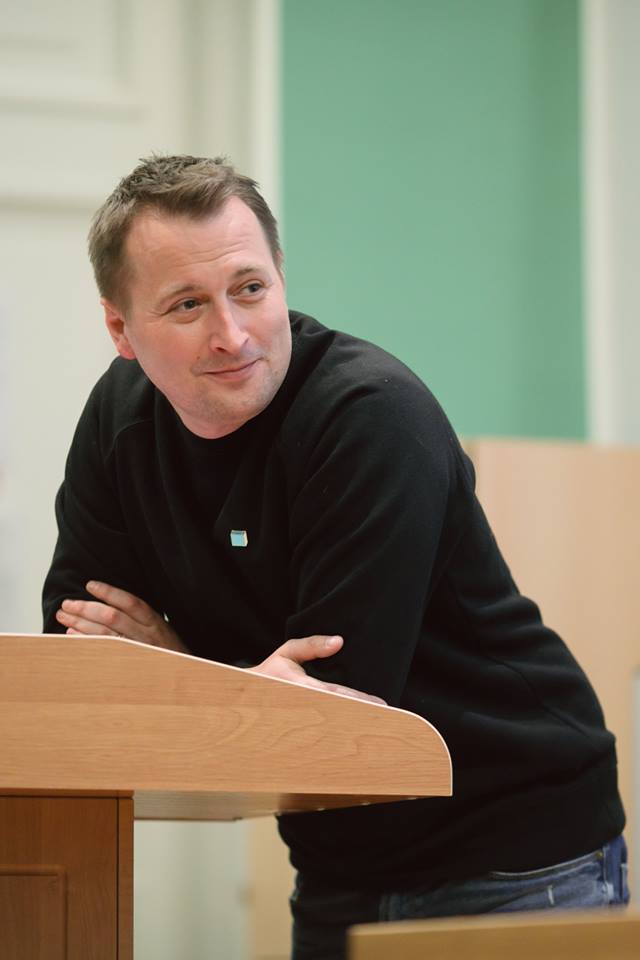
Nikolai Solodnikov. Photo courtesy of Open Library

Nobel Laureate Svetlana Aleksievich, musician Diana Arbenina, animator Garri Bardin, Deacon Andrei Kurayev, journalist Yulia Latynina, and poet Vera Polozkova are just a few of the celebrities who have been guests of the project Dialogues at Petersburg’s Mayakovsky Library. Hundreds of Petersburgers have attended the discussions in person, while even more have watched the live broadcasts on various media websites.

The project, which was run by Nikolai Solodnikov, former deputy general director of the Mayakovsky Library, on a voluntary basis, was shut down yesterday, June 26, after the FSB came to the library and carried out searches. One hypothesis is that the security forces were interested in the political activism of Dialogues. Another hypothesis is it was Solodnikov’s frequent visits to Latvia that bothered them. Fontanka.ru contacted the man behind Dialogues to set the record straight. 

Nikolai, if they were in your shoes, many other people would be in Latvia by now. Where are you now?

For reasons of safety, I cannot answer the question.

Meaning you are not in Russia?

All I can say is that I am not in Latvia. [In the background, a voice announcing flights can be heard—Fontanka.ru.]

After the incident with the FSB did you have thoughts of leaving the country?

I am Russian. I do my projects in Russian for Russians. I cannot imagine myself as a political émigré, and I have no plans to leave Russia.

You have said the FSB had been putting pressure on Dialogues for a year and a half. Why did you decide to shut the project down only yesterday?

Different things overlapped. The elections and the fact we had been spending a lot of time in Latvia, where Katya [Solodnikov’s wife Katerina Gordeeva, journalist and co-organizer of DialoguesFontanka.ru] had our fifth child. It is not the children who bother them, of course. They are annoyed by the Open Lecture project we have been doing in Riga, Tel Aviv, and Odessa. And they had been combating Dialogues, in fact. So now things boiled over and exploded.

Meaning that if there had been no searches, Dialogues would have continued?

Of course. I hope it will continue, only not at the Mayakovsky Library. Because what is it like for the elderly ladies who make up the core of the library’s employees to go through interrogations and seizures of equipment? That would be incredibly heartless.

Surely after yesterday’s announcement you have already received proposals to move the project to another location.

Private organizations have had some ideas, but I haven’t considered them yet. I am still hoping we can gather in a space where very different people in terms of views, age, and social status can come.

Are you implying the next venue for Dialogues will also be public?

I really hope so. I am a citizen of the Russian Federation, and the people who attend our events are citizens of the Russian Federation. We are, in fact, the Russian people, who have the right to gather in public cultural institutions.

Public institutions have a hard time accepting the opposition agenda, which Dialogues, in particular, supported.

I am not an opposition activist. I am someone who deals with education and awareness. Teaching was my first occupation. I taught for a long time, and I hope I will teach again in the future. The only thing I can do is teach people to talk to each other while maintaining different points of view.

We are speaking via Skype now. Before that you called from a new number.

Tell me straight that the Federal Security Service (FSB) is eavesdropping on us. When you call me, something clicks and hums on your end.

Before yesterday, did you have any sense that the security forces were following you personally?

Since May of last year [when Ukrainian politician Mustafa Nayyem was supposed to speak at Dialogues, but the trip was canceled—Fontanka.ru] I have had no doubt that all my phones have been tapped. Although I think they have not been following me. I have no documents or evidence, but I do have the sense they have been listening in on me.

“Aside from land we have no real estate in Latvia”

You resigned from the Mayakovsky Library yesterday. How will it affect the career of the library’s director, Zoya Chalova?

I really hope things will be a bit easier for her.

We tried to call her, but to no avail. There is no sense that Chalova supports you at all.

She is the director of a public institution. That says it all. I am very grateful to her for the entire time we worked together. She is one of the bricks in the wall who helped deter the people who carried out the search on Thursday and interrogated the librarians.

Cultural functionaries, including Konstantin Sukhenko, head of the Petersburg Municipal Culture Committee, have said that Zoya Chalova did not know what the sources of financing for Dialogues were, and she was very worried about it.

She knew what they were from day one of the project.  I have always said this, and I have said it repeatedly to Fontanka.ru: Dialogues is financed solely by Katya and me, meaning the salary I earned at the Mayakovsky Library, 43,000 rubles a month, and what Katya earns. Together, we have tried to combine what we have, borrow money here and there, and ask friends to pay for our guests’ tickets and accommodation. No oligarchs have been involved.

Can you name at least a few of the friends who have supported the project?

Nikolai Solodnikov and Katerinia Gordeeva. That is quite enough.

In addition to financing, the FSB were interested in your links to Latvia. Apparently, the Chekists [sic] assumed that you were not merely spending time there, but living there as well.

We have five children, aged six years to one and half months. We left in late 2015, because Katya was going to have our fifth child.  The heating main opposite our house on Chaikovsky Street was turned off. In November, the hot water and light were being turned off every other day. It was impossible to live with small children in a flat with no water and electricity. We decided to temporarily relocate to Riga so that Katya could finish her pregnancy in peace and give birth.

Do you have a residence permit or property abroad?

Everybody knows that three or four years ago Katya bought a small plot of land in Latvia to obtain a residence permit. We did this and, in accordance with the law, immediately informed the Russian Federal Migration Service about it.

You haven’t built a house yet?

No, except for the land, we have no property in Latvia.

How did you feel working at a public library? After all, it is almost like the civil service, but at the same time you had a residence permit in another country.

I felt great. My wish is that all other worthy people had a residence permit while not parting with their Russian passports for any reason. A residence permit makes it easier to get around the world: you don’t have to apply endlessly for visas.

But the FSB sees this as a certain duality and contradiction.

There are some not very healthy people working there, but there are also normal people. Just as there are more people than Sukhenko working in the municipal culture department. By the way, many Petersburg municipal officials also have resident permits abroad.

Getting back to Dialogues, if the project would have continued in the old format, what would have its future been?

We thought we would do Dialogues monthly at least until the end of 2016. We worked like bees, regularly inviting new guests.

What did you feel yesterday when you were told the project was over?

A huge amount of work has been done, and it is sad when it ends this way. But we are going to go forward. There are people who support us. We will cope.

Our conversation is now being constantly interrupted by other calls. Who is calling?

Your journalist colleagues.

You have probably been getting many expressions of support. What matters most?

What matters most is that Katya and I really support each other in these circumstances.

Translated by the Russian Reader

The Refugees and the “Death of Europe”

The Refugees and the “Death of Europe”
Raimond Krumgold
September 5, 2015
www.nihilist.li

This summer we went to Latvia on our way to Russia.

During the week we were waiting for visas, a lot of things happened along the lines of “they have completely broken away from the collective and become remote from their people.” But the main shock for me was a one-off attempt at reading the latest Russian-language press. The quotas of refugees for Latvia were being discussed just then, along with the great reluctance to take in these same refugees. I scanned several newspapers. They all wrote about the “nightmare brewing in Europe” in a tone of aggressive and malicious ignorance that I found quite unfamiliar. I really had the feeling I had opened a neo-Nazi website. The only difference was the gloating at the Latvians, who had discriminated against “us,” the good guys, and now were going end up with “them,” those awful people. At first, I decided something had changed over the years, and then I realized it was I who had changed. I tried to remember how things had been before and realized these newspapers had always written in a similar tone. It was just I used to think this was normal. I had even considered the Russian-language press internationalistically minded in comparison with the already quite right-wing Latvian press.

2013-02-16_-_wien_-_demo_gleiche_rechte_fc3bcr_alle_refugee-solidaritc3a4tsdemo_-_refugees_are_human_beings

As long as I can remember, Europe has been dying. This has not been an article of faith, but a fact of reality. The sky is blue. Water is wet. Europe is dying of multiculturalism and political correctness. It would now be interesting to trace the origins of this ironclad certainty. Maybe it was the death of a huge country, which we experienced in the early nineties. Maybe it was ordinary ressentiment. We grew up in the ruins of one empire and maliciously anticipated another empire’s fall. I was not a racist, quite the contrary. But I had almost no doubts that a Munich caliphate would soon be fighting a Bavarian Kurdistan.

My first two trips to England were basically tourist trips. I brought back a huge number of impressions. But the main impression was that the country I saw did not look as if it were dying. Even in Birmingham, densely populated by immigrants, there was no sense of catastrophe. It gave me pause for thought for the first time.

Then there was my own emigration. It was economic emigration, triggered by the 2009 crisis, which took on the proportions of a natural economic disaster in Latgale, where I lived. It was one of the most difficult years of my life, probably the most difficult. And the experience of looking for work in a foreign country with my money quickly running out has forever changed my views. We lived for a month in Sheffield’s “colored” neighborhood and quickly learned to visually distinguish the various African and Asian ethnic groups. However, it is generally difficult to confuse Nigerians with Somalis, not to mention Ethiopians with Kenyans. We socialized with people at the very bottom. We even worked for a week at the very bottom, in a greenhouse growing flowers. It was a terrible experience. After that I could no longer look the same way at people who, just like me, were struggling to make it in a foreign country from scratch, but with no EU passport in their pocket and different skin color to boot. Of course, my experience is not equivalent to the experience of all Eastern European immigrants. For many of us, living in a multicultural country has only heightened our aggression and hatred towards “others.” But this is usually caused by the inability to examine our fears and ourselves calmly.

The 2011 London riots were probably the finishing touch. Reading the English press and Russian bloggers in parallel, I discovered that Russia, both official Russia and completely “oppositional” Russia, exists in an information space of its own, cut off from all unusual information.  The tussle, launched by Jamaican gangs (whose people have been in Britain for at least three generations) and embraced by lower-class white youth, was transformed, in Russian popular consciousness, into an uprising by Muslim immigrants. It was then it first dawned on me that if I had still been within the purely Russian-language information space, I probably would have written such nonsense as well. Until recently, I would have seen this news as confirmation of my view of the world.

An objectively serious refugee crisis is underway in Europe. Something similar happened in the 1930s, during the wonderful Évian Conference, at which only the Dominican Republic acted humanely. All the other countries reported they had no more room. European Jews did not excite the most pleasant feelings among respectable burghers back then, so they had every reason not to increase the quotas for them. The beginning of the Final Solution was only three years away. Now people are fleeing from a place where a wonderful quasi-state quite capable of organizing a small genocide has sprung up. Part of Europe is once again saying there is no room. In the forefront are my dear Latvia and the Eastern European republics generally. Over on the sidelines, licking its chops and brandishing a giant walking stick, is old lady Russia, which was no less dear to me once upon a time. Moreover, it has been closing its borders to former subjects of its beloved Assad. But I don’t want to write about Russia. It is too unpleasant a topic.

I want to write about something else. I will never forget my own immigration experience, which was relatively soft core given that I had a EU passport. I will never forget the people, of various nationalities, who helped us that year. And I will also never forget the right-wing English “journalists” who were generating propaganda against us the whole time. They are Europeans, too, but Fortress Europe is not the Europe of which I am a citizen, a citizenship of which I am even beginning to be proud, despite the fact that initially I strongly opposed the EU.

So as a EU citizen and UK resident I personally signed a petition demanding an increase in the quotas for refugees. If I have to take to the streets to support this idea, I will do it. And I will personally greet the first families brought to our city and hand them flowers. Our island is small and overcrowded, but for their sake we will make room.

As a Latvian citizen I am seriously thinking about launching a similar petition to the Latvian government. This embittered rightwing marsh will not be able to hide from reality for long anyway.

You are burying Europe too soon.

Translated by the Russian Reader. Photo courtesy of The Gampr