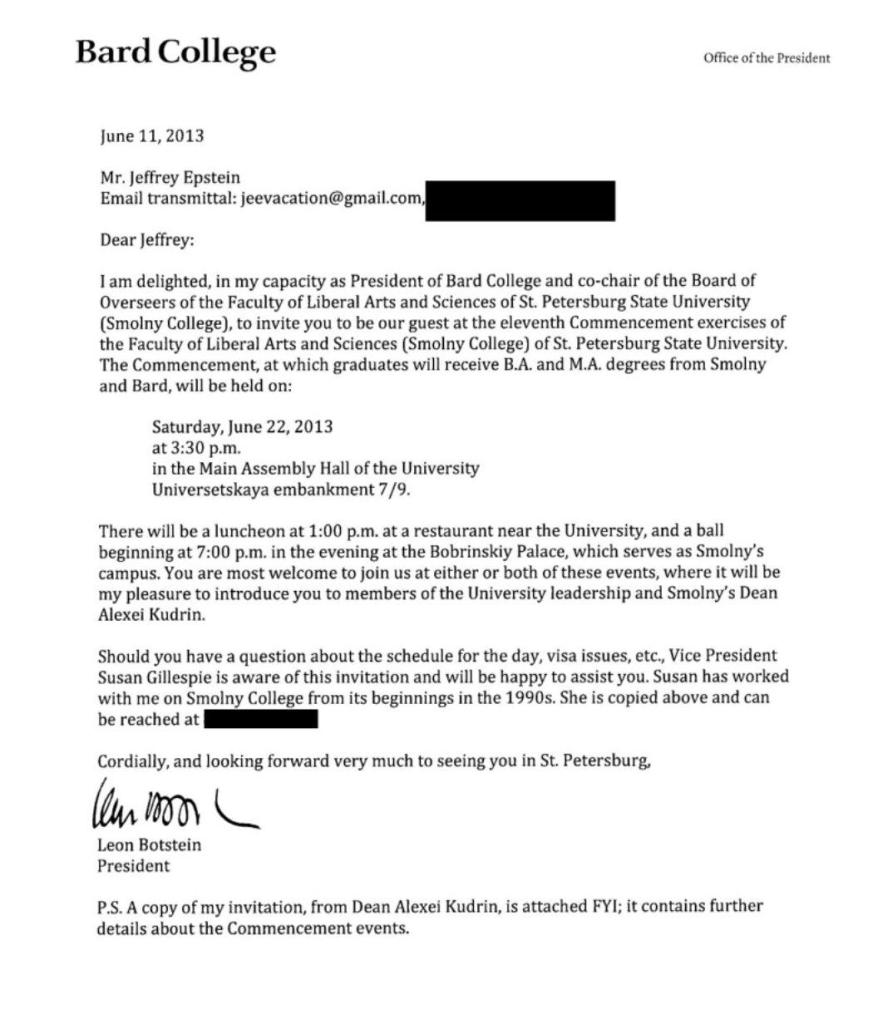
An exhibit at the Cooper Molera Adobe museum in Monterey, California. Photo: The Russian Reader
Cooper Molera Adobe is now pursuing the interpretation of Ohlone/Esselen/Costonoan Native Indian slaves at our historic site. This includes evaluating our history, beyond gaining simple historical information and respectfully work with descendants to then forge a richer, more diverse narrative and legacy.
Three pillars of multi-disciplinary research, relationship building, and interpretation as major benchmarks will guide our methodology as we move forward with this project. Cooper Molera Adobe has partnered with Woodlawn Pope Leighey and Shadows on the Teche as a working group in a large network of sites the National Trust has to move toward this collective goal.
Failing to tell the truth about race and slavery results in widely-held fears of engaging with people who look, speak, act or think differently than oneself. It is lived out in anger and despair in feeling marginalized, erased, and invisible due to demographics or identity.
Follow us on Instagram, Facebook, and our website to see more of our updates in the future for this project.
On April 27, 1863, nearly five months after President Abraham Lincoln issued the Emancipation Proclamation, California abolished its system of forced apprenticeship for American Indians. Under the apprenticeship provisions of the state’s Act for the Government and Protection of Indians, several thousand California Indians, mostly children, had suffered kidnapping, sale and involuntary servitude for over a decade.
Newly elected California Republicans, eager to bring California in line with the national march toward emancipation, agitated for two years in the early 1860s to repeal Indian apprenticeship. And yet those Republicans’ limited vision of Indian freedom — one in which Indians would be free to reap the fruits of their labor, but not free from the duty to labor altogether — made for an incomplete Indian Emancipation Proclamation. Although California was distant from the battlefields of the Civil War, the state endured its own struggle over freedom that paralleled that of the North and the South.
The Republican campaign to abolish Indian servitude ran up against nearly a century of coerced Indian labor in California. Under Spanish and Mexican rule, thousands of California Indians worked on missions and ranches, bound to their employment through a combination of economic necessity, captivity, physical compulsion and debt.
With the United States’ conquest of California in 1847, the discovery of gold in 1848 and the formation of a state government in 1849, new American lawmakers expanded and formalized Indian servitude to meet growing demands for labor. The 1850 Act for the Government and Protection of Indians authorized whites to hold Indian children as wards until they reached adulthood. Indian adults convicted of vagrancy or other crimes could be forced to work for whites who paid their bail.
Skyrocketing demand for farmworkers and domestic servants, combined with violence between Indians and invading whites in the northwestern part of the state, left Democrats in war-torn counties clamoring for the expansion of the 1850 Indian act. A “general system of peonage or apprenticeship” was the only way to quell Indian wars, one Democrat argued. A stint of involuntary labor would civilize Indians, establish them in “permanent and comfortable homes,” and provide white settlers with “profitable and convenient servants.” In 1860, Democrats proposed new amendments to the Act for the Government and Protection of Indians that allowed whites to bind Indian children as apprentices until they reached their mid-20s. Indian adults accused of being vagrants without steady employment, or taken as captives of war, could be apprenticed for 10-year terms. The amendments passed with little debate.
As the nation hurtled toward a war over slavery, Californians watched as their own state became a battleground over the future of human bondage. Apprenticeship laws aimed at “civilizing” the state’s Indians encouraged a robust and horrific slave trade in the northwestern counties. Frontier whites eagerly paid from $50 to $100 for Indian children to apprentice. Groups of kidnappers, dubbed “baby hunters” in the California press, supplied this market by attacking isolated Indian villages and snatching up children in the chaos of battle. Some assailants murdered Indian parents who refused to give up their children.
Once deposited in white homes, captive apprentices often suffered abuse and neglect. The death of Rosa, a 10-year-old apprentice from either the Yuki or Pomo tribes, provides a grim case in point. Just two weeks before the repeal of Indian apprenticeship, the Mendocino County coroner found the dead girl “nearly naked, lying in a box out of doors” next to the home of her mistress, a Mrs. Bassett of Ukiah. Neighbors testified that the child was sick and restless and that Basset shut her out of the house in the middle of a raging snowstorm. Huge bruises on Rosa’s abdomen suggested that Bassett had mercilessly beaten the ill child before tossing her out into the blizzard. Mendocino officials never brought charges in the case.
The horrors of kidnapping and apprenticeship filled the state’s newspapers just as antislavery California Republicans swept into power in 1861–2. Republicans assailed the apprentice system and blamed Democrats for the “abominable system of Indian apprenticeship, which has been used as a means of introducing actual slavery into our free State.” George Hanson, an Illinois Republican whose close relationship with Abraham Lincoln earned him an appointment as Northern California’s superintendent of Indian affairs, vowed to eliminate the state’s “unholy traffic in human blood and souls.” He tracked down and prosecuted kidnappers in the northwestern counties (with mixed success) and petitioned the State Legislature to abolish the apprenticeship system.
In 1862, Republican legislators proposed two new measures to overturn the 1860 apprenticeship amendments. Democrats blocked these bills and insisted that apprenticeship “embodied one of the most important measures” for Indians’ “improvement and civilization.” Indian servitude lived on.
By the time the legislature met again in the spring of 1863, however, all signs pointed to the destruction of the apprenticeship system. Republicans won firm majorities in both houses of the State Legislature, and in January California became the first state to endorse Lincoln’s Emancipation Proclamation. Republicans again proposed to repeal the apprenticeship amendments, and this time they achieved their goal with no debate or dissent. Involuntary labor for American Indians died quietly.
Or did it? Republicans had eliminated all the 1860 amendments authorizing the forced apprenticeship of American Indians. But they had left intact sections of the original 1850 act that mandated the forcible binding out of Indian convicts and vagrants. Moreover, repeal only prevented future apprenticeships; Republican legislation did not liberate Indians already legally apprenticed. After repeal, as many as 6,000 Indian children remained servants in white homes.
The incomplete nature of Indian emancipation in California reflected Republicans’ own ambivalence toward Indian freedom. Most Republicans opposed the kidnapping and enslavement of Indians. They believed that Indians, like former African-American slaves, should be entitled to reap the economic rewards of their own work. On the other hand, they asserted that the key to “civilizing” Indians was to force them to participate in the California labor market. They could not be free to support themselves through traditional mobile hunting and gathering practices that removed their labor from white supervision and tied up valuable natural resources. Such a lifestyle was, in Republicans’ minds, little more than idle vagrancy. Just as their Republican colleagues on the East Coast argued that ex-slaves should be schooled to labor by being bound to plantation wage work through long-term contracts, California Republicans began to advocate compulsory labor as the only way to cure Indian vagrancy.
The Republican vision for Indian freedom quickly took shape after the Civil War. Republican appointees who oversaw California’s Indian reservations compelled all able-bodied Indians to work on the reservation farms. Those who refused, or who pursued native food-gathering practices, forfeited the meager federal rations allotted to reservation Indians. By 1867, one Republican agent declared that “the hoe and the broadaxe will sooner civilize and Christianize than the spelling book and the Bible.” He advocated forcing Indians to work until they had been “humanized by systematic labor.” These policies persisted long after the war. At Round Valley Reservation, one critic observed in 1874 that “compulsion is used to keep the Indians and to drive them to work.” Indian workers received no payment for “labor and no opportunity to accumulate individual property.”
The ambiguous postwar liberty of California Indians reveals that the Civil War was a transcontinental conflict that reached west to the Pacific. The freedoms won in wartime, and the unfulfilled promises of emancipation, encompassed not only black and white, free and slave, but also American Indian peoples who suffered from distinctly Western systems of unfree labor. The Civil War and Reconstruction are best understood as truly national struggles over the meaning and limits of freedom, north, south and west.
Source: Stacey L. Smith, “Freedom for California’s Indians,” New York Times, 29 April 2013

The gardens at the Cooper Molera Adobe in Monterey, California. Photo: The Russian Reader
[…]
Confusion about how sex trafficking works and who qualifies as a victim has compounded the problem. The government’s 2019 indictment charged Epstein with trafficking minors between 2002 and 2005, the period covered by his earlier Florida plea deal. The adult women Epstein entrapped after his 2008 conviction weren’t included in the indictment.
In 2019, prosecutors brought charges using the minimum number of victims needed to apprehend Epstein in order to keep the case secret and avoid him fleeing, according to people familiar with the investigation.
Prosecutors continued interviewing victims after his July 2019 arrest and had planned to expand the indictment, including potentially to adult women, had Epstein not died the following month, according to these people and a 2019 Justice Department memo released in the files.
For sex-trafficking cases involving adults, prosecutors must prove the victim was compelled into sexual exploitation through force, fraud or coercion. Fraud typically involves false promises of employment or a better life; coercion can be psychological and take the form of threats of deportation, blackmail or debt bondage, lawyers said.
Federal prosecutors have successfully prosecuted cases of adult sex trafficking. In 2019, the Nxivm group founder Keith Raniere was convicted for his exploitation of adult women and sentenced to 120 years in prison.
Most recently, the Alexander brothers were convicted in a case in which adult women testified that they had been lured to exclusive parties and trips, then drugged and assaulted. Lawyers for the Alexander brothers said they planned to appeal.
Pyramid scheme
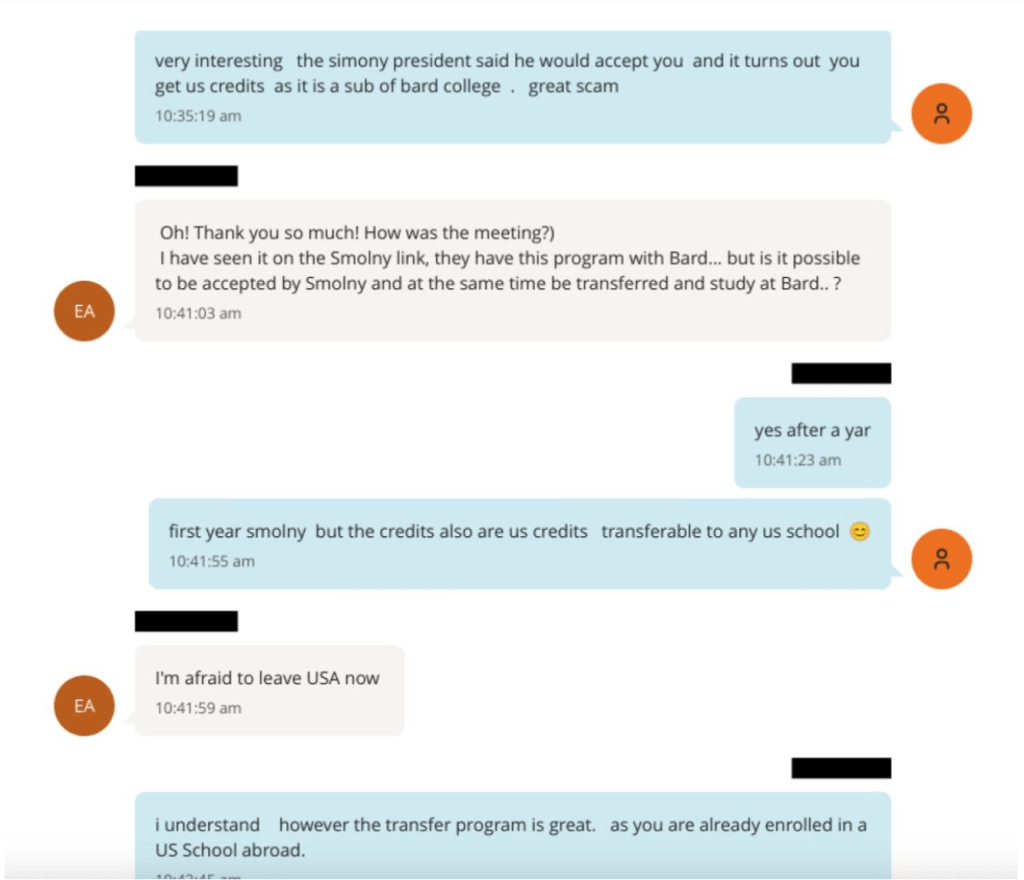
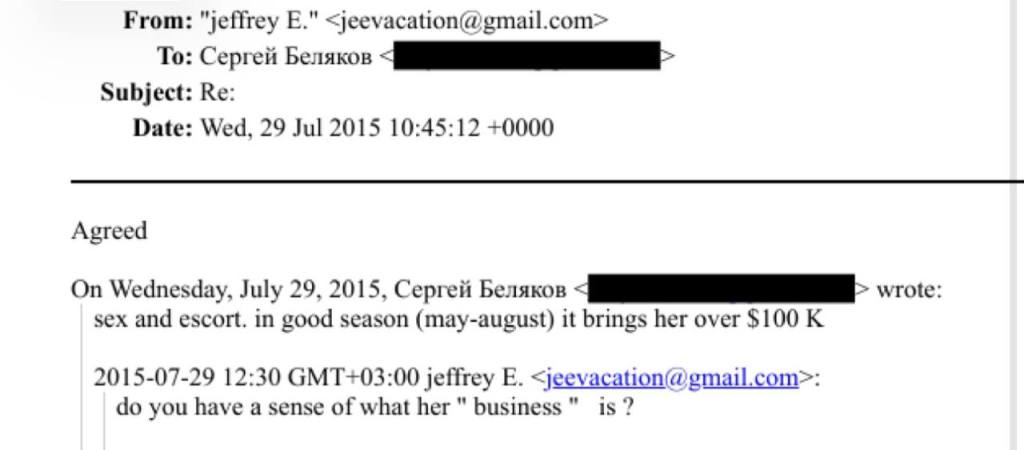
After his 2008 plea deal, Epstein shifted his focus to adult women who looked like teenagers—many of them fashion models from Europe and Russia. He dangled fake jobs linked to his famous connections, promising work at places like Victoria’s Secret. He rarely delivered.
Once inside his orbit, the women said they were coerced into performing massages that escalated into sexual demands. Several have said he required at least one such encounter a day, and when no other women were available, he turned to his “assistants.”
Continue reading “The Help”