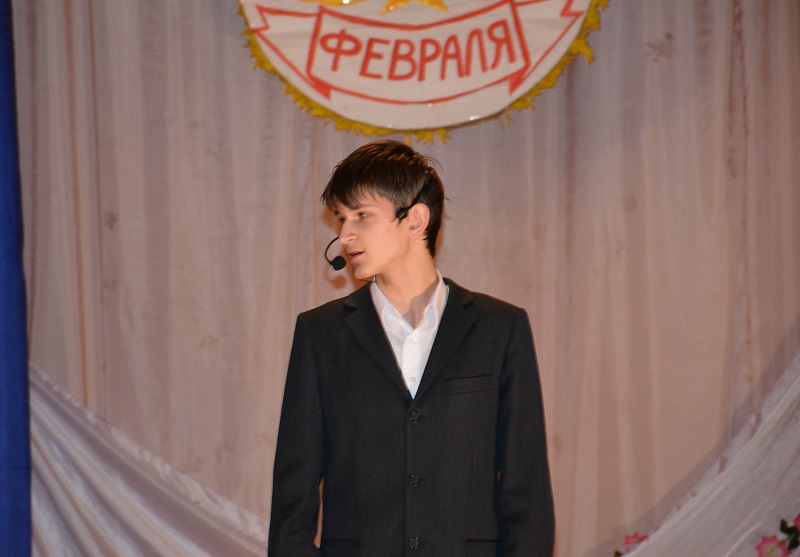
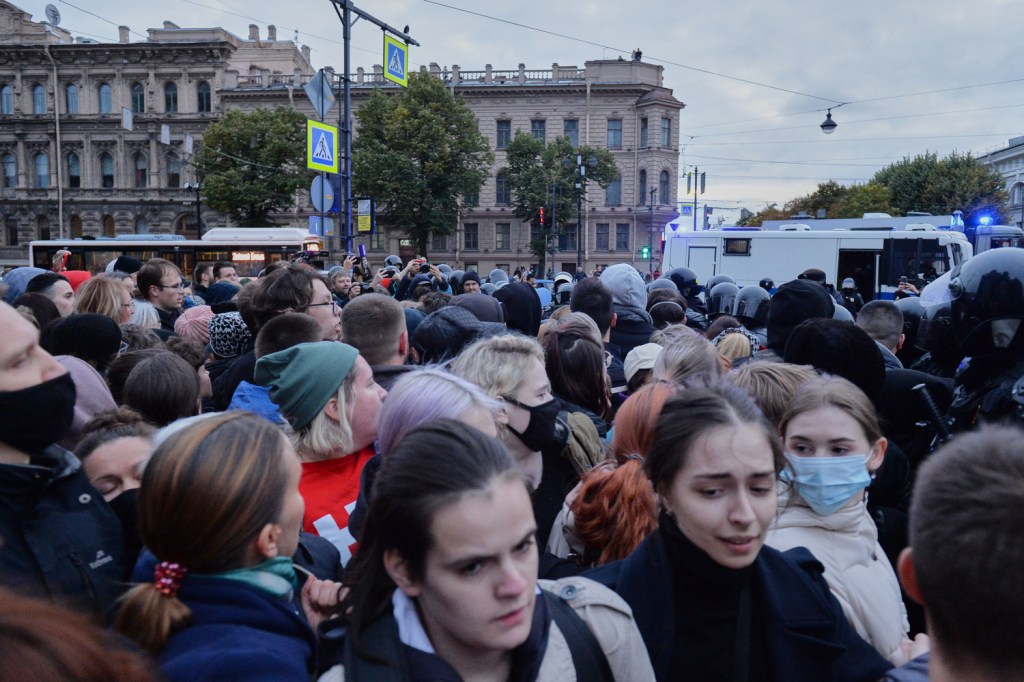
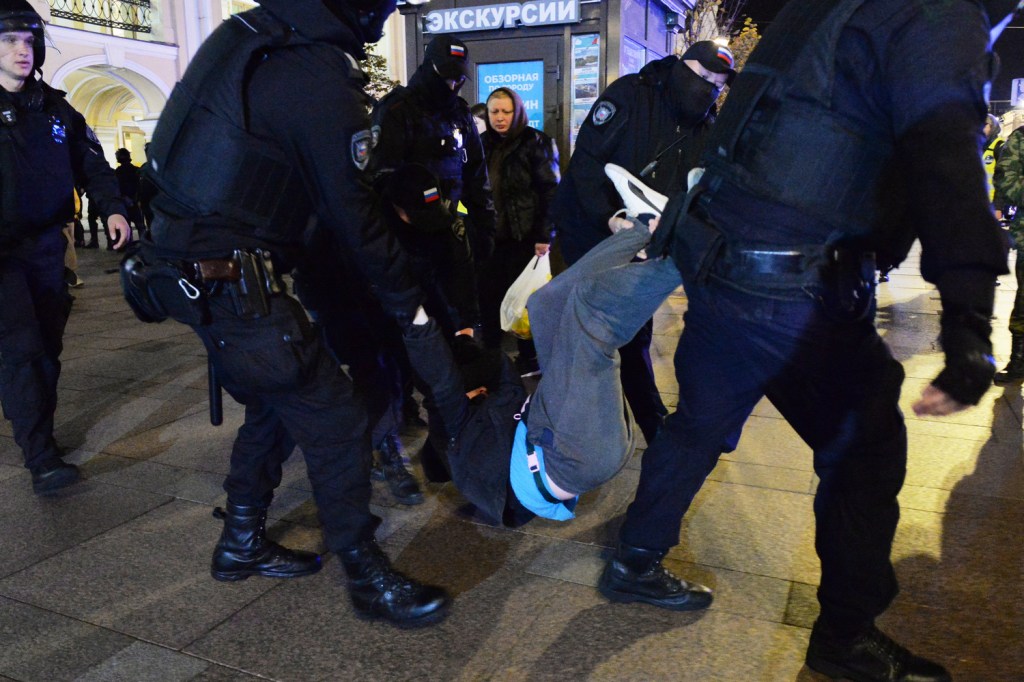
I am going to tell you about a political prisoner who seemingly no one has written about yet. I came across information about him quite by accident.
His name is Gordey Nikitin. Thirty-two years old and a native of Ryazan, Gordey worked at an oil refinery before his arrest. According to Gordey, he has been interested in politics and held opposition views since 2014. When the full-scale war [against Ukraine] broke out, Gordey went into shock. He was in this state of shock when he wrote several comments on Telegram.
As Gordey found out when reviewing the files in his criminal case, it was precisely because of these comments that, three years later, FSB officers would come after him, calling him on Telegram and introducing themselves as Ukrainian intelligence.
A few conversations with the “GUR” (actually, with the FSB) sufficed to charge him with and convict him of high treason and sentence him to seventeen (17) years in a maximum security penitentiary facility.
Gordey did not testify at his trial and he refused to make a closing statement to the court. He also did not bother to appeal the verdict, and so he will soon be transferred to a penal colony.
Gordey is currently being held in a remand prison in the town of Ryazhsk, Ryazan Region. He writes that the worst thing about the remand prison is the library: “Mostly third-rate military science fiction.” In the eight months he has spent in the prison, Gordey has only come across six decent books—by Remarque, Dostoevsky, and Chuck Palahniuk.
You can write a letter to Gordey. And if you use a digital service, a New Year’s miracle may occur, and he will receive the letter on January 30. In the worst case, it will arrive after the holidays.
Write to Gordey at the following address:
Russian Federation 391999 Ryazhsk, Ryazan Oblast • ul. Krasnaya, d. 1a, SIZO-2 • Nikitin Gordey Andreyevich (d.o.b. 28.09.1993)
You can also send letters through the online services F-Pismo, Zonatelecom, and PrisonMail.Online (the last should be used by foreign bankcard holders).
Source: Ivan Astashin (Facebook), 26 December 2025. Translated by the Russian Reader. Since letters to Russian prisoners are vetted by prison censors, they must be written in Russian or translated into Russian, something that can done more or less decently using an online machine translator like Google Translate. ||||| TRR
On 22 February [2023], scheduled tactical and drill exercises were held at Ryazhsk Remand Prison No. 2 (Ryazan Region, Russian Federal Penitentiary Service).
Remand prison staff practiced negotiating procedures, organizing combat groups, dealing with the aftermath of mass disobedience, and repelling attacks on the correctional facility.
The exercises were observed by Young Army cadets from Ryazhsk High School No. 3. Remand prison staff showed the kids their weapons and equipment. The boys and girls were able to try on bulletproof vests and hold automatic rifles and pistols. At the end of the tour, the schoolchildren were treated to hot porridge and tea.
“Today, the students got a closer look at the penal system,” said Alexei Ogurtsov, acting chief warden at Remand Prison No. 2. “Our staff demonstrated their professional skills, equipment, and weapons to the students and answered their questions. Perhaps some of them will choose to enlist in our service in the future.”
Since the outbreak of Russia’s full-scale war against Ukraine, the country’s repressive apparatus has turned so severe that absolutely anyone can face serious prison time. You can evince complete indifference to events or even support the “special military operation,” but one day it could happen that a family member of yours has been captured by the security forces. Often these family members are minors. They are now being given quite “adult” prison sentences, but they have virtually no chance of being released as part of high-profile prisoner exchanges.
The number of Russians imprisoned for political offenses has been growing, and the situation is unlikely to improve in the near future. We decided to tell the stories of several family members of political prisoners in order to try and answer the simplest questions: why relatives of prisoners often need support themselves, how best to help relatives of political prisoners, what mistakes it is better to avoid making if your relative is detained by law enforcement, and the vital role played by letters to political prisoners. Ivan Astashin, a human rights activist with the project Solidarity Zone and a former political prisoner himself, and two mothers whose sons have been convicted of “terrorism” by the Russian authorities helped us to answer those questions.
Cast of characters:
Anna, Nikita Uvarov’s mother. Nikita Uvarov was a defendant in the high-profile case of the Kansk teens. The three teens charged in the case were detained by law enforcement after posting leaflets on an FSB building and organizing an anarchist “terrorist” group. Uvarov was sentenced to five years in prison.
Tatyana, Yegor Balazeikin’s mother. Yegor Balazeikin, a prep school student, was detained for allegedly throwing a Molotov cocktail at the wall of a military enlistment center in the Leningrad Region which failed to ignite. According to investigators, in February 2023, Balazeikin tried to set fire to military enlistment offices in St. Petersburg and the town of Kirovsk by way of protesting against the military mobilization. He was sentenced to six years in prison.
Ivan Astashin was a political prisoner in the high-profile 2010s criminal case against the so-called Autonomous Combat Terrorist Organization (ABTO). He spent almost ten years in prison. Nowadays, he does human rights work as part of the project Solidarity Zone, which we featured in a previous article.
Arrest and Verdict
Tatyana and Yegor Balazeikin
Tatyana, Yegor Balazeikin’s mother: The telephone rang at 11:40 p.m. on 28 February. It was an unknown number. A woman’s voice said that our son had been detained whilst attempting to torch a military enlistment office in the town of Kirovsk in the Leningrad Region. At the time [of his arrest], Yegor was in the room which we had rented for him [in St. Petersburg]. He stayed there on school days because it was near the prep school he attended. We live in the Leningrad Region, and it was quite complicated to commute there. When I heard what the woman said, I told my husband what happened and that we should get ready to go. We got ready instantly and went there. What were we feeling at that moment? We probably felt that was happening was not real because Yegor had never broken any rules, not at school or kindergarten, not at his sports club, not outside or in public places. We realized that something out of the ordinary must have happened to move him to do what he did.
We were not allowed to see Yegor when we arrived: he was with the police, the FSB, or the Investigative Committee. I don’t know exactly who was in the room with him, as none of those people introduced themselves to us. We talked with the juvenile justice officer, who took our statements. Yegor at that moment was in a separate room with law enforcement officers, and I was let in there to see him only when another juvenile justice officer had taken his statement, which either his father or I was supposed to sign. Only when Yegor had made his statement was I let into the room.
What was the hardest thing for us during the process? There were a lot of hard things, but the hardest thing was understanding that this was an injustice and that we were powerless, that we had no way to fight back and prove that an injustice was taking place. The verdict was one of the hardest stages. And for me it was not the verdict that was the scariest, but the prosecutor’s oral arguments, when he asked the court to sentence Yegor to six years. That was horrible. It was during the trial, and I had a very hard time coping with my emotions. I started crying, taking sedatives, and drinking water, because my oral arguments were next. I had to put myself together and make my speech. These six years requested by the prosecutor were the most terrible thing.
Nikita and Anna Uvarov
Anna, Nikita Uvarov’s mother: It all began on 6 June 2020. Five teens were detained in Kansk around five o’clock in the evening, and my son Nikita was amongst them. Their telephones were immediately confiscated and they were taken to the Investigative Committee. Among them was the Marxist-leaning grandson of the former mayor of Kansk, Nadezhda Kachan, and a guy who associated himself with antifa and had met the other boys online shortly before their arrests. He was the first to be approached by a police detective and asked to set up a meeting. Those two immediately turned witnesses, while Denis, Bogdan and Nikita were identified as suspects, although only two people had pasted up the leaflets. An FSB detective called me and told me that my son had been detained and that I needed to come to the Investigative Committee. When I arrived there, Nikita and five officers were sitting in an office. There, I learned that Nikita and Denis, who had asked to spend the night at our place, on the night of 5 June, after waiting for me to fall asleep, had pasted a leaflet on the treasury building that read “Their luxury guarantees your poverty!” and next to it, on the FSB building, a leaflet that read “Hands off the anarchists — the state is the main terrorist!” and included four photos of political prisoners.
I was told to sign a form giving consent to a search of our apartment and voluntarily hand over leaflets and other items. At the apartment, Nikita turned the leaflets and the sugar substitute (?) over to them, while a detective went through his notebooks and computer, which was then also confiscated. Then there was another interrogation by a detective from the department for combating extremism and terrorism, in which after examining the contents of the phones he began to ask questions about the Molotov cocktail, and Nikita’s reply that they had just been fooling around didn’t satisfy the detective.
Then there was an interrogation involving investigators and a bunch of FSB guys with a readymade record of the interrogation, which even included the date of the alleged bombing of the FSB, or the Interior Ministry. My son and I refused to sign it, and then they began to write up the arrest. It was horrible, as I realized I could do nothing to help Nikita. I couldn’t get my head around what was happening and what would happen next.
And then there was the arraignment, at which the judge read out terrible character references from the school, while the juvenile justice inspector, who had never been to our apartment and never spoken with our neighbors, nevertheless tried to describe our living conditions. After eleven months, my lawyer Vasin and I managed to get the remand in custody changed, and Nikita was free for nine months. But the lawyer immediately said that the sentence would most likely involve actual prison time, so throughout that whole time it was hard and scary for my son. The verdict was the hardest, because I had hoped for a suspended sentence, even if it was minimal, thinking that due to his age they would take pity on him, because there had been no such instances involving actual prison time, it seems, before Nikita, and these kids had already been punished for their views. The case was an obvious frame-up, and I think the judges saw that too, but they didn’t give the defense much room to make its case, and many of its motions were overruled. Still, I thought to myself that now everything would be over and we would be free at last…. The verdict was meant to make an example of my son, because he hadn’t pleaded guilty or asked for mercy.
Problems and Challenges
Ivan Astashin: Of course, it is better to learn about the problems faced by relatives of political prisoners from them. For my part, as a human rights activist, I can emphasize the fact that after a person is arrested, their relatives often either do not know where to turn, or are afraid to go anywhere for help. This is a big problem, as the initial hours and days are crucial in many respects.
Ivan Astashin
Anna, Nikita Ugarov’s mother: My main difficulties now are emotional fatigue and constant worries about Nikita, his health, and the attitudes of both the prison staff and the people serving time with him. After all, prison is a terrible place, and my son should not be in there. He has a good heart: he is not bitter now, and forgave everyone long ago. We are still coping financially: ordinary, caring people help a little, and I am very grateful to them for this. They write to me and support me, which makes me feel better. Nikita receives a lot of letters, which help him a great deal to hold on and not get discouraged. Thank God, I have not encountered bullying or stigmatization from others. No one cares at all here in Kansk. I get mostly sympathy and understanding from neighbors and the people I know, and many of them ask me to send Nikita their regards.
Tatyana, Yegor Balazeikin’s mother: There are a lot of difficulties we have faced along the way, actually. First of all, getting a decent medical examination, to which Yegor is entitled by law, because he has autoimmune hepatitis, because he has a disability, and he is entitled to certain medical care. It is very difficult to make this happen. We have struggled to get this done while he has been in the pretrial detention center in St. Petersburg. I can’t even imagine what will happen when he goes to the penal colony, because every three months he has to take tests to monitor his health.
Looking at all the political prisoners who have health problems, some of whom are already serving time, I assume that this will be very difficult to achieve. It’s probably even impossible. Psychologically, it is quite difficult, because you go through all the stages. First is the denial stage: “No, it can’t be happening, it can’t be happening to us.” Then there is the hatred stage, in which you hate everybody, just not understanding at all how it could have happened. The acceptance stage, I guess, has come to us a little bit, that is, we have accepted this situation, although we don’t agree with it. And then there is the feeling of powerlessness, the feeling that you are just a speck in this world, that you can’t protect your own child, you can’t defend his rights, you can’t prove in court that his actions were not offenses under Criminal Code Article 205 [“committing a terrorist act”], but offenses under Article 167 [“intentional destruction or damage of property under aggravating circumstances”] at most. They don’t even listen to you, because they already have their marching orders from above. And they have to execute these orders, because they have to maintain the picture they want to create—a picture of universal support for the “ruling party” and universal support for the so-called special military operation. And there is no way to fight it.
As for financial challenges, it is quite difficult financially to support a political prisoner, especially a child, given that Yegor shares a cell with boys who are often from orphanages or dysfunctional families, and they do not get care packages. We have been going to the pretrial detention center for fourteen months, and we bring a very large care package every week, which is meant not only for Yegor but also for the other five boys. Because we know that in order for our child to eat one apple from the care package, we need to pack five more apples, so that each of the boys eats an apple, and the same goes for all the other products. They are children. And we can’t feed only our own child and leave the other five hungry, so we certainly bring very large care packages, once a week. Each care package costs about seventeen to twenty thousand rubles [approx. 200 euros], and financially it is quite difficult. So, I think that financial difficulties are not the least of our difficulties either, actually.
Letters to Inmates
Ivan Astashin: Letters and correspondence are first of all personal interactions. A person in prison often does not have a telephone or internet, and is very limited in terms of personal interactions: they have their cellmates (although sometimes people are in solitary confinement) and the prison staff—that’s it. And their lawyer, if they have one, who visits them. Therefore, correspondence should be used first of all as a tool for personal interaction. In the first letter, it is better to tell them a little about yourself and your interests, so that in the future general topics for personal interaction can take shape. You can write almost anything, but the best option is to tell the inmate about your own interests, and ask them what they would be interested in finding out. Often people are interested in the news, and they have interests in a particular area. This should all be taken into account individually. And of course, you shouldn’t write anything that could harm a person by discrediting them or giving additional information to the prosecution
Anna and Nikita Uvarov
Anna, Nikita Ugarov’s mother: I would very much like people to not stop writing letters to Nikita: this aid should be the highest priority. I would advise people who would like to help political prisoners and their families to write letters to political prisoners, and if they want to find a connection with their relatives to communicate with them. Information about political prisoners is available on the Telegram channels Memorial: Supporting Political Prisoners and Solidarity Zone.
Support for Relatives
Ivan Astashin: You have to act differently in different cases. In some cases, the families need financial support to pay a lawyer or spend care packages. In other cases, this is not an issue, but emotional support is needed. I think it is always needed, in fact. In my experience, when you telephone the relatives of political prisoners, those conversations often last longer than is strictly necessary for discussing practical matters. People need to speak their mind, to share their feelings with someone. Often, they do not live in an environment in which they can share, as they are often ordinary people who don’t run inb activist circles. Emotional support is thus quite important.
Anna, Nikita Uvarov’s mother: The support of others is actually quite important, because when a person is left alone with this trouble, they can probably go crazy. I don’t know what would have happened to me if the case had not been publicized. I remember those six months of silence and fear, when there was no one I could tell and with whom I could consult, in order to feel that I was not alone…. And then I felt, I recognized how many of us there were, both those who were in such situations ourselves and people who understood everything we were going through and were willing to help and support us!
You can find information about what support Nikita Uvarov and his family need on the Telegram channel Case of the Kansk Teens.
You can send letters, books and articles to Nikita at the following address:
You can also send letters to Nikita via the online service ZT and the volunteer-run project RosUznik.
Yegor Balazeikin’s parents, wearing t-shirts that say “Common cause.”
Tatyana, Yegor Balazeikin’s mother: The support of others is the most important thing we have. We have the support of our son. You wouldn’t believe it, but he manages to support us whilst he is in prison! We support him in every way we can, and he supports us. He gives us the energy to go on with our lives. But at the same time, the support of the people around you is quite important, because you realize that you are not alone in this fight, and the people around you, they understand how unjust the court’s decision is, how unjust and unfair the sentence they passed is.
In fact, we have not dealt with any direct harassment in the wake of Yegor’s criminal case from family or friends. There are people whom we don’t know who write all sorts of nasty things about both Yegor and us in the feedback chat of Yegor’s Telegram channel, but there hasn’t been any large-scale bullying. Thank God, we’ve managed to avoid that. For the most part, people support Yegor and us. They write messages of support and comments that support Yegor and us.
What advice can I give to people who would like to help? To write letters, of course: it is safe, it is inexpensive, and it can be done from anywhere in the world. And, probably, to provide financial assistance to the families of political prisoners. Because it is quite dangerous to send packages or parcels without vetting them with the families, since a prisoner may not be given a care package that their family planned if someone suddenly sends one without vetting it first. And financial assistance is quite important, because relatives know what they sent in the last care package, what they need to send in the next one, and how many kilograms they have left to send. For the time being, this does not concern Yegor: he is a minor, so there are no restrictions on care packages to him. But on 6 August he will turn eighteen and the number of care packages he can get will be strictly limited. Generally speaking, letters and financial support are absolutely necessary. But nothing should be sent to political prisoners without the consent of their support groups or their families.
You can find information about what support Yegor Balazeikin and his family need on the Telegram channel The Yegor Balazeikin Case.
You can send letters to Yegor at the following address:
Balazeikin Yegor Danielevich (born 06.08.2006) Primorsky rayon, pos. Talagi, d. 112, FKU Arkhangelskaya VK UFSIN Rossii po Arkhangelskoi oblasti Arkhangelsk 163530 Russian Federation
You can also send letters to Yegor via the online service ZT and the volunteer-run project RosUznik.
Mistakes to Avoid
Anna, Nikita Ugarov’s mother: I was shocked when Nikita was detained. You see, when I’d gone to bed, the kids were home and I didn’t even suspect they had done something. I asked the police officers right then and there what would happen to the kids, and they replied that they would get off scot-free since they were minors. This reassured me and so I didn’t bother to do anything, but now I very much regret that I didn’t immediately retain counsel. I was completely stunned, at the arraignment, when they read out the statements by Bogdan and Denis (Ugarov’s “accomplices” in the case — Ed.), in which they requested that Nikita be remanded in custody since they feared for their lives because they were cooperating with the investigation. It was quite hard and hurtful that Nikita was betrayed by people he considered friends. The boys had been pressured by their mothers into signing the statements, and persuaded by the investigators, who had told them that due to their age no one would been punished. They had signed confessions, on which the investigators and FSB officers had worked very hard, running back and forth between interrogation rooms and adjusting the boys’ statements so that they coincided down to the last gramme when one of the boys didn’t know or remember a particular detail. Since Nikita refused to confess, he was made the main villain, and the confessions were the basis of the charges against him. Later, though, the mothers understood the mess they had made. They hired good lawyers and we all started sticking to the same position.
Ivan Astashin: It happens that a family turns down the services of civil rights lawyers, entrusting themselves instead to the court-appointed attorney and the lead case investigator, and naturally this harms the defendant. The case of Ilya Podkamenny is a perfect illustration of this. His mother decided that telling everything straight was the best thing to do. She told the authorities that her son had been storing petrol and was also planning to torch a military recruiting office. Ilya was ultimately charged with two more crimes, including planning to torch the military recruiting office. I don’t know whether Ilya also said anything about this or not, but it’s a fact that you don’t have to say anything, especially since Article 51 of the Constitution gives you the right to refuse to testify not only against yourself but also against your close relatives. You can say nothing at all. As we know, any testimony can be used against you and your relatives.
Or there’s the case of Alexei Rozhkov, who was released on his own recognizance in 2022 and could have left Russia. His relatives were opposed to this and tried to talk him out of it. He ultimately left the country but only a few months later. After he left he had to wait several months in Kyrgyzstan for an entry visa to Europe. Whilst he was waiting he was abducted by the security forces and taken back to Russia. It is hard to talk about what “might have been,” but it is possible that, had he left Russia earlier, he would have been able to leave for Europe more quickly and would not have wound up back in a Russian remand prison. But now he’s facing over twenty years in prison.
Vladislav Yurchenko, an anarchist from Russia who stood up in defense of the peoples of Ukraine, has died in battle
You may have recently read about an anarchist from Russia with the call sign Pirate who was fighting against Putin’s troops in the ranks of the Siberian Battalion. He is 22-year-old Vladislav Yurchenko. He was killed on 9 August during an amphibious assault on the occupied Kinburn Spit, according to the Telegram channel Anarchist Сombatant.
In July, the Resistance Committee published Vladislav’s remarks about his motives for fighting on the Ukrainian side.
“I have always had a heightened sense of justice. That was why, when Putin launched his imperial war against Ukraine, I decided to take up arms to defend the freedom of the Ukrainian people, and the freedom of Russian citizens and the Indigenous peoples enslaved by Russia.
“When I was 24 years old [Yurchenko changed his age to protect his identity — I.A.] I took an interest in the ideals of anarchism. It was then I realized I was living in a fascist state. I started going to rallies in support of political prisoners, but quite quickly was disillusioned with this way of fighting the regime. I studied a maritime profession and was employed on sea vessels. I had a good salary, and had something to lose, but when the war started, I could not in good conscience continue to lead my ordinary life and turn a blind eye to the crimes committed by the Russian army. That is why I am here,” Yurchenko wrote.
On 9 August 2024, Siberian Battalion soldiers took part with other units in an amphibious assault on the Kinburn Spit, which is occupied by Russian troops. Yurchenko was wounded in the battle. His comrades tried to evacuate him, but his boat was hit by an ATGM (anti-tank guided missile) fired from the Russian side, and Yurchenko was killed.
Yurchenko left behind a letter to be published in the case of his death.
“Hello to all our comrades. My name is Vladislav, call sign ‘Pirate.’ I decided to leave behind this letter in case I perished in the war against the imperial Russian regime, the war against the country in which I was born and grew up, the war against the dictator who usurped power before I was born. I want this letter to remain as a historical document of the involvement of revolutionary anarchists in the Ukrainian people’s resistance to the Russian tyranny. Like all sensible citizens of the Russian Federation, I was shocked by this war’s beginning, by the terrible injustice and crimes committed by the Russian army on Ukrainian soil. From the first days of the full-scale invasion, I thought only about what I could do to combat this injustice, how I could stop the madness that my own people were committing. When I learned that there were military units in the Armed Forces of Ukraine which had begun to sign up Russian nationals, I immediately realized that I must fight for the freedom of the Ukrainian people and our ideals in this way, under arms. And even if I don’t live to see the Ukrainian people’s victory over the occupiers, the bright anarcho-communist future, and justice and freedom for all people on Earth, I still believe. I believe that this future will definitely dawn; as long as our comrades continue to fight, totalitarianism, authoritarianism and fascism will not engulf humanity. I wish my comrades the same confidence in the fight for freedom.
Muscovite Ivan Astashin knows firsthand what human rights activism, Russian prisons, and terrorism and arson charges look like. As a young man, he was close to Eduard Limonov’s National Bolsheviks and was arrested as part of the high-profile Autonomous Combat Terrorist Organization (ABTO) case, in which a group of young men were charged with a series of arson and terrorist attacks.
At the turn of the 2000s and 2010s, this story was widely discussed in the media, sparking debates over whether the arson attacks were justified. Astashin was convicted of torching an FSB district office in 2012 and spent over nine years behind bars.
Upon his release, Astashin worked for Andrei Babushkin’s Committee for Civil Rights and was involved in defending the rights of prison inmates. In February 2022, Astashin joined the protests against the invasion of Ukraine and was soon forced to leave Russia.
Astashin is now involved in the campaign Solidarity Zone, which aids Russians who have been arrested for radical anti-war protests.
How did the “Solidarity Zone” come into being?
When full-scale war broke out, large protests took place in many Russian cities, and criminal charges were filed against protesters, both charges of “violence against police officers,” which have been routine at protest rallies (police officers themselves use violence, but they don’t pay for it), and charges that were newish for Russia.
There was Anastasia Levashova, who threw a Molotov cocktail at police officers. There was the case against Anton Zhuchkov and Vladimir Sergeyev: they were detained near Pushkin Square in Moscow on 6 March 2022 on their way to an anti-war rally. A Molotov cocktail was found in Sergeyev’s backpack. The police did not know what they guys were planning, so they were able to accomplish part of what they’d planned. Zhuchkov and Sergeyev had planned to commit suicide publicly at an anti-war rally as a sign of protest—they were so desperate. As they were being detained, they took lethal doses of methadone. The police failed to notice this. They put them in a paddy wagon and beat them up there, but on the way to the station the police realized that their detainees were quite sick and took them to hospital. They were saved in the intensive care unit at the Sklifosovsky Institute.
Zhuchkov and Sergeyev were sent from the intensive care unit to a pretrial detention center after being charged with “attempted disorderly conduct.” According to police investigators, the men had been planning to set fire to empty paddy wagons. When detained, Sergeyev said that they “wanted to torch a couple of paddy wagons,” emphasizing that it was empty vehicles they had intended to target. At first, we wanted to find out the address where we could write to Zhuchkov and Sergeyev at the pretrial detention center, so we asked OVD Info, but we also learned that OVD Info would not defend them, as theirs was not a peaceful protest.
We realized that none of the existing human rights organizations was willing to take on such cases. We decided to take on Zhuchkov and Sergeyev’s case: we published the address to which people could send them letters and found them a lawyer. A little later, the authorities started charging people with arson attacks on military recruitment centers, and so we decided that we should also aid such people. By September 2022, we had launched Solidarity Zone’s social media accounts and expanded our work.
Do I understand correctly that the attitude of OVD Info, Memorial, and other human rights organizations to people engaging in “non-peaceful” anti-war protests has changed? Have their motives become clearer to these human rights organizations?
Yes, their attitude has changed. As I see it, it changed after the military mobilization, when people began setting fire to military recruitment offices en masse in protest. Now it is easier to get announcements of fundraisers for such detainees reposted. But the position of human rights organizations has remained the same.
We had a public discussion with Sergei Davidis, head of Memorial’s Support for Political Prisoners project. He said these people should certainly be supported, that in most cases they have been wrongfully charged with violating Article 205 of the Russian Criminal Code (“terrorism”), but that whereas the criminal code articles on “discrediting” the army and “disseminating fake news” about the army clearly contradict Russian law and international conventions, and people charged with violating these laws can be designated political prisoners without a detailed examination of their cases, then with regard to people who attempt to torch military recruitment centers, Memorial examines the cases in detail and is guided by international criteria. They have designated twenty such people political prisoners, but the number of these cases is many times greater.
All human rights organizations have their own focus. OVD Info deals with cases related to peaceful protest; First Department, with high treason cases; and the Net Freedoms Project, with freedom of expression cases. Our cases do not fit these criteria. Before we started, there was no organization which was willing to support such people.
Is your campaign volunteer-driven? How many people are you assisting now? How do you define the people you support?
We support people who have been arrested for anti-war protests, for radical anti-war actions, although nowadays virtually all anti-war protests are radical. We handle cases where people actually set fire to a military recruitment center or a railroad signal relay box, and cases where they were merely planning to do such things.
Or they weren’t even planning to do such things, but the security services have fabricated a case against them, alleging that they were planning to torch a military recruitment center, as happened to Ivan Kudryashov.
We are currently supporting nineteen political prisoners. In almost all cases we pay their defense lawyers and organize fundraisers to this end, and in many cases we are also involved in arranging for parcels and care packages to be sent to the prisoners and replenishing their personal commissary accounts at their detention facilities. We talk publicly about their cases and similar criminal cases. We did a count in September 2023, and at that time there were around three hundred people in Russia facing criminal charges over radical anti-war protests. There was no further info on half of these people: we could not find out whether they were under arrest or wanted by the police.
We try to cover such cases as much as we can because we are a volunteer organization: we don’t get paid or have permanent funding, although we would certainly like to have such things. We raise money for political prisoners through cryptocurrency and PayPal donations. We also do personal ruble-denominated fundraisers to pay lawyers through the platform Zaodno (“In Cahoots”).
In the first quarter of 2024, we spent 900 thousand rubles (approx. 9,100 euros) paying for care packages and one-off visits by defense lawyers. When lawyers defend our prisoners in court, we organize personal fundraisers. Sometimes we hold events in Europe to raise money, and sometimes other campaigns hold events to raise money for us.
Let’s imagine that a programmer in Tver has been arrested for attempting to set fire to a military recruitment center. His relatives are scared: they are unlikely to want to do business with a volunteer campaign based in Europe. How do you reach out to those accused of anti-war protest?
Actually, we are increasingly being approached by relatives of arrestees as we are becoming famous. We are recommended in various chat rooms dealing with support for political prisoners. Often people contact OVD Info, and they suggest contacting us.
Aftermath of an arson attack on a military recruitment center in Kemerovo
We also search for information on detainees ourselves. If you have at least a first name and a surname, you can find the rest of the information in the public domain. But sometimes you cannot find out which thirty-year-old native of Voronezh has been detained. There are such case, unfortunately. Information can be obtained when a person is added to the list of “terrorists and extremists” via court filing. When a person is in the database, the locale of the pretrial detention center where they are held is identified as well. In many cities there is only one pretrial detention center, so we can dispatch a lawyer there to offer assistance to the arrestee and get their take on the case.
Some argue that publicity is not always beneficial to defendants in political criminal cases given the current conditions. Does Solidarity Zone not take this approach?
Our opinion is that publicity is beneficial in most cases. Despite everything, the security services still don’t like their lawlessness to become public. This still entails inspections, which, although they are formal procedures, are still unpleasant for them.
Publicity is a defense against torture and coercion. Also, you cannot raise money to pay a lawyer if there is no publicity. Without publicity, a person will not receive letters from supporters and well-wishers, but letters are very important. Publicity has practically no effect on the sentence nowadays, neither positively nor negatively.
So the lawyer is the prisoner’s link with the outside world? If a person ends up in this situation, they will still get a brutal sentence of ten, fifteen or twenty years or more, won’t they?
The lawyer is the only person who can visit someone in pretrial detention centers and penal colonies without limits on the number and length of visits. During the investigation phase of a case, relatives usually do not have visitation rights, especially if the individual has not pleaded guilty. So the support of a lawyer is very important.
As time goes on, this is less and less the case, but what the lawyer does can still affect the sentence. If a person has a court-appointed defense lawyer, they often tell them to agree to every deal offered by the prosecution and to sign every paper they ask them to sign, so the sentence will be shorter. Ultimately, however, the investigators and prosecutors add new charges, and the sentence is huge. But if there is a lawyer who really defends their client, they at least make sure that no new charges are filed.
A lawyer can go after the gross violations on the part of the state. Take Ivan Kudryashov: there was no evidence in his case, and so he should have been acquitted. But there are no acquittals in Russia, so he was sentenced to six years for “planning a terrorist act.” This is a short sentence by today’s standards, but his lawyer got it reduced on appeal to four years and ten months.
Although Ilya Baburin was just sentenced to twenty-five years in prison for violating six articles of the Criminal Code. For one incident—planning to torch a military recruitment center—he was charged with violating four different articles, for one and the same thing! And the lawyer could do nothing.
Ilya Baburin in court
There are news stories of phone scammers conning people into torching military enlistment office, of people being offered money on Telegram to torch railway signal relay boxes. Do you handle these cases?
We have been approached about such cases. Those people shouldn’t be in jail, of course. It is doubly cynical that the pensioners who were conned have also been charged with terrorism, although in terrorism cases what matters most is the person’s intent. We have limited resources, however, so we only assist people who take an anti-war stance, which is an important criterion for us.
You also have the criterion that the defendant not testify against anyone else. Whether they pleaded guilty or not doesn’t matter.
What matters is that they didn’t willingly testify against others. Anything can happen under torture.
The number of people who go down the road of torching military recruitment centers and railway relay boxes has not been decreasing, has it? Not all those who oppose the war and Putin have left the country or gone to jail, have they?
On the contrary. Whereas previously we tried to write about all arrests on such charges, we now realize that our small team cannot cover all the arrests because they occur almost daily. Often little is known about the detainees, but the news reports say that the person was on a mission for the Free Russia Legion, meaning that the person has an anti-war stance.
When a person engages in such actions, they seemingly first of all undergo an existential crisis because they live in a quasi-fascist empire that has also attacked its neighbors. Does this person want to do something even though they realize that their life may be in danger?
Yeah, that’s right. In the cases that are well known, the defendants say they wanted to do something, to take radical action by way of protesting.
In 2022, Navalny supporters were often detained for such actions, such as Igor Paskar, who threw a Molotov cocktail at an FSB building, or Vladimir Zolotarev, who set fire to a Russian National Guard building in Komsomolsk-on-Amur. People used to go to protest rallies, but then there were no more protest rallies. Another motive we can observe among such people (Zolotarev and the anarchist Alexei Rozhkov, who set fire to a military recruitment center in March 2022, spoke of it) is that they couldn’t tear themselves away from the news about Ukraine. At some point it was impossible for them to just read all of it: they had to do something as well.
When the military mobilization began, people realized that all of this was not happening somewhere far away, but could affect them. Many people realized that they would go to jail, but they went to commit arson because they thought it was better to go to jail than to go fight a criminal war. Roman Nasryev and Alexei Nuriyev were sentenced to nineteen years each for attempting to set fire to a military registration office in the Chelyabinsk Region. This phrase in Nasryev’s correspondence jumps out: “It’s time to start—or we’ll die as slaves.”
There are now people who are primed for a long-term confrontation with the military machine, for guerrilla actions, and for greater degrees of security. And if you look at the reports of sabotage, not every one leads to the capture of the perpetrators.
It is clear what could have prompted radical action in February 2022. In the autumn of 2022, it was the mobilization. But how can it be that someone tolerated the war for a long time and decides to act only now? Or are these just “guerrillas” who have avoided capture for a long time?
That is a good question, to which I have no answer. We know generally about those detained for radical protests in 2022, but there is still little data even for 2023. We can assume that some people went abroad in 2022, but had to return to Russia because they could not settle down here. Some people may not have resisted in 2022 because they hoped that everything would end quickly, but now they see that nothing ends by itself.
The case of Sergei Okrushko can be cited as an example. He is Ukrainian but has a Russian passport. In 2022, he went to Moldova, whence he wanted to enter Ukraine and work on humanitarian projects. But he was not allowed to enter Ukraine because of his Russian passport. He was forced to return to Russia. He got a job at an oil refinery (as an electrician) and set off an explosion there.
Are you also a wanted man in Russia? What are the charges?
The authorities have not yet responded to inquiries about what the criminal charges are, although my lawyer submitted a request over a month ago.
After this interview was recorded, Moscow’s Cheremushkinsky District Court published information that it had been petitioned to arrest Ivan Astashin in absentia on charges of “condoning terrorism.” Other details of the case are still unknown.
Yesterday, during a dinner conversation, I was asked why I’d been silent, why I hadn’t been writing anything about the war. Was it because I was afraid of going to jail, or was it something else? These questions were posed point blank albeit sympathetically.
I’ve been asking myself this question for many months. On the one hand, it’s stupid to deny that watching as my acquaintances are given devastating prison sentences does not affect me in any way. It makes an impression, of course.
On the other hand, I wonder what would I write or say now if the level of state terror had remained at least at pre-war levels. I realize that I would still write or say nothing. I can hardly squeeze this text out of myself. I’m just explaining myself because yesterday was not the first time I’ve been asked why I haven’t been writing anything about the war.
I feel that words have lost their meaning.
One of the ideologues of the war, who constantly makes allegations about the “genocide of the Russian language,” writes bezpilotnik, obezpechenie, na primer, and ne obezsud’te. [Instead of the correct spellings bespilotnik, obespechenie, naprimer, and ne obessud’te — meaning, respectively, “drone,” “provisions,” “for example,” and “don’t take it amiss.”] No one corrected him for a year. Compared to him, I’m a total expert on the Russian literary language, but I don’t have the words to stop cruise missiles or send soldiers home, while his bezpilotnik turns residential buildings into ruins in a second.
I do not know what words to find for a mother who, conversing with her POW son, regularly interjects “bitch” and “fuck.” Or for a mother who, as she sees off her son, smiles at the camera and says what actually matters is that she didn’t raise him to be a faggot, and basically, if push comes to shove, she has another child. Moreover, the supplies of such people are really endless.
Now, sadly, only the Ukrainian Armed Forces can “explain” anything. I am not trained in military affairs. So I am silent.
Separately on Friday, police briefly detained Yevgeny Levkovich, a reporter for Radio Svoboda, RFE/RL’s Russian service, at his home in Moscow, and charged him with “discrediting the army,” according to newsreports and Facebookposts by Levkovich.
[…]
In Moscow, police detained Levkovich for about five hours at the Teply Stan police station and charged him under Article 20.3.3 of the Administrative code for allegedly discrediting the army; convictions for that offense can carry a fine of up to 50,000 rubles (US$613).
Levkovich wrote on Facebook that his trial was scheduled for Monday, but he did not plan to attend because he did not “see the point” in contesting the charge.
Radio Svoboda wrote that the charge was likely related to Levkovich’s posts on social media, but did not say whether authorities had specified any posts prompting the charge. On his personal Facebook page, where he has about 36,000 followers, Levkovich recently wrote about Russia’s war on Ukraine.
These are the numbers. I want to do something so that people don’t get caught, and even more actively support those who do get caught. But in the first case, it is unclear what these people are reading, and where the safety recommendations should be published so that they are accessible to such people. And we are already working on the second case, but we lack the human resources.
Those arrested for radical anti-war protest are heroes, although sometimes the charges are completely trumped-up. In any case, all of them deserve support. Solidarity Zone regularly writes about such political prisoners, publishes addresses where you can send them letters, and raises funds to pay their lawyers. Sign up to get news of what is happening to these people and, if possible, get involved in supporting them.
112 people are being prosecuted on charges of carrying out or planning radical anti-war acts.
Solidarity Zone counted how many people have been criminally charged with setting fire to military enlistment offices, sabotaging the railroads and other militant anti-war actions, or planning them, in the year following [Russia’s] full-scale invasion of Ukraine.
What police investigators allege these people have done to warrant criminal prosecution:
1 — “other”
7 — torched vehicles marked with the letter Z
17 — planned arsons of military enlistment or other government offices
36 — sabotaged the railways
51 — torched military enlistment or other government offices
Articles of the Russian criminal code under which these people have been charged:
36 — Article 205: Terrorist Act
31 — Article 167: Destruction of Property
15 — Article 281: Sabotage
14 — Unknown
12 — Article 213: Disorderly Conduct
4 — Other Criminal Code Articles
Of these people:
78 are being held pretrial detention centers (remand prisons).
5 have been sentenced to parole.
4 are serving prison sentences.
1 is under house arrest.
1 has been released on their own recognizance pending trial.
There is no information about 23 of them.
Our statistics are incomplete because the Russian authorities do not always report new criminal cases. Sometimes we only get reports that people have been detained, with no mention of their names or the charges against them, and these reports are thus extremely hard to verify.
Our statistics do not include people who were killed by the security forces during arrest or people prosecuted on administrative charges.
Source: Solidarity Zone (Facebook), 24 February 2023. Translated by the Russian Reader. Here, by way of comparison, are OVD Info’s statistics for numbers of people criminally (as opposed to administratively) prosecuted for “non-radical” anti-war actions since 24 February 2022:
Total defendants: 465 in 77 regions (we include occupied Crimea and Sevastopol in our data because we monitor activities of repressive Russian government authorities that operate there).
Women among the defendants: 90 (19%)
Minors among the defendants: 6 (1%)
(Section 3, Article 207.3 of the Criminal Code) Prosecuted for “spreading fakes about the Russian army” (ie talking about the war in an unsanctioned manner): 141 (30%)
(Section 3, Article 280.3 of the Criminal Code) Prosecuted for “discrediting the Russian army”: 54 (12%)
Convicted: 119 (26%)
Imprisoned upon conviction: 26 people
In pre-trial detention: 108 people
Under house arrest: 17 people
Convicted and given a non-custodial sentence: 62 people
It thus follows that a total of 577 Russians have faced criminal prosecution for anti-war actions of all kinds (violent and nonviolent) since the start of their country’s invasion of Ukraine. As Ivan Astashin, a former political prisoner himself, argues, above, all these people are, indeed, heroes. It’s another matter that they constitute a statistically insignificant segment of the world’s ninth most populous country. Again, by way of (invidious) comparison, at least 1,003 Americans have been charged with crimes for their alleged involvement in the 6 January 2020 riot at the US capitol.
I would argue that those who were forced to leave Russia due to Putin’s unleashing of illegal aggression against Ukraine could file a class action lawsuit against the Russian Federation or the ruling elite of the Russian Federation demanding compensation for the moral anguish and economic harm suffered as a result of these events. The Russian federal authorities must fully compensate them for expenses incurred by forced relocation, such as the cost of airplane and other tickets, accommodation in hotels and rented accommodation abroad, and other expenses. Compensation could also include the irreparable losses suffered by citizens within the country due to forced relocation — for example, the loss of a job or a business. Compensation for emotional suffering is a separate issue.
Payments could be made from the Russian federal budget, through the sale of the property of officials directly responsible for unleashing the war, or at the expense of business income from entrepreneurs who have directly supported the illegal aggression. Naturally, compensation for this damage is possible only after full payment of the reparations necessary to restore Ukraine’s economy and civil infrastructure. What do you think about this? #nowar#netvoine
[two selected comments + one response by the author]
Zmey Gurevich A difficult question. It’s true that the monstrous war forced me to leave Russia. But to my incredible surprise, I have have become happy here [in emigration]. Perhaps it’s immoral to be happy when rivers of blood overflow their banks. It’s been eating at me. But the painful departure has led me a new happiness. Some vital knots have been untied… No, I have nothing to bill [the Russian authorities] for. My friends empathize with me and ask me how things are going here. I can’t tell them the truth. I am ashamed. But my departure has turned into a happy time for me. I don’t know what will happen next.
Vlad Shipitcyn Zhenya! Did you go to at least one protest rally against Putin in Russia over [the last] 22 years? No, you didn’t. Did you ever stand on the stand on the street holding a [protest] placard? No. So no one owes you anything, not a kopeck. You too are responsible for both the regime and the war. You let them happen. So calm down.
Evgeny Krupitsky Hi! Yes, I am responsible for this war: it happened due to my connivance, indifference and cowardice. And I said it right away: https://www.youtube.com/watch?v=GsAFChc2HSI And my protest was that on March 6, exactly a year ago, I left the Russian Federation having abandoned everything, because I felt sick and ashamed. Okay, maybe it’s not such a big deal in terms of significance and courage, but I am proud of my little protest. I know you went to the rallies long before the start of the war, that you were detained, beaten and fined, and I respect and admire you for that! But someone will say that they suffered more than you did, that they did more to prevent this war, etc. We need to consolidate, rather than argue about who is more to blame!
Evgeny Krupitsky, “My take on what’s happening (2 April 2022) #nowar #netvoine”
Some people in Russia are living a normal life, but they feel the lack of real normality, and this causes them discomfort. Others live with a sense of catastrophe, but they feel the absence of a real catastrophe, and this also causes discomfort. Consequently, everyone is on edge. The sensible approach is to live normally with a sense of disaster. But this useful attitude is hard to achieve, and if you don’t have it, then I do not even advise you to start. When it takes shape, it will no longer be relevant.
The four members of this “countryside hub” are among hundreds of Russian opposition activists of various political leanings who have fled their country to Georgia throughout the past year. Some left in the months prior to Moscow’s invasion of Ukraine last February as repression grew to unprecedented levels in the Putin era. Others came after the war began, realizing that with their dissenting opinions, they could no longer live in what they deem a fascist totalitarian state.
In Tbilisi, they have created or joined new anti-war resistance organizations, which operate on Western grants and employ hundreds of volunteers. Working around the clock, these groups offer services in real time to Ukrainians refugees as well as Russian activists and military deserters fleeing their respective countries. The help comes in the form of evacuation routes, therapeutic services, legal guidance, shelters and resettlement plans.
[…]
From her volunteering as an election monitor in Russia’s 2011 elections to offering pro-bono legal support to activists arrested during protests in subsequent years, Burakova’s career followed a linear trajectory. Degrees in political science and law equipped her with the legal know-how to aid political opponents, and now exiles, over how to wrestle with and escape an authoritarian system that often invents new laws to persecute citizens. As of 2022, “discrediting the Russian army” is now an offense that has landed countless people in prison for sharing anti-war posts on social media.
[…]
“To conduct these types of congresses and host mock parliamentary votes on Russia’s future while in exile just looks a bit cringe-ova,” Burakova tells me, using the popular English word that has been appropriated into the Russian language. Her husband Egor Kuroptev shares the sentiment.
M., one of my smartest interlocutors, arrived from Moscow Time. “Well, what is your final conclusion? Why?” he asked me. I told him that now I see three points that we simply missed, that ended up in our blind spot. The first point is that of course everyone worked hard during these years, enthusiastically; everyone had an articulated mission in life, etc. But it was seemingly taken as a natural given that each of us was the client of someone a few floors above us. Now everyone looks back and discovers that their mission has been burned for a long time, and their belonging to one or another Moscow (or regional) clan shines forth in their biography. For some reason, it was automatically believed that, in the nineties, we operated in a world in which, when difficulties arose, we should turn to “the man from Kemerovo” (in the words of Grebenshchikov’s song). In the noughties, however, all this was allegedly vanquished. In reality, nothing was “vanquished”: it was simply transformed into large-scale state clans. That is why now everyone who was engaged in charity, book publishing, media development, etc., has suddenly shifted the emphasis in their reflections on life: wait a second, I worked for Abramovich (or Gusinsky, or Potanin, etc.). The system consisted entirely of a network of clients.
The second point: the language of pragmatic communication. It was a completely abusive language. The smash-mouth jargon permeated everything. Roughly speaking, the country was governed in the language of American rappers (i.e., the Solntsevo mob). All communications! Not only the special communications among those in power, but also all communications in the liberal, academic realm, in civil society. The cynical jargon of abuse reigned everywhere, and it was absolutely acceptable even in highly cultured milieux. And we did not see what consequences this would have.
The third point: “populism.” The automatic perception of the “common people” [narod], which had its origins in the late-Soviet and perestroika periods, was a colossal mistake. It was tacitly assumed, first, that there was a “common people”; second, that the “common people” would determine their own fate; and third, that the “common people” naturally triumph over evil because they themselves are good. It was this “populism” that served as the basis for the compromise with the state when it began to take institutional shape in Yeltsin’s wake.
All three of these points were “organic” in some sense. They were a part of ontology: they were taken for granted without any reflection and criticism. And all three played a fatal role in the process of “slowly boiling the frog alive.”
I had problems,
I had gone way too far.
The lower depths of the deepest hell
Didn't seem so deep to me.
I called my mom,
And Mom was right.
She said, "Straightaway you've got to call
The man from Kemerovo."

He is a man of few words, like de Niro.
Only a wacko would argue with him.
You can't pull one over on him,
He knows all the insides and outs.
The sky could crash to the ground,
The grass could stop growing,
He would come and silently fix everything,
The man from Kemerovo.

Adam became a refugee,
Abel got on a mobile connection,
Noah didn't finish what he was building,
Got drunk and fell face down in the mud.
The history of humankind
Wouldn't be so crooked,
If they had thought to get in touch
With the man from Kemerovo.

I got a call from Kyiv,
I got a call from Kathmandu,
I got a call from the opening of the plenum —
I told them I would not come.
You have to drink two liters of water at night,
To have a fresh head in the morning.
After all, today I'm going to drink
With the man from Kemerovo.
Only one conclusion follows from Stalin’s death: woe is the country where tyrants die natural deaths while still in power.
Source: Roman Osminkin (Twitter), 5 March 2023. Translated by the Russian Reader. Mr. Osminkin’s remarks were occasioned by the social media commemoration of the anniversary of Stalin’s death, yesterday, which often as not consisted of replicating the meme “That one croaked, and this one will croak too.” This means, apparently, that the entire “plan” of the “Russian anti-war movement” and the “anti-Putin opposition” consists in waiting for the current Russian tyrant to die a natural death. It’s a frank admission to be sure. ||| TRR
Does it make sense to torch military enlistment offices? The short answer is no. And here’s why not.
From the outset of the mobilization in Russia, military enlistment offices have been targeted by arson attacks. We realized that this appears striking and effective and may seem like a good way to voice your protest. But is this really the case? Let’s unpack it.
1. It is ineffective. Most often, arson does not damage individual records in any way — the fire is either put out in time, or there is no fire at all. There are no exact statistics here, but an analysis of news reports about the arson attacks confirms that in most cases they didn’t accomplish anything.
Moreover, the authorities have now started digitizing conscript databases, which will soon render the destruction of paper files meaningless.
2. It involves very (!) high risks. Statistics show that arsonists are very often tracked down by the police: 48% of activists involved in arson attacks have been detained.
If you are caught, a criminal case and a hefty prison sentence are virtually inevitable. Moreover, these arson attacks are most often charged as “terrorism” — and the people charged face up to fifteen years in prison if convicted.
3. It endangers others. Military enlistment offices are often guarded, which means that the watchmen may suffer. In addition, military enlistment offices are sometimes located in or near residential buildings, and the fire can spread to them.
4. There are other ways to resist that are safer and more effective. Considering all of the above, simply talking to friends and relatives (and writing on social media) about how to avoid mobilization seems to be a much more effective and safer means of resistance.
We have compiled a complete list of methods of online and offline resistance here.
What protest methods you choose is your decision alone, of course. But we urge you to be aware and prudent in this matter and not to give in to emotions. Much more good comes from activists who aren’t in jail.
“Russian Army: A Time of Heroes Has Chosen Us.” Source: Igor Stomakhin, Facebook, 5 January 2023
On January 11, Vesna surprised me more than ever. Have you already read the post [translated, above] with (almost) the same name?
I’ll admit that I didn’t even know about this movement until February 24. But after the start of they full-scale invasion, they proved their mettle, unlike other public movements. From the earliest days of the war, they spoke out against the invasion and urged people to protest. Vesna announced mass protests while other liberal democratic organizations took no decisive action. Neither [Alexei Navalny’s] Anti-Corruption Foundation nor [opposition liberal party] Yabloko, for example, supported the call for mass street protests then. Vesna called for and was involved in the protests themselves, for which its members were persecuted and the movement was designated “extremist” by the authorities.
I try not to criticize methods and approaches to anti-war protests: everyone has the right to protest and resist as they are able and see fit. Today, however I want to speak critically about Vesna and respond to the piece, entitled “Does it make sense to torch military enlistment offices? The short answer is no. And here’s why not.”
Let’s analyze the arguments made in the post.
1. Ineffectiveness. Vesna claims that torching military enlistment offices makes no sense, since military enlistment records are not destroyed as a result of these actions. Indeed, many arson attacks on military enlistment offices have caused quite superficial damage: the flames did not spread into the offices where the paper files of conscripts might have been stored. However, this has not always been the case. For example, as a result of the actions taken by Ilya Farber (a village schoolteacher), the room in a military enlistment office where official documents were stored was destroyed by fire, as was a room at a recruiting office containing the personal belongings of employees. Moreover, we should bear in mind that the authorities and propagandists have a stake in downplaying the damage from such attacks.
When analyzing direct actions, it is also important to take into account what the guerrillas themselves say, and not to talk about the abstract results of possible actions. Did they want to destroy records at all? Moreover, it is not only military enlistment offices that are set on fire. For example, Bogdan Ziza, who threw a Molotov cocktail into a municipal administration building in Crimea, explained his motives as follows: “[I did it] so that those who are against this war, who are sitting at home and are afraid to voice their opinion, see that they are not alone.” And Alexei Rozhkov, who torched a military enlistment office on March 11, argues that the actions of guerrillas forced the authorities to withdraw conscripts from the combat zone.
If we talk about effectiveness in terms of direct action, then Vesna’s criticism is patently ridiculous: the movement has never proposed direct action tactics. If the railway saboteurs, for example, argued that torching military enlistment offices was “ineffective,” that would be a different conversation.
As for the digitization of draftee records, at the moment there is no information that it has been successfully implemented, except for claims by the authorities about staring the process. On the basis of the first wave of mobilization, the Moscow Times explained why rapid digitization of the Russian draft registration system is impossible under present conditions.
2. High risks. Indeed, people are persecuted for torching military enlistment offices. But anything else you do to counteract the Russian military machine is also fraught with high risks. You can now get a long stint in prison for the things you say. Not only Moscow municipal district councilor Alexei Gorinov (7 years) and politician Ilya Yashin (8.5 years) but also Vologda engineer [sic] Vladimir Rumyantsev (3 years) have already been handed harsh prison sentences for, allegedly, disseminating “fake news” about the army. To date, these sentences have been even harsher than those already handed down for anti-war arson. It is impossible to assess in which case it would be easier for the state to track you down and persecute you — after you torched a military enlistment office, or after you publicly posted the truth about the war. It all depends, primarily, on the security precautions you take.
3. Endangering lives. Vesna’s arguments on this score completely echo the wording of pro-government media and prosecutors’ speeches: allegedly, when a military enlistment office is torched, people could get hurt. Attention! Since the beginning of the full-scale invasion, guerrillas have carried out more than eighty anti-war arson attacks and not a single living being has been harmed! The guerrillas carry out their actions at night and plan attacks so that people do not get hurt. This is how they are discussed on the direct action Telegram channels, and the guerrillas themselves say the same thing.
4, Unsafe and ineffective. As an alternative to arson, Vesna suggests educating friends and relatives about how to avoid mobilization. Educating is, of course, an important and necessary thing to do. However, it alone is not enough to stop the war. They mention no other effective methods of resistance in their post.
I would suggest that you draw your own conclusions.
Finally, I have a few wishes. If you are planning any action that the state may regard as a criminal offense — a guerrilla action or an anti-war statement — please assess the risks and take all possible security precautions. To do this, use the guides that have been compiled online and study the know-how of forerunners. Keep in mind that even this may not be enough. Recommendations on physical security from the Combat Organization of Anarcho-Communists (BOAK) can be found in this article published DOXA. And to learn the basics of digital security, take a look the website Security in a Box.
You can find even more guides to security on the internet: don’t neglect perusing them and follow the rules they establish daily. The time you spend working through questions of security will in any case be less than the time spent in police custody in the event of your arrest after a protest action or a careless statement on the internet.
Study the safety guides mentioned in the introduction, if you thought it was not so important or had put it off for later.
How сan you take your minds off things?
Listen to the 10th edition of the podcast Zhenskii srok (“Women’s Prison Stint”) about how women revolutionaries fought the good fight and how they did time in Tsarist Russia. Among other things, the podcast explains what was mean by the term “oranges” back then and why officials and security forces were afraid of “oranges.”
For many years the Russian opposition propagandised a particular manner of protest: clean, peaceful protest of the urban class, not dirtied with violence or even any pretension to violence. I was politicised at that time. I am 25, and I first went to a street demonstration when I was 17, in the second year of study at university. And I learned the lessons conscientiously: when somebody urges people to free a demonstrator who is being detained – that’s a provocation. If someone proposes to stay put on a square and not leave, or to occupy a government building – that’s a provocateur, and that person should be paid no heed.
We are better than them, because we do not use violence, and they do. Let everyone see us and our principles as unarmed, peaceful protesters, who are beaten by cosmonauts [Russian riot police] in full combat gear. Then they will understand what is going on. Why go on a demonstration? To express our opinion, to show that we are here. And if there are enough of us, that will produce a split in the elite.
Evidently, this strategy didn’t work. Whether it worked at one time is probably not so important now. I am convinced, by my own life experience, that it has failed. A year and a half ago, I recorded an inoffensive video to support student protests – and for that got a year’s house arrest. [Reported here, SP.] And in that year, the Russian authorities succeeded in destroying the remains of the electoral system, and invading Ukraine. No peaceful protest could stop them.
During that time, as the anti-Putin opposition de-escalated protests and adapted to new prohibitions — you need to give advance notice about a demo? OK. You need to set up metal detectors on site? Very good — the authorities, by contrast, escalated the conflict with society. They pursued ever-more-contrived legal cases — for actions ranging from throwing a plastic cup at a cop, to liking stuff or joking on Twitter.
We have been retreating tactically for a long time, and finally wound up on the edge of a precipice —in a situation where not to protest would be immoral, but where, at the same time, the most inoffensive action could result in the most serious sanctions. The neurosis in which a large part of Russian society now finds itself — all those arguments about who is more ethically immaculate: those who have left, those who have stayed, those who have half-left or one-quarter-stayed; who has the moral right to speak about something and who doesn’t — all this is a result of living in a paradox.
For the first few weeks after the invasion, this logic of conflict — that the opposition de-escalates and the state escalates — reached its limits. Peaceful protests came to an end. Resistance didn’t stop: several hundred people, at a minimum, set fire to military recruitment offices or dismantled railways on which the Russian army was sending arms, and soldiers, to the front.
And when this started to happen, a big part of the opposition had nothing to say. Our editorial group was one of the first to try to report on these actions, despite the shortage of information. We were even able to speak to some of the railway partisans in Russia. But much of the independent media and opposition politicians were silent.
The silence ended on 4 October, when [Alexei] Navalny’s team announced that it would again open branches across the whole country, and support different methods of protest, including setting fire to recruitment centres. A month before that, in an interview with Ilya Azara [of Novaya Gazeta, SP], Leonid Volkov [a leading member of Navalny’s team, SP] answered a question about radical actions in this way:
I am ready to congratulate everyone who goes to set fire to a recruitment office or derail a train. But I don’t understand where these people have come from, where to find them, or whether it’s possible to organise them.
Evidently, in the course of a month, something changed. In October, the branches began to collect forms from potential supporters, and on 23 December a platform was set up on the dark web, which could only be accessed via a TOR browser. Navalny’s team stated that the platform will not retain any details of its supporters. [In an interview with DOXA, Navalny’s team clarified that the branches would be clandestine online “networks”, SP.]
For some mysterious reason, news of the reopening of the branches, and of the setting-up of the platform, went practically unnoticed in the Russian media. In October, we were apparently the only (!) publication that talked with members of the Navalny team about the reopening of the branches. Organised antiwar resistance did not make it to the top of the news agenda.
It seems to me that, notwithstanding the mass of questions that political activists want to ask Navaly’s team about this, organised resistance is the only way left to us, out of the war and out of Putinism.
I have had many discussions with antiwar activists and journalists lately, about how they assess their work, nearly a year after the start of full-scale war. The majority of them (of us) are burned out: they don’t see any point in what we are doing. I think part of the problem is that a big part of our activity concerns not resistance, but help and treatment of the symptoms — evacuation and support for refugees. Our activities don’t bring the end of the war nearer, they just alleviate its consequences.
You can count the initiatives focused on resistance on the fingers of two hands. And alas, they are not very effective. A comrade of mine, with whom at the start we put together guides about how to talk to your family members about the war, joked, bitterly:
The Russian army killed another hundred people while we were thinking about how to change the minds of one-and-a-half grandmas.
To get out of this dead end, we must together think of the future that we can achieve by our collective efforts. It’s time to reject fatalism: stop waiting for everything to be decided on the field of battle and putting all our hopes in the Ukrainian armed forces (although much will of course be decided there); stop relying on the prospect that Putin will die soon, that the elite will split and that out of this split shoots of democracy will somehow magically grow. We will not take back for ourselves freedom and the right to shape our own future, unless we ourselves take power away from this elite. The only way that we can do this, under conditions of military dictatorship, is organised resistance.
Such resistance must be based on cooperation between those who have remained in Russia and those who have left. And also those who continue to come and go (and there are many of them). Such resistance can not be coordinated by some allegedly authoritative organisation. It has to be built, by developing cooperation with other antiwar initiatives —especially the feminists and decolonising initiatives, that is, with organisations that have done a huge amount of activity since the all-out invasion and who bring together many thousands of committed supporters.
Most important of all, resistance must expand the boundaries of what we understand by non-violent protest and the permissibility of political violence. We can not allow the dictatorship to impose a language that describes setting fire to a military recruitment office, with no human victims, as “terrorism” and “extremism”.
Political struggle has always required a wide range of instruments, and if we want to defeat a dictatorship we have to learn how to use them; we need to understand clearly what each of them is good for. For many years we have paid no attention to methods of resistance that, although they are not violent, require much more decisiveness and organisation. It is to these methods that we need now to return.
There is no other way of building democracy in Russia (any democracy — liberal or socialist) without a grassroots resistance movement that can win widespread support. If the majority of opposition politicians in the pre-war period hoped that democracy could fall into their laps as a gift from the elite (as a so-called gesture of goodwill), then this year it has become completely clear: we will never have any power, if we can not ourselves take it in to our own hands.
Ulrike Meinhof [a leader of the Red Army Faction in Germany, 1970–72, SP] once quoted the words of a Black Panther activist [probablyFred Hampton, SP], spoken at a conference in February 1968 against the war in Vietnam:
Protest is when I say I don’t like this. Resistance is when I put an end to what I don’t like. Protest is when I say I refuse to go along with this anymore. Resistance is when I make sure everybody else stops going along too.
This comment was published by DOXA, an independent Russian web site that has grown out of a student magazine to become a prominent voice against the war. Translation by Simon Pirani
Berlin-Friedrichshain, January 2019. Photo by the Russian Reader
There is an interesting controversy on Twitter between DOXA (a left-wing media outlet) and the Vesna Movement (liberals) about violence.
Vesna wheeled out a text arguing that torching military enlistment offices is bad, and DOXA and other leftists responded by explaining why there is no way to do without such tactics now.
In response, the liberals and the publication Kotyol (“Boiler”), which took their side, have deployed a super argument: so why don’t you go to Russia and torch these places yourself, instead of advising others to do it? They also claimed that DOXA embraces Putin’s way of thinking by sending others to get killed instead of themselves.
I’ll join in the fray and answer for myself. First, it’s none of your damn business where I go or don’t go and why.
Second, waging an armed struggle requires financing, training, experience, support bases, and much more. Now of this exists now.
Third, if you liberal assholes had not consistently advocated against every form of illegal resistance for all Putin’s years and decades in power, if you had not demonized “radicals,” just as you are doing now, if you had not readily dubbed “terrorists” all those at whom the authorities pointed a finger, the situation in paragraph 2 would have been different.
Yes, it was you who shat your pants, soiling not only us, but everyone, including the Ukrainians.
The leftists are “talking shit” about violence, but are not traveling to Russia to torch things? Well, at least we’re talking shit!
Look at yourself. The bravest of you, and there are relatively few of those, raise money for the Armed Forces of Ukraine so that Ukrainians will fight and die on your behalf. But you yourselves advocate nonviolence, my ass. Which of us are the hypocrites? Who has embraced Putin’s way of thinking?
If you have at least a drop of conscience, you’ll recall what the liberals wrote in the late nineteenth century about the Decembrists and Narodniks and at least shut your traps on the question of violence.
Source: George Losev (Facebook), 17 January 2023. Translated by Thomas Campbell
The Sverdlovsk Region is one of the leading Russian regions in terms of the number of casualties among mobilized men. Many of them perished in the Kherson Region, from whose capital Russian army retreated after eight months of occupation. Relatives of the mobilized men said that, despite the fact that the authorities promised not to send untrained soldiers to the front line, their loved ones were killed a week after they were drafted. Some were killed literally within a few days. Despite this, the mothers, wives and children of the mobilized men support the war and thank Putin. Our film explains why.
00:00 Sverdlovsk Region is among the leaders in numbers of mobilized men killed 01:15 “They were quickly dispatched to the Kherson Region” 04:57 A man who had four children was taken away 08:43 How a father went to fight instead of his conscript son 13:10 “We had a funeral, but we didn’t see who we were burying” 14:55 What relatives of dead draftees receive 16:40 The mobilization’s end result
Source: “The Mobilization’s Aftermath: What the War Has Done to Russia,” iStories (YouTube), 14 January 2023 (in Russian, with Russian closed captions).
Alexei Rozhkov responded with Molotov cocktails to the decision by the Russian authorities to launch a full-scale invasion of Ukraine. On March 11, he set fire to a military enlistment office in the suburbs of Yekaterinburg. He was detained the same day and charged with “attempted murder”: allegedly, there had been a watchman in the building at the time. The young man faced up to fifteen years in prison.
Alexei was held in a pretrial detention center for six months. The charges were then unexpectedly reduced to a less serious crime — “property damage” — and the insurgent was released on his own recognizance. After a time, thanks to the support of a human rights organization, Rozhkov left Russia, and we were able to speak to him.
Tell me what you did before February 24. Did you have a job? Any hobbies? Were you interested in politics?
Rozhkov: I lived in the city of Beryozovsky, a suburb of Yekaterinburg with a population of about 100 thousand. Yekaterinburg itself can be reached by bus in twenty or thirty minutes. I worked as a sales consultant at a DNS store.
I was fond of music — I’m a guitarist, a bassist. About six years ago, I had a band, Tell Me the Reason. I started recording a solo album [before February 24], which is still not finished due to the war, having to moving around, and being in prison.
I love dynamic, energetic music: it invigorates me, helps me get out of depression, and gets me warmed up and excited.
I have been interested in politics since I was fourteen. [Alexei is now twenty-five.] My views have changed over time. Previously, they were more democratic or something, more legal. Now I can call myself a left-wing anarchist. I have always campaigned to open people’s eyes and make them see what is happening with the country — for example, with the standard of living. I talked to my family and acquaintances, friends and even strangers. I drew leaflets and spray-painted walls. Do you know those big advertising banners? At night, I would climb up and write “Putin is a thief” on them. At the time, he was merely a thief. But now, of course, he is not just a thief but also a murderer. I wrote on such billboards at night so that people would also start asking questions and arrive at the same opinion.
Tell me why you decided to set fire to the military enlistment office. What did you hope to achieve?
Rozhkov: Since February 22, I had been closely following independent media and social media channels. I expected the war to start in the last week of month, because Russian troops were amassed in Belgorod, Belarus, and other border areas. It was obvious that some kind of movement of troops would begin. And it kicked off on February 24. I began to go into a depression. I was constantly flipping channels and reading the news. I was getting worse every day. I just understood that it was impossible to remain indifferent. What is happening now is illegitimate; it is illegal. Any war means death for ordinary folks. A war in the twenty-first century seems somehow alien to me, especially for such ridiculous, made-up reasons. We annexed Crimea in 2014, and I said already back then that it was wrong. Crimea is not ours and will never be ours. I said there would be consequences. And that’s how it turned out.
It is really awful for me to get my head around the fact that people are getting killed — civilians are dying, and those who do not want to fight, but have been drafted, are also getting killed. I wanted to make some kind of appeal for people to start fighting against this war. I wanted to impact the situation, to do something to stop it all or at least weaken [Russian troops]. So, I set fire to the military enlistment office in the city of Beryozovsky. I didn’t try to burn it down. I threw three Molotov cocktails at the glass doors, which broke. I didn’t even expect them to shatter. Actually, I was thinking that I would just set fire to the door, to the entrance. I was unlucky: at that moment, traffic cops were driving past and noticed what I did. [They] put out the fire, and then they followed me. I couldn’t get far. I ran about a kilometer, and I was blinded by the high beam from their vehicle. I tried to get out of there, to run away, but they threatened to shoot me, and I was forced to surrender.
Tell me how you prepared for this. How spontaneous was this protest?
Rozhkov: It happened quite spontaneously. I didn’t even develop an exit plan and was operating in unfamiliar territory. It seemed to me like some kind of self-sacrifice. I perfectly imagined that I would be held [criminally] liable for this, but I had no fear.
After my protest action was carried out, Putin admitted on Channel One that conscript soldiers had been deployed to the military special operation zone, and [said] that they would be withdrawn from there and that those who had sent them would be punished. It was after my arson attempt that he said this. I was the third person in Russia to set fire to a military enlistment office, and this is [an example of how] several people made an impact to save guys like us, guys our same age. [Conscripts] were not killed in the war. None [of them] were killed: they were simply transferred back to Russia, leaving only contract soldiers [in the war zone].
So you think that the arsons of military enlistment offices also influenced this decision by the authorities?
Rozhkov: Yes, I think so. I’m certain of it.
How did you feel while you were in police custody? Was there any pressure from the investigative authorities? What actually happened after you were detained?
Rozhkov: I was detained, handcuffed, searched, thrown into a paddy wagon, and taken to the police station. I was treated pretty badly at the station. The police chief of the city of Beryozovsky threatened me personally that he would piss on me and beat me with a stick — those were literally his words. But there were also decent people [among the police officers] who did not threaten me and talked to me calmly. They supported me so that I would not go into complete shock.
At Pretrial Detention Center No. 1 in Yekaterinburg, I was quarantined at first. They didn’t issue me bed linens, they didn’t give me a pillow or a blanket — they only gave me a pissed-stained mattress. Thank God I didn’t spend much time there. On the fourth day, the head doctor of the psychiatric ward summoned me. Since I have some ailments, she put herself in my shoes and I was transferred to the hospital wing, to the “psycho hut.” Basically, I liked it there. Despite the fact that some people in my cell were wacky, I had almost no conflicts with them. It wasn’t the first time my cellmates had been in prison. I was the only first-timer.
[In the pretrial detention center] they gave me very strong drugs, which made me feel lousy. One of those drugs was risperidone, which is prescribed to schizophrenics. I was given a triple dose. I suffered from restlessness [akathisia], I had panic attacks, I was short of breath and suffered from insomnia. That is, the treatment wasn’t right for me. Nevertheless, I’m glad that I was sent there, and not to gen pop.
I was a “road worker” [the person in a prison cell or block responsible for the “road,” the illegal system of communication among cells] — they respected me and listened to my opinion. Basically, everything was fine while I was in the joint. The prison staff were mostly supportive: you could talk to them a little bit during inspections or when the gruel was served.
During the period of my imprisonment, I was taken for an inpatient mental competency examination to the psychiatric hospital on the Siberian Route [i.e., Sverdlovsk Regional Clinical Psychiatric Hospital]. I stayed there for twenty-one days. There, on the contrary, the prison staff behaved aggressively and tried to provoke many people, including me, into conflict.
Those who succumbed to provocations were tasered and locked up in solitary confinement. The worst, most deranged prison staff, I believe, were in the tenth ward of the psychiatric regional hospital on the Siberian Route.
Did anyone support you while you were in prison, such as relatives, friends, or maybe human rights campaigners?
Rozhkov: When I was in the pretrial detention center, a lawyer from the Anarchist Back Cross came to visit me and offered their help. They also asked whether I wanted to receive letters, [financial?] assistance, care packages, and publicity for my case. I turned down the assistance and publicity, but decided that it would be nice to get letters from concerned folks who help people like us who are in prison. The letters really gave me a boost. My parents and concerned people from Yekaterinburg helped me by bringing me care packages. I won’t name names, but they helped me and are still helping me.
Why did you decide to turn down the assistance from the Anarchist Black Cross?
Rozhkov: Because I gave into the persuasions of my parents and lawyer. They were against my case being [widely] publicized — allegedly, so as to avoid hounding the investigator in my case. They were afraid that he would toughen the punishment if I attracted public attention. So, due to pressure from [my parents and lawyer], I had to turn down this help.
And yet, when you were in the pretrial detention center, as far as I remember, you were facing the rather harsh charge of attempted murder, right?
Rozhkov: Yes, I had been charged with violating Article 105, part two, in combination with Article 30 — “attempted murder, committed with extreme cruelty, from hooligan motives, in a generally dangerous way.” The crime carries a sentence of between eight years to life in prison.
Do you think that someone’s life was actually threatened as a result of what you did?
Rozhkov: I’m absolutely sure that this wasn’t the case. I doubt that there actually was a woman [night watchperson] of some kind in the military enlistment office building. According to the testimony of the policemen who detained me, who helped extinguish the fire, there were no lights turned anywhere on the premises, and they did not see this woman either. So, I doubt that she was there. In addition, in other such cases — I monitored similar cases — no one was charged under the same article of the criminal code as me. There were no guards there.
When you were released on your own recognizance, you didn’t leave the country immediately. What was holding you back?
Rozhkov: I was promised that the charges against me would be light: Article 167 in combination with Article 30, which translates into “attempted destruction of property,” and carries a maximum sentence of five years. But, after looking at the other cases, I realized that sooner or later, Article 205 [“terrorism”] would be rolled out against all of us.
I also wanted to spend as much time as possible with my family, with relatives and friends, so that I could at least somehow restore our relations and thank them. But ultimately I left. I was evacuated from the country.
How did your relatives react to your actions and to your prosecution?
Rozhkov: They said that I had acted stupidly, that it was impossible to go against the system and that I had let everyone else down. They accused me of suffering from a guilt complex. But I believe that I saved people and that my life is a small sacrifice compared to the number of people who survived thanks to what I did. Even if I had been shot when they were detaining me, I would still have achieved more than anyone else.
How are you feeling right now?
Rozhkov: I feel sad and lonely. I am not in my native country. But I have a friend — I am lucky that he ended up here for the same political reasons — and he helps and supports me. I am also supported by evacuation organizations. I feel pretty bad. But now I’ve purchased the medications prescribed by a psychotherapist, and things are getting easier and easier in my head every day. But sometimes a powerful sadness rolls over me, a melancholy due to the fact that I am lonely and had to leave the country.
Berezovsky and Sverdlovsk Region, on a map of the Russian Federation. Image courtesy of DOXA
When we were agreeing to do this interview, you said that after you had left [Russia], you tattooed the anarchy symbol on the back of your hand. Can you tell me about it for the interview?
Rozhkov: The symbol means a lot to me. I am an anarchist myself, a leftist; I espouse this political position. And although a society without powerful authorities and hierarchies seems like a utopia, we could get there. Power should belong to the people, not to a bunch of corrupt bastards who commit terrible crimes. My symbol also means that I share the views of the people who helped me when I was in prison. It says that I am close to these people. And that I, in turn, will also help political prisoners at the first opportunity.
Maybe you would like to convey something to Ukrainians?
Rozhkov: Yes, I would. I want them to know that there are dissenters, people [in Russia] who do not want war with Ukraine or any war at all. I hope that soon no one else will suffer due to this shit that Putin has made happen. Ukrainians are doing a good job of retaking their territory and destroying Russian troops. I think everything will be fine sooner or later. Ukrainians are very strong, motivated people and will defend their territory to the end. I respect them for that. I would have done the same thing in their place.
On October 28, the trial of Igor Paskar began in the Southern District Military Court in Rostov-on-Don. He is accused of throwing a Molotov cocktail at the FSB’s offices in Krasnodar, and also of setting fire to a [pro-war] “Z” banner. Paskar explains his actions as a protest against the war: after the alleged attempted arson at the FSB, he painted his face in the colors of the Ukrainian flag of Ukraine. The FSB has classified the protest as “terrorism,” and the burning of the banner as “vandalism.” Paskar faces ten to fifteen years in prison if convicted.
To Moscow and Back
Igor Paskar was born and lived until the age of thirty-five in a workers settlement in the Volgograd Region. He came of age in the 1990s, turning eighteen in 1994. After school, he enrolled in the administrative and industrial buildings maintenance program at the Volgograd Institute of Architecture and Civil Engineering, but had to quit his studies in his first year after he was drafted into the army. After two years in a construction battalion, Paskar returned to his native village and immediately began working odd jobs — on construction sites, as a loader, and as a courier.
In 1998, when Paskar was twenty-two, he was first sentenced to five years probation on charges related to drug trafficking. In 2001, he received two years of actual prison time for theft and possession of hashish. He was last convicted of a criminal offense — one and a half years probation for possession of marijuana — in 2006. The last ten years, Paskar told Vot Tak, he has been clean — he completely gave up using light drugs.
In 2013, Paskar moved to Moscow. At various times in the capital, he worked as a courier at Samokat, as a loader, and as a furniture assembler. He also sold rare items on Amazon.
He became interested in politics in 2018 — as his case investigator would later write, he became an “adherent of radical liberal opposition ideas.” In 2021, Paskar was detained in Moscow for taking part in a protest rally called by Team Navalny after the politician’s arrest.
In the summer of 2021, the activist returned to Volgograd, where he got a job as a courier. During one of the interrogations about this period, he said: “I was still interested in the work of the Anti-Corruption Foundation, and I supported Alexei Navalny. I publicly voiced my opinions among people I know, including at work, and I posted my opinions in messengers and chats.”
The FSB on Fire
In February of this year, before the start of the Russian invasion, Paskar responded to an ad and took in a lost dachshund. According to the activist, stray dogs tried to attack the pooch several times, so he bought a flare gun to scare them away. He soon left his village in the Volgograd Region with his dog for work: he had found an unusual vacancy on the internet — picking strawberries in Adygea. Paskar was unable to start the job, however. There was a conflict in the workers’ accommodations over the dachshund, and he fired the flare gun at the ceiling. Paskar himself called the police, and the court sentenced him to five days in jail. After his release from a special detention center, Paskar left for Krasnodar.
In a letter, he describes this period as follows: “I have had a whole series of failures in life over the last three months. When the special operation began, I was unable to transfer money from abroad after the SWIFT system was switched off. I had an Amazon account on which I traded rare items. After the start of the special operation, I lost my earnings. I could not get a job in Volgograd and decided to go to Krasnodar for seasonal work, but there were a number of failures. I was angry at my plight and decided to sacrifice myself for what I believe in — peace.”
Paskar held his first anti-war protest in downtown Krasnodar on June 12, Russia Day. It was then that he threw a lighted bottle of gasoline at a banner featuring the letter Z and the slogan “We do not abandon our own.” No one paid attention to his actions, the banner quickly went out, and Paskar was not detained.
Paskar then decided to carry out a protest action at the FSB’s Krasnodar offices. He did not plan to go into hiding and prepared for his arrest by selling his phone and packing a bag for the pretrial detention center. “My criminal experience has left its mark on me. When a person has [this experience], they are no longer afraid to go to prison. They already know that you can live there too — not very well, but you can do it. It is not hell. This has an impact not so much on radical decisions as on accepting one’s fate,” Paskar noted in a letter to your correspondent.
On June 14, Paskar went to the FSB’s offices on ulitsa Mira [“Peace Street”] in Krasnodar. A Molotov cocktail flew [sic] onto the building’s stone porch. The activist then painted his cheeks yellow and blue and waited for passersby to react and for the authorities to detain him. He hoped that someone would record the protest on their phone and post the video on the internet. Passersby avoided the scene, however. FSB officers came out of the building after a few minutes and detained the activist.
The moment when the fire flared on the porch of the FSB offices in Krasnodar: Source: Baza. Courtesy of Vot Tak (Belsat)
A Burnt Rug
Paskar calls his protest symbolic, emphasizing that his actions could not have caused serious damage — only a rug was burned on the stone porch. Despite this, a criminal case was immediately launched against Paskar under Article 205 (“Terrorism”) of the Russian Federal Criminal Code, which stipulates a penalty of ten to fifteen years in prison.
On October 28, the Southern District Military Court began considering the case — according to the amendments to the law adopted in 2014, only four district military courts [in Russia] can try terrorism cases. The court extended Paskar’s term in the pretrial detention center for six months, and ruled that the trial would be open to the public. The first hearing on the merits in the case was scheduled for November 10.
In 2016, for setting fire to the door of the FSB headquarters in Lubyanka Square [in Moscow], the performance artist Pyotr Pavlensky was sentenced to pay a fine of 500 thousand rubles under Article 243 of the Russian Federal Criminal Code (“Destruction or damage to objects of cultural heritage or cultural artefacts”). And yet, at the trial, the artist demanded that his actions be reclassified as terrorism.
Earlier, the [exiled opposition] politician Gennady Gudkov said that Paskar’s actions could be deemed disorderly conduct: “In any civilized country, such a thing is regarded as disorderly conduct and is punished with a warning or a fine.” And gallery owner Marat Guelman called Paskar’s act activism.
Paskar is being aided by the human rights initiative Solidarity Zone, which previously announced a fundraiser to pay for Paskar’s lawyer.
Vot Tak has published an article about Igor Paskar, who is accused of throwing a Molotov cocktail at the FSB offices in Krasnodar and setting fire to a “Z” banner. He did this to drawn attention to the war and voice support for the people of Ukraine.
On October 28, the Southern District Military Court began trying Paskar’s case.
Solidarity Zone has been providing comprehensive assistance to Paskar.
We are now raising funds to pay for Igor’s lawyer.
Minus one:Yan Sidorov, a former political prisoner in the Rostov Case, has volunteered for the war.
Sidorov served four years in prison in the Rostov Case, in which the court decided that two posters and thirty leaflets were evidence of “attempted organization of mass disturbances.” The Memorial Human Rights Center recognized him as a political prisoner.
Yan was released from prison a year ago, and he had planned to work in human rights protection. There were no vacancies in human rights organizations, however, and so he had to get a job as a food delivery courier.
Yan socialized with many leftist and liberal activists, but he also maintained relations with the red-brown National Bolsheviks.
Apparently, the latter were nicer to him. Several mutual friends have informed me that Yan Sidorov has joined the ranks of Eduard Limonov’s Other Russia and gone to the front.
I still don’t get how the National Bolsheviks degenerated from a flamboyant opposition party into the vanguard of the Kremlin regime. The late Limonov was always an imperialist, however.
But how — how?! — former political prisoners become defenders of Putin’s dictatorship, no one seems to understand. As one of my cellmates used to say, “Everyone has gone off their fucking gourd!”
Well, before he starts shooting, it’s not too late for him to change his mind. Maybe he will shake himself free of this delusion after all.
Russian human rights activist Yan Sidorov is facing the prospect of three years under harsh probation conditions, when he is released next week from the penal colony where he has spent the last two years, Amnesty International said today.
Yan Sidorov is a prisoner of conscience, whose attempts to hold a peaceful protest in 2017 resulted in an imprisonment at a Dimitrovgrad penal colony after he had spent two years in pre-trial detention. He is set to be released on 3 November, but on 29 October Dimitrovgrad City Court will hear a request by the authorities to impose a severely restrictive probation period.
“Russian authorities are sending a clear signal to all young activists that participation in peaceful protests can come at huge personal cost. Yan Sidorov has already served four years in prison; he may now have to spend three more under strict police surveillance, forbidden to go out after 10 pm and banned from travelling outside the Krasnodar region,” said Natalia Zviagina, Amnesty International’s Moscow Office Director.
“The Russian penitentiary authorities must immediately withdraw their request to impose additional arbitrary restrictions on Yan Sidorov and release him unconditionally. Yan Sidorov has done nothing but exercise his rights to freedom of expression and peaceful assembly, and this outrageous campaign of punishment must end.”
Background
Two weeks ahead of Yan Sidorov’s release from penal colony IK-10 in Dimitrovgrad (Central Russia), the penitentiary administration requested that the court impose a three-year probation period on him. Conditions include obligatory biweekly registration at the local police station and a curfew between 10 pm and 6 am; Sidorov would also be banned from leaving his native Krasnodar region, and banned from attending or participating in any mass events. The Dimitrovgrad City Court will hear this case on 29 October. On 15 October, the penal colony authorities accused Yan Sidorov of violation of the prison regime regulations – allegedly for not attending morning workout – and placed him in a punishment cell for seven days.
In October 2019, Yan Sidorov and his friend Vladislav Mordasov, who spent almost two years in pre-trial detention, were found guilty of “attempted organization of mass disturbances”, and each sentenced to more than six years imprisonment for organizing a peaceful protest in November 2017. The protest was in support of dozens of people in Rostov-on-Don (Southern Russia) who had lost their homes in mass fires. Their sentences were subsequently reduced to four years on cassation. Vladislav Mordasov serving his sentence in IK-9 penal colony in Shakhty (Rostov-on-Don region) is due to be released on 3 November as well.
Outside Gostiny Dvor [metro station and shopping center, in downtown Petersburg]. The police are plucking out the protesters one by one and dragging them away.
Passersby ask, “What happened?”
Most either don’t read the news or support the mobilization.
They look at us like we’re idiots.
I asked a middle-aged woman whether she had any children.
“Two sons, so what?” she answered me defiantly.
Today I thought for the first time that there is no future.
Just for balance. Today, in the supermarket, I quietly eavesdropped on the conversations among the saleswomen (these were two different conversations). Irritated and indignant, these middle-aged women said that the members of parliament [who quickly passed laws enforcing Putin’s mobilization] should go to war themselves.
On the bus. A middle-aged woman in the front seat yells into the phone, not mincing her words. She says that there is a panic at work, that they have seven days to keep the guys from getting drafted. This was followed by instructions for direct action. The young fellow sitting with his back to her listened attentively, while the girls opposite him could not have cared less.
Source: Friends-only post on Facebook by a trusted source and occasional contributor to this website, identified here as “AR” for future reference. Translated by the Russian Reader
This hurts a lot. I console myself with the fact that, as in private life, the most vital and beautiful thing is the process itself, when you are initially in a hole, but you fight to make things better. But can I please go back to the time when I have to confront myself, and not a crazy autocrat with a nuclear button?
I try to shift my focus from irritation towards Russians who support the war, and the collective Europe playing along [sic], to endless love. First of all, to people who are in Russia and are not afraid to speak out against the war. I am glad that I am living at the same time as you. Of course, we are far from being Iran, where people take deadly risks for their beliefs. But we’re cool, too. We’re doing what we can. If everyone in Russia were like us, the war would have ended today. Now, when it is important to support myself, I console myself with this thought, and I advise you to do the same.
Source: Friends-only post on Facebook by a grassroots activist in Petersburg, identified here as “JA” for future reference. Translated by the Russian Reader
On the evening of September 21, in Petersburg, as in other cities, a protest was held against the mobilization of Russians for the war in Ukraine. The protest was called by the Vesna Movement. The protesters gathered at 7 p.m. on St. Isaac’s Square.
Riot police vigorously detained protesters, beat them with batons, dragged them on the ground, and put them on their knees. According to OVD Info, at least 444 people were detained in St. Petersburg.
Bumaga has put together a photo chronicle of the first popular protest in the city in the last six months.
Conscription Notice Russia. This channel was created to inform the residents of Russia about the delivery of conscription notices in our city! [sic] Write here with information about which addresses conscription notices in Russia are being sent — @maks_ge
“Prospect Mira. A conscription notice was just served to a man approximately 40-45 years of age. He was strolling with his wife and dog. Then they [the police?] went up to some young guys sitting on a bench and had a chat with them.”
“They’ve already started handing out conscription notices at the factories in the town of Gatchina in Leningrad Region.”
“The Gazpromneft filling station at Amurskaya 15A. Two men got into a scrap, and the attendant called the police. The cops came and gave them tickets. They threatened the men, saying that tomorrow, other people in uniform would come visit them at home — I think they meant the military conscription office.”
Source: Screenshot of the Telegram channel Where Draft Papers Are Being Handed Out — Russia. The channel was created on August 13, but only started posting on September 21. It already has over ten thousand subscribers. Thanks to VL for the heads-up. Translated by the Russian Reader
Well, my prognosis was mistaken. I underestimated the regime’s vileness and meanness. As the supreme ruler declared a partial mobilization, the local military enlistment offices issued decrees concerning all reservists without exception.
This is totally fucked up. For example, “temporary residents must depart for their legal place of residence.” Accordingly, millions of unregistered men or men registered at their temporary residences in large cities must leave for their hometowns or home regions. Accordingly, all these millions of men are “lawbreakers” — they can be seized in dragnets, blackmailed with prison terms, locked up, beaten up, and anything else that our cops do with our citizens. When [the cops] are faced with passive resistance, they will indiscriminately rake in whomever they catch.
These people will certainly “engage in combat,” but that will happen later. What matters now is filling the quotas.
Source: George Losev, Facebook, 21 September 2022. Translated by the Russian Reader
Putin has announced a “partial mobilization.” Only time will tell how “partial” it is, but it is already clear that the mobilization will affect many people. What options do those whom the Kremlin wants to mobilize have?
Become cannon fodder.
Go to jail.
Illegally flee the country. If you fail, you go to jail.
Go underground. If you fail, you go to jail.
Go underground and become a guerrilla. You could also go to jail.
I do not consider legal ways to avoid mobilization, since the rules of the game can change at any moment, and those who were not subject to mobilization yesterday will be subject to it tomorrow.
The choice isn’t great, but there is a choice.
Source: Ivan Astashin, Facebook, 21 September. Mr. Astashin is a former political prisoner and human rights activist who now seems to be living in exile in Berlin. Translated by the Russian Reader
In the kitchen of a communal flat:
— Soooo, you live closer to the front door, don’t open it to anyone. If they come, tell them there are no men living here.
— I’ve been dodging the draft for so long I don’t even remember how to do it anymore. I’ve had so many chronic illnesses since then. Do you think it will help?
— At my work, a friend of a friend of a friend of a colleague is offering to drive [men] to Finland for 50 thousand rubles [approx. 855 euros]. Any takers?
— He’s definitely going to Finland? That’s too cheap somehow. What if he takes you to the military enlistment office?
— My pop says that he would volunteer himself, but he’s already sixty-seven, they won’t take him. But he’s weird that way. He never goes to the welfare office, because he believes you have to have pride: he didn’t work all his life to ask the state for something in his old age! His pension is 25 thousand rubles a month [approx. 440 euros].
— Maybe he is also one of those people who have nothing, and who donates money to buy socks for soldiers?
— No, he believes that we have the strongest army and does not give them a kopeck. He says the people asking for that money are scammers.
Source: Friends-only post on Facebook by a veteran human rights activist in Petersburg, identified here as “NN” for future reference. Translated by the Russian Reader
 Write to Gordey at the following address:
 You can also send letters through the online services F-Pismo, Zonatelecom, and PrisonMail.Online (the last should be used by foreign bankcard holders).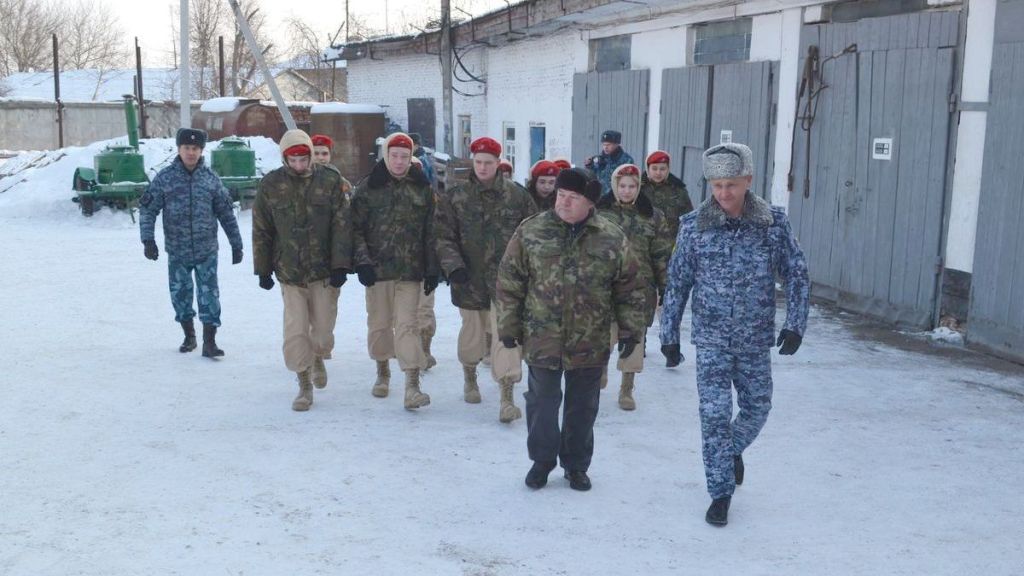

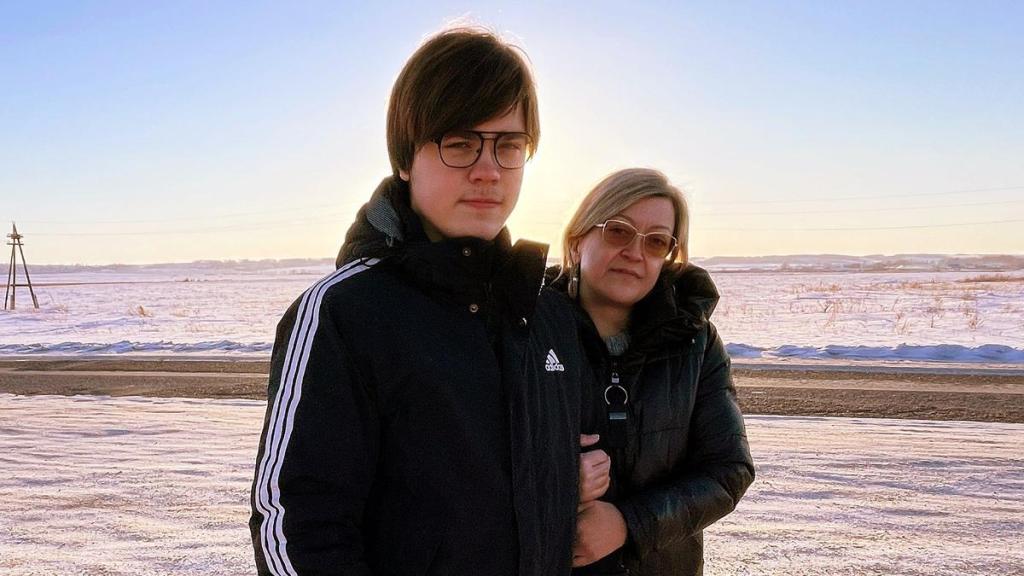
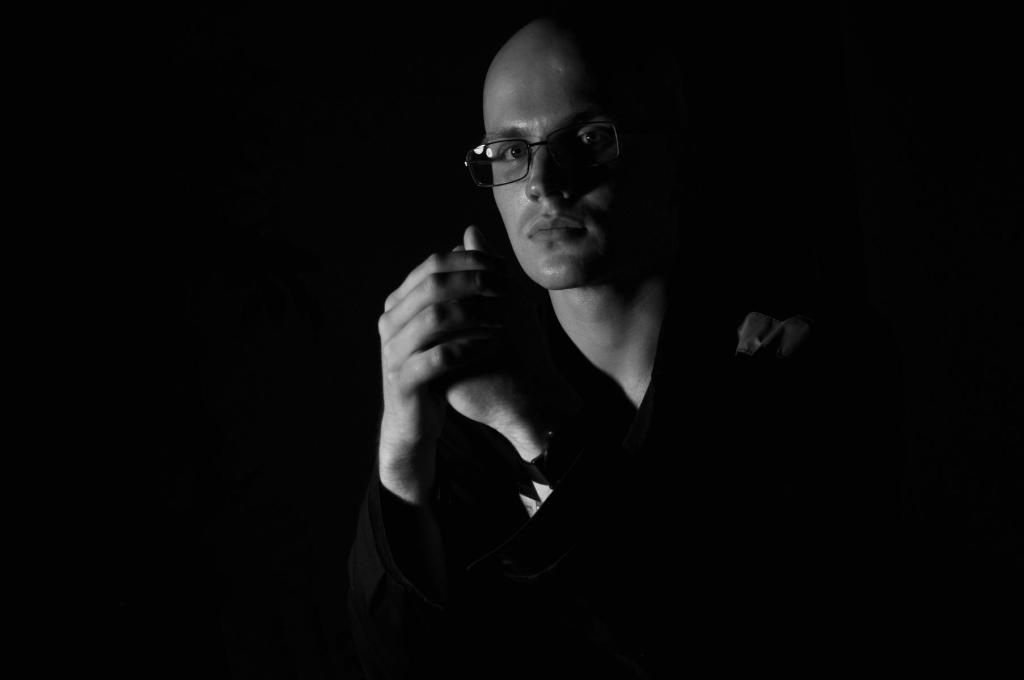


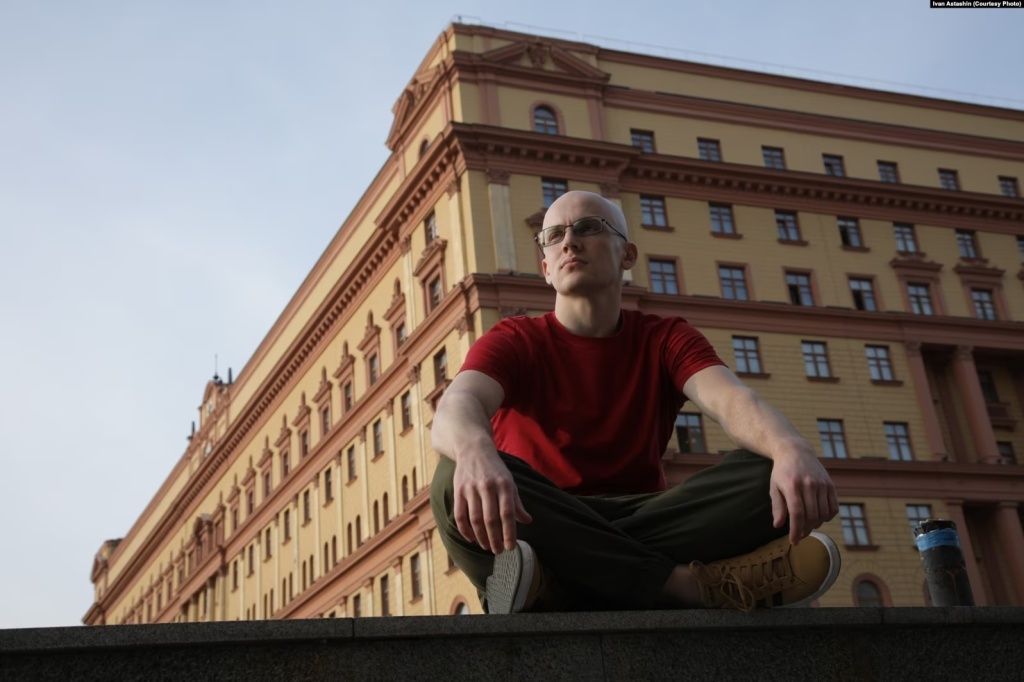
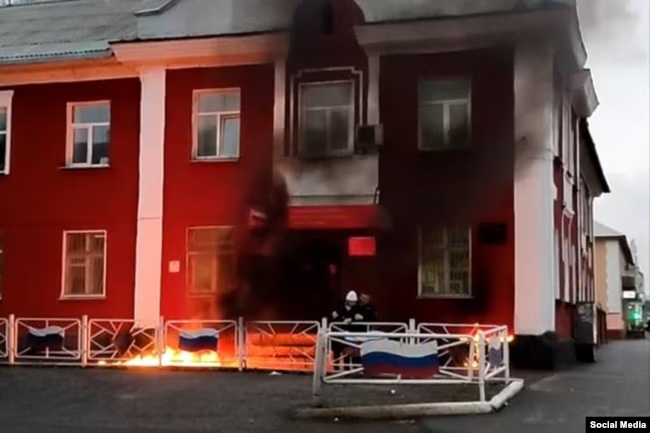
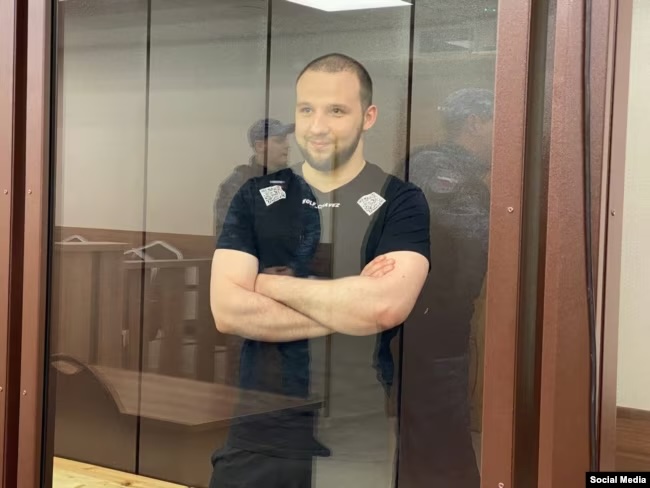
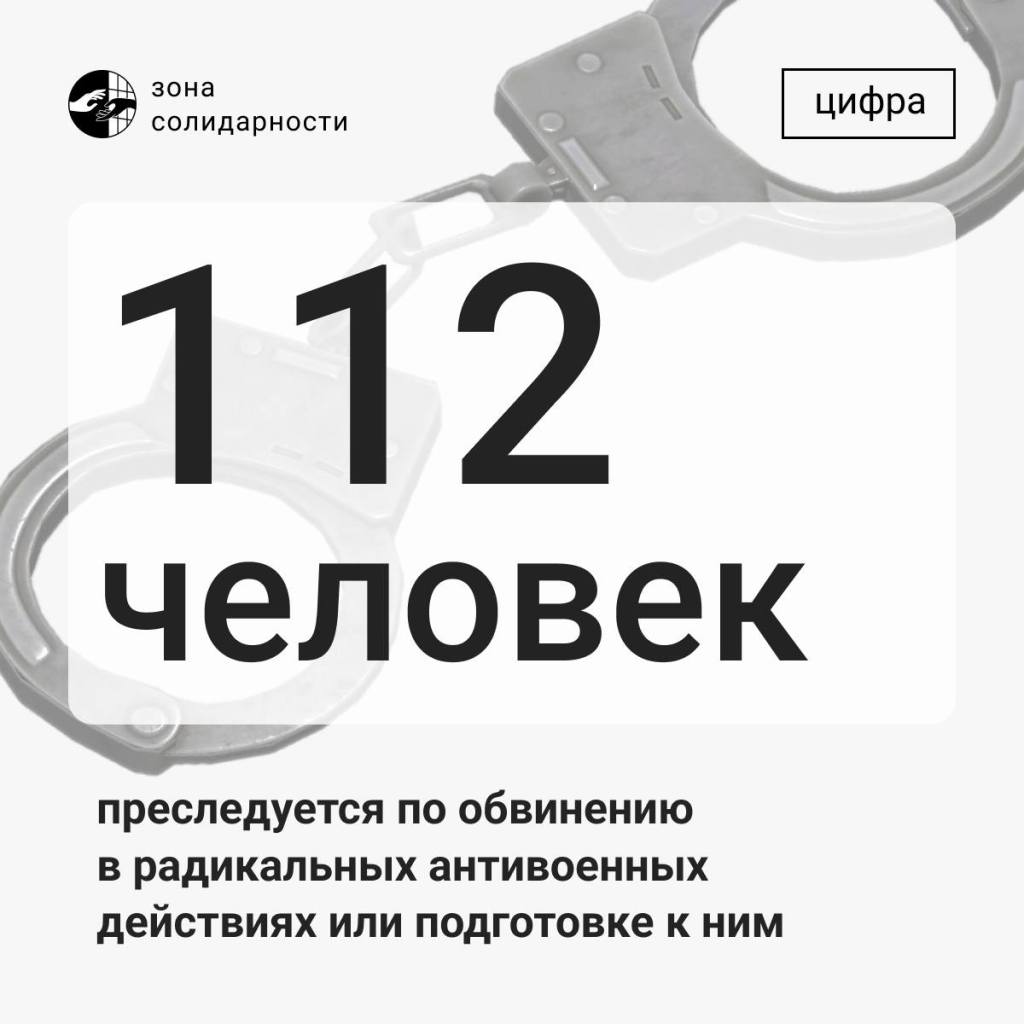


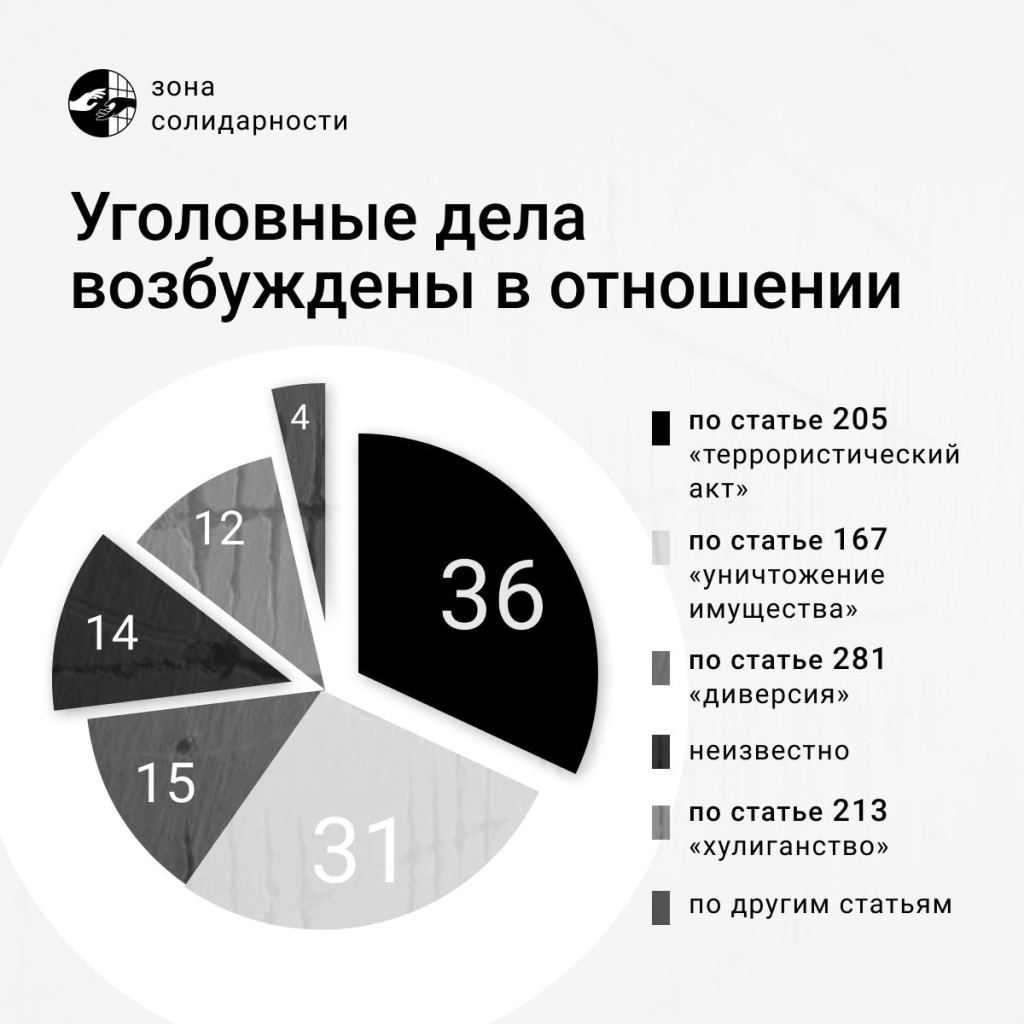
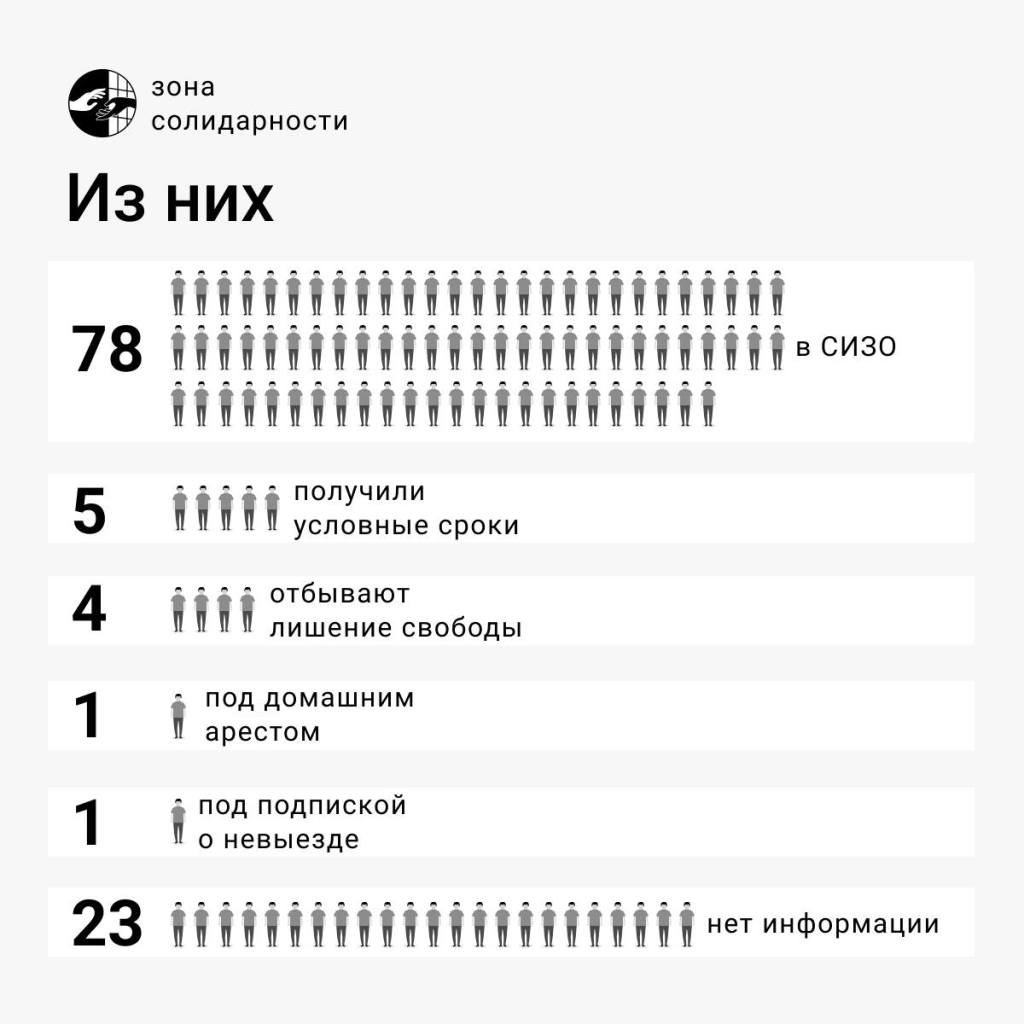


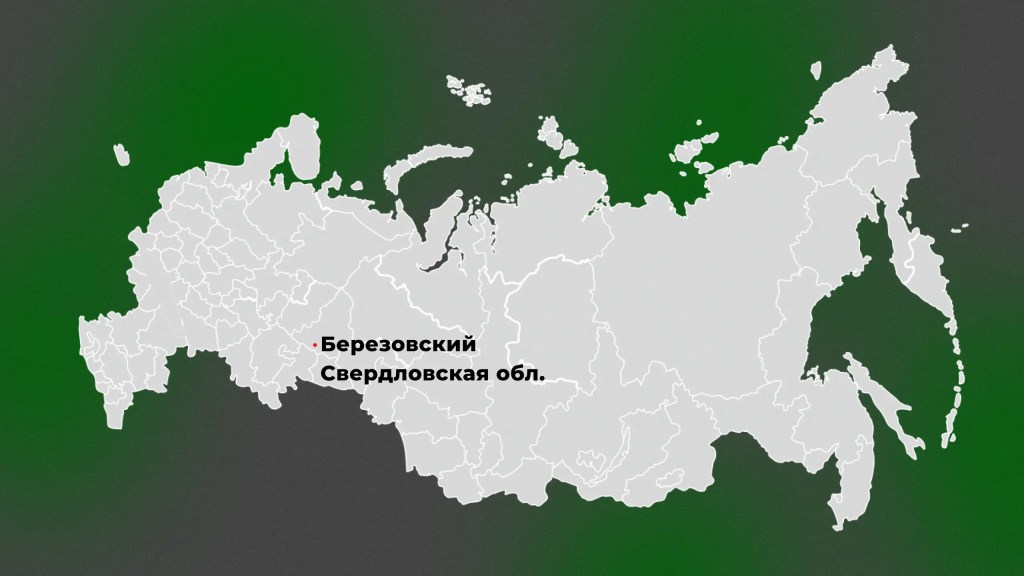

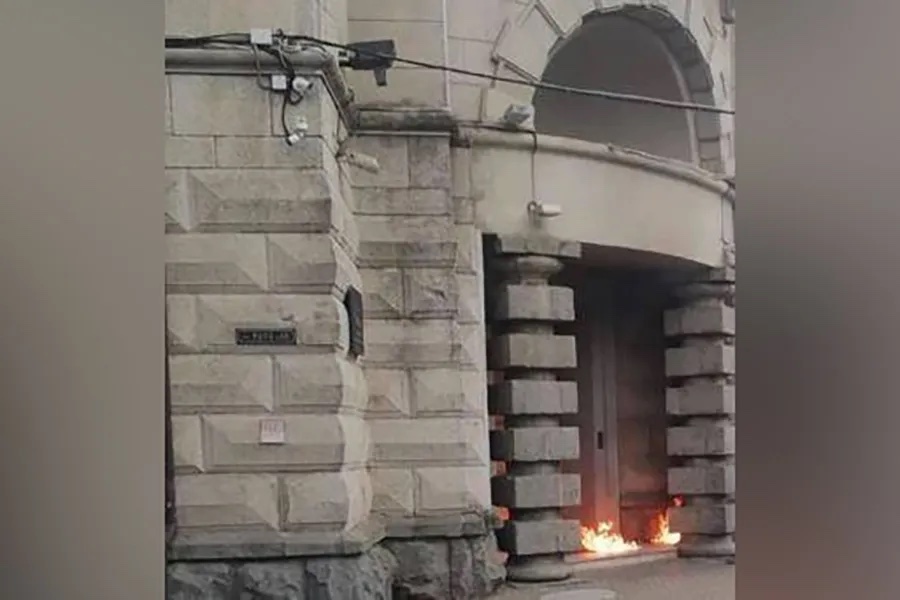
 Sberbank card
 PayPal: solidarity_zone@riseup.net (marked “for Paskar”).
 Cryptocurrency (be sure to email us at solidarity_zone@riseup.net if you transfer cryptocurrency to support Igor Paskar)