Andrei Bazhutin: “More than a Million Trucks Have Stopped Running Nationwide”

Andrei Bazhutin: “More than a Million Trucks Have Stopped Running Nationwide”
Nina Petlyanova
Novaya Gazeta
April 7, 2017

The nationwide strike by Russian truckers continues. The regime’s main weapon against the strikers has been strong-arm police tactics.

Andrei Bazhutin, chair of the Association of Russian Carriers (OPR) and thus the duly elected leader of the long-haul truckers opposed to the Plato road tolls payment system, was subject to the harshest crackdown. On March 27, he was put under arrest for 14 days. He spent five of them in a jail before he was released, but during that time the authorities nearly removed his four children from their home and almost caused his pregnant wife to have a miscarriage. But none of this has forced Bazhutin and his colleagues to give up their fight.

Is 14 days of arrest a fair move in your circumstances? What were you being punished for?

The objective is clear. This was not done at the behest of the traffic police, the police or the other security services. It was a deliberate action on the part of the regime to isolate me. The only thing was that the judge got carried away when she sentenced me to 14 days of arrest. It was cruel and unusual punishment. I didn’t do such a terrible thing to warrant isolating me for 14 days.

What did you do? Had you violated any laws?

All three cases that made it to court were about revoking my driving license. Two of the cases were heard by Judge Marina Afanasieva, who ordered me put under arrest. But in two of the three cases I wasn’t even behind the wheel. It was recorded on video: there is evidence. However, despite that, my license was revoked.

When did you find out you’d been driving with a revoked license?

On March 27, when I was detained. I knew the accusations had been made. We were challenging them, and I was certain we’d challenge them successfully. But what happened, happened. Yet the traffic cops told me I coudn’t have been unaware of driving with a revoked license. Two days before I was detained, however, I drove to Moscow and back in my own car, and no one stopped me. Am so I insane that I would drive a thousand kilometers to another city and back knowing my license had been revoked?

When I was detained, I was driving my son back from practice. He was wearing his wet uniform. We were literally a hundred meters from the house. The 25th Police Precinct, where I was eventually taken, is located in the courtyard of my building. I asked the traffic cop either get behind the wheel himself or let me drive my son to the house, but he categorically refused. Moreover, he sent a message to children’s protective services, after which they decided to take the children into their custody.

What did you do when you found out about this?

While I still had a mobile phone, I telephoned my eldest son, and he ran home. But children’s protective services explained that he was not a guardian and could not stay with the children. Right at that moment, I had been hauled to the 25th Police Precinct. The people from children’s protective services and my son entered our apartment, and they inspected everything, including the refrigerator. Then Artyom called his mom, my wife, and told her everything. She left the hospital, where she had been hospitalized to avoid a miscarriage. [Natalya Bazhutina is seven months pregnant—Novaya Gazeta.] She came home and told the children’s protective services officials that her eldest son and his grandmother were in charge of the children in her absence. But they told her they needed a power of attorney. Natalya hurried to a notary’s office, where she was told the power of attorney could have been made out in the presence of the children’s protective services employees. But they hadn’t told a pregnant woman this. On the other hand, they warned her that if my eldest son or his grandmother took the children outside for a walk, the children would be immediately removed, since they had no legal proof of guardianship.

Did you know what was happening at home when you were in court and in jail?

Not for the first two days. I was isolated. Then someone gave me a SIM card and I called home. By that time, our guys from the OPR were standing constant watch in the courtyard and not letting any outsiders get into the apartment, because there was constant surveillance in the courtyard. A car with some strange young people in it was cruising there round the clock. They vanished only after I had been under arrest for four days.

content_1
Andre Bazhutin (center) and comrades. Photo courtesy of Anna Artemieva/Novaya Gazeta

This was all done to intimidate you?

You can’t intimidate me with such methods. Although recently, who hasn’t been knocking on my door: the police, the tax inspectors, the prosecutors, the FSB. Space aliens haven’t come knocking yet.

Russian officials don’t understand they can’t intimidate us with such actions: I mean truckers in general. These are guys who are used to doing everything themselves. They’ve spent a million nights alone in the woods, in parking lots, on the side of the road. They’ve fixed their own trucks, rustled up food, and defended themselves. They are used to sticking up for themselves. You can’t derail them. That stuff doesn’t work on them.

Do they listen to you?

They do, but not the way they should. We have heard that people in power have been having nervous breakdowns due to us, due to this situation. But that’s not what we want. We aren’t professional protesters. We want to sit down at the negotiating table and solve our problems. What’s happening in the industry is abnormal. More and more truckers are involved in the strike. Some might not park their rigs, but they are riding empty: they’re not hauling cargo. They don’t park on the roadsides, they aren’t involved in our protest rallies directly, but they support us.

Your arrest and the story with your children have not altered your plans?

No way. Of course, I was worried about the children when I wasn’t sure whether the authorities would leave them at home or not. I was worried about my wife and her condition. But I was immediately bombarded with text messages from all over the country. People were willing to help. They were willing to take my family into hiding. I will be cautious in the future. But we’re not going to stop what we’re doing until we achieve something.

What is the mood of the truckers at the moment? How long do they want to strike? How far are they willing to go with their protest?

We won’t end the strike until the authorities make a decision. Whereas at the beginning of the protest, many colleagues said we wouldn’t hold out for more than a week, now everyone is unanimous that we’re holding out till the end.

The main objective is negotiations with Transport Minister Sokolov and Prime Minister Medvedev, who, I imagine, don’t have a clue about our problems. We want them at least to try and figure them out.

In addition, all members of the trucking community should sit down at the negotiating table, even those who don’t share our point of view, because the problem is vast, this is a real sector of the economy, and everyone’s opinions have to to be considered.

Until such a meeting takes place, the strike will continue. We will stay on the road until there is a real solution.

On April 5, Rustam Mallamagomedov, leader of the Dagestani truckers, was detained in Moscow. Have you figure out what happened? How are you going to react?

This is lawlessness. For the longest time, we couldn’t understand who the people who detained Rustam were. Were they from the Moscow Criminal Investigation Department or the FSB? We still don’t know what their beef with Rustam is. But we sent in the lawyers and human rights activists immediately. It worked, and Rustam is now free. We’re going to Makhachkala together. On April 7, truckers from Dagestan, Kabardino-Balkariya, and Chechnya will be meeting there with reporters. On the way back to Moscow, we’ll be holding similar meetings in Ossetia, Kransodar, and Rostov-on-Don, because there is a deficit of information in the media about the strike.

Why has Dagestan become the hottest spot?

In Dagestan, 90% of the drivers are private carriers. The republic is small, and so the strike is in everyone’s face. We have strikers spread across the entire country, but Russia is so vast that it’s not so noticeable, although a huge number of people are on strike. We’re going to summarize the numbers by April 10. We want to count the number of regions in which there are protest camps, and the number of people in these camps, as well as where the camps are, and where they were until the police dispersed them.

We will try and give an overall picture for every city in Russia. It’s complicated. In Petersburg alone, there are more than 200 parking lots, and we have to make the rounds of all of them. There are also people not involved openly in the protest, but who support it and have parked their trucks. We have to take them into account, too. Currently, not even the traffic cops and the police have those stats. But I can say for sure that at least half of all truckers have now stopped working as of today. In terms of numbers, that’s more than a million trucks.

Translated by the Russian Reader  

content_2
Andrei Bazhutin. Photo courtesy of Anna Artemieva/Novaya Gazeta


Chop It All Down!

Chop It All Down! Molotov Cocktails versus Woodland Defenders in the Town of Zhukovsky
Maria Klimova
Mediazona
July 13, 2016

Photo by Fyodor Karpov

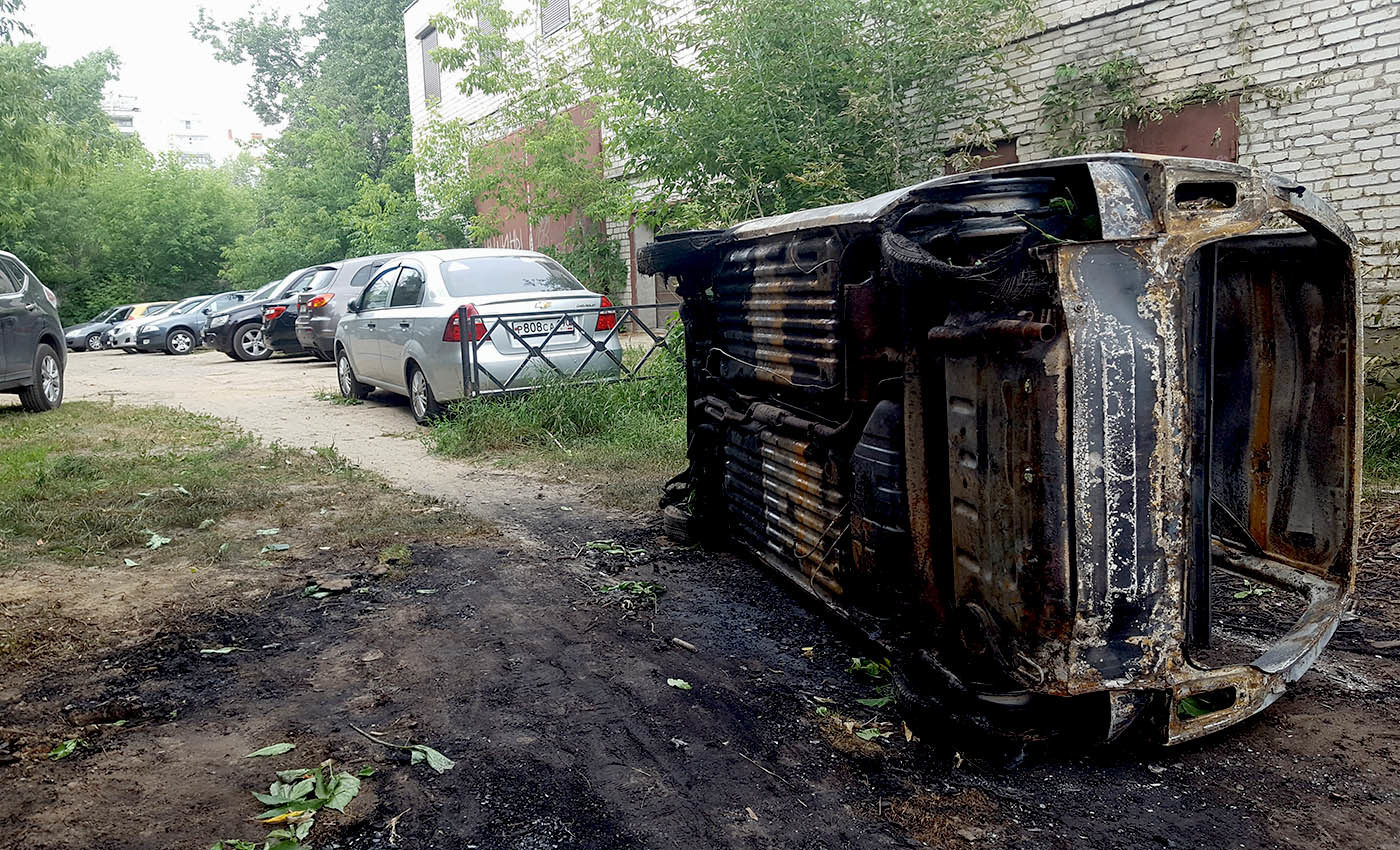
Over the past month, several environmentalists in the Moscow Region town of Zhukovsky fighting against the illegal logging of trees to make way for construction have suffered at the hands of persons unknown. Two of them have had their cars set on fire and burned, while a female activist had a Molotov cocktail thrown at her windows. Municipal authorities see no reason to worry yet, although the victims are certain someone has been trying to intimidate them.

Around four o’clock in the morning on June 15, a Molotov cocktail was tossed at the windows of the flat occupied by Zhukovsky activist Olga Deyeva, who lives on the first storey of a block of flats. Hearing a bang, which set off the alarms of cars parked in the yard, she looked out the window and saw shards of glass on the pavement. What turned out to be a broken bottle was wrapped in electrical tape and a thick layer of solvent-soaked cloth. According to police summoned to the scene by Deyeva, the persons unknown had failed to ignite the cloth, which had been soaked in a flammable liquid. According to Deyeva, the assailants had aimed at her window but had missed, and the bottle had hit the window frame.

A week and a half later, on June 27, a Ford Focus owned by Mikhail Yuritsin, an environmentalist and member of the grassroots organization Lyubimy Gorod (Beloved City), was torched and burned. According to Yuritsin, he heard the loud sound of glass being broken at around three in the morning, looked out the window, and saw his car burst into flames. Yuritsin was unable to extinguish the fire, and the car was completely destroyed. Cars parked next to it were mildly damaged, as firefighters arrived quickly on the scene.

In addition, a car used Svetlana Bezlepkina, a Yabloko Party member who sits on the Zhukovsky city council, was torched in the early hours of July 7.  Although the car was registered to the council member’s sister-in-law, Bezlepkina often used it herself.

“Yes, I have used the car. I used it for business when I needed, and everyone knew it. You couldn’t think of anything more cynical: my brother and sister-in-law had their wedding that day. After celebrating at a cafe, they came home and parked the car, and during the night it was torched. Then the police showed up, took our testimony, and that was all. They didn’t really take a hard look at anything. On the other hand, what do you expect from a police force who back in the day guarded loggers chopping down a forest,” said Bezlepkina.

A suspicious incident happened the same day to Fyodor Karpov, leader of the Yabloko Party’s Zhukovsky branch. Persons unknown torched an abandoned car, which had recently been left outside the gate to his garage.

Karpov related the sequence of events.

“The abandoned car drifted around the yard for two weeks, and then it ended up in front of my gate. I gently shoved it away from the gate, but on a day I was attending a court hearing on illegal construction in the forest, it was torched.”

Except Karpov, all the victims are plaintiffs in a lawsuit against Zhukovsky city hall and businesswoman Irina Gorodnova, who has been given permission to build a consumer services center on Nizhegorodskaya Street and a children’s center on Semashko Street. Both lots slated for construction are located on woodlands in the city limits.

Local residents began vigorously fighting to save their woodlands in 2012, when the authorities announced the construction of an access road from the M5 Ural Highway that would pass through the Tsagov Forest. When workers began clear-cutting a twelve-hectare site, grassroots protests erupted throughtout the city, and activists set up a camp in the woods, later dispersed by private security guards. The protesters proposed several alternate routes for the road. Several months later, Sergei Shoigu, who had recently been appointed governor of Moscow Region, intervened in the conflict. He criticized the actions of the Zhukovsky authorities and spoke of the need for dialogue with the public, but his statements had no impact on the situation. The access road to the city was built through the forest.

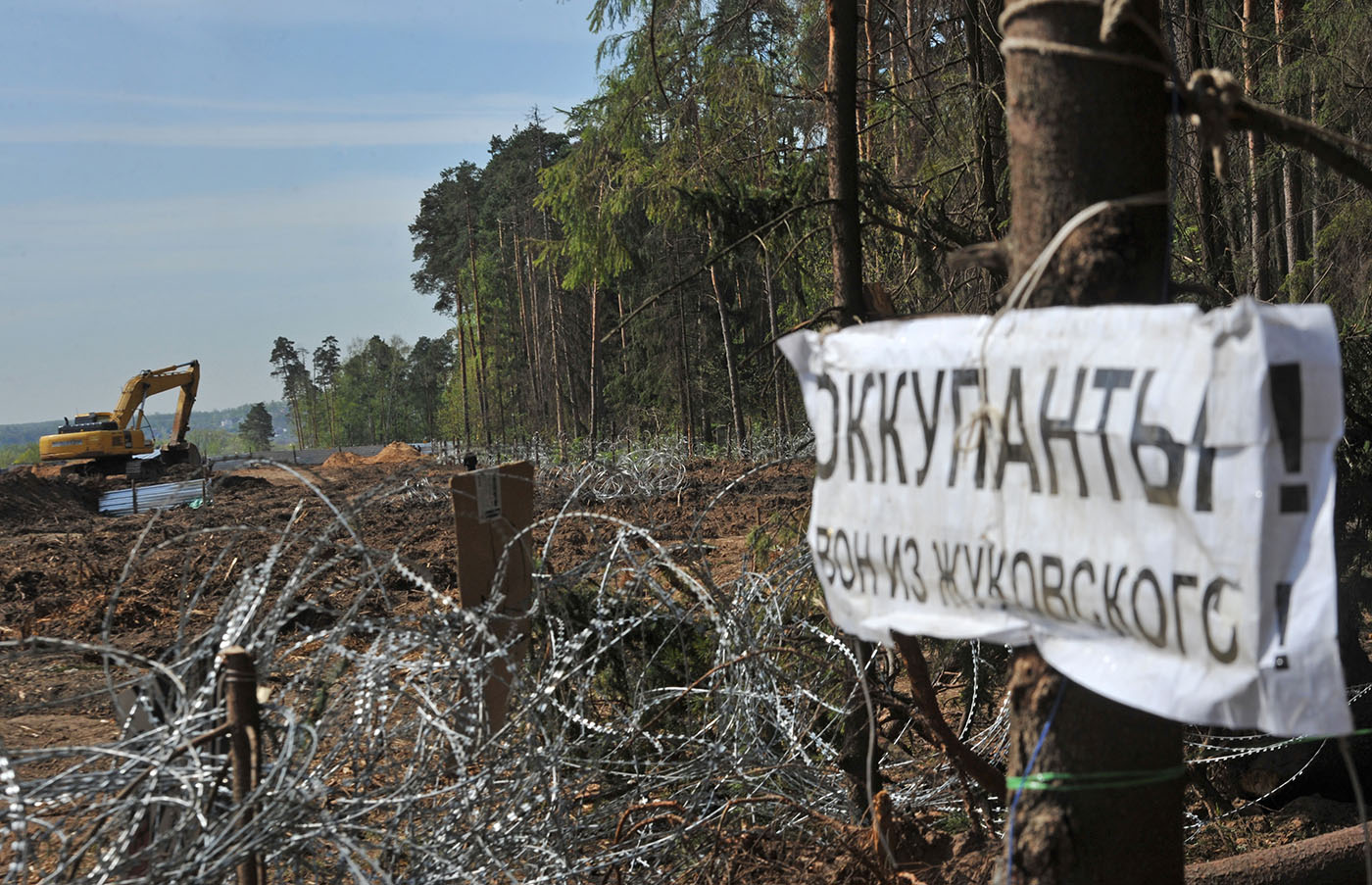
1109928 02.05.2012 Плакат в лагере защитников Цаговского леса в Жуковском. Гражданские активисты-экологи протестуют против вырубки леса для строительства новой трассы. Артем Житенев/РИА Новости
A placard in the camp of people defending the Tsagov Forest in Zhukovsky, May 2, 2012. The placard reads, “Occupiers! Get the hell out of Zhukovsky.” Photo: Artyom Zhitenyov/RIA Novosti

A year after the conflict over clear-cutting in the Tsagov Forest broke out, Alexander Bobovnikov, mayor of the city, lost his post. He resigned after a meeting with Andrei Vorobyov, who had succeeded Shoigu as governor of Moscow Region. Andrei Voytyuk was elected to Bobovnikov’s post. In 2013, protests against logging in Zhukovsky broke out again when it transpired that municipal authorities had issued long-term leases to woodland lots. 5,000 square meters of woodland were allocated for construction of a consumer services center on Nizhegorodskaya Street, while another lot measuring 6,000 square meters was allocated for construction of a leisure center in the woods near the railroad station. Activists entered into a prolonged legal battle with city hall and the potential developer.

“According to the documents, in 2010, Natalya Lebedeva, head of Stimul-K, Ltd., obtained preliminary permission to rent the lot. But Lebedeva herself claims she never came to Zhukovsky in 2010, and signed no rental agreement. In 2012, she decided to get rid of the company and she transferred it to another person so he would close it. But he failed to do this and, apparently, used the company. Later, the lot was transferred to Gorodnova,” explains Olga Deyeva.

According to Deyeva, permission to lease the lot had been issued, apparently, by Stanislav Suknov, Bobovnikov’s deputy, who served as acting mayor of Zhukovsky for a couple of months in 2013.

“We have been trying to prove in court there was no preliminary agreement to rent the land. The paperwork was drawn up after the fact so as not to violate the city’s General Development Plan, adopted in 2012,” explains Deyeva.

The right to rent the woodland lots now belongs to businesswoman Irina Gorodnova. Zhukovsky activists are afraid municipal authorities might try and bypass the 2012 General Development Plan and rezone the woodland lots to permit construction of residential buildings and shopping centers on them. That, ultimately, was what happened to the lot on Nizhegorodskaya Street. Without holding public hearings and without involving city council members, the Zhukovsky City Court rezoned the area from recreational use to residential use and thus suitable for redevelopment. Immediately after obtaining the construction permit, Gorodnova also obtained a permit from municipal authorities to fell deadwood. According to Deyeva, however, workers cut down healthy pine trees while clearing the deadwood.

“When this came to light, Gorodnova batted her eyes and said, ‘I don’t know how it happened. I was abroad at the time.’ Policemen guarded the logging process. Ultimately, the ‘illegal’ loggers were not located and punished, but the story made such a big splash that Gorodnova was unable to open the consumer services center she had built on the lot. On the basis of this violation, the municipal authorities went to court and terminated the lease on the land,” says Deyeva.

Now it was Gorodnova’s turn to go to court. She demanded the court recognize her ownership of the consumer services center, and in October 2015, Zhukovsky City Court granted her claim. Activists asked city hall to appeal the decisions, but the local authorities failed to do this.

“City hall was not about to challenge the ruling. They could not even explain why. So now we have been handling the litigation ourselves,” explains city council member Bezlepkina.

The appeal hearing has been scheduled for July 25.

The status of the second woodland lot, on which Gorodnova’s company had planned to build a leisure center, has not yet changed. It is still zoned for recreational uses, where it is forbidden to erect any structures.

In February 2015, however, activists discovered large round holes in the bark of pine trees on the site of a planned clear cutting. The holes had been presumably made with a drill. A total of seventy-eight trees had been damaged in this way. Local residents marked each of the trees with green paint and photographed them, subsequently filing a complaint with the police. After an inspection was carried out, police refused to open a misdemeanor investigation. Staff at the Zhukovsky municipal environmental and land management technologies department had assured police there was no danger of the trees weakening and dying. Many of the damaged pine trees that once grew on the lot slated for development have now indeed died. The forest’s defenders believe they were damaged deliberately. Developers thus decided to get rid of trees that were preventing them from launching construction.

According to Valentin Ponomar, who has been representing Gorodnova’s interests in court, the land plot rented for construction of the leisure center is now not being used by anyone in any way.

“The lease runs out soon, in 2017. During this time, the city has to issue a construction permit. There is no permit at present, just as there are no plans to build the children’s center,” Ponomar explained to Mediazona.

According to Ponomar, without such permission, the development company cannot commence construction in a green belt zone. Moreover, city authorities cannot issue such a permit due to the land plot’s status. Ponomor was unable to explain why his client concluded an agreement with the city on such conditions.

In an interview with Mediazona, Zhukovsky Mayor Andrei Voytyuk said he was unaware of the arsons of the urban activists’ cars, although he had heard about the Molotov cocktail thrown at Deyeva’s window.

“I’ll tell you this. If they had wanted to set fire to her, they would have done it,” the mayor commented on the incident.

He expressed his willingness to meet with the urban activists victimized by criminals.

“They can meet and talk with me if they wish, but so far no one has reached out to me,” said Voytyuk.

Bezlepkina is certain the torching of the cars will never be investigated.

“Now it is a matter of intimidation, but no one knows how far it might go. Our families are fearful. They have asked us not to attend the court hearings. They are afraid they might be in danger,” says the city council member.

The case of the Molotov cocktail tossed at Deyeva’s window has been assigned to the local beat cop.

“I went to see him, but, apparently, they are not planning to make any complicated moves in this connection. There was no damage either to my health or my flat. So I wouldn’t rule out the police will be working in keeping with the principle ‘No body, no case,” Deyeva admits.

Translated by the Russian Reader

Don’t Film That or You’ll Go to Jail (Russia’s Diggers’ Law)

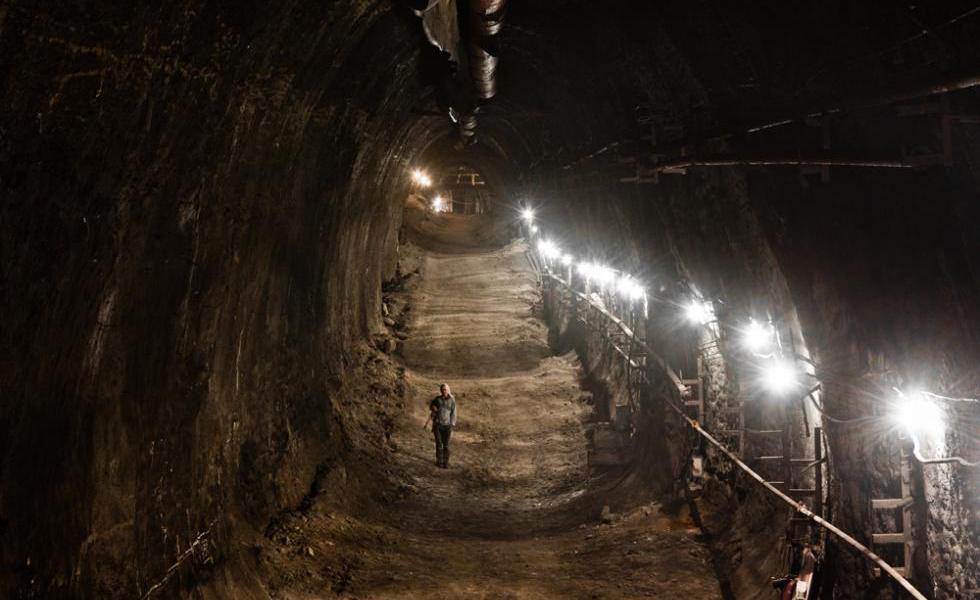
A digger wandering in a passageway under Moscow in 2012

Pavel Chikov
Don’t Film That! You’ll Go to Jail
Snob.ru
May 4, 2016

A new trend has emerged in Russia that is a logical sequel to the state’s policy of intimidation. Diggers, roofers, base jumpers, bloggers, and other curious folk who like going to places and, especially, filming places not everyone goes and films are under threat of investigation and prosecution. Law enforcement’s arsenal includes heavy fines, arrest, and criminal charges for disseminating state secrets, followed by up to eight years in prison.

In late April, activist Yan Katelevsky was jailed for twelve days after videotaping outside the Ramenskoye police station in Moscow. He wanted to broach the topic, on his YouTube channel, of how policemen illegally park their police vehicles and personal vehicles, but it transpired he had been filming a “sensitive facility” and had “resisted the lawful order of a police officer” when he refused to stop filming.

A few days earlier, Meshchansky District Court in Moscow sent digger Gennady Nefedov to a pre-trial detention facility for “contacts with the media” (!) and with other defendants in his criminal case. Nearly a year and a half ago, Nefedov and five other guys had wandered into an underground passage in the Moscow subway in downtown Moscow. They were initially fined for “trespassing on a secured, restricted site” (Article 20.17 of the Russian Federal Administrative Offenses Code). A year later, they were detained and charged with “illegally obtaining and disseminating information constituting a state secret” (Article 283.1 of the Russian Federal Criminal Code).

Article 20.17 of the Administrative Offenses Code demands special attention. As they say, keep your eyes on the ball. On the first working day of 2016, Russia’s official government newspaper Rossiiskaya Gazeta published a largely unnoticed article bearing the prophetic headline “Freeze! It’s 15 Days for You: If You Sneak into a High-Security Site, You’ll Go to Jail.” Its topic was something its author dubbed the “diggers’ law,” meaning a set of amendments to the Criminal Code and Administrative Offenses Code that have considerably stiffened the punishments for trespassing on restricted-access areas. The fine has been raised from 300 rubles to 200,000 rubles (i.e., 666 times), and punishment now includes confiscation of “the weapon [sic] used in the commission of the offense, including photo and video equipment.” In addition, fifteen days in jail has been stipulated as possible punishment “as long as the act does not contain evidence of a criminal offense.” In the worst case, diggers, roofers, base jumpers, and bloggers can face the above-mentioned Article 283.1 and eight years in prison.

It is noteworthy that one of the people who drafted the diggers’ law was Tatyana Moskalkova, who would become Russia’s human rights ombudsman a few months later. In the same article in Rossiiskaya Gazeta, the author complains that diggers and “just plain thugs” are not spooked by restrictions, but unnamed sources in law enforcement explain to him that fifteen days in jail is not a soft punishment “but, so to speak, a mere makeweight to a whole passel of other criminal charges [including] disseminating state secrets, resisting arrest, theft, and property damage.”

No sooner said than done. In 2016, a schoolgirl who took a stroll on the roof of the Mariinsky Place, home of the Saint Petersburg Legislative Assembly, roofers and just plain tipsy young people who climbed the TV towers in Tver and Arzamas, respectively, and schoolchildren in Astrakhan who decided to take a selfie at the airport next to a TU-134 passenger jet and jumped the fence to do it have all been written up for “trespassing on restricted-access sites.” And these are just the incidents that have been reported in the media.

Thus, the Russian Federal Interior Ministry’s Inter-Municipal Directorate for Closed Jurisdictions at Important and Sensitive Sites in the Moscow Region (the Vlasikha Inter-Municipal Directorate of the Russian Federal Interior Ministry) has reported that from April 12 to April 19 of this year, it had uncovered six incidents of “trespassing a secured, restricted-access site.” If such statistics are being recorded, it usually means there is an order from the higher-ups to push up the numbers.

For example, according to his attorney, Vitaly Cherkasov, Petersburg digger Andrei Pyzh has already been charged with six administrative violations, including two for trespassing on secured sites: Engineering Design Bureau Center JSC and the Naval Academy’s experimental model basin.

The climax so far has been the case of the Moscow diggers. The authorities have followed the classic pattern for implementing their plans. Laws are amended right before a big holiday. They are tested out at the local level, and then a landmark, high-profile criminal case is staged to teach everyone else a lesson. Because even if you have been fined for the administrative offense of trespassing on a restricted site, it is far from certain that FSB officers will not burst into your home a year later and charge you with criminal violations such as “Illegal Entry into a Secured Site” (Article 215.4, amended December 30, 2015; punishable by up to four years in a penal colony) or “Illegal Acquisition and Dissemination of Information Constituting a State Secret” (Russian Federal Criminal Code Article 283.1). No one will pay any mind to the fact that “dissemination,” as in the case of the Moscow diggers, amounted to reposting a photograph of the Moscow underground on the VKontakte social network, and that the “state secret” was something the accused would have no way of knowing by definition, since they had no physical access to it and were not privy to it. Moreover, it will sound like a legal travesty in such cases when prosecutors argue there were no signs of high treason and espionage (Articles 275 and 276 of the Criminal Code, each punishable by twenty years in a penal colony) in the actions of the accused. Meaning the creative scope, range, and freedom that law enforcement can exercise in such cases will be complete and unconditional.

Lawyer Dmitry Dinze said that a colleague told him the story of his client while they were waiting in line at the Lefortovo pre-trial detention facility in Moscow. The client had been arrested for photographing clearings in the woods near Bryansk and charged with treason.  It turned out the place was an abandoned military airfield.

Also, considering how investigators and prosecutors juggle articles of the Criminal Code, various forms of “daching” and investigations involving drones and video cameras will be at risk.  It is safe to say that the case of the Moscow diggers is the first harbinger and, unfortunately, it clearly won’t be the last.

A new element in the establishment of a police state has thus been born. There is a clear understanding in law enforcement that orders have come down to suppress attempts at photographing and filming special facilities and sites, moreover, in the broadest sense of these words, and posting what you have shot on the web. This is probably due to the latest secret report on a study of the Internet and the popular video hosting websites and social networks where such matter is usually posted. Under the guise of prudent counter-terrorism and maintaining public safety, the authorities have apparently ratcheted up the requirements for guarding sensitive facilities. True, so far, it seems, they are more inclined to use the traditional methods of intimidation and arrest. What is sad is that they deem even a vacant parking lot outside a police station a “sensitive” facility.

Pavel Chikov is chair of Agora, an association of Russian human rights lawyers and activists that was ordered shut down by a court in Tatarstan in February 2016. Translated by the Russian Reader. Photo courtesy of Russian Beyond the Headlines, from a now-hilarious article entitled “Moscow diggers reveal secrets of the underground world.” Oh well, goodbye to all that.