Having Received Applause

PACE-NARYSHKIN-RUSSIA-GAYS

Strasburg [sic], October 1 (Interfax) – Russian State Duma Speaker Sergei Naryshkin said he invited European MPs, concerned about the rights of sexual minorities in Russia, to come to Russia and to make sure that their rights were not violated.

“Unfortunately, I will not be able to visit [gay clubs] with you,” Naryshkin told deputies, members of the Parliamentary Assembly of the Council of Europe (PACE) when answering question of the European parliamentarians in the framework of the autumn meeting of the Council of Europe in Strasburg [sic].

The rights of sexual minorities are same as the rights of other citizens “practicing traditional sexual relations,” Naryshkin said.

Sexual minorities work successfully in various spheres, including culture, they relax freely and go to their clubs, Naryshkin said. “I have never been but witnesses say that it is very nice there, people spend time there nicely,” Naryshkin said, having received applause.

Source: Interfax

967058460

_____

Here’s what Having Received Applause really said (yes, this is in translation, too, but we’ve tried to reinsert the audible sneer that Interfax or the PACE interpreters airbrushed out):

We have a lot of successful people with a non-traditional sexual orientation. They are successful in business, in art, in all creative fields. […] They have the right to rest and relax comfortably […] in Moscow and other Russian cities. There are a lot of so-called gay clubs. I haven’t been, but witnesses say it is quite nice and comfortable there; those people have a good time. If anyone wants to receive confirmation of this, please, I invite you to Moscow. Unfortunately, I myself will not be able to visit the club, but I will take care of you.

Source: RIA Novosti

Thanks to Alexis for the inspiration.

Ilya Matveev: The Childish Face of Russian Fascism Today

Our friend Ilya Matveev writes:

I have noticed, incidentally, that the focus in the current state-sponsored fascist upsurge is on children—moreover, both as objects of various bad actions (“propaganda,” pedophilia, etc.) and as subjects, as “young militants.” For example, teenagers were clearly involved in the “attempt to clean up the dormitory” in Moscow’s Kapotnya District: I wouldn’t be surprised if some of them were thirteen or fourteen. This was all shown on national TV almost as an example to be emulated. Children also play a large role in convicted Russian neo-Nazi Maxim “Tesak” Martsinkevich’s Occupy Pedophilia campaign (likewise hyped on TV). The same kids have opened up their own shop (Occupy Gerontophilia) and set to bullying their gay agemates. Kids beat up activists at LGBT protests. Eighty percent of attendees at the so-called Day of Russian Rage were children. Finally, a sixth-former (!) has detected homosexuality in T.H. White’s Once and Future King, and again it has made the TV news. This stuff is served up completely seriously, as the new moral standard.

In general, I see two major differences from previous years. Very rapidly, just as described by Hannah Arendt, whole groups of people are denied the status of human beings. For example, it is taken as a given in fascist rags like Komsomolskaya Pravda that the Interior Ministry is using a gang of teenagers against illegal immigrants. Legally, migrant workers are no longer human beings; the issue of “purging” them is a technical matter, not one of law enforcement, and anything goes here. LGBT are also not human beings, but defective biomaterial, so their “hearts should be burned” and so on.

That is the first difference. The second is the focus on children. In the noughties, “youth policy” was about the eighteen- to twenty-year-olds who embedded themselves in a fake albeit political organization (Nashi), with its own program, ideology, and so on. (Although Nashi leader Vasily Yakemenko and Kremlin ideology chief Vladislav Surkov daydreamed of units of stormtroopers combating the “orange menace” on the streets.) Now it is a matter of fourteen- to sixteen-year-olds, with a distinct taste of hatred as something absolutely irrational, along the lines of school bullying. The state has no doctrine or theory of hatred: there is only the pure emotion displayed by laboratory mice-like children. Grown-up “psychologists” and “educators” comment on this, arguing that we really are facing a gay threat and IT SHOWS in children. In short, the shit has hit the fan. Now things really are serious.

The Milonov Factor

An original view as to the cause of Petersburg’s economic problems was evinced by Alexander Karpov, director of the ECOM Expert Center. “In the near future, Petersburg’s economy is not threatened with development. This is facilitated by two factors, external and internal. The external factor is the State Duma and its laws; the internal factor is [Petersburg Legislative Assembly deputy Vitaly] Milonov. Currently, the only possible scenario for economic development is a sluggish one,” he argued. “The city has to make a clear choice: either innovation or Milonov.” Karpov explained to Kommersant that he had in mind the famous anti-gay activist both as a specific person and as an embodiment of nutty legislative initiatives.

Source: www.kommersant.ru

Church officials, city officials and MPs took part in the religious procession [in Petersburg on September 12]. Together with clergymen, they followed the Icon of Our Lady of Kazan as it was solemnly carried [down Nevsky Prospect]. Vadim Tyulpanov, Petersburg’s representative in the Federation Council, Legislative Assembly Speaker Vyacheslav Makarov, and deputy governors Vasily Kichedzhi, Vladimir Lavlentsev and Marat Oganesyan were spotted in the procession.

Famous deputy Vitaly Milonov was out in front of city leaders, however: he marched not behind the icon, like the officials, but ahead of it, in a group of clergymen carrying banners and crosses. Like the other priests, Milonov was wearing solemn gold vestments and bearing an enormous cross.

Source: piter.tv

Let’s Boycott All Contemporary Art

Editor’s Note. I’ve had it with “contemporary art” in general, not just Russian contemporary art or international art events held in Russia, fabled land of officially enforced homophobia. We think all people everywhere, progressive humanity and regressive humanity, the indifferent and the enthusiastic, everyone from Maine to Moscow to Melbourne, should boycott contemporary art. Otherwise, mouth breathers like the eurocuratorial nightmares caught shilling for the Putin regime in the article, below, will keep getting away with this fraud, which sucks up tons of intellectual, physical, financial, and technical resources that could be put to much better and more imaginative use elsewhere.

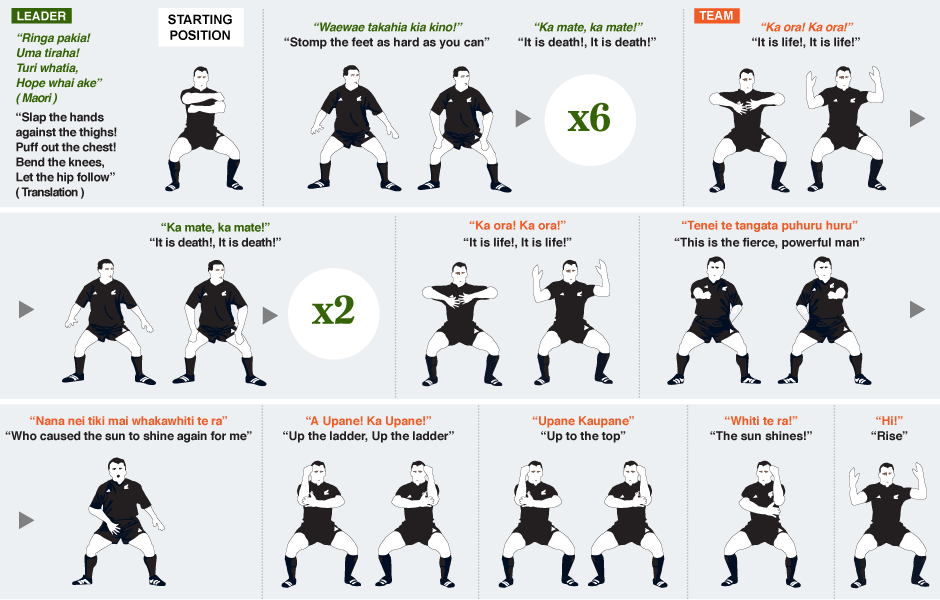
haka-desktop
When threatened by contemporary art, do the haka!

www.theartnewspaper.com
Moscow biennial curator and artists explain why we shouldn’t boycott Russia
While critics cry out against the country’s draconian anti-gay laws, cultural exchange is still important
By Sophia Kishkovsky
9 September 2013

Despite recent controversy over the country’s restrictive anti-gay laws, the curator of the Fifth Moscow Biennale says this is not the time to reject Russia. Her comments follow similar responses from the organisers of the Manifesta biennial, as critics call for a cultural boycott.

“I feel I am responsible to keep the platform going,” the Belgian-born Catherine de Zegher tells The Art Newspaper. The latest edition of the contemporary art exhibition opens on 19 September at the Manege Exhibition Hall.

De Zegher says that the biennale’s organisers have not placed any restrictions on what she can show. She adds that “only one or two” artists, whom she refused to identify, said they would pull out of the biennial because of the situation in Russia, but she convinced them to reconsider.

Visitors, however, are unlikely to see much art that aggressively confronts the country’s conservative laws. “I’m not a big believer in provocation,” De Zegher says. “Art that is very provocative is like fast food almost. It flares up, then it’s finished. Of course I do believe in activist gestures, and movement and action, but I think art works in a different way.”

Her comments echo those of the veteran German curator Kasper Konig, who is organising the next edition of Manifesta, Europe’s roving contemporary art biennial. Speaking at a news conference at the State Hermitage Museum, St Petersburg on 5 September, Konig said the 2014 biennial will avoid “cheap provocations”. A petition calling for the biennial’s organisers to choose another city, postpone or cancel the exhibition has drawn nearly 2,000 signatures. Manifesta has responded with a statement on its website, expressing concern about the anti-gay laws but stressing that the biennial is based on “dialogue with those with whom we may disagree”. The biennial’s founding director, Hedwig Fijen, says that isolating Russia is wrong “especially as it deprives younger people of access to a broader scope of voices and points of view”.

“I think the 20th century was very much about shock and awe,” De Zegher says. “We’re entering another age, where there is more about collaboration, collective thinking.” Artists at the biennale are addressing controversial issues, she said, “but they are in nobody’s face”.

In the Moscow Biennale for example, the Chechen artist Aslan Gaisumov’s work touches on the intersection of religion and secularity, Islam and its relationship with Western culture, but does so with a sense of the “ambiguity of the negotiation between cultures, between religions, between the sexes, between ethnicities”, she says.

The Polish-born artist Gosia Wlodarczak, who has been working in Australia since the 1990s, is coming to Russia for the first time for the biennial. She explains why foreign artists should come to Moscow now by recalling her days as a student in Poland, when Communist rulers tried to crush the opposition Solidarity movement with martial law.

“I remember how important it was when anybody actually came [to Poland] instead of avoiding us. Every visit from somewhere else meant that people cared instead of just abandoning you, leaving you to your own,” the artist told The Art Newspaper as she worked on her intricate glass drawing installation in Manege, where the Kremlin is always in sight next door, outside the windows. “Every visit was like a contribution, and every exchange of dialogue was valued, because that’s how things change.”

“The Anti-Capitalist Movement Is Stronger than Putin”

The anti-capitalist movement is stronger than Putin and no matter how many activists end up in jail, Putin can’t stop working class opposition growing daily more visible on the streets of Moscow and elsewhere.

—Stewart Home, “Open Letter about Alexei Gaskarov”

____

avtonom.org

Moscow Anarchists Leave AntiCap

As we reported earlier, the march organizing committee had reached an agreement to ban the participation of nationalist organizations and the use of nationalist slogans. However, today, 15 September, anarchists who came to the march discovered a column from the nationalist group People’s Will carrying a banner that read, “Free, social, national.” Nationalists marching under black banners chanted slogans about “Russian socialism,” as well as anti-feminist and homophobic chants.

After chanting anti-fascist slogans and “Don’t disgrace the black flag” in response, the anarchists, along with members of the Left Socialist Action and Rainbow Association column, decided to leave the event before the start of the march. As they left, they shouted, “We came to AntiCap, / But all we found was crap!”

A number of anarchist and anti-fascist groups had earlier decided to boycott AntiCap because information had appeared on the social networks that nationalists would come to the protest.

The virtual merger of the leftist movement with nationalist groups that attempt to blend incompatible ideas in their propaganda and aesthetic is a trend that cannot help but disturb members of the anti-fascist movement. The mass protests in Russian in 2011–2012 have already led to the legalization of nationalist discourse within the civil protest movement, despite the opposition of anti-fascists. New ways of combating fascist infiltration of the non-systemic opposition to the current regime must be sought.

________

Homophobes attack activists from the Rainbow Column at the Anti-Capitalism March in Moscow. September 15, 2013. Video by Dmitry Zykov

Russia’s Anti-Gay Law Kills!

_____

ru-antidogma.livejournal.com

Bloody Performance by Moscow LGBT Activists outside Presidential Administration Building

2 July 2013

On July 2, the LGBT community staged a bloody performance near the entrance to the Presidential Administration Building in Moscow.

88.75 КБ

Moscow activists Reida Linn, Niks Nemeni, and Roman Petrishchev were discovered in a pool of blood near the entrance to the Administration Building. Another activist, Alexei Davydov, accompanied the action with a placard. Photographs of recent real victims of homophobia were placed on the activists’ backs.

73.42 КБ

Passersby whispered in horror and recorded the event on cameras and telephones. However, within several minutes, police officers recognized it was a staged performance, confiscated Alexei Davydov’s placard (inscribed “Mizulina‘s Law in Action”), and took the activists to Kitai Gorod police precinct.

92.27 КБ

“This protest aims to demonstrate the danger of the new anti-LGBT laws, because of which any person, whatever their orientation, can end up in a pool of blood,” the picketers stated by way of explaining their actions.

Homophobic Fascist Hoedown in Russia’s “Cultural Capital”

Gay Pride Event in St. Petersburg. Field of Mars, 29 June 2013

_____

Gay Star News
All participants in St Petersburg gay pride arrested for marching
LGBT activists in Russia confirm that police have arrested about 60 participants in today’s gay pride parade for violating the country’s anti-gay laws, while some were beaten and suffered injuries
29 June 2013 | By Jean Paul Zapata, Dan Littauer

All the participants in today’s St Petersburg gay pride parade have been arrested and are being detained in police vans.  

Some participants were badly beaten by anti-gay protestors. 

Nikolai Alekseev, one of Russia’s most prominent LGBT activists who was arrested last month for organizing a gay rights march, confirmed with GSN that around 60 fellow activists and pro-gay supporters are now in police custody. 

Several people also were badly beaten by anti-gay protestors who attacked the partcipants, with some suffering injuries.

Alekseev, who was not arrested since he was standing outside the fenced area of St Petersburg pride, managed to tell GSN that participants were detained for breaching Russia’s ‘gay propaganda’ bill that passed Russia’s upper house in parliament to days ago.

Five Russian gay couples, who yesterday in a historical legal move applied for marriage licenses, were also taking part in today’s march and are now under police custody. The chair of St. Petersburg Pride and Equality organization Yury Gavrikov and his partner Maksim were one of the couples arrested.

Dimitry Chunosov, who along with his partner partcipated in yesterday’s application for marriage license,  was reported to have been beaten up by the anti-gate protestors.

Gavrikov, who knew he was likely to face arrest for organizing today’s gay pride march, could face double penalties as an LGBT individual and leader of an LGBT organization who breached the local and federal Russia’s gay gag  laws.

Both laws have been passed in order to ‘protect minors’ from so called ‘homosexual propaganda’ by punishing offenders with fines and jail sentences. 

The Petersburg law bans the ‘propaganda’ among minors of homosexuality, bisexuality and transsexuality, and makes the offense – which has never clearly been defined by lawmakers – punishable by a fine of 5,000 rubles (US$157) for individuals, 50,000 rubles (US$1,570) for officials and 250,000-500,000 rubles (US$7,854-US$15,710) for companies.

According to the Federal law, any media or gay rights organization could be fined up to one million rubles ($30.8k, €23.2k) and shut down for 90 days, individuals could be fined up to 100,000 rubles ($3k, €2.3k) and foreigners could be fined the same amount, held in jail for 15 days and deported. 

Sources in St Petersburg indicate that the individuals arrested today may be detained for up to two days.

Watch a video of St Petersburg Pride (in Russian):

Thanks to Roman for the heads-up on the first two videos.

Sergei Volkov on Being a Teacher in Russia after the Anti-Gay Law

In the Zone of Silence
How to talk with teens after passage of the law banning gay propaganda
Sergei Volkov
New Times
June 17, 2013

On June 11, the State Duma passed in its third reading a law banning promotion of homosexuality. Complex problems are being driven underground, where teenagers will be left one on one with their questions.

The law banning “gay propaganda” has passed. And although the much broader notion of “non-traditional sexual relations” figures in its wording, this is exactly how it will be referred to for short.

What does the law have to do with me, the father of a quite traditional family (from the viewpoint of the people who drafted the law)? Everything. I’m a schoolteacher. I’m a university lecturer. I’m the editor of a journal for teachers and university lecturers. I’m a member of the Public Chamber. And more than two thousand people, including teenagers, read my Facebook page. When I say or write something, it ceases to be private: with the right will, it can be regarded as propaganda. You see, I’m already one small step closer to falling under this law. Also, I mainly work with teenagers, with minors and with people who work with them. That’s another small step. And I’d like to clear up some of the law’s nuances so as not to fall into its trap.

The law says that dissemination of information aimed at forming non-traditional sexual attitudes among children, presenting non-traditional sexual relations as attractive, giving a distorted view of the social equivalence of traditional and non-traditional relations, or imposing information that provokes interest in such relations will be considered “promotion” [or “propaganda”] and as such deemed punishable. Okay.

Does this mean that if I consider a pupil with a non-traditional sexual orientation (I have had experience with such pupils, and, as I know firsthand, so have many other educators) normal and want him to realize himself in the future as he likes, I’m coming dangerously close to breaking the law? I still haven’t engaged in propaganda, but in my own mind I think of this person as ordinary and “legal,” and I think the same thing about the relations he will have with other people like him. I haven’t opened my mouth yet, but I’m no longer so pure before the law.

And if I do open my mouth—because, for example, a pupil comes to have a heart to heart talk with me (I’ve had experience with such conversations, like many other educators, believe you me) or sends a message to my inbox or shares his problems in an essay? Should I tell him what I think or should I tell him what the law requires? The law requires I don’t give a distorted view of the equivalence of traditional and non-traditional relations. So if a female pupil comes to talk to me about her sufferings over a boy, I can hear her out, comfort her, and give her advice. But what if the sufferings of another female pupil are over a girl? Do I have to tell her it’s disgusting and perverted? If I talk to her and comfort her the way I did the first female pupil, will I thus be affirming the equivalence of such relations? Will that come under the law? Or will it not be considered propaganda because it’s one on one, not intentional or systematic?

But what if the conversation happens in the classroom—because, for example, I need to intervene in a conflict involving a student who is “different,” or because we’re discussing a book, a film, an incident, or the law itself? (Teenagers aren’t blind: many of them are interested in politics and what is happening in society.) Or, say, what if I’m asked about the project Children 404, a Facebook page where children of non-traditional orientation talk about what it is like for them in the adult world, a world of homophobes? In these cases, I’ll have to talk in public. So what? What should I say? Or should I hand them the text of the law while shaking my head and mumbling something unintelligible by way of saying, “You see, I can’t do it: the fines are so steep. What if someone suddenly takes what I say the wrong way or files a complaint? You can’t be too cautious”?

Or, for example, the publisher Samokat has just released the book Fool’s Cap, by Darya Wilke. It’s a poignant and beautifully written book about a boy who lives in a puppet theater (his parents are actors), a book about the world of theatrical workshops, a book about puppets—and a book about love. The boy becomes aware of his unconventionality, his sexual specialness. And so as not to be found out he pretends by playing the role of jester, which is his favorite puppet. He gradually grows up emotionally and realizes a jester is not someone who plays the fool, lets everyone take a whack at him, and hides under the fool’s cap. Real jesters are freer and stronger than kings. So he decides to do his own little coming out. And he wins.

I often tell teenagers about new books, because we read a lot of stuff that is not on the curriculum. I want to tell them, among other things, about this book as well. But will I be able to do it now without fear of being accused of gay propaganda? What guarantee is there that some parent won’t come running into the school screaming that their child has had a book about “faggots” rammed down his throat? The parent won’t even bother to open the book, but he will be certain I’ve committed a crime just by introducing it to my students. Remember how quickly parental opinion turned against Ilya Kolmanovsky: they demanded their children be protected from a gay teacher, who wasn’t really gay but had only gone to the State Duma to support the protest against passage of the law and explain to people that if a person is homosexual, they are that way by nature. Of course, not all parents were against Kolmanovsky, only a minority, but in our business one unhinged parent is enough to ruin a teacher and a school forever. Believe me when I say I know what I’m talking about.

The law has been passed, but the controversy over it has not died down. I’ve noticed that problems not addressed by the law often get mixed up into the debate. For example, can a same-sex couple be considered a family? Can the marriage be registered, or must the union be tagged with a different label? Can same-sex couples adopt children? These issues are exacerbated by the fact that such things are more and more permitted in Europe. For many, this is a sign it’s time we in Russia should ban these things. Unfortunately, the confusion and tension around these issues makes it impossible to get to the bottom of them.

Aggression comes pouring out of many people when discussing same-sex relationships (and the new law in particular), revealing an inner fear. Talking through the problem could be a remedy for fear, but the law drives it into the zone of silence and presents people working with adolescents with a difficult choice.

Silence is detrimental to teenagers who have discovered their own specialness. They need to talk about it with someone. I am very grateful to my fellow educators who replied to my question on Facebook by writing that nothing would change for them after passage of the law and that as before they would try and help any pupil with any problem, because all pupils are equal to them.

My last point has to do with the fact that homophobically minded people make the following move as one of the strongest arguments in their favor. They ask whether I would want my own son to be seduced by a gay. My answer is that I don’t want my son to be seduced, and it doesn’t matter whether the seducer is a woman or a man. I would want my son to figure out what he wanted, and for things to happen as they should, the way he wants. Or the way he wants with the person or persons with whom they’re going to happen. And I want for him to know that I’m ready at any moment to talk with him and accept him. And that there are other adults ready to do the same.

What I very much do not want is for him to break himself to satisfy the majority and its laws and not have the chance to be himself, or for him to be left without help by people who could give him help but prefer to keep quiet on pain of punishment.

Sergei Volkov teaches Russian language and literature at School No. 57 in Moscow. He is also editor-in-chief of the journal Literature, an associate professor of philology at the Higher School of Economics, a lecturer at the Moscow Art Theater Studio School, and a member of the Russian Federal Public Chamber and the Ministry of Education’s Public Council.

Original article in Russian