Recent Russian Opposition YouTube Blockbusters: “Age of Dissent 2024” & “The Yashins”

Andrei Loshak, “The Age of Dissent 2024” (in Russian, with English subtitles)

The eve of the 2018 presidential election saw the release of Andrei Loshak’s series Age of Dissent, about young supporters of Alexei Navalny who were involved in his election campaign.

The sequel to the series, filmed on the eve of the latest presidential “election,” recounts how the lives of the activists who dreamed together with Navalny of “the wonderful Russia of the future” have changed dramatically in six years. Filming was almost completed when news came Navalny’s death. The movie’s protagonists ask themselves how to live without dreams and hope.

Source: Current Time Doc (YouTube), 3 June 2024. Annotation translated by the Russian Reader
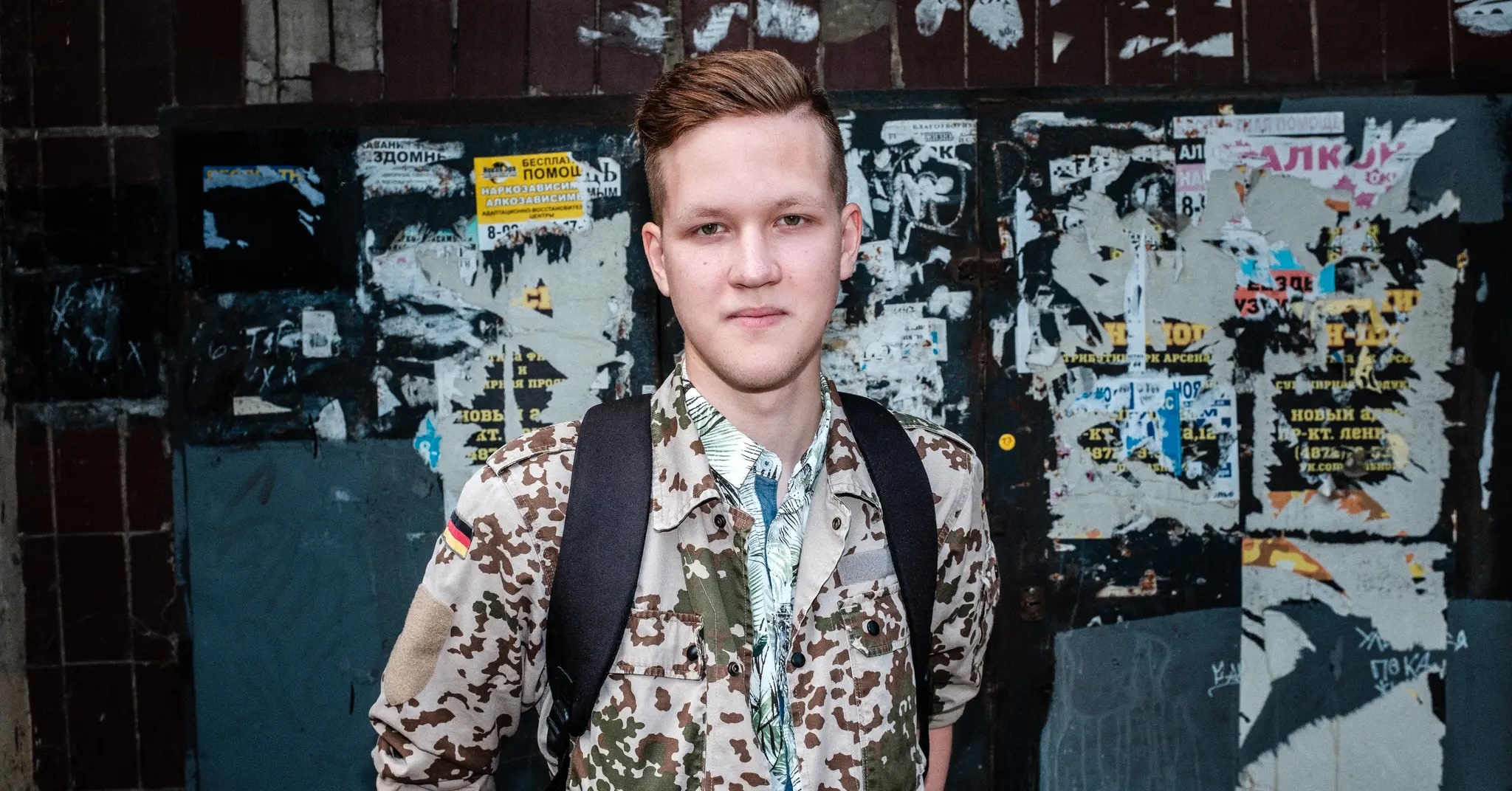

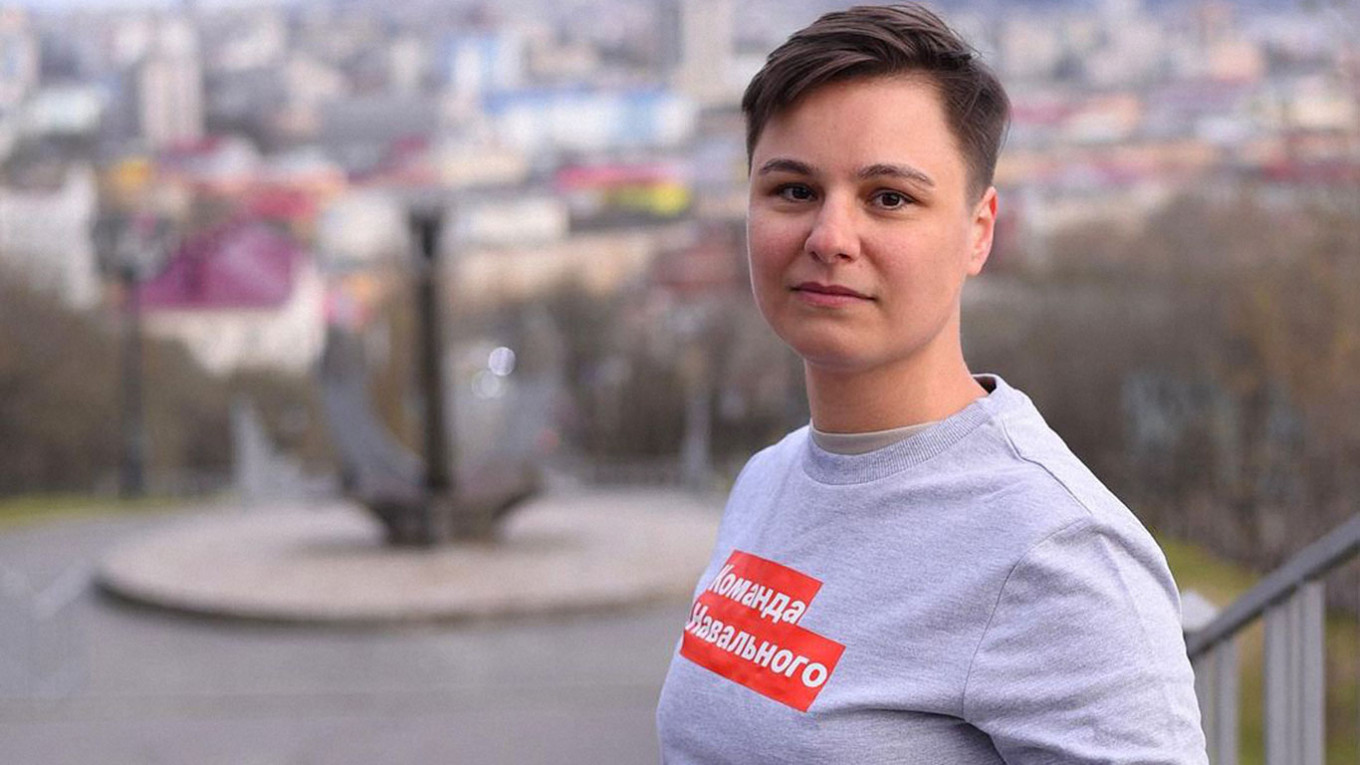
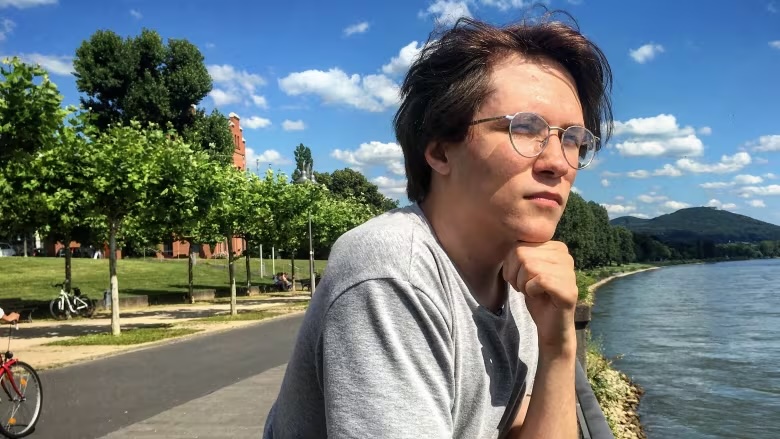
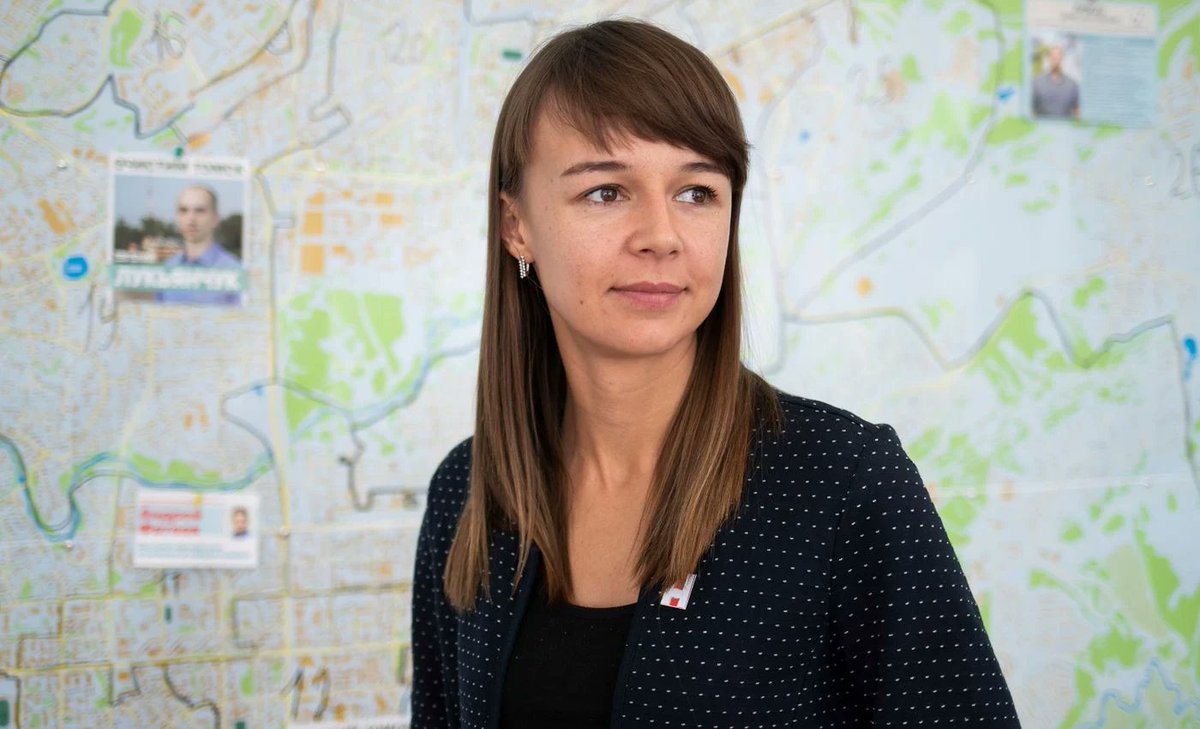
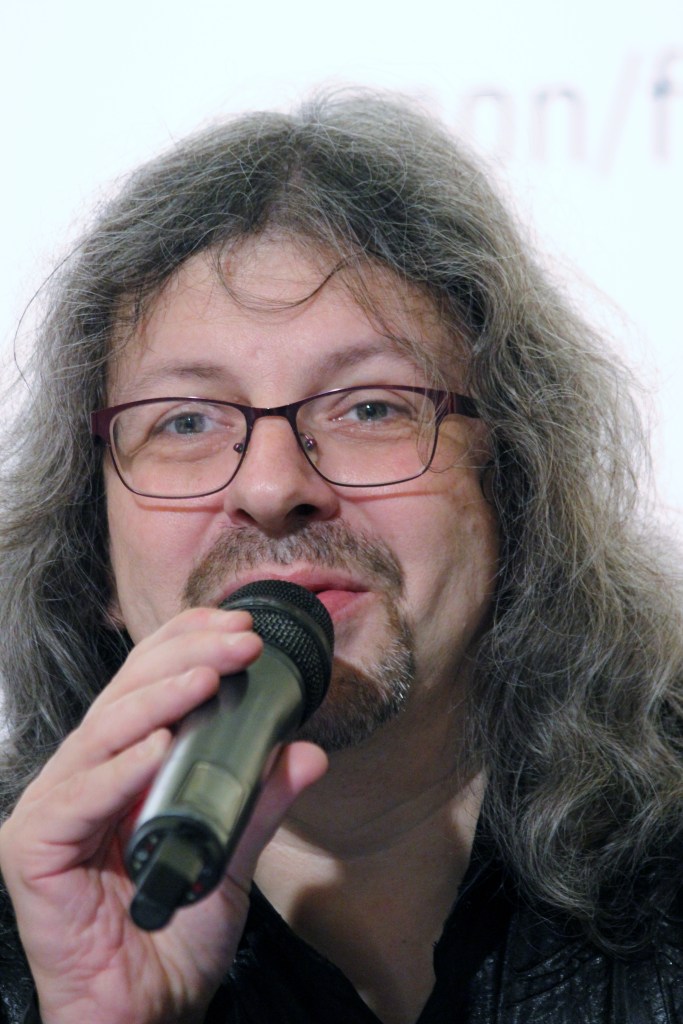
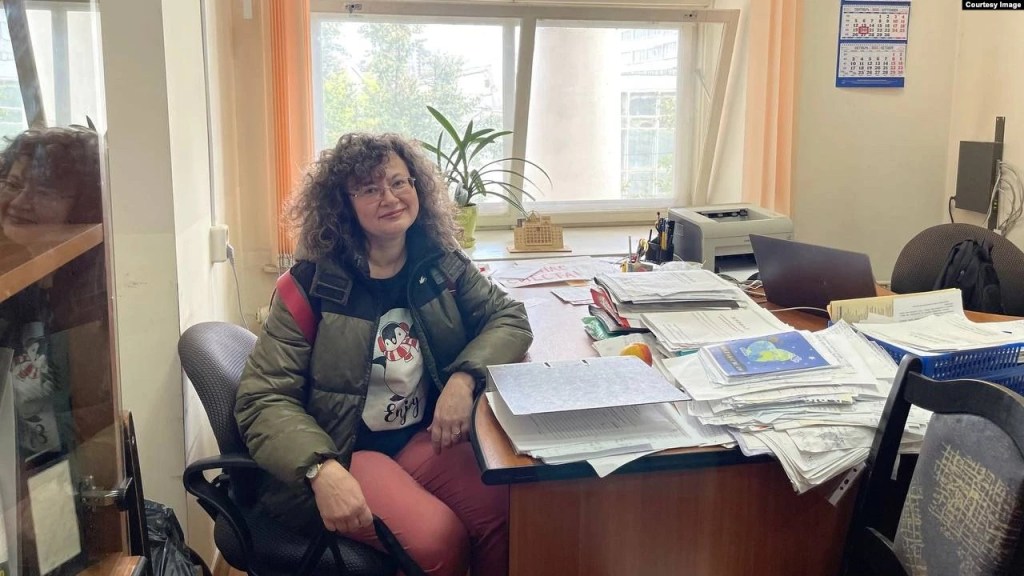
The protagonists of Andrei Loshak’s documentary film Age of Dissent 2024: (clockwise, from upper left corner) Filipp Simpkins, Lilia Chanysheva, Ksenia Fadeeva, Yegor Chernyuk, and Violetta Grudina


On June 3, Current Time hosted the premiere of Russian filmmaker Andrei Loshak’s documentary Age of Dissent 2024. It is a sequel to Age of Dissent, which was filmed on the eve of the 2018 presidential election in Russia and focused on opposition politician Aleksei Navalny and the young supporters who helped him with his unofficial campaign. He was denied registration as a candidate but campaigned as if he was on the ballot.

Fast forward six years, to 2024, and another Russian presidential election, which was held in March and won, again, by Vladimir Putin with what the state said was 87.3 percent of the vote. Loshak’s new film, commissioned by Current Time, RFE/RL’s Russian-language TV and digital network, tells how the lives of the same activists who had dreamed, together with Navalny, of a “beautiful Russia of the future” changed dramatically.

Filming was almost completed when news broke in February of Navalny’s mysterious death in a Russian Arctic prison while serving a 19-year term on charges his supporters and many Western governments considered politically motivated.

On the eve of the film’s premiere, Current Time journalist Ksenia Sokolyanskaya met with Loshak in Tel Aviv.

RFE/RL: Did you think from the very beginning that this story would have some kind of sequel? Or did something happen at a certain moment that made you want to return to these people?

Andrei Loshak: I must say that, probably, this idea was there from the very beginning. After I released the first film, I saw that it kind of took off. People began to tell me that they wondered what would happen to the subjects next. And I thought, yeah, it’s really interesting that it will be a new election cycle six years later.

I had to monitor their fates, so I asked to film some things, although I didn’t know for whom it was to be done or when. But then I realized that they had all left Russia, that their fates had changed very dramatically, and that everything that they had fought for and lived for, all of it was destroyed in these past six years.

Yes, it seemed to me that this was enough to return to them and film what had happened to them. But you have to understand that we finished filming in January and early February [of 2024]. I sat in Tbilisi and thought about what to do with all of this.

What was my idea? To draw attention to Aleksei Navalny, because for me, this was such a serious motivator. There was a moment when he was being transferred to [the Polar Wolf prison in Russia’s Arctic town of] Kharp, and he disappeared, and I was struck by how few people wrote about it. For two weeks, it was not clear whether he was alive or not.

They killed Aleksei on February 16. At that moment, I was simply lost. I didn’t understand what to do with the material.

I think it was important to record the reactions of [the film’s subjects] to the news of that day, before they had time to get used to it. Although, to be honest, I’m still not used to it. It killed me, too.

This is probably the most personal film I’ve made in a long time. Because usually you take the position of an observer and film all sorts of things, but in this film I lived with the subjects — with one dream, one hope — and Aleksei was as important a figure for me as he was for them.

RFE/RL: I read the comments under the teaser for the film, which was posted the other day. People wrote that it was painful to watch, that their hearts were broken. We live in a Russia we don’t want to live in, and Violetta in the film talks about “those traumatized by Russia.”

Loshak: Moreover, a psychotherapist gave them such a diagnosis.

RFE/RL: In the film, a separate theme is the question: How do you live when the main thing you’re living for is taken away? Do you think there is an answer?

Loshak: We are all asking this question now, and few people understand how to overcome all this. This is a recording of this moment, when our homeland rejected us. We found ourselves superfluous and unnecessary there. She needs us, but the circumstances are such that they don’t expect us there, they don’t want us there, they push us out of there.

Hope is such a straw. You still clutch at it. Of course, a few months is not enough time to understand how to live now. I am in this process, and my heroes are in this process of understanding. [In the film,] Oleg says this [phrase] from the point of view of common sense: “We need to stop this, guys.”

RFE/RL: Meaning that political activism is not a profession?

Loshak: Yes. It is possible in some historical cycles, but in others it is impossible. And when you find yourself rejected, uprooted and without a homeland, your plan must change….

That’s why I always look at this whole “opposition movement” with great skepticism. I don’t know who looks at it without skepticism. But on the other hand, I don’t deny it. It’s kind of necessary, because they’re doing the right things, but it’s virtually impossible to influence anything in Russia from [exile]. This must be understood clearly.

This feeling of helplessness with which Violetta says: “What, how, and why?” — the loss of these meanings is very painful. But we always have to say goodbye to something; everything has its own lifespan. And unfortunately, we are now at this point where we need to say goodbye to all this and start something new. The question is: What?

RFE/RL: Do you have faith? In the film people talk a lot about faith, and it ends with Aleksei’s words about the need to believe. Do you have faith that Aleksei’s story can also transform into something that people will watch, and that if they don’t know the story of Jan Palach, they will learn it from your film? (Editor’s Note: On January 16, 1969, 20-year-old university student Jan Palach set himself on fire in Prague to protest the August 1968 invasion of Czechoslovakia by Warsaw Pact troops. He died of his burns three days later.)

Loshak: I’m sure of it. I’m convinced of it. Such sacrifices, heroic deeds of such magnitude, cannot be in vain. I am absolutely sure that this is not a wasted sacrifice and that Aleksei will remain in the history of Russia forever as one of these heroic figures, which, of course, will acquire its own mythology. And in what our grandchildren and great-grandchildren will read about him, we would hardly recognize Aleksei.

There are always few such figures in history. I have never encountered anything like this in my life, such a level of self-sacrifice.

RFE/RL: The scale.

Loshak: Yes, but we also had, of course, our own Jan Palach: [Russian journalist] Irina Slavina, who set herself on fire in Nizhny Novgorod [in 2020], opposite the city police headquarters. (Editor’s Note: Before self-immolating, Slavina wrote on Facebook, “Blame the Russian Federation for my death.” A day earlier, she had written that police had searched her apartment, trying to find evidence linking her with the opposition Open Russia group and confiscated her computers and mobile phone.)

She didn’t do it in vain, either. I’m absolutely sure. Although who remembers her now? This was just a few years ago, before the war [in Ukraine]…. She will also be in this pantheon of heroic people who openly came out against evil.

Of course, Aleksei and what he did, and the way he died — all of this will later inspire people because everyone always needs bright examples, everyone needs these myths. And Aleksei has already become this myth. I can already see how people who never appreciated him during his lifetime — and, in general, I heard little good from them about Navalny — are now writing: “But Navalny would not have said that,” or, “Navalny would not have done that.”

His wings have already grown; he is already soaring over this unfortunate Russia, and he will always soar there from now on. This is actually good because you have to believe in something.

RFE/RL: After Navalny’s death, a discussion appeared in the Russian-speaking, mostly emigrant, community. It seems to me that the impetus was Shura Burtin’s manifesto on Meduza that a “beautiful Russia of the future” will not happen and that hope for some kind of good future is harmful. One of your subjects, Violetta, also talks about how she doesn’t feel joy, that she can’t say she lives, she just exists. Do you think you should actually believe such stories?

Loshak: Believe in what?

RFE/RL: You said Aleksei’s sacrifice was not in vain, but it seems to me that for a large number of people this is not true.

Loshak: That everything is in vain, that evil triumphs over good, and that this has always been the case in Russia? It has always been this way. But it seems to me that everything has its time. Even if we look at the history of Russia, evil has always defeated good, but there have also been moments when good had a chance.

There have always been thaws, rollbacks toward democratization, and liberation from the shackles with which the state always entangles people in Russia. We have always had this chance; we just never took advantage of it.

With Aleksei there was this chance; he gave us this chance throughout his political life, starting in 2017, but this liberal layer of us, so to speak, simply looked at it all with the curiosity of a TV viewer, nothing more.

Then he returned. He returned [to Russia from Germany in January 2021 after being treated for poisoning], realizing that, of course, he would most likely be imprisoned. But he gave us this chance again, and it was as if it was all staged. He returned, his documentary Putin’s Palace was released, which was watched by 100 million people. Then there was a rally, and the usual 20,000 to 40,000 people came out.

We wasted the chances that Navalny gave us.

I really believe that at some point people will understand how important it is to participate in politics, how important it is to be a citizen, and not just to be a resident of this country. One of the subjects in the first part of the documentary in 2017 said to me — I won’t say his name now, because he is in Russia, but he was on the Maidan; by accident, he ended up there — “When 10,000 people come out, it’s nothing. But when 1 million people come out, you can’t do anything about it.”

This is why I endlessly respect Navalny: for the fact that he did everything he could, and more than he could, to give us these chances. And we blew them. And I hope that someday this will become obvious. You see, what is happening to Russia now cannot last forever.

RFE/RL: Why?

Loshak: Because it’s against common sense, it’s against the passage of time. This is an attempt to turn back time, to turn it around….

In general, history is cyclical. Now there is some moment of crisis in which Western civilization finds itself. We see incredible divisions within Western countries. I don’t remember this before. This is also some kind of new sign of the times. But nevertheless, Western societies have gone through many crises, and their strength is that they are democratic, and thanks to this openness they survive them, work through them, and reach a new level.

But Russia is not doing this. Russia is simply driving us into some kind of Middle Ages with its boots. The rhetoric that is heard now is about a “holy war,” about the defense of traditional values. It all comes down to homophobia really. This is the only thing they found as a scarecrow around which they built this whole structure about the “holy war” of the Russian world with Western civilization, which is satanic, because gay people can openly hold each other’s hands and recognizes their marriages. This is complete bulls**t.

For this generation, about which I filmed in 2017, there was no issue of homophobia at all. They had already grown up in this cross-border world of the Internet. They saw that this was normal. This is how all people live, and they are happy.

I subscribe to Russian-language Iranian opposition channels. You’re amazed how much the same is there. It’s just that these grandfathers look more colorful there. Ours are in secular blue jackets, and in Iran there are bearded ones in dressing gowns. But everything is the same. People want to live freely; they want to be happy. It is impossible to be happy when everything is forbidden.

It is impossible to keep these prohibitions all your life because the reverse process is taking place all over the world. People are following the path of gaining more and more freedom, because it is more comfortable to live this way, and at the same time respect the freedom of others….

But at any moment the Russian state can invade your life and tell you how you should behave, how to dress. You have nothing. You owe them everything for some reason, but they don’t owe you anything.

This is such an old patriarchal model of the world order. If you look at all this more broadly, I see it as a rebellion against patriarchy. And what is happening in Russia is the agony of the patriarchy. In Russia, the strong are always right. To the question, “What is strength?” [I answer that] in Russia there is strength in strength. Not in any truth. This is nonsense. What is the truth? The truth was on Aleksei’s side. And where is he? I’m sure [these grandfathers] are becoming decrepit. Time will simply kill them because time is not on their side. And at some point they will simply stop being strong, and then they will be finished.

Arriving at Jan Palach’s grave [in Prague], Oleg tells the story about what happened in 1969. And in 1989, the Velvet Revolution [in Czechoslovakia] began with people coming to his grave. Yes, we had to wait 20 years for this name and this feat to become an impulse and begin to work. But now, it seems to me, time flows faster. I would like to believe that we will not have to wait another 20 years.

RFE/RL: When you invited people to the premiere in Tel Aviv on Facebook, you wrote: “I don’t wish you a pleasant viewing. That would be hypocritical on my part.” As someone who has seen the film twice, I can say it is indeed very difficult to watch. What effect do you, as an auteur, hope for?

Loshak: Due to what happened during the filming — and it was not I who wrote Navalny’s death into the script — I stopped thinking at all about who I was doing it for. It’s just a film that has a lot of my personal pain in it. I did this in order to try to part with this pain. It’s like psychotherapy: You have to work through it and live it in order to move on….

Navalny was important to so many people. This is a figure on a much larger scale than perhaps even we thought. Both importance and value. Still, his presence in Russia, even in prison, in this political landscape was completely incommensurable. We just don’t even understand yet how important. And we will understand gradually more and more. This film is probably for these people.

RFE/RL: You wrote a big post on Facebook about Aleksei and said that you miss him, and that it doesn’t go away. And in the end you say that despondency is a mortal sin, that Russia is a terrible fairy tale with a bad ending. You say that faith is an irrational thing. Do you want to return to Russia?

Loshak: Of course, I want to return to Russia now…. If Putin dies, then, of course, I will return….

Listen, this is our homeland. It’s not that we’re injured. It’s normal to want to live in your homeland with your people. They turned us into some kind of national traitors, although they are the national traitors. But we ourselves even began to get used to it, feeling that we were somehow different, which means we don’t belong there, that this is not our homeland.

But, damnit, this is our homeland, our roots are there, our everything is there. Why shouldn’t we want to go back? It’s normal to want to go back and desire to live in a different country. That is, to want changes in your country, which has simply turned into a fiend of hell, which threatens the whole world with nuclear disaster and is working to split the whole world and plunge it into some kind of abyss of chaos.

What is Western civilization? If we talk about European values, this is democracy, this is human rights, this is freedom — these are normal things. This is the norm. And they declared the norm to be evil. Who are they after that? This is some kind of madness that will end either in a nuclear apocalypse or in the fact that at some point they will simply die, as generally happens in history with villains: At some point, they simply died, and the world sighed freely until a new one was born.

RFE/RL: In an interview, you said you’d like to shoot a film in [the Ukrainian city of] Odesa, which is an important place for you. Did you have in mind a film that is less heavy than the one you have made for Current Time? Something entirely different?

Loshak: I really want to. I am very tired of politics, of Putin — of this creature, this absolutely insignificant bastard, who forces us to follow him all the time. Then we all write about it, film it, and react in horror. We are forced to because we react to abuse, to constant violence against us, because this person mocks us.

I want to film about something more metaphysical. With hope, with faith, with love. There is a lot of love missing.

Source: Ksenia Sokolyanskaya, “‘We Wasted The Chances He Gave Us’: Director Andrei Loshak Talks About His New Navalny Film,” RFE/RL, 4 June 2024. Although this isn’t a perfect translation, I refrained from editing it—except for the title of Loshak’s new film, which was translated flagrantly wrongly in the original text. ||| TRR


Tell Gordeeva: “The Yashins: ‘His Sentence Will End When the Regime Ends'” (in Russian; no subtitles)

In February 2022, opposition politician Ilya Yashin openly spoke out against the war while declaring that he would never leave Russia. In December, he was sentenced to eight and a half years in prison on charges of “discrediting” the army. Yashin has been held in a punishment cell over a month (since 17 May 2024), a visit from his parents was canceled, and nothing is known about the state of his health. We talked to Yashin’s parents about their son, whom they are proud of.

Contents: 00:00 Why do the Yashins not keep their son’s letters at home? 2:45 “A person is jailed for 15 days and until the last minute he doesn’t know whether he’ll be released or not” 7:15 “I’ll be the first to tell you’re wrong” 10:16 “Emigrating means admitting that we lost”11:47 “Gorinov doesn’t have it better because Ilya’s in prison” 13:43 “Who will know whether you gave your consent or not?” 17:36 “I guess I’ll have to be in prison for a while. What’s a little bit?” 21:21 How the clerk at the Tushino district court fell in love with Yashin and quit her job 22:36 Does Ilya Yashin have a fiancee? 25:20 How Yashin’s ex-girlfriends attend his court hearings 27:29 “We don’t communicate with Ksenia Sobchak” 31:27 Why didn’t Yashin become an actor? 33:53 “We accidentally met Lyudmila Navalnaya at the trial” 35:31 How Lyudmila Navalnaya taught Tatyana Yashina to put together prison care packages 36:48 Why do shampoo and toothpaste have to be poured into a plastic bag? 39:08 “His sentence will end when the regime ends” 40:46 “Now nothing good will ever happen” — on Navalny’s death 42:52 “Both my friends are dead” — Yashin’s letter after Navalny’s murder 44:55 “There are people who have it worse than we do” 48:53 Yashin’s health problems 52:49 How did Yashin’s parents meet? 54:58 Who taught Ilya to box and why 56:46 “I did everything to make sure Ilya was a momma’s boy” — Valery Yashin on parenting 1:00:28 “We Spartak fans are indomitable!” 1:02:16 Yashin asked for a wash basin in prison 1:06:01 “Ilya lived in a barracks in the tenth grade” 1:11:09 “He’s serving the longest sentence in the penal colony in Smolensk” 1:13:47 How his son has changed in prison, according to his father 1:14:36 …and according to his mother 1:19:19 “It’s him doing, but I’m the one who’s ashamed” — how Yasha’s mom taught her son to be a good deputy 1:25:00 “He went to his first protest rally in the eleventh grade after school”1:28:08 “Yabloko decided to do a deal with the Kremlin”1:31:24 How did Yashin and Nemtsov become friends? 1:33:48 “Even from prison, Ilya manages to send me flowers for my birthday” 1:34:46 “Mom, I’m in a paddy wagon but I’m okay” 1:36:57 The scariest day in Tatyana Yashina’s life 1:42:52 “I don’t consider Putin my enemy” 1:47:21 “Our son really did something wrong, but your son is paying for everyone” — what relatives of other prisoners say to Yashins 1:58:20 “Absolute strangers made care packages for him” — about the prisoner transport to Izhevsk 2:01:05 How did Yashin end up in the Okrestina detention center in Belarus in 2020? 2:03:48 “If you haven’t raised a person who is smarter than you, you’ve wasted your life” 2:05:34 “This is a marathon, and I have no doubt you’ll make it to the finish line” — a three-day visit with Ilya 2:07:05 “I missed your omelettes the most” 2:08:03 Why does Ilya Yashin’s mom not want him to become president? 2:10:13 “Guys, don’t get upset!”

Source: Tell Gordeeva (YouTube), 17 June 2024. Annotation translated by the Russian Reader
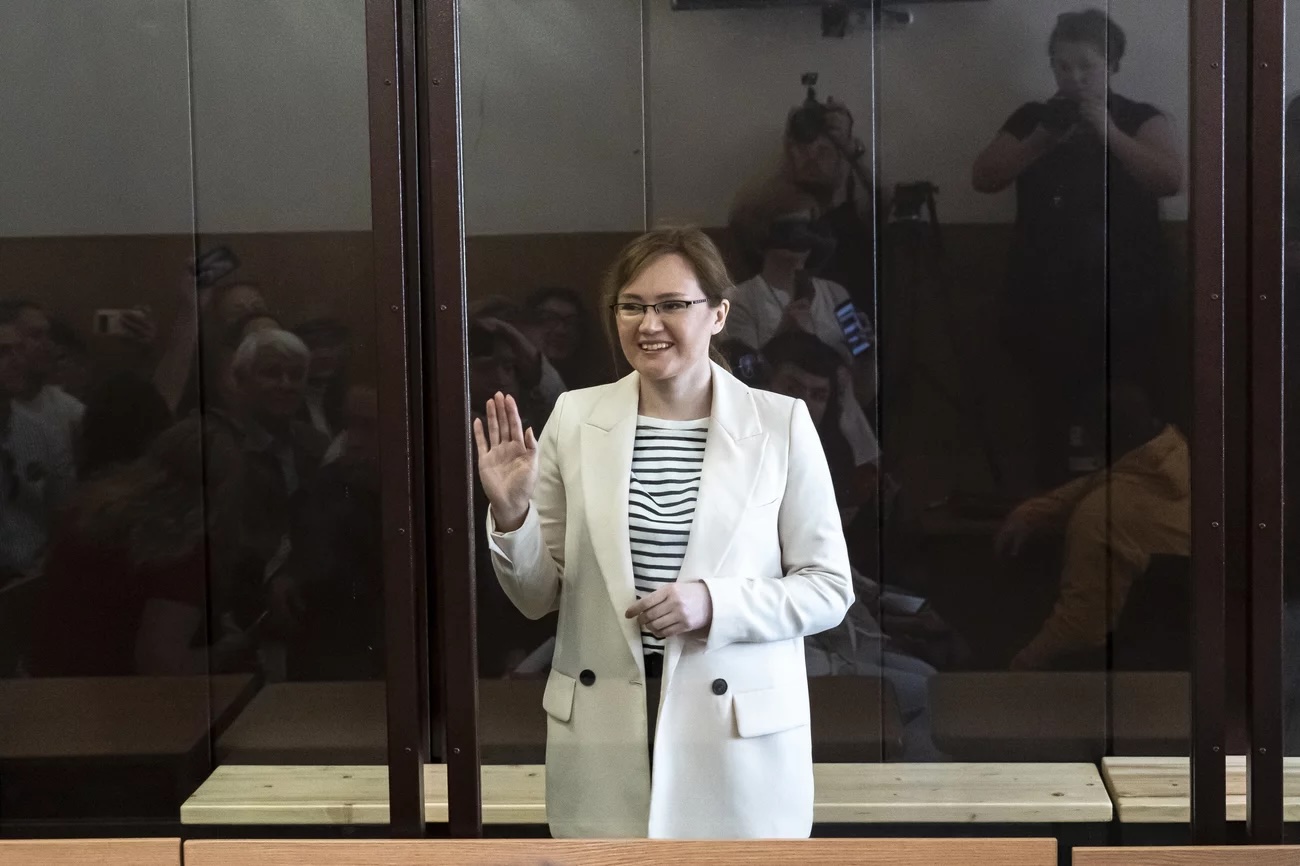

Russian opposition politician Ilya Yashin is currently serving an eight-and-a-half year sentence in prison for spreading “disinformation” about the Russian army after speaking out against the mass murder of civilians in Bucha, Ukraine. Journalist Katerina Gordeeva sat down with his parents, Tatyana and Valery, who still live in Russia, to learn how they’re coping with his incarceration, how they support their son in prison, and what hopes they have for the future. Meduza shares key points from the interview.

On not persuading him to leave Russia

We never pressured him on any issue — neither small ones nor something like this. It’s his life, and he has to make these decisions; we can only help. I always told him, “Ilya, no matter what happens in life, know that you have a strong support system. That doesn’t mean you’ll always be right. And if I think you’re wrong, I’ll be the first to tell you.” The decision [not to leave Russia] came in 2012, after the Bolotnaya Square case. Leaving would mean giving up, admitting that everything was in vain.

He didn’t leave then. And then Boris Nemtsov was killed, and he said, “Now, even more so, I can’t leave. Leaving would mean admitting that we lost. As long as I’m alive, I don’t believe that I’ve lost.” We didn’t try to talk him out of it because I understood how he felt, and I can’t imagine him being abroad now. I think it would have been such an ordeal that what he’s going through now is still much easier.

On an exchange

He himself doesn’t want an exchange. His main argument is: “Even if there are any exchanges, I’m far from being the first in line, and probably I’m the last, because there are people for whom it’s a matter of life and death. Secondly, I’m not ready to be exchanged for a hired killer who will then be free. Thirdly, agreeing to an exchange means leaving the country. I could have left the country right away.” I told him, “Ilya, it’s clear which way everything is going. Maybe if the opportunity arises, you shouldn’t be stubborn and should agree? After all, who will know whether you gave consent [for the exchange] or not?” He said: “I will know. That’s enough.”

On why they themselves stay in Russia

Because our son is here. We use any possible fleeting opportunity to see [him]. If there’s an appeal hearing, and he’ll be there via teleconference, maybe he’ll see us, and we’ll wave to him. And then he’ll see and make a heart. Maybe we’ll be given five minutes to exchange a few words. Letters are one thing, but it’s another when you can see him and understand by his expression, [by the way] he shuffles papers, what state he’s in, what his mood is. That’s why we attend all the court sessions.

On their son’s sentence

I was shocked when the prosecutor requested nine years for Ilya. I thought I’d misunderstood, I had misheard, because it couldn’t be true. Then, after we’d left the courtroom but before the sentence was pronounced, there was a moment when it overwhelmed me a little. But I quickly pulled myself together, and by the time of the sentencing, we took it quite calmly, philosophically: when the regime ends, the term will end. He chose this path, and we’re walking it with him. We are beside him, we are helping, and what will be, will be.

On family life

We never had any secrets. In our family, we made all our decisions collectively, so to speak. Any decisions — important or unimportant — were discussed by the whole family, and we included Ilya in this from a very young age.

On how Ilya has changed in prison

Tatyana: He’s become kinder and less rigid, paradoxical as it may sound. When he was young, he could break off relationships abruptly. Now, he’s more understanding, he doesn’t judge. Some things make him smile wryly — but without judgment.

Valery: He used to have moments where he was very categorical in his judgments. He’d listen, understand, agree, but still stick to his opinion. Now, he’s grown more tolerant. He’s developed [an open-mindedness]; he’s matured and become more resilient.

On people’s support

We were in Smolensk; the court was hearing an appeal on an administrative case for failing to fulfill the so-called duties of a “foreign agent.” And the [train] arrives just on the dot, so we had to take a taxi and rush into the building. When we got there, a journalist who’d arrived earlier called us and said, “They changed the courtroom because there are a lot of people.” And when we walked in, we saw a full hall — Smolensk residents of all ages. […]

And then these people came up to us — there were these guys, a very young man, a student, young women, and a local lawyer. They said, “Come with us, we’ll show you where you can sit, have coffee, eat, and warm up.” It was so touching. Then a charming woman, about our age, maybe a bit younger, came up to us. She said, “I live nearby too, you can always rely on me.” I’ve met a lot of people who say things like, “Hold on, everything will be fine, this will all end.” But no one has ever called my son a traitor or whispered it behind my back.

On the future

During our last visit, which lasted three days and was the first in two years, we could hug and talk about anything. We talked a lot. He said: “What can you do? It’s a marathon.” I told him, “Ilya, I might not make it to the end.” He said: “You’ll make it. I have no doubt.”
Source: “‘He chose this path, and we’re walking it with him’: The parents of imprisoned Russian opposition politician Ilya Yashin on coping with their son’s incarceration,” Meduza, 19 June 2024

Expat

How to pronounce “expat”

How not to pronounce “expat”


How not to be an “expat”

After the Russian invasion of Ukraine last year, hundreds of thousands — perhaps more than a million — people left Russia. Although there is no data on how many of those people were foreigners, certainly many foreign citizens left Russia either at the insistence of their employers or on their own initiative. Many Western embassies advised their citizens to leave immediately, warning of the risks of staying. 

The Moscow Times spoke to five foreigners who stayed. They are all living in various parts of Russia, have been living in Russia for a long time — and have no plans to leave in the near future.

True to his roots

Anselme Fayolle came to Moscow from France in 2008 to study Russian. He had no plans to stay at first, but he has been living here and working as a teacher of French at an international language school ever since. 

Before coming to Russia, he knew more about the U.S.S.R. and only that Russia was the largest country in the world. He was surprised that Russians say what they think. “It can be unpleasant. But I liked this directness,” Anselme said.

Anselme loves to travel around Russia — even by hitchhiking. His favorite places are Lake Baikal and the cities of Vladivostok, Murmansk, Krasnoyarsk, and St. Petersburg. He also likes the Caucasus and Dagestan. “Most Russians like the French, and I’ve never had problems with my nationality,” Anselme told The Moscow Times.

A lot of his friends left Russia in 2022. Anselme is not going to return to France, but he does not exclude the possibility of relocation to other country, including his homeland. But for now he is staying in Russia. He lost some of his French students in 2022, but he has a lot of work again.

“I like France and Russia for different reasons. Russia has certainly influenced me, but I am still French,” Anselme said.

An aspiring Swiss Cossack

Benjamin Forster is from Switzerland. Since 2015 he has been living in Pereslavl-Zalessky, a small town a few hours’ drive from Moscow. He learned about the town from his Russian friends and the book “Taras Bulba” by Nikolai Gogol; now he likes to say he has a Cossack soul.

For 12 years Benjamin has been practicing organic beekeeping, and he continued his business in Pereslavl-Zalessky. “There is a stereotype in Switzerland that Russia is a third-world country, but it is not so,” he said. “My father said that he could sense how much I liked living in Russia, and he was glad. He was not surprised when I decided to stay here.”

Benjamin said that almost nothing changed in his life in 2022, except that visiting home has become more complicated. He used to visit Switzerland once a year, but now without a direct flight it is a long and complicated trip. He has to take a bus from St. Petersburg to Tallinn, and from there fly to Zurich. Another problem has been accessing money. But besides his beekeeping business, he also conducts Russian-language guided tours of his apiary. Since 2022, many Russians have begun to travel around Russia more often, and as a result, there is more demand for his guided tours.

“Russia is my home. I like the culture, mentality, and freedom. Here I have a house and a family. I am not against Switzerland, but I prefer to live here. I always joke that I was just born in the wrong country; the stork got confused and took me to the wrong place,” Benjamin said.

An Englishman with a Russian soul

Craig Ashton is from Great Britain. He studied Russian at the University of Exeter and came to Russia for the first time in 2002 with a group of students. He fell in love with St. Petersburg and wanted to live there.  

At first, his relatives and friends were surprised by his decision, but he explained he had to live in Russia to understand the Russians. His mother and grandmother were especially worried. “In 2022, my mother wanted me to come home, but I decided to stay,” Craig said.

Today he works as a writer, blogger, and a teacher of English. “After Feb.24, I had fewer students, and I was wondering if there would be money for food. I bought a huge amount of bottled water and buckwheat, sat in the apartment and read the news. But now everything is back to the way it was before,” Craig told The Moscow Times.

He adds that he still likes Russians as much as he ever did. In the summer of 2022, he went to Great Britain with his wife to visit his family. After a month they came back. “Russia is the country that adopted me and gave me a job, a family, friends, and adventures. It is my life. I feel I must be here. If I leave when there are hard times, what kind of relationship is that?”

Pro-Kremlin information warrior

Sven Svenson left Germany many years ago. While he was living in Egypt he met a Russian woman, and they came to Russia together. Before that, he had never been to the country, but his grandmother used to say that Russia should be respected because they liberated the Germans from fascism.

In Moscow, he joined the pro-Russian Night Wolves motorcycle club and started to teach German and English at an international language school. After the start of the war, he never considered leaving Russia.

“The Germans are distant from me in spirit. I always say that I am for Russia, and I feel more Russian in spirit,” Sven told The Moscow Times.

He is sure that the Europeans do not know what happened before Feb. 24, 2022 in Ukraine, and said that he is fighting an information war on social networks.

“I make posts to show that the stores are not empty. It is often said that prices have risen in Russia, but I lived in Germany, where everything was expensive. In Russia, almost everyone has an apartment and a dacha, but in Germany, the majority rent housing. In Germany medical care is not free, taxes are high, and as a result, there is very little money left over. I do not talk about Ukraine with my brother, because we have different points of view, but many of my subscribers are beginning to understand the truth. After World War II, Russia promised that it would always defend the world from fascism, and this is what we are doing now,” Sven said.

Life’s work in Russia

David Henderson-Stewart is from the United Kingdom, but he decided to get his first work experience abroad. In 1996 he came to Moscow to work for a French company.

Today he is the managing director of the Raketa Watch Factory. When he visited the factory for the first time, he was captivated by the manufactory and its 300-year history. “In 2022, I didn’t even consider leaving, because the factory is my life’s work,” he told The Moscow Times.

In 2022, sales dropped off in Europe and the U.S., but they have evened out and new markets in the Middle East have opened up. David also hopes to enter the Asian market by next year. “The uniqueness of the factory is that we are limited in production capacity,” he said — meaning there will always be more demand than supply.

He admits that nowadays logistics have become more complicated and expensive, but nothing has changed in his personal life.

“I understand that I have privileges,” David said. “Yes, it’s more difficult and expensive to travel, and my family doesn’t come to see me anymore, but nothing has changed in my life in Moscow. We often go to theater and opera. My family is here, my work is here.”

Source: “5 Expats Who Stayed in Russia Despite the Ukraine War,” Moscow Times, 6 April 2023. The emphasis is mine. ||| TRR


How not to be an “expate”

[…]

Western academics have started attending conferences again on the down-low. Some are even conducting bits of research — and indeed, it is still possible to visit the archives. Most academic institutions forbid their employees from traveling to Russia, but you can still visit as a private citizen. 

One Cambridge academic who has traveled here twice since 2022 told me, “Having Russian contacts is vital, especially now. Russians still have a voice, and we need to hear it.” The academic also encourages PhD students to try and visit because understanding the nuances of Russia and its culture is impossible without spending a certain amount of time here.

Many more of those returning have Russian spouses and families. (This was true of most people I spoke to in the line at the airport in late 2023.) Craig, a Californian, has a young son. His work visa expired after the start of the 2022 invasion, and so he had to leave temporarily. In his own words, the war had a “zero-percent” impact on his decision to return. 

“I missed my family. And things are just fine [here],” he said. “[The war] made certain things harder. There are more rules and visa requirements now, but to be honest my life has hardly changed. If anything, I make more money now than before.”

Raymond, back after a year’s hiatus, agreed. He is more in demand as an English-language teacher now because so many others left soon after Russia invaded Ukraine. But that’s not all he and Craig have in common. “A lot of the new arrivals from the U.K. and America are trying to escape Western problems,” Raymond explained. “The wokeness, the [political correctness], the entitlement.”  

Both he and Craig said they see Russia as a country fighting the “woke epidemic.” They do not see Russia as a savior of “traditional values,” as some claim, but rather as a bulwark against what they perceive as liberal values run amok. Russia, in their view, is not going down the rabbit hole over issues of gender identity, race, and policing language — and is much better for it. 

Of course, gender and sexuality are actually huge talking points. Russia banned the so-called “international LGBT movement” late last year, effectively outlawing all LGBTQ+ rights activism and visibility. Discrimination is rife, and rights have been curtailed, particularly for trans people. Police have raided LGBTQ+ nightclubs and bars and charged their employees with “extremism.”

[…]

Source: “‘Every country has its problems’: Why are Western tourists and expats returning to Russia?” Meduza, 7 June 2024. The emphasis is mine. ||| TRR

Dmitry Kuzmin: To Save One Person

Dmitry Kuzmin in 2019. Photo courtesy of Wikipedia

“It is probably too late for the world, but for the individual man there always remains a chance.” This formulation from Joseph Brodsky’s Nobel Prize speech grew out of the two-hundred-year Russian liberal tradition of tiny, good deeds accomplished in the maw of Leviathan, and over the past two years it has inspired many. Each refugee rescued from the occupied Ukrainian territories via the Rubikus volunteer network is the best evidence of this inspiration. But we of course know that this is not true. There is not always a chance to save the individual. And the death of Alexei Navalny has reminded us of this with irrefutable clarity. Although with no greater clarity than the death a few days earlier of three children, burned alive with their parents at their home in Kharkiv as a result of a Russian rocket strike.

But empathy is only ever individual: in your head you may be on the side of all the Ukrainians and all the political prisoners, but your heart responds to concrete stories, names, and faces. And the media reality of today brings them to us. By following a couple of links, you can look into the eyes of every victim of a rocket attack. You can read the last text messages sent by Ukrainian women to their loved ones killed in this war. You can see the frontline dugout where the phenomenal poet Maksym Kryvtsov, the hope of Ukraine’s rising literary generation, slept alongside his tabby cat—just a few days before they were both killed there.

It’s a little more complicated with the victims on the other side of the frontlines, the ones whom the Kremlin regime is trying to exterminate on its own soil. Navalny’s singularity and even exceptionalism lies in the fact that even in a prison camp literally at the ends of the earth he was still able to turn his story into a gripping, if agonizing, show. Others do not have this opportunity. Where is Nikita Uvarov, the teenager sentenced to five years for talking with his friends about anarchism and for constructing an FSB building in Minecraft and planning to blow it up? Where are Salekh Magamadov and Ismail Isayev, the Chechen youths who dared to start a chat group for atheists and received eight- and six-year prison sentences, respectively? Or this thing that didn’t even get picked up in the news: where is the “transgender LGBT activist and OVD Info volunteer” who sent money to the Ukrainian army? Their name is unknown but their prison sentence, they say, is twelve years. And this is not to mention Belarus, which has practically disappeared from the Russian news, and where one of the main opposition figures, Maria Kolesnikova, is in prison and has not been heard from for over a year. Navalny, who even from the Yamal Peninsula was able to maintain Russian society’s focus and interest, was also doing this for all the above-named individuals and many more unnamed ones, even if it didn’t actually help them at all. Along with Navalny’s murder, the topic of internal crackdowns, the domestic frontline in the Putinist walking dead’s war against all the living, will inevitably exit the field of daily scrutiny. It is entirely likely that this was indeed the motivation for finishing off a reprisal that had lasted for years, and now we can expect an abrupt post-election uptick in those selfsame crackdowns.

In theory, there are people working on the other side. But they are, in typical fashion, incapable of drawing attention to themselves—and they intentionally avoid it. The prosecutors advocating for the prosecution, the judges issuing the sentences, the prison wardens carrying out their dirty work (even if we don’t take straight-up murder into account)—they all have names and faces, but no one worries about them: it seems that only the extremely scrupulous Gabriel Superfin remembered today who is nominally responsible for the tragedy on the Yamal Peninsula. After all, every rocket dropped onto Ukrainian targets was designed by someone, assembled, shipped by someone, and someone pressed the button. You can fantasize about how each of these people will eventually pay for their involvement, but we know from historical experience that at best their grandchildren and great-grandchildren will feel ashamed of them. In the stand-off between individuals and the system it is immaterial who personally represents the system. In the recent story of the rock group Bi-2’s lucky liberation from imprisonment in Thailand it was openly discussed how the Russian consul was pulling the strings in the devilish machinations—but where is this consul, who has seen him? He is probably an inventive paper-pusher—a “first-rate pupil,” in Yevgeny Schwartz’s words—but he is not meant to have any personal qualities. 

Safe to say we won’t get anything out of Thailand: this country, so beloved by Russian tourists, where the king can kick his former wife out to a dilapidated shack, having first ordered his minions to destroy the shack’s toilet and to hang a sign over the waste pit saying, “I hope you are as comfortable here as in the palace,” should easily find common cause with a country where the president’s main opponent had his underpants smeared with poison. Yet a month earlier, for example, Russian national Yevgeny Gerasimenko was arrested at Russia’s request in Prague, at Vaclav Havel Airport (you can imagine what Havel would have said about this). It seems that no one had to lobby for this arrest, the system worked on its own: some Russian agency put in a request to Interpol, some international bureaucratic authority received the request, some Czech law enforcement officials carried out their routine duty. What does it matter that Gerasimenko’s application for political asylum was already being reviewed by the authorities of a different EU country: they were looking for him, the former manager of a computer school in Norilsk, a city built on the bones of political prisoners, allegedly for dangerous financial crimes… Wait, and of what crimes had Alexei Navalny been convicted, sent to a village built on the bones of political prisoners, and murdered there? Does no one remember anymore?

A long time ago there was a Soviet film about a group of teenagers who got lost in caves: they ran out of food and water, they lost their sense of time, all the underground passages led them again and again to a bunker built by the Germans in WWII, with the word Tod (“death”) written in huge letters on the wall. When they’re on their last legs one of the boys has the thought that Death, in fact, is fascist, that everything that’s bad for the Nazis has to be good, everything that the Nazis prohibit should be allowed—and he pulls the lever below the word. The wall collapses and they’re set free. And that’s what the story by Magsud Ibrahimbeyov, on which the film is based, is called: “Death to All That’s Good.”

You might think that something which was clear to Soviet teens has become unclear to many people in today’s democratic world: when you are up against an inhuman system, the whole system is inhumane. Its criminal sentences for discrediting the army and its legitimation of Nazism are legal to the same extent as its fines for traffic violations. Its special services aim to root out good and inculcate evil to exactly the same extent as its therapists who have developed “acceptance and responsibility” therapy for Russian LGBT people, or its preschool teachers who dress the little ones in camouflage and line them up to make the letter “Z.” There are no such scales that could determine which of the system’s nodes and mechanisms are more harmful or more guilty: the rabid steamroller that has decided to crush you moves all the more efficiently because its rollers, hydraulics, and electric starter are working in perfect unison.

This unison starts to fall apart when one single individual drops out of the system.

Among the various individual people scattered across the icy wasteland of Russia, for the past six months I’ve been steadily observing two perfectly ordinary schoolchildren (albeit in snatches since it’s not entirely up to me). They have no father, their wingnut mother unfailingly supports the authorities, and every week at their very average school on the outskirts of Moscow they get to listen to the “Important Conversations” lesson—a repulsive propagandist mishmash that make the Brezhnev-era political-information sessions of my youth look like ambrosia. You might think that the fate of these kids in the foreseeable future is predetermined. But here we have an interesting result. The older brother is studying Ukrainian on his own. The young one, who isn’t yet up to that task, is diligently drawing Ukrainian flags in all of his school notebooks. It seems that they haven’t even discussed this with each other.

I don’t know how to convey to these kids that they’re playing with fire. I am not sure it will be possible to save them if it comes to that. But I see in them what Daniil Kharms once promised: “Life has defeated death by means unknown to me.” And if Brodsky was wrong about the possibility of saving the individual person, then maybe he was wrong about the world as well. Although from today’s perspective how the world can be saved is entirely unclear.

Source: Dmitry Kuzmin, “To Save One Person: On the Victims and the Executioners,” Radio Svoboda, 18 February 2024. Translated by the Fabulous AM. Mr. Kuzmin is a poet, translator, and editor-in-chief of the poetry journal Vozdukh.

About the Author

Photo by the Russian Reader of the back cover of a book found in a Little Free Library on Sinex Avenue in Pacific Grove, California, 21 January 2024

Definition of слесарь (slesar) on DeepL

Henry Slesar was born in Brooklyn, New York City. His parents were Jewish immigrants from Ukraine, and he had two sisters named Doris and Lillian. After graduating from the School of Industrial Art, he found he had a talent for ad copy and design, which launched his twenty-year career as a copywriter at the age of 17. He was hired right out of school to work for the prominent advertising agency Young & Rubicam.

It has been claimed that the term “coffee break” was coined by Slesar and that he was also the person behind McGraw-Hill’s massively popular “The Man in the Chair” advertising campaign.

Source: “Henry Slesar” (Wikipedia)

A Hostage of the Putin Regime: The Case of Ekaterina Kishchak

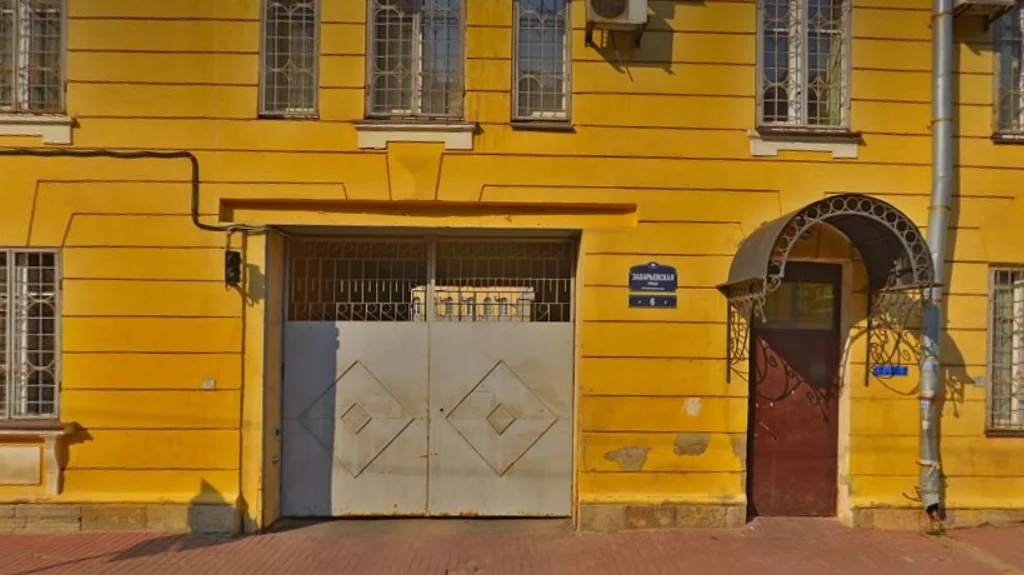
The special detention center at Zakharyevskaya 6 in downtown Petersburg. Image courtesy of Yandex Maps via mr7.ru

Police have detained Ekaterina Kishchak, a 20-year-old resident of Crimea, a citizen of Ukraine and Russia, and the daughter of Yuri Kishchak, a suspect in the bombing of a power line in the Leningrad Region. The young woman is currently at a special detention center in St. Petersburg, said lawyer Vitaly Cherkasov.

Ekaterina’s relatives turned to the lawyer for help. They said that on May 4, the young woman and her boyfriend, Dilyaver Gafarov, were supposed to cross the Russian-Georgian border at Upper Lars to go on holiday in Georgia. At the border checkpoint, the young woman texted to her father, who is living in Belgium, that they were on the verge of crossing the border, after which she stopped answering his calls.

Only fifteen days later, on May 19, did Ekaterina get in touch with her family. In a conversation with her father, she said that she had been detained at the border with Georgia and jailed for fifteen days—that is, until May 21. After this conversation, Ekaterina’s father had a heart attack and underwent surgery.

Ekaterina’s sister, Anna Petrishina, wrote to the Russian Federal Prosecutor General Igor Krasnov asking that the lawyer be notified if the young woman faced criminal charges, or to place her on the federal wanted list if law enforcement agencies were not involved in her disappearance. The letter states that, over the phone, Ekaterina claimed that the police officers who detained her “only ask[ed] questions about her father,” and said that if he did not return to Russia, she and her boyfriend “[would] be tried for his deeds.”

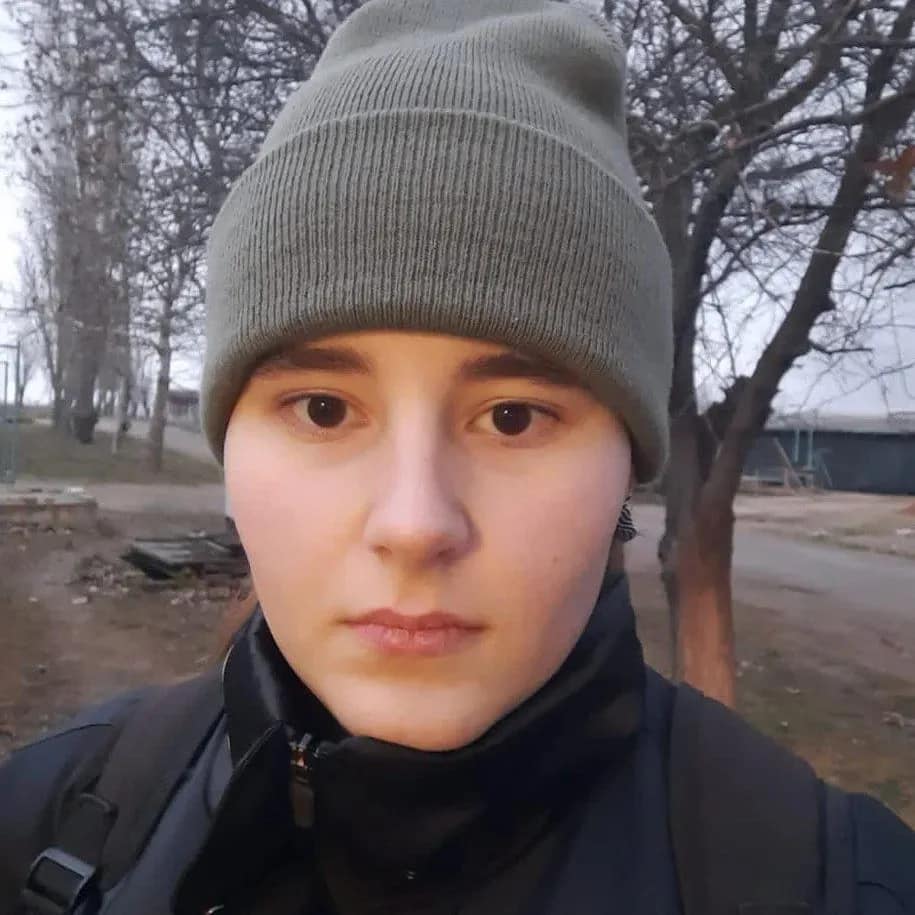
Ekaterina Kishchak. Photo courtesy of Vitaly Cherkasov, as posted on his Facebook page on 5 June 2023

Later, Ekaterina wrote to her father again. According to the lawyer, the young woman said that she had been “taken to St. Petersburg to be arraigned in his criminal case.” Ekaterina’s message was answered by her father’s wife, who replied that she would not pass on her stepdaughter’s message because it would only worsen her husband’s condition.

A lawyer from the Krasnodar Territory who was first engaged by the young woman’s relatives went to Vladikavkaz and discovered that Ekaterina and Dilyaver had been jailed for fifteen days on charges of “disorderly conduct”(per Article 20.1 of the Russian Federal Administrative Offenses Code). It also transpired that the detained young man had telephone his father on May 23 and informed him that the couple had been jailed a second time.

Yesterday, June 3, Cherkasov learned that Ekaterina and her boyfriend were in custody in the special detention center at 6 Zakharyevskaya Street in St. Petersburg—again on charges of disorderly conduct, per the decision of the city’s Smolny District Court. The lawyer attempted to meet with the young woman, but Ekaterina filed a written refusal to communicate with the human rights advocate.

“What happened there made me realize that FSB officers had arrived at the special detention center. I was asked for my identity card again, although they had already made a photocopy of it. When I had waited an hour, I approached the officer on duty and asked why it was taking so long. He replied, ‘Wait, they’re writing a statement in there.’ I was surprised: who did he mean by ‘they’ if I was waiting only for Ekaterina?

“An hour and a half later, the same officer appeared in the visiting room and bashfully handed me a statement, written in Ekaterina’s hand, that she did not want to communicate with me until the end of her stay at the special detention center.

“I asked the on-duty officer the standard question: did he understand that she had been pressured into [writing the statement]? He looked down and said that he had nothing to do with it, thus letting me know that he was carrying out someone else’s instructions,” Cherkasov told mr7.ru.

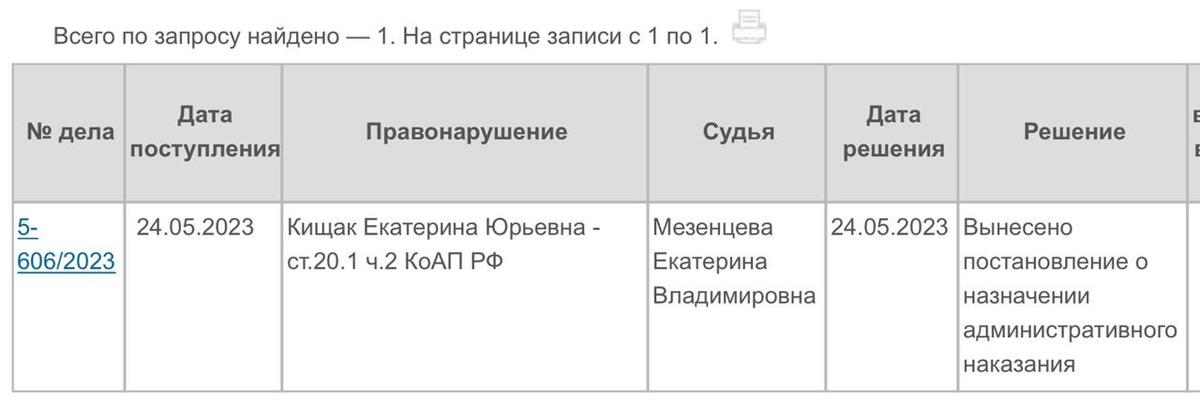
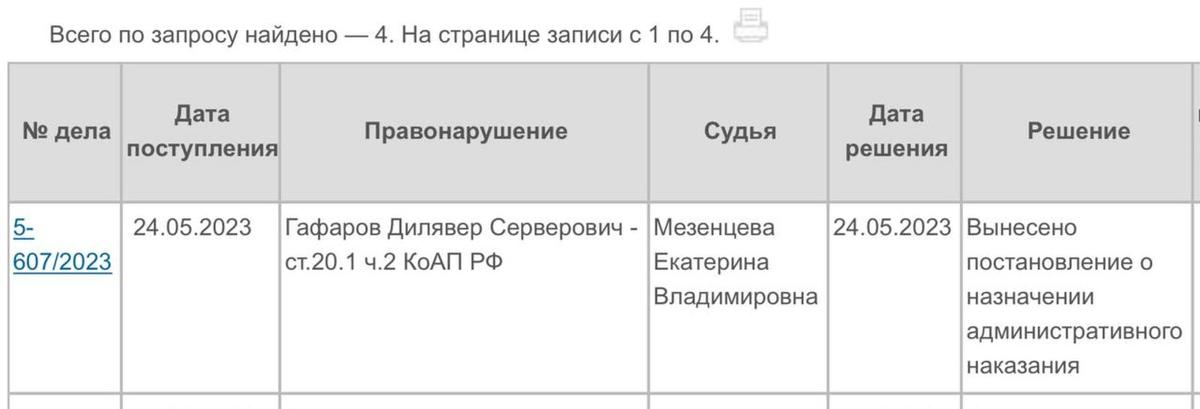
The lawyer plans to familiarize himself with the administrative case against Ekaterina Kischak in the Smolny District Court. There is information on the court’s website that the young woman and her boyfriend were convicted on May 24 by decision of Judge Ekaterina Mezentseva under Article 20.1.2 of the Russian Federal Administrative Offenses Code (i.e., “disorderly conduct involving disobeying a legitimate demand by an officer of the state”).

Screenshots of the Smolny District Court’s website, showing that Kishchak and Gafarov were convicted on 24 May 2023 by Judge Ekaterina Mezentseva of violating Article 20.1.2 of the Russian Administrative Offenses Code and sentenced to “administrative punishment.” Courtesy of mr7.ru

“We need to understand how, having arrived in St. Petersburg involuntarily, in fact, under the escort of regional FSB officers, Ekaterina and her boyfriend could have engaged in disorderly conduct,” the lawyer said.

You will recall that, on May 25, the FSB reported that it had detained two Ukrainian nationals: 44-year-old Alexander Maystruk aka Mechanic, and 48-year-old Eduard Usatenko aka Max. Yuri Kishchak aka YBK, a 59-year-old Ukrainian and Russian national who is currently in Belgium, was put on the wanted list.

The FSB claims that, in September 2022, the Foreign Intelligence Service of Ukraine (SZRU) recruited the three suspects to sabotage upwards of thirty pylons on the high-voltage power lines running from the Leningrad and Kalinin nuclear power plants (the latter is located in the Tver Region).

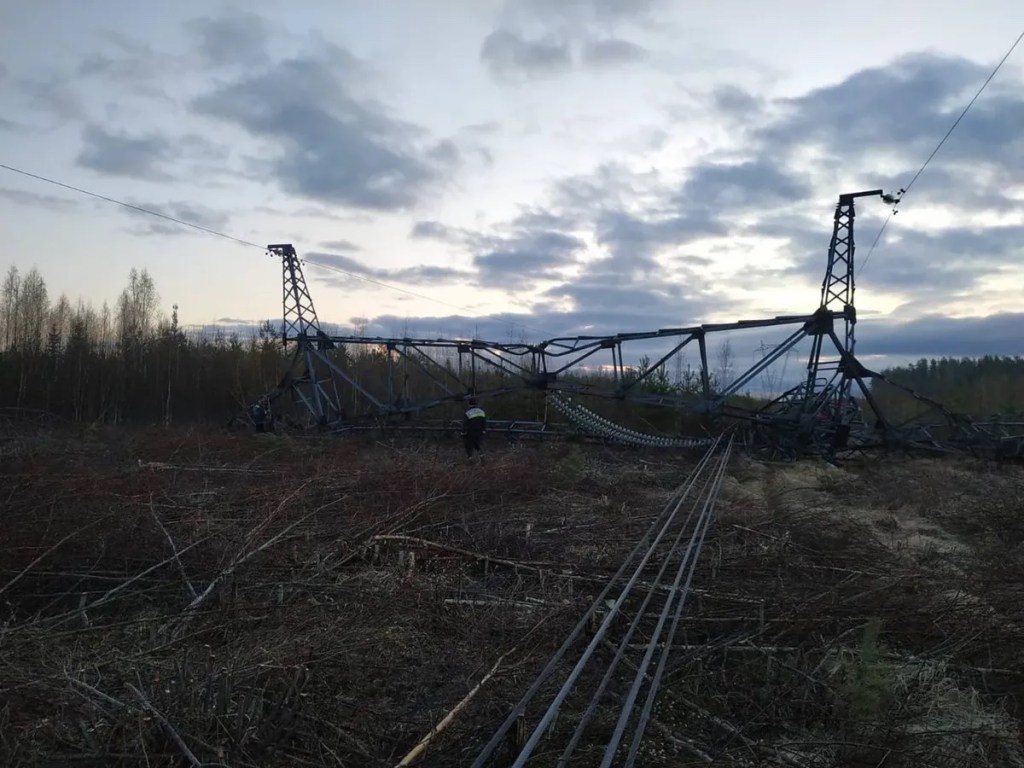
According to the FSB, on the Leningrad NPP power line the saboteurs managed to blow up one pylon and rig four pylons with explosives, while on the Kalinin NPP power line they planted IEDs under seven pylons. One of the pylons in the Leningrad Region collapsed due to the blast, but no one was injured, and the power supply was not disrupted.

The high-voltage power line allegedly damaged by a bomb blast on 1 May 2023
Source: Leningrad Region Governor Alexander DroZdenko [sic] (Telegram), via mr7.ru

Source: “Daughter of suspect in bomb blast on power line in Leningrad Region sent twice to special detention center for ‘disorderly conduct,'” mr7.ru, 4 June 2023. Translated by the Russian Reader. Thanks to Vitaly Cherkasov for the heads-up. This post was updated on 5 June 2023 to include the photograph of Ms. Kishchak, above, which was not part of the original article on mr7.ru.

Oleg Vazhdayev: A War Resister on Trial for “Terrorism” in Rostov-on-Don

Oleg Vazhdayev. Photo courtesy of Solidarity Zone

Oleg Vazhdayev has been transferred to Rostov-on-Don, where the court will begin to try his case the day after tomorrow.

Vazhdayev, an auto mechanic, was detained in late September on charges of attempting to set fire to a military enlistment office in Krasnodar. After his arrest, the police tortured him, demanding that he confess to receiving funding from Ukraine.

The building in which the military enlistment office is housed was not damaged, but this did not stop the security forces from charging Vazhdayev with committing a “terrorist act” (per Article 205.1 of the Russian Federal Criminal Code). He faces ten to fifteen years in prison if convicted.

The criminal case against Vazhdayev has been submitted to the Southern District Military Court, and he was recently transferred from the Krasnodar pretrial detention center to Rostov-on-Don.

The trial of the case on the merits should begin the day after tomorrow. Come to the trial!

🕑 2:00 p.m., 31 May 2023

📍 Southern District Military Court (Judge Maxim Mikhailovich Nikitin), 75B Mechnikov Street, Rostov-on-Don

❗️If you are going to the trial, don’t forget to bring your internal passport with you and leave all blades and means of self-defense at home.

You can also write to Oleg or send him a package.

💌📦 Address for letters and parcels:
Vazhdayev Oleg Igorevich (born 1988)
219 ul. Maksima Gor'kogo, SIZO-1
Rostov-on-Don 344022 Russian Federation

(It is possible to send emails via the service Zonatelecom.)

Solidarity Zone is supporting Oleg Vazhdayev and his family.

Source: Solidarity Zone (Facebook), 29 May 2023. Translated by the Russian Reader. People living outside Russia will find it impossible to use the Zonatelecom service. It is also probably impossible to send parcels to Russian detention facilities from abroad. But you can ask me (avvakum@pm.me) for assistance and advice in sending messages to Russian political prisoners.

Empire

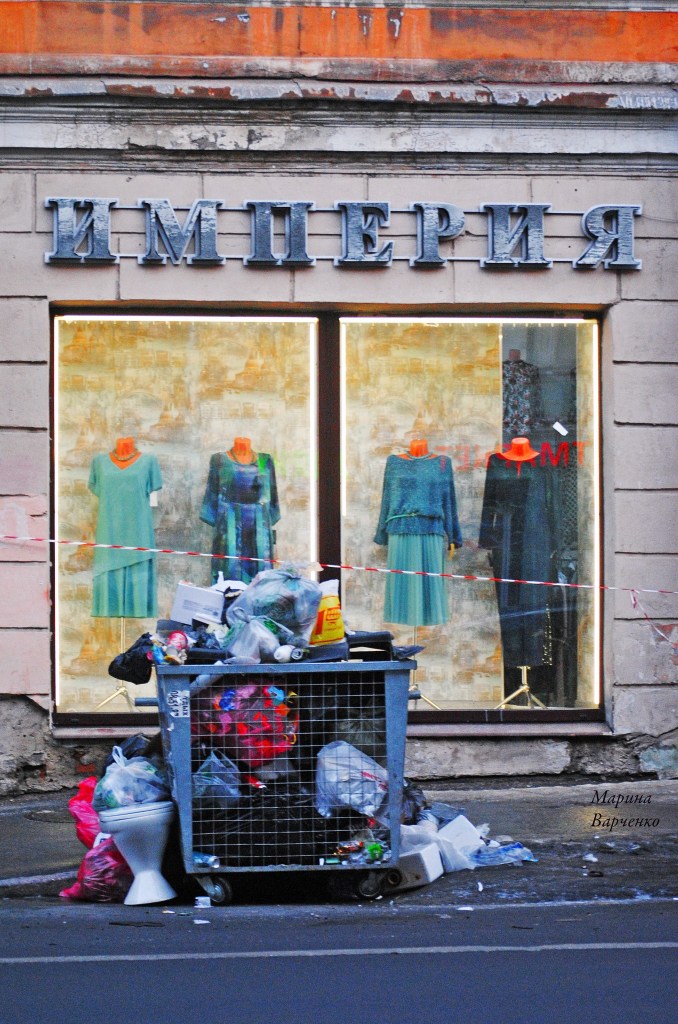
“Empire”

Today, on Razyezhaya, I came across a simply perfect illustration of what we’re living through.

Source: Marina Varchenko, Facebook, 25 December 2022. Razyezhaya is a street in central Petersburg that I know like the back of my hand since I lived nearby for many years. ||| TRR


These comments by Mira Tai were published by Doxa, the Russian online student magazine that has become a prominent voice against the war.

Hello! It’s Mira.

The full-scale Russian invasion of Ukraine has compelled many people, who live in Russia but are not ethnic Russians [russkie], to think about how we actually became the “small peoples of Russia” [a widely used term for the non-Russian nationalities that make up about one fifth of Russia’s population]. We saw many parallels between the way that the “Russian world” is trying to swallow up independent Ukraine, and the way that the ethnic republics “voluntarily became part of Russia” previously.

We have seen how the state, in which openly-declared nationalists hold leading posts in government bodies, justifies the massacre of citizens of a neighbouring country as “denazification”. We have seen how the propaganda machine is speaking openly about the renaissance of a gigantic centralised empire, in which there is no identity except Russian, and no other language than Russian.

These months have made all of us pose a mass of difficult questions, to ourselves and to each other. And no matter how hard the Russian propaganda machine tries to ridicule or denigrate this process, it will not be stopped and not be turned back – because we have changed. The surge of anger among non-Russian people has gone too far. The genie will not be put back in the bottle.

And the further it goes, the more astonishing it becomes that the majority of prominent Russian liberals and representatives of the “anti-Putin resistance”, continue to ignore what is happening. A great example is the new educational project, “Renaissance” [“Vozrozhdenie”], which opened today [23 December] and which has been loudly advertised on Ekaterina Schulmann’s Youtube channel over the last few months.

For the project, nine men and Ekaterina Schulmann invite people to take courses on the theory of democracy, capitalism and protest, the history of Christianity, and so on. They promise that in future this knowledge will facilitate the working-out of “a strategy for the Russian state, rebuilt and reborn as the inheritor of Russian, European and world culture”. Judging by the visual images chosen – golden-haired young women in Monomakh caps [the crown symbol of the pre-1917 Russian autocracy], gold leaf and portraits of monarchs – the school’s founders are especially inspired by the aesthetics of the Russian empire.

In a video in the section “About Us”, the word “civilisation” appears together with a picture of a young, rouged Ekaterina the Second [usually Catherine the Great in English-language history books] – the empress who first seized Crimea and began the process of genocide against the Crimean Tatars. That same Ekaterina, whose army slaughtered the population of whole towns in the name of the country’s “growth”.

And so in the tenth month of the full-scale Russian attack on Ukraine, we continue to witness how Russian liberals ignore any consideration of decolonisation. They do not even pose questions about the ideas and interests of those who have not been, and do not want to be, “inheritors of Russian culture”. They have not been troubled by doubts about the abstract liberal ideals of “democracy, freedom and peace”; they have no hesitation in proposing “Europe” as the source of progress, as opposed to the east. One of the courses offered by “Renaissance” is titled, in the best traditions of orientalism: “The East: a delicate matter”. …

People who can today link the word “civilisation” with portraits of Ekaterina the Second and festive, gold-trimmed panoramas of Moscow and St Petersburg, and who can promise the “renaissance of Russia”, must be blind and deaf to the suffering, and the hatred, of the Chechen people, who were subjected to genocide by the nearly-democratic Moscow of the 1990s. Blind and deaf to the hatred, and suffering, of the Ukrainian people, subjected to genocide by the authoritarian Moscow of 2022. Blind and deaf to the hatred, and suffering, of everyone whose first language definitely should not have to be Russian. And this lack of feeling is monstrous.

□ These comments appeared in Doxa’s Anti-War Digest on 23 December. I have translated them, because I think they offer useful starting-points for discussion about “decolonisation” of Russia that has begun not only among anti-war Russians, but also among those elsewhere who take the side of Ukrainian resistance. With Mira Tai, we witness “how Russian liberals ignore any consideration of decolonisation” – and, I would add, some self-proclaimed socialists do the same. One such is the writer and publicist Boris Kagarlitsky, who is to teach courses for “Renaissance,” and appears in its introduction video. He expressed opposition to this year’s invasion, but only after years of support for Russia’s imperial adventure in Ukraine since 2014 (for which he was criticised on this blog and elsewhere). SP.

□ To read more about Doxa in English, see an interview with Doxa activists just published by the Ukrainian socialist journal Spil’ne (Commons), and these speeches from the dock by Doxa editors Armen Aramyan, Volodya Metelkin, and Natasha Tyshkevich. They were tried on criminal charges last year, after publishing a video that discussed whether teachers should discourage students from attending demonstrations to support Alexei Navalny, the anti-corruption campaigner. (Doxa’s new website is in Russian.)

□ You can also read in English about anti-war activism in Russia on the Feminist Anti-War Resistance Facebook page. The Russian Reader is an essential source, as is OpenDemocracy; Posle reflects the view of Russian socialist activists.

Source: “Russia. Renaissance is not going to happen,” People and Nature, 28 December 2022. Thanks to Simon Pirani for his kind permission to reprint this here.

A Hard Rain


The main problem with TV Rain is that neither its staffers nor its defenders really understand what the problem with it is.

It is especially funny when people who have been stumping for years for “situational cooperation with the regime in the Kremlin for good ends” are outraged by the revocation of TV Rain’s license.

Sooner or later, they’ll get round to you, too.

“Moderate law-abiding protest” in Russia isn’t worth anything at all, basically. Its value is negative, rather. It does not give one the moral high ground and does not empower one to write off errors. On the contrary. And those who want to continue the policy of compromise shouldn’t be offended that no one regards them as a real opposition and sees no value in them.

[TV Rain’s broadcast was revoked] not because “there are such laws in Latvia”, or because “they are traumatized due to the occupation,” or because [the Latvians] suffer from “Russophobia.”

[It happened] because the real value of “moderate” oppositionists who even in exile remain loyal to the pro-regime “silent majority” is close to nil.

Since they do nothing to bring Russia’s defeat closer even by a second, they perform no important political, humanitarian or military function.

They are thus useless.

Source: Aleksandr Fukson, Facebook, 6 December 2022. Translation and photo by the Russian Reader


The “[TV] Rain Case” has wound up sadly, at the end of the day. After the revocation of its license, the channel’s editorial team had a good opportunity to apologize once again to the audience, to the large group of Russian opposition media located in Latvia, and to the Latvian government and the European Union as a whole, which have been supporting Russian media in exile, and to announce that the editorial team hopes that the license would be restored.

But that’s not what happened. What did happen was much, much worse. Moscow imperial haughtiness came pouring out of all the cracks. For Moscow journalists are “citizens of the world,: and so they are empowered teach other peoples to respect human rights, including “freedom of opinion.” [TV Rain editor-in-chief] Tikhon [Dzyadko] shot off his mouth about the “absurd decision” for some reason. It’s just a mystery: Tikhon is smart, after all, and all of them are quite sensible there, and TV Rain is an essential media institution and does its job well. Why do they have to talk arrogantly to the government of Latvia?

Over the last twenty-four hours, TV Rain’s liberal well-wishers have written tons of disparaging, mocking posts about Latvia, which “is trampling” [on the rights of Russians], etc. They say that it is impossible to relocate there, that the folks in the former outskirts of our empire don’t like us. Well, no fucking wonder, eh?! No, we shall never get over this haughtiness. You knock yourself out trying to argue that it is possible to “recycle experience” and stop this haughtiness, when — oops! —all your work is nullified. Apparently, those who say that we just have to raze the whole MSK down to the foundations are right. Otherwise, there will be no life for anyone.

Source: Alexander Morozov, Facebook, 6 December 2022. Translated by the Russian Reader


It’s impossible, of course, to look at all the Russian chutzpah about “Latvia helped Putin today.”

In the summer, Latvia transferred 200 million euros worth of weapons and uniforms to Ukraine. This is just from what I remember offhand. They also sent six self-propelled howitzers and six helicopters. For Latvia’s small military budget, this is a lot, in relative terms.

What has the Russian opposition sent to Ukraine? Their fervent greetings? The demand not to offend them on the internet? Maxim Katz’s program?

Latvia has already done much more for [a Ukrainian] victory than all the TV Rains and Katzes combined, just millions of times more.

Source: Dmytro Raevsky, Facebook, 6 December 2022. Translated by the Russian Reader


Latvia’s decision Tuesday to withdraw the broadcast license of independent Russian television channel Dozhd caused disbelief and anger among the media outlet’s journalists and soul-searching among other Russian journalists in exile.

The Baltic country’s media watchdog said in a statement announcing the revocation that Dozhd posed “threats to national security and social order” following a series of fines issued over the outlet’s coverage of the war in Ukraine.

“I’ve been fighting for all these years to remain human in any situation… [but] I feel like a disgusting scoundrel,” Dozhd co-founder Natalia Sindeeva said between sobs in a video posted to her Telegram channel after the announcement. 

“The entire TV channel is at stake.”

While Dozhd has yet to announce its response, the Latvian decision poses difficult questions for other independent Russian media outlets forced into exile in the wake of Moscow’s invasion of Ukraine. 

Dozhd was one of a group of independent Russian media outlets that re-established themselves abroad after the passage of repressive wartime censorship laws earlier this year, with many congregating in the Latvian capital. 

Other independent Russian media outlets based in Riga include Meduza, the BBC Russian Service, and Novaya Gazeta Europe.

“It’s a very bad sign for journalists,” said one reporter from a Russian-language media outlet that moved to Riga after the start of the war who requested anonymity as he had been told not to comment on the Dozhd situation. 

“Journalists obviously cannot go back to Russia where they are threatened with criminal prosecution. But they are also unlikely to be able to work quietly in Latvia.”

Many would “think of moving to another country as soon as they have the opportunity,” said another Russian journalist in Latvia who also requested anonymity. 

Dozhd first came under fire when anchor Alexei Korostelev last week asked TV viewers to send information on Russia’s drafted soldiers and mistakes during the mobilization. The channel was subsequently fined for displaying a map showing annexed Crimea as part of Russia and for calling the Russian Armed Forces “our army.”

Some Ukrainian and Latvian commentators interpreted Korostelev’s words as an expression of support for Russian troops in Ukraine. 

The Latvian authorities opened an investigation into Dozhd on Friday, saying that “the statements made in the program are directed against the interests of Latvia’s national security.” The Latvian National Electronic Mass Media Council (NEPLP) on Tuesday also called for a ban of Dozhd’s YouTube channel in Latvia.

Latvia’s State Security Service urged the authorities on Tuesday to bar Korostelev from entering the country, adding that it also warned Dozhd editor-in-chief Tikhon Dzyadko of possible “criminal liability in case of committing criminal offenses.”

“Today’s decision is absurd and it has nothing to do with common sense,” said Dzyadko during Tuesday’s live news show.

“When you are switched off the air for far-fetched reasons for the first time — it is perceived as a tragedy,” Dzyadko said, referring to the channel’s removal from Russian cable packages in 2014.

“When eight years later you are called a threat to the national security of Latvia — it is perceived as a farce,” he said.

Dozhd — which started broadcasting from Latvia in June after its staff fled Russia — said it would continue to broadcast on its YouTube channel. The channel also has offices in Tbilisi and Amsterdam. 

Korostelev, who was fired by Dozhd for his words, said on Friday that they had been no more than “a slip of the tongue.” 

Despite his protestations, his words have caused widespread anger, however.

“When ‘good Russians’ are helping ‘bad Russians’ — can the world finally understand that they are all the same?” Ukrainian Culture Minister Oleksandr Tkachenko wrote on Telegram on Friday.

Over the weekend, at least three journalists resigned from Dozhd to show their solidarity with Korostelev, while others told The Moscow Times that the current situation reminded them of the crackdown on opposition media in Russia and would ultimately only help Moscow push its pro-war narrative.

“It was the worst thing we could do in that situation… I want to say sorry,” Sindeeva said in an emotional video statement on Tuesday after the revocation of the license, in which she also asked the fired journalists, including Korostelev, to return.

International media watchdog Reporters Without Borders (RSF) urged Latvia on Tuesday to rethink its decision. 

“Dozhd is one of the few independent channels with Russian journalists broadcasting to the Russian-speaking public,” Jeanne Cavelier, the head of RSF’s  Eastern Europe and Central Asia desk, said in a statement. 

“The withdrawal of its license would be a serious blow to journalistic freedom, independence and pluralism.”

Some Ukrainian officials also expressed their support for Dozhd. 

“They explained their position absolutely clearly, that their position is anti-war and pro-Ukrainian,” Ukrainian President Volodymyr Zelensky’s adviser Mykhaylo Podolyak said on Tuesday.

Latvia’s decision to revoke Dozhd’s license would make it harder to report “truthful and objective information for Russian-speaking audiences,” a Russian journalist in Latvia, who requested anonymity, told The Moscow Times. 

“That is exactly what the Kremlin is trying to achieve.” 

Source: “Latvian Decision to Revoke Russian TV Station’s License Sparks Fear, Disbelief,” Moscow Times, 6 December 2022

Olga Nazarenko: “What Is the Point of Having Principles If You Don’t Act on Them?”

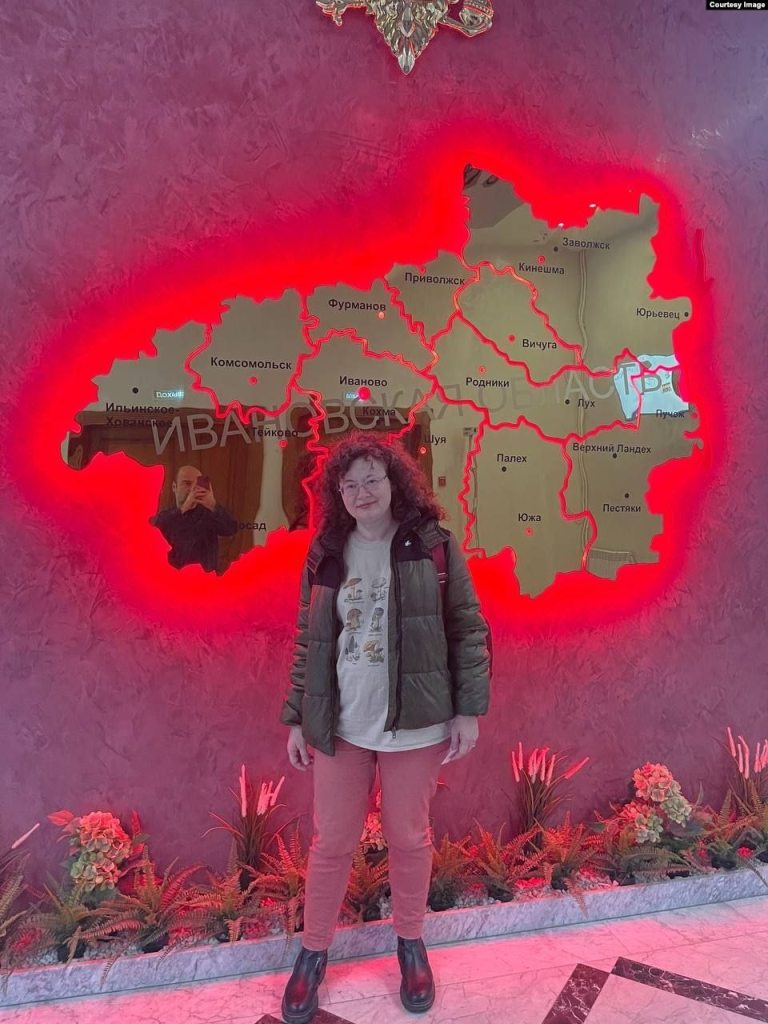
Olga Nazarenko, a university lecturer in Ivanovo, risks going to prison for simply hanging the Ukrainian flag in the window of her own flat. Neighbors from the building opposite regularly complain about her. Nazarenko goes on anti-war pickets, where aggressive fellow citizens attack her. And the pickets have already triggered a criminal case against her. Repeated visits and searches by police officers at night and early in the morning have become routine for her children. Nazarenko sees the situation in Russia as nearly hopeless. She is amazed at how the country’s maternal instinct has even been destroyed: Russians dutifully send their children off to die for nothing. Despite all this, she considers it her duty to talk to people. She remains in Russia, and has no plans to emigrate.

Recently, the police rang at Nazarenko’s door at three o’clock in the morning. They demanded to be let in so that they could remove the Ukrainian flag. It has been hanging for six months on the balcony of the activist’s flat in an ordinary multi-storey residential building in the city of Ivanovo. Nazarenko refused to let the police in without a search warrant. Through the door, the night visitors informed her that neighbors had filed another complaint about the Ukrainian flag. The law enforcement officers left, only to return at seven in the morning and knock on the door for a long time. Nazarenko did not unlock the door, but wrote a complaint against the police to the prosecutor’s office.

Over the past two months, the police have visited the well-known anti-war protester at least four times. In the autumn, two criminal cases were opened against Nazarenko, one of them under the so-called Dadin article of the Russian criminal code. The medical school at which the activist has worked for almost twenty-four years has suspended her employment. The university lecturer is currently listed as a “suspect” by the authorities. Despite the fact that term of her undertaking not to leave the country, which went into effect after the criminal case was launched, has recently expired, she has no plans to leave Russia. She talked to Radio Svoboda about her principled choice.

Olga Nazarenko, holding a placard that reads: “If those who oppose the war are imprisoned, fascism has won.
Alexandra Skochilenko face five to ten years in prison for anti-war stickers…” Photo courtesy of Radio Svoboda

— How did you find out that you had been identified as a suspect in a criminal case?

— I learned that a criminal case had been launched against me under Article 280.3 of the Russian Federal Criminal Code (“Public actions aimed at discrediting the deployment of the Armed Forces of the Russian Federation”) from the Center “E” officers who came to my workplace at around eleven a.m. on September 20. They obliged my colleagues to to serve as witnesses, searched my desk, and found two placards. Before that, my laptop was seized without my knowledge. The bigwigs at the medical school wanted to conceal it at first, but I made a fuss. It transpired that the Center “E” officers did not even give our management rep a copy of the report for the seizure of the laptop, nor did he demand one from them. Then we went to my house; fortunately, there were no handcuffs on me. There they carefully rummaged for a long time: they took our phones (even the phone of my young son), a computer, old leaflets, our personal money, and the savings of our daughter, who is a university student. The money was returned to her, but the police kept our funds for themselves, and they are not planning to give them back to us, apparently.

— How did your children react to the search of your home?

— My son was in a little shock, especially since they took something that belonged to him. My daughter behaved calmly. She talked to the police a little. She asked whether their “assistant” was an adult: the computer technician they brought with them looked quite young. A Center “E” officer replied tersely that they were all adults and all officers. My daughter is already an adult, and she understands everything and supports me. My family took the search well, because this was not my first encounter with the relevant authorities due to politics. In the spring, at seven a.m., the riot police came to search the flat since I had been identified as a witness in a vandalism cased launched against another activist. Then they tried to prevent me from calling a lawyer, seized my phone, my computer, 138 posters, and the Ukrainian flag from the window. The law enforcement agencies’ interest in me had already become something routine.

Оlga Nazarenko in her office at the medical school. Photo by Oskar Cherdzhiyev. Courtesy of Radio Svoboda

— How long has the Ukrainian flag been hanging in the window of your flat?

— Every year since 2014, I had hung up the flag of Ukraine on the country’s Independence Day. Last year, I put it in the window and decided not to take it down. Police officers visited me after complaints were made, and they demanded explanations about the flag. I refused to explain anything to them. In the spring, after my apartment was searched, and they took the Ukrainian flag with them. I sewed a new one and hung it in the window again. I did the same thing after the search in the autumn.

— Why did you do that?

— For reasons of principle: if I support Ukraine, then I support it. And most importantly: no one in uniform and flashing a badge gets to decide what hangs in my window.

— What was the first criminal case brought against you for?

— They think that I posted anti-war leaflets in Ivanovo. I refused to give evidence by citing Article 51 of the Constitution.

— Were you not intimidated when they launched a criminal case and searched your flat?

— All this was to be expected. And no, it didn’t intimidate me. I continued going to anti-war pickets and rallies in support of those who have been persecuted for making anti-war statements, and I talked to people on the streets. A second criminal case was soon launched against me under the so-called Dadin article (i.e., Article 212.1 of the Russian Federal Criminal Code: “repeated violation of the established procedure for organizing or holding a meeting, rally, demonstration, march, or picket”). In October, Center “E” officers and the investigator who was running the first criminal case against me came again to search my flat. They were accompanied by several people in black masks and bulletproof vests. It’s hot in our flat, and I saw sweat on their faces, probably from overexertion. I even felt sorry for them. The search was superficial; they didn’t see anything new, apparently. They again seized our phones and a couple of posters. Once they got into the flat, they immediately rushed to the balcony and again pulled down the Ukrainian flag. I told them that I hadn’t violated the law when I hung up the flag, since I wasn’t infringing on the building’s communal property. The Center “E” guys replied that I should understand how turbulent the situation was now. They asked me why I was hanging the flag up. I said that it reflected my position and my aesthetic tastes.

— Do you like the colors yellow and blue?

— Yes, they are my favorite colors: the sky and the sun. The next day I sewed another Ukrainian flag and hung it out.

— Do you usually sew Ukrainian flags on a sewing machine?

— Yes. There are many shops in Ivanovo where you can buy fabric. I found a good one and bought three sets at once. It will last for a long time.

— Why do you think that it is the neighbors who filed complaints against over the flag?

— Only residents of the house located opposite mine can see the flag all the time. The denunciations are probably written by neighbors and residents of the neighboring house. I saw one complaint. The poor lady wrote: “I see the Ukrainian flag every morning and I consider it unacceptable in such a situation as we have now.” I even felt sorry for her. After I hung out the Ukrainian flag, the neighbors living in the apartments below and above mine hung out Russian flags. After the search, a “Z” was again written on my apartment’s mailbox and a note was tossed in it that said, “Ukraine is no more. Take down your rag and dry yourself with it.”

– How did the medical school react to the criminal cases against you?

– The management suspended me on the grounds that the articles of the Criminal Code brought against me hinder my work as a lecturer. My colleagues were upset. We have worked together for many years. Besides, now they have to do my duties. My colleagues do not talk about politics. Most of my colleagues are apolitical. But they have voiced their support to me and hope that everything will be resolved somehow. I studied at the medical school for six years, and after graduation I stayed on there to work. That is, my entire adult life, almost thirty years, has been connected with the medical school.

— Have you been able to get another job?

— Due to the criminal cases, I cannot tell an employer how long I would be able to work for them. So, I will look for something temporary, and then my professional career will depend on the court’s decision.

— How many pickets did you hold in the autumn?

— In September and October, I held four or five pickets. Since the second criminal case was launched, I have not yet gone out to protest, but I’m going to continue to voice my civic stance.

— Why are you going to continue to hold anti-war pickets, despite the serious risks of ending up in a Russian prison?

– I have beliefs, and I will act in keeping with them. As long as I can talk, I’ll keep doing it. What is the point of having principles if you don’t act on them, regardless of the risks?

— Do you have the support of friends, family, and associates?

— I have moral support from friends, and there are also simple acquaintances who support me and help me raise the money for fines. I am being defended by attorney Oskar Cherdzhiyev.

— Aren’t you annoyed by like-minded people who emigrated instead of getting involved in anti-war protests with you?

— If the question is about ordinary Russian citizens, and not about protest leaders, then I’m not annoyed. I understand that nothing will change in the near future. People in difficult circumstances choose the best option for themselves. We have one life, and everyone has the right to live it as they please. Besides, emigration is now a rational, appropriate solution. Many of those who have gone abroad continue their protest activities: they go to anti-war protests at Russian embassies, help refugees from Ukraine and Russia, and work on publicity.

— But why is it the best option for you to stay in Russia and go to anti-war pickets, rather than worry about your own safety?

— My choice is based on the fact that I can do more in terms of working with people in Russia than I could in emigration. I’m rubbish at information technology. It’s easier for me to talk to passersby at street protests in the hope of getting my message to them. Russia is my country, and I won’t let them kick me out. I have the right to my own country and I don’t want to leave Russia for anywhere else. I will stay here and do what I think is necessary, voice my position. If I left, I would feel bad because I got scared and ran away.

— Do you think your long-term street activism has produced any results?

— If we’re talking about changing people’s minds, I don’t see any particular results. The war is so propagandized that a few people who publicly voice a different viewpoint cannot shift the minds of the majority in the other direction. My protests are meant to have an effect on the people who are having doubts. I have succeeded in making such people think. But the main purpose of my protests is to support like-minded people among Russians and Ukrainians. Thanks to my actions, among other things, friends in Ukraine know that not everyone in Russia is an “orc.”

— How has the reaction of passersby to your pickets changed since the war with Ukraine began?

— I’ve observed that people have become more guarded and scared. They usually dash past me quickly, averting their eyes. The reactions of those who do not hide them have become quite polarized. Either passersby are emotionally grateful, or they almost pounce on me, fists flying, and call me a Banderite. At the last picket, a man grabbed my placard and tore it up. There have been more negative reactions to my pickets than friendly ones, but this is not surprising. It is amazing how, with such propaganda, one hundred percent of people don’t react negatively to anti-war protests.

— How do you manage to be so tolerant towards people whose views differ from yours?

— I would not call my attitude towards them tolerant. I just understand what motivates their behavior: a lack of critical thinking skills, plus the fear and the reverence for the authorities that is inscribed in their subcortex. Powerful state propaganda combines with excessive loyalty to those in power. Thus, Russian citizens support all decisions by high-ranking officials.

Olga Nazarenko in the lobby of the Ivanovo Regional Office of the Interior Ministry. Photo by Oskar Cherdzhiyev. Courtesy of Radio Svoboda

– Are you able to understand why the parents of conscripts did not come out in droves to protests after the mobilization was announced?

— It’s beyond my comprehension. The maternal instinct is a powerful biological mechanism. As conceived by nature, it should be stronger than any propaganda. Apparently, there has been a real degradation in our society over the past twenty years. Total state propaganda, which includes not only the media, but also the education system, has aimed to completely distort values. Fear and reverence for power, submission to it, which never disappeared in many Russians, have now resurfaced especially strongly. Unfortunately, learned helplessness has overcome the maternal instinct. I do not know if such people can change anything.

— This is not the first year that you have been constantly going out to protest. Perhaps you have a hope that Russia will become a free country?

— It’s hard to say. Historically, Russia has been going in circles all the time, rather than developing in a spiral. But I still want to hope that Russia will become a developed and free country. However, this won’t happen soon, perhaps in one hundred years.

Source: Daria Yegorova, ‘Why have principles if you don’t act?’: A fight over the Ukrainian flag in Ivanovo,” Radio Svoboda, 29 October 2022. Translated by the Russian Reader

Mission of Burma

“The US risks repeating the fate of the Soviet Union. Currently, the greatest threat to America comes from within, argues Donald Tramp.” Screenshot from the TASS page on Telegram. Read the whole story on their website.


“Cooperation between Russia and Myanmar is based on a solid foundation and is not subject to political trends, Russian Foreign Minister Sergei Lavrov said at a meeting with Myanmar Foreign Minister Wunna Maung Lwin.” Source: TASS (Telegram), 3 August 2022


Kyaw Min Yu, a pro-democracy leader and writer in Myanmar widely known as Ko Jimmy, who rose to prominence in 1988 during protests that helped galvanize political forces opposing military-led regimes for decades to come, was executed with three other activists. He was 53.

In total, Ko Jimmy spent more than 20 years in prison. While detained by the state, which had been under absolute military rule for decades, he worked on literary projects. One surprise bestseller was his translation of a self-help book, which was seen as a manifesto of personal empowerment rare in a country known for its unyielding repression.

Myanmar’s military regime announced that it recently carried out the death sentences, but did not specify when the executions took place at the Insein Prison in Yangon. The junta was strongly denounced by rights groups and governments around the world. But the country’s rulers remained defiant as they seek to crush dissent and political allies of ousted civilian leader and Nobel Peace Prize laureate Aung San Suu Kyi.

[…]

Source: Brian Murphy, “Kyaw Min Yu, Myanmar activist known as Ko Jimmy, executed at 53,” Washington Post, 26 July 2022


Mission of Burma, “Academy Fight Song”