Made in the USSR (May Day 2023)

A man sporting a “Made in the USSR” tattoo, Liteiny Prospect, Petersburg, May 1, 2023.
Photo by Vadim F. Lurie, reproduced here with his kind permission

Victory Day is a memorable holiday for every citizen of St. Petersburg! During the celebration of the Great Victory, each of us remembers the heroic deeds of our grandfathers. In keeping with a long-established tradition, many musicians dedicate their concerts to this important date.

On May 15, the Lensovet Palace of Culture will host “Echo of Victory,” a soulful solo musical performance by Dmitry Pevtsov and the Pevtsov Orchestra.

Dmitry Pevtsov, “Echo of Victory,” 15 May, Lensovet Palace of Culture

“Echo of Victory” is a new themed concert in which poems and songs of the war years and the best songs of Soviet and modern composers will be performed. The program will feature such songs as “Airplanes First of All,” “From Dawn to Dawn,” and, of course, everyone’s favorite song, which has become a symbol of the celebration of May 9—”Victory Day”!

We invite everyone to the “Echo of Victory” concert on May 15 at the Lensovet Palace of Culture. Let’s remember the great songs of that heroic time and once again feel proud of our great nation!

Directed by Denis Isakov

Duration 1 hour 40 minutes (without intermission)

Source: Bileter.ru. Translated by the Russian Reader


The Russian authorities and Russian propagandists have been competing with each other to recreate something outwardly similar to the Soviet system in our country. The message to Russian society is simple: we are different, we have a different path, don’t look anywhere else, this is our destiny — to be unlike everyone in the world. And yet there are more and more traits of our country’s yesterday in its tomorrow.

For some reason, the speakers at the Knowledge educational forum, starting with Prime Minister Mikhail Mishustin, called directly for Russia’s self-isolation. Mishustin demanded that we achieve independence from foreign designs in the information sphere. The word “independence” has been increasingly used to mean isolation and breaking ties.

Deputies in the State Duma have proposed re-establishing the mandatory three-year “repayment through job placement” for university graduates, and prohibiting those who have not served in the army from working in the civil service.

With Ella Pamfilova, head of the Russian Central Elections Commission, on hand as a friendly observer, Uzbekistan held a referendum on April 30 to decide whether to adopt a new constitution that would grant the current president, Shavkat Mirziyoyev, the right to de facto lifelong rule by lengthening presidential terms from five to seven years and nullifying Mirziyoyev’s previous terms. The ballot, which involved digital technologies, produced a turnout of 84.54%, and according to preliminary data, 90.21% of voters said yes to the amendments, which would change two-thirds of the Constitution, while 9.35% of voters voted no, and 0.49% of the ballots were disqualified. Although democratic procedures were seemingly followed, Uzbekistan is moving away from democracy.

Something makes us see Pamfilova’s visit to Uzbekistan not only as a trip “to strengthen friendship and cooperation,” but also as a completely practical exchange of know-how in organizing such referendums. Only by adopting a new constitution can the first and second chapters of the current Russian Constitution be amended, and it is the second chapter that enshrines civil rights and freedoms, we should recall.

Alexander Bastrykin, the prominent human rights activist and chair of the Russian Investigative Committee, has proposed adopting a new Russian constitution that would enshrine a state ideology, completely eliminate international law’s precendence over domestic law, and re-envision human rights as an institution alien and hostile to Russia, as something encroaching on its sovereignty. Uzbekistan’s know-how in voting on a new constitution will come in handy for the Russian Central Election Commission.

At seven o’clock this evening live on Citizen TV, we will talk about why, exactly, the Russian authorities are so enthusiastic about Soviet political practice and the Soviet style, and where such intentions can lead our country.

Source: Citizen TV (YouTube), 1 May 2023. Translated by the Russian Reader


Russian President Vladimir Putin agreed with the need [for Russia] to develop its own communication protocols instead of foreign TCP/IP to ensure the country’s technological sovereignty and independence.

On Thursday, the head of state held an event at the Rudnevo Industrial Park during which the specifics of the development of domestic unmanned aerial systems were discussed. In this context, Alexander Selyutin, board chair of the Technojet group, spoke about the “Internet from Russia” project.

After listening to the proposals, Putin turned to his aide Maxim Oreshkin.

“Maxim Stanislavovich, talk to your colleagues, then report back to me separately, we need to help. This is obligatory, because if you have advanced proposals, your own, of course, we need to do everything to support them. It means technological sovereignty, and better competitiveness, and independence. […] We will definitely help,” the president said.

Source: “Putin supports creation of Russian communication protocols as alternative to foreign ones: head of state held event at Rudnevo Industrial Park where specifics of developing domestic unmanned aerial systems were discussed,” TASS, 27 April 2023. Translated by the Russian Reader. Thanks to Lev Schlosberg for the heads-up.


Those wishing to take part in a virtual LDPR rally at the monument to Vladimir Zhirinovsky created in Minecraft have overloaded the server. The number of applications exceeded twelve thousand, LDPR’s press service informed us.

As Andrei Svintsov, a member of the LDPR faction [in the State Duma], noted, this is only the first such event. The Liberal Democrats plan to continue using [Minecraft] and other gaming platforms to communicate with voters and attract new supporters, becoming in fact “Russia’s first digital party.”

The MP also recalled that experts continue to work on the “Cyber Zhirinovsky” political algorithm, which was previously announced by the party’s current leader Leonid Slutsky.

Photo: Official LDPR Telegram channel

Source: TASS (Telegram), 1 May 2023. Translated by the Russian Reader


In late April, Judge Yevgenia Nikolayeva closed a court hearing at which it was decided how much time to give Alexei Navalny to examine the 196 volumes of the latest criminal case against him. According to the police investigator, this was necessary in order to protect investigatory privilege.

Navalny’s case is not unique. There have been other such decisions recently. Judges closed a court hearing on the killing of the blogger Vladlen Tatarsky, decided the fates of conscientious objectors without witnesses present, ruled on pretrial restrictions in absentia for journalist Ilya Krasilchik, and extended the arrest of politician Vladimir Kara-Murza.

Over the past five years, judges in Russia have increasingly closed court hearings to observers, journalists, and even relatives of defendants. Because of this, defense lawyers cannot inform the public about what happens in these proceedings. Mediazona reviewed the judicial statistics and discovered that, in 2022, judges ruled 25,587 times to hear cases in closed chambers. This was almost twice as often as in 2018, when judges decided 13,172 times to hear cases without outsiders present.

The Constitution actually guarantees that your case should be heard in open court, but there are exceptions. The principal exceptions are cases involving state secrets (which is why all treason and espionage trials are closed), cases against defendants under sixteen years of age, and cases involving sexual offenses. The statistics for all such cases have not changed much in recent years.

But there is one more exception — a trial can be closed to “ensure the safety” of the people involved in the proceedings and their loved ones. This extremely vague wording allows judges to close any court hearing. Judges make vigorous use of it, especially when hearing high-profile cases.

Here’s another example. In September, the Moscow City Court closed the hearing of an appeal against the verdict in the “fake news” trial of municipal district council deputy Alexei Gorinov, who had been sentenced to seven years in prison for an argument over a children’s drawing contest in which he had said that children were dying in the war in Ukraine The judge alleged that the court had received threats, and said that the hearing would have to be closed for the safety of the parties to the proceedings.

Russian judges may be following the lead of their Belarusian colleagues, who have learned how to conduct political trials without outside scrutiny. They cite covid regulations, or fill the gallery with persons unknown, or don’t let anyone except the relatives of the defendants in the courtroom. Russian courts have begun to use many of these methods. And the Belarusian courts can declare a hearing closed without explaining the reasons at all.

The authorities do not want people to know about political trials, to monitor these trials, or to support the accused. That is why, on the contrary, it is important for society today to talk about political prisoners and help them.

Source: I Don’t Get It email newsletter (Mediazona), 1 May 2023. Translated by the Russian Reader


A Russian version of the song by the French left-wing chansonnier Georges Moustaki. Translation: Kirill Medvedev. Guitar: Oleg Zhuravlev. Video: Nikolay Oleynikov

Don’t ask what her name is, she’s
Beloved and tender, but fickle
Very spunky, she’ll wake up and go forward
To a new life that shines and sings

Bullied and branded
Tortured and executed
Well, how much can she suffer!
And she rises up and strikes,
And spends many, many years in prison,
Yes, we betrayed her
But we only love her more and more
And so we want to follow her
Right to the end

What her name is, don’t ask, my friend,
She’s just a mayflower and a wild fruit
She sprouts anywhere, like grass
Her path will take her wherever she wishes

Don’t ask what her name is, she’s
Sometimes beloved, sometimes persecuted, but faithful
This girl that everyone is waiting for
Permanent revolution is her name

Original song by Georges Moustaki

Source: Arkady Kots Group (YouTube), 1 May 2023. Translated by the Russian Reader
Lev Schlosberg: Why Russian Democrats Should Vote on March 18

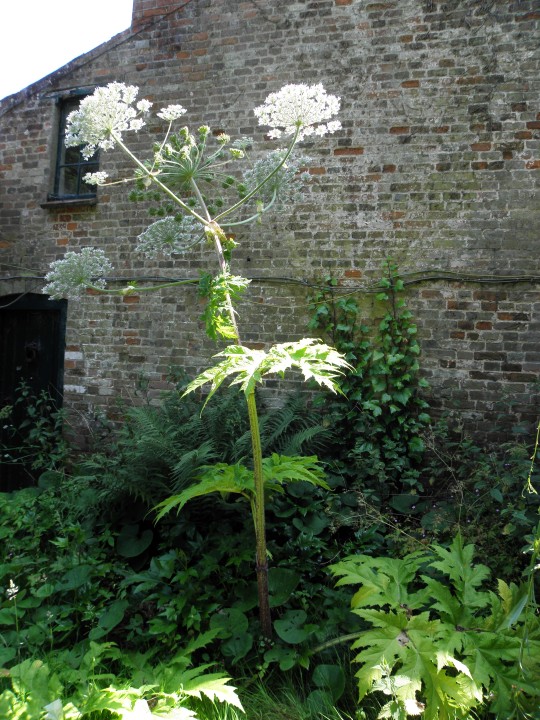
OLYMPUS DIGITAL CAMERA“They want a turnout for Putin that is as huge, wild, and unnatural as a giant hogweed plant.”
Voter Turnouts: Who the Russian Authorities Want to See at the Polls and Who They Do Not Want to See
Lev Schlosberg
Pskovskaya Guberniya Online
March 12, 2018

On March 18, Vladimir Putin plans to become president of Russia once again. The unnatural political system created under his rule is not meant to produce any other outcome.  Realizing this, many people do not want to vote in an election whose outcome is a foregone conclusion. The anger and desperation of these people can be understood and explained. Nevertheless, we must take part in the procedure [sic] scheduled for March 18. We must take part because the tally makes a difference. You can lose on points, but you cannot lose by a knockout, because life could depend on those points.

Amidst increasing stagnation, only the numbers of dissenting citizens whose votes were officially recorded by election commissions, albeit in a dishonest election, can protect dissenters from such things as physical harassment and destruction.

It is all too obvious and extremely dangerous.

Putin will never change. He will not become kinder or smarter. He will not repent for his misdeeds. He will not become a believer in democracy. He will not begin defending the rights and liberties of his fellow Russian citizens.

Putin is a cynic. Like all cynics, he understands only thing: strength. In elections, this strength consists, in the most literal sense, in numbers, in votes.

Russia is tired of Putin. Putin himself is tired of Russia and, in this sense, he is particularly dangerous. He does not inspire people. Votes for Putin are votes cast not enthusiastically, but votes cast in despair. “If not Putin, who else?” people wonder aloud. But no one else in Russia gets round-the-clock press coverage.

In order to protect himself from all risks, Putin has purged the political arena and poured it over with concrete. Any living thing that pushes it way up through the concrete lives despite the system Putin has built. But these living things cannot grow to their full height. Democracy is impossible without the sunlight of liberty. It exists in the old Soviet national anthem, but not in real life in Russia. Putin and freedom are incompatible, because he is a product of unfreedom.

Putin’s likely victory in the upcoming election is as tedious as the man himself, who has long contributed nothing new to Russia and the world except flagrant military threats.

The government’s desperate campaign to get out the vote in the presidential election is founded on the understandable, humdrum intentions of officials, which are in full keeping with the big boss’s desire to paint a ballot, whose outcome was announced before the election, as the result of sincere grassroots enthusiasm.

People forced to watch and listen to this bacchanalia might imagine that voter turnout in this election is the most important objective pursued by officials.

“Our” Voter for “Our” President
Does this mean the Russian authorities want all voters to turn out on March 18, whatever their political preferences? No, it does not mean that at all. The Russian authorities desperately want Vladimir Putin’s voters to show up for this election and no one else. They want a turnout for Putin that is as huge, wild, and unnatural as a giant hogweed plant. Everyone who prevents them obtaining this unnatural percentage of votes are superfluous when it comes to the election. The authorities do not want to see them at polling stations. They will tolerate only the convinced supporters of the other registered candidates, whom they cannot stop from voting.

The omnipresent official election advertisements and the propaganda message that you can vote wherever you want on March 18 are bound to nauseate all decent, self-respecting people. They are a carefully planned and professionally implemented tactic on the part of the authorities. They are like a missile with multiple warheads.

This dull and simultaneously aggressive advertising is meant to help the authorities drag voters obedient to Putin out of their houses on March 18. Such people really do wait for the authorities to tell them what to do, where to go, and what box into which to drop their ballot papers. Programmed by the lies and violence of total propaganda, they reflexively execute direct instructions. So, the authorities have a single objective: to reach out to these votes whatever the cost, through all the windows, doors, attics, cellars, and cracks state propaganda is able to penetrate. This means directly zombifying people whose antennas, so to speak, are tuned to the regime’s transmitter. The authorites send a command to people capable of picking up simple, repetitive signals: go and vote.

Likewise, the deliberate promotion of the election in this digusting manner is meant to turn off people from voting who are independent, self-sufficient, and critical of the regime. Unfortunately, it really does prevent them from voting. Such people do not like being shepherded anywhere, much less to polling stations.

The regime thus kills two birds with one stone. It gets the electoral partisans loyal to Putin out to vote and radically reduces the turnout of democratic voters.

We encourage our people to vote and discourage their people from voting. This is the recipe for so-called victory.

It is sad to see millions of energetic people, sensitive to insincerity and fraud, falling into this primitive psychological trap.

It is sad to see democratic politicians, who will be the first to succumb to the hardly virtual mudslide generated by the absence of democratic politics in Russia, vehemently campaigning for a so-called voters’ strike, which absolutely satisfies the authories. It as if these democratic politicians had lost the capacity to understand events and their consequences, because they are calling for democratic voters to sit out the election, rather than people planning to vote for Putin, Zhirinovsky or Grudinin. This is a self-inflicted wound, a provocative call for democrats to eliminate themselves.

It is unacceptable to let the authorities exploit you as a useful idiot, as the Bolsheviks cynically did with the intelligentsia back in the day.

If democrats sit out elections, they are absent from politics as well.

You Don’t Want a Second Round?
State-driven polling in Russia has become part of the system of state propaganda and popular deception. It is the loyalist “public opinion” polls that have forecast a turnout of 81% of eligible voters, Putin’s share of the tally reaching the desired 70% threshold, and the votes cast for all his opponents squashed into a gamut that runs from 0.1% to 7%.

In reality, as borne out by other public opinion polls whose results are not made public, the voter turnout in many regions of Russia will barely crawl above the 50% mark, which should be expected amidst public apathy and socio-economic crisis, while Putin’s share of the tally will not be much higher than 50%, and a second round-like scenario has been predicted in many cities, meaning Putin will receive less than 50% of the vote there. Even the loyalist pollsters at VTsIOM have reflected this turn of events. Putin’s support rating has been falling throughout the election campaign and will keep on falling, because the public manifestation of alternative political views undermines Putin’s monopoly. Things are getting serious.

What should the democratic voter do in these circumstances? Go vote and support a democratic candidate, thus reducing the share of votes cast for Putin and increasing the number and percentage of votes cast for democrats and democracy.

No one know the numbers of democratically minded citizens there are currently in Russia. Only general elections can show how many there are, but the majority of democratic voters have rejected voting in general elections a long time ago. They continue to refuse to vote nowadays, thus throwing in the towel and relieving themselves of all responsibility for what happens to all of us.

Not only that, but it also makes makes the chances of democratic politicians extremely low in elections. We thus find ourselves in a classic vicious circle: no voters > no results > no voters.

As D’Artagnan said, a thousand devils. How can this be incomprehensible to educated, informed people? But, as we can see, it is incomprehensible.

I cannot fail to remind readers that democrats have learned how to win Russian elections such as they are now. The know-how that was on display in Karelia, Petersburg, Pskov, Yekaterinburg, Yaroslavl, and Moscow has shown that when a large amount of hard work is invested, voters are energetic, and voting is strictly monitored, democrats can win elections. Yes, it is hard. But we do want to win, don’t we?

Does Putin have a plan for Russia?

Yes, he does. On March first, he laid out his plan to the entire world. His plan is as simple as an old grammar school primer: guns instead of butter, and grief to dissenters. Grief to consenters, too, however. It is just that they have not figured it out yet. Putin is the president of war.

Is there anything that can stop or at least limit Putin in his maniacal willingness to sacrifice not only our country but also the entire world to his virtual reality?

There is only one thing: the votes of Russian citizens who disagree with him.

Operation Fiasco
If democratic voters do not turn out to the polls on March 18, the consequences will be  enormous. Not subject to any political restrictions, dependent on the bureaucracy and the security services, listening only the counsel of imperialists and Stalinists on the back of the election results, Putin will cross the line, perhaps more blatantly than he himself intends to right now.

If there is a fiasco on the democratic political flank as the result of the presidential ballot, everything will be caught up in it, both those who voted and those who did not vote. There will be a single political pit for everyone, a mass grave for soldiers killed in war.

In conditions of unfreedom, all that people who do not want violence can do is vote for freedom while the possibility still exists.

Because if it transpires that next to no one wants freedom, the changes that occurr in Russia will be extreme, sending us in a free fall towards the unforgettable Soviet Union, which perished in political and economic paralysis only twenty-six years ago, but which is currently undergoing a political reincarnation.

Will the March 2018 election be honest at least when it comes to tallying the votes? On the whole, no, but the percentage of rigged votes is fairly well known. In approximately fifteen regions of Russia, the so-called electoral sultanates, election results have nothing to do with how citizens vote. In those regions, the final official tallies are simply fabricated, giving the authorities around 10% of the votes of all voters on the rolls nationwide.

In other regions, however, the results do depend on how people vote to a greater or lesser degree. After massive civic outrage over the results of the 2011 parliamentary elections, vote rigging has become much harder, thanks in part to tougher laws.

Who achieved all this? The Russians who went to protest rallies in defense of their votes. The 2011–2012 protests were primarily a civic protest of voters whose votes had been stolen. That is why the authorities took it seriously [sic], and it lead to reforms in the voting system. Criminal penalties for so-called carousel voting were adopted after the protests.

What can supporters of the voters’ strike defend at a protest rally? Nothing. They did not vote. What impact can they make by not voting? None at all. They do not have any arguments, because they have no votes or, rather, they gave up their votes.

Who will notice the 10% of voters who do not go to the polls on Sunday? No one. The numbers will not be recorded anywhere. But it would be impossible not to notice the 10% of votes cast by democratic voters, since they will be recorded in the official final vote tallies. The ballot paper is the citizen’s main weapon.

No one will take into account the people involved in the voters’ strike. But it will be impossible to ignore the votes of four, five or six million people.

Russian democrats have one main objective in the 2018 presidential election: to show that we exist, that we do not agree with Putin’s politics, and that we see Russia’s future differently. This means defending ourselves, our loved ones, friends, and comrades, giving ourselves and the entire country the chance for a normal future, a chance that war will not break out, a chance for peace, a chance to save the lives of people who are still alive.

Elections are a public action, an expression and movement of the popular will. They are the only peaceable means of regime change. Often, things do not work out in single step. But we cannot stand in place. We have to keep moving.

The Russian regime will not change on March 18, 2018, unfortunately. But on that day millions of democratic voters in Russia can save the country’s and their own chance for freedom.

Translated by the Russian Reader. Photo courtesy of the Norfolk Wildlife Trust

P.S. Sometimes it’s useful to carefully rehearse and examine arguments that strike you as just plain wrong—in this case, the argument that “Russian democrats” (whoever they are) will surrender their place in Russian “politics” (as if there is politics in Russia) if they boycott the presidential ballot scheduled for this Sunday.

This argument is made by one of Russia’s smartest cookies and bravest democratic politicians, Lev Schlosberg, in his latest column for Pskovskaya Guberniya Online.

Unfortunately, Mr. Schlosberg is reduced to such a queer combination of sophistry and outright bullying that one recalls the remark Tolstoy supposedly made about the writer Leonid Andreyev: “He tries to scare us, but I’m not frightened.”

This is not to say that the political conjuncture in Russia is not objectively frightening. But Mr. Schlosberg’s argument that the “ballot paper is the citizen’s main weapon” rings hollow when even he admits the extent to which vote rigging and coercion will be big factors in Sunday’s vote.

Finally, Mr. Schlosberg urges Russian democrats (let’s assume they really exist) to vote for “democrats” in the presidential election, which immediately begs the question, What democrats does he mean? Grigory Yavlinsky, the de facto leader of Mr. Schlosberg’s own Yabloko party since its founding in 1993 and a man who has run for president so many times I’ve lost count? Or does he mean Ksenia Sobchak, Vladimir Putin’s real-life god-daughter? She talks the good talk once in awhile, but under what real democratic “procedures” were she and the perennial Mr. Yavlinsky nominated to run for president? Meaning by what democratic majorities?

And this is the real problem. There is no democracy in Russia not because of the villainy of Putin and his satraps, although of course they really have done everything in their power over the last eighteen years to make Russian undemocratic.

The real problem is so-called Russian democrats either have no idea what democracy really entails or they’re all too willing to sell the farm for a penny so they can get the chance to run, with the Kremlin’s approval and vetting, of course, in rigged elections whose outcomes are foregone conclusions.

Can a serious man like Mr. Schlosberg really imagine that a few more percentage points here or there for Ms. Sobchak and Mr. Yavlinsky will genuinly serve as a bulwark against the hell that will be unleashed after March 18, when Putin imagines he is invincible and has yet another six years to do as he likes?

What a naive if not utterly specious argument. TRR

Valery Brinikh: The News from Adygea


07_brinikh
Valery Brinikh

Valery Brinikh
Facebook
September 9, 2017

Hello!

I wrote a report on this Sunday’s elections. Don’t be lazy and read it to the end. You’ll learn a lot of new things.

Who Elects the Head of Adygea: A Political Portrait of the Republic’s Parliament

As you know, on Sunday, September 10, the State Council of the Republic of Adygea (in Adyghe, the Khase) will elect a new head for the republic. There are three candidates, but the outcome is predetermined. Who would doubt it? Correct me if I’m mistaken, but in the history of modern Russia this was probably the first instance when the outgoing head of a Russian region brought his own kinsman to Moscow so that Putin could view the bride, i.e. his chosen successor. Nor, we must note, were he and his kinsman immediately shown the door. This was probably taken by the petitioners from Adygea as a favorable sign.

Everything kicked off when, in March of last year, as it was about to give up the ghost, the members of the Adgyean parliament’s fifth convocation nearly unanimously voted (fifty yeas, four nays) to abolish direct, popular elections of the republic’s head, adopting a special law and making the relevant amendments to the Adygean Constitution. Having denied Adygeans the right to vote directly for head of the region, the “people’s” elected representatives formally explained their decision as a means of making the electoral process less expensive. However, no one abolished another law, a law of everyday life: cheaper doesn’t mean better.

So elections to the sixth convocation of the Adygean Khase, in 2016, took place with the understanding that it would be the new parliament, not the people, that would be picking the republic’s new head. So, the requirements for sifting out the winners were tougher than usuaul. It was boom or bust, literally, all or nothing. The powers that be backstopped its chosen candidates to the hilt, and the elections took place in a stifling climate of lawlessness, generated by the acting executive branch and the local office of the United Russia party. Functionaries of the Rodina (Motherland) party did everything they could to force the Adygean Central Elections Commission to remove the opposition party’s entire regional list of candidates from the ballot, although the party had a good chance of taking several seats in parliament. The billboards, posters, and flyers of all candidates and parties except United Russia and LDPR were destroyed hours, if not minutes, after they were posted. The vote tallies at the polling stations were skewed, and the votes received by candidates and parties that are not part of the so-called parliamentary grouping (United Russia, CPRF, A Just Russia, and LDPR) were totally nullified. The latter parties divvied up their shares of the vote totals in keeping with quotas that had been agreed in advance in Moscow. So, the current Adygean Khase consists of 38 MPs from United Russia, four MPS each from the CPRF and LDPR, and two MPs from A Just Russia. Two more MPs have to be elected in by-elections on September 10. There is no doubt that one of the two will be a United Russia member. Thus, MPs from United Russia make up 80% of the republic’s parliament, while the CPRF and LDPR have 8% of MPs each, and A Just Russia has 4% of MPs. Now let’s compare these proportion with the spread of MP mandates in the Russian State Duma. United Russia’s MPs occupy 76% of the seats; the CPRF, 9.5%; the LDPR, 8.7%; and A Just Russia, 5.8%. The Duma also has two MPs who are not members of these parties. One of them is a member of the Rodina party, the party that was successfully sent packing in Adygea. The outcomes are quite similiar, don’t you think? It’s as if the same templates had been used.

The lineup of MPs running in the 2017 elections has been thoroughly purged. Anyone who provoked the slightest doubts has been removed from the lists. Only five people who have been MPs for more than three convocations are left, and only nine MPS from the last three convocations are still in the running. Two of them are from the CPRF’s faction (Adam Bogus and Yevgeny Salov), while the rest are from United Russia. The other thirty-four MPs (out of a total of forty-eight) were elected during Aslan Tkhakushinov’s last two terms as head of the republic [he resigned in January 2017, after ten years in office], under the watchful eye of his team. In fact, they are part of his team.

Clearly, they express not the will of the people, but the will of their true masters, the men who got them elected. Thus, the clearly unelectable United Russian candidates Sergei Belokrys (District No. 16) and Rustam Kalashov (District No. 21) got the cherished mandates. During their party’s so-called primaries [the English word is used in Russian], they both took an honorable third place in their districts with 7% and 27% of the vote, respectively. Even more unelectable pawns were kinged after winning spots on United Russia’s party list.

They hardly all have the right to be called people’s representatives, if only because not all the MPs in the Khase’s sixth convocation were elected by the people on the new single voting day. Thus, seven of the winning candidates from United Russia list soon resigned for different reasons, and their mandates were automatically handed over to five new MPs from the party list (Yuri Gorokhov, Yevgenia Dyachkova, Zurab Zekhov, Azamat Mamkhegov, and Murat Shkhalakov). Two more MPs will be selected on September in single-mandate constituencies. LDPR’s list of of winners included party leader Vladimir Zhirinovsky and the party’s regional leader Denis Ogiyenko, neither of whom took their seats in the Adygean parliament. Why Zhirinovsky did this is clear enough, but Ogiyenko works as an aide to an MP in the State Duma, where everything is grown-up and they feed you caviar sandwiches. The two LDPR leaders were replaced as Khase MPs by Valentina Chugunova and Tembot Shovgenov, thus technically bypassing the will of voters.

It is interesting to compare how much the majoritarian MP mandates in the republic’s urban districts and rural districts are worth in terms of votes cast by voters. Thus, Maykop, the capital city, is divided into nine electoral districts, inhabited by a total of 132,890 voters. One majoritarian mandate is thus worth, on average, 14,776 potential votes.  The Maykop Municipal District [not to be confused with Maykop per se] has three electoral districts and 46,111 voters, so an MP’s mandate is worth slightly more there: 15,370 votes. The Teuchezh District has only one majoritarian mandate, worth 13,549 votes. The Takhtamukay District is home to 51,840 votes, and so its four majoritarian mandates are worth an average of 12,960 votes. In the Giaginskaya District, the mandates are worth a bit less (12,563 votes on average), while in the neighboring Shovgenovsky District, it is worth 12,482 votes. Adygeysk’s single majoritarian mandate is worth 12,029 votes, while the Koshekhabl District’s two mandates are worth 11,407 votes apiece. The Krasnogvardeyskoye District has the “cheapest” mandates: two at 11,013 votes apiece. But strangers do not roam the homeland of the sweet couple of Aslan Tkhakushinov and Murat Kumpilov [Adygea’s acting head and Tkhakushinov’s chosen successor]. They elect only their own people and only on the advice of their superiors.

It was not entirely accurate to distribute MP mandates generally (whether from majoritarian single-mandate constituencies or party lists) in terms of the number of voters in the districts. The largest number of voters lives in Maykop (39% of all voters in Adygea), and its goes down from there. The Takhtamukay District has 15% of voters; the Maykop District, 13.6%; the Giaginskaya District, 7.4%; the Koshekhabl District, 7%; the Krasnogvardeyskoye District, 6.5%; the Teuchezh District, 4%; the Shovgenovsky District, 3.7%, and the town of Adygeysk, 3.5%. Meanwhile, the MPs from Maykop have only 30% of the mandates in the Khase; Takhtamukay District, 20%; Maykop District, 14%; Giaginskaya District, 6%; Koshekhabl District, 10%; Krasnogvardeyskoye District, 8%; Teuchezh District, 6%; Shovgenovsky District, 4%; and the town of Adygeysk, 2%.  The imbalance is obvious.

The sixth convocation of the Adygean Khase has only eight MPs (16.7% of the total number) employed in the state sector. Six MPs (12.5%) are party officials. The remaining MPs (over 70%) run businesses in different sectors of the economy. The largest number of them (21 MPs out of a total of 48) earn their money in construction, commerce (including wholesale commerce), and services. Four MPs (8.3%) get their income from agriculture. Three MPs (6.3%) work in banking and investing, while two MPs each (4.2% each) are involved, respectively, in the hotel and tourism business, logging and extractive industries, and industrial manufacturing. Yet the CRPF and A Just Russia factions are dominated by party officials (four out of six), while members of United Russia have a clear advantage in all other lines of work.

The sixth convocation of the Khase includes two high-profile businessmen with criminal pasts (according to the media): United Russia member Gissa Baste (aka Voloskevich) and non-partisan MP Adam Bogus (aka Mazai), who blocks with the CRPF faction. Several well-known businessmen from United Russia have close ties with different dubious firms and people with criminal pasts. In particular, nine deputies (six from United Russia, two from the LDPR, and one from the CPRF) are involved in the construction business in the Takhtamukay District, run by Azmet Skhalyakho aka the Foreman. According to the media, he earned the nickname not on the fields of his native Takhtumukay District, but by shaking down market traders in Krasnodar during the “wild” 1990s. The notorious prosecutor Murat Tkhakushinov, son of ex-republic head Aslan Tkhakushinov, worked in the same district until recently. The Takhtamukay District’s proximity to Krasnodar, the much lower prices for land in the district than in Krasnodar, and the total control over the black market for land plots by criminal gangs, who have fused with Adygea’s government agencies, have made the construction business in the district quite profitable. Especially if you are not bothered by the legality of particular transactions, do not waste money on pollution treatment facilities, and pay no mind to the quite costly environnmental requirements.

Questions also arise when you take a closer look at the life and times of Vladimir Narozhny, head of the United Russia faction and chair of the republic’s parliament. There are strange blanks in his CV from 1981 to 1991, which for some reason he does not particularly advertise. Judging by occasional references, he ran various agricultural businesses during this period. Currently, he is associated with a number of firms, also involved in agrobusiness, in Adygea and Krasnodar Territory. They have different names and legal addresses, and yet they have the very same Primary State Registration Number and Taxpayer Identification Number. Obsessive thoughts of criminal money laundering schemes come to mind, but I have probably read too many detective novels.

As a final touch to my sketch of the current Adygean Khase, I want to focus on yet another imbalance, which testifies to a deeply embedded problem, if not a chronic disease, that affects the regional authorities in Adygea. I have in mind the distortions in personnel policy that favor the so-called titular ethnic group, the Adyghe. This phenomenon, which I would dub the Adyghization of power in the republic, was especially rampant during Aslan Tkhakushinov’s second term and has kept evolving in the present. I would not argue it has anything to do with ethnic conflicts between two great peoples, the Russians and the Adyghe, but has been caused only by attempts by specific members of the so-called Ulyap clan, who have ruled the republic for the last ten years, to ensure they will stay in power for the indefinite future. This is done both by depriving the Adygean populace of the right to elect the republic’s leaders and local government officials in direct elections, and through a deliberate personnel policy of giving preference to members of the titular ethnic group when filling vacancies in state and municipal agencies—if possible, to members of one’s own clan and numerous kinsmen. This cup has also touched the republic’s legislative branch. Whereas the republic’s population consists of approximately 63% Slavs, 25% Adyghe, 3.5% Armenians, and 8.5% other ethnic groups, the Khase is dominated by members of the titular ethnic group, who hold 28 seats (or 58.33%), while the Slavs are represented by 19 MPs (or 39.58% of seats). There is also one Armenian MP in the parliament, and no one else. I do not insist on introducing ethnic quotas. (God forbid, we have already been through such attempts at achieving parity.) I merely want to draw attention to this obviously non-random outcome as the inevitable side effect of dishonest elections.

Valery Brinikh, Chair of the Adygean Regional Branch of the Greens Russian Ecological Party, September 8, 2017

Translated by the Russian Reader. Photo courtesy of Bellona