Hassan, a Somali-American airport shuttle driver in Minneapolis, is struggling to make ends meet. When Lloyd, a stranded twenty-something at the airport, offers to pay Hassan to take him overland to Chicago, it seems worth the risk. But as the realization grows that his passenger is not what he seems, Hassan finds himself trapped in a terrifying ride that he can’t escape, knowing that saving himself might put countless others in danger.
[…]
Andrei Kolganov: “Somalis who work instead of living off welfare are not a horror story, but a fantasy!”
Source: Ororo.tv. Racist comment translated by the Russian Reader, who has unfortunately read and heard thousands of such comments in Russian during his thirty-plus years on the Russia desk. Russian Reader No. 2829 was inspired by another such comment. \\\\\ trr
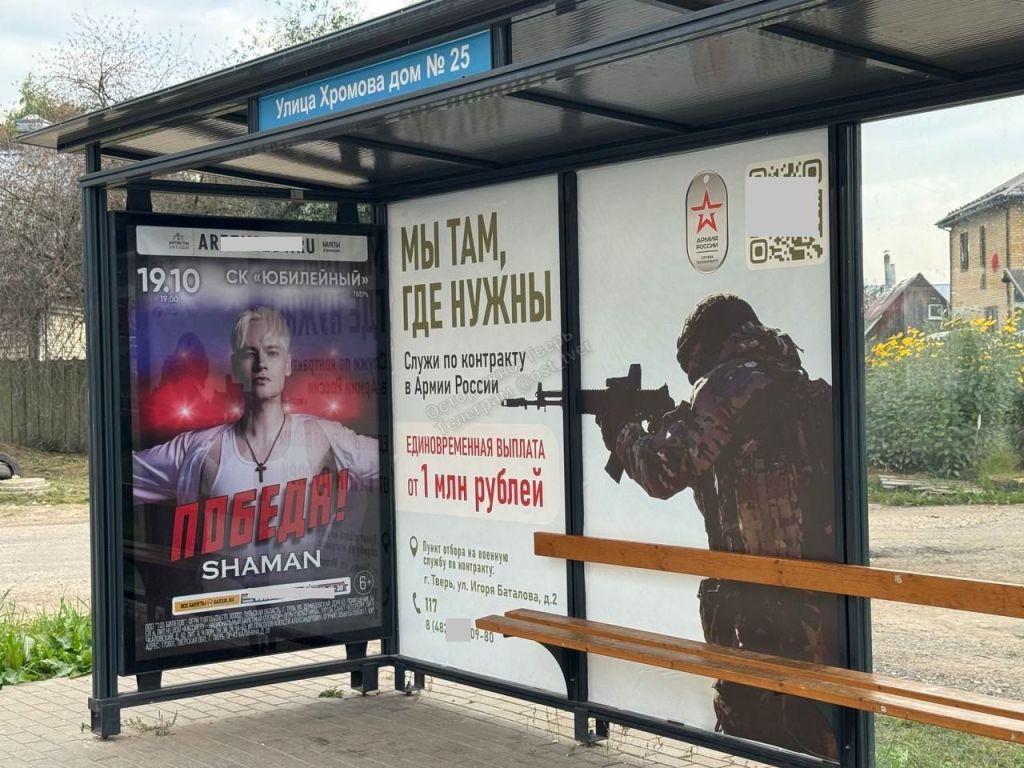
Top: “25 Khromov Street.” Left: “Shaman: Victory!” Right: “We are there where we need to be. Serve as a contract soldier in the Russian Army and get a one-time payment starting at one million rubles.”
Source: Caution, Tver! (Telegram), 1 September 2024. Thanks to Andrey Anissimov for the heads-up. “Basurka” is the faux-Russian nonce word I coined for this distressing post. It was suggested to me by our building’s bilingual garbage bin.||| TRR
Many acquaintances from Russia condemn me for calling for the bombing of Russian factories and supporting the Ukrainian army’s Kursk offensive. They genuinely don’t get how one could wish defeat on one’s own country. Some have quietly unfriended me, while others continue to read my posts but are perplexed and perhaps even offended by them.
They are often the same people who “love (their) country no matter what.” This is where you all and I part ways. You REFUSE to look at reality—you turn away from it in order to love your country without breaking a sweat, as if love were a chain and you’ve been chained to a radiator since childhood. It works differently for me. I make my own decision about whether I like this scene or not. And, if my country jumps from one bloody shitstorm to another like a maniac running in circles, it’s not worthy of my love and I rescind its right to be my country. People are another matter, especially the unborn. It makes sense to fight for them. But it’s secondary to me what the country they’ll live in will be called and how big it will be. If they’ll have a better chance for a decent and safe life in a small country, then we should choose a decent and safe life for them.
Russia is an anti-human phenomenon. It is a threat to the entire world and to the people within the country. Like any rabid macaque with a grenade, it must be stopped. Look reality in the eye at last. Don’t look away. It’s happening right now, and you, with your unadulterated love, are a part of it.
Image number one. A fourteen-year-old girl dressed in white sneakers and a white tank top, sitting on a bench in the yard of her house on an ordinary summer day. It all looks ordinary, but there is one catch: the girl is dead. A fragment of a cluster bomb, which the Russians dropped on Kharkiv on 30 August, tore off the child’s head. Everything happened instantly; no one had time to hide. The girl’s body remained seated on the bench. Perhaps her last thoughts were of her father, who had gone missing in action in the war with Russia. The family knows he was killed, but they can’t get his body back. The worst part is that he gave his life thinking he was protecting his daughter. Russia got to her, though, and so the family’s story is over. Father and daughter are not alive because they were born near Russia. Other Kharkiv residents who were killed in that senseless attack are also “guilty” in this sense.
Image number two. A girl again, but from another city. She is fifteen years old and has come to Novosibirsk from the Altai to enroll in the Olympic reserve school. She is quite beautiful, gentle, kind, and has great hopes. She doesn’t understand why her fellow students call her a “dirty, slant-eyed pig.” They secretly pour waste into her backpack and mock her appearance in public. After two years of this terror, which was encouraged by coaches and school officials, the formerly cheerful girl will come to realize that this life is not for her. In her seventeenth year, she will kill herself and leave a suicide note on her Telegram channel. She will say in the note that the unbearable racist bullying was her reason for leaving this life.
The school will then post a touching obituary on their Vkontakte page. They won’t specify the cause of death, of course. All comments expressing outrage over the bullying will be assiduously deleted. Only the wishes of “soft clouds” and broken heart emojis will be left untouched.
Incitement to suicide is a criminal offense, actually. But no one will answer for the death of Ksenia Cheponova because it is not the custom in Russia to punish one’s own kind for a crime against outsiders. “You’re not my brother, black-ass louse,” says the immortalized Russian movie hero. These words are much more than a mere insult: this is how millions of people in Russia understand justice. Moral rightness is not based on your deeds, but on whether you are an insider or an outsider. It doesn’t matter what you did. What matters is whether you are stronger than me at the moment.
Ksenia Cheponova
Image number three. Beslan. September first marked the twentieth anniversary of the mass murder of children by Russian security forces in that ill-fated school. For twenty years, the perpetrators have never been held accountable for lying about “350 hostages.” There were 1,100 hostages, as we know. No one has been held accountable for firing from a tank at the building where the children were. Three hundred and thirty-four people were killed during the assault, including one hundred and eighty children. This terrorist attack might not have happened if Russia hadn’t started a war in Chechnya. The hostages might have lived if the security forces had actually tried to save them. But they were killed and twenty years on their sacrifices are still covered in lies and impunity.
All of those people could have lived if it weren’t for their country, sick with messianism and aggression. And the “it’s like this everywhere” ploy doesn’t work. No country in the world has 60 million lives lost in wars, gulags, and famines under its belt.
The time for saying “no war” has passed. It is clear that where there is a “great Russia,” there will be perpetual war. That’s why we should say no to Russia, and yes to independent Ukraine, Ichkeria, Buryat-Mongolia, and all free nations.
Or is the idea of a united Russia dearer than the lives of your children?
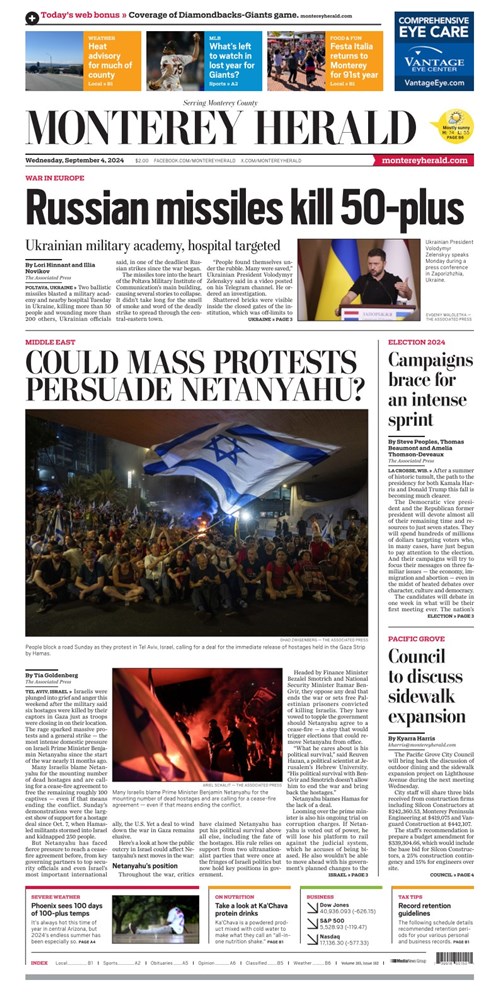
Two ballistic missiles blasted a military academy and nearby hospital Tuesday in Ukraine, killing more than 50 people and wounding more than 200 others, Ukrainian officials said.
The missiles tore into the heart of the Poltava Military Institute of Communication’s main building, causing several stories to collapse. It didn’t take long for the smell of smoke and word of the deadly strike to spread through the central-eastern town.
The strike appeared to be one of the deadliest carried out by Russian forces since the war began more than 900 days ago, with Russia’s Feb. 24, 2022, full-scale invasion.
“People found themselves under the rubble. Many were saved,” Ukrainian President Volodymyr Zelenskyy said in a video posted on his Telegram channel. He ordered an investigation.
Shattered bricks were visible inside the closed gates of the institution, which was off-limits to the media, and small pools of blood could be seen just outside hours later. Field communications trucks were parked along the perimeter. Roads were covered in glass from shattered apartment windows.
“I heard explosions … I was at home at that time. When I left the house, I realized that it was something evil and something bad,” said Yevheniy Zemskyy, who arrived to volunteer his help. “I was worried about the children, the residents of Poltava. That’s why we are here today to help our city in any way we can.”
By Tuesday evening, the death toll stood at 51, according to the general prosecutor’s office.
“My deepest condolences to the families of those killed and injured in the Russian missile attack on Poltava,” Ukraine’s first lady, Olena Zelenska, posted on social media Tuesday. “This is a shocking tragedy for the whole Ukraine.”
Filip Pronin, governor of the region that bears Poltava’s name, announced on Telegram that 219 people were wounded. Up to 18 people may be buried under the rubble, he said.
Ten apartment buildings were damaged, and more than 150 people donated blood, Pronin said.
He called it “a great tragedy” for the region and all of Ukraine, and announced three days of mourning starting Wednesday.
[…]
The academy trains officers in communications and electronics, honing some of the most valued skills in a war where both sides are fighting for control of the electronic battlefield.
“The enemy certainly must answer for all (its) crimes against humanity,” Pronin wrote on Telegram.
The Kremlin offered no immediate comment on the strike. It was not clear whether the dead and wounded were limited to Ukrainian military personnel, such as signal corps cadets, or if they included civilians.
Since it embarked on its full-scale invasion in early 2022, the Russian military has repeatedly used missiles to smash civilian targets, sometimes killing scores of people in a single attack.
Some of the deadliest such assaults included a 2022 airstrike on a theater in Mariupol that killed hundreds of civilians sheltering in the basement and a strike that same year on the train station in Kramatorsk that killed 61. Apartment buildings, markets and shopping centers have also been targeted.
Poltava is about 350 kilometers (200 miles) southeast of Kyiv, on the main highway and rail route between Kyiv and Ukraine’s second-largest city, Kharkiv, which is close to the Russian border.
The attack happened as Ukrainian forces sought to carve out their holdings in Russia’s Kursk border region after a surprise incursion that began Aug. 6 and as the Russian army hacks its way deeper into eastern Ukraine.
The missiles hit shortly after an air-raid alert sounded, when many people were on their way to a bomb shelter, Ukraine’s Defense Ministry said, describing the strike as “barbaric.”
Rescue crews and medics saved 25 people, including 11 who were dug out of the rubble, a Defense Ministry statement said.
The strike came on the day that Russian President Vladimir Putin visited Mongolia. There was no indication that his hosts would heed demands to arrest him on an international warrant for alleged war crimes.
Zelenskyy repeated his appeal for Ukraine’s Western partners to ensure swift delivery of military aid. He has previously chided the U.S. and European countries for being slow to make good on their pledges of help.
He also wants them to ease restrictions on what Ukraine can target on Russian soil with the weapons they provide. Some countries fear that hitting Russia could escalate the war.
“Ukraine needs air defense systems and missiles now, not sitting in storage,” Zelenskyy wrote in English on Telegram.
“Long-range strikes that can protect us from Russian terror are needed now, not later. Every day of delay, unfortunately, means more lost lives,” he said.
Ukraine’s air force said Monday that Russia had launched an overnight barrage of ballistic and cruise missiles and drones at Kyiv as children prepared to return to school. Multiple explosions echoed across the capital early Monday morning as Ukraine’s air defenses shot down many of the weapons, causing damage and fires as the debris fell onto the capital.
Ufa’s Kirov District Court has remanded 20-year-old university student Makar Nikolayev in custody to a pretrial detention center for a month on charges of “promoting terrorism.” The court issued its ruling on 30 August, but it was made public only on Monday, 2 September, as reported by the Telegram channels of Baza and Idel.Realities, who cited sources. The court confirmed Nikolayev’s arrest to news website Ufa1.ru.
In 2020, Nikolayev, then a prep school student, designed an information retrieval method for creating a Russian national archive on the history of the Great Patriotic War. The boy wanted to recover information about his great-grandfather and in the process designed an entire system. His project, “Methodology for Creating a Family Archive,” won the Russian national contest “My Country — My Russia,” one of the projects of the Russia Is a Land of Opportunities presidential platform.
Later, Nikolayev went to Germany to study. According to Idel.Realities, Nikolayev had been studying at a university in Frankfurt am Main in recent years. In August 2024, he came home on holiday to Ufa, where he was detained.
According to police investigators, during his time abroad, Nikolayev wrote comments on social networks supporting Ukraine and urging people to join the Russian Volunteer Corps. The stipulated punishment for violating Russian Federal Criminal Code Article 205.2.2 (“Public calls to carry out terrorist activities; public justification of terrorism or promotion of terrorism, committed using mass media or electronic or telecommunication networks”) is five to seven years in prison.
WordPess AI-elicited image: “Mongolia, as imagined by Russian liberals”
Political scientist Andrei Nikulin writes on his Telegram channel: “If even Mongolia can be progressive and democratic, then all the more so can Russia be progressive and democratic.” Claims to the contrary are just neurolinguistic programming, he argues.
I am unironically aware that, from the Moscow intellectual’s lofty vantage point, Mongolia is a backward, third-rate country. The whole semantics of Nikulin’s turn of phrase says so. Since those nomads were able to do it, why can’t we, cultured Europeans, have a normal future?
I generally salute positive affirmation. But before we are cheered up by a sense of superiority, let’s face reality. Here are just a few facts about Mongolians today.
Yes, forty percent Mongolia’s population is made up of nomads who, like their ancestors, live in yurts and travel with their livestock. Yes, there are only three paved roads for a population of three and a half million people.
But since 1990, the Mongolian people have elected six presidents, never once allowing any of them to exceed their rightful term in office. The Mongolian constitution gives a leader only one six-year term without the right to re-election, and this norm has never been violated. The average turnout in elections at all levels of government is seventy percent. By comparison, turnout in progressive Moscow barely exceeded thirty percent when Navalny ran for mayor.
Further, while Russians were seizing Crimea and “nullifying” Putin’s previous terms as president, the humble Mongolian nomads forced their government to resign at least twice, in 2017 and 2021. In 2012, a former president was arrested and jailed on charges of bribery.
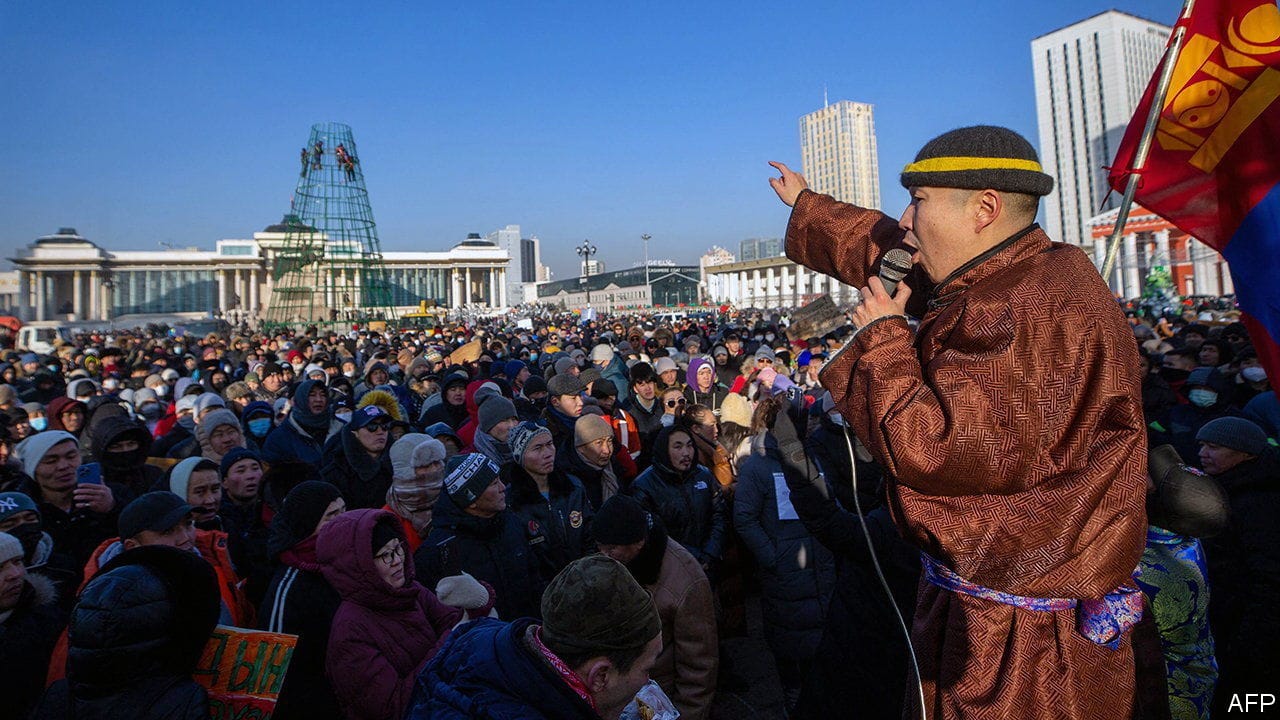
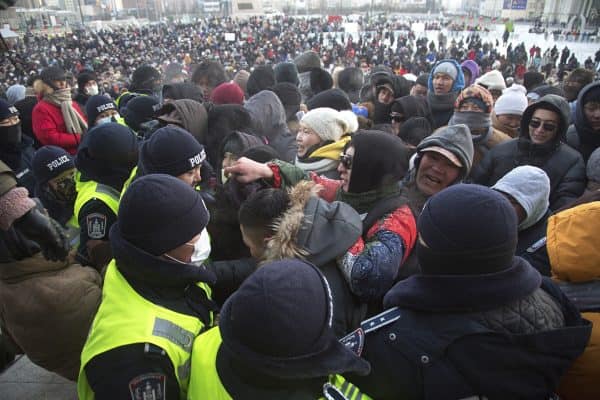
The real, democratic Mongolia, as seen in the photos selected by the author to illustrate her post
More recently, in the winter of 2022, Mongolians staged large-scale protests in Ulaanbaatar over a corruption scandal. It transpired that when exporting coal to China, customs officials had “diverted” six and a half million tons of the cargo, according to the paperwork. Mongolians considered this a theft of national revenues and marched on the capital’s square demanding that the theft be investigated and the names of those involved be made public. Eventually, the protesters stormed government house and demanded the government’s resignation.
Remind me again what Muscovites stormed in Moscow after Navalny’s investigations, of which there were dozens?
But Mongolians protested in the cold for three weeks until they forced the government to arrest the corrupt officials and reform the coal industry.
In April, the protests resumed. This time, Mongolian youth blamed the government for its poor performance and rising prices.
And lastly, let’s talk about the culture. Mongolians do not shout at their children or punish them. You will not hear from a Mongolian mom say to her child “I told you to shut your mouth” or “The more you cry, less you piss.” How should I put it? Mongolians love their children. There are only 924 orphaned children the entire country—that is less than 0.03% of the population. By comparison, there are 391,000 children living in Russian orphanages—that is 0.3% of the Russian population. In other words, children in Russia are left parentless ten times more often.
You can remain trapped in the old optics, looking down on everyone and denying reality. This will not bring social and political change any closer. If you want to go on living, but your body is rotting and falling apart, you need an accurate diagnosis. And the more honest it is, the greater the chances of your recovery.
Bizarre Beasts, “Tenrecs Will Not Stay in Their Lane”
If all crustaceans “want” to look like crabs, then tenrecs “want” to look like basically any other small mammal. These weird little guys are endemic to Madagascar—they’re native to nowhere else on Earth.
Новый культурный (или мультикультурный?) код Европы (если это правда Финляндия). https://t.co/ktnP1D1fp0
— Геннадий Гудков Gennady Gudkov (@gudkov_g) July 7, 2024
Prominent Russian liberal in exile Gennady Gudkov wrings his hands over what the “coloreds” are doing to his Russian liberal fantasy “Europe”: “Europe’s new cultural (or multicultural?) code (if that really is Finland).” ||| TRR
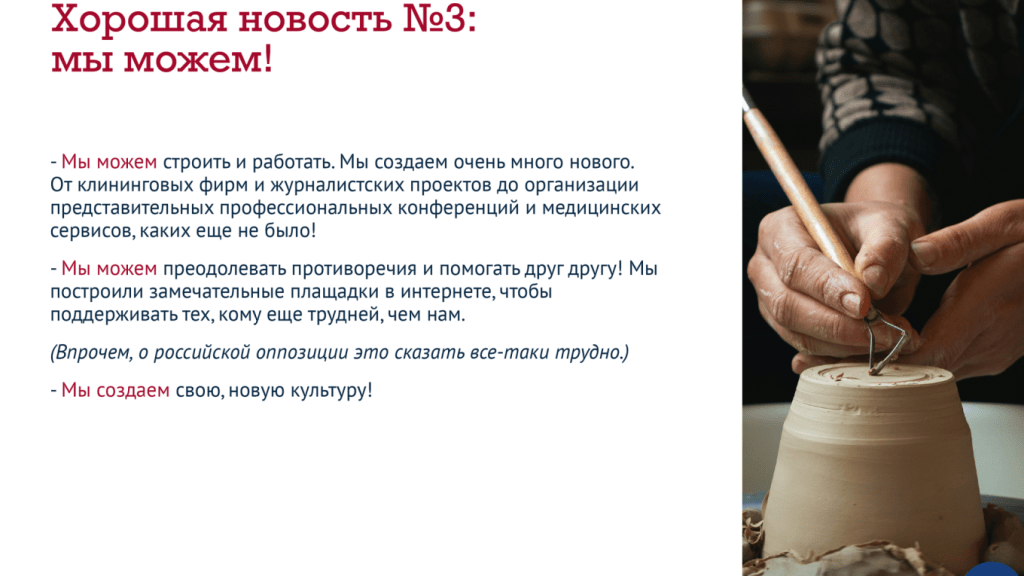
We can build and work. We have been creating many new things — from cleaning firms [kliningovykh firm] and journalism projects to organizing impressive professional conferences and medical services the likes of which have never been seen!
We can overcome animosities and help one another! We have built outstanding platforms on the internet to help those who have it worse than we do. (However, it is still difficult to say this about the Russian opposition.)
Sciences Po and its Provost Sergei Guriev, a world-renowned Russian academic and economist who had to flee his country in a day in 2013, were honoured to welcome @Ekaterina_Schulmann for a very exclusive conference on 20 April, 2023. This political scientist and social media sensation guest speaker addressed the serious matters of the Russian regime stability and the dynamics of public opinion.
Source: Sciences Po (YouTube), 8 May 2023. My question, had I been in the auditorium for this fascinating lecture, would have been to the audience: how many of you are neither Russian nationals nor speak Russian? I suspect that the numbers of such non-Russian nationals and non-Russian speakers were quite low. And why was this lecture delivered in English, not French?||| TRR
Source: unsolicited ad on Facebook
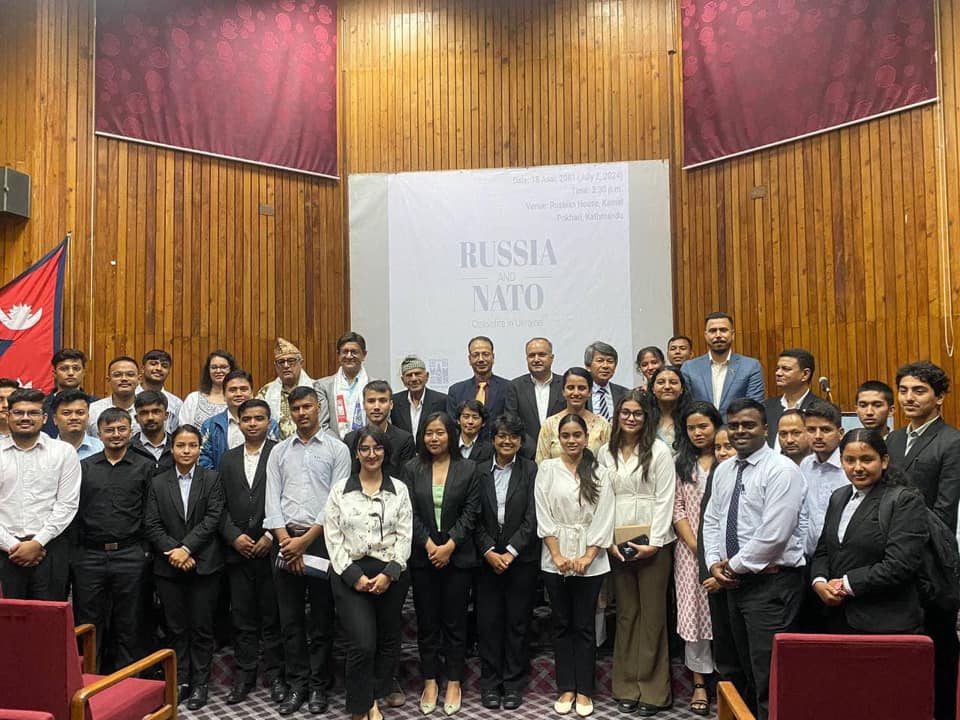
On 2 July 2024, International Law Club successfully organized an academic discourse entitled “Russia and NATO: Ceasefire in Ukraine.”
The speakers for the program included Dr. Yubaraj Sangroula (Professor of International Law), Dipak Gyawali (Former Minister of Ministry of Water Resources, Nepal), Dr. Govind Kusum (Former Secretary of Ministry of Home Affairs), Prem Chandra Rai (From Himalayan Development Affairs Council, Nepal), Yugichha Sangroula (Masters in International Humanitarian Law from Geneva), Dmitry Stefanovich (From IMEMO RAS, Moscow)
The welcoming remarks for the discourse were delivered by Anton Maslov, First Secretary and Director of the Russian House. The distinguished Chief Guest of the program was Seniormost Advocate Krishna Prasad Bhandari.
Dr. Dipak Gyawali provided valuable insights into the historical context of the Russia-Ukraine conflict, emphasizing its longstanding nature within the framework of NATO-Russia dynamics.
Professor Dr. Yubaraj Sangraoula shed light on the hegemonic influences and Western interference in global affairs, highlighting the concept of a rule-based international order that has been divisive.
Assoc. Prof. Yuggichhya Sangroula emphasized the importance of interpreting international law in a balanced manner, noting the significant contributions of Asian nations to its development alongside European nations.
Assoc. Prof. Prem Chandra Rai advocated for adherence to the UN Charter as the foundation of international law, stressing the need for inclusive peace initiatives that engage all relevant parties, including Russia.
Dr. Govind P. Kusum underscored the disproportionate impact of global conflicts on developing nations and emphasized the urgent global need for peace and security.
Mr. Dmitry Stefanovich discussed the inadequacy of mere ceasefires and called for sustainable solutions and increased global cooperation, particularly from the Global South, to address ongoing conflicts.
The subsequent question and answer session facilitated critical discussions on ceasefire strategies and institutional reform. Speakers analyzed geopolitical dynamics, and Western dominance, and proposed measures for achieving global peace and security, with a focus on strategies applicable to third-world nations.
Overall, the seminar provided a platform for robust dialogue and strategic insights into resolving international conflicts and fostering a more peaceful world order.
We sincerely express our gratitude towards the speakers, guests, and participants for their involvement.
The Club would like to thank the Russian House, especially the Director of Russian House, Mr. Anton Maslov for supporting us in organizing this academic discourse and acknowledge the presence of Ms. Alena Danilova, Press Secretary from the Russian Embassy at this program of ours.
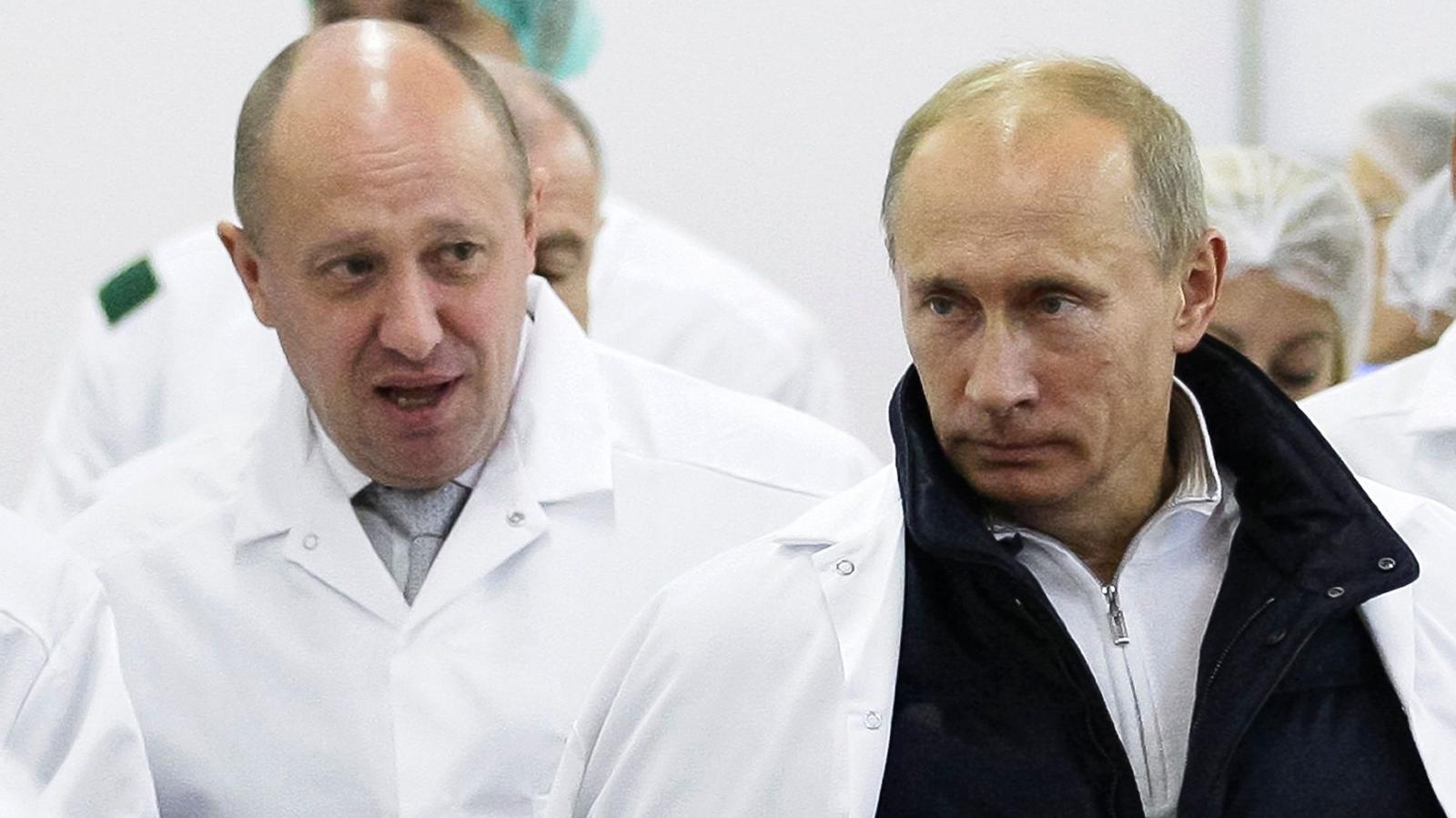
Yevgeny Prigozhin (left), the man whose company has been accused by at least two Russian publications of plotting to destroy the United States by igniting a race war. Photo by Alexei Druzhinin. Courtesy of AP and Quartz
I’m not going to comment on it except to say that, even if there were such a plot, it’s a Russian problem, not a US problem.
No Americans in their right minds have any suspicions about African Americans and their ability to distinguish real anti-racist campaigns from fake ones.
No Americans in their right minds think that all is right with “race” in the US and the treatment of people of color by authorities and our country’s dominant and hegemonic classes.
No Americans in their right minds think people of color either have no reason to protest their present condition or no constitutional right to engage in protest, including, when necessary, civil disobedience.
Decent Americans support all Americans of color in all their strivings for total justice and unequivocal equality.
If certain Russians, especially Russians with links to the current Russian regime, think they can or should meddle in our domestic affairs, this is a Russian problem.
If there are people left in Russia with any pride in their country and the desire to have friendly relations with other countries in the world, including the US, they need to reign in the current Russian regime as soon as possible. {THE RUSSIAN READER}






 Yevgeny Prigozhin (left), the man whose company has been accused by at least two Russian publications of plotting to destroy the United States by igniting a race war. Photo by Alexei Druzhinin. Courtesy of AP and