I’m not sure what you get if you place the winning bid on this photograph by the fantastic Pskov photographer Dmitry Markov. (An NTF? A .jpeg file? A real print?) It should be in a museum. Source: OpenSea
⊕ ⊗ ⊕ ⊗ ⊕
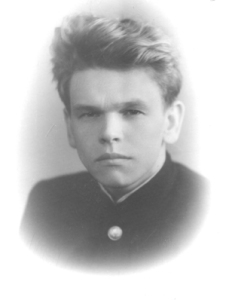
Revolt Pimenov:
A quote about the first months of a certain war:
“I tried to read in the faces of the thousands what was in their minds this Easter day. But their faces looked blank. Obviously they do not like the war, but they will do what they’re told. Die, for instance.”
Perhaps worth noting: Putin hasn't personally commented on Ukraine since Dec. 23. His annual Tatiana's Day Q&A with students came and went today without a question on current events. Last year, one of the students asked him about his purported Black Sea palace.
It strikes me of note (not that this has any bearing or reflection on Putin's actual decision making) that there's very little sense in Moscow of people having any idea or interest in fact that their country may be days away from launching a devastating invasion of a neighbor
My dear Ukrainian friends! I want to express my support to you in connection with numerous reports about a possible Russian invasion of Ukraine. You should know that the vast majority of my friends in the art profession are not only against such aggressive behavior, but also strongly condemn it. We see that by increasing its military presence on the border, the Kremlin hopes to intimidate Ukraine and push Europe. This gang of people in power has long ago lost all sense of decent behavior, having completely turned into goons in terms of their mindset. The only deterrent for them is a united stance by the western countries on this issue. I really hope that after seeing this unity, they will crawl back to their lair, not daring to unleash hostilities. In any case, please accept my words of support and know that there are a lot of people in Russia who have not supported and are not going to support this government and its insane aggressive ambitions.
Translated by the Russian Reader
Update (28 January 2022):
The Pig Hut, as this exhibit is known, is the work of Rosemarie Trockel and Carsten Höller, and they, like Herr Weinberger, have an explanation for this work. Pigs and humans have similar nervous systems, they say, so they probably feel the same things. The stream has no way to know the psychomedical part of the reasoning. It approaches under the auspices of art and so it recognizes the pigs as readymades: humble, ordinary objects imported into this festively aesthetic space and thus invested with the condition of “art” by the mere fact of occupying its domain. By the same token, of course, the reflection in the glass renders the visitors themselves into readymades, making the corrupted stream even dirtier as it flows on toward the first of Documenta’s official buildings, Kassel’s Fridericianum.
Russia: punishment psychiatry back in vogue People and Nature
February 17, 2016
The Russian performance artist Pyotr Pavlensky has been sent to the notorious Serbsky Institute of Psychiatry, and his family and lawyers are worried about him.
On November 9, 2015, Pavlensky poured petrol over the doors of the infamous Federal Security Service (FSB) building at Lubyanka Square in central Moscow and set fire to them. He named the action Threat (Ugroza). Friends photographed and filmed him as the flames took hold. (Damage was done, but no one was hurt.) Pavlensky was arrested soon afterwards.
The FSB’s building was inherited directly from the Soviet KGB. Thousands of the regime’s political opponents were tortured and killed behind its austere façade.
Pavlensky is also awaiting trial for charges arising from an earlier performance, Freedom (Svoboda). In February 2014, days after the removal of Ukrainian president Viktor
Separation (Otdelenie). Pavel Pavlensky protesting against punishment psychiatry, October 2014. Photo courtesy of Calvert Journal
Yanukovich, he went with collaborators to the Maly Konyushenny Bridge in Saint Petersburg, setting light to car tires and banging dustbin lids, to recreate the atmosphere of the Maidan demonstrations in Kyiv.
Pavlensky was sent to the Serbsky State Scientific Centre for Social and Forensic Psychiatry last month (on January 27) to be observed by doctors. The centre was then closed due to an outbreak of a strong flu-like virus, and Pavlensky’s lawyers have been denied access to their client.
On February 3, in Pavlensky’s absence, the Tagansky District Court extended his detention to March 5. His wife expressed fears for his health in a Facebook post: “We do not know if they are injecting him with drugs, trying to give him pills. We don’t know.”
Meanwhile, artists are protesting a decision by the National Centre for Contemporary Art to throw Pavlensky’s performance out of the contest for this year’s Innovation Prize.
His action at the Lubyanka was included after an online vote by critics. But on February 15, the organizers of the prize struck it off, on the grounds that it had involved an illegal act. Members of the expert committee that advised the organizers were angry; art critic Anna Tolstova quit the committee, saying: “I don’t consider myself obliged to agree with censorship and become part of the repressive machinery of the state.”
Clearly, the Innovation Prize organizing committee has taken a step backwards. In 2010, the prize was won by the Voina group for painting a large phallus on a bridge near FSB headquarters in Saint Petersburg.
Punitive psychiatry has been on the rise in Russia again since the 2011 demonstrations against government ballot-rigging.
Pavlensky has protested against punishment psychiatry. In October 2014, he sat on the wall of the Serbsky Institute and cut off his earlobe to make his point. He then wrote: “Armed with psychiatric diagnoses, the bureaucrat in a white lab coat cuts off from society those pieces that prevent him from establishing a monolithic dictate of a single, mandatory norm for everyone.”
But punitive psychiatry goes back much further. It was used in the Soviet Union from (at least) the 1940s, to deal with those who defied its tyrannical, misnamed “socialism”, and became widespread in the 1960s. It was the Serbsky Institute that developed the diagnosis of “sluggish schizophrenia” (vyalotekushchaya shizofreniya) which was widely applied to political dissidents.
Not only were internationally known oppositionists, such as the independent trade union organizer Vladimir Klebanov and the Second World War general Pyotr Grigorenko, confined to psychiatric institutions, but psychiatry was used against large numbers of less-well-known Soviet citizens. (Indeed two western writers who studied the phenomenon in Soviet times concluded that the abuse of psychiatry against prominent dissidents was “probably only the tip of an iceberg.” It had a wide-ranging function in dealing with “social deviants,” “suppressing individuality […] so that the state can maintain a stifling social as well as political control.” Sidney Bloch and Peter Reddaway, Russia’s Political Hospitals, Gollancz 1977, pp. 278-279.)
An early (and typical) case was that of Revolt Pimenov, a maths student who resigned from the Communist Party’s Youth League, was diagnosed as schizophrenic and consigned to a psychiatric hospital – the sentence being lifted when he agreed to rejoin the league! His story is recorded in the marvellous archive of the Chronicle of Current Events, a dissident journal. (Thanks to J. who drew that to my attention!)
Revolt Pimenov in his student days. Photo courtesy of the Chronicle of Current Events
Finally, a thought about Pavlensky’s art. I am pretty conservative in my artistic tastes, but it works wonders for me. What is an artist supposed to do when his government becomes increasingly repressive and supports military mayhem in a neighbouring state? Paint landscapes?
In my view, setting fire to the doors of the Lubyanka was a cry of sanity in an insane world. I’m not blind to the limitations of individual protest, but this protest tried seriously to deal with the state machine’s monstrous corrosion of humanity.
If you are a western leftie thinking “Well, this is hardly the worst example of state repression,” give me some credit. I know. I, too, see the sickening irony in the denunciation of Putin for ordering Syrian children’s deaths to gain diplomatic advantage by people who had little to say about Tony Blair and George Bush ordering Iraqi children’s deaths on a vastly greater scale. Well, you know what, it’s not a competition! Putin’s violence is part of thesame process as Tony Blair’s, not some sort of answer to it.
For me, this is about the reality with which my friends, activists in social and labour movements in Russia and Ukraine, have to deal.
If you’re a psychiatrist, please get on to your professional association about that institute. If you’re an artist, please get on to that art centre about that competition. If you’re a letter writer, please follow Amnesty’s advice on protesting to the Russian prosecutor, and if you’re fighting for some other cause, big or small, please keep doing what you’re doing. How else can we deal with the inherent madness of the system under which we live? GL, February 17, 2016