Old Deaf Joke

A Russian and a Cuban and an American were on a train
It quickly came to pass that the Russian took out a bottle of vodka and after a few swigs he tossed it out the window
The other two men exclaimed why throw still have vodka good waste why
The Russian opened his fur coat and showed them rows and rows of bottles and he said there Russia vodka plenty
The two men said oh and settled back in their seats
After a while the Cuban took out a cigar and after a few puffs he tossed it out the window
The other two men exclaimed why throw still have left good cigar waste why
The Cuban opened his suit and showed them rows and rows of cigars and he said there Cuba cigars plenty
The two men said oh and settled back in their seats
After a while a young man came whistling into the car from the next one
The American grabbed him by the collar and belt and tossed him out the window
The other two men exclaimed why throw still young good man waste why
The American made an expansive sweep with his hands and said here America hearing people plenty
The two other men said oh and settled back in their seats
Apart from a detailed peace plan to end Russia’s invasion of Ukraine, President Volodymyr Zelenskiy has a less conventional idea for ending geopolitical crises like these: let dogs run the world.
In the rare downtime he gets as a wartime leader, Zelenskiy, speaking to Reuters by video link on Wednesday, suggested man’s best friend might fare better when it comes to getting along on the global stage.
“Sometimes I’m … looking at all these wars or looking at all the crisis, Middle East crisis. It’s not only Ukraine, everywhere in Africa and the Middle East.
“Sometimes I’m looking at this and think that the best way (is) if this planet will be the planet of dogs,” he said at the Reuters NEXT conference in New York, responding to a question about what still makes him laugh.
The Kremlin’s war in Ukraine, now in its 21st month, has upended Europe’s security architecture and sent ripple effects through Africa and Asia, which have seen food shortages thanks to Russia’s de facto blockade of the Black Sea.
Kyiv’s Western partners have provided crucial financial and military support, but are now also dealing with the conflict in Gaza.
Along the front line, Ukrainian forces have been fighting for months to reclaim Russian-occupied territory in a counteroffensive but have made only incremental gains.
Zelenskiy, who is promoting a 10-point peace proposal, said his dogs provide much-needed relief when he spends time with his wife and children, and are “always funny”.
“Sometimes I don’t understand people, really,” Zelenskiy added with a smile.
Today we ask you to support one specific and very important project — Navalny’s Propaganda Machine. It functions very simply: volunteers telephone people in Russia and talk with them, persuading them to turn from Putin supporters into doubters, and from doubters into opponents of Putin and the war.
The more people in Russia start asking questions and stop tacitly supporting everything that the Putin regime is doing, the better for our country. The volunteers of Navalny’s Propaganda Machine are working on this right now.
You can become a volunteer by sending an email to antiwar@navalny.com or supporting the project with a donation. A one-minute call costs two cents. That is, your $10 will turn into 500 minutes of conversation. And $20 is a thousand minutes of conversation with actual residents of Russia, who, thanks to you, can learn the truth and get motivated to fight. Make your contribution at https://acf.international.
Thank you for being on our side! The Navalny Team
“Navalny has been in prison for 1,025 days”
Source: email newsletter from the Navalny Team (Anti-Corruption Foundation), 9 November 2023. Translated by the Russian Reader
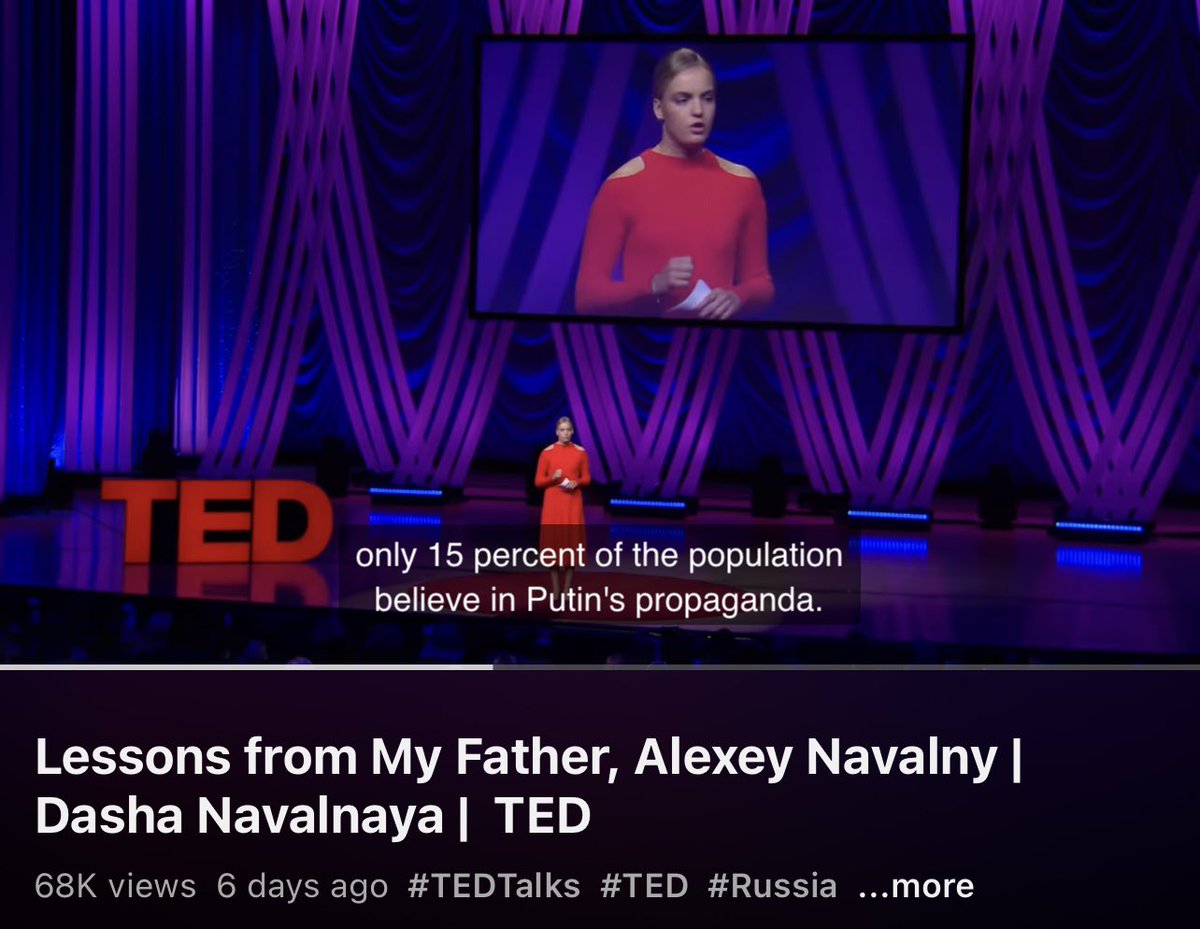
Dasha Navalnaya is the daughter of Alexey Navalny, the politician and leader of the Russian opposition to Vladimir Putin. Sharing the story of her father’s poisoning, persecution and current imprisonment, she details what it was like growing up under the watchful eye of government surveillance as her father led a decade-long investigation into the corruption of Putin’s regime — and shows why paying attention to what happens in Russia matters to everyone, everywhere.
There’s been some discussion lately on what proportion of russians actually believe russian propaganda. The presumption is that a low number gives hope for the end of the regime. There’s a lot of problems with that logic. Firstly, domestic russian propaganda is very often very open about the crimes russia is committing as an imperial aggressor. So it’s nonsensical to talk only about whether russians recognise lies. What matters is the extent to which they share this imperialist mindset and chauvinistic attitudes. It doesn’t matter whether you can recognise lies if you still think of Ukrainians as your little brother speaking a funny dialect of russian who needs to be pulled back into line. The key question is what proportion understand Ukraine is an independent nation – all the way to Crimea – and has a right to exist and do sovereign things like choose its own security alliances. It’s definitely not 85%. Not even close. When it comes to russia’s lies – like the lie it’s fighting nazis – I’d estimate the proportion of russians who understand this to be a lie at roughly 100%. On some level, to some extent, literally everyone knows this is a lie. Consider this. Have you ever heard anyone ever express any confusion as to why wagner, founded by a neo-nazi, had a leading role in ‘denazification’. It was never hidden. And it does not make any sense if you believe the lie. But no one really believes russia is fighting nazis. This would be a very, very long thread if I went through all the examples of where no one ever expresses confusion when russia openly does and says things that are completely contradictory to much of its own propaganda. No one is confused because everyone knows russia lies. But that does not translate to not supporting the regime. Lying is an endemic feature of russian society. People accept lying as easily as they lie themselves because, in this case, they know the lies are necessary to advance the imperial agenda. When Navalny’s people speak to Western audiences, they play on the assumption that western values are universal in russia and that russians are yearning for a liberal democracy yet only being held back by lies told to them. This is nonsense. Think of russia like a sports team. When diehard fans see their players fake an injury to get a free kick, the fans will shout outrage to the referee in favour of their team’s free kick with no care whether that is fair or not. Would you wade into that crowd of diehard fans to tell them “actually your side cheated” and think this would end their support for their favourite team? On some level, those fans know their side cheated, but what matters is that they just don’t care about the truth despite their feigned indignation. Similarly, convincing russians their country is an imperial aggressor committing genocide does not mean they’ll suddenly want to become a rules-based democracy that stays within its borders. They already know what they are. They support it. Note that russia’s key lies, like the denazification narrative, are used far more prominently towards international audiences in just the same way as fans shouting at a referee. In both cases, the lies are part of the game to them. But this is why international attitudes to Navalny are more positive the further away from russia you get. From afar, it’s easy to convince yourself that exposing russia’s lies will lead to the end of the regime and the start of some happy liberal era led by whoever rules next, even though so much of the russian opposition reflects these same imperial attitudes. What really matters is the end of the russian imperial mindset and its ability to conduct aggression with impunity. For that, the world must support a victory to Ukraine and a Special Tribunal for russia. Give us a TED Talk about that. More importantly, do it.
The Sverdlovsk Region is one of the leading Russian regions in terms of the number of casualties among mobilized men. Many of them perished in the Kherson Region, from whose capital Russian army retreated after eight months of occupation. Relatives of the mobilized men said that, despite the fact that the authorities promised not to send untrained soldiers to the front line, their loved ones were killed a week after they were drafted. Some were killed literally within a few days. Despite this, the mothers, wives and children of the mobilized men support the war and thank Putin. Our film explains why.
00:00 Sverdlovsk Region is among the leaders in numbers of mobilized men killed 01:15 “They were quickly dispatched to the Kherson Region” 04:57 A man who had four children was taken away 08:43 How a father went to fight instead of his conscript son 13:10 “We had a funeral, but we didn’t see who we were burying” 14:55 What relatives of dead draftees receive 16:40 The mobilization’s end result
Source: “The Mobilization’s Aftermath: What the War Has Done to Russia,” iStories (YouTube), 14 January 2023 (in Russian, with Russian closed captions).
Alexei Rozhkov responded with Molotov cocktails to the decision by the Russian authorities to launch a full-scale invasion of Ukraine. On March 11, he set fire to a military enlistment office in the suburbs of Yekaterinburg. He was detained the same day and charged with “attempted murder”: allegedly, there had been a watchman in the building at the time. The young man faced up to fifteen years in prison.
Alexei was held in a pretrial detention center for six months. The charges were then unexpectedly reduced to a less serious crime — “property damage” — and the insurgent was released on his own recognizance. After a time, thanks to the support of a human rights organization, Rozhkov left Russia, and we were able to speak to him.
Tell me what you did before February 24. Did you have a job? Any hobbies? Were you interested in politics?
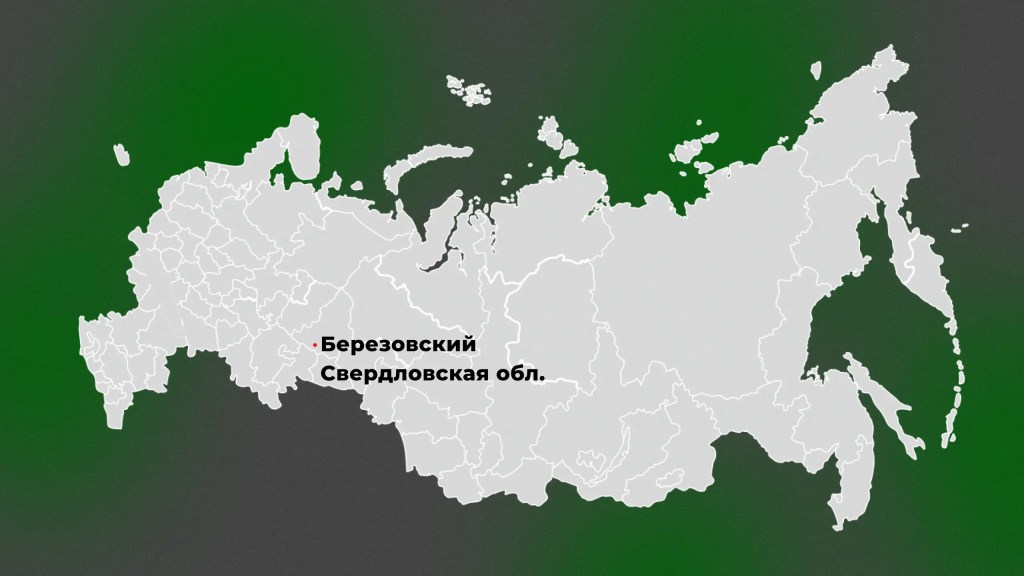
Rozhkov: I lived in the city of Beryozovsky, a suburb of Yekaterinburg with a population of about 100 thousand. Yekaterinburg itself can be reached by bus in twenty or thirty minutes. I worked as a sales consultant at a DNS store.
I was fond of music — I’m a guitarist, a bassist. About six years ago, I had a band, Tell Me the Reason. I started recording a solo album [before February 24], which is still not finished due to the war, having to moving around, and being in prison.
I love dynamic, energetic music: it invigorates me, helps me get out of depression, and gets me warmed up and excited.
I have been interested in politics since I was fourteen. [Alexei is now twenty-five.] My views have changed over time. Previously, they were more democratic or something, more legal. Now I can call myself a left-wing anarchist. I have always campaigned to open people’s eyes and make them see what is happening with the country — for example, with the standard of living. I talked to my family and acquaintances, friends and even strangers. I drew leaflets and spray-painted walls. Do you know those big advertising banners? At night, I would climb up and write “Putin is a thief” on them. At the time, he was merely a thief. But now, of course, he is not just a thief but also a murderer. I wrote on such billboards at night so that people would also start asking questions and arrive at the same opinion.
Tell me why you decided to set fire to the military enlistment office. What did you hope to achieve?
Rozhkov: Since February 22, I had been closely following independent media and social media channels. I expected the war to start in the last week of month, because Russian troops were amassed in Belgorod, Belarus, and other border areas. It was obvious that some kind of movement of troops would begin. And it kicked off on February 24. I began to go into a depression. I was constantly flipping channels and reading the news. I was getting worse every day. I just understood that it was impossible to remain indifferent. What is happening now is illegitimate; it is illegal. Any war means death for ordinary folks. A war in the twenty-first century seems somehow alien to me, especially for such ridiculous, made-up reasons. We annexed Crimea in 2014, and I said already back then that it was wrong. Crimea is not ours and will never be ours. I said there would be consequences. And that’s how it turned out.
It is really awful for me to get my head around the fact that people are getting killed — civilians are dying, and those who do not want to fight, but have been drafted, are also getting killed. I wanted to make some kind of appeal for people to start fighting against this war. I wanted to impact the situation, to do something to stop it all or at least weaken [Russian troops]. So, I set fire to the military enlistment office in the city of Beryozovsky. I didn’t try to burn it down. I threw three Molotov cocktails at the glass doors, which broke. I didn’t even expect them to shatter. Actually, I was thinking that I would just set fire to the door, to the entrance. I was unlucky: at that moment, traffic cops were driving past and noticed what I did. [They] put out the fire, and then they followed me. I couldn’t get far. I ran about a kilometer, and I was blinded by the high beam from their vehicle. I tried to get out of there, to run away, but they threatened to shoot me, and I was forced to surrender.
Tell me how you prepared for this. How spontaneous was this protest?
Rozhkov: It happened quite spontaneously. I didn’t even develop an exit plan and was operating in unfamiliar territory. It seemed to me like some kind of self-sacrifice. I perfectly imagined that I would be held [criminally] liable for this, but I had no fear.
After my protest action was carried out, Putin admitted on Channel One that conscript soldiers had been deployed to the military special operation zone, and [said] that they would be withdrawn from there and that those who had sent them would be punished. It was after my arson attempt that he said this. I was the third person in Russia to set fire to a military enlistment office, and this is [an example of how] several people made an impact to save guys like us, guys our same age. [Conscripts] were not killed in the war. None [of them] were killed: they were simply transferred back to Russia, leaving only contract soldiers [in the war zone].
So you think that the arsons of military enlistment offices also influenced this decision by the authorities?
Rozhkov: Yes, I think so. I’m certain of it.
How did you feel while you were in police custody? Was there any pressure from the investigative authorities? What actually happened after you were detained?
Rozhkov: I was detained, handcuffed, searched, thrown into a paddy wagon, and taken to the police station. I was treated pretty badly at the station. The police chief of the city of Beryozovsky threatened me personally that he would piss on me and beat me with a stick — those were literally his words. But there were also decent people [among the police officers] who did not threaten me and talked to me calmly. They supported me so that I would not go into complete shock.
At Pretrial Detention Center No. 1 in Yekaterinburg, I was quarantined at first. They didn’t issue me bed linens, they didn’t give me a pillow or a blanket — they only gave me a pissed-stained mattress. Thank God I didn’t spend much time there. On the fourth day, the head doctor of the psychiatric ward summoned me. Since I have some ailments, she put herself in my shoes and I was transferred to the hospital wing, to the “psycho hut.” Basically, I liked it there. Despite the fact that some people in my cell were wacky, I had almost no conflicts with them. It wasn’t the first time my cellmates had been in prison. I was the only first-timer.
[In the pretrial detention center] they gave me very strong drugs, which made me feel lousy. One of those drugs was risperidone, which is prescribed to schizophrenics. I was given a triple dose. I suffered from restlessness [akathisia], I had panic attacks, I was short of breath and suffered from insomnia. That is, the treatment wasn’t right for me. Nevertheless, I’m glad that I was sent there, and not to gen pop.
I was a “road worker” [the person in a prison cell or block responsible for the “road,” the illegal system of communication among cells] — they respected me and listened to my opinion. Basically, everything was fine while I was in the joint. The prison staff were mostly supportive: you could talk to them a little bit during inspections or when the gruel was served.
During the period of my imprisonment, I was taken for an inpatient mental competency examination to the psychiatric hospital on the Siberian Route [i.e., Sverdlovsk Regional Clinical Psychiatric Hospital]. I stayed there for twenty-one days. There, on the contrary, the prison staff behaved aggressively and tried to provoke many people, including me, into conflict.
Those who succumbed to provocations were tasered and locked up in solitary confinement. The worst, most deranged prison staff, I believe, were in the tenth ward of the psychiatric regional hospital on the Siberian Route.
Did anyone support you while you were in prison, such as relatives, friends, or maybe human rights campaigners?
Rozhkov: When I was in the pretrial detention center, a lawyer from the Anarchist Back Cross came to visit me and offered their help. They also asked whether I wanted to receive letters, [financial?] assistance, care packages, and publicity for my case. I turned down the assistance and publicity, but decided that it would be nice to get letters from concerned folks who help people like us who are in prison. The letters really gave me a boost. My parents and concerned people from Yekaterinburg helped me by bringing me care packages. I won’t name names, but they helped me and are still helping me.
Why did you decide to turn down the assistance from the Anarchist Black Cross?
Rozhkov: Because I gave into the persuasions of my parents and lawyer. They were against my case being [widely] publicized — allegedly, so as to avoid hounding the investigator in my case. They were afraid that he would toughen the punishment if I attracted public attention. So, due to pressure from [my parents and lawyer], I had to turn down this help.
And yet, when you were in the pretrial detention center, as far as I remember, you were facing the rather harsh charge of attempted murder, right?
Rozhkov: Yes, I had been charged with violating Article 105, part two, in combination with Article 30 — “attempted murder, committed with extreme cruelty, from hooligan motives, in a generally dangerous way.” The crime carries a sentence of between eight years to life in prison.
Do you think that someone’s life was actually threatened as a result of what you did?
Rozhkov: I’m absolutely sure that this wasn’t the case. I doubt that there actually was a woman [night watchperson] of some kind in the military enlistment office building. According to the testimony of the policemen who detained me, who helped extinguish the fire, there were no lights turned anywhere on the premises, and they did not see this woman either. So, I doubt that she was there. In addition, in other such cases — I monitored similar cases — no one was charged under the same article of the criminal code as me. There were no guards there.
When you were released on your own recognizance, you didn’t leave the country immediately. What was holding you back?
Rozhkov: I was promised that the charges against me would be light: Article 167 in combination with Article 30, which translates into “attempted destruction of property,” and carries a maximum sentence of five years. But, after looking at the other cases, I realized that sooner or later, Article 205 [“terrorism”] would be rolled out against all of us.
I also wanted to spend as much time as possible with my family, with relatives and friends, so that I could at least somehow restore our relations and thank them. But ultimately I left. I was evacuated from the country.
How did your relatives react to your actions and to your prosecution?
Rozhkov: They said that I had acted stupidly, that it was impossible to go against the system and that I had let everyone else down. They accused me of suffering from a guilt complex. But I believe that I saved people and that my life is a small sacrifice compared to the number of people who survived thanks to what I did. Even if I had been shot when they were detaining me, I would still have achieved more than anyone else.
How are you feeling right now?
Rozhkov: I feel sad and lonely. I am not in my native country. But I have a friend — I am lucky that he ended up here for the same political reasons — and he helps and supports me. I am also supported by evacuation organizations. I feel pretty bad. But now I’ve purchased the medications prescribed by a psychotherapist, and things are getting easier and easier in my head every day. But sometimes a powerful sadness rolls over me, a melancholy due to the fact that I am lonely and had to leave the country.
Berezovsky and Sverdlovsk Region, on a map of the Russian Federation. Image courtesy of DOXA
When we were agreeing to do this interview, you said that after you had left [Russia], you tattooed the anarchy symbol on the back of your hand. Can you tell me about it for the interview?
Rozhkov: The symbol means a lot to me. I am an anarchist myself, a leftist; I espouse this political position. And although a society without powerful authorities and hierarchies seems like a utopia, we could get there. Power should belong to the people, not to a bunch of corrupt bastards who commit terrible crimes. My symbol also means that I share the views of the people who helped me when I was in prison. It says that I am close to these people. And that I, in turn, will also help political prisoners at the first opportunity.
Maybe you would like to convey something to Ukrainians?
Rozhkov: Yes, I would. I want them to know that there are dissenters, people [in Russia] who do not want war with Ukraine or any war at all. I hope that soon no one else will suffer due to this shit that Putin has made happen. Ukrainians are doing a good job of retaking their territory and destroying Russian troops. I think everything will be fine sooner or later. Ukrainians are very strong, motivated people and will defend their territory to the end. I respect them for that. I would have done the same thing in their place.
There wasn’t much left of Russian army Sgt. Andrei Akhromov’s body when it arrived in a zinc coffin at his hometown, a four-hour drive south of Moscow, relatives said. The 21-year-old died in April near the Ukrainian city of Chernihiv when his tank was hit by enemy fire.
Sgt. Akhromov’s cousin, Sergei Akhromov, said a representative of the regional governor’s office told the family it took the armed forces three weeks to identify what remained of him using DNA analysis. Loved ones didn’t look into the casket before burying him last week, he said.
“I only blame America—not Ukraine, not Russia,” Mr. Akhromov, a 32-year-old parks-and-recreation worker, said. “Biden, or however he is called, allowed for Nazism to flourish in Ukraine, and so Russia had to fight not only to protect its people and borders, but also the Ukrainian people, women, children, elderly.”
Source: Evan Gershkovich, “As Coffins Come Home, Russians Confront Toll of Ukraine Invasion,” Wall Street Journal, 4 May 2022
I see that there is a struggle underway over the numbers [of Russians] supporting the war. We are all asked whether Russians want war, how different segments of society relate to the war, etc. There is a temptation (a natural desire) to find grounds — everyone has their own — for our “sense of society’s reaction to the war.” The old liberal circles in Moscow, of course, do not want to reconcile themselves to the fact that society in a patriotic frenzy sincerely supports all the monstrous violence, destruction, and sowing of death and grief produced by Russia’s political leadership and army. Hence the struggle arises. VTsIOM says 75% [of Russians support the war], but independent sociologists says it’s 58-59%. And look at Levada’s figures: by the end of the second month [of the war], support had fallen from 74% to 68%. And so on.
However, if you think about it, what is the political significance of this struggle over the sociological grounds for “non-support”? There is none, since there is no way to mold “non-support” into a political factor. It’s like when the Polish uprising of 1863 was put down. Russian society, including the educated classes, experienced a patriotic upsurge. This is a historical fact. Some people, of course, did not support it, but politically that didn’t mean anything. Therefore, no “figures” or “focus groups” change anything now. They do not enable one to shift Russian society’s attitudes to the war from where they are now. This society is currently under martial law – undeclared, but de facto — because the norms of military censorship have been been instituted, economic data has been partly made off-limits, and civil rights have been completely restricted. Under martial law, “non-support” is tantamount to desertion, “alarmism,” sabotage, and treason. Under martial law, there are no civil institutions within which you can politically voice your “non-support.” Therefore, what are we talking about when we raise the question of who supports the war and why they support it?
Source: Alexander Morozov, Facebook, 4 May 2022. Translation and photo by the Russian Reader
A friend mailed the following story to me this morning.
I had an interesting trip to the agricultural fair yesterday. I bought some honey from Pskov and a few other things.
The most exciting part, however, was the trip back home on an overcrowded trolley bus.
It was filled with several distinctly different layers of passengers: old and not-so-old women who had been to the fair, young Tajik or Uzbek men, and students who seemed to be Russian. It was funny to observe how they interacted.
All the women from the fair first talked about various kinds of medical treatments and ways to “undergo serious medical tests” for free (by entering a program to test some new drug without actually taking the drug), but later everybody focused on the solo performance of an old woman who used to work in the Admiralty building.
She shouted that Putin and his gang were criminals, that they have destroyed the country, that there is no future for young people, and that she wanted her talented grandson to go abroad and not to have the life she and her son have had here. But it gradually transpired she hated Putin so much because he had sold Russia to the West and allowed “them” (meaning the Central Asians, as I understood her, because she was pointing at the young Central Asians on the bus) to “flood the country.”
She also said that Lukashenka was a great guy because he had not allowed this sort of thing to happen.
At the same time, she said that although “people chew out America,” she knows some people who went there and told her “the people there live wonderfully.”
So, the old women were rather agitated, the young Central Asian men smiled all the time (including at the angry old woman who was upset by their presence) and politely let them pass or sit down, and most of the Russian students stood with faces that did not express anything, except, maybe, a young woman who smiled at the woman’s speech and seemed to be interested.
The indignant woman was very well spoken and sounded educated. (And she was a “native Leningrader,” as she pointed out). She also came across as very reasonable and well informed—up to the point when she explained that Putin had sold the country to the West (and had betrayed Novorossiya, which in some way is probably even true).
She said that usually when she would talk about this, everybody would tell her they were not interested in politics. But then she said something that was hard to deny.
“Everyone says it’s all politics, politics, but it’s not politics, it’s life.”
She went on to say that, because she spoke about it openly and loudly, someone had once even attacked her on Insurrection Square, grabbing her by the arm. She had cried for help, but nobody had helped her.