Household Debt in Russia Over 170 Billion Euros

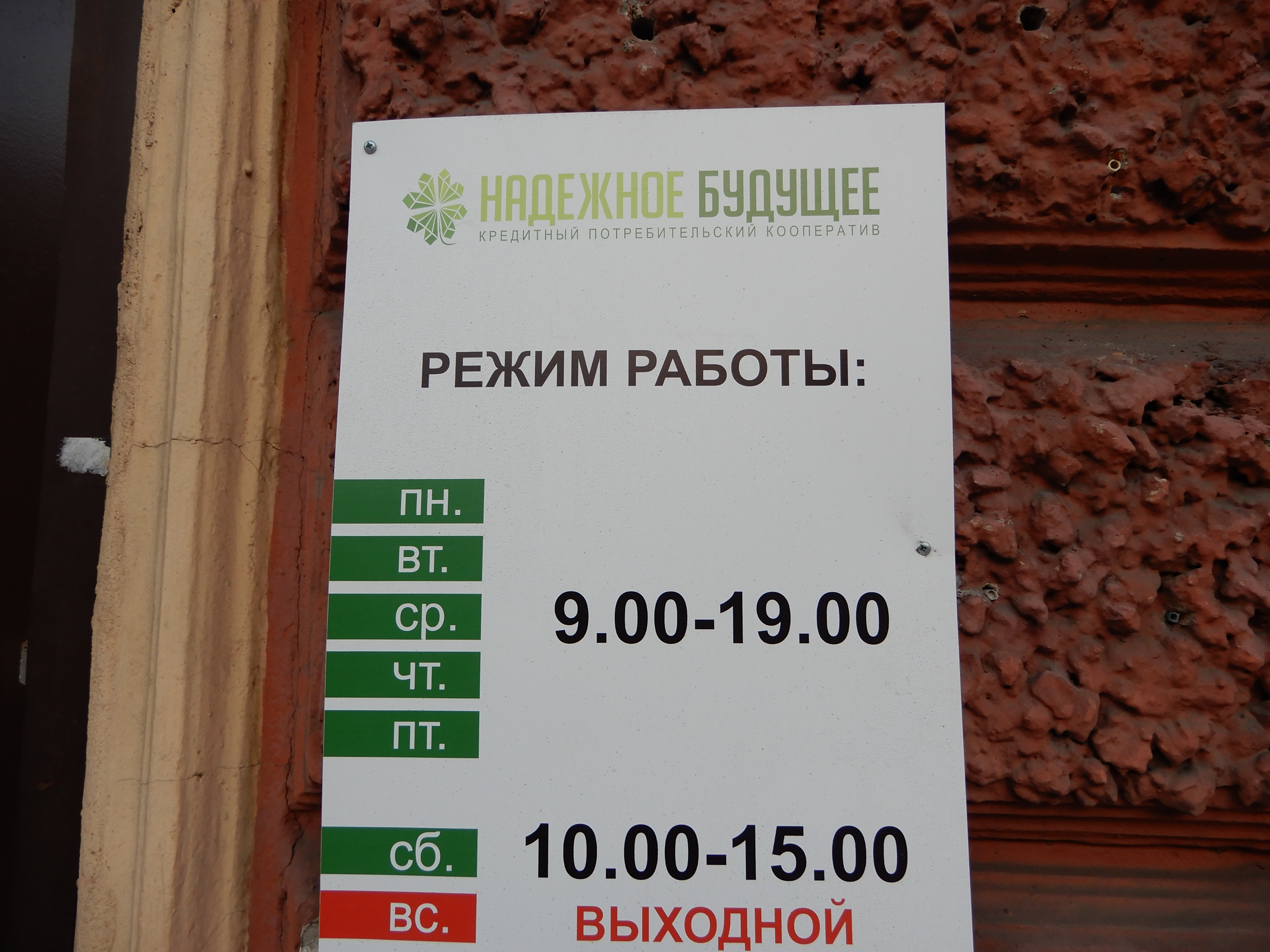
reliable future consumer credit coopReliable Future Consumer Credit Cooperative is one of many retail lenders ready to help ordinary Russians “boost their standard of living.” Photo by the Russian Reader

Household Debt of Russians Exceeds Twelve Trillion Rubles
Half of This Amount Was Borrowed Over the Last Year
Emma Terchenko
Vedomosti
January 31, 2018

This emerges from statistics gathered by the United Credit Bureau (OKB), based on information about the outstanding loans of 82 million Russians.

According to the Russian Central Bank, the Russian populace’s bank debt grew by 13.2% in 2017 to 12.2 trillion rubles [approx. 170.75 billion euros].

The OKB’s calculations show the number of new loans grew more slowly than their total amount. Over the past year, loans increased by 37% compared to 2016 (by 4.14 trillion rubles), whereas their quantity increased only by 12% to 34.8 million individual outstanding loans.

Moreover, an increase was observed in all segments of the loan market—mortgages, cash loans, auto loans, and credit cards—according to the OKB’s statistics.

Banks mostly disbursed money to Russians in the form of cash loans: nearly 3 trillion rubles or 33% more than in 2016. The number of such loans reached 24.7 million units, an increase of 14%.

The total amount of mortgages issued for the year increased by 42% to 1.8 trillion rubles, while the total number rose by nearly a third to 959,237 individual mortgages. According to Rusipoteka, a financial analytics company, 53% of the housing mortages issued last year were supplied by Sberbank.

In November, the mortgage portfolios of Russian banks exceeded a record five trillion rubles, the Central Bank reported previously.

“Afer the crisis, banks tried to build up their mortgage portfolios. Many of them reduced their down payments to accomplish this. Therefore, amongst the loans issued last year, around a third had down payments of less than 20%,” says Rusipoteka director Sergei Gordeiko.

According to the OKB, auto loans for all of 2017 increased by 36% to 333.3 billion rubles or by 25% to 436,539 individual loans. The National Credit History Bureau (NBKI) estimated the annual growth of auto loans at 29%.

“Auto loans have returned to pre-crisis levels, and the share of cars bought on loan has been growing,” notes NBKI’s director general Alexander Vikulin. “In 2017, every other automobile in Russia was purchased with a loan.”

The OKB claims credit cards are the fastest growing segment. Although the number of new credit cards issued last year grew only by 8% to 8.65 million cards (this figure excludes replacement cards), their total limit increased by less than half: by 48% to 544.5 billion rubles.

According to the NBKI, the number of newly issued credit cards grew by 52.6% to 6.87 million units in 2017. Equifax reported an 52% increase to six million new cards issued on the year.

The reason for the discrepancy is the databases of creditors monitored by the various credit bureaus differ. Unlike other credit bureaus, the OKB receives all information about loans made by Sberbank, which, according to different estimates, accounts for 42% to 46% of the loan market. The NBKI, for example, does not monitor figures from Home Credit Bank. None of the three bureaus—OKB, NBKI, and Equifax—take Russian Standard Bank’s statistics into account.

With its share of the credit card market, Sberbank has an impact on discrepancies in the calculations of the OKB and the other bureaus, argues Frank RG director general Yuri Gribanov.  According to Frank RG’s data, based on the management statements of banks and taking into account the utilization of credit limits and overdue debts, Sberbank’s portfolio of credit cards and overdrafts constituted 42.5% of the overall portfolio of all Russian banks as of December 1, 2017. During the year, it grew by 16.4% to 559.6 billion rubles.

A Sberbank spokesperson did not provide exact figures for the issuing of new credit cards last year, but confirmed they had not grown, remaining at a “consistently high level.”

Tinkoff Bank issued 2.41 million new credit cards in 2017, 43% more than the previous year, while Sovkombank issued more than a million credit cards. Vostochny Bank increased its issuing of credit cards by 140%, OTP Bank, by 135%, and VTB Bank by 13% (440,000 cards).

“The main reason for the growth is that banks have returned to sales channels that were frozen after 2015, for example, lending to walk-in customers,” says Alexei Shchavelev,  director of the cross-selling department at OTP Bank.

“In addition, many banks now have built up a broad base of quality customers: payroll customers, debit card holders, borrowers. It is now much easier for them to sell credit cards, because this customer base has been clarified,” Pavel Samiyev, managing director of the National Rating Agency, explains.

The demand for credit cards from borrowers themselves has been caused by the growth of consumer activity in general and improved customer solvency, argues Rostislav Yanykin, director of Russian Standard’s credit card sales. In the fight for customers, banks have been offering increasingly advantageous terms for using credit cards, he admits.

People who take out loans to boost their standard of living have mainly fueled the growth in lending to the populace, argues Nataliya Orlova, chief economist at Alfa Bank.

“In the past two years, they suffered more than others from the crisis in terms of reduced purchasing power.”

According to NBKI’s Vikulin, retail lending has been growing due to the economy’s stabilization.

Translated by the Russian Reader

NB. According to a May 17, 2017, article in the New York Times, household debt in the US had risen to $12.73 trillion in the first quarter of 2017, a new peak. Converted into rubles, this would amount to approx. 742 trillion rubles at current exchange rates. Based on the latest UN estimates, the current population of the US is nearly 327 million people, while the population of the Russian Federation is nearly 144 million people, based on the same estimates. In 2016, GDP (PPP) per capita in the US was over $57,000, while it was just over $23,000 in Russia, according to figures published by the World Bank. TRR
The Russian Economic Miracle of 2017

fullsizeoutput_602
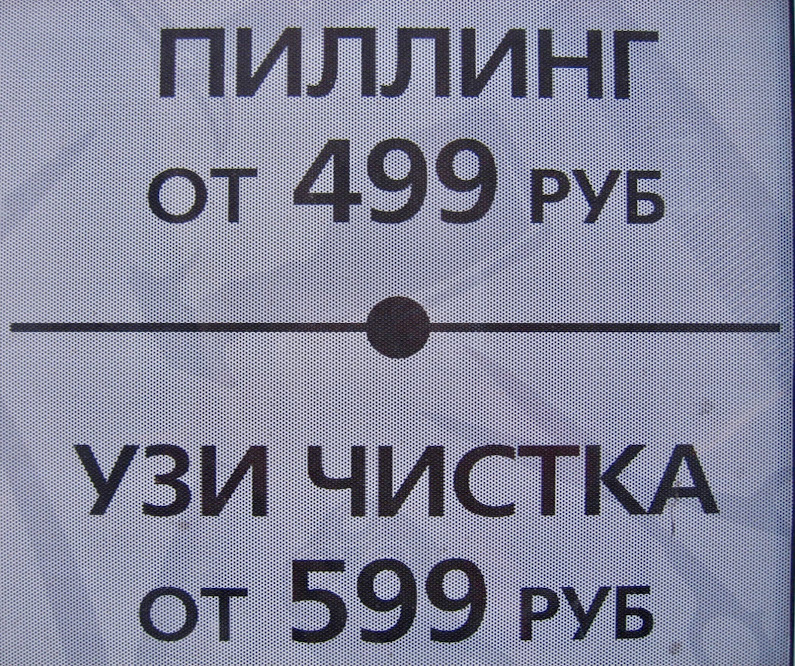
“Pilling from 499 rubles. Ultrasound cleaning from 599 rubles.” Photo by TRR

More Than Five Million Russians Have Trouble Paying Back Loans
Takie Dela
May 30, 2017

Around five and half million Russians have trouble servicing their debts. Their debut burden is more than 60% of their income, reports Gazeta.ru, quoting a statement by Vladimir Shikin, deputy marketing director at the National Credit History Bureau.

According to experts, this figure is regarded as a critical indicator. Among the main reasons for arrears are the unreliability of borrowers and the lack of means to finance current debts.

Residents of the Kemerovo, Tyumen, and Novosibirsk Regions are the most indebted. According to the National Credit History Bureau, three million people cannot make payments on loans, which is 8% of all borrowers. Their current debt load exceeds half of their monthly incomes.

According to Shikin, the share of overdue loans remains at 16%, even as the number of new loans grows. The majority of Russian borrowers have several loans, and the average economically active Russian owes creditors 146,000 rubles [approx. 2,300 euros].

Meanwhile, research done by RANEPA shows that the debt burden of Russians is not critical. As Natalya Orlova, chief economist at Alfa Bank, stressed, the debt of Russians is estimated at 12% of GDP.

“In developed countries, debt is 60% to 80% of GDP, so the market has potential for growth,” emphasized Orlova. However, she argues that Russia issues a relatively small percentage of mortgages, whereas in developed countries, mortgages account for nearly 90% of all loans.

Experts hope that the debt burden of Russians will not rise greatly. After the 2014–2015 crisis, banks were more way about issuing loans, so the debut burden of Russians will fall. In the near future, banks will be even more cautious. In particular, the Central Bank has planned to consolidate the data of major of credit history bureaus in a single data base to combat indebtedness.

Earlier, the United Credit reported that half of Russian borrowers had been applying for new loans to pay off old loans. According to its figures, 45 million Russians with old loans had taken new loans in banks. Over half of them had done this to pay off old loans.

The analysis shows that 53% of borrowers had taken new loans in cash to partially or fully pay off already existing loans. 27% of the borrowers had spent more than half of the new loans on paying debts.

________________________

Almost 60% of Russians Admit They Have No Savings
Takie Dela
May 29, 2017

Around 59% of Russian families have no savings, reports Rambler News Service, citing a report from the polling and market research firm inFOM.

According to a survey commissioned by the Central Bank, the figure has remained stable [sic] the last three months. In December 2016, 64% of those surveyed had no savings.

Yet a quarter of Russians believe that now is a good time to save money, while 44% hold the opposite opinion. According to experts, the tendency to save has grown noticeably since the beginning of the year. In February, fewer than 17% of respondents answered the question positively.

The majority of respondents replied that spare cash should be saved or put away for a rainy day, while a third of Russians would spend the money on expensive, major purchases.

The poll showed that 40% of respondents prefer to keep their savings in a bank account, 26%, in case, and 20%, partly in a bank, and partly in cash.

Two thousand respondents, aged eighteen and older, from fifty-five regions of Russia were involved in the survey.

According to research by RANEPA, the share of Russians who save money dropped by a third in 2016, from 55% to 40%. Moreover, in March, 40% of Russians claimed they had only enough money for food.

________________________

VTsIOM: 67% of Russians Skimped on Groceries during the Past Year 
Takie Dela
May 30, 2017

During the past year, 67% of Russian skimped on groceries in one way or another; 27% of them in a substantial way. Pensioners and residents of big cities had to skimp most of all. These figures were reported by pollsters VTsIOM.

The survey dealt with Russians’ attitudes to government regulation of the food market. 82% of respondents were against the idea of limiting supermarket opening hours on weekdays and weekends. According to 68% of them, if the government decided to do this, it would cause a number of problems. It would be hard to buy groceries in the evenings, and the selection would be reduced. Nearly 40% believed that limiting competition would generate price rises in small shops and produce markets.

Only 15% of Russians favored limiting competition, mostly pensioners aged sixty and older. When replying about what they thought about regulating prices for basic foodstuffs as a way of supporting the poor, Russians were divided in their opinions. Exactly half of them said such restrictions were ineffective, while 32% supported a combination of government and market measures, while 14% believed the government should solve the problem.

The VTsIOM survey showed that Russians were concerned about the government’s restricting prices for basic products. 55% said it would lead to the closure of stores, while 28% said it would lead to shortages, price gouging, and disruption of supplies. However, a quarter of respondents believed that prices would subsequently drop, and life would improve.

Russians see the government’s key role in regulating the produce market in support for domestic producers and developing farming, as well as in quality control. However, according to Yulia Baskakova, head of social modeling and forecasting at VTsIOM, “While worrying with all their heart for domestic producers, supporting improved food quality, and supporting the development of farming, Russians are not willing to sacrifice their comfort and put up with a reduction of the range of goods to which they are accustomed and its becoming less available. The survey showed that 88% of Russians are not willing to put up with a drop in their quality of lives to reduce the price of essential foodstuffs.”

The poll was occasioned by a suggestion, made by Federation Council member Sergei Lisovsky, that regional authorities could decide how large store chains should operate. Lisovky also suggested prohibiting supermarkets from opening at nights and on Sundays, and permitting them to work on Saturdays only until four o’clock in the afternoon. Lisovsky has argued that such measures would support small business and promote small-scale trade.

Translation and photo by the Russian Reader. Faithful readers might wonder why I have cited Russian opinion polls at such length after making a big effort, over the past couple of years to show that this pollocracy, while real enough as a practice, does not tell us much or anything at all about what actual Russians thinking or are planning to do.  I have made an exception in this case, however, because I think the three news items, above, show, between the lines, as it were, what really afflicts the Russian economy, and how the feigned populism of the political/economic elite rears its head, quite often in fact, to suggest impracticable solutions to the knotty problems their own mammoth corruption and instinctive hatred of small business and independent individuals generates the dead end they claim to want to alleviate by, among other thing, commissioning one “public opinion poll” after another while stubbornly failing to notice that their enthusiastic terrorizing of Krasnodar farmers, independent truckers, and Moscow street vendors show they have no interest whatsoever in small business, much less reducing the prices of basic foodstuffs for pensioners. The only thing that interests them is getting richer and making their power untouchable. TRR