“For the Church, Violence Is the Norm”
Valentin Baryshnikov
Radio Svoboda
August 16, 2016
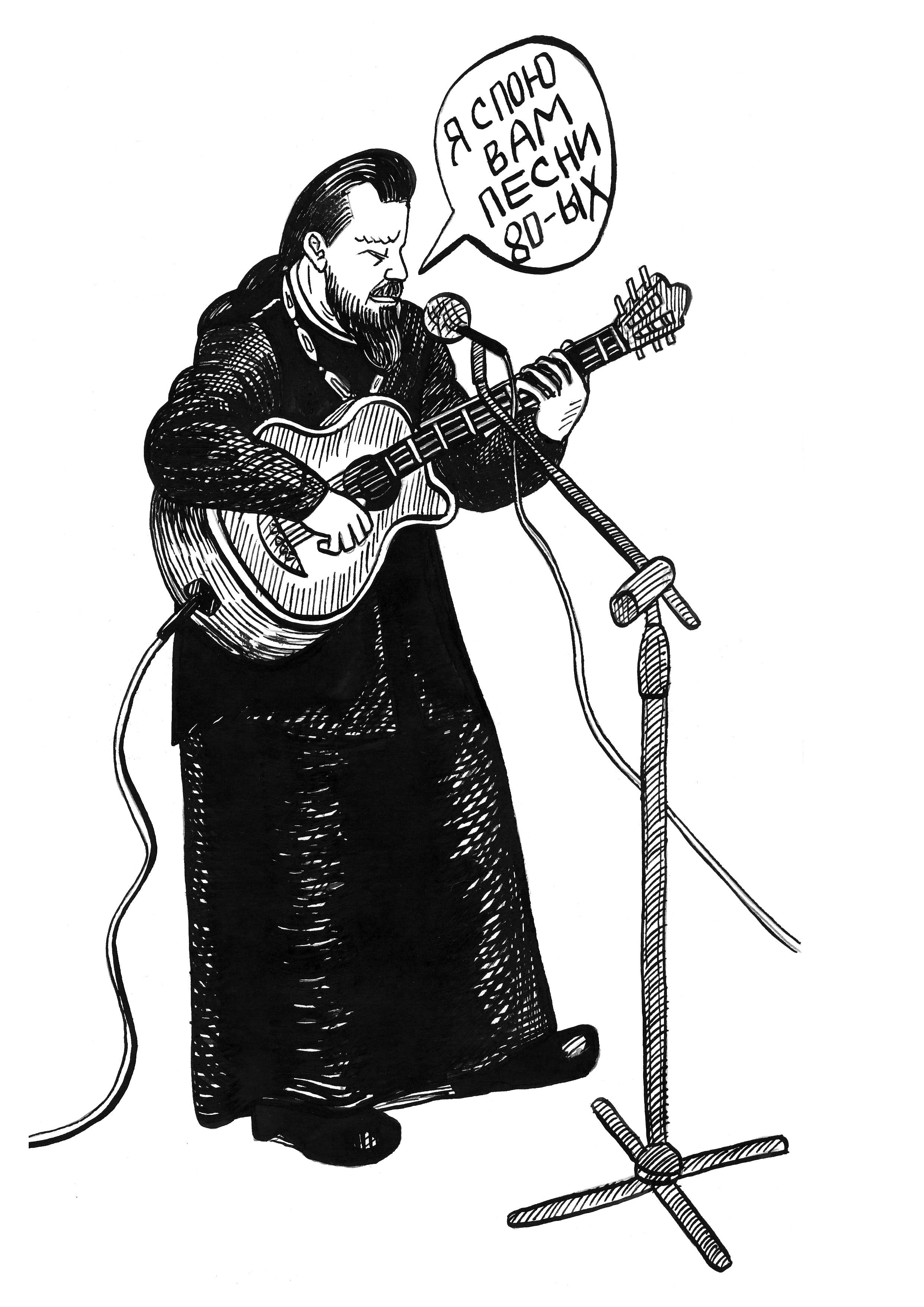
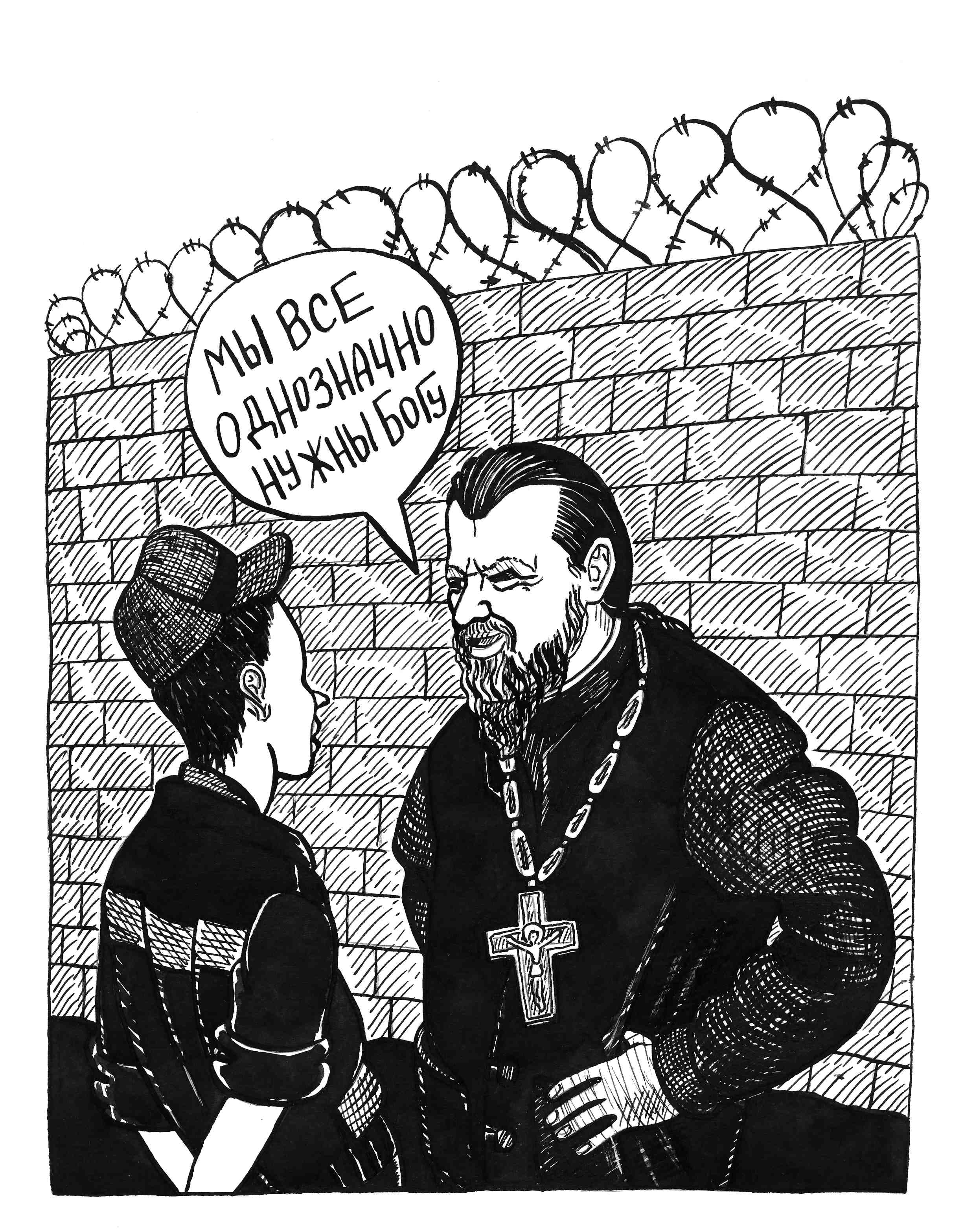
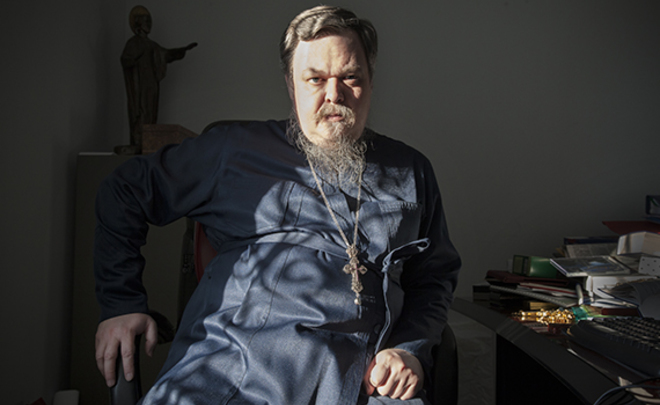
Father Vsevolod Chaplin, long-time head of the Moscow Patriarchate’s Synodal Department for Cooperation between Church and Society, made an appearance on Echo of Moscow radio in which he shocked many people by saying that some people “can and should be killed.”
Here is an excerpt of Father Chaplain’s appearance on Echo, which began with a discussion of erecting a monument to Ivan the Terrible in Oryol.
Presenter: Yes, but with that rationale you can also justify Stalin, for example. Sure, there were excesses, but he was an effective manager, they say.
Vsevolod Chaplin: He did a lot. Listen, at the end of the day what is wrong with destroying a certain number of internal enemies?
Presenter: “Destroying” people, that is what is wrong.
Vsevolod Chaplin: What is wrong with that?
Presenter: You cannot kill people!
Vsevolod Chaplin: Why not? Some people can and should be killed. That is for sure.
Presenter: “Some people”? Which ones are those?
Vsevolod Chaplin: So it is no accident that criminals are destroyed, and no accident—
Presenter: I would remind you the death penalty has been abolished in Russia.*
Vsevolod Chaplin: I am not sure that was the right decision. Look, even God, if we read the Old Testament, if we read the Apocalypse, that is, the New Testament, directly sanctioned and sanctions in the future the destruction of a huge number of people for the edification of others. For the edification of societies, it is sometimes necessary to destroy a certain number of people who deserve to be destroyed.
* In fact, capital punishment has not been abolished in the Russian Federation. President Yeltsin placed a moratorium on the death penalty in 1996 so that Russia could meet the requirements for joining the Council of Europe. The moratorium has remained in effect since then, but the death penalty is still listed in the law books as a legal punishment for certain crimes. TRR
When asked whether Chaplin’s statement was his personal opinion or a reflection of conversations within the Russian Orthodox Church (ROC), Nikolay Mitrokhin, a sociologist of religion and author of the book The Russian Orthodox Church: Its Current State and Challenges, confidently replied that church insiders think this way.
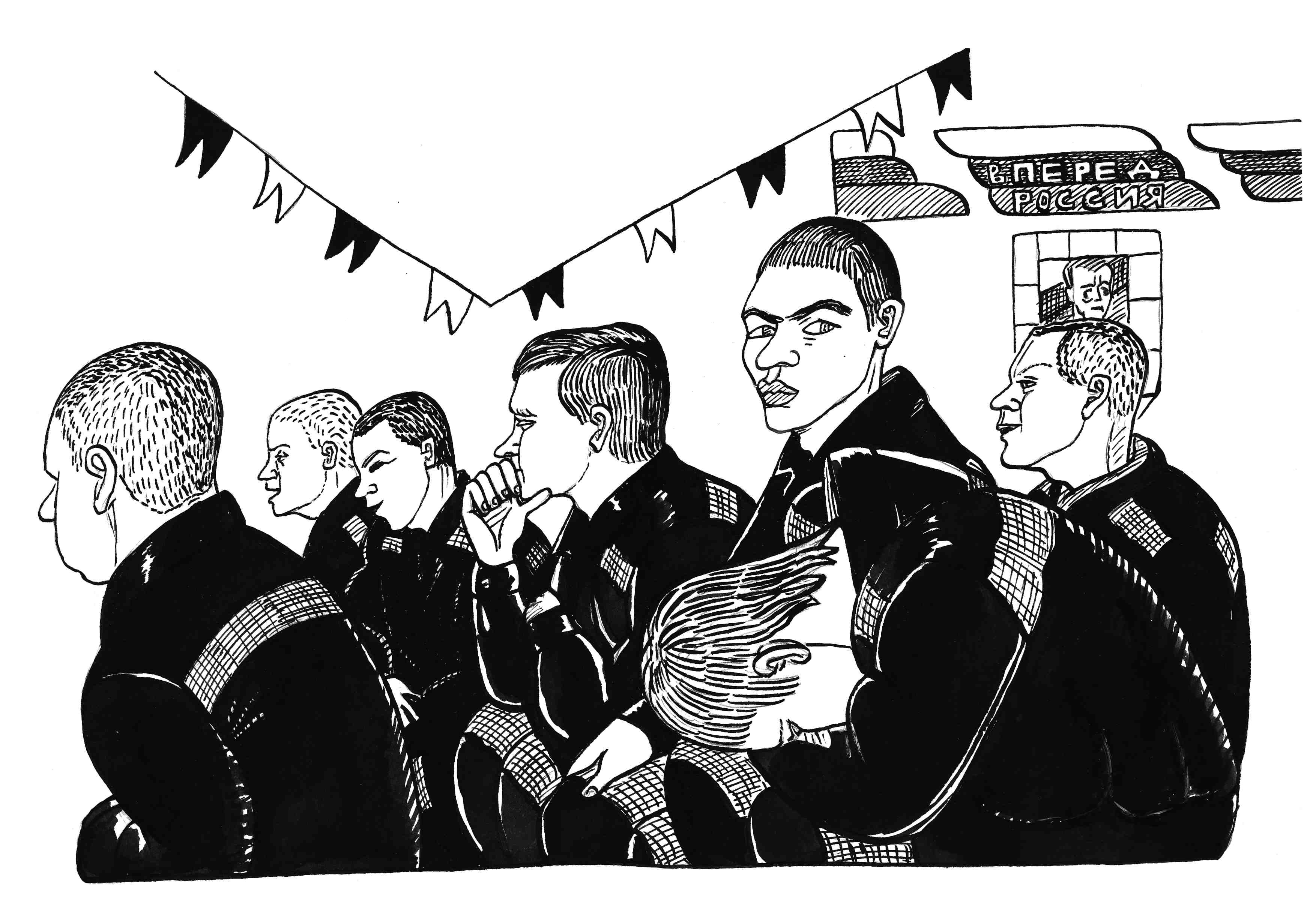
Nikolay Mitrokhin: The majority of rank-and-file clergy and the bishops are quite militantly minded. They do not rule out violence. Violence is the norm in ecclesiastical practice. Bishops hit priests who do something wrong on the altar. Its is a popular subject of stories told within the Church. In turn, priests are capable of hitting sacristans and subdeacons. The Church is now also the leading social institution that has come out against so-called juvenile justice, in other words, against bans on beating children. So for the Church, violence is the norm. The Church supports militarist rhetoric. The Church supports the numerous military-patriotic clubs operating under its auspices. If you chat with a rank-and-file priest, he will surely talk like Chaplin or worse. It is another question whether it was worth putting Chaplin on the radio and giving his cannibalistic ideas a platform. However, that is the stance of Echo of Moscow, which has given various kinds of fascists the chance to speak out on its airwaves. Let us not forget that several right-wing radicals have their own programs on the station. So it all fits, in the first place, not only the mindset of the ROC but also the mindset of Echo of Moscow.
Echo of Moscow actually plans not to publish the transcript of this speech and, as far as I can tell, will not be inviting Father Chaplin on the air again.
With Chaplin’s appearance, they have reached a point where a lot of people have wondered whether the prosecutor’s office is asleep at the wheel and whether they should not file a complaint against Echo of Moscow radio station. In this case, they face quite specific criminal charges. But the reason they invited Chaplin to appear on the air is itself quite obvious. Yet again they had to rile up the liberal public with harsh statements so that a discussion would emerge around them. They are not shy about inviting someone who on several occasions has voiced his tough and, quite frankly, fascist stance. So I think this was a big mistake on the part of Echo of Moscow, which is no less liable for the statements than the person who made them.
When Chaplin says this, when priests en masse within the ROC hold such positions, does this somehow link up in their minds, if I can put it is this way, with the concept of Jesus Christ, who spoke of love and non-violence?
As we know, there is no Christ in the ROC. There is Orthodoxy in the ROC, but there is no Christ in the Church in the sense in which the idea of Christ was shaped by the Russian intelligentsia in the early twentieth century. For centuries, the phrase that Jesus is love just did not make sense. It was not a subject the clergy considered. From that point of view, it is not clear why it should be considered now. The concepts that the liberal intelligentsia have been attempting to discuss are all seemingly variations on western Christianity, so-called post-Holocaust thought, which has nothing to do with what the majority of the ROC’s ordinary parishioners think and believe. They see Orthodoxy as the national religion, which provides them with spiritual strength to oppose the “godless” west, and so on. So Chaplin, who was driven from his post in the Church, deliberately shocked the audience by divulging what the conservative half of his brain thinks. The audience talked about it. Basically, though, any average Russian priest, whomever you approach, thinks exactly the same thing.
Does it come from the Church? Or does the Church trail behind its flock?
It comes from the Church, of course. Within the Church there has long existed a concept, which has been its main content, that has to do with Russian nationalism and militarism. The vast majority of the clergy espouse these ideas and communicate them to parishioners in one form or another. It is another matter to what extent the Church’s leadership controls all of this. To what extent are the clergy permitted to speak out or keep quiet about political issues? This is something that the Church’s leadership monitors. When it wanted the ROC to have a fairly decent image in Ukraine, priests were told they should not travel to Ukraine and help the separatists. A couple of people who violated the ban were banned from the ministry. The Russian clergy immediately began speaking carefully about Ukraine. The clergy can keep thinking as aggressively as it likes. The question is the things it will say in ordinary life. This is something that can be regulated both by society and the state.
Let us come back later to the question of regulation on the part of society and the sate. Let’s talk about the situation within the Church. Are there priests who follow the idea that God is love?
This is a concept common among a very narrow segment of Moscow and Petersburg intelligentsia, among university-educated intellectuals in the broad sense. The majority of clergymen have no secular education whatsoever (I mean higher education), and they have had a very average secondary education. Many of them either do not know about this concept or regard it as a bit of intellectualizing. There are individual priests (among the ROC’s 20,000 priests you might find several hundred, at best) who espouse this concept. But they are outside the mainstream of the Church and do not constitute a respected or influential minority.
Are they persecuted within the Church?
No, but these ideas are so remote from what priests really do it is impossible to say they in any way define the life of the Church. Especially because ideas of this sort are clearly articulated only by individual priests, priests who are closely associated, again, with liberal circles. One level down, in the provinces, a priest can very well tell his parishioners that Christ is love while running a military-patriotic club. It all gels perfectly in their minds depending on their personal views and the last book they read ten years ago. Nothing contradicts anything else. That is why priests with distinctly liberal views who are willing to say that God is love amount to a dozen. They are known to journalists, who turn to them all the time. Beyond the confines of this narrow circle, such concepts are not particularly popular, and they are not subjects of conversation.
The real life of the clergy and the real ideas in their minds are so diverse, so not amenable to systematization, that we can speak of a society, an ideology, that is in fact unknown to us. We can speak of their militarism. But for some priests this militarism is clearly defined—they wear camouflage all the time except during services—while other priests have these ideas in their heads, but they do not express them too publicly, because they think they should say something else to their parishes. In addition, there are the changes that come with age. When they are young, people’s blood runs hotter. As they age, they become smarter, but in old age, on the contrary, they lose their heads, senility sets in, and they can say things that completely contradict what they had said fifteen or twenty years earlier. For example, Father Dmitry Dudko became a communist in old age, although his whole life he was a harsh anti-communist. It is a dynamic environment of generally anti-liberal ideas, but certain noble notions can be found in what they think or say.
What about the natural objection that, in the twentieth century, a huge number of Russian Orthodox priests were murdered by the Bolsheviks on the same grounds that Father Chaplin cited? Does this objection just have no effect on these people? Do they not feel they are the successors to those priests, to the church that was destroyed by this massive crackdown?
They feel like this when it suits them. When they have to argue with the former collective farm chair and current local council head that the church needs paint, they remember the new martyrs. Generally, a person who is willing to remember the new martyrs was probably a Party or Communist Youth League member or even a political officer in the Soviet Army (that is a quite common case) or a local university graduate who wrote pro-Soviet articles. The fact is that there are very few people directly associated with the new martyrs in Russia, and there are fewer of them as the years go by. The bulk of the Church consists of former Soviet people who until 1991 believed in socialist ideas of some kind, were card-carrying Party members, were involved in political organizations, and did not give a second thought to anything religious. Ideas about the regime’s responsibility, ideas about the memory of the mass repressions, all had some importance in the late 1980s, but then quickly came to naught. In this case, what is urgent for the ROC is the question of so-called post-Holocaust thought that the intelligentsia has proposed, meaning the awareness of guilt and the needlessness of so many victims, but the Church has consistently rejected all this now. It believes you can kill, but you have to pick the right group to kill, as Chaplin said. This is the basis of the current ROC’s ideology.
Nikolay Mitrokhin is a research fellow at the Research Centre for East European Studies at the University of Bremen. He is the author of important books on the current state of the Russian Orthodox Church and Russian nationalist movements in the postwar Soviet Union. Read his previous reflection on the fascization of the Russian Orthodox Church, “Right-Wing Saints.” Translated by the Russian Reader