Erkhuu Khoto: Songs of Buryats from Irkutsk

83rd release from Antonovka Records

Erkhuu Khoto is the Buryat name for the city of Irkutsk, in which khoto means “city.” Buryats are the indigenous people of this area.

The Ayanga Ensemble (ayanga means “melody” in Buryat) was founded in 1998, the leader is Tsybigmit Damdinzhapova.

The band performs mainly songs of the Irkutsk Buryats, some of which were directly inherited from their ancestors. For example, Evgenia Baldynova learned song 4 from her grandfather. And song 5 was passed on to Petr Saganov from his grandmother Lilia Zhebadaeva, who, in turn, learned it from her grandfather Danchi Nikolaev, born in 1875. And Evgenia and Peter are the oldest (86 years old) and the youngest (27 years old) members of Ayanga respectively.

Some of the ensemble participants moved to Irkutsk from Buryatia and Transbaikal, so particular songs come from there. For example, Onon is a river in Transbaikal Territory.

Ayanga Ensemble (from left to right on the album cover photo):
1. Oyuna Chimitova — vocals
2. Khanda Bazarova — vocals
3. Valentina Bardakhanova — vocals
4. Petr Saganov — vocals, solo vocals (5, 13)
5. Rinchin-Khanda Lubsanova — vocals, solo vocals (12, 16), vocals in duo (9)
6. Olga Radnaeva — vocals, solo vocals (10)
7. Tatyana Turmakova — vocals, solo vocals (7)
8. Eduard Khalzanov — vocals, vocals in duo (6)
9. Tsybigmit Mitupovna Damdinzhapova — vocals, solo vocals (11, 14, 17), vocals in duo (9)
10. Evgenia Baldynova — vocals, solo vocals (15)
11. Zinaida Egnaeva — vocals, vocals in duo (6)
12. Alla Dmitrieva – vocals
13. Svetlana Inchizhinova – vocals

The calligraphic inscription on the cover is the name of the ensemble written in Old Mongolian script by Rinchin-Khanda Lubsanova.

The Buryat song titles are written as given by the performers and may differ slightly from the literary version.

Recorded in Irkutsk on July 3, 2022.

Thanks to Tsybigmit and the ensemble, Sergey Shotkinov, Lyudmila Gerda, Natalya Dmitrieva.

Source: Antonovka Records, Facebook, 11 December 2022
Back in the USSR: “Sluggish Schizophrenia”

Back in the USSR: Sluggish Schizophrenia
LiveJournal (Alexei Nasedkin)
July 26, 2021

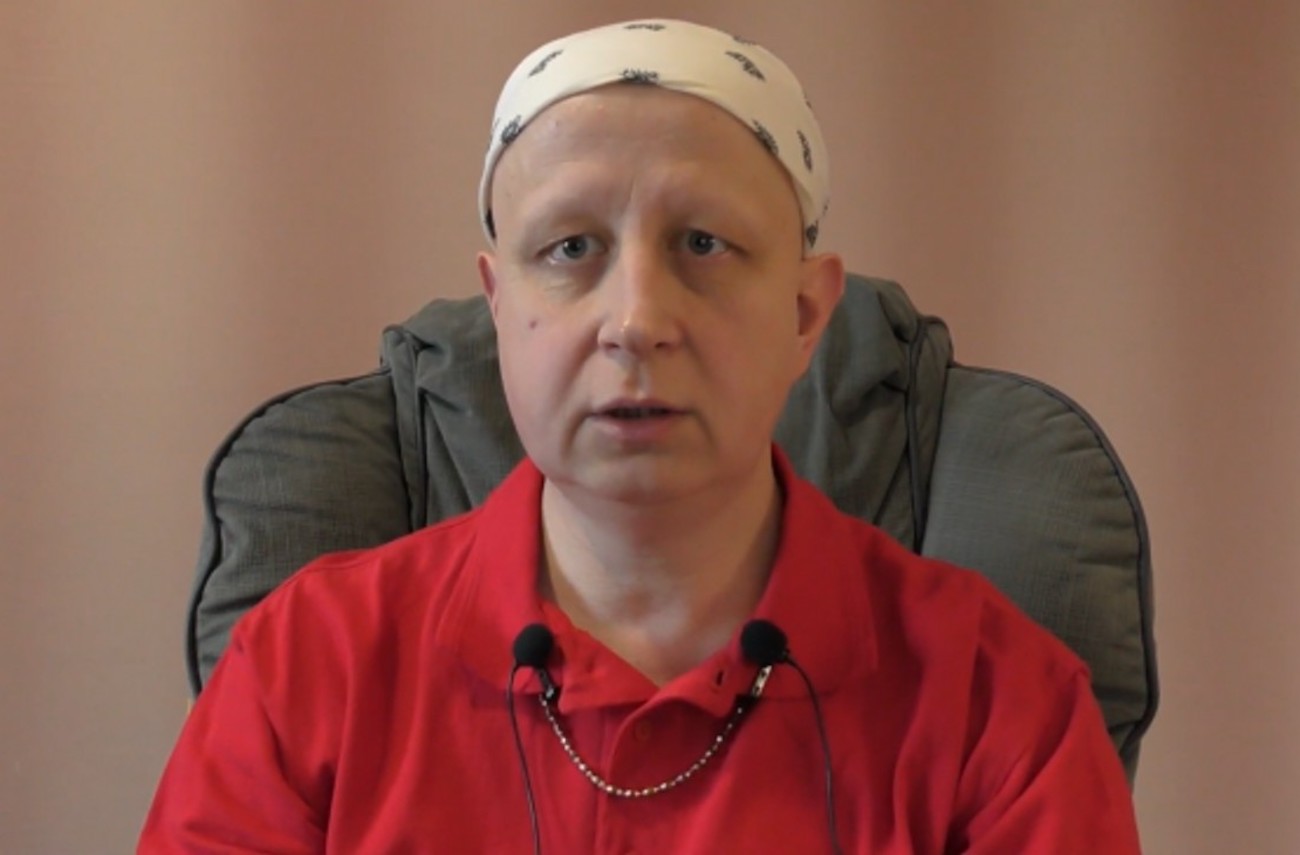
The man in the photo is Dmitry Nadein, a grassroots political activist from Irkutsk. He’s not just an activist, but was once a volunteer at Alexei Navalny’s local headquarters. Russian law enforcement agencies could not overlook such a dangerous criminal, of course, and, putting aside all their other business, they rushed into battle with him.

Nadein was arrested on February 4 on charges of “condoning terrorism,” in a case launched by FSB investigators. Taiga.Info reported that, on November 21 of last year, Nadein published on his Vkontakte page the news that a military court had sentenced Lyudmila Stech, a Kaliningrad resident, to pay a large fine for “condoning” the “Arkhangelsk terrorist.”

In early April, Nadein was forced to undergo a forensic psychiatric examination: he was diagnosed with “sluggish schizophrenia” and labeled “especially dangerous to society.” And today, thanks to OVD Info, it transpired that [on July 19] the First Eastern District Military Court had ordered Dmitry to undergo compulsory psychiatric treatment.

I’ll take this opportunity to note that there is no such thing as “sluggish schizophrenia” at all. It is a typical Soviet diagnosis, dreamed up by Andrei Snezhnevsky back in 1969 by analogy with Eugen Bleuler’s “latent schizophrenia,” which today is listed as one variety of “schizotypal disorder” (coded as F21 in the ICD-10). Beginning in the 1960s, many ideological opponents of the Soviet Communist Party found themselves under this psychiatric stigma. About a third of all political prisoners were forcibly “treated,” crippling their lives. By the way, this treatment was applied not only to political dissidents per se, but also to “deviants” more generally, as well as to many homeless people and those who avoided military service. Need I mention how many of their civil liberties were violated and how their health was ruined?

Today, step by step, the Soviet model of punitive psychiatry is being restored and modified to new realities. After all, no holds are barred when it comes to “mopping up” the political landscape.

Translated by the Russian Reader