A Hostage of the Putin Regime: The Case of Ekaterina Kishchak

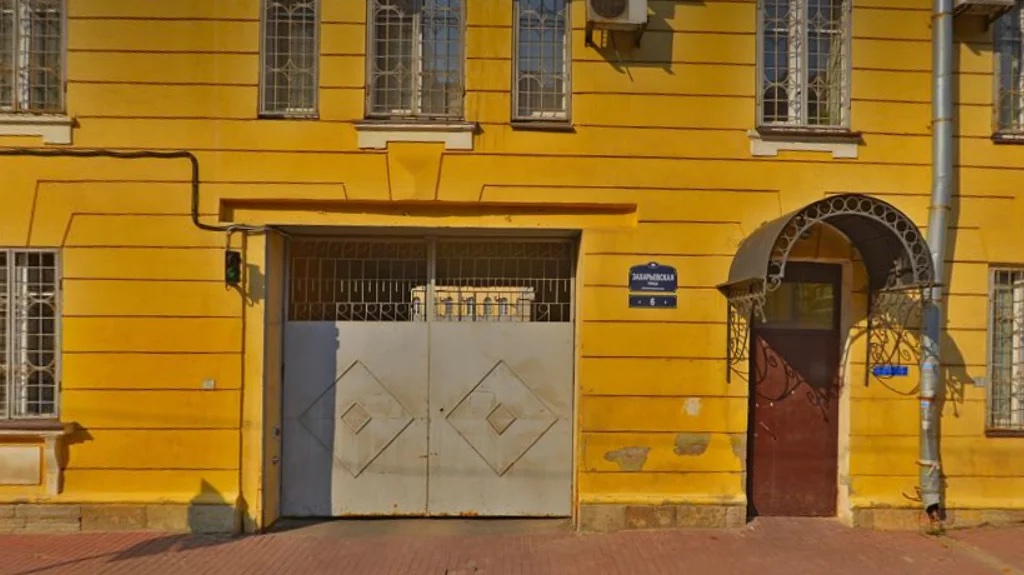
The special detention center at Zakharyevskaya 6 in downtown Petersburg. Image courtesy of Yandex Maps via mr7.ru

Police have detained Ekaterina Kishchak, a 20-year-old resident of Crimea, a citizen of Ukraine and Russia, and the daughter of Yuri Kishchak, a suspect in the bombing of a power line in the Leningrad Region. The young woman is currently at a special detention center in St. Petersburg, said lawyer Vitaly Cherkasov.

Ekaterina’s relatives turned to the lawyer for help. They said that on May 4, the young woman and her boyfriend, Dilyaver Gafarov, were supposed to cross the Russian-Georgian border at Upper Lars to go on holiday in Georgia. At the border checkpoint, the young woman texted to her father, who is living in Belgium, that they were on the verge of crossing the border, after which she stopped answering his calls.

Only fifteen days later, on May 19, did Ekaterina get in touch with her family. In a conversation with her father, she said that she had been detained at the border with Georgia and jailed for fifteen days—that is, until May 21. After this conversation, Ekaterina’s father had a heart attack and underwent surgery.

Ekaterina’s sister, Anna Petrishina, wrote to the Russian Federal Prosecutor General Igor Krasnov asking that the lawyer be notified if the young woman faced criminal charges, or to place her on the federal wanted list if law enforcement agencies were not involved in her disappearance. The letter states that, over the phone, Ekaterina claimed that the police officers who detained her “only ask[ed] questions about her father,” and said that if he did not return to Russia, she and her boyfriend “[would] be tried for his deeds.”
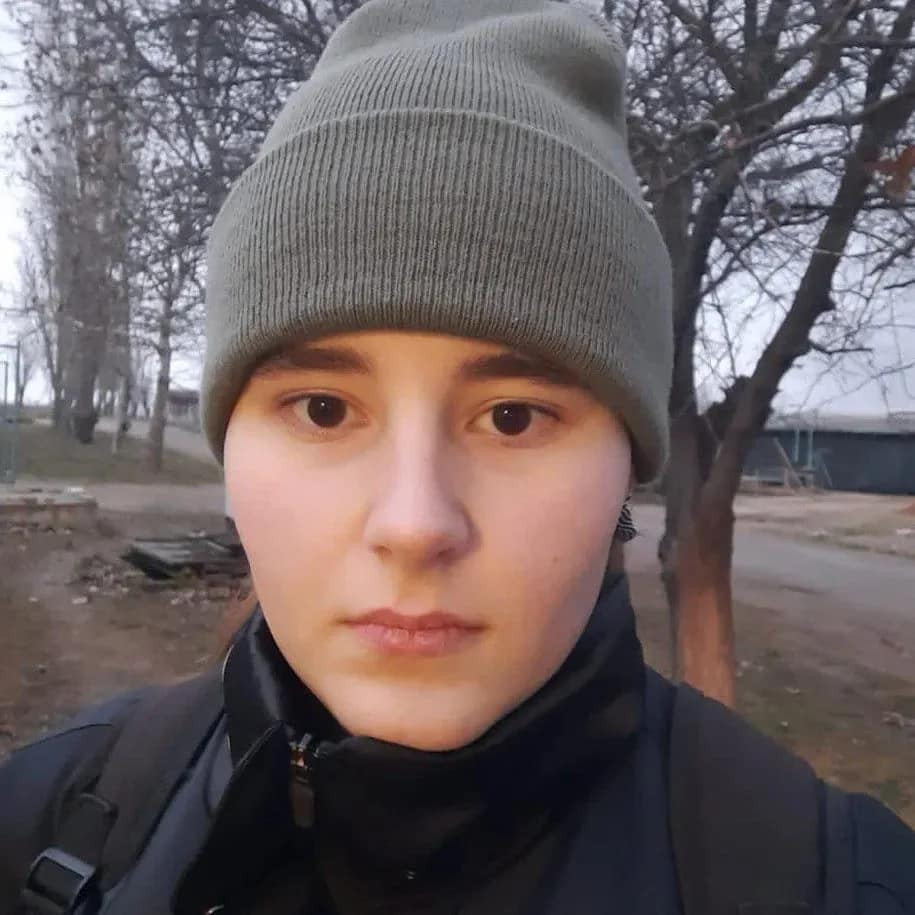
Ekaterina Kishchak. Photo courtesy of Vitaly Cherkasov, as posted on his Facebook page on 5 June 2023

Later, Ekaterina wrote to her father again. According to the lawyer, the young woman said that she had been “taken to St. Petersburg to be arraigned in his criminal case.” Ekaterina’s message was answered by her father’s wife, who replied that she would not pass on her stepdaughter’s message because it would only worsen her husband’s condition.

A lawyer from the Krasnodar Territory who was first engaged by the young woman’s relatives went to Vladikavkaz and discovered that Ekaterina and Dilyaver had been jailed for fifteen days on charges of “disorderly conduct”(per Article 20.1 of the Russian Federal Administrative Offenses Code). It also transpired that the detained young man had telephone his father on May 23 and informed him that the couple had been jailed a second time.

Yesterday, June 3, Cherkasov learned that Ekaterina and her boyfriend were in custody in the special detention center at 6 Zakharyevskaya Street in St. Petersburg—again on charges of disorderly conduct, per the decision of the city’s Smolny District Court. The lawyer attempted to meet with the young woman, but Ekaterina filed a written refusal to communicate with the human rights advocate.

“What happened there made me realize that FSB officers had arrived at the special detention center. I was asked for my identity card again, although they had already made a photocopy of it. When I had waited an hour, I approached the officer on duty and asked why it was taking so long. He replied, ‘Wait, they’re writing a statement in there.’ I was surprised: who did he mean by ‘they’ if I was waiting only for Ekaterina?

“An hour and a half later, the same officer appeared in the visiting room and bashfully handed me a statement, written in Ekaterina’s hand, that she did not want to communicate with me until the end of her stay at the special detention center.

“I asked the on-duty officer the standard question: did he understand that she had been pressured into [writing the statement]? He looked down and said that he had nothing to do with it, thus letting me know that he was carrying out someone else’s instructions,” Cherkasov told mr7.ru.

The lawyer plans to familiarize himself with the administrative case against Ekaterina Kischak in the Smolny District Court. There is information on the court’s website that the young woman and her boyfriend were convicted on May 24 by decision of Judge Ekaterina Mezentseva under Article 20.1.2 of the Russian Federal Administrative Offenses Code (i.e., “disorderly conduct involving disobeying a legitimate demand by an officer of the state”).
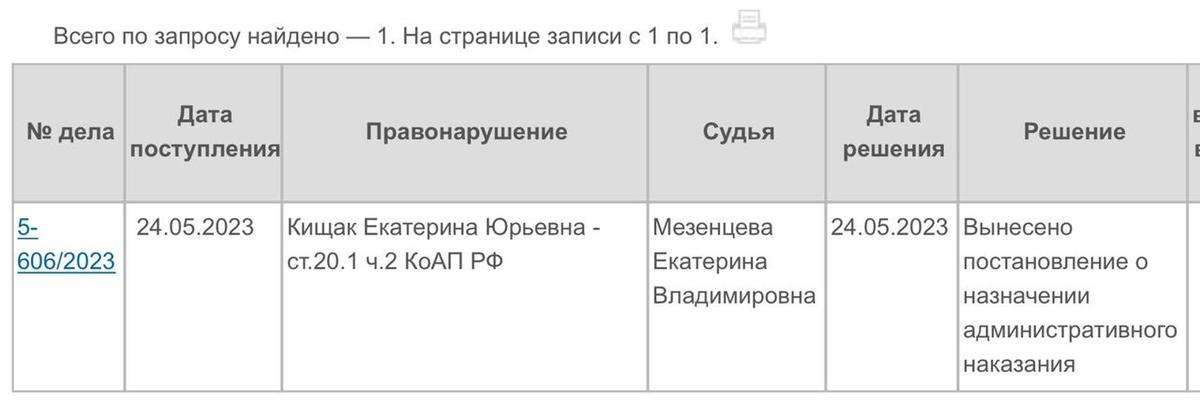
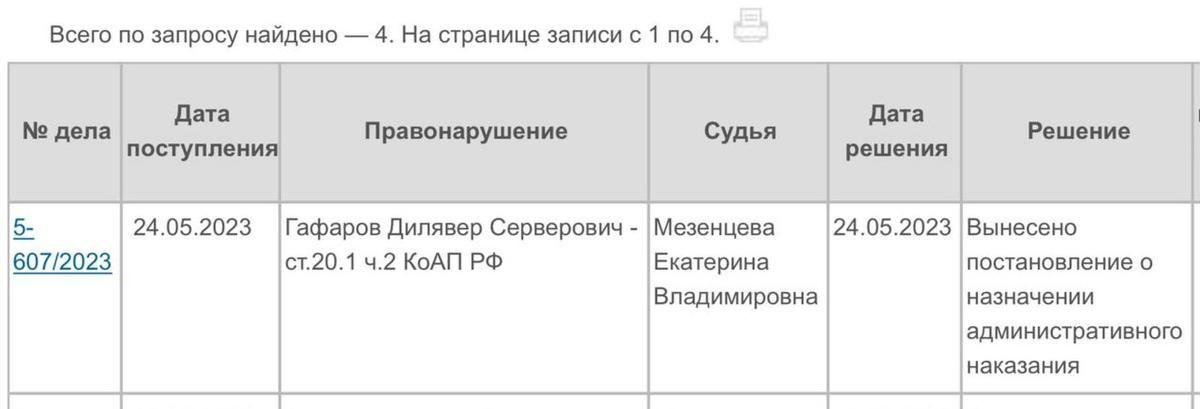
Screenshots of the Smolny District Court’s website, showing that Kishchak and Gafarov were convicted on 24 May 2023 by Judge Ekaterina Mezentseva of violating Article 20.1.2 of the Russian Administrative Offenses Code and sentenced to “administrative punishment.” Courtesy of mr7.ru

“We need to understand how, having arrived in St. Petersburg involuntarily, in fact, under the escort of regional FSB officers, Ekaterina and her boyfriend could have engaged in disorderly conduct,” the lawyer said.

You will recall that, on May 25, the FSB reported that it had detained two Ukrainian nationals: 44-year-old Alexander Maystruk aka Mechanic, and 48-year-old Eduard Usatenko aka Max. Yuri Kishchak aka YBK, a 59-year-old Ukrainian and Russian national who is currently in Belgium, was put on the wanted list.

The FSB claims that, in September 2022, the Foreign Intelligence Service of Ukraine (SZRU) recruited the three suspects to sabotage upwards of thirty pylons on the high-voltage power lines running from the Leningrad and Kalinin nuclear power plants (the latter is located in the Tver Region).

According to the FSB, on the Leningrad NPP power line the saboteurs managed to blow up one pylon and rig four pylons with explosives, while on the Kalinin NPP power line they planted IEDs under seven pylons. One of the pylons in the Leningrad Region collapsed due to the blast, but no one was injured, and the power supply was not disrupted.
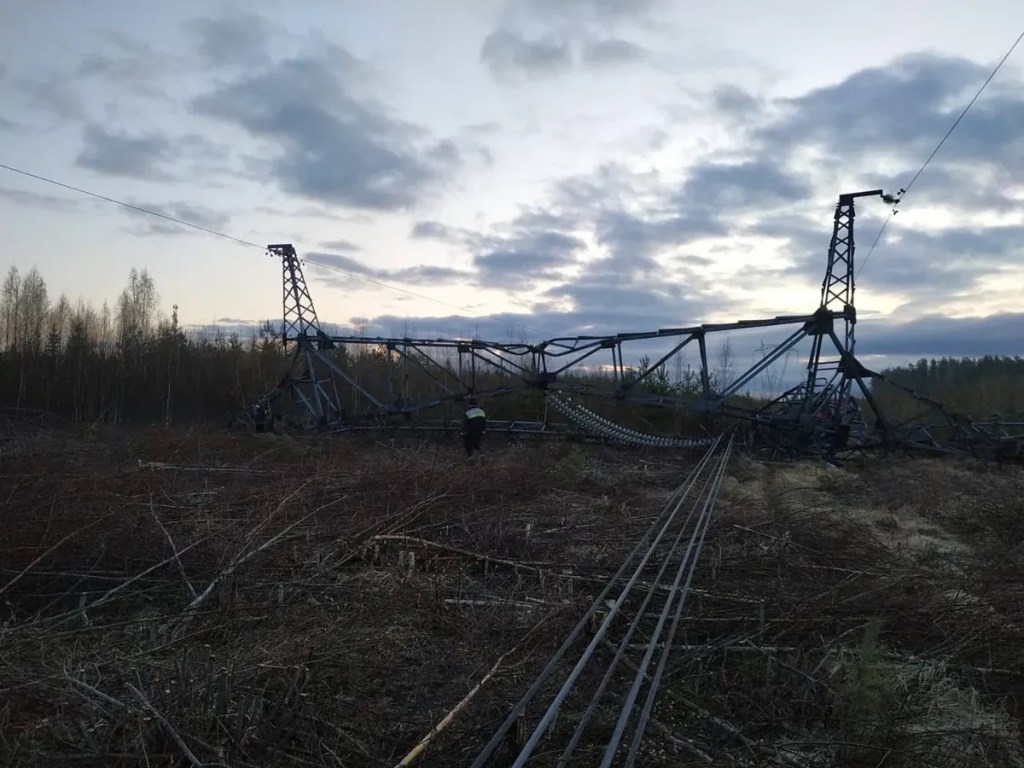
The high-voltage power line allegedly damaged by a bomb blast on 1 May 2023
Source: Leningrad Region Governor Alexander DroZdenko [sic] (Telegram), via mr7.ru

Source: “Daughter of suspect in bomb blast on power line in Leningrad Region sent twice to special detention center for ‘disorderly conduct,'” mr7.ru, 4 June 2023. Translated by the Russian Reader. Thanks to Vitaly Cherkasov for the heads-up. This post was updated on 5 June 2023 to include the photograph of Ms. Kishchak, above, which was not part of the original article on mr7.ru.

Moscow: Where Waving Your Arms Energetically Is a Felony

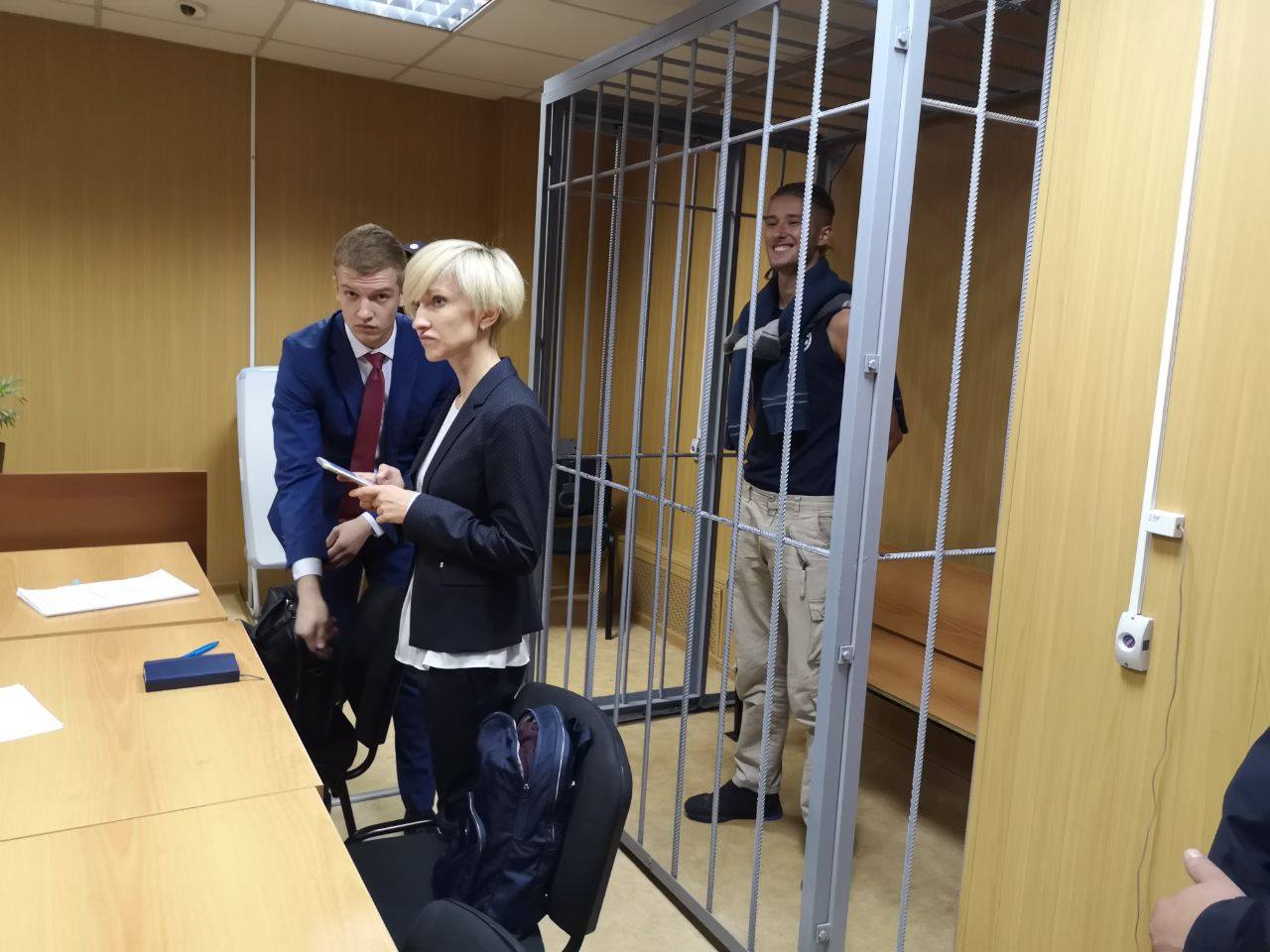
barabanov.jpgVladislav Barabanov in the dock at the Presna District Court in Moscow earlier today. Photo by Elizaveta Pestova. Courtesy of Yegor Skovoroda and Mediazona
Yegor Skovoroda
Facebook
August 5, 2019

The Presna District Court has remanded three more people in custody as part of the Moscow “riot” case. It became clear during the hearings how they had warranted being charged with involvement in rioting, punishable by up to eight years in prison under Article 212.2 of the Russian Criminal Code.

Daniil Konon, 22, a student at the Bauman School, waved his arms energetically and showed people on the streets where other protesters had gone. (Ren TV has posted a video denunciation of Konon.) Thus, the Investigative Committee argued in court, Konon “coordinated” the riot, a riot that, in fact, never took place.

67517382_2194384337353952_1659775525830262784_oDaniil Konon in the dock at the Presna District Court today. Photo by Anna Kozkina. Courtesy of Yegor Skovoroda and Mediazona
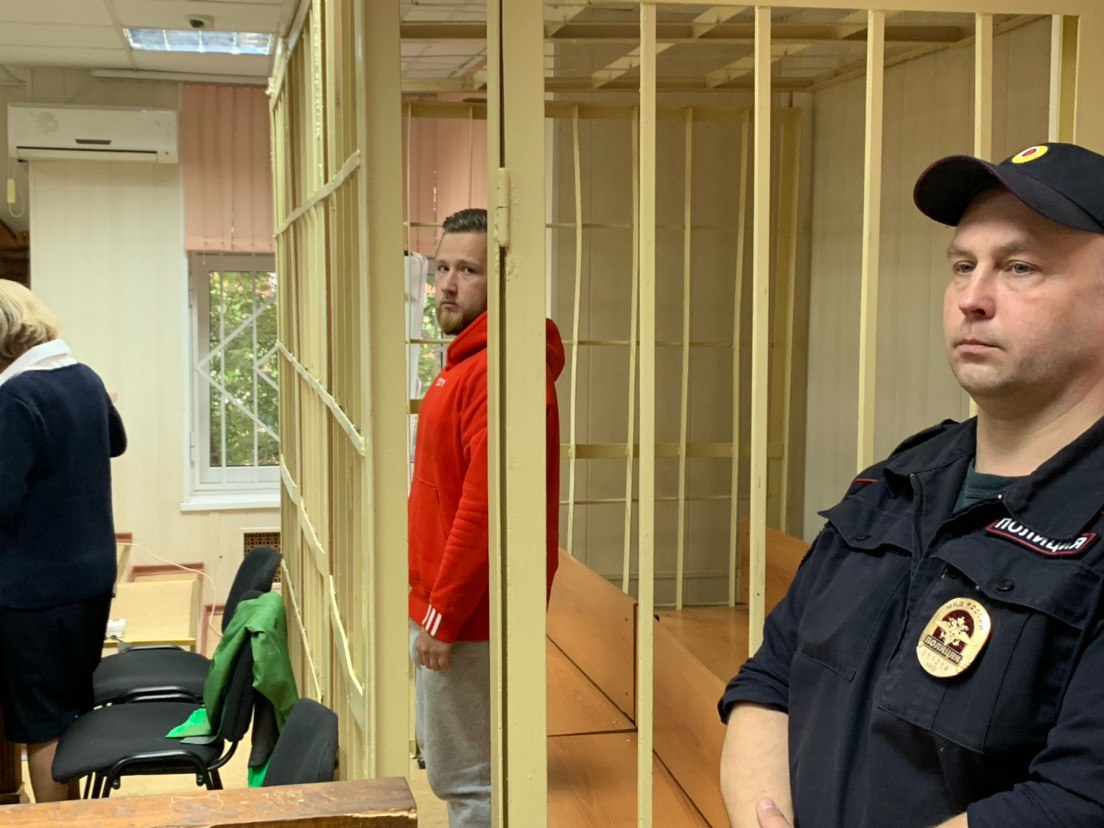
Vladislav Barabanov, 22, an anarchist from Nizhny Novgorod, also, allegedly, “coordinated” the pogrom that wasn’t. However, field agents from Center “E” cited a video in which Barabanov can be seen merely standing in the midst of other demonstrators. He is not even waving his arms.

Sergei Abanichev, 25, is a manager. His girlfriend says he enjoys helping homeless animals. What was his crime? He tossed an empty paper cup from Burger King towards the cops, who were coming at the protesters from all sides. That was it.

67903104_2194384357353950_7558604397521928192_oSergei Abanichev in the dock at the Presna District Court. Photo by Dmitry Shvets. Courtesy of Yegor Skovoroda and Mediazona

I overheard a conversation in the court building. A case investigator exited the courtroom.

“It’s fine. He’ll have to suffer for a month, that’s all,” he said to the mother of one of the men who had been remanded in custody.

“Aren’t you ashamed?” a young woman from the support group asked him.

“What, me? No. Are you?” he replied.

I really do not like high-sounding words like “captives” and “hostages,” but all these people, seized at random by the police, are, in fact, hostages. The security forces took them captive only to frighten all of us.

Don’t be afraid.

Free all political prisoners!

Today, we again covered the hearings simultaneously online, meaning we had several reporters working in the court building, and several working at the office. Covering events online is a lot of work and only your donations and support make it possible. This is going to be a big case, so do not forget to donate to Mediazona.

Yegor Skovoroda is a journalist at Mediazona. Translated by the Russian Reader

Alexander Kolchenko and Oleg Sentsov Are Hostages

On Kolchenko and Sentsov’s Sentences
August 26, 2015
www.shiitman.ninja

179003Alexander Kolchenko and Oleg Sentsov

It is important to realize that the sentences that Kolchenko and Sentsov received are a fiction.

No one actually takes the charges against them seriously.

Even the most loyal Putinists do not take the charges seriously. What terrorism? What does the Right Sector have to do with any of this?

Kolchenko and Sentsov are hostages. Their being held in a Russian prison is an act of intimidation directed at the Crimeans who stayed home but could have fought back. Their being held in prison is an act of intimidation directed against all the people of Ukraine and those Russian citizens who could have supported them.

The trial was a fiction. The verdict is a fiction. That is why I reacted without emotion to the sentences, although I understand the shock felt by many comrades, among whom there are close friends of both Kolchenko and Sentsov. Twenty years and ten years in prison? The Russian judges could have give them sentences of forty years and twenty-five years. Or given both of them life sentences. Or given them each six months in prison, then retried the case. Or they could have not announced the verdict at all, but just laughed and made faces. Or mannequins dressed in judicial robes could have replaced the judges. Nobody would have noticed the difference.

Kolchenko and Sentsov are in prison as long as the Russian Federation is ruled by Putin’s repressive, aggressive authoritarian regime. They cannot be freed using lawyer’s tricks. They cannot be freed via “diplomatic channels.” They can be freed only by defeating Putinist Russia. Or if it “defeats” itself by choking on its own rage and madness.

And when that happens, it will not matter a whit what numbers have been written in Kolchenko and Sentsov’s sentences. It doesn’t matter what the judges whip up in Savchenko’s sentence. The release of the hostages does not depend on the actions of lawyers. It depends on politicans and military men. And, in part, on the price of petroleum.

As soon as the “Russian bear,” who has turned out to be a rabid rat, finally kicks the bucket, all the regime’s hostages will be freed.

Translated by The Russian Reader. As is nearly always the case, my opinions might not coincide entirely with those expressed by the authors whose texts I translate and post here. But it has been strange to read the angry reactions of leftist progressive Russian comrades to this particular text given the almost total lack of any visible, public solidarity with Sentsov and Kolchenko on their part.

I won’t even go into the haziness they and many other “ordinary” “apolitical” Russian citizens experience when figuring out who to blame for the whole mess in Ukraine. But this is the privilege all imperialist, metropolitan peoples enjoy: pretending not to know or understand what is being done in their name somewhere else in the world.

_________

Russia’s Sentsov–Kolchenko case “an absolutely Stalinist trial”
Halya Coynash
August 21, 2015
khpg.org

The prosecutor has demanded 23 years for Ukrainian film director Oleg Sentsov, and 12 years for civic activist Oleksandr Kolchenko in a case with no crime and where all evidence was obtained through torture. Russian human rights activist Zoya Svetova likens this to Stalinist repression, not a court trial.

Svetova has seen a huge number of trials over the last 15 years, but nothing like the “absolutely insane hearing” on Aug 19. She can’t remember a case where, with no elements of a crime, or criminal (terrorist) acts, the prosecutor should be seriously demanding 23-year and 12-year sentences. This, the fact that everybody expects the court on August 25 to convict two innocent men, and much more, she says, is reminiscent of Stalinist repressions where people were arrested for nothing.

Sentsov is charged with leading a ‘terrorist organization,’ Kolchenko of taking part in it and involvement in one specific firebomb attack on a pro-Russian organization active in helping Russia seize control of Crimea in 2014.  There is no evidence that an organization even existed, and the only specific charge against Kolchenko is one that has not previously been classified by any Russian court as ‘terrorism.’

“The prosecutor is demanding 23 and 12 years for people accused of crimes they didn’t commit. Today Sentsov and Kolchenko’s lawyers clearly demonstrated that there are no elements of a crime in this case, nor any criminal act. On August 19, 2015, I saw a totally Stalinist trial. Three judges were sitting there, a real ‘troika,’ with cold, virtually dead eyes who were listening to the prosecutor and the lawyers,” Svetova writes here.

Another of the disturbingly Stalinist features of this case has been the fixation on some demonized organization, in this case the far-right and nationalist Right Sector. Russia has constantly exaggerated this organization’s role in both Euromaidan and subsequent events in Ukraine.  There was even a Russian media attempt on the night of the Ukrainian presidential elections on May 25, 2014, to claim distortion of the election result after the Right Sector candidate gained a pitiful 0.9% of the votes. It was therefore no surprise that five days after those elections, the FSB should have claimed that it had uncovered a supposed Right Sector ‘terrorist plot.’  It has never produced any evidence at all, nor did any of the witnesses for the prosecution even demonstrate a clear understanding of what the Right Sector is, although they were all convinced it was dangerous, etc.  There is nothing to link Sentsov, the left-wing and anarchist Kolchenko or Gennady Afanasyev with the far-right organization. In court on Wednesday, the prosecutor Oleg Tkachenko changed their story, saying that Sentsov and Kolchenko are not accused of membership in Right Sector, but of having “taken on the ideology of this organization as a guide for action.” What this means remains a mystery since the court has not demonstrated any interest in seeking clarification on this subject or with respect to the numerous other discrepancies in the prosecution’s case.

At the final hearing on Wednesday, the defence demolished all of the charges against the two men, then Dmitry Dinze, Sentsov’s lawyer, read out the account given by Gennady Afanasyev of how he had been tortured to get him to testify against Sentsov.

As reported, Afanasyev and Oleksy Chirniy were arrested at the same time as Sentsov and Kolchenko.  Their ‘confessions’ and testimony are literally all that the charges against Sentsov are based on. It is therefore of critical importance that Afanasyev retracted his testimony on July 31, stating that it had been given under duress.  He then spoke for the first time to a lawyer not provided by the investigators and gave a detailed account of the torture applied immediately after his arrest, and also the pressure placed on him to repeat this testimony in court. As well as threats against him, a FSB officer who appeared at the prison warned him that his mother “could have an accident” if he didn’t cooperate.

All of this information was read to the court. The judges simply looked down and did not react in any way, and the prosecutor continued to demand 23 and 12 years.  It should be stressed that the details in Afanasyev’s account fully coincide with those given by Sentsov, and Chirniy is also known to have told the Ukrainian consul that he had been forced to ‘confess.’

Unlike the players in this modern-day show trial, the renowned Memorial Human Rights Centre has taken Afanasyev’s account seriously.  On August 19, it issued a statement recognizing Afanasyev as a political prisoner and warning of the danger he is now in. This follows a similar statement and damning assessment of the ‘trial’ of Sentsov and Kolchenko.

Sentsov’s final statement was, as all previous statements, courageous and moving. So too was Kolchenko’s, who spoke of the fact that the court had heard about the use of threats and torture by the FSB against Sentsov and Afanasyev.

“It’s interesting that people using such methods to obtain testimony have no qualms about accusing us of terrorism.”

He called the charges against them fabricated and politically motivated, and said that this trial, like those against Nadiya Savchenko, the Bolotnaya Square protester, and others are aimed at extending the life of the current regime.

“Yet throwing us in prison, this regime speeds up its end, and those people who still yesterday believed in law and order, today, watching such trials, have lost that faith. And tomorrow or the day after tomorrow, those people who are part of the 86 percent [supposedly supporting President Vladimir Putin – HC] will overturn this authoritarian regime.”

Kolchenko noted that, in the letter read out to the court, Afanasyev said that the FSB officer had told him that the day he gave testimony in court would be the most important day in his life.

“Seemingly, Afanasyev took those words to heart and interpreted them in his own way. I was very taken with this great and powerful act of his.”

Gennady Afanasyev is in danger; Oleg Sentsov and Oleksandr Kolchenko are facing long sentences on preposterous charges.  And Russia is descending into a frightening Soviet tradition in which people are tortured for ‘confessions’ with neither the prosecutor nor the judges even batting an eyelid when this is demonstrated to the world.

Please write to all three men!

The website of the Solidarity Committee with the Crimean Hostages will try to get messages to them.

solidarityua.info

In the first box, write one of the following names one at a time:

Олег Сенцов (Oleg Sentsov)

Олександр Кольченко (Oleksandr Kolchenko)

Геннадий Афанасьев  (Gennady Afanasyev)

Then in the next box, write your name.

The next box asks for a telephone number if you wish to give it. An email address is, however, needed (the fourth box).

Finally, in the fifth box, write your message.

The key aim is to ensure that all three men know that they are not forgotten. The following would be quite sufficient (if you do write in Russian, please avoid anything controversial or overly political).

Мы восхищаемся Вашим мужеством и надеемся на Ваше скорое освобождение.

Спасибо, что нашли в себе силы остаться честным с самим собой.

Держитесь!

(We admire your courage and hope for your speedy release. Thank you for finding the strength to remain true to yourself. The last word is a word of support, like “take care!”)

The question under the last box asks whether you are on social networks: yes, no, in that order (or leave it blank)

Then hit SEND.

Thanks to Comrade SP for the heads-up. I have lightly edited the text to make it more readable.