A Bell Is a Cup Until It Is Struck: The Disaster in Tuapse

Russia is readying for Victory Day — a major state holiday that the Kremlin has elevated into something of a sacred ritual — in far-from-perfect condition. For several weeks, Ukraine has been systematically and successfully attacking oil infrastructure across the country, with ecological consequences that local authorities are struggling to contain. The aftermath of the strikes, largely unreported in national media, is even visible from space. The attacks have only added to public discontent with Putin’s policies — but it is unlikely to have any serious consequences for the Kremlin.

Throughout the second half of April, Ukraine made the Black Sea resort of Tuapse its primary target. Tuapse is a sprawling oil city — home to a Rosneft oil refinery, one of Russia’s oldest, which operates alongside an export terminal that ships petroleum products overseas. From April 16 to May 1, Ukraine hit the town four times, damaging both the terminal and the refinery.

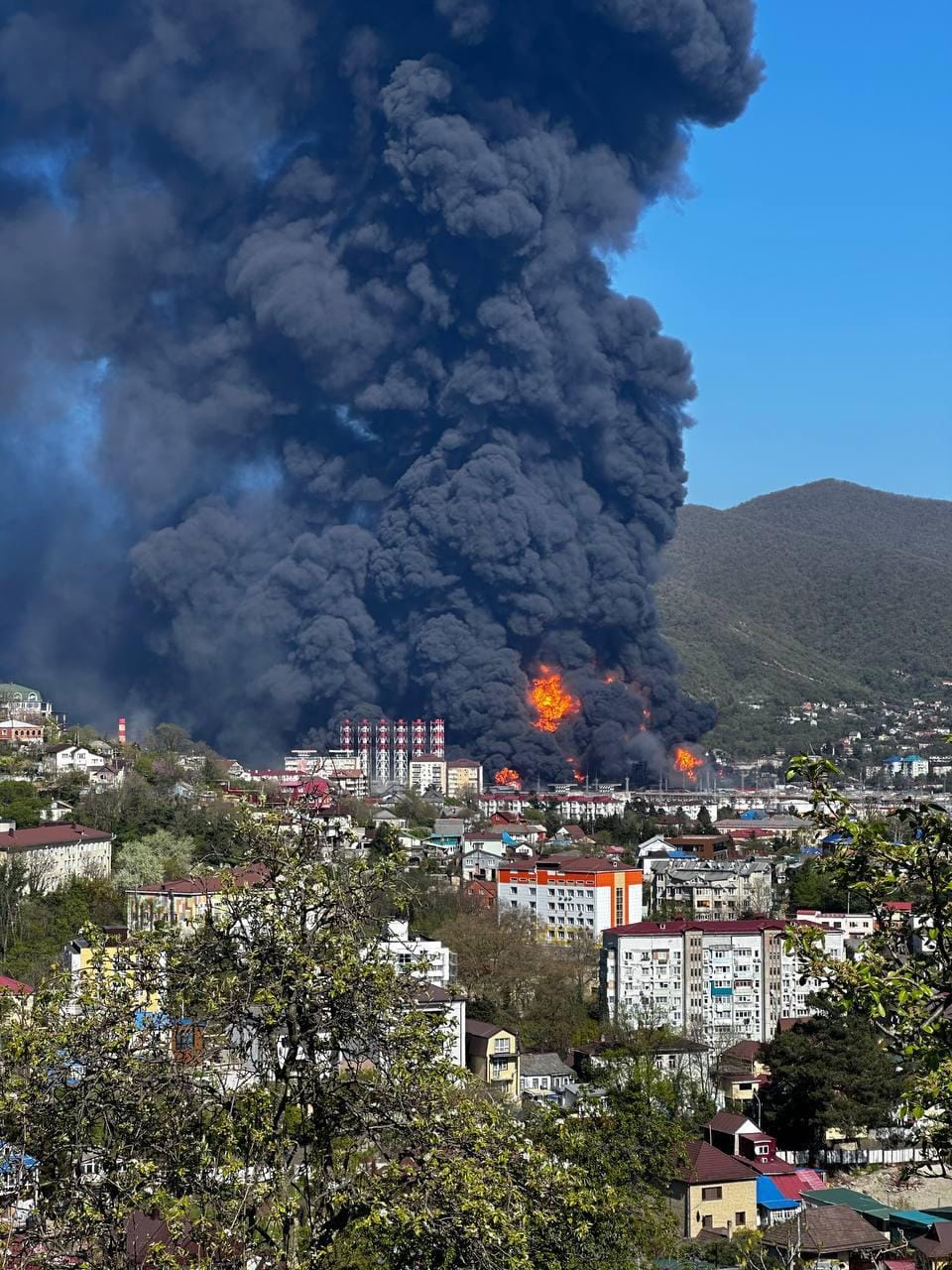
The drone strikes led to a genuine ecological catastrophe. Fires at the refinery caused plumes of smoke visible from orbit. Burning petroleum poured down one of the city’s streets. What became known as “oil rain” — thick black toxic precipitation — fell across the city, leaving stains on plants and animals. In several districts, air quality data showed an unsafe concentration of dangerous chemicals, specifically carcinogenic benzene and xylene, as well as choking soot. Residents living close to the terminal reported vomiting and nausea.

Some of the spilled oil entered the Tuapse River and, after heavy rain, flowed into the Black Sea. Ecologists from the Transparent World project studied satellite images from April 25 and concluded that the size of the spillage covered up to 3.8 square kilometers. The spill near the resort’s central beach was more than half a kilometer long. There is a shortage of workers and equipment to clear up the mess, an operation which has been complicated because the oil soaks deep into the pebble beaches, and the sea continually washes new pollutants ashore. In addition, residents keep finding dead dolphins on the beaches. 

Local authorities declared a state of emergency — a special legal status allowing the immediate deployment of resources and a coordinated disaster relief effort. They recommended locals avoid going outside for long periods, keep windows closed, wear masks, and rinse their eyes, noses and throats. However, there was no official stay-at-home order. For many days, Tuapse’s schools did not cancel classes (before eventually being ordered to close only after one of the last attacks), even as air pollution significantly exceeded safe norms. Employers were similarly reluctant to allow staff to work remotely. “At the same time, you have to stay home but also go to work as usual. Choose for yourself which rule to break,” said one Tuapse resident who first had to take her children to school through a town blanketed in acrid smoke, before driving to work.  

Vladimir Putin’s response has been muted. “Drone strikes on civilian infrastructure are becoming more frequent. The latest example is the attacks on energy facilities in Tuapse, which could have serious environmental consequences,” he said almost two weeks after the first attack. He then added: “However, the governor merely reported that there don’t seem to be any serious threats and people are coping with the challenges they face.” Residents were not impressed, judging by one report from the Black Sea resort. “People are coping. But where’s the government? They seem to be on some other planet. You can feel the anger: some people are doing something, while others are scratching their asses,” a local resident told the Ostorozhno Novosti publication. 

National TV channels did not devote much time to the ecological catastrophe: the weekly news review, Vesti Nedeli, presented by leading propagandist Dmitry Kiselev, ran a five-minute segment on Tuapse in the second half of the show. In it, Governor Venyamin Kondratyev said that he would do everything “to ensure the resort season goes ahead.” Ecologists consider this unrealistic.

Tuapse is not the only place that has been hit by Ukrainian drones. On April 29 and 30, Ukraine attacked a refinery and pumping station in Perm, a city of one million people in the Urals, about 1,500 km from the front line. Ecologists told Agentstvo that an environmental catastrophe could unfold along similar lines there. The skies over Perm were shrouded by smoke, oil fell like rain and carcinogens entered the air. Meanwhile, the local authorities did nothing: the mayor’s page on vKontakte (the Russian version of Facebook) posted nothing about the attacks on the refinery.  

Overnight into May 3, Ukraine attacked Primorsk, Russia’s biggest oil terminal on the Baltic Sea — the latest time in a string of long-range strikes on the site. The port typically handles about 40% of oil Russia’s maritime oil exports. The Leningrad Region’s governor reported a fire had broken out, but no oil leak. The next night, a Ukrainian drone attacked an elite residential complex in the western part of central Moscow — a protected area, home to foreign embassies and where ex-president Dmitry Medvedev owns expensive real estate.

Amid the ongoing Ukrainian attacks, the Kremlin has taken a previously unthinkable step and scaled back the full-scale military parade to celebrate May 9 (for more on how this sacred day in Russia’s calendar became a way to glorify the current war,  read here). Military hardware has trundled through Red Square every year since 2008, although following the invasion of Ukraine the parade has gotten smaller and smaller. This year, there will be no display of military equipment. Only infantry soldiers will march in the parade. “Amid … terrorist threats, of course, we are taking all measures to minimize risk,” said Putin’s press secretary Dmitry Peskov, explaining the decision. In addition, Muscovites living in one of the most digital cities on Earth, again face a mobile internet shutdown from May 5-9. Operators are blocking access to the network “for security reasons.”

Increased taxes for business, rising prices for customers, regular mobile internet outages, the blocking of Telegram (Russia’s most popular online messenger) and general war fatigue among the population have seen Putin’s approval rating continue to fall for a second month. According to the latest survey by state pollster VTsIOM, 71% of Russians back the president — the lowest level since the invasion of Ukraine. FOM, another pollster that works with the presidential administration, recorded a drop in support to 73% — also its lowest reading since the opening days of the invasion in 2022. The decline in approval will not lead to any protests in Russia, an expert studying Russian public opinion told The Bell.  

Why the world should care

Ukraine’s systematic and increasingly successful drone strikes against Russian cities clearly cast a shadow over Putin’s plans for May 9, arguably the most important day of the year for the Russian leader. The Kremlin uses the event not only to celebrate Soviet victory over Nazi Germany, but increasingly to justify the current war and lionize the Russians fighting at the front. In previous years, Kyiv has refrained from attacks on this date. Regardless of whether that remains the case this time, the key point remains: Russian society is not just tired of the war, but is starting to feel its full impact: constant restrictions, lockdowns, and dim economic prospects. In the fifth year of fighting, growth rates that were once trumpeted by Kremlin economists are already out of reach.

Sourcee: Denis Kasyanchuk, “Russia on Fire as Victory Day Approaches,” The Bell, 5 May 2026. As a paid subscriber to this exorbitantly overpriced biweekly newsletter, I am happy to share it occasionally with my own readers.||||| TRR


Wire, A Bell Is a Cup… Until It Is Struck (LP, 1988)

Hello!

This is the 7×7 newsletter, which tells the tale of two journalists, Alisa and Yelisei, who have set out on a voyage around Russia’s cities and towns to find out what life is like in the country’s regions. Care to join them?

The Ulysses have arrived in Tuapse. On the night of 1 May, the local marine terminal here caught fire once again following a drone attack. As a result of the incident, petroleum byproducts spilled into the river and the sea, polluting approximately sixty kilometers of coastline. Volunteers immediately rushed to the scene. Many of them already have experience in combating fuel oil pollution on the coast: they worked on the 2025 oil spill in Anapa.

The volunteers have been sadly convinced that the authorities had not learned from the previous disaster, and that they were once again left to deal with the oil alone. Officials, meanwhile, did nothing but issue directives on how not to tackle the spill’s aftermath. For instance, they proposed barring women from being involved in the cleanup efforts. You can find out how they justified this stance—and how the female volunteers responded—in the newsletter below.

Reading time: 8 minutes

Tags: Tuapse, Anapa, environmental disaster, oil spill, war’s effects, reproductive health, volunteering

“There is only one solution: once there are enough men available for this work, there will no longer be any need for women to do it,” the female volunteers in Tuapse remarked wryly as they head back to the beach. They had a busy May Day holiday digging up oil-contaminated pebbles on beaches, washing oil off dogs, cats, and birds, and recording videos appealing for help. They also could not help but notice that there were more women than men out on the beach.

Meanwhile, a correspondent for Kommersant reported that Tuapse city hall and the regional department of the Emergency Situations Ministry had not permitted female volunteers to clean up the oil due to “concerns” for their reproductive health. The conversation took place during a meeting with volunteers. Several women present at the meeting said that they would take care of their own reproductive choices themselves.

City hall issued no formal legal ban on women’s involvement in the cleanup effort, limiting itself instead to a verbal recommendation. Yet even these suggestions sparked considerable controversy.

Ecologist Roman Pukalov urged women to refrain from working directly on the beaches. According to him, after spending forty years studying the effects of petroleum products on humans, he has concluded that “the fairer sex constitutes the primary risk group.” He asked female volunteers to focus on other forms of assistance (aside from beach cleanup) such as organizing meals, overseeing the delivery of humanitarian aid, and coordinating targeted fundraising efforts.

“We members of the fairer sex make up the majority,” Anastasia, a volunteer from the Anapa-based volunteer squad Ghosts, reminded Pukalov in the comments section. She herself requires medical attention after being involved in the cleanup of fuel oil in Veselovka. She urged her fellow female volunteers to take care of themselves and undergo all necessary medical checkups following their time in the field.

Other volunteers noted in the comments that fuel oil is not only dangerous to reproductive health. It can also lead to anemia, to which women are more susceptible than men. The women should therefore undergo a medical checkup before the cleanup begins so they are aware of the risks involved, and volunteer coordinators should explain the potential harm of petroleum byproducts and discourage those at high risk of harm to their health from taking part in the cleanup.

What has upset the female volunteers most was that no one has been carrying out medical checks or providing any information at all about the dangers of fuel oil. The officials simply impose bans, and do so under the guise of concern for reproductive health. Yet the women working to clean the beaches may not even want to have children.
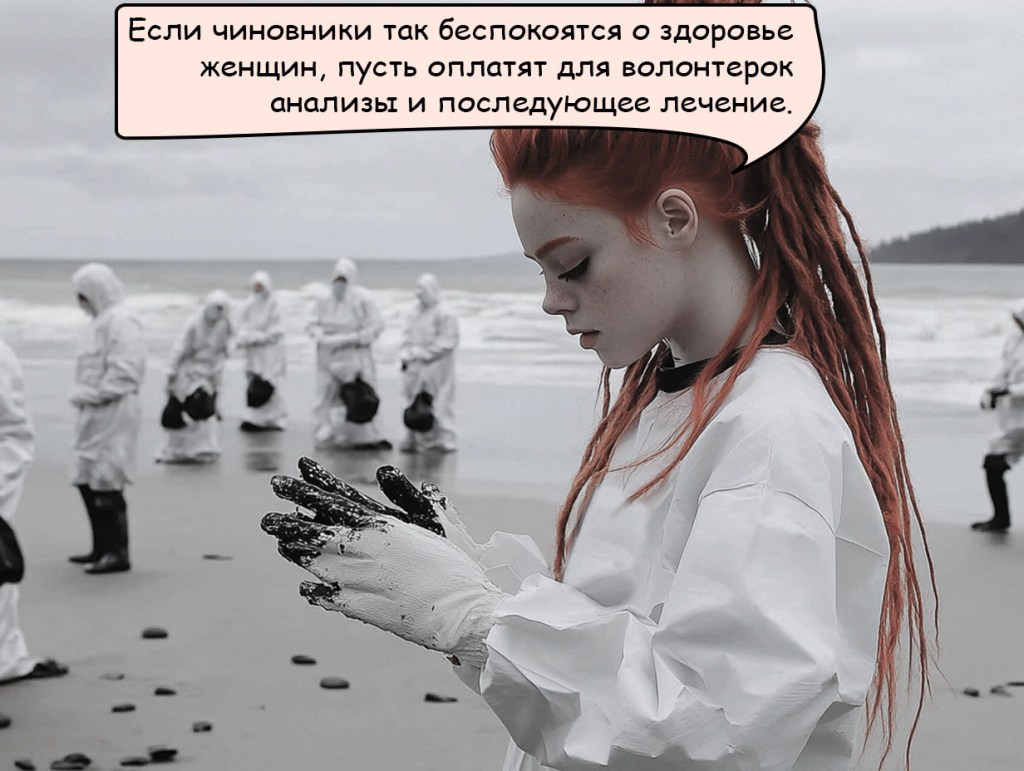
Alisa: “If officials were so worried about the women’s health, they should pay to have them tested and treated, if necessary.”*

Petroleum products can in fact cause a range of health problems in women: disturbances in the menstrual cycle, complications during pregnancy and fetal abnormalities, and the onset of anemia.

Women are more vulnerable to the effects of petroleum products: their dangerous components accumulate in fatty tissue, which women have more of, and affect the endocrine system. In some cases, these components are eliminated more slowly than in men, due to the effect of sex hormones on the liver.
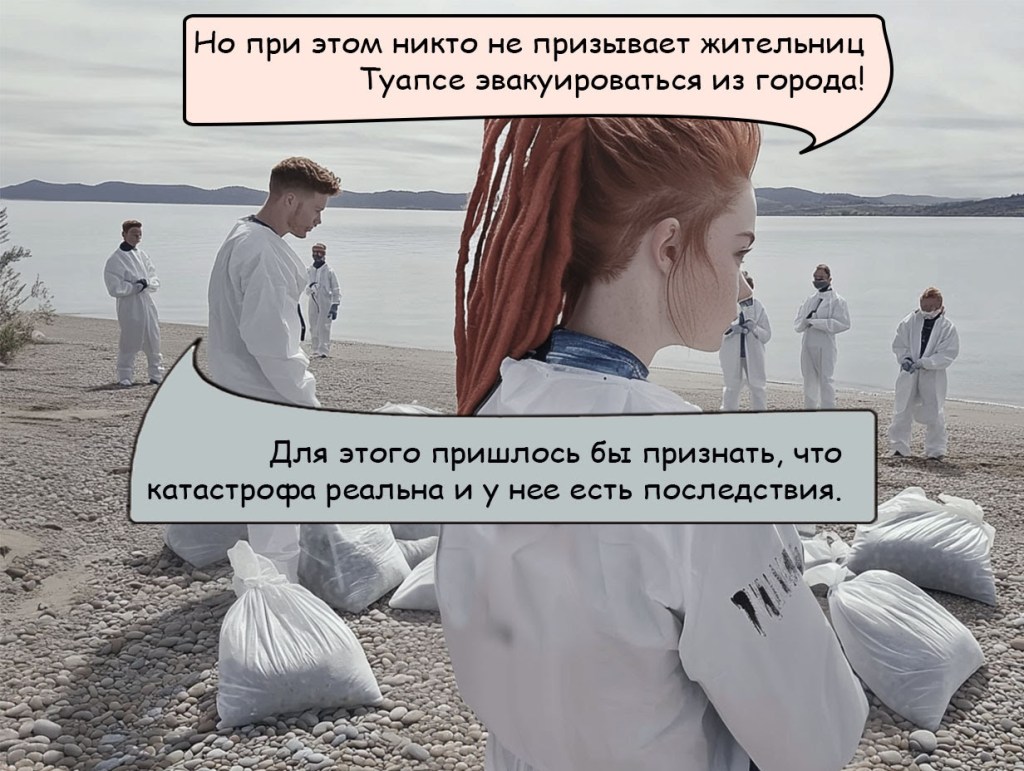
Alisa (right): “And yet no one has been calling on the women of Tuapse to evacuate the city!”
Yelisei (left): “For that to happen, the authorities would have to admit that the disaster is real and that it has consequences.”

The volunteers themselves complain that they are short of hands. The authorities, meanwhile, have promised to have the beaches completely cleared of oil by 1 June. But environmentalists doubt that the clean-up crews will manage to meet the deadline: the area affected by the spill is simply too vast.

What is more, the city is experiencing “oil rain”: petroleum byproducts are released into the air and settling on the ground in the guise black droplets along with the rainfall. They then seep into the soil, poisoning plants, animals, and the drinking water.

The oil rain poses a particular risk to pregnant women living in the city, rather than those directly involved in the cleanup.

“In this sense, now is the worst possible time to try to have children. There is a high probability that these children will suffer from developmental abnormalities. Pregnant women need to keep their windows closed, wash the floors at home twice a day, wear a mask (even indoors), change their clothes daily, and take every possible precaution to avoid exposure to this filth. And the same goes for those who aren’t pregnant, too,” ecologist Igor Shkradyuk told 7×7.

The authorities did in fact evacuate residents from one district—not due to the risk of oil poisoning, however, but rather due to the aftermath of the drone strikes. Residents of private homes destroyed by fire were among those who left. Yet the authorities have been making strenuous efforts to conceal the true magnitude of the pollution. For instance, Sergei Boyko, head of the Krasnodar Territory’s Tuapse Municipal District, said on Solovyov Live that Tuapse would be ready to welcome tourists during the resort season, arguing that “what happened on one beach will in no way affect the other beaches.”

The Emergency Situations Ministry’s Tuapse office eventually explained to Kommersant that volunteers are barred only from the most heavily polluted (and, therefore, most dangerous) beaches. Nevertheless, the women have been going on with their work despite these “recommendations”: they have not only being cleaning the beaches but also washing animals, removing polluted sand, coordinating volunteers, sending out appeals for assistance, and recording videos documenting the situation.
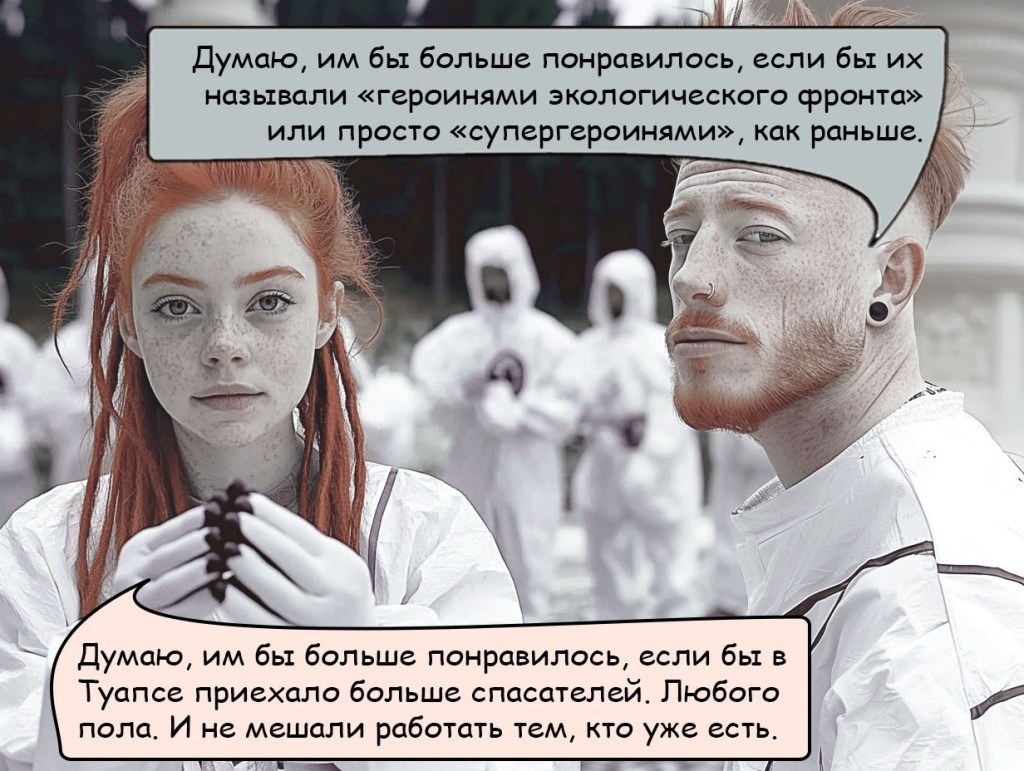
Yelisei (right): “I think they would like it if they were called environmental superheroines, or just superheroines, like earlier.” Alisa (left): “I think they’d like it more if more rescuers came to Tuapse, whatever their sex, and if the rescuers who are already here stopped being pestered.”

If you have read about the risks of poisoning and are still willing to help, check out the volunteers’ channels on Telegram and VKontakte. Volunteers are urgently needed right now to catch birds, wash animals, and clean up the fuel oil. Before setting out, be sure to contact the coordinators, as particular jobs, locations, and needs for supplies may change during the course of the day. A bot set up by the volunteers provides their contact details. You can also help remotely: fundraising efforts support washing operations, the bird-catching team, and the equipment warehouse are ongoing.

* AI tools were used to produce the images in this article.

Source: 7 x 7 weekly email newsletter, 5 May 2026. Translated by the Russian Reader


No sooner had local officials declared that they had finally brought under control a fire that raged for days at an oil refinery in Tuapse, a port town on Russia’s Black Sea coast, than it flared up again.

The blaze is visible from as far away as Sochi — and even from space. Satellite images show vast oil slicks spreading across the sea. Online, volunteers are posting videos of dead marine life, including dolphins, their bodies coated in crude.

How much oil has already been spilled: hundreds of tons, or thousands? No one seems to know.

President Vladimir Putin said Tuesday that there were “no serious threats in Tuapse, and people are managing to cope with the challenges they face on the ground.” Governor Venyamin Kondratyev told him so, he said.

Putin is no stranger to calamity, or to minimizing it. But it is worth taking a look at what is actually happening.

The inferno first erupted last week. Storage tanks filled with petroleum products burned, sending columns of black smoke visible more than 100 kilometers away.

The volume of combustion byproducts released into the air was so large that Tuapse experienced what residents called “oil rain,” because it felt like the city had been doused with oil. A film resembling an oil slick settled on streets, plants, people and any pets or stray animals that happened to be outside at the wrong time.

That film contains a toxic mix of pollutants, including carcinogens such as benzene. Because the fire is still burning, dangerous concentrations of these substances persist in the air. Black rain may well continue.

Officials say levels of harmful substances are two to three times above what is considered safe.

To paraphrase a Russian proverb, lying is nothing compared to lifting sacks. Talk is cheap.

There is no reliable independent data, but it is hard to imagine that concentrations near the fire are merely double or triple permissible limits. More likely, they are dozens, perhaps hundreds, of times higher.

Last week, roughly 60% of the facility’s storage capacity was on fire. Now the rest is burning.

The resulting clouds of soot and carcinogens are especially dangerous for children, the elderly and those with cardiovascular or respiratory conditions. People with fragile health are already feeling the effects. The rise in cancer rates will come later; that is how such exposures work.

And when the fire finally burns out, the disaster will not end. Toxic residues left behind by the fires and the oily rains will remain in the environment, re-entering human bodies again and again.

Nor is the damage confined to the air. At least several hundred tons of petroleum products have spilled into the Tuapse River and the Black Sea. Satellite imagery showed large slicks as early as last week; the leakage continued this week. The impact on marine ecosystems and the coastline will be severe. Drinking water contamination is a real risk.

To understand what may come next, one need only recall the spill in the Black Sea at the end of 2024, which saw thousands of tons of oil products released. Fish, mollusks, dolphins and birds died in large numbers.

As then, volunteers are now desperately scrambling to respond while Putin and Governor Kondratyev tell the country that there are no serious problems. 

Remember those videos where they’re cleaning oil off the birds? Well, most of them die anyway. I don’t mean to say that washing the birds is pointless — some of them will survive. Just not many.

Even if the visible oil is removed from beaches, the problem will linger for years. Each storm will dredge buried petroleum products back up to the surface. Effective, repeated cleanup requires sustained resources and political will, both of which are in short supply given the war in Ukraine and the crisis in the global oil market.

In my more than 35 years of environmental work, I cannot recall a single instance in which the Russian authorities were prepared for an emergency. They always take a long time to decide what to do at the outset of a crisis, when time is of the essence.

A proper response to a major refinery fire would begin with clear public guidance: stay indoors, close windows, limit exposure. It would include the distribution of effective protective equipment — not surgical masks, but respirators capable of filtering fine particles — and, crucially, early evacuation to areas with clean air.

Reports of evacuations suddenly appeared on Tuesday. In reality, residents of a few streets were moved to a nearby school, still within the zone of contamination, rather than taken somewhere where the air isn’t polluted with carcinogens.

This catastrophe is part of the broader consequences of the senseless and bloody war Putin unleashed more than four years ago. He isn’t bothered by the hundreds of thousands of Russian and Ukrainian military deaths for which he bears direct responsibility, so it’s naive to expect him to care about burning oil tanks and poisoned seas.

And things will only get worse.

Vladimir Slivyak is co-chairman of Russian environmental group Ecodefense and laureate of the Right Livelihood Award 2021.

Source: Vladimir Slivyak, “The Kremlin Fiddles While Tuapse Burns,” Moscow Times, 30 April 2026

The Strange Investigation of a Strange Terrorist Attack

The Strange Investigation of a Strange Terrorist Attack
Leonid Martynyuk
Radio Svoboda
February 3, 2018

The investigation of the April 2017 terrorist attack in the Petersburg subway continues. We have assembled thirteen facts that provoke questions and leave us bewildered.

Last year witnessed two major terrorist attacks in Russia’s so-called second capital: in the subway in April, and in a Perekrostok supermarket in late December. They claimed 16 lives and injured another 126 people. In addition, in December, two weeks before the New Year, a joint operation by the Russian Federal Security Service (FSB) and the Interior Ministry apprehended seven persons who, according to the security services, were planning a whole series of terrorist attacks in Petersburg, including a blast in Kazan Cathedral. According to the same sources, the CIA had assisted the Russian security services in uncovering the terrorists and their plans.

On December 17, “Vladimir Putin thanked Donald Trump for the intelligence shared by the CIA, which had assisted in detaining terrorists planning blasts in Petersburg’s Kazan Cathedral and other sites in the city. The intelligence received from the CIA was enough to track down and apprehend the criminals.”

Given the fact that last year no similar terrorist attacks or attempted terrorist attacks took place anywhere else in Russia, the activeness of terrorists in Petersburg was especially shocking. Why was Petersburg chosen by terrorists as the only target? However, the security services should first answer not this question, which is, perhaps, rhetorical, but questions about the ongoing investigation and its findings. While little time has passed since the December terrorist attack, and there has been little news about its investigation, it has been nearly nine months since the April attack in the Petersburg subway, and so we can sum up and analyze the available information.

Thus, on April 3, 2017, at 2:33 p.m., a terrorist attack occurred in the Petersburg subway that left 16 people dead and 49 people hospitalized. From the very first minutes, reports about the attack contradicted each other.

1. Fake Terrorists

The first person whom the media, citing law enforcement agencies, named as the possible terrorist was Ilyas Nikitin, a truck driver from Bashkortostan, who was returning home that day from St. Petersburg’s central mosque.

fontanka+fake

“A photo of the man whom the CID are seeking in connection with the blast.” Screenshot from the Twitter account of popular Petersburg news website Fontanka.ru

A few hours later, however, Nikitin himself went to the police to prove his innocence. He had planned to fly from Moscow’s Vnukovo Airport to Orenburg. He had gone through the security check, but the flight crew of the Rossiya Airlines plane refused to let him board the plane due to the protests of frightened fellow passengers, who had “identified” him from his photograph in the press.

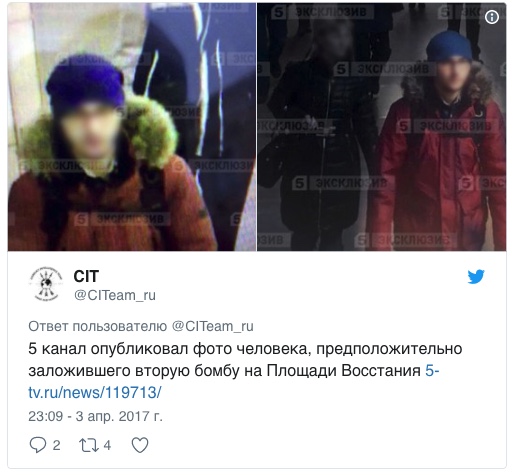
In the early hours of April 4, the media, citing the security services, identified Maxim Arishev, who was “in the epicenter of the blast in the subway car” and “could be the alleged suicide bomber.” cit

“Channel Five has published photos of the person who allegedly planted the second bomb at Ploshchad Vosstaniya.” Screenshot from Twitter account of the Conflict Intelligence Team (CIT)

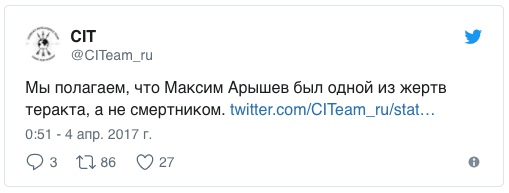
Arishev was identified as a “22-year-old Kazakhstani national.” An hour later, the Conflict Intelligence Team (CIT), a group of investigators, published a message stating Arishev was a victim of the terrorist attack, not the man who carried it out. cit2

“We have concluded that Maxim Aryshev [sic] was among the victims of the terrorist attack, not a suicide bomber.” Screenshot from Twitter account of the Conflict Intelligence Team (CIT)

The third and final hypothesis as to the perpetrator’s identity during the immediate aftermath of the attack was that it was 22-year-old Russian national Akbarjon Jalilov, who also died in the blast. The Investigative Committee’s guess was based on genetic evidence and CCTV footage.

Фотография Акбаржона Джалилова на его страничке в

A photograph of Akbarjon Jalilov on his page on the Russian social media website Odnoklassniki (“Classmates”)


Djalilov’s neighbors in Osh, Kyrgyzstan, where he lived until 2011, described his family as secular.

“His family is not religious. Akbarjon did not pray five times a day or grow a beard. On the contrary, he liked wearing ripped bluejeans. He knew Russian well.”

2. Reports of Two Blasts

In the first hour after the terrorist attack, Russian media reported that two blasts had occurred. They cited what they regarded as very reliable, informed sources: the Emergency Situations Ministry, the Investigative Committee, and the National Anti-Terrorist Committee.

An hour later, the concept had changed, and the Russian security services informed the public through the media there had been one blast, while a second explosive device, planted at the Ploshchad Vosstaniya subway station, had been disarmed in time.

The news chronicle of the terrorist attack in the Petersburg subway is still available on the internet news site Lenta.ru, which is now absolutely loyal to the regime.

Between 3:12 p.m. and 3:44 p.m., that is, over thirty minutes, Lenta.ru published several reports that two explosive devices had exploded at two subway stations.

3:12 p.m.: “There were two blasts. They thundered at Sennaya Ploshchad and Tekhnologicheskii Institut stations.”

3:17 p.m.: “Putin has been informed of the explosions in the Petersburg subway.”

3:44 p.m: The media report that “all stations of the Petersburg subway have been closed due to the blasts.”

After 3:49 p.m., only one blast is mentioned in every single one of Lenta.ru‘s dispatches.

3:49 p.m.: “The number of victims of the blast in the Petersburg subway has grown to thirty, reports Interfax.”

But at 3:55 p.m. Lenta.ru publishes a report of a second unexploded bomb.

3:55 p.m.: “Fontanka.ru reports that another, unexploded bomb has been found at the Ploshchad Vosstaniya station.”

The media’s interpreters of information supplied by the Investigative Committee and Emergency Situations Ministry were offered the following explanation of the false report of two blasts at two stations.

“The explosion occurred on the stretch of track between Petersburg subway stations Sennaya Ploshchad and Teknologicheskii Institut. At the time of the explosion, the subway train had only set out from Sennaya Ploshchad, but it did not stop, braking only at Tekhnologicheskii Institut. Therefore, reports of a bomb exploding arrived from both stations. At one station, the explosion and smoke were seen, while the exploded subway car, and the injured and the dead were seen at the second station.”

But this account contradicts reports about the time of the explosion.

“The explosion occurred at 2:40 p.m. in the third car of an electric train traveling on the Petersburg subway’s Blue Line. It happened a few minutes after the train had left Sennaya Ploshchad for Tekhnologicheskii Institut.”

The average speed of a train traveling in the Petersburg subway is 40 kilometers an hour. The train left Sennaya Ploshchad and had been traveling a few minutes before an explosion occurred in one of the cars. Let us assume that train had been under speed for a minimum of two minutes, and during the first minute the train traveled slowly due to the need to pick up speed. During the second minute, the train was already traveling at around 30 kilometers an hour. In one minute, an object moving at a speed of 30 kilometers an hour travels half a kilometer.

This means that at the time of the explosion the train was at least half a kilometer from the departure station. Most likely, however, the train was much farther than half a kilometer from Sennaya Ploshchad. Eyewitnesses reported that the “train was flying along” when the explosion occurred, that is, it was traveling at a good speed.

As TV Rain reported, “According to eyewitnesses, the explosion in the car occurred on the approach to Tekhnologicheskii Institut.”

Under the circumstances, the smoke seen by eyewitnesses, and the noise of the blast, which could be heard at Sennaya Ploshchad, could not have been perceived by witnesses and, much less, by Emergency Situations Ministry and Investigative Committee officers as a “blast at Sennaya Ploshchad station.” It could be identified, for example, as an “explosion in the tunnel” or “smoke on the stretch of track between the stations.”

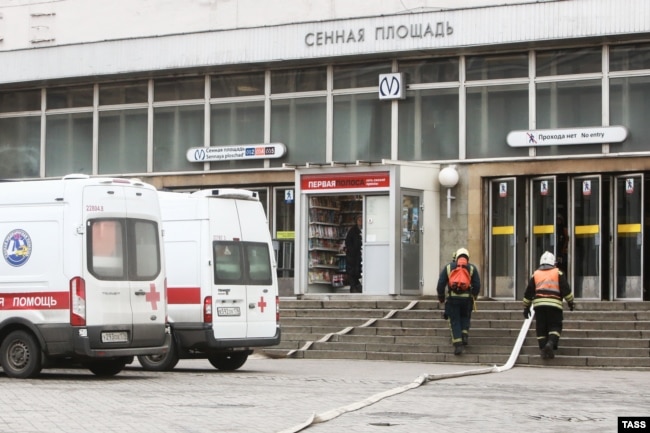
Another explanation is that reporters mixed everything up. The Emergency Situations Ministry and Investigative Committee never reported an explosion at Sennaya Ploshchad subway station. This hypothesis is easily refuted by the stories filed by news agencies and TV channels, for example, the Federal News Agency. They clearly show that, within an hour of the blast, there were emergency vehicles, firefighters, Emergency Situations Ministry officers, seventeen ambulance brigades, and even an medevac helicopter outside the station. The entrance to the station was cordoned off, and police herded passersby away from the station.

У станции метро Outside Sennaya Ploshchad subway station, April 3, 2017

Questions arise in this regard. How could professionals from the security services, whom many media quoted, confuse an explosion and a disarmed bomb? How could the Investigative Committee and Emergency Situations Ministry have known there should have been two explosions?

3. Confusion about the Time When the Explosive Device Was Found at Ploshchad Vosstaniya Station

The first report that an explosive device had been discovered at Ploshchad Vosstaniya station was filed at 2:21 p.m. on Motor Vehicle Accidents and Emergencies | Saint Petersburg | Peter Online | SPB, a popular page on the VK social network. (It has 800,000 subscribers.)

“A bag has been left at Ploshchad Vosstaniya subway. An inspector with a sniffing device has arrived. No police. The area has not been cordoned off.”

The post was read 509,000 times.

The post was published at 2:21 p.m, but a photograph was uploaded to VK even earlier, at 2:06 p.m. Reporters from the local business daily Delovoi Peterburg called the man who had taken the picture, Denis Chebykin, and asked him to check the exact time on his telephone when he snapped the photo.

“At 2:01 p.m. At any rate, my telephone displays more or less the right time,” he told them.

But in its official report, sent to all media, the FSB’s Petersburg and Leningrad Region Office said the bomb in the Ploshchad Vosstaniya subway station was found fifty-nine minutes later.

“Around 3:00 p.m., a homemade explosive device armed with projectiles was found in the Ploshchad Vosstaniya subway station. The device was promptly disarmed by explosives experts.”

Why did the Federal Security Service (FSB) not want to tell the truth: that the explosive device at Ploshchad Vosstaniya had been discovered at least 32 minutes before the explosion in the train headed to Tekhnologicheskii Institut? Are the security services concealing their own sluggishness?

4. Who Disarmed the Second Bomb?

The media supplied two completely different accounts of who prevented the second explosion. According to the account given at 12:10 p.m., April 4, on the website of Zvezda, the Defense Ministry’s TV channel, the bomb was disarmed by a Russian National Guard officer who happened to be in the subway at the time, was quite familiar with the particular type of explosive device, and thus quickly disarmed the bomb. This was also reported by Ren TV and Moskovsky Komsomolets newspaper.

Another account emerged later, after three o’clock on the afternoon of April 5.

“The explosive device in the Ploshchad Vosstaniya station of the Petersburg subway was defused by officers of the engineering and technical branch of the Russian National Guard’s riot police (OMON).”

The same day, April 5, NTV, known for its close ties to the Russian security services, aired a special report, in which a riot policeman, identified in the captions as “Maxim, senior explosives engineer,” says the riot police (OMON) discovered a black bag, containing a explosive device, which he and his colleagues defused.

The second account of how the bomb was defused was heavily spun by the media, while the original account, of the Russian National Guard officer who happened to be in the subway and defused the bomb, was dropped after April 4.

5. The Terrorist Attack Happened after Massive Opposition Protests 

Eight days before the terrorist attack in the Petersburg subway, on March 26, 2017, one of the biggest protest rallies in the past five years took place in Moscow. The protesters, who had not coordinated the event with the mayor’s office, demanded the authorities respond to the charges made against Prime Minister Dmitry Medvedev in the Anti-Corruption Foundation’s investigative report “Don’t Call Him Dimon.”

The protest led to numerous arrests. According to official sources, over 600 people were packed into paddy wagons. Human rights defenders claim that over a thousand people were apprehended. Protests took place not only in Moscow but also in other Russian cities. A total of between 32,359 and 92,861 people [sic] took to the streets nationwide on March 26, 2017, and between 1,666 and 1,805 people were detained.

The terrorist attack took place in Petersburg on April 3. The very next day, President Putin’s office recommended that regional governments hold rallies against terrorism on April 8. In keeping with the Kremlin’s instructions, all political parties represented in the Russian parliament were involved in the rallies, which were held in major cities nationwide.

“The governors are getting called and told to make everyone go to the rallies,” a source close to the Kremlin told the newspaper Kommersant.

This information was also confirmed by a source in United Russia, the country’s ruling party.

6. Islamic State Did Not Claim Responsibility for the Terrorist Attack

At the outset of the investigation, the FSB claimed Jalilov had been a member of an Islamic State commando group. At first, it made this claim anonymously.

“According to Kommersant‘s trustworthy source, the security services knew an attack was planned in Petersburg, but their intelligence was incomplete. It was provided by a Russian national who had collaborated with Islamic State, an organization banned in our country, and detained after returning from Syria. The man knew several members of a commando group dispatched to Russia.”

Subsequently, its claims were more specific.

“The terrorist attack in Petersburg was carried out by an Islamic State suicide bomber. […] FSB officers […] found out he had entered Russia via Turkey in 2014. Currently, the security services have been in contact with their colleagues in neighboring countries to find out the exact itinerary of Jalilov’s journey, but they are certain he visited Syria or, rather, Islamic State-controlled Syria.”

More than eight months have passed since the terrorist attack, but Islamic State never did claim responsibility for the explosion in the Petersburg subway, although Islamic State militants had claimed responsibility for a terrorist attack that happened ten days before the Petersburg attack: an attack on a Russian military base in Chechnya. The attack occurred in the early hours of March 24, 2017, leaving six Russian servicemen dead.

Islamic State also claimed responsibility for a terrorist attack carried out less than twenty-four hours after the attack in Petersburg: the murder of two policemen in Astrakhan in the early hours of April 4, 2017.

7. An Unknown Group Claimed Responsibility for the Terrorist Attack Only Three Weeks Later

On April 25, 2017, Russian and international media reported that an unknown group calling itself Katibat al-Imam Shamil, allegedly linked to Al Qaeda, had claimed responsibility for the attack in the Petersburg subway twenty-two days after the attack. However, there is no information about the group in public sources, and experts have never heard of it.

The long period of time that elapsed between the terrorist attack and this “confession” also raises doubts that the statement was really made by Islamic fundamentalists, rather than by people passing themselves off as Islamists.

8. The Terrorist’s Suspected Accomplices Kept a Bomb in Their Home for Two Days after the Attack

On the morning of April 6, 2017, FSB and Interiory Ministry officers detained six men in Petersburg, claiming they had been involved in the terrorist attack. All the detainees lived in a flat on Tovarishchesky Avenue, where, according to police investigators, a homemade explosive device was discovered during a search. It was similar in design to the devices used by the terrorist in the subway. Investigators had located the suspects by studying telephone calls made by Akbarjon Jalilov.

Let us assume that the suspects really were accomplices in planning the terrorist attack. In that case, it transpires that two days after the attack they were keeping an explosive device in their home. Moreover, they made no attempt to leave Petersburg, knowing that investigators would check people the suspected terrorist had called, and so they would definitely track them down. Meaning that either the arrested men are quite stupid people or, as they have claimed themselves, the FSB planted the bomb in their flat.

9. The Accused Were Provided with State-Appointed Defense Attorneys Who Worked for the Prosecution

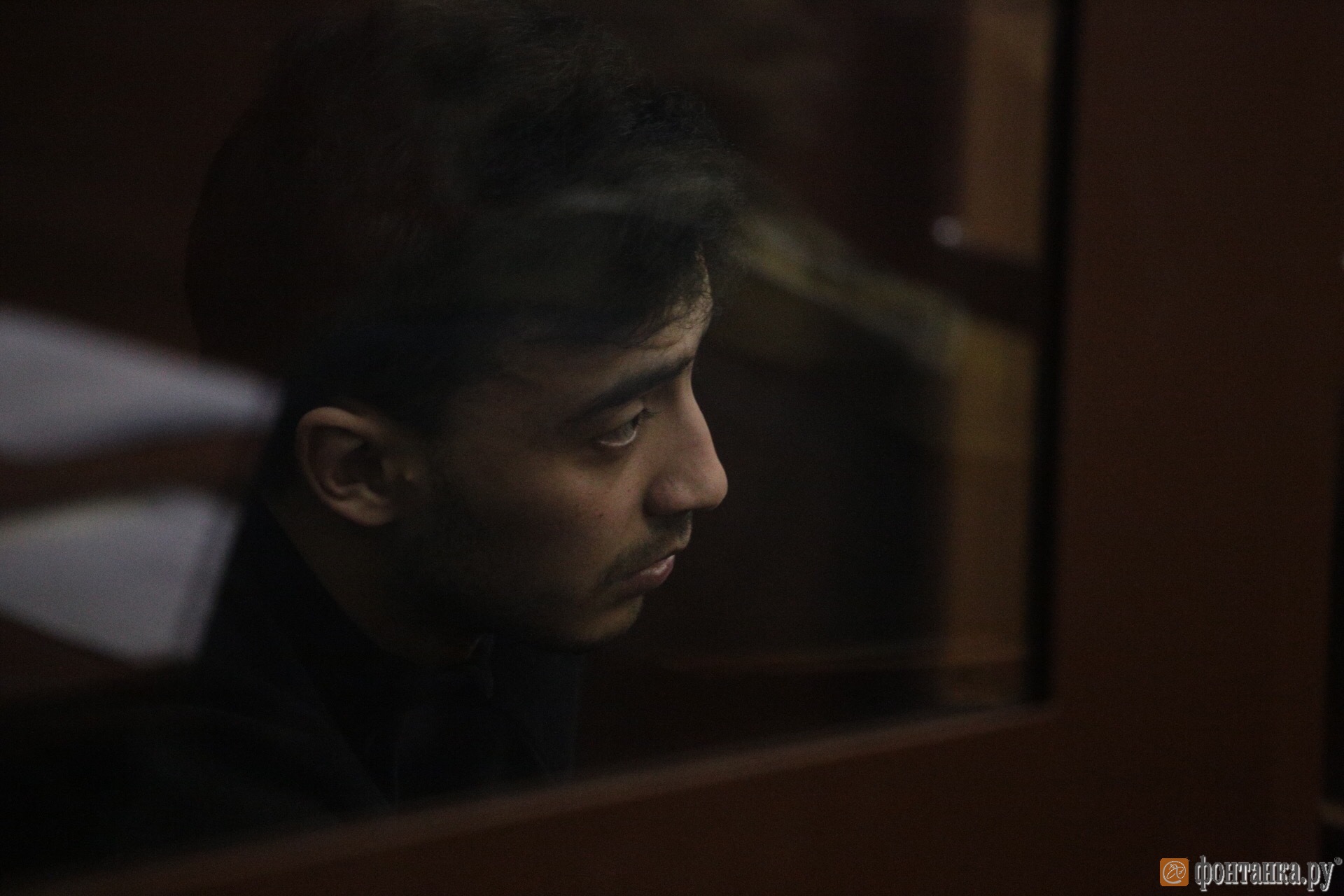
A total of ten people were arrested as part of the terrorist attack investigation in Petersburg. All of them were provided with state-appointed attorneys, who have a very bad reputation among human rights activists in Russia. Many of them perform their duties in such a way that no prosecutor is necessary. Meaning they do not need his help to send their defendants to prison faraway and for a long time. This has been borne out in full in the Petersburg terrorist attack case.

Thus, on April 7, 2017, the court considered a motion, made by investigators and supported by the prosecutor, to remand Mahamadusuf Mirzaalimov in custody. The accused plainly stated he did not want to go to a remand prison.

“I object to the investigation’s motion to remand me in custody. I never saw this explosive device,” he said in the courtroom.

However, the defendant’s position was not supported by his lawyer, Nina Vilkina, who left the question of custody to the court’s discretion. Consequently, the court remanded Mirzaalimov in custody until June 2, 2018.

6Mahamadusuf Mirzaalimov. Photo by Sergei Mihailichenko. Courtesy of Fontanka.ru
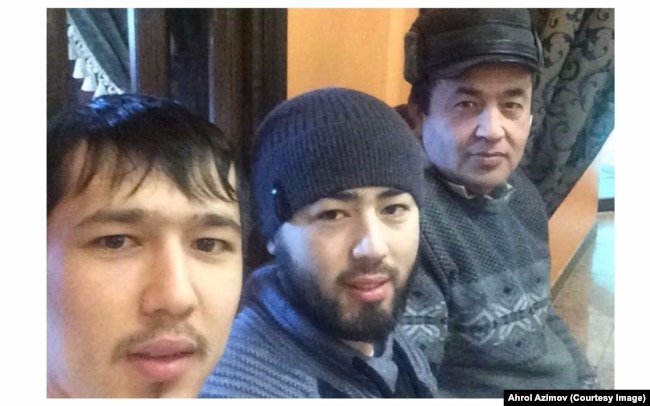
During suspect Abror Azimov’s remand hearing, which took place on April 18, 2017, in Moscow’s Basmanny District Court, his state-appointed defense lawyer cheerfully reported to the judge, “He pleads guilty in fully.”

The lawyere made this statement before the investigation was completed and before any trial had taken place.

The father of the accused brothers Abror and Akram Azimov would later say about the state-appointed lawyers, “These lawyers do not call me and do not say anything. They hide everything. It was only from the press I heard my sons had been detained.”

10. Police Reports and Videos of the Azimovs’ Detention Were Falsified

Since mid April 2017, investigators have regarded brothers Abror and Akram Azimov as the principal suspects in the Petersburg terrorist attack.

According to a statement issued by the FSB, Akram Azimov was detained in New Moscow on April 19. A RGD-5 combat grenade was allegedly found on his person when he was apprehended.

Акрам и Аброр Азимовы с отцом Ахролом. Фото со страницы Ахрола Азимова в ФейсбукеAkram and Abror Azimov, and their father Ahrol Azimov. Photo taken from Ahrol Azimov’s Facebook page


According to Akram Azimov’s mother Vazira Azimova, law enforcement officers snatched her son from a hospital in Osh, Kyrgyzstan, on April 15, the day after he had undergone an operation, and took him to an undisclosed location. The video recording released by the FSB on April 19, in which Akram Azimov is detained at a bus stop in New Moscow, was staged, she claims.

“He had no money for a ticket. He did not have his passport. It was obviously staged. I want justice,” Vazira Azimova said in a statement.

Akram’s father Ahrol Azimov provided RBC with a photo of his son’s boarding pass for an S7 flight from Domodedovo Airport in Moscow to Osh, Kyrgyzstan, on March 27, 2017. The senior Azimov is convinced his son could not have traveled to Russia on his own: when he was hospitalized he had no money with him to buy a ticket.

The fact that Akram Azimov was snatched from a hospital in Osh by officers of the Kyrgyzstan State Committee for National Security (GKNB) on April 15, 2017, has been confirmed in writing by Zina Karimova, head doctor of the Hosiyat Clinic, a private facility, and Sanzharbek Tohtashev, the attending physician.

According to lawyer Anna Stavitskaya, illegal detentions are a common practice in the CIS countries.

“The security services in a number of post-Soviet countries cheerfully cooperate with the FSB when it comes to ‘unofficial’ exchanges of detainees. Practically speaking, it is often a matter of kidnapping. In my practice, there have been several cases when people were apprehended in Russia. The issue of whether to extradite them to Uzbekistan or Tajikistan, for example, was being decided, but the European Court of Human Rights forbade extradition. As soon as the people were released from custody, they were kidnapped with the assistance of the Russian security services and transported to these foreign countries. In this case, it is the other way round.”

Akram Azimov was transported by FSB officers from Kyrgyzstan to Moscow, where, his lawyer Olga Dinze claims, he was held for four days in an illegal prison, after which the FSB staged his apprehension.

“On April 19, the suspect, wearing a blindfold, was taken somewhere in a vehicle. He was told how to behave. He should sit with his hands in his pockets and keep quiet. The ‘officers’ would come up to him and take him to a car. This was the same staged video we all would see later on the internet. After his apprehension was staged, he was placed in the car. His hands were cuffed behind his back and a grenade was placed in his hand. He was ordered to squeeze it so he would leave his fingerprints on it.”

Something similar happened to Akram’s brother Abror Azimov. He was apprehended by FSB officers on April 4. After thirteen days in a secret FSB prison, he was apprehended a second time, for the video cameras, on April 17.


Abror Azimov claims that on April 17 he was taken from his cell, and a hood was pulled over his head and wrapped round with adhesive tape. His capture was then staged. Afterwards, he was put in a car, forced to leave fingerprints on a Makarov pistol, and taken to an investigator, who had already printed out his interrogation transcript.

Before Abror Azimov was officially apprehended on April 17, the house where he lived in Lesnoi Gorodok, Moscow Region, was searched. Investigators carried out the search without a judge’s warrant due to the urgency of the matter, as they explained. It was during this search that the Makarov pistol was allegedly found.

11. The Azimov Brothers Were Tortured After They Were Apprehended

The Azimov brothers were apprehended twice: first with no cameras present, and then for the cameras, so that FSB officers would have several days to illegally interrogate the accused men. The Azimovs claim they were tortured during these interrogations.

According to Olga Dinze, Akram Azimov’s attorney, her client was tortured with electrical shocks.

“He was brutally tortured. He was standing practically naked on a concrete floor. He was not fed or given any water. He was forced to memorize the testimony he would later give to the investigator. When he would give the wrong answer, they would shock him with an electrical current, counting to ten. Periodically, he fainted. He would be brought back to his senses and the torture would resume. The torture not only involved memorizing his testimony but also threats of violence against his wife and children. They threatened to rape his wife. Since Akram knows of such cases in his homeland, he took the threats seriously.”

After he was tortured, Akram Azimov was taken to the Russian Federal Investigative Committee, where he was interrogated in the presence of a state-appointed defense attorney. The FSB officers who had earlier tortured him told him what answers to give, but his state-appointed counsel said nothing, allowing the FSB officers and the investigator to coerce Azimov mentally.

The circumstances faced by the second accused man, Abror Azimov, have been similar. His defense attorney said his client was apprehended and jailed in a secret prison, where he was repeatedly tortured with electric shocks, dunked in water, humiliated in every possible way, and subjected to mental coercion. FSB officers spent two weeks forcing him to admit involvement in terrorist activities.

On April 18, 2017, during his custody hearing, Abror Azimov’s testimony was confused. At first, he stated he was not involved in the explosion, but after an Investigative Committee officer reminded him that he had earlier signed a confession, Azimov said, “I’m involved in this, but not directly.” When the judge asked whether the suspect wanted the court to assign non-custodial pretrial restrictions, Azimov answered in the negative. The question is what kind of person, if he has not been subjected beforehand to physical and mental coercion (torture and threats), would voluntarily agree to be jailed?

12. Their Lawyers Were Not Admitted to the Azimov Brothers

According to lawyers Olga and Dmitry Dinze, they could not begin defending the Azimov brothers for over a week.

“We could not start working on this criminal case, because neither the remand prison nor the investigator would let us see our clients, using whatever trick they could.”

The investigators from the Investigative Committee ignored the lawyers’ calls and conducted the investigation only in the presence of the state-appointed lawyers.

Investigators thus had nearly a month after the official arrest to pressure the accused without being distracted by the legitimate requests of real lawyers.

The Azimov brothers’ problems did not end with the refusal of authorities to let their lawyers see their clients. Since late June, according to their father, the Azimovs have been paid visits by FSB officers who have demanded they renounce their defense lawyers and employ the services of state-appointed lawyers.

13. The Justice Ministry Has Been Pressuring Olga Dinze, Akram Azimov’s Lawyer

On August 3, 2017, officials of Lefortovo Remand Prison in Moscow detained Olga Dinze, Akram Azimov’s lawyer, for three hours, demanding she hand over the notes she received from Azimov concerning the case of the terrorist attack in the Petersburg subway.

The prison wardens wanted to get their hands on documents Azimov had given to his lawyer. The wardens suggested Olga Dinze could sit in a cell for awhile, while her client was threatened with time in a punishment cell. According to Dinze, she had not done anything illegal. Before the visit, guards had searched Azimov and not found anything that could not be taken out of the prison.

In November 2017, the Justice Ministry requested Olga Dinze be barred from the case due to the conflict over obtaining her client’s written testimony. Ramil Akhmetgaliyev, a lawyer with the Agora International Human Rights Group, believes this was obvious coercion of the lawyer.

“Correspondence is one thing, but communication with your lawyer, including written communication, is something else altogether. Usually, the guards do not have a problem with it, but the FSB got involved. They are trying to establish total control over the accused.”

The current Russian regime, conceived in September 1999 amidst the smoke from the exploded residential buildings in Buynaksk, Moscow, and Volgodonsk, has a bad reputation when it comes to terrorist attacks. Any doubts, as a rule, are chalked up by independent observers as strikes against the authorities.

Taken separately, each of these thirteen points cannot serve as proof that the account of the explosion in the Petersburg subway on April 3, 2017, offered by state investigators, is falsified. Taken together, however, these facts do generate serious suspicions.

Translated by the Russian Reader