Leave the Capital!

Emergency Situations Ministry Recommends Residents Leave Yekaterinburg, Advises Those Who Stay Not to Leave the Apartment and Gargle
URA.Ru
July 23, 2016

Smog has enveloped Yekaterinburg. Photo: Vladimir Zhabrikov © URA.Ru

The Emergency Situations Ministry (EMERCOM) office for Sverdlovsk Region has made a special appeal to the region’s residents, which it has posted on the agency’s official website.

As our own correspondent reports, the rescue service has warned that adverse weather conditions of the first level of hazardousness have settled over the region until 8 p.m., June 26. During this time, calm weather and high temperatures will facilitate the formation of smog in the air.

Mayors have been advised to closely monitor industrial emissions, and motorists, to abandon the use of private vehicles and switch to public transport. Monitoring of unauthorized waste incineration has been increased.

To date, the rescue service has not recorded levels above the maximum allowable concentration of pollutants in the air. Nevertheless, they have asked the public to take the following precautions.

The public has been advised to leave the city during this time. (The message does not indicate which city. Apparently, Yekaterinburg is meant.) If this is impossible, then people are advised to go outside as little as possible and keep doors and windows closed, and when leaving the house, people should put on a dampened cotton-gauze bandage. After being outside, it is advised to take a shower and change one’s clothes or thoroughly wash up and rinse one’s throat.

As URA.ru has previously reported, a dense smog, due, allegedly, to forest fires in Siberia, has enveloped Yekaterinburg the last several days.

NB. Yekaterinburg, Russia’s fourth largest city, has an estimated population of one and a half million people. TRR

Translated by the Russian Reader. Thanks to Comrade AK for the heads-up. See “Greenpeace Russia: The Far East and Siberia Are Burning,” Russian Reader, May 25, 2016.

_________
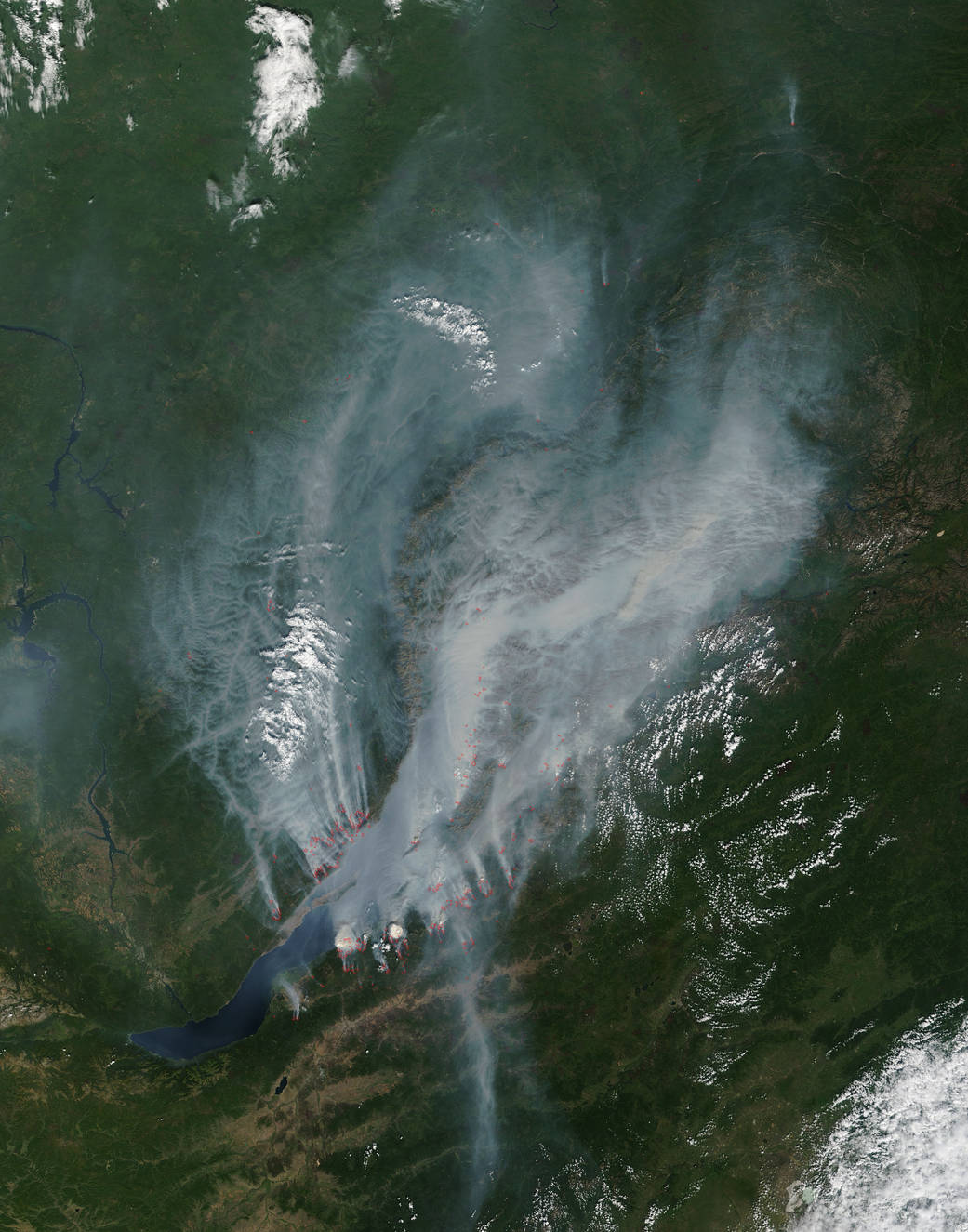
Baikal on Fire

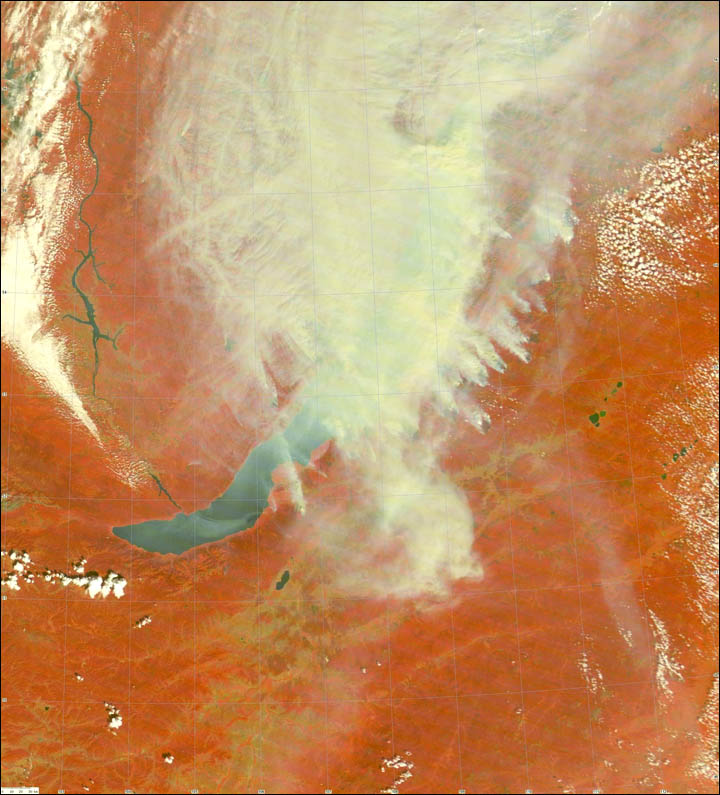
russia.a2015234.0355.250mLake Baikal in Eastern Russia, the deepest and oldest lake in the world, is home to 20 percent of the world’s unfrozen fresh water.  As of August 24, 2015 this lake is facing a crisis with 36 fires equaling an area of 138,500 hectares (342,240 acres) currently burning around its shores.  The fires which surround the lake are cutting off its water arteries, which can adversely affect the ecological balance of the lake.  At present the depth of the lake is at an all-time low.  As a result, the drier coastline could lead to more summertime wildfires. Soot and ash are washing up on the shores of the lake and the skies above the lake, a popular tourist area, are completely covered in smoke.  So too, an unusually hot summer and a lack of rainfall have contributed to making the situation worse.

This natural-color satellite image was collected by the Moderate Resolution Imaging Spectroradiometer (MODIS) aboard the Terra satellite on August 22, 2015. Actively burning areas, detected by MODIS’s thermal bands, are outlined in red.  NASA image courtesy Jeff Schmaltz, MODIS Rapid Response Team. Caption: NASA/Goddard, Lynn Jenner

source: NASA

__________

Baikal on fire – ‘it feels like doomsday’
By The Siberian Times reporter
23 August 2015
The Siberian Times

Pristine forests around the world’s oldest lake go up in flames.

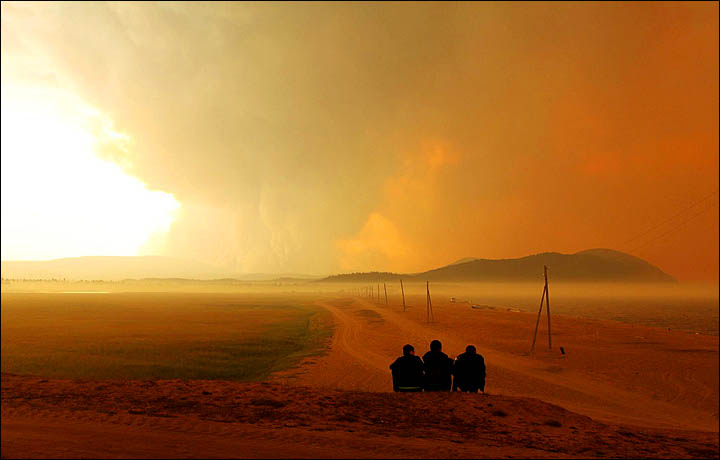
Baikal inferno. Picture: Chono Erdenebayar
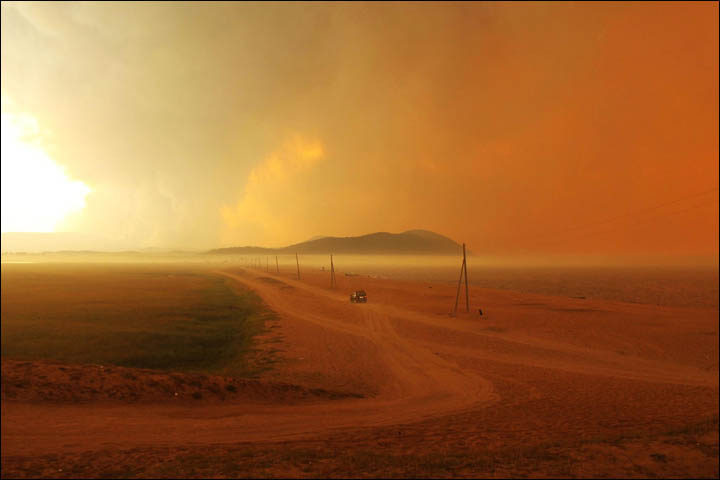
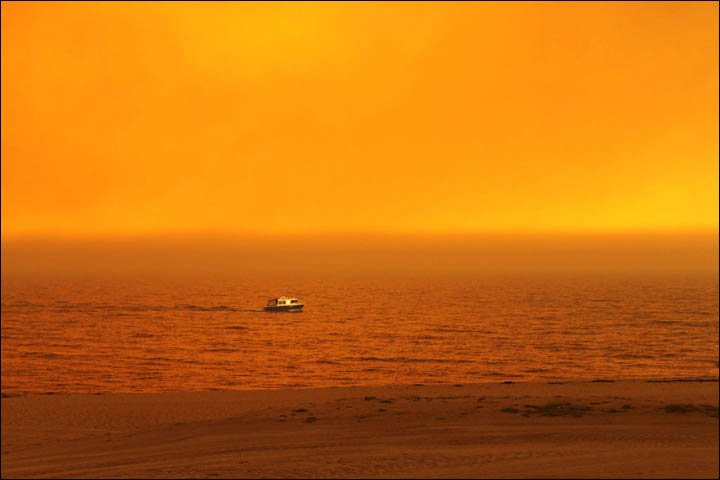
These unnerving images show the scale of destruction from wildfires close to Lake Baikal, the jewel of Siberia. The sky is aglow over the Republic of Buryatia from the uncontrolled burning, the latest outbreaks of fires that have been destroying forests around the world’s oldest and deepest lake for a number of weeks.

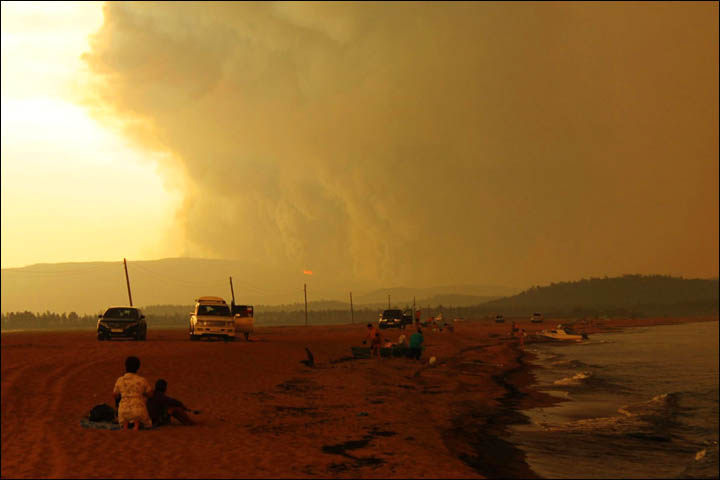
Locals and tourists could only gaze from beaches beside the lake at the impressive but disturbing images from the flames and smoke.

The shocking scenes came amid a warning from a senior politician that wildfires now pose the greatest threat to the lake, on the UNESCO World Heritage List, which contains 20% of the unfrozen freshwater on the planet.

Mikhail Slipenchuk, deputy head of the Russian parliament’s committee on natural resources and ecology, said: ‘Fires near the lake’s shores actually kill the water arteries, thus damaging the water balance in the lake’.

Baikal on fire - 'it feels like doomsday'


Baikal on fire - 'it feels like doomsday'


Baikal on fire - 'it feels like doomsday'


Baikal on fire - 'it feels like doomsday'


Baikal on fire - 'it feels like doomsday'
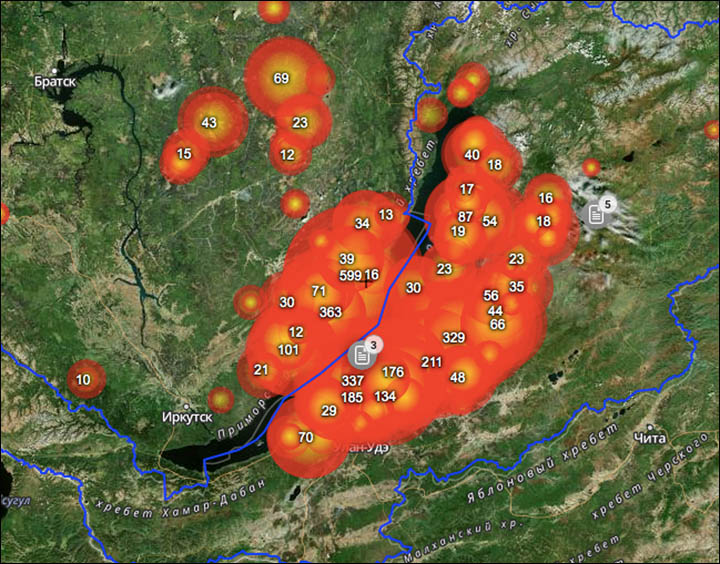
Pictures from around the town of Gremyachinsk, and maps of wildfires around lake Baikal. Pictures: Chono Erdenebayar and Andrey Razyvayev

Some 36 fires are burning over an area of 77,000 hectares, after a hot summer with a lack of rainfall, it was reported.

These pictures were taken by Chono Erdenebayar close to Gremyachinsk, on the shore of Lake Baikal, some 138 km south of Ulan Ude.

‘It feels like doomsday’, said one eyewitness.

On the lake’s eastern shore, the area is famed for its sunny bays and sandy beaches.

Thanks to Echo of Moscow radio and Novaya Gazeta editor-in-chief Dmitry Muratov for the heads-up