International Children’s Day (June 1)

Important Stories • “Putin, Lvova-Belova and their crimes: how Ukrainian orphans are registered as Russians” • 31 May 2023

The Russian authorities have been removing children en masse from occupied Ukrainian territories and do not consider it a crime. But the International Criminal Court in the Hague thinks differently, accusing Vladimir Putin and Russian children’s ombudsman Maria Lvova-Belova of war crimes—namely, the illegal deportation of minors from Ukraine.

Orphans and children left without parental care have been sent all over Russia, even to the Far North. Important Stories found out how this system works and how abducted Ukrainian orphans are forcibly turned into Russian nationals.

[…]

Timecode

00:00 Why Putin and Lviv-Belova have been accused of kidnapping Ukrainian children

01:12 How 2,500 new children appeared in Russia’s database of orphans

02:32 The story of Sasha from Donetsk and his two sisters

03:56 The environment in which Ukrainian children are raised in Russia

05:23 “The children categorically refused to go to the Far North, where we live”

07:12 “The parents were killed there. The children told us terrible things”

07:48 Ukrainian orphans are provided with housing, for which Russians spend years on the waiting list

08:39 “There have never been such crimes in the history of humankind”

Source: Important Stories (YouTube), 31 May 2023. Annotation translated by the Russian Reader


SOTA • “Putin is readying young people to rebuild the army” • 31 May 2023

It won’t be possible to wage wars forever, but Putin is trying very hard. Since February 24, 2022, the lives of young people have changed. Starting in kindergarten, children are now taught that serving in the army is the best job in the world, and that the most beautiful thing in life is dying for the good of the Motherland.

[Endlessly repeat the message that] Russia is surrounded by Nazis, the whole world is against it, its soldiers are defenders, and you’re good to go. You’ve raised a whole new generation of soldiers.

This assembly line for producing soldiers has existed for several years. Even before the war, schoolchildren were inspired with imperialism and a desire to go to war. Now, however, everything has reached new levels. Military parades are organized in kindergartens. Schoolchildren are taught to dig trenches, shoot, and render first aid in combat. And university students are trained to serve in the military.

See more about how children are turned into soldiers in our new video.

Source: SOTA (YouTube), 31 May 2023. Annotation translated by the Russian Reader
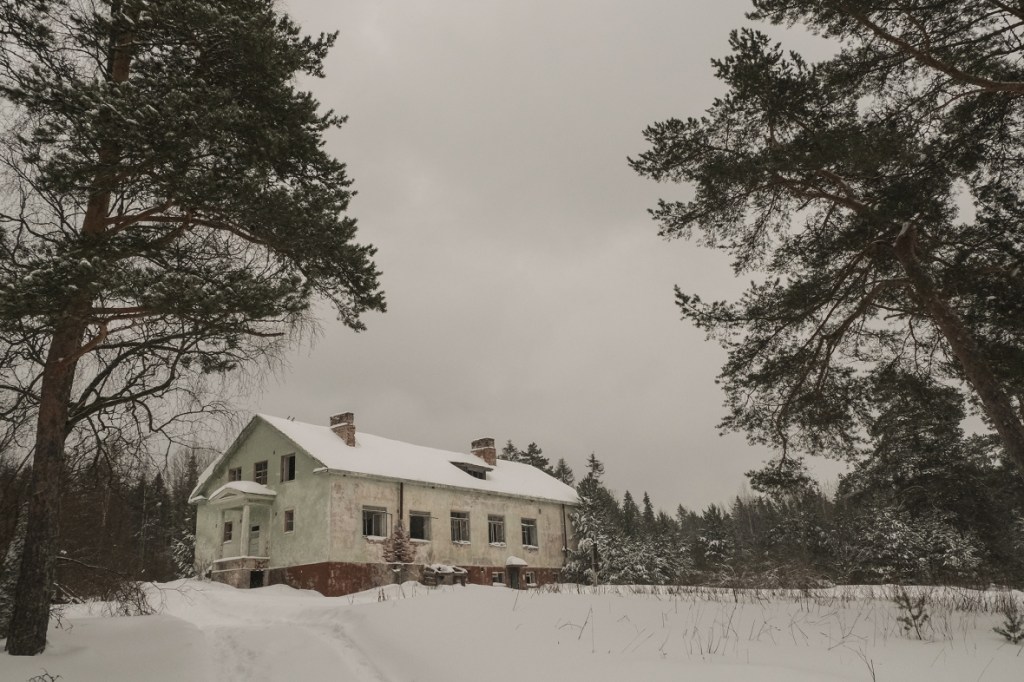

A ruined building of the Burenevo Auxiliary Boarding School for Mentally Retarded Children.
Village of Burnevo, Priozersk District (Leningrad Region), 2021. Photo: Olga Matveeva/Republic

“Hello Irina Alexandrovna! This is your pupil writing to you. I decided to write to you. Please write a letter here so that they let me go on my own, whatever date you need, so that I can study from the beginning of the school year, that is, beginning September 1. Say hello to everyone at the school. When you write the letter, address it to the 11th department… Irina Alexandrovna what was the reason you sent me to the mental hospital again. I told you that I would remain at camp…”

This is an excerpt from a letter written by a pupil to the director of the Burnevo Auxiliary School for Mentally Retarded Children. I found the letter in his personal file.

In 1970, the Priozersk Sanatorium Forest School was reorganized into an auxiliary boarding school for mentally retarded children. According to the school’s fact sheet, “Forty-eight mentally retarded children studied [sic] at the school. Ten of them are disabled. All of the children are from at-risk families. Classes are held in one shift, five days a week. On weekends and holidays, ten to fifteen of them, mostly orphans, stay. There are twelve of them in the school.”

It seems that many of the pupils were not mentally retarded or disabled, but they were neglected. Sergei, a resident of the village of Burnevo, spoke to this fact: “Half of the children there were sick, while half of the healthy ones were from dysfunctional families. I attended this school until 1970, and my mother worked there as a minder.”

The school was closed in 2005 due to poor epidemiological conditions. There was only stove heating in the building, and the water was pumped from the lake. The school consisted of several buildings. In the main building there were four classrooms, a teacher’s room, a curriculum office, and the director’s office. There were sleeping quarters in a wooden building. Carpentry workshops, sewing workshops, a recreation and sports equipment room were located in separate buildings. There was also a medical unit with an isolation ward and a speech therapist’s office. There I found an archive containing the personal files of the school’s graduates.

“His grandmother telephoned. She said that her grandson was very bad, it was hard to deal him, his socks were wet and dirty. He gave a jacket to a girl, but lied to his grandmother that he had dropped it off at the laundry. At the class meeting, it was decided to refer him to the psychiatrist to prescribe treatment.”

“Slava ended up the border zone this summer: he told the border guards that he was flying in a spaceship. I had a frank talk with him. He still wants to go see his mother in Vyborg (she does not live with their family). He didn’t find her, got lost, and ended up in the border zone. Slava, smiling, told how me he deceived a border guard and a policeman. Slava was referred to a psychiatrist, who detected no abnormalities.”

“Oleg systematically wipes the dust from his bed badly. This was discussed at a class meeting. There are no results.”

“If children skip classes, they should be reported to the police without delay.”

These are quotes from pupil observation logs. Along with memos, letters, and assessments, they were kept in the students’ personal files. These records about the children were kept for years—from the first grade to graduation. Perusing them, you begin to imagine these children, how they lived, what they worried about, what they did. Their childhoods are written down in slim notebooks. You watch them grow up and go out into the world, or to a psychoneurological residential treatment facility, or to prison.

For bad behavior, children were referred to a psychiatrist and prescribed treatment. There is no data on how many orphans are placed in psychiatric clinics nowadays. The roots of what is happening in this system to this day must be sought in the past.

This project is based on archival materials and interviews with graduates of the Burnevo Auxiliary School for Mentally Retarded Children whom I managed to find.

[…]

Source: Olga Matveeva, “‘A slight degree of imbecility’: the stories of graduates of an auxiliary boarding school for mentally retarded children,” Republic, 31 May 2023. Translated by the Russian Reader
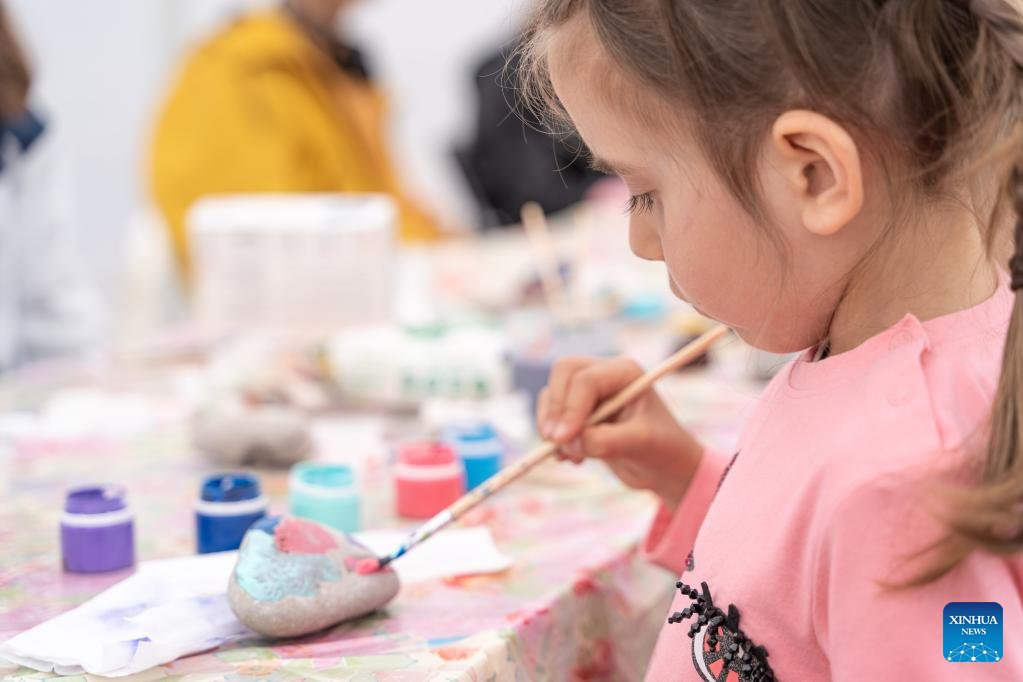

A girl paints a pebble during an event to mark the International Children’s Day in Vladivostok, Russia, June 1, 2023. (Photo by Guo Feizhou/Xinhua)
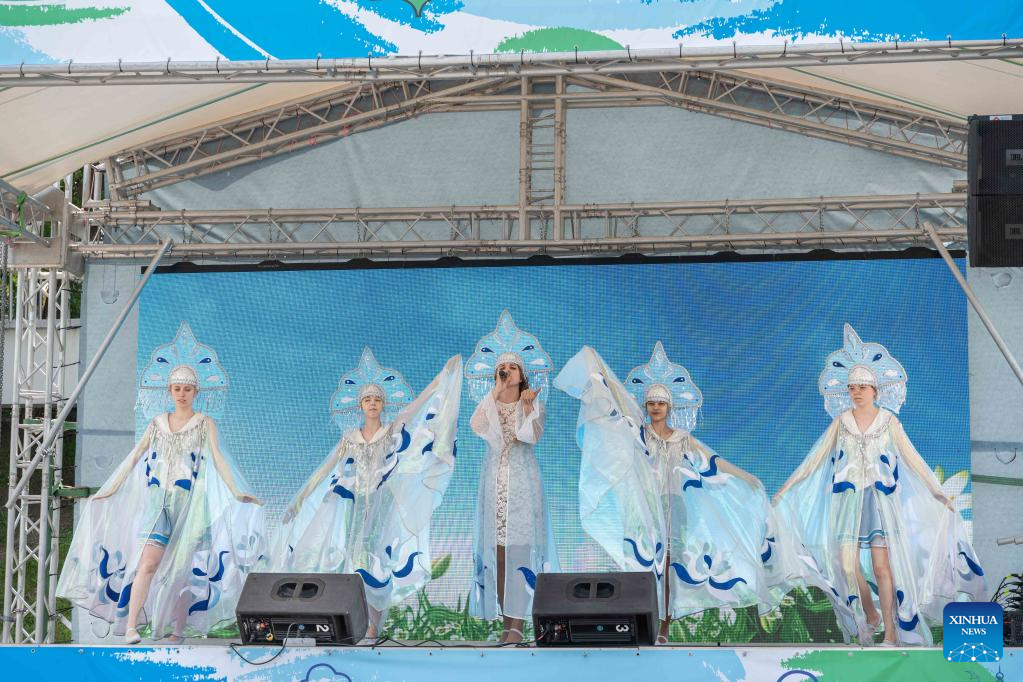
Students from a special education school perform during an event to mark the International Children’s Day in Vladivostok, Russia, June 1, 2023. (Photo by Guo Feizhou/Xinhua)
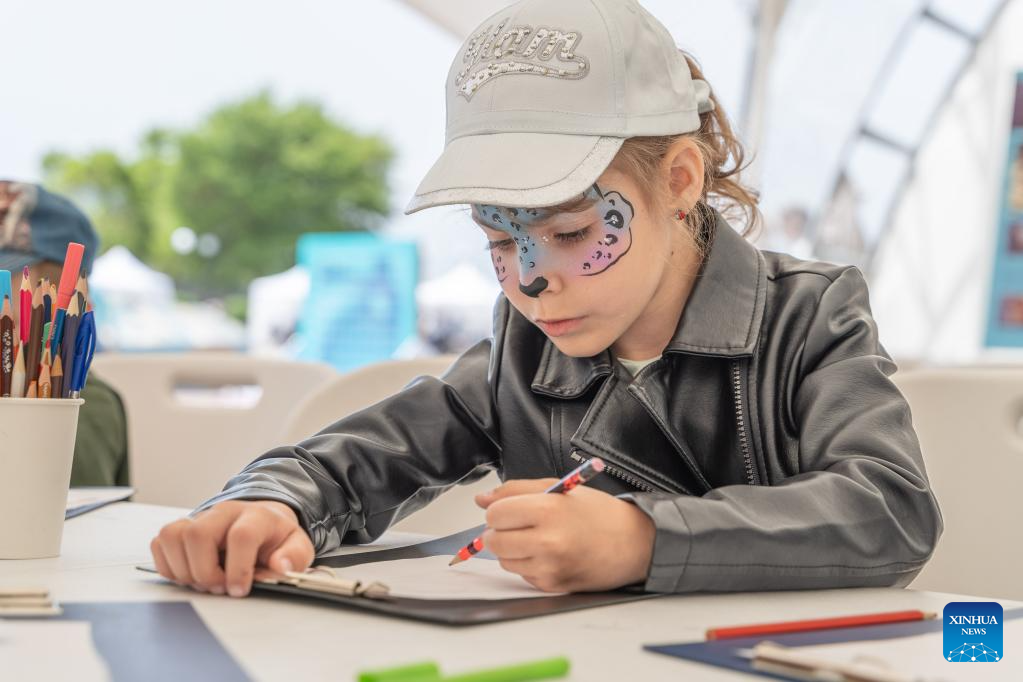
A girl draws during an event to mark the International Children’s Day in Vladivostok, Russia, June 1, 2023. (Photo by Guo Feizhou/Xinhua)
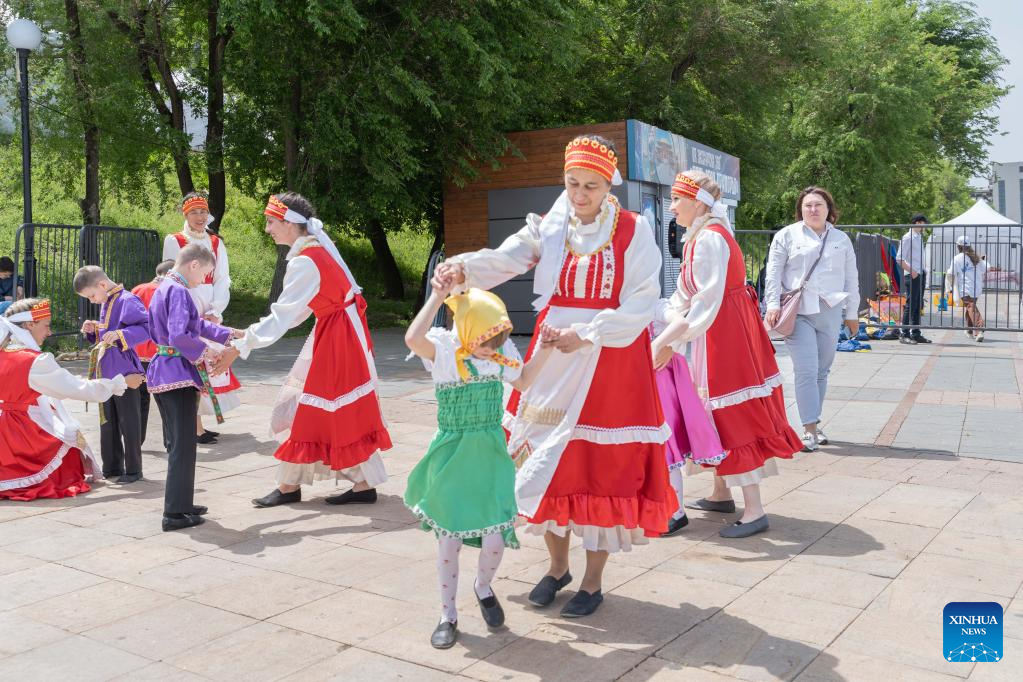
Teachers and students in traditional attire dance during an event to mark the International Children’s Day in Vladivostok, Russia, June 1, 2023. (Photo by Guo Feizhou/Xinhua)

[…]

Source: “Int’l Children’s Day marked around world,” Xinhua, 1 June 2023

Tatarstan’s Zelenodolsk District: Pay Your Rates or We’ll Take Your Kids

Aerial view of Zelenodolsk, Tatarstan. Photo courtesy of Wikipedia

Children Removed from Families of Utilities Debtors in Tatarstan
Natalia Vasilyeva
Vechernyaya Kazan
January 12, 2017

Alexander Tygin, head of the Zelenodolsk District, has instructed his subordinates to remove children from families who have gone into debt for nonpayment of gas and electricity bills. Vechernyaya Kazan has obtained a copy of the relevant document, whose harsh wording could make even the most hard-boiled reader shudder. No one in Tatarstan has yet taken such a radical approach to solving the problem of poor families whose homes and flats are threatened with having their electricity shut off in wintertime due to unpaid utilities bills.

“The children’s protective services of the Zelenodolsk Municipal District executive committee should be ready to remove minor children living in dwellings in debt for energy bills,” read the official instructions, signed by Alexander Tygin after a staff meeting on December 12, 2016. Short and to the point, as they say. Readers are free to interpret the instructions as they fancy. Will the children be removed forever from the families of debtors or only for the winter, keeping the minors from freezing in houses in which the heating has been turned off or burning to death in a fire? According to our information, in December, two children from families of debtors in the Zelenodolsk District were taken into care.

Copy of Alexander Tygin’s instructions. Courtesy of Vechernyaya Kazan

The problem of families in persistent default on their payments for utilities and housing services became a serious matter in January 2016, after the tragedy in the village of Staryi Kuvak in the Leninogorsk District, in which 27-year-old Olga Zhuravlyova and her five children, aged six months to ten years, burned to death in their own home. It was discovered the gas supply to the house had been turned off since August 2013 without a court order, and the family had been heating the house with electric heaters and a wood stove, the cause of the tragedy. In addition, it transpired the Zhuravlovs had earlier been registered as a vulnerable family, but shortly before the tragedy they have been removed from the registry.

At the time, Tatarstan President Rustam Minnikhanov harshly criticized district officials for “short-sighted actions” and ordered the republic’s government to improve how it worked with vulnerable families in debt. After the tragedy in the Leninogorsk District, around 300 families whose gas and lights had been turned off due to debts were identified.

According to Guzel Udachina, ombudsman for children’s rights in the Republic of Tatarstan, a year on, the president’s orders have not been forgotten at the local level.

“Since last winter, the republic’s towns and districts have worked systematically to identify problem families and restructure their debts,” said Udachina, noting, however, that she did not have statistics for the oversight work.

As Vechernyaya Kazan discovered, the Leninogorsk District checks on a quarterly basis whether families with children have payment arrears.

“We regularly ask the billing center who has large debts. If someone’s debt has reached the critical mark, our social services go into action. They work on getting non-paying parents into employment, restructuring their debts, and searching for sponsors,” said Vladimir Druk, the Leninogorsk District’s deputy head for social issues.

According to the executive committee, there are currently around thirty large families in the Leninogorsk District who have defaulted on their housing and utilities payments. By law, energy companies can cut off hardcore debtors whether they have children or not. But our sources in the executive committee say they have an agreement with gas and electricity suppliers that if they decide to cut off a family with small children, they will inform the authorities in advance, giving them the chance to intervene quickly. Hence, matters had never come to taking children into care, the same sources assured us, telling us the story of a mother with four children who, due to debts and a broken gas furnace, found themselves in an unheated house during December’s cold snap. The woman was warned she would have to take action or she could lose her children. She quickly took the children to their grandmother’s. Meanwhile, the gas furnace was repaired for free, and philanthropists helped to partly pay off the family’s debts.

Our sources at the Zelenodolsk District executive committee told us they had registered around a hundred families with minors who had defaulted on their housing and utilities payments.

“During 2016, eleven children from such families were removed for up to three months,” said Alexander Korshunov, head of the press office for the Zelenodolsk District executive committee. “All these children lived temporarily in a shelter. Would it have been better to leave the kids in houses with no light or heat, where they were not getting the proper care? It is unacceptable for children to live in such conditions. The head of our district is quite strict when it comes to protecting minors. Therefore, our children’s protective services vigilantly check all familiies.”

“Just yesterday, I visited in a family in the village of Nizhnye Vyazovye who had defaulted on their gas payments. I suggested assigning the children to a shelter for the winter so the kids would be well feed and warm,” Ludmila Minnigarayeva, head of children’s protective services in the Zelenodolsk District executive committee, shared with Vechernyaya Kazan.

In turn, Tatarstan children’s ombudsman Guzel Udachina explained that arranging for children to live temporarily in a shelter or social rehabilitation center is permitted only with the written consent of the parents, not on the basis of an arbitrary decision by children’s protective services or by order of a district head.

“The orders issued by the head of the Zelenodolsk District are inappropriate, to put it mildly,” Udachina argues. “If it turns out the district’s children’s protective services have been removing children from families due to debts, their actions are illegal. The state has the right to take the children into care only in instances where there is a threat to their lives and health. It is a moot point whether having the gas or lights turned off can be considered a direct threat. If a dwelling is unheated during a cold snap, there is such a threat, of course. The child could freeze, become ill or worse. But local authorities can solve the problem without resorting to extreme measures.”

Translated by the Russian Reader. Thanks to Russkaia smert’ and Meduza for the heads-up

Fighting the “Faggot Kids” in Russia

LGBT Teens Called “Faggot Kids” at Meeting with Russian Children’s Ombudsman
Ruposters.ru
November 2, 2016

During a meeting in Tula featuring children’s ombudsman Anna Kuznetsova, homosexual teens were called “faggot kids,”  reports Kommersant newspaper

Denis Davydov,  director of the Safe Internet League, made the statement. Speaking at the meeting, he talked about the harassment organized against psychologist Lydia Matveeva. Her expert opinion had contributed to banning the [online] community Deti-404 (Children 404), which had helped gay children.

“Maybe you remember the website where underaged faggot kids held up signs and promoted this lifestyle?” said Davydov.

The remark provoked laughter in the auditorium. Davydov continued his speech, emphasizing that sects, “psychocults,” promotion of dangerous behavior and alternative realities, computer games, and “aggressive information” posed the main risks on the Internet to children.

Kuznetsova suggested tightening Article 110 of the Russian Federal Criminal Code (“Incitement to Suicide”) by adding a paragraph to the article that would outlaw “inclining minors to suicide” by virtual means.

In turn, Nikolai Abramov, deputy head of Roskomnadzor‘s Tula office, proposed leaving Russia with three to five access points to the world Internet and filtering all data through these points.

On September 9, President Vladimir Putin dismissed Pavel Astakhov from the post of presidential envoy for children’s rights and named Anna Kuznetsova to the post.

Translated by a Sack of Potatoes. Thanks to Comrade Sergey S.  for the heads-up