Airsoft: The Penza Terrorism Case
OVD Info
January 29, 2018
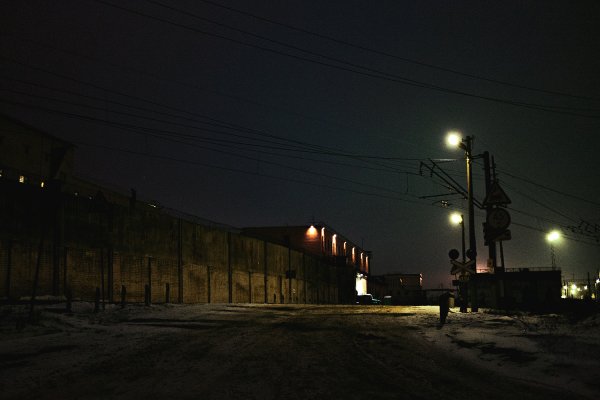
Pretrial Detention Center No. 1 in Penza
On January 23, antifascist Viktor Filinkov disappeared in Petersburg. He was found two days later: the press service of the Petersburg court system related Filinkov had been remanded to police custody after confessing his involvement in a terrorist network whose members “profess[ed] the anarchist ideology.” Members of the Public Monitoring Commission were able to visit him in the pretrial detention center a day later. Filinkov told them he had been tortured.
On January 25, Petersburger Igor Shishkin disappeared after going out to walk the dog. The dog came home with security services officers, who conducted a search of Shiskin’s flat. Petersburg’s Dzerzhinsky District Court remanded Shishkin to police custody on the very same charges that had been imputed to Filinkov. Reporters were not admitted to the courtroom. The investigation and arrests in Petersburg were sanctioned by a municipal district court in Penza.
What is the connection between Penza, Petersburg, and antifascists?
On December 11, 2017, OVD Info published a long report on the manhunt mounted in the wake of the so-called Maltsev Revolution of November 5, 2017. In particular, the report mentioned a criminal investigation of an alleged terrorist network in Penza. We wrote at the time that five people had been charged in the case, and two of them were anarchists. This was not entirely true. Six people have been charged in the case, in fact, and at least some of them are antifascists. One of them, Arman Sagynbayev, lived in Petersburg before his arrest. According to Fontanka.ru, a transcript of Sagynbayev’s interrogation was included in the case file police investigators entered into evidence at Shishkin’s remand hearing.
On October 17 or October 18, 2017, the first suspect in the case, Yegor Zorin, was detained. Antifascist Ilya Shakursky and his friend Vasily Kuksov were detained shortly thereafter. Dmitry Pchelintsev was detained on October 27. Then, in early November, Andrei Chernov was detained in Penza, and Sagynbayev was detained in Petersburg, shipped to Penza, and remanded to the pretrial detention center. According to police investigators, all six men had been members of the terrorist group 5.11 (i.e., November Fifth), who were planning for unrest to kick off in Russia. Five of the men are still imprisoned in the pretrial detention center, while a sixth man has been placed under house arrest. The accused men said they have been tortured while in police custody, enduring psychological coercion, electrical shocks, and being hung upside down, and that FSB officers planted weapons on them.
In airsoft, unlike paintball, there are no ratings, because responsibility for following the rules lies with the players themselves. A player who has been shot is obliged to admit it and immediately don a clearly visible red armband, which denotes he or she has been killed or wounded in the game, and proceed to the place designated as the cemetery or infirmary. Consequently, the point of the game is not winning, but playing fair and having fun. Arguments about whether someone has been killed or not are not kosher, and people who get into rows with each other are sidelined until the game is over.
Players use airsoft guns, which shoot plastic pellets 6 mm or 8 mm in diameter. The projectiles are powered either by compressed air or a gas mixture. Airsoft guns come in four basic models: spring-powered, battery-powered, gas-powered, and hybrid.
“There is no doubt terrorism is a bad thing,” says Vasily Kuksov’s defense attorney Alexander Fedulov. “But you punish the people who are really involved in terrorism, not everyone without exception. I also used to play paintball just to give my head a rest. I also have an airsoft gun at home. You don’t need a permit of any kind for it. I also used to shoot at targets in the park in the evenings. Well, Vasily would go play war. He fired two times from an airshot gun. During the hearing to extend Vasily’s remand to police custody, I gave a twenty-minute speech, but not a word of it ended up in the judge’s ruling. The police investigator read out the prosecution’s appeal: ‘They engaged in the illegal mastery of survival skills in the woods and rendering first aid.’ Where is it written in the Russian legal codes these skills are illegal? And the judge sat there and nodded. ‘They planned to blow up offices of the United Russia party and post offices.’ Rubbish.”
When Kuksov’s wife Yelena came home from work on October 19, she realized Vasily was not there, although he should have been home earlier. She called him on his mobile. The call went through, but her husband did not pick up the phone. A few hours later, Yelena heard someone trying to unlock the door of their flat. When she looked through the peephole, she saw around ten strangers, one of whom was holding her husband by the neck. Vasily could barely stand up. The men claimed they were from the FSB.
Kuksov’s trousers and jacket were torn and blood-stained, and his forehead and nose were badly injured, as if he had been smashed against the pavement. According to Yelena, the search was superficial. The FSB officers then asked Vasily whether he had a car. They took Kuksov and his wife to the car and ordered him to open the door. When he approached the car, Kuksov exclaimed the door lock was broken, to which one of the FSB officers crudely replied, “What do you mean by that?” The men searched the car, allegedly finding a pistol in it. Kuksov, who had been calm until then, screamed the weapon had been planted.
Ilya Shakursky was detained the same day. At first, he was suspected of “organizing” the group, but later the charge against him was reduced to “involvement.” Shakursky had organized lectures and park cleanups as part of environmental campaigns, and animal rights events. He was a fairly prominent figure in the local leftist scene.
A female acquaintance relates how, when they were at school, Shakursky got his classmates together and they went off together to clean up the Moksha River. No one had thought of doing such a thing before, but the idea occurred to Shakursky. A while later, members of the Mokshan city government and policemen came to the school. They organized a special class for the schoolchildren during which they instructed them Ilya was a Nazi, and his peers should stop associating with him. Shakursky and his antifascist friends always laughed when they retold the story.
At the December 14 hearing to extend the accused men’s term in police custody, Shakursky sat in the courtroom, not in the cage with Sagynbayev and Pchelintsev. Perhaps the police investigator did not want Shakursky to speak with the other defendants, although the hearing was for all three of them. Shakursky appeared very depressed, and he sat with his hood pulled over his head. His mother sat next to him, hugging him the whole time. She would ask her son something, and he would give one-word replies. The longest thing he said to his mother was about the New Year: “Mom, be sure to decorate the tree.”
According to Fedulov, Shakursky has confessed. Actually, everyone except Kuksov has confessed. Invoking Article 51 of the Russian Constitution [“No one shall be obliged to give evidence incriminating themselves, a husband or wife or close relatives the range of whom is determined by federal law.”], he refused to answer questions. Some time ago, Shakursky and Pchelintsev were friends. They worked out and played sports together, including airsoft. But they have not seen each other for several months.
Dmitry Pchelintsev writing to his wife:
It is mean to treat people like this. You are suspected and accused of something, but until it is proven, you are not guilty. That is why I am living in such horrible conditions: because it it doubles the punishment for something I did not really do.
Angelina Pchelintseva writing to her husband:
I could not care less about birthdays, New Year, and all the other celebrations, and all the difficulties that happen to me. You are the only thing that matters. If I could, I would be with you and go through all of it. But I know you would be against it, at least, and that it is impossible, at most. I will do everything I can to help you. Just don’t worry about me. Believe me, I will handle things.
Prior to his arrest, Pchelintsev worked as a shooting instructor. He learned his profession while doing his compulsory military service at the Penza Artillery Engineering Institute’s training center.
On October 27, Pchelintsev left home in the early morning to meet his grandmother. His wife, Angelina, was still asleep when her husband returned to the flat in handcuffs, escorted by FSB officers. According to Angelina, during the search, law enforcement officers turned the flat topsy-turvy, ultimately confiscating their personal telephones and other electronic devices, as well as their registered firearms: two hunting rifles and two trauma pistols. They went to look at Pchelintsev’s car. His car had broken down, and he had recently just barely driven it close to their building and parked it. As Pchelintsev recounts, the FSB officers got into the car to search it right when no one was looking at them, and they allegedly found two grenades under the back seat.
“A car without an alarm. You guys are champs,” Pchelintsev said, implying they had planted the grenades in his car.
The same day, Angelina got a call from the FSB. Her husband supposedly wanted her to be present during his interrogation. She was greeted by two secret service agents. According to Angelina, during their conversation, one of them, who was playing with an awl, threatened her husband would be sentenced to life in prison. The FSB officer said someone just needed to be shot in the foot so Pchelintsev stopped refusing to testify by invoking Article 51 of the Constitution.
“The stupidest thing is a terrorist organization that did not commit a single terrorist act and was not planning any,” says Angelina. “Meaning that in court no one can even say they were planning to do such-and-such a thing on such-and-such a day. One cannot say that because they were not planning to do anything at all. All they ever did was learn how to render first aid in field conditions and survive in the woods. Is that illegal?”
After several days in the pretrial detention center, Pchelintsev said he planned to confess his guilt. This shocked his relatives, who were certain of Dmitry’s innocence. To pay the services of an attorney, his relatives borrowed money from a bank: attorney Alexei Agafonov had asked them for an advance of 150,000 rubles [approx. 2,150 euros]. According to Dmitry’s family, despite the high fee, Agafonov was not particularly sensitive to the needs of his client. Aganofov regularly came to the pretrial detention center and showed Pchelintsev where to sign the papers the investigator had brought. As Pchelintsev recounts in his letters, the lawyer would agree to meet with Dmitry on Monday, before the investigator’s arrival, but then show up the same time as the FSB officer, on Tuesday. When Pchelintsev expressed his bewilderment, Agafonov would reply, “Well, I came.”
Dmitry Pchelintsev writing to his wife:
Unfair. Dishonest. Wrong. Pointless. All the roads in my life led only in one direction. You, Grandma, my sister, my parents, and lots of people know I’m a good person. But why does everything happening to me not care a whit about this? Not care about a whole, safe person with his joys and troubles, his thoughts and experiences? What will it bring to me and my relatives except trauma? It doesn’t even make me angry, but it upsets me like nothing. It is not an accident, not a coincidence. It is just someone’s unjust will. An utterly senseless Saturday. I took a shower and shaved off my beard, at least. I don’t want to look like the person they take me for. How am I wrong, Angelina?
Angelina Pchelintseva writing to her husband:
I believe you, as do your entire family and your friends. Everyone is very worried about you and understands what is happening. It is obvious to us. The first month, I tried to understand what a person could have done to be treated this way, but then I gave up looking for meaning. It’s a pitiless steamroller that could not care less about the people it crushes.
Agafonov once met with Angelina and asked her whether husband suffered from “fantasies.” Angelina replied that the situation was probably not very conducive to fantasies. It transpired Dmitry had been telling the lawyer that FSB officers were coming to see him every day and taking him to different cells for interrogations. According to the lawyer, this simply could not be happening in the pretrial detention center, where it was prohibited.
At first, Angelina received no letters from her husband, although later he told her he had written to her practically every day. Later, she found a thick envelope in the mailbox: it was filled to overflowing with all her husband’s letters for a month. It was then she discovered Dmitry had been complaining about Agafonov from the outset. According to Angelina, the fact his own defense attorney did not believe him literally was “finishing off” her husband. Moreover, he was in solitary confinement, isolated as much as possible from everyone, and the lawyer was the only person in whom he could confide.
“Given the relationship between law enforcement and the courts in our city, they will be convicted with a minimal amount of evidence,” argues Alexander Fedulov. “Because this is the first such case in the region, and everyone is interested in it. It is this stick to whack everyone with. ‘What’s with you? Fancy that! They caught some terrorists.’ Who were running round the forest with wooden sticks and pine boughs. Vasily said to me, ‘You know, Alexander, what I was afraid of? That someone would really see me running in the woods playing war. I would have sunk through the ground in shame.’ Changing the constitutional order where? In the village of Shalusheyka? What, they could change the system there with their airsoft guns?”
Once, Angelina received a letter from Dmitry written on a piece of paper torn unevenly from a notebook. It began with a passage about how her husband was reading 800-page books and he loved his wife. But these lines had been crossed out, and at the bottom of the page Dmitry had written in a quite shaky hand, “Don’t write to me, don’t bring me anything, go away as far as possible, don’t ask about me, I’m a goner.” In the same letter, Pchelintsev informed Angelina he was being injected with tranquilizers and given tablets, and it was “worse than death.”
Angelina thought Dmitry was not himself and wrote back to him.
“I took a piece of paper and, my hands shaking, I wrote that everything would be fine. I realized that, although it seemed to us that not so much time had passed, it felt like a much longer time to him. Then his father told Agafonov to take from the advance we had already paid what he considered necessary and give us back the rest. We found a new lawyer.”
After Pchelintsev was formally charged on December 1, he and Angelina were able to see each other and chat. Dmitry said he had asked for a meeting with his wife “to say goodbye.” According to Pchelintsev, he had been tortured every day: he had been hung upside down, and various parts of his body had been hooked up to an electrical current. He was afraid they would kill him and make it look like a suicide. He said his body might not be able to withstand the torture.
“I’m afraid my heart will give out, and I won’t make it out of here alive. This is hell,” he said.
Pchelintsev asked his wife to tell the investigator he had said goodbye to her. Then, perhaps, they would not come and torture him that day.
According to Angelina, she made up her mind beforehand she would not cry in front of the FSB officers, so she kept her cool and tried to cheer up her husband. She tried to persuade him not to despair and wait for the new lawyer to come up with something.
When her husband was led away, the investigator asked Angelina what they had discussed.
“Stop killing Dima,” Angelina replied.
Dmitry Pchelintsev writing to his wife:
I wouldn’t refuse to colonize Mars. Something farther away would be better, so these earthlings could not reach us quickly. I probably don’t need anything in the next care package: no Cheetohs, no Snickers. So don’t come here for the time being. I’ll write if I need anything. Basically, I’m hanging in there. I’m thinking about how we’ll start life over.
Angelina Pchelintseva writing to her husband:
I’ll make arrangements with Elon Musk. We will fly away and never return to this planet. We’ll wait until the ship is built, okay?
Arman Sagynbayev, who was jailed after most of the other accused, has serious health problems and needs constant medical career. During the police custody extension hearing in mid December, he said he constantly felt sick and vomited.
Yegor Zorin and Ilya Shakursky were classmates at Penza State University, where they had studied to be physics teachers. Zorin was the first to be detained, and he was the first to testify. According to relatives of the other accused men, his testimony was “utterly savage.” Zorin rang in the new year in partial freedom: he was released from the pretrial detention center and placed under house arrest.
According to investigators, the so-called November Fifth Group was allegedly established with the aim of planning a revolutionary coup and overthrowing the government using terrorist methods. Other similar groups also allegedly operated in Russia, and they were all part of a single organization with the same goals and methods. Investigators argue the members of November Fifth used conspiratorial methods, and they had a clear division of roles. The group allegedly had a sapper and a signalman, for example. Given this context, according to investigators, the airsoft games were a means of preparing for terrorist attacks.
And yet, currently there is no visible connnection, procedural or actual, between the criminal cases launched in the aftermath of the so-called Maltsev Revolution and the case of the Penza antifascists, except the numbers five and eleven in the name of their so-called terrorist community.
Dmitry Pchelintsev writing to his wife:
The lights are on twenty-four hours a day. If I’m not released because I’m innocent, I’ll be released when I develop Alzheimer’s. The humidity is such I’ll be released when I contract tuberculosis, and it’s so filthy I’ll be released when I contract hepatitis. And I smoke so much I’ll be released when I get cancer. And you all send me too much chocolate, so I’ll be released when I get diabetes. I’m kidding, of course. No one will ever release me.
Translated by the Russian Reader
 The Russian Federal Security Service or FSB enjoys breaking doors down in its pursuit of fictitious “extremists” and “terrorists.” Photo courtesy of
I was in the vehicle from roughly nine-thirty in the evening to one-thirty in the morning, when we arrived, apparently at an FSB office. When they took me out, they pulled a hood over my head and forced me to look down, and I could not figure out where we were, but later, when they took me home to search my flat, I guessed that it was a corner on Shpalernaya Street of the FSB building [whose main entrance is on Liteiny Avenue in downtown Petersburg—TRR]. I saw just as many secret service people in the office, only they were not wearing and were dressed in plain clothes. An investigator questioned me for something like an hour. Other secret service guys would sometimes stop by. One of them told me that if I did not want a second round, I should answer all the questions.
Then we went to the flat where we live, and there they let us read a search warrant issued by a court in Penza. During the search, I refused to switch on my laptop and telephone. That made them act very stridently. They threatened to hide a grenade and come back in a couple of days and find it in a search. Ultimately, they confiscated my laptop, telephone, and hard drive.
When they left, I went to the emergency room and documented the fact I had been beaten. I was issued a certificate in which all my injuries are listed. I am now looking for a lawyer to file a complaint. I am not mixed up in anything, but out of the blue I was tortured for several hours.
Translated by the Russian Reader