Dankhaiaa Khovalyg: Russia’s Asian Republics Speak

Dankhaiaa Khovalyg. Photo: Rinchinaaa/Baikal People

‘I was made from Russian anyway,’ 28-year-old Dankhaiaa Khovalyg writes in her story ‘Ayalga,’ published in early 2022. Its female protagonist tells a psychologist how she feels like a stranger in her own country. When Dankhaiaa was a teenager, she deliberately detached herself from her native culture. She was proud to speak Russian without an accent, and dreamt of leaving Kyzyl ‘to be with her own people’ in Moscow.

During her eight years in Moscow, Dankhaiaa was involved in decolonial activism, researched her own painful background, and launched a project about indigenous people from Russia’s six ethnic Asian regions —the podcast re.public_speaking.

Alina Golovina, a Baikal People correspondent based in Buryatia, spoke with Khovalyg about why it is important to talk about trauma, where decolonization begins, and whether Russia’s ethnic republics can unite for their own benefit. At Danhkaiaa’s suggestion, they spoke to each other using the informal second-person pronoun ty.

As soon as I would lеave home, the world would crash down on me with all its xenophobia

— Tell me about yourself, Dankhaiaa.

— I was born and raised in Kyzyl. After graduating from school, I went to study in Moscow and lived there for eight years. I worked as a client manager in an IT company and was involved in feminist activism. In 2021, I quit my job and realized my childhood dream: I enrolled in literature classes and took up writing. Since March 2022, I have been living in Berlin and doing podcasts and anti-war activism.

— You told me that up to ninety percent of the indigenous people in Tuva speak Tuvan and consider it their native tongue. Why have you prioritized Russian? Is it a problem?

— I’m a city girl: I grew up in Kyzyl. I was sent to a Russian-language kindergarten and, later, to a Russian-language class at school. That was how my mother showed that she cared about me: Russian-speaking classes were considered tonier. I was a bookworm and was engrossed in Russian literature. Unfortunately, I didn’t have access to a large amount of foreign literature at school, and at that moment, eighty percent of me certainly consisted of this great and beautiful Russian literature by the so-called Tolstoyevskys. I read all of that stuff and would dream of going to Moscow. I was a little proud that I spoke such beautiful Russian. Basically, I went through all that internalized colonial chauvinist crap that life was better there, that I was going to get out because I was more like them.

— Did it save you from ethnic discrimination? If not, when did you first encounter it?

— My experience of discrimination actually began long before I moved to Moscow. My mother found opportunities using travel vouchers to send me to summer camps in Krasnodar Territory, Khakassia, and other regions. I was eleven and twelve years old at the time. It didn’t matter whether I traveled five hundred kilometers from home or several thousand, because everywhere I went I encountered phenomenal bullying. I was labeled ‘China girl’ and ‘black.’ No one asked me to dance at dance parties. I was either totally ignored or talked to condescendingly and peppered with passive-aggressive insults. I had lived in my native Tuva in a groovy, comfortable bubble: most people spoke Tuvan, and we didn’t encounter any racism there. But as soon as I would leave home, the world would crash down on me with all its xenophobia. Whereas in Tuva I was considered pretty, smart, and cool, everything and everyone at those camps made it clear to me that I was second-rate.

— How did this affect you?

— These contrasts generated very unhealthy takeaways in my head: that Tuva’s overall level [of development] was much lower than the rest of Russia’s. This absolutely perverted assumption made me, as a teenager, condescend to Tuvan culture and my Tuvan side. It is quite painful for me to remember the instances when relatives addressed me in Tuvan, but I would reply in Russian, saying that I didn’t understand them, although that was a lie. Those memories now make me feel bitter. I feel sorry for that teenage girl.

— What happened later in life? How did Moscow welcome you?

— I often encountered micro-aggressions in public places. For example, I would be standing in the queue at a store, and a huge Russian guy would push me aside and go in front of me. There was no explicit verbal indication that this was because I was non-Russian, but I think this wouldn’t hae happened if I had been of Slavic appearance. I repeatedly had big problems finding a place to live because of my name and my appearance. Or, for example, I would be climbing the stairs to my floor, and neighbors descending the stairs would say, ‘The churkas have come and taken over the place’ when they would see me. They would not say it to my face, but under their breath as it were, and when they were already a flight below me, so I couldn’t even shout back at them as it happened. I would just stand there for a while, frozen on the steps. You always deal with this alone because when you are with your husband or a group of people, those very same neighbors keep their mouths shut. Every such episode of chauvinism really demoralized me, although I didn’t express it outwardly. Because no matter who I would tell, they would say, ‘Oh, don’t pay attention! Rise above it! We don’t stoop to their level.’ I swear that there has never been an instance when someone just shared my indignation for a second.

— Have you experienced physical violence? Have you been attacked?

— I didn’t encounter any actual boneheads (far-right skinheads): I moved to Moscow in 2013, by which time the most ardent supporters of that ideology had been jailed. The cases of physical violence that happened to me are difficult to categorize. The first time it happened was when I was in my first year at university. I was traveling from my part-time job in an empty train carriage to my dormitory. I had leaned my head against the window and fallen asleep with my legs stretched out. I woke up to an old man kicking me and saying, ‘Move your damn feet.’ I did and asked him what was the matter, and he said he wanted to sit down. I suggested he sit down in one of the other free seats, upon which he started kicking me again, saying that I was a churka and if I gave him any guff, he would beat the shit out of me. It was so horrible, because the old man spoke softly and looked like a harmless creature. I didn’t leave because I didn’t want to look weak. He stared at me point-blank the whole way and commented that I behaved very freely in Russia. It was forty minutes of violence.

The second incident happened on Leninsky Prospekt near the Oktyabrskaya subway station. It was summer, I was walking with headphones on in a crowd of people, listening to music. I noticed out of the corner of my eye that a man was walking in my direction and looking at me intently. Over the years, you develop something like a muscle that reacts to unwanted attention and makes you tense up and pull yourself together as if you’re getting ready to react. When the man walked by, he hit me over the head with a bottle. I fell down. He walked on. So there I was, lying propped up on my elbows, looking at the man walking away, and all the other people just passed me by. I thought at the time that it could have been a scene from a film, because only in a film can you get hit and nobody comes up and asks how you’re doing or tries to help you. And there were a lot of little situations — elbowing, pushing, kicking. Several times when I was putting away my dirty tray at a food court, I was told, ‘Hey, clean this up.’

Continue reading “Dankhaiaa Khovalyg: Russia’s Asian Republics Speak”

Inner Mongolia

WordPess AI-elicited image: “Mongolia, as imagined by Russian liberals”

Political scientist Andrei Nikulin writes on his Telegram channel: “If even Mongolia can be progressive and democratic, then all the more so can Russia be progressive and democratic.” Claims to the contrary are just neurolinguistic programming, he argues.

I am unironically aware that, from the Moscow intellectual’s lofty vantage point, Mongolia is a backward, third-rate country. The whole semantics of Nikulin’s turn of phrase says so. Since those nomads were able to do it, why can’t we, cultured Europeans, have a normal future?

I generally salute positive affirmation. But before we are cheered up by a sense of superiority, let’s face reality. Here are just a few facts about Mongolians today.

Yes, forty percent Mongolia’s population is made up of nomads who, like their ancestors, live in yurts and travel with their livestock. Yes, there are only three paved roads for a population of three and a half million people.

But since 1990, the Mongolian people have elected six presidents, never once allowing any of them to exceed their rightful term in office. The Mongolian constitution gives a leader only one six-year term without the right to re-election, and this norm has never been violated. The average turnout in elections at all levels of government is seventy percent. By comparison, turnout in progressive Moscow barely exceeded thirty percent when Navalny ran for mayor.

Further, while Russians were seizing Crimea and “nullifying” Putin’s previous terms as president, the humble Mongolian nomads forced their government to resign at least twice, in 2017 and 2021. In 2012, a former president was arrested and jailed on charges of bribery.

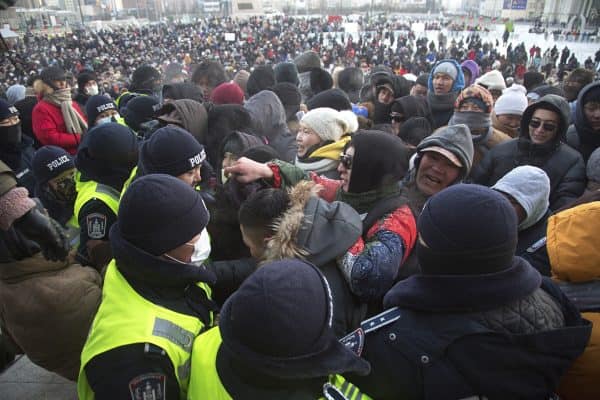
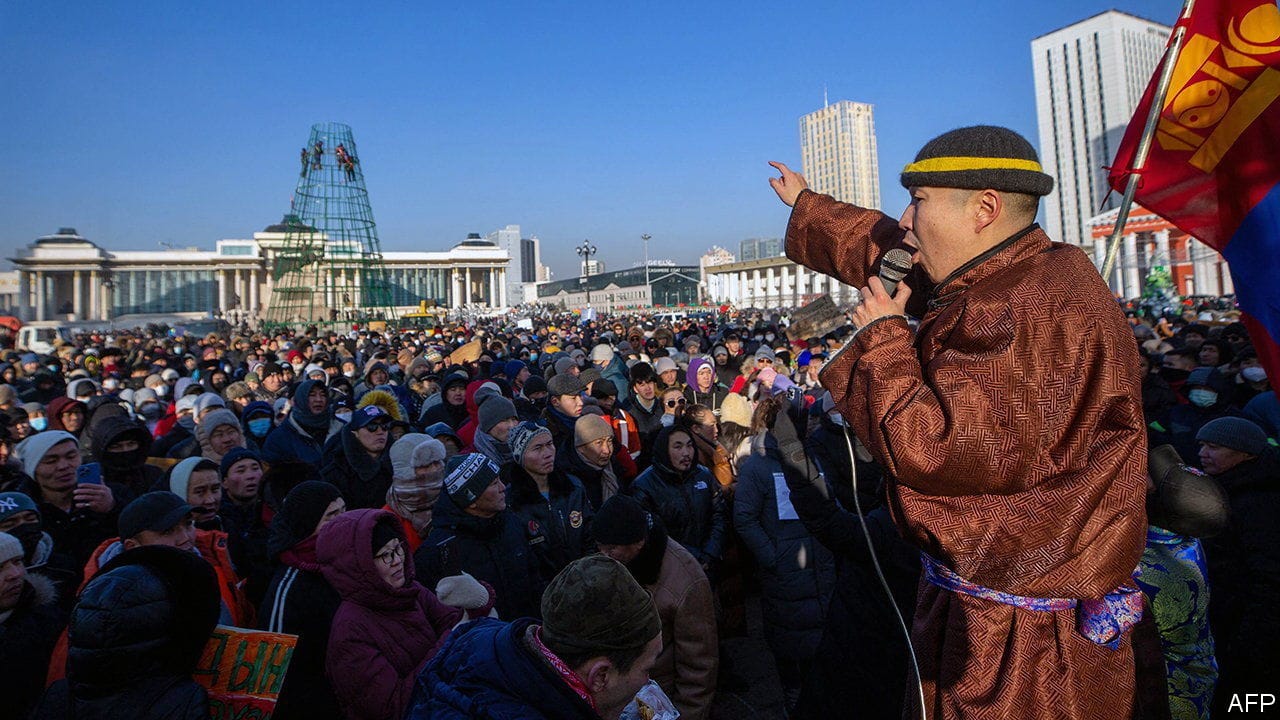
The real, democratic Mongolia, as seen in the photos selected by the author to illustrate her post

More recently, in the winter of 2022, Mongolians staged large-scale protests in Ulaanbaatar over a corruption scandal. It transpired that when exporting coal to China, customs officials had “diverted” six and a half million tons of the cargo, according to the paperwork. Mongolians considered this a theft of national revenues and marched on the capital’s square demanding that the theft be investigated and the names of those involved be made public. Eventually, the protesters stormed government house and demanded the government’s resignation.

Remind me again what Muscovites stormed in Moscow after Navalny’s investigations, of which there were dozens?

But Mongolians protested in the cold for three weeks until they forced the government to arrest the corrupt officials and reform the coal industry.

In April, the protests resumed. This time, Mongolian youth blamed the government for its poor performance and rising prices.

And lastly, let’s talk about the culture. Mongolians do not shout at their children or punish them. You will not hear from a Mongolian mom say to her child “I told you to shut your mouth” or “The more you cry, less you piss.” How should I put it? Mongolians love their children. There are only 924 orphaned children the entire country—that is less than 0.03% of the population. By comparison, there are 391,000 children living in Russian orphanages—that is 0.3% of the Russian population. In other words, children in Russia are left parentless ten times more often.

You can remain trapped in the old optics, looking down on everyone and denying reality. This will not bring social and political change any closer. If you want to go on living, but your body is rotting and falling apart, you need an accurate diagnosis. And the more honest it is, the greater the chances of your recovery.

Everything else can be put down to helplessness.

Source: Julia Khazagaeva (Facebook), 21 June 2024. Translated by the Russian Reader

Scapegoats

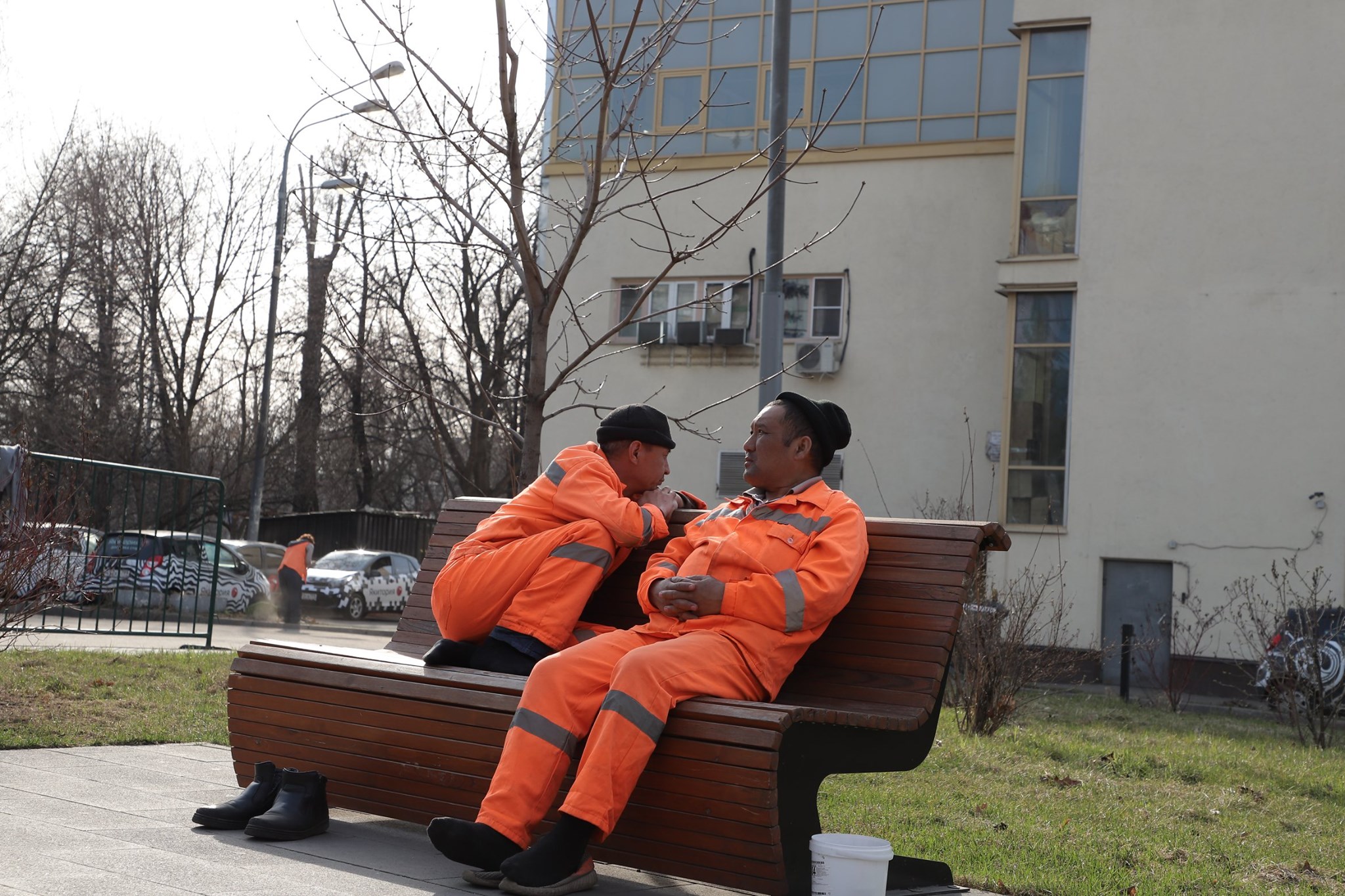
anatrrra-dvornikiCentral Asian yardmen in Moscow taking a break from their work. Photo by and courtesy of Anatrrra
‘People shout “Coronavirus!” at me as if it were my middle name’
Lenta.ru
March 29, 2020

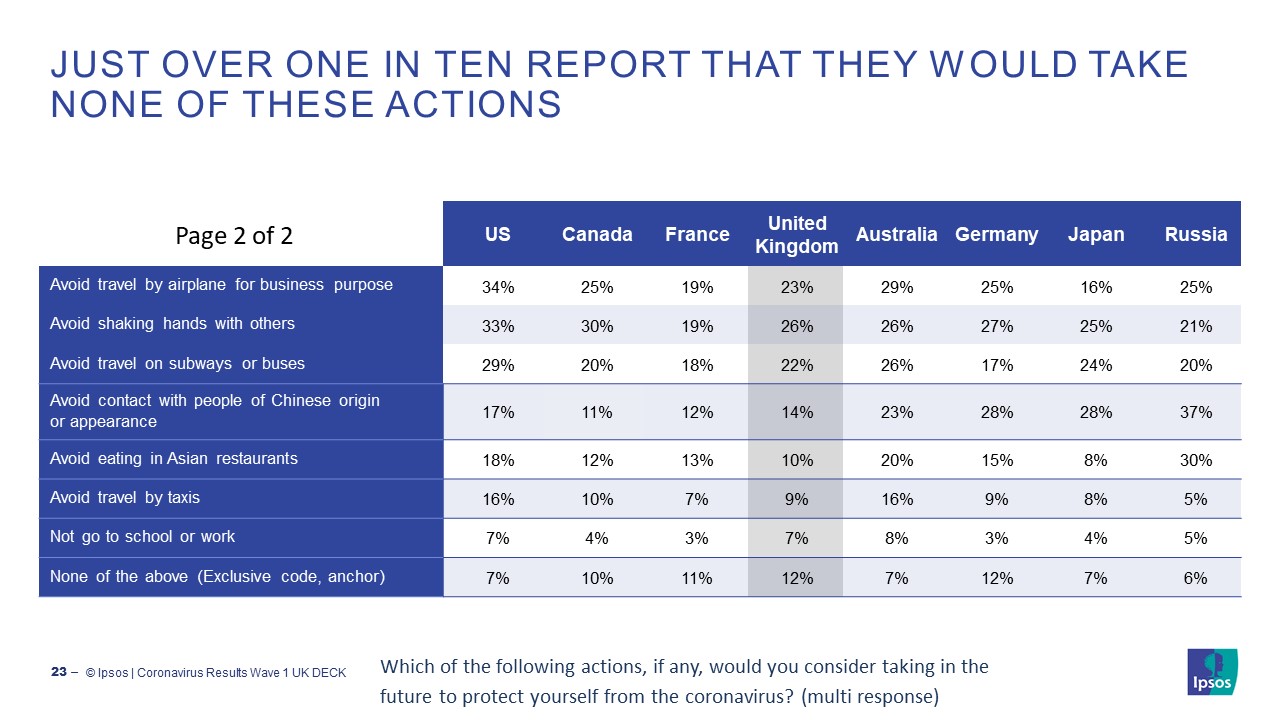
The coronavirus pandemic has led to an increase in xenophobic attitudes towards people of Asian background around the world, even though the US has already overtaken China in the number of infected people, as have European countries, if you add up all the cases. However, according to an international survey of several thousand people, it is Russians who are most likely to avoid contact with people of Asian appearance, although one in five residents of Russia is not an ethnic Russian. Our compatriots of Asian appearance have been subjected to increasing attacks, harassment, and discrimination. Lenta.ru recorded their monologues.

“Being Asian now means being a plague rat”
Lisa, Buryat, 27 years old

Sometimes I am mistaken for a Korean, and this is the best option in Russia, when you are mistaken for Chinese, Koreans or Japanese. The disdainful attitude is better than when you are mistaken for a migrant worker from Central Asia, because the attitude towards them is clearly aggressive. At least it was before the coronavirus.

Now, basically, being Asian means being a plague rat.

A couple of days ago, a young woman approached me at work—I’m a university lecturer. The lecture was on fashion, and naturally I had talked about the epidemic’s consequences for the fashion industry. The young woman works in a Chanel boutique. She said right to my face that “only the Chinese have the coronavirus,” and she tries not wait on them at her store, but “everything’s cool” with Europeans.

My mother has to listen to more racist nonsense because she has a more pronounced Asian appearance than I do, because my father is Russian. For example, there are three women named Sveta at her work. Two are called by their last names, but she is called “the non-Russian Sveta,” although she has lived in Petersburg since the nineteen-seventies. And when I enrolled in school, the headmaster asked my father to translate what he said for my mother, although five minutes earlier my mother had been speaking Russian.

In the subway, she can be told that immigrants are not welcome here and asked to stand up. A couple of times, men approached her on the street and asked whether she wasn’t ashamed, as a Muslim woman, to wear tight jeans. She is learning English, and when she watches instructional videos, people in the subway, for example, say, “Oh, can these monkeys speak Russian at all? They’re learning English!” Police are constantly checking her papers to see whether she’s a Russian citizen. When I was little, we were even taken to a police station because the policemen decided she had abducted an ethnic Russian child—I had very light hair as a child.

Recently, she was traveling by train to Arkhangelsk, and children from two different cars came to look at her. At such moments, you feel like a monkey. (By the way, “monkey from a mountain village” is a common insult.)

Everyone used to be afraid of skinheads. Everyone in the noughties had a friend who had been attacked by skinheads. Everyone [in Buryatia] was afraid to send their children to study in Moscow. But being a Russian Asian, you could pretend to be a tourist: my Buryat friend, who knows Japanese, helped us a couple of times make groups of people who had decided we were migrant workers from Central Asia leave us alone. Another time, the son of my mother’s friend, who was studying at Moscow State University, was returning home late at night and ran into a crowd of skinheads. They asked where he was from, and when he said he was from Buryatia, one of them said, “I served in Buryatia! Buryats are our guys, they’re from Russia,” and they let him go.

Now all Asians are objects of fear. People shout “Coronavirus!” at me on the street as if it were my middle name. They get up and move away from me on public transport, and they give me wide berth in queues. A man in a store once asked me not to sneeze on him as soon as I walked in. I constantly hear about people getting beat up, and I’m very worried. My Buryat girlfriends, especially in Moscow, are afraid to travel alone in the evening. People also move away from them on transport and behave aggressively.

You can put it down to human ignorance, but you get tired of living like this. When you talk about everyday racism with someone, they say they worked with an Asian and everything was fine. This constant downplaying is even more annoying. You haven’t insulted Asians—wow, here’s your medal! It doesn’t mean there is no problem with grassroots racism in multi-ethnic Russia.

“When are you all going to die?!”
Zhansaya, Kazakh, 27 years old

On Sunday morning, my boyfriend, who is an ethnic Kazakh like me, and I got on a half-empty car on the subway. We sat down at the end of the car. At the next station, an elderly woman, who was around sixty-five, got on. When she saw us, she walked up to my boyfriend, abruptly poked him with her hand, and said through clenched teeth, “Why are you sitting down? Get up! We didn’t fight in the war for people like you.”

I am a pharmacist by education, and I have seven years of experience working in a pharmacy. The pharmacy is next to a Pyatyorochka discount grocery store. Recently, I was standing at the register when a woman of Slavic appearance, looking a little over fifty, came in. She came over with a smile that quickly faded from her face when she saw me. I only had time to say hello when suddenly she screamed, “When are you all going to die?! We are tired of you all! You all sit in Pyatyorochkas, stealing our money, and then act as if nothing has happened!”

I didn’t hold my tongue, replying abruptly, “Excuse me! Who do you mean by you all?” The woman was taken aback as if something had gone wrong. Then she said something about “CISniks” [people from the Commonwealth of Independent States], ran out of the pharmacy, and never came back.

I had always dreamed about driving a car since I was a kid. At the age of eighteen, I found a driving school, where I successfully passed the classroom training, and after three months of practice I had to pass exams at the traffic police. I got 100% on the written test the first time. But during the behind-the-wheel exam, the examiner began talking crap the minute I got into the car. When I introduced myself by first name, middle name, and last name, he said something I missed since I was nervous. Then he, a rather obese man, hit me on the thighs and screamed, “Do you want me to say that in Uzbek?”

I immediately unbuckled my seat belt and got out of the car. I gave up for good the idea of taking the driving test.

covid-19-coronavirus-actions-ipsos-moriResults of an Ipsos MORI poll published on February 14, 2020

“The chinks piled into our country and brought this plague”
Anna, Buryat, 27 years old

We live in a multi-ethnic country that supposedly defeated fascism, but now every time I go into the subway, the police check my papers as if I were a terrorist. People really have begun to move away from me, give me a wide berth, and throw me contemptuous glances, as if to say “There goes the neighborhood!”

I live near University subway station [in Moscow], and there really are lots of Chinese students there. I feel quite sorry for them: they are constantly stopped by the police in the subway, and people look at them with disgust and demonstratively steer clear of them. If there are Chinese people who have stayed here, they probably didn’t go home for the Chinese New Year. Where would they bring the virus from? If they had gone home for the holidays, they would not have returned to Russia, since the border was already closed by the end of the holidays. Accordingly, the Chinese who are here are not carrying the virus.

Recently, I was going down an escalator. My nose was stuffy from the cold, and so I blew my noise softly. I thought I was going to be murdered right on the escalator: some people bolted straight away from me, while others shouted that I was spreading the contagion.

Recently, in a grocery store, a woman and her teenage daughter were standing behind me. The woman said something to the effect that all sorts of chinks have come to our country and brought the plague. She said it out loud and without any bashfulness, aiming her words at me. She and her daughter were less than a meter away from me, as if I didn’t understand them. My level of indignation was off the charts, but I didn’t say anything.

Another time, I went into my building and approached the elevator. A woman and her children literally recoiled and almost ran out—they didn’t want to ride in the elevator with me! I said I’d wait for the next one. They were not at all perplexed by the fact that I spoke Russian without an accent.

“I will always be second class here”
Malika, Uzbek, 21 years old

Recently, a mother and daughter passed by my house. Tajik yardmen were cleaning the yard. The girl asked the mother why she was rolling her eyes, and the mother explained that the yardmen were probably illegal aliens and terrorists. I walked next to them all the way to the bus stop—it was unpleasant.

During three years of living in Moscow, I very rarely felt like an outsider: the people around me were always sensible, and I was almost never stopped by police in the subway to check my papers. But when I decided to leave the student dorm, I realized that I would always be a second-class person here. It took four months to find an apartment. A girlfriend and I were looking for a two-room flat for the two of us for a reasonable amount of money, but every other ad had phrases like “only for Slavs.” There were jollier phrases like “white Europe” or “Asia need not apply.” But even in cases where there were no such restrictions, we would still be turned down when we went to look at flats.

After a while, I started saying on the phone that I was from Uzbekistan. Some people would hang up, while others would make up ridiculous excuses. In the end, we found a place through friends, but the process was quite unpleasant.

I’m no longer bothered by such everyday questions as “Why is your Russian so good?” I like talking about my own culture if the curiosity is not mean-spirited. But I am terribly disgusted to see how my countrymen are treated on the streets and realize that I’m left alone only because I’m a couple of shades lighter. Because of this, people take me for a Russian and complain about “those wogs” to my face.

“He shouted that I was a yakuza and had come here to kill people”
Vika, Korean, 22 years old

I’m an ethnic Korean. I was born and raised in North Ossetia, and graduated from high school in Rostov-on-Don. I have lived in Moscow since 2015, and I encounter more everyday racism here.

One day a woman on the street started yelling at me to get the hell out of Moscow and go back to my “homeland.” Another time, a madman in the subway sat down next to me and shouted that I was a yakuza and had come here to kill people.

When I was getting a new internal passport at My Documents, the woman clerk asked several times why I was getting a new passport and not applying for citizenship, although I had brought a Russian birth certificate and other papers.

Once my mother was attempting to rent an apartment for us and humiliated herself by persuading the landlords that Koreans were a very good and decent people. I wanted to cry when she said that.

There is a stereotype that Asians are quite smart and study hard, that they have complicated, unemotional parents, and so on. As a teenager, I tried to distance myself as much as possible from stereotypical ideas about Koreans. Now I can afford to listen to K-pop and not feel guilty about being stereotypical.

Generally, we are not beaten or humiliated much, but I don’t feel equal to the dominant ethnic group [i.e., ethnic Russians], especially now, when everyone is so excited about Korean pop culture, generalize everything they see in it to all Koreans and can come up to you out of the blue and say they love doramas. That happened to me once. It is very unpleasant—you feel like a pet of a fashionable breed.

In questionnaires on dating sites you can often find preferences based on ethnicity, and they can take the form of refusals to date people of a certain race, as well as the opposite, the desire to date such people. It is not a sign of tolerance, however, but the flip side of racism—fetishization. It still reduces a person to her ethnic group, suggesting she should be perceived not as an individual, but as a walking stereotype.

“Several times it ended in attempted rape”
Madina, from a mixed family (Tatar/Tajik/Kazakh/Russian), 25 years old

I was born in Moscow. My Russian teacher from the fifth grade on liked to repeat loudly to the entire class, “Can you imagine? Madina is the best Russian and literature student in my class!” By the end of the sixth grade, my classmates were sick and tired of this, but instead of boning up on Russian, they decided to throw me a blanket party. They got together, backed me into a corner, and kicked the hell out of me.

I recently returned from doing a master’s degree abroad and was looking for an apartment to rent in Moscow. Several times, landlords offered to rent an apartment without a contract, explaining that I undoubtedly needed a residence permit. When I showed them my internal passport and Moscow residence permit, they turned me down anyway.

Before moving to the United States, I had to forget about romantic relationships for several years because several times it all ended with attempted rape under the pretext “You’re an Asian woman, and I’ve always dreamed of fucking a woman like you  in the ass.”

Nor was it strangers I’d met on Tinder who told me this, but guys from my circle of friends at school and university. There were three such incidents, and all of them combined racism, objectification, and a lack of understanding of the rules of consent.

“She looked at me like I was death, shoved me, and ran out of the car”
Aisulu, Kazakh, 22 years old

Recently, I was a little ill: I had a runny nose and sneezed once in a while. I wouldn’t even say it was the flu, just the common cold. I decided to attend lectures and put on a mask for decency’s sake.

I went into the subway, where people got up and moved away from me twice. I wasn’t particularly offended, but it was unpleasant when I stood next to a women after moving to another car and sneezed. She looked at like I was death, shoved me, and ran out of the car. That was quite odd.

I told a classmate about the incident, and she asked why I was wearing a mask, because it attracts more attention. I felt even worse, and took it off.

Translated by the Russian Reader